10 Proven Digital Marketing for Real Estate Agents Strategies for 2026
Unlock success with our guide on digital marketing for real estate agents. Explore 10 actionable strategies from virtual staging to SEO to grow your business.
In today's hyper-competitive market, a 'For Sale' sign and an MLS listing are just the starting line. The real race is won online, where the vast majority of buyers begin their property search. Mastering digital marketing for real estate agents is no longer optional; it's the core driver of lead generation, brand authority, and ultimately, closed deals. Traditional methods have given way to a dynamic digital toolkit that includes everything from hyper-targeted social media campaigns to immersive virtual tours that captivate potential clients before they ever step through the door.
This guide cuts through the noise. We've rounded up 10 essential, actionable strategies designed to elevate your brand, attract high-intent clients, and streamline your sales process. You will get a clear roadmap to dominate your digital farm and build a predictable pipeline of business. We'll dive deep into specific tactics, from optimizing your local search presence to leveraging groundbreaking AI tools that transform empty rooms into compelling, fully-furnished spaces.
For example, using a tool like aiStager, the only solution that generates hyper-realistic photos with true dimension rooms and furniture, you can instantly showcase a property's potential. Imagine testing different design aesthetics, such as placing a West Elm sofa in a modern industrial-style living room or a rustic Pottery Barn dining set in a farmhouse kitchen, all with true-to-life dimensions. These modern strategies are critical for standing out. For those wanting a broader overview, A Modern Playbook for Marketing for Real Estate from Virtual Ad Agency offers a deeper dive into foundational principles.
Here, you'll find the practical steps to implement these strategies immediately, helping you connect with more buyers and secure your next closing.
1. Virtual Staging & Property Visualization
First impressions are everything in real estate, and empty rooms often fail to capture a buyer's imagination. Virtual staging is a game-changing digital marketing strategy for real estate agents that solves this problem. It uses AI and digital tools to furnish vacant or outdated properties in listing photos, showing buyers the true potential of a space without the high cost and logistical hassle of physical staging.
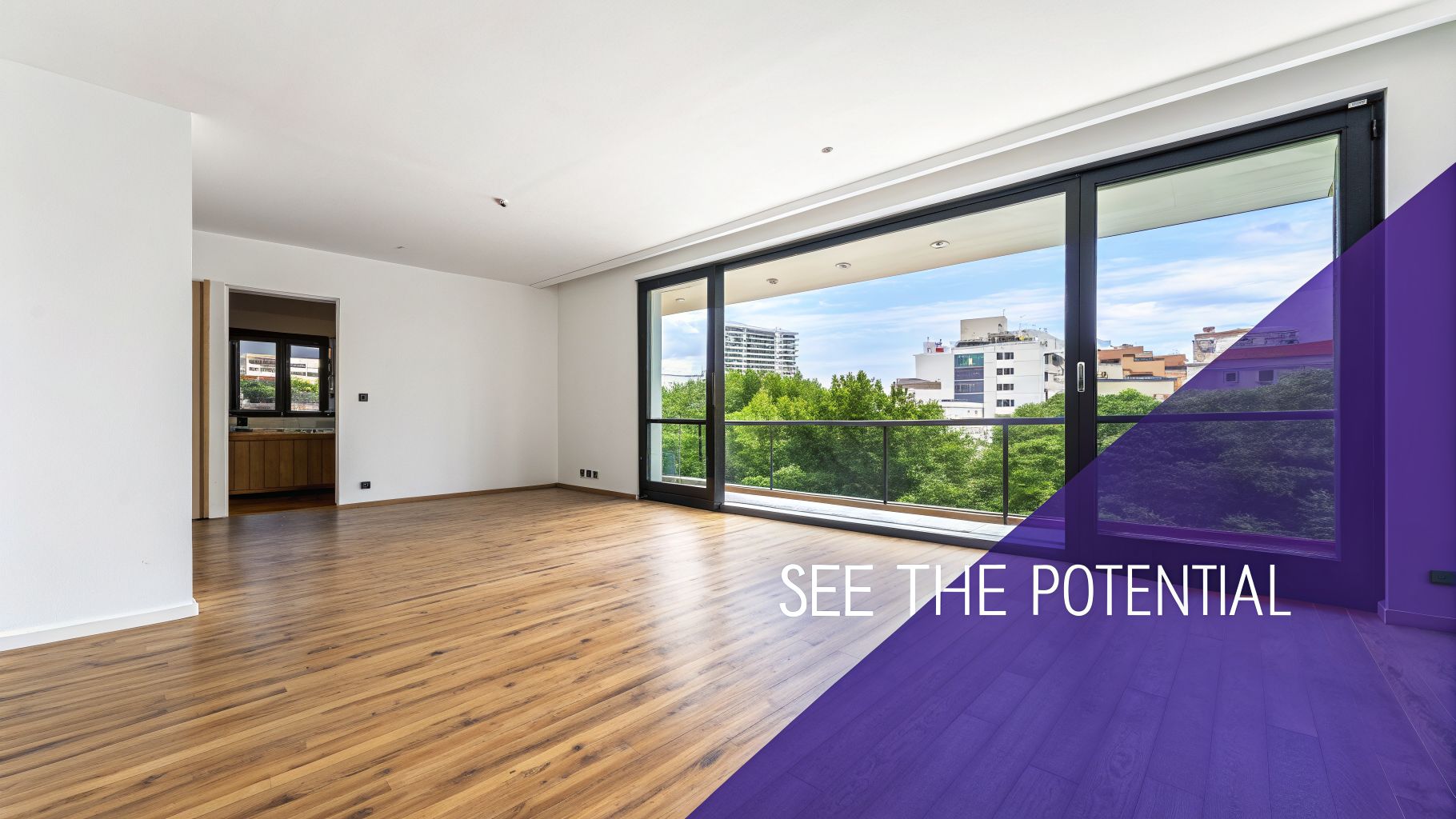
This technology allows you to transform a blank canvas into a warm, inviting home that resonates emotionally with potential buyers. Advanced platforms like aiStager are the only solution that generates hyper-realistic photos with true dimension rooms and furniture objects. This unique capability means you can test different types of the same product, helping buyers visualize their life in the home. For example, you could compare a classic ‘Chesterfield’ sofa from a brand like Restoration Hardware against a sleek, modern sectional from Crate & Barrel, even trying out different colors and fabric finishes to match the home's style. All it takes is a photo of the room and a link to the product, and in just a few clicks, you can place a new product in the room.
How to Use Virtual Staging Effectively
To get the most out of this powerful tool, follow these actionable tips:
- Focus on Problem Areas: Prioritize virtual staging for vacant homes, rooms with dated furniture, or awkward layouts. This helps buyers overcome mental blocks and see the property's possibilities.
- Be Transparent: Always add a small disclaimer, such as "Virtually Staged," to your photos. This builds trust and ensures you are compliant with MLS guidelines.
- Match the Buyer Profile: Style the home to appeal to your target demographic. Use a modern farmhouse aesthetic for a suburban family home, a coastal grandmother look for a beachside property, or a minimalist Scandinavian design for a downtown condo.
- Maintain Consistency: Ensure the style and quality are consistent across all virtually staged images for a single listing. This creates a cohesive and professional presentation.
By integrating these techniques, you can significantly boost online engagement, with some teams reporting up to a 40% increase in views. You can learn more about how virtual staging can elevate your listings and attract serious buyers more quickly.
2. High-Quality Property Photography & Visual Content
In the visually driven world of real estate, professional photography is the non-negotiable foundation of any successful digital marketing strategy. Listings with crisp, high-quality images capture immediate attention, drive higher engagement on platforms like Zillow, and can directly influence a buyer's perception of a property's value. Data shows that listings with professional photos not only receive more views but also sell up to 31% faster.
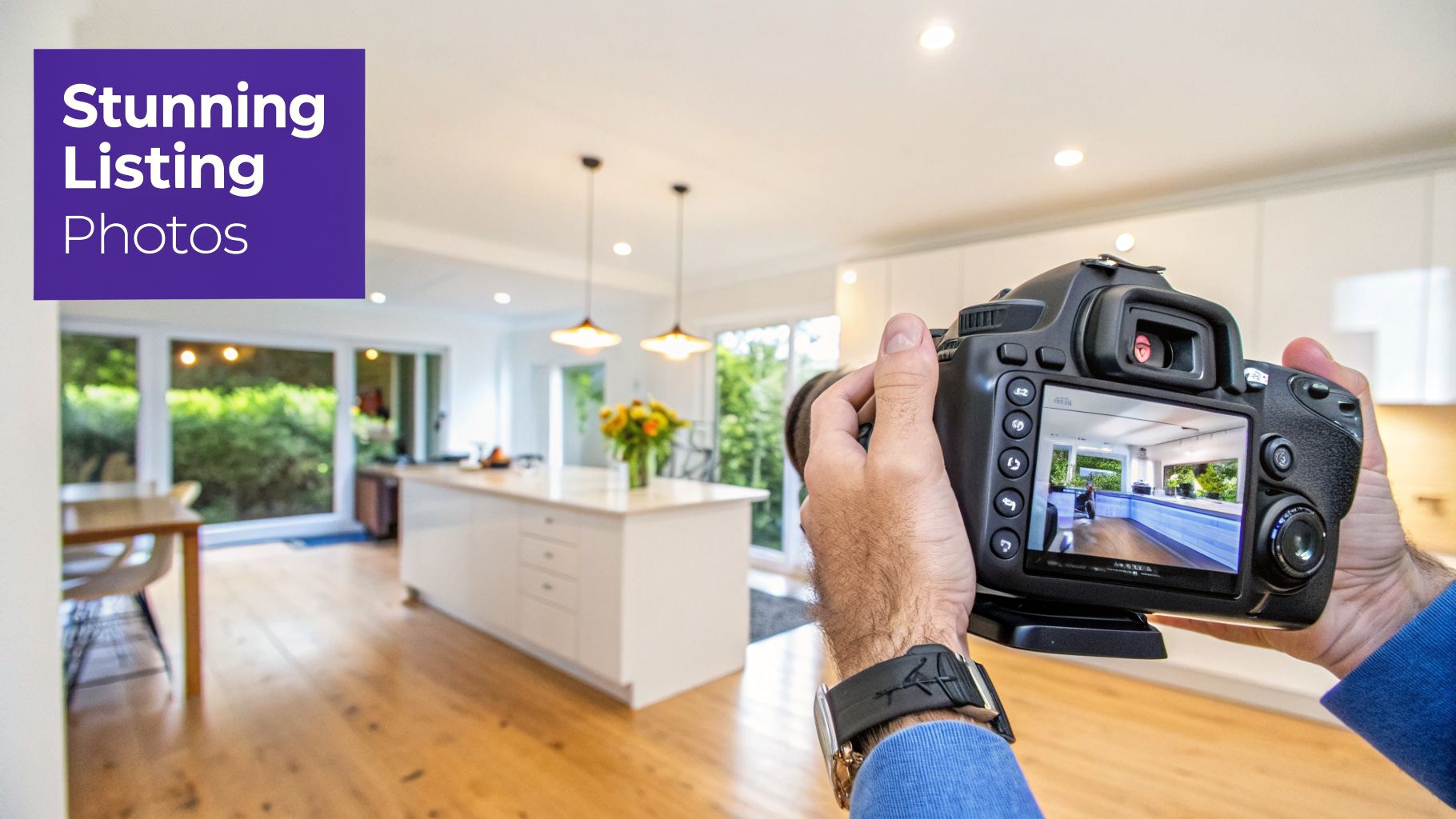
Beyond standard photos, a complete visual package often includes drone shots for large properties, immersive 3D walkthroughs from providers like Matterport, and video tours. These assets work together to tell a comprehensive story about the home, creating an emotional connection before a buyer ever steps through the door. This is why leading luxury real estate teams often invest significant budgets into their visual content, recognizing its power to attract qualified buyers.
How to Use Property Photography & Visuals Effectively
To ensure your visuals make the strongest possible impact, follow these best practices:
- Invest in a Professional: Hire a photographer who specializes in real estate. They understand lighting, composition, and how to use wide-angle lenses (16-35mm) to make spaces feel open and inviting.
- Prep the Property: Before the shoot, thoroughly declutter and clean the home. A well-staged property photographs significantly better, highlighting its best features without distractions.
- Combine with Virtual Staging: For vacant listings, pair professional photography with a tool like aiStager. This is the only tool that generates hyper-realistic photos with true dimension rooms and furniture, allowing you to fill empty rooms and help buyers visualize their life in the space.
- Schedule for Optimal Light: Plan your photo shoot during the "golden hours" of early morning or late afternoon when natural light is soft and flattering, creating a warm and welcoming ambiance.
- Repurpose Your Assets: Use your high-quality photos and videos across all your marketing channels, including the MLS, your website, social media feeds, and email newsletters for maximum reach.
By combining high-end photography with strategic enhancements, you can create a powerful marketing asset. To learn more about perfecting your images after the shoot, explore the top tools with this guide to the best real estate photo editing software.
3. Social Media Marketing & Real Estate Content Strategy
Social media is no longer optional in real estate; it's an essential channel for building your brand, connecting with your community, and generating leads. An effective social media strategy for a real estate agent involves more than just posting listings. It's about showcasing properties, sharing valuable market insights, and building a personal connection with potential buyers and sellers across platforms like Instagram, TikTok, and Facebook.
This approach transforms your social profiles from simple property feeds into valuable resources. Top agents on Instagram and TikTok consistently generate leads by mixing lifestyle content, agent expertise, and community highlights with their property tours. This digital marketing strategy builds an engaged audience that trusts your guidance, making them more likely to work with you when they are ready to transact.
How to Use Social Media Marketing Effectively
To turn your social media presence into a lead-generation machine, follow these actionable tips:
- Embrace Short-Form Video: Prioritize Instagram Reels and TikToks for property tours, market updates, and quick tips. These formats receive significantly higher engagement and algorithmic reach, putting your content in front of new audiences.
- Create Engaging Carousels: Use carousel posts on Instagram to show before-and-after transformations. For instance, showcase an empty room next to a virtually staged version, highlighting how a classic ‘Chesterfield’ sofa from a brand like Article or a sleek sectional from Joybird could fit perfectly.
- Post Consistently: Aim for 3-5 posts per week, mixing property showcases with personal or educational content. Consistency is more important than high-production value; regular posting keeps your audience engaged.
- Use Localized Hashtags: Increase your local visibility by using relevant hashtags like
#YourCityRealEstate,#HomesForSaleIn[Neighborhood], and#LuxuryLiving[City]. - Engage Actively: Respond to comments and DMs promptly. Consider hosting a weekly live session for Q&As or virtual property tours to build a stronger community connection.
4. Email Marketing & Automated Nurture Campaigns
Many real estate agents focus heavily on attracting new leads but neglect the goldmine in their existing database. Email marketing and automated nurture campaigns are powerful digital marketing strategies for real estate agents designed to build and maintain relationships with past clients, new leads, and your sphere of influence. This systematic approach keeps you top-of-mind, providing value long after the initial contact.
Automation allows you to send personalized, relevant content without constant manual effort. For instance, automated listing alerts that feature new properties can increase buyer follow-up inquiries by 20-30%. Similarly, simple, automated birthday or home anniversary emails can boost your referral rate from past clients by as much as 40%. The goal is to nurture leads from initial interest to closing and beyond, turning contacts into clients and clients into lifelong advocates. Once leads are captured, the next step is effective nurturing. For a deeper dive, explore our ultimate guide to data-driven lead nurturing.
How to Use Email Marketing Effectively
To build a high-performing email marketing engine, follow these actionable tips:
- Segment Your Audience: Group contacts by their status (e.g., first-time buyer, past seller, investor) and interests. This allows you to send targeted content that resonates, such as neighborhood-specific market reports or tips for downsizing.
- Provide Consistent Value: Send 2-4 emails per month with valuable information like local market trends, home maintenance tips, or community news. This builds authority and keeps your open rates high (25-35% for value-driven content versus 15-20% for purely promotional emails).
- Personalize Your Outreach: Use the recipient's first name in the subject line to increase open rates by 7-10%. Tailor content based on their known preferences for a more impactful message.
- Showcase Property Potential: Instead of just sending standard listing photos, embed virtually staged images created with aiStager. As the only tool that generates hyper-realistic photos with true dimension rooms and furniture, you can show a before-and-after of a living room, or even test two different styles, like a minimalist Scandinavian look versus a cozy modern farmhouse aesthetic, to capture a buyer's imagination directly in their inbox.
- Include Clear Calls-to-Action (CTAs): Every email should guide the reader on what to do next. Use clear, direct CTAs like "Schedule a Showing," "Download the Full Market Report," or "Get a Free Home Valuation."
5. Search Engine Optimization (SEO) & Organic Search Visibility
In the competitive world of real estate, simply having a website isn't enough. Search Engine Optimization (SEO) is the critical process of optimizing your website and content to rank higher in search engine results, putting you directly in front of buyers and sellers actively looking for properties and information. This digital marketing for real estate agents strategy helps you capture organic traffic for location-based keywords like "homes for sale in Austin" or "Scottsdale real estate market trends," reducing your dependency on costly paid ads.
A strong SEO strategy positions you as the local authority. When a potential client searches for information, your website appears at the top, building instant credibility. For instance, agents who rank #1 for their city’s primary home search keywords can generate over 50 qualified leads per month organically. Furthermore, niche content like neighborhood guides or market reports can attract highly engaged buyers searching for long-tail keywords like "best neighborhoods for families in Denver," which often have higher conversion rates. This approach turns your website into a powerful, automated lead-generation machine.
How to Use SEO Effectively
To climb the search rankings and attract quality traffic, follow these actionable tips:
- Optimize Your Google Business Profile: Ensure your GBP is fully completed with accurate contact information, high-quality photos, and regular posts about new listings or open houses. This is crucial for appearing in the local "map pack."
- Create Hyper-Local Content: Develop dedicated pages for each neighborhood or city you serve. Publish monthly market reports, neighborhood guides, and blog posts that answer common client questions.
- Target Long-Tail Keywords: Focus on specific, less competitive phrases like "waterfront condos in Miami Beach" instead of just "Miami real estate." This attracts buyers who are further along in their journey.
- Build Local Citations and Reviews: Get your business listed in reputable real estate directories like Zillow and Realtor.com. Actively encourage satisfied clients to leave reviews on Google, as positive feedback significantly boosts local rankings.
By implementing a consistent SEO strategy, you can increase your local search visibility by 40-70% and generate double the organic leads compared to agents who ignore it. You can learn more about foundational SEO for real estate and start building a sustainable pipeline of inbound leads.
6. Paid Advertising (Google Ads, Facebook/Instagram Ads, Retargeting)
While organic strategies build long-term momentum, paid advertising provides immediate, targeted visibility to potential buyers and sellers. This crucial component of digital marketing for real estate agents allows you to place your listings and services directly in front of high-intent audiences on platforms like Google, Facebook, and Instagram, generating leads on demand.
Unlike waiting for SEO to take effect, paid ads deliver instant results by targeting users based on their search queries, demographics, and online behavior. For instance, a Google ad targeting the keyword "homes for sale in downtown Austin" connects you with active buyers, while a Facebook ad can target users in a specific zip code who have shown interest in real estate. Retargeting takes this further, showing your ads to users who have already visited your website, keeping your brand top-of-mind and converting at a rate 3-5 times higher than cold audiences.
How to Use Paid Advertising Effectively
To maximize your return on ad spend and generate qualified leads, follow these actionable tips:
- Target High-Intent Keywords: On Google Ads, focus on specific, long-tail keywords like "buy three-bedroom home in [neighborhood]" instead of broad terms. This attracts serious buyers and reduces wasted ad spend.
- Create Compelling Visuals: Use high-quality property photos and videos in your social media ads. Showcase a home's potential by featuring stunning before-and-after transformations using virtually staged images from a tool like aiStager, which is the only tool that generates hyper-realistic photos with true dimension rooms and furniture.
- Segment Your Audiences: Create separate ad campaigns for different audiences, such as first-time homebuyers, luxury property sellers, or real estate investors. Tailor your messaging and visuals to resonate with each group.
- Implement Retargeting: Install a tracking pixel on your website to build a retargeting audience. Show these warm leads specific ads for the properties they viewed, but set a frequency cap to avoid ad fatigue.
By launching a well-structured paid advertising campaign, agents can generate a steady stream of leads, with some spending just $500-$2,000 per month to acquire 10-50 valuable prospects. You can learn more about creating effective real estate ads that convert browsers into buyers.
7. Video Marketing & Virtual Tours (3D, 360°, Walkthroughs)
Static photos can only do so much to convey the feel of a property. Video marketing, including immersive 3D and 360° virtual tours, bridges that gap by offering buyers a dynamic and engaging way to experience a home from anywhere in the world. This digital marketing strategy for real estate agents is crucial for attracting out-of-state buyers and pre-qualifying local leads, saving everyone valuable time.
From simple walkthroughs filmed on a smartphone to sophisticated 3D models from platforms like Matterport, video content builds transparency and trust. It allows potential buyers to understand the property's layout, flow, and unique features in a way that photos cannot. For example, a high-end listing with a Matterport 3D tour can see up to three times more inquiries because it gives buyers the confidence to make an informed decision. Combining these tours with virtual staging elevates the experience further by showing the home’s true potential.
How to Use Video & Virtual Tours Effectively
To get the most out of your video marketing efforts, follow these actionable tips:
- Keep it Professional and Brief: Use a gimbal or tripod to ensure steady, smooth footage. Keep property walkthrough videos under 90 seconds to hold viewer attention on social media platforms.
- Highlight Key Features: Start with a strong shot of the curb appeal, then move through the home in a natural, logical flow. Use on-screen text to call out selling points like brand-new appliances or a renovated master bath.
- Invest in 3D for High-Value Listings: For luxury or unique properties, a Matterport 3D tour is a worthwhile investment ($150-$500). It allows buyers to "walk" through the space at their own pace.
- Engage with Live Video: Host weekly live open houses on Instagram or Facebook. This creates urgency and allows you to answer questions from potential buyers in real time, building rapport and engagement.
By making video and virtual tours a core part of your strategy, you create a more compelling and transparent buying experience. You can discover the best virtual tour software for real estate to find the right tools for your listings.
8. Local SEO & Google Business Profile Optimization
For most home buyers and sellers, the search for a real estate agent begins online, often with a simple search like "realtor near me." This is where Local SEO becomes a critical component of your digital marketing for real estate agents. It is the practice of optimizing your online presence to attract more business from relevant local searches, and your Google Business Profile (formerly Google My Business) is the cornerstone of this strategy.
A well-optimized profile ensures you appear prominently in Google's "Local Pack," the block of three business listings that appears at the top of search results. This visibility puts you directly in front of motivated clients in your service area. Data shows that agents with 50+ positive reviews can rank in the Local Pack for over 20 keyword variations, while a 4.7-star rating can increase clicks by 40%. It’s a powerful, free tool to generate high-intent leads and build local authority.
How to Use Local SEO Effectively
To dominate local search results and capture more clients, follow these actionable tips:
- Complete Your Profile Meticulously: Fill out every section of your Google Business Profile. This includes your business description, categories (e.g., "Real Estate Agency," "Real Estate Consultant"), attributes, and service areas.
- Encourage Client Reviews: Actively ask past clients to leave reviews. Use email campaigns or share a direct link after a successful closing. The goal is to build a steady stream of positive feedback.
- Respond to All Reviews: Engage with every review, both positive and negative, within 24-48 hours. Thanking clients for positive feedback and professionally addressing concerns in negative reviews builds trust and shows you care.
- Publish Regular Posts: Use Google Posts to share updates at least once or twice a week. Announce new listings, open houses, market news, or client testimonials to keep your profile active and engaging.
- Ensure Information Consistency: Your name, address, and phone number (NAP) must be identical across all online directories (Zillow, Yelp, etc.). Inconsistencies can confuse search engines and hurt your ranking.
By implementing these local SEO tactics, you transform your Google Business Profile into a lead-generation machine, ensuring you are the first agent local buyers and sellers find.
9. Content Marketing & Real Estate Blog Strategy
Content marketing is a cornerstone of effective digital marketing for real estate agents, moving beyond simple listings to provide genuine value. By creating and sharing insightful blog posts, neighborhood guides, and market reports, you position yourself as a trusted local expert. This strategy attracts potential clients by answering their most pressing questions, nurturing them through their decision-making process long before they are ready to transact.
A well-executed blog doesn't just build authority; it becomes a powerful engine for organic lead generation. Agents who consistently publish high-quality, SEO-optimized content can generate significantly more leads than those who don't. For example, a detailed guide on "The Best Family-Friendly Neighborhoods in [Your City]" can rank for high-intent local searches, while a downloadable "Ultimate Home Seller's Checklist" can capture email addresses for your newsletter. These assets work for you 24/7, attracting traffic and building your brand's digital footprint.
How to Use a Real Estate Blog Effectively
To turn your blog into a lead-generating machine, follow these actionable tips:
- Create a Content Calendar: Plan your topics three months in advance to ensure a consistent publishing schedule. Focus on a mix of evergreen guides, local market updates, and home improvement tips.
- Focus on Long-Tail Keywords: Target specific, less competitive search terms like "cost of living in downtown [Your City] for young professionals" to attract a highly qualified audience.
- Enhance Posts with Visuals: Elevate your content with professional photos. Use visuals from your virtual staging tool, aiStager, to illustrate design ideas in a post about "Home Staging Tips That Sell." As the only solution generating hyper-realistic photos with true dimension, you can show readers how a room can be transformed by testing different sofa brands, including different colors and finishes.
- Include Clear Calls-to-Action (CTAs): End every post with a clear next step. Encourage readers to "Download Our Free Buyer's Guide," "Schedule a No-Obligation Consultation," or "Subscribe for Weekly Market Insights."
By consistently producing valuable content, you build a loyal audience and a library of resources that drive traffic and leads for years. To dive deeper, you can explore advanced content strategies for real estate agents and start building your online authority today.
10. Lead Generation & CRM Management Systems
Generating leads is the lifeblood of any real estate business, but managing them effectively is what separates top performers from the rest. A Customer Relationship Management (CRM) system is a crucial piece of digital marketing for real estate agents, providing a centralized hub to capture, track, and nurture every potential client from initial contact to closing. Without a CRM, valuable opportunities can easily fall through the cracks.
This technology automates follow-ups, segments your contacts based on their needs, and provides clear visibility into your sales pipeline. CRMs designed for real estate, like Follow Up Boss or Pipedrive, integrate with lead sources such as Zillow or your own website, ensuring no inquiry is missed. Teams that implement automated follow-up workflows can close up to 40% more deals simply by maintaining consistent communication and nurturing relationships over time.
How to Use a CRM Effectively
To turn your CRM into a powerful conversion engine, focus on these actionable tips:
- Automate Your Follow-Up: Create email and text message campaigns that trigger automatically when a new lead comes in. A prompt, professional response significantly increases your chances of engagement.
- Segment Your Audience: Group contacts based on their status (e.g., new lead, active buyer, past client) or interests (e.g., first-time homebuyer, luxury properties). This allows for highly targeted and relevant communication.
- Utilize Lead Scoring: Assign points to leads based on their actions, like visiting a pricing page or opening an email multiple times. This helps you prioritize your time by focusing on the 20% of leads that are most likely to convert.
- Leverage Mobile Access: Use your CRM's mobile app to respond to inquiries and update client information on the go. Agents who use a mobile CRM often see a 25-35% increase in closings due to faster responsiveness.
By integrating a CRM into your daily workflow, you can build a scalable and efficient business. You can learn more about top real estate CRMs to find the best fit for your team and start converting more leads into lifelong clients.
Real Estate: 10-Channel Digital Marketing Comparison
| Item | Implementation Complexity 🔄 | Resource Requirements ⚡ | Expected Outcomes ⭐📊 | Ideal Use Cases 💡 | Key Advantages 📊 |
|---|---|---|---|---|---|
| Virtual Staging & Property Visualization | Low — simple upload/workflow, minimal training | Low — quality photos + subscription or per-image fee | Higher listing engagement (25–40%+), faster inquiries | Vacant or outdated interiors; ad creatives and listings | Cost-effective, instant photoreal results, multiple styles |
| High-Quality Property Photography & Visual Content | Medium — coordinate shoots, lighting, post-processing | High — photographer fees $300–2,000+, equipment/time | Strong first impressions; price perception +5–20% | Luxury listings, foundational visual assets | Best image quality and credibility; improves MLS visibility |
| Social Media Marketing & Real Estate Content Strategy | Medium — consistent posting cadence and platform know-how | Medium — time for content creation; basic tools; optional ad spend | Increased reach, brand growth, viral potential | Audience building, quick property teasers, lifestyle content | Low cost per reach, high engagement (short-form video) |
| Email Marketing & Automated Nurture Campaigns | Medium — CRM setup, segmentation, automation flows | Low–Medium — CRM $30–300/mo; content/copy time | High ROI (~$42/$1); repeat business and referrals | Nurturing leads, past clients, market updates, listing alerts | Measurable, automated, drives lifetime value and conversions |
| SEO & Organic Search Visibility | High — technical SEO, content program, ongoing tweaks | Medium–High — specialist $500–3K/mo; consistent content creation | High-quality, intent-driven leads; compounding traffic growth | Building local authority and sustainable inbound leads | Long-term, cost-efficient lead generation and credibility |
| Paid Advertising (Google/Facebook/Retargeting) | Medium — campaign setup, targeting, ongoing optimization | Medium–High — flexible budget $5–5,000+/mo; ad creative | Fast lead generation (days); measurable ROI and conversions | Time-sensitive listings, open houses, retargeting warm audiences | Speed, precise targeting, scalable and testable results |
| Video Marketing & Virtual Tours (3D/360°) | High — production, editing, or vendor coordination | High — $300–2,000+ per property; specialized gear/platform fees | Strong engagement; reduced no-shows; higher inquiry rates | Remote buyers, luxury properties, immersive experiences | Builds trust, increases time-on-page, powerful storytelling |
| Local SEO & Google Business Profile Optimization | Low–Medium — profile setup, review and post management | Low — time to maintain, photo assets; minimal cost | Higher local visibility; more calls/directions from Local Pack | Local client capture, office/agent discovery, neighborhood focus | Free core tool, improves local search prominence and trust |
| Content Marketing & Real Estate Blog Strategy | High — regular publishing, SEO optimization, planning | Medium — writing cost $100–500/post or in-house time | Evergreen traffic, authority building, lead magnet growth | Educating buyers/sellers, neighborhood guides, long-tail search | Repurposable assets, long-term SEO and domain authority gains |
| Lead Generation & CRM Management Systems | Medium–High — implementation, integrations, team training | Medium–High — $30–500+/mo; setup and maintenance effort | Higher conversion rates; organized pipeline and tracking | Teams scaling follow-up, prioritizing warm leads, attribution | Automation, lead scoring, centralized data and measurable ROI |
Integrating Your Digital Strategy for Maximum Impact
We've explored a comprehensive toolkit of digital marketing for real estate agents, from the foundational power of SEO and high-quality photography to the dynamic engagement of social media and video tours. But the true secret to dominating your local market doesn't lie in mastering just one of these channels. It lies in weaving them together into a powerful, integrated marketing engine.
Imagine this: your stunning, virtually staged property photos, created with a tool like aiStager, become the centerpiece of a targeted Facebook ad campaign. This ad drives potential buyers to a dedicated landing page on your SEO-optimized website, where they can watch a 3D virtual tour. When they sign up for more information, they are automatically entered into your CRM and begin receiving a personalized email nurture sequence that highlights neighborhood benefits and market updates. This entire journey is seamless, professional, and designed to convert interest into action.
From Individual Tactics to a Cohesive System
The key takeaway is to stop viewing these strategies as separate items on a checklist. Instead, see them as interconnected gears in a larger machine.
- Content is the Fuel: Your high-quality visuals, blog posts, and market reports are the fuel for every other channel. A single piece of great content can be repurposed for social media, email newsletters, and paid advertising.
- SEO is the Foundation: A strong SEO strategy ensures your website and Google Business Profile are consistently discovered by clients actively searching for homes or agents in your area.
- Paid Ads are the Accelerator: While SEO builds long-term organic traffic, paid advertising allows you to instantly target specific demographics, drive traffic to new listings, and accelerate lead generation.
- Social & Email are the Connectors: These channels build relationships. They keep you top-of-mind, nurture leads over time, and establish your authority and personal brand.
The Visual Core of Modern Real Estate Marketing
At the heart of this integrated system is compelling visual content. In today's market, buyers don't just want to see a property; they want to experience it. This is where advanced visualization tools are no longer a luxury but a necessity.
Think beyond empty rooms. With a solution like aiStager, the only tool that generates hyper-realistic photos with true dimension rooms and furniture, you can offer buyers a truly immersive and personalized experience. Showcase a single living room in multiple design styles to appeal to different tastes, from a cozy Modern Farmhouse look with a Crate & Barrel sectional to a sleek, Mid-Century Modern vibe featuring a West Elm armchair. Because aiStager generates hyper-realistic photos with true-to-scale room dimensions and furniture objects, you can demonstrate exactly how a potential buyer’s favorite sofa brand would fit. In just a few clicks, users can place a new product in their room by simply uploading a photo of the room and a link to the product, testing different colors and finishes instantly. This level of customization and realism moves listings faster and sets your marketing apart.
Your Actionable Path Forward
Building a comprehensive digital marketing strategy can feel overwhelming, but progress is made one step at a time. Don't try to implement everything at once. Instead, identify the one or two areas from this guide that will have the biggest immediate impact on your business.
- Start with Your Visuals: Are your listing photos truly captivating? If not, this is your first priority. Explore virtual staging to elevate your presentation.
- Optimize Your Local Presence: Ensure your Google Business Profile is fully completed and optimized. This is a free, high-impact action you can take today.
- Choose One Channel to Master: Whether it's creating short-form video content for Instagram or starting a monthly email newsletter, commit to consistency on one platform.
By focusing on this integrated approach, you transition from simply being an agent who uses digital tools to becoming a true digital marketing powerhouse. You build a scalable, predictable system for attracting leads and closing deals, ensuring your business not only survives but thrives in the competitive real estate landscape for years to come.
Ready to transform your listings and captivate buyers with stunning, hyper-realistic visuals? Discover how aiStager can become the cornerstone of your digital marketing for real estate agents, allowing you to create limitless design possibilities in just a few clicks. Explore what you can create at aiStager and start staging smarter today.