Earthy Apartment Decor Ideas to Create a Natural Sanctuary
Discover how to use earthy apartment decor to create a tranquil, nature-inspired home. Get expert tips on palettes, textures, and furniture.
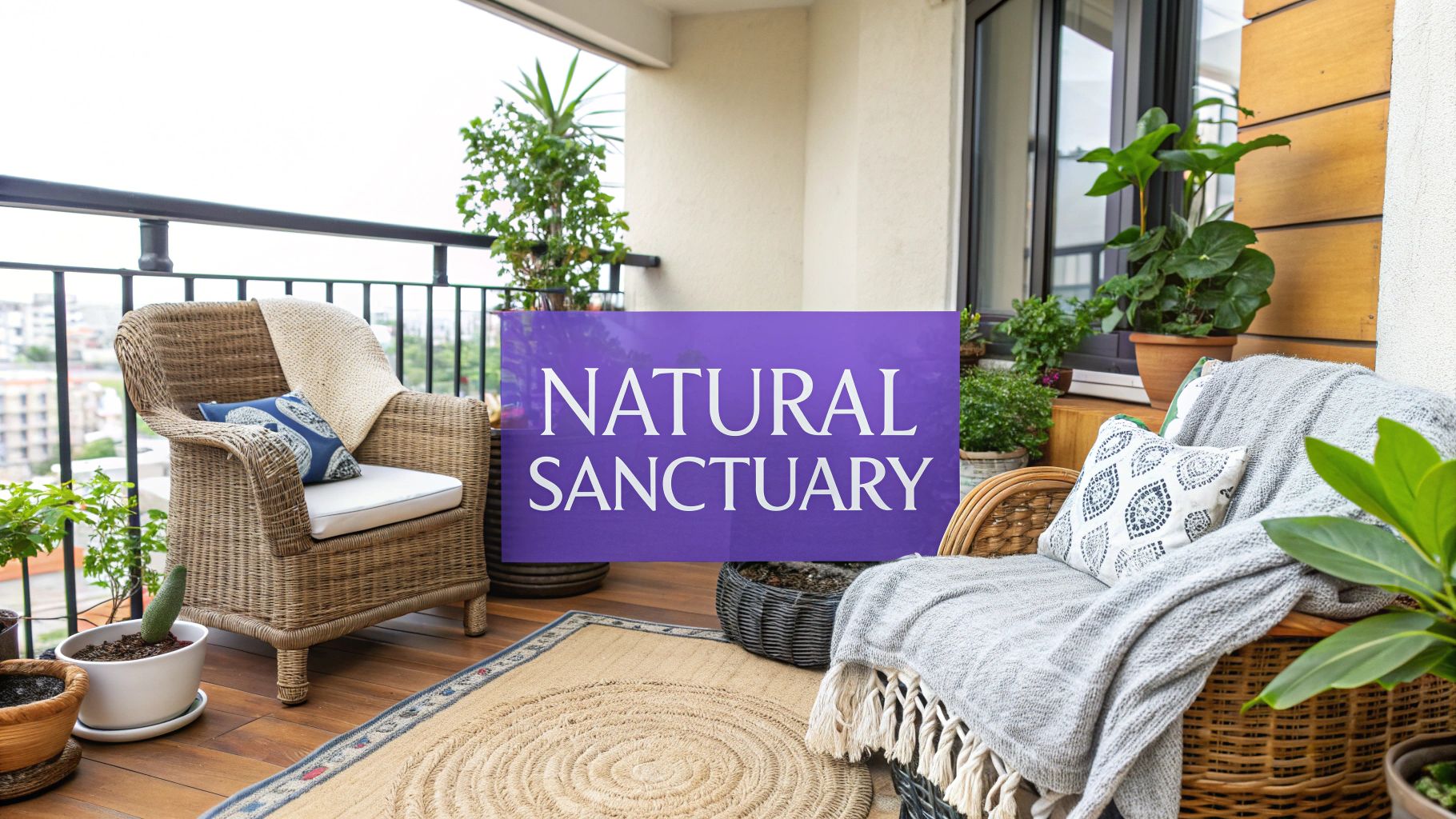
Earthy apartment decor is all about creating your own personal sanctuary. Think warm, neutral colors, organic textures, and a general feeling of calm. The idea is to ground your space with natural elements—wood, stone, plants—to build an atmosphere that genuinely feels like a retreat from the world outside.
Building Your Earthy Decor Foundation
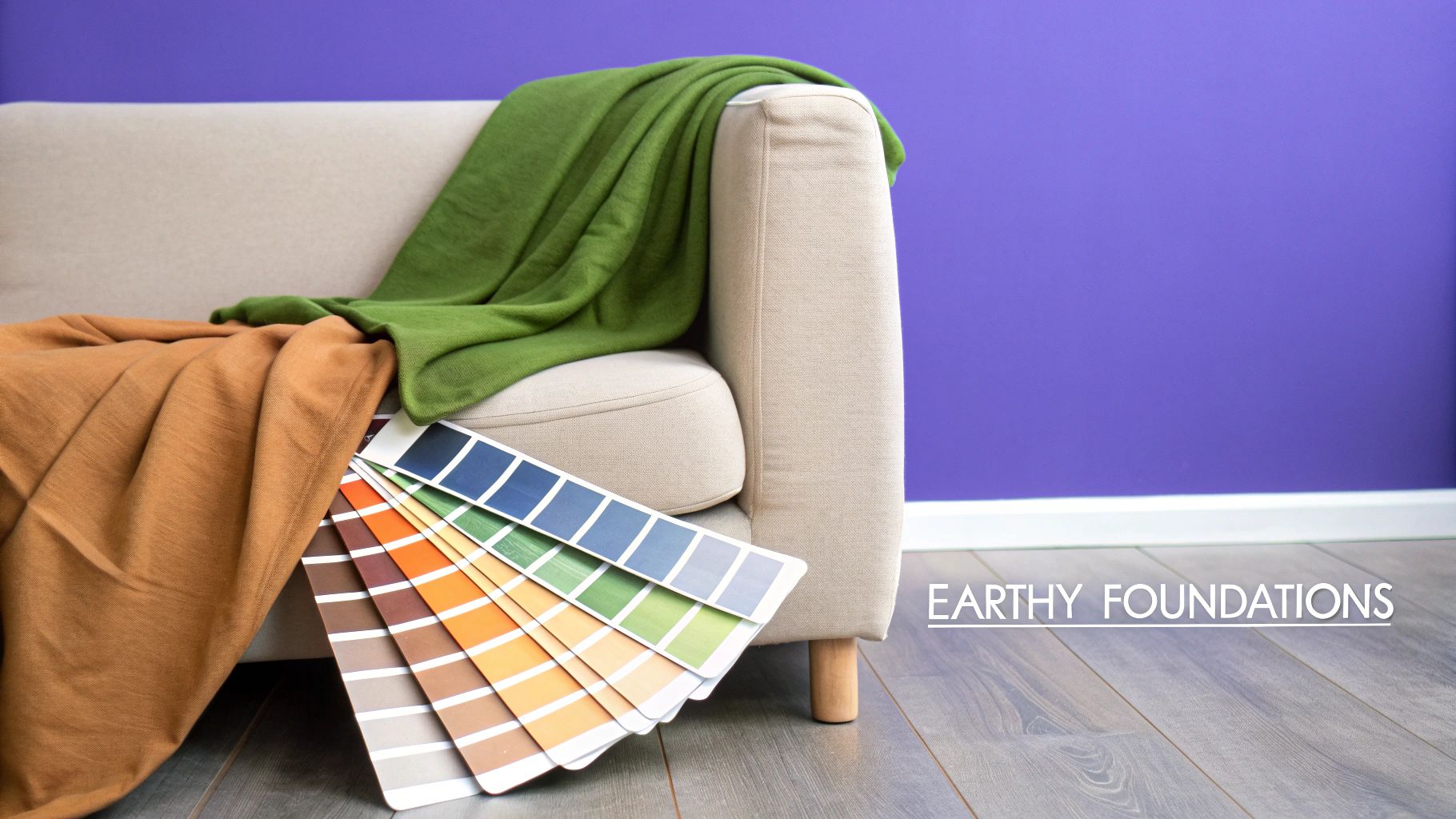
Before you even think about buying a single piece of furniture, you've got to get the foundation right. This is where you define the core palette and materials that will hold the whole design together. An earthy aesthetic isn’t about chasing fleeting trends; it’s about choosing timeless colors and textures that create a space that feels deeply personal and tranquil.
This style works so well because it taps into our basic need for connection and well-being. The goal here isn't to follow a strict rulebook but to cultivate a feeling of peace. You're crafting a personal haven that’s both sophisticated and incredibly comforting—the perfect antidote to a stressful day.
Crafting Your Color Palette
The right colors are the bedrock of any earthy design. You'll want to move away from stark, sterile whites and instead pull shades directly from a natural landscape. Warm neutrals, soft greens, and rich terracotta tones are your go-to options here. They create an instantly calming and grounded vibe.
Design inspirations like Southwestern desert modern or California casual, popular among US consumers, heavily lean on these hues. In 2025, warm earthy tones have become a major force in home decor, a clear shift away from the cool minimalism that dominated for years. Designers are all in on hues like burnt sienna and olive green, which look incredible next to organic textures.
A well-layered palette is what gives a room depth and keeps it from feeling one-dimensional. Try thinking in these layers:
- Walls: Start with a soft, warm beige or a muted greige. These colors act as a versatile backdrop that really makes natural light pop.
- Base Textiles: For bigger items like your sofa or a large area rug, look for shades of cream, stone, or a gentle olive green.
- Accents: This is where you bring in pops of personality. Think terracotta, rust, or deep charcoal through pillows, throws, and artwork.
To help you get started, here are a few palettes that capture that quintessential earthy feel.
Core Earthy Apartment Decor Color Palettes
| Palette Name | Primary Colors (Walls & Large Furniture) | Secondary Colors (Textiles & Rugs) | Accent Colors (Decor & Art) |
|---|---|---|---|
| Desert Warmth | Terracotta, Sandstone, Warm Beige | Cream, Burnt Orange, Dusty Rose | Matte Black, Brass, Deep Teal |
| Forest Floor | Olive Green, Mushroom Gray (Greige), Taupe | Moss Green, Cream, Light Gray | Charcoal, Walnut Wood Tones, Gold |
| Coastal Calm | Off-White, Light Stone, Soft Gray | Muted Blue, Seafoam Green, Jute | Weathered Wood, Rattan, Clay |
Mix and match from these, or use them as a jumping-off point to create your own unique combination. The key is to keep the overall feel cohesive and connected to nature.
The Power of Visualization
Let's be real—choosing a paint or sofa color feels like a massive commitment, especially when you're renting. It's one thing to love a paint swatch, but guessing how it will look across an entire wall can be incredibly stressful.
This is where visualization becomes your secret weapon. Instead of guessing, you can use a tool like aiStager to test out these foundational pieces with complete confidence. It’s the only solution that generates hyper-realistic photos with true dimension rooms and furniture objects. Just upload a photo of your apartment, drop in a link to a product—like that moss green sofa you’ve been eyeing—and you can see exactly how it will look in your space in just a few clicks.
The real game-changer is being able to test different types of the same product. You can instantly compare that moss green sofa to a terracotta version from a different brand. Or see how different wood finishes on a coffee table look against your chosen wall color. This process completely eliminates expensive mistakes and helps you nail the foundation.
Of course, the foundation of earthy decor also leans heavily on natural materials like wood, stone, and ceramics to bring that authentic, grounded feeling home. Seeing how these different textures play together is crucial, especially when you're navigating the quirks of apartment living. When you get this base layer right, every other decision becomes easier and more impactful.
Choosing Furniture with Natural Character
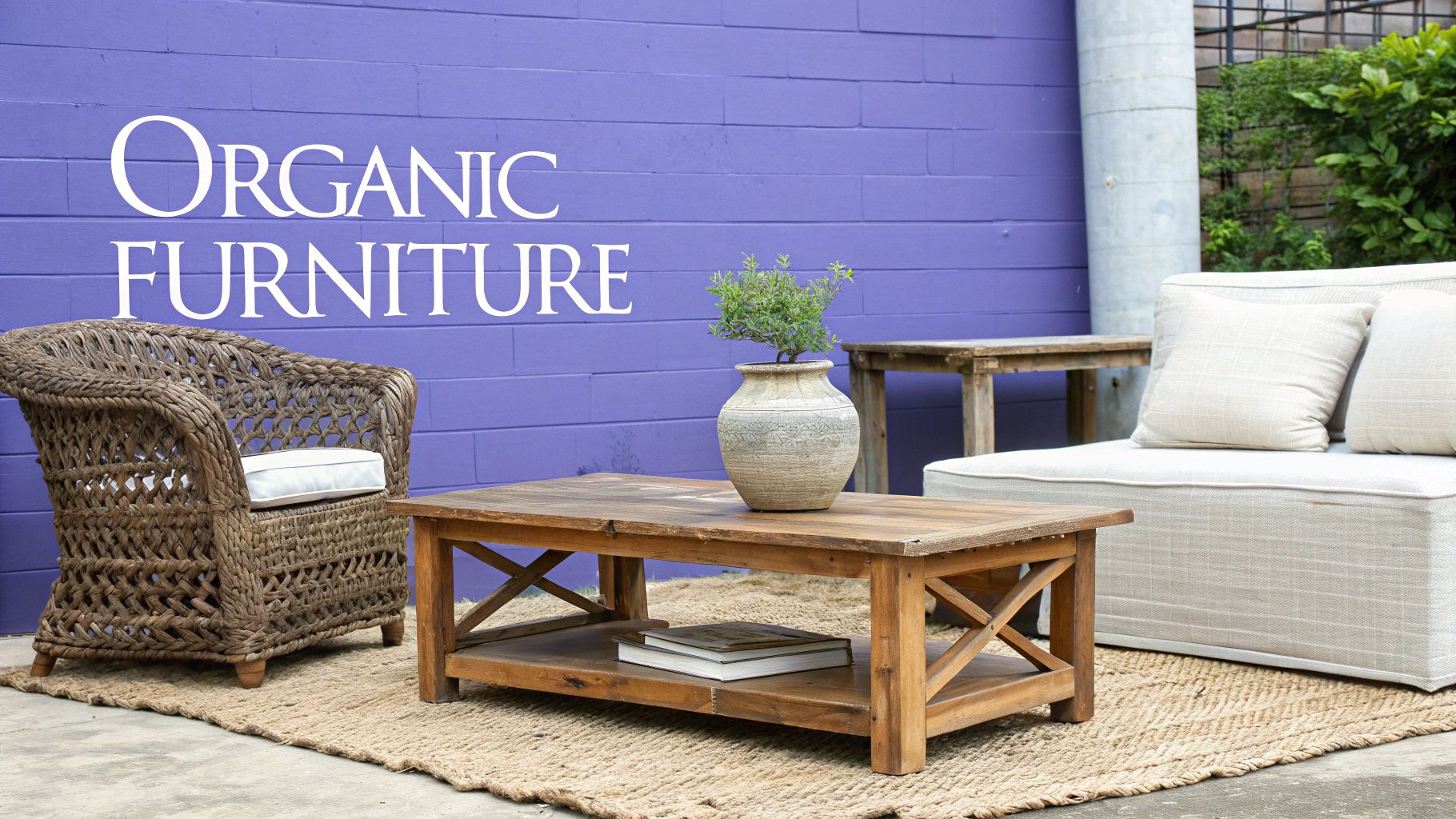
Once you've defined your color palette, it's time for the fun part: picking furniture that anchors the entire look. We're not just filling space here; we're choosing pieces with soul. Think of your furniture as the main characters in your apartment's story—they should feel personal and grounded, not like they just rolled off a generic assembly line.
This is all about what designers call 'slow design.' It’s a philosophy centered on choosing quality items that are built to last and tell a story. That means prioritizing materials straight from nature: raw or reclaimed wood, woven rattan, soft linen, and even bits of stone. These materials bring an immediate sense of warmth and authenticity you just can't fake.
Prioritizing Texture and Organic Forms
With an earthy design, texture is every bit as important as color. A room with the right colors can still feel sterile and flat if everything has the same smooth finish. You need to layer in different textures to create visual interest and make the space feel cozy and lived-in.
Organic shapes are just as critical. Instead of sticking with sharp, rigid lines, look for furniture with softer curves and more natural forms. A kidney-shaped coffee table or a chair with rounded arms can do wonders to break up the boxy feeling that's so common in apartments, making the whole room feel more fluid and relaxed.
- Wood: Look for pieces where you can see the grain, admire a live edge, or feel a reclaimed finish. A solid oak media console, for example, adds a sense of warmth and permanence.
- Woven Materials: Rattan, jute, and wicker are fantastic for bringing in a light, airy texture that works beautifully in smaller spaces. Think about a woven accent chair or a couple of jute poufs for a subtle bohemian touch.
- Stone: Don't forget about stone. When you’re looking for pieces with real character, consider something truly unique like polished petrified wood slabs. They can work as stunning tabletops or even decorative wall art, anchoring your space with ancient, organic beauty.
- Upholstery: Stick to natural fabrics like linen, cotton, or a textured boucle. A simple linen-upholstered sofa or a cozy boucle armchair can easily become a tactile centerpiece.
Test Before You Invest with AI Visualization
Let's be real—choosing a big piece of furniture like a sofa or dining table is a major decision. It's a significant financial investment and a real commitment to a certain style. What if that gorgeous reclaimed wood coffee table you've been eyeing feels way too bulky once you get it into your living room?
This is where visualization tools are a game-changer. Instead of just guessing, aiStager lets you see exactly how a piece will look and fit in your actual apartment. Because it's the only solution that generates hyper-realistic photos with true dimension rooms and furniture objects, you can sidestep those expensive mistakes.
The real power is in the comparison. In just a few clicks, you can test different types of the same product. Just upload a photo of your room, paste a link to a sofa you like, and see it in place. Then, paste a link to a different sofa brand and compare them side-by-side. You can even test different colors and finishes—a light oak versus a dark walnut—to see what truly complements your earthy decor.
This ability to experiment risk-free takes all the anxiety out of the process. It frees you up to make bold, confident decisions that will bring your dream space to life.
And this desire for furniture with character isn't just a niche interest. The global arts and crafts market is projected to grow from USD 45.3 billion in 2024 to USD 74.3 billion by 2033, which shows just how much we're all craving handmade, sustainable pieces. This trend is deeply tied to earthy aesthetics, favoring the very woven textures and curved, organic furniture that feels both modern and natural. By choosing furniture with genuine character, you're not just decorating—you're curating a space that feels timeless and connected to the world around you.
Using Light and Texture to Create a Cozy Vibe
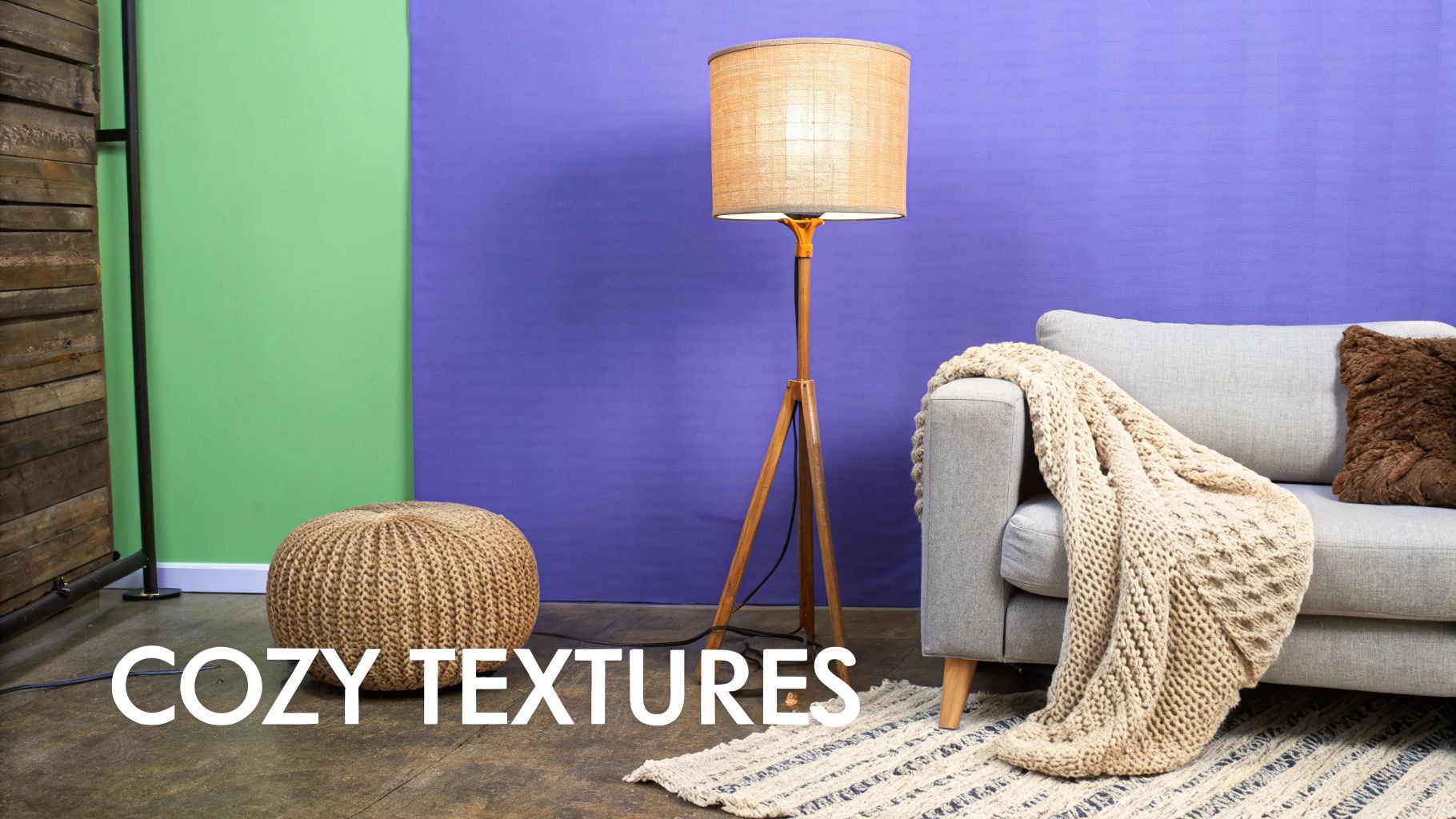
An earthy apartment should feel as good as it looks. Once you've got your core palette and furniture in place, the real magic happens when you start layering in light and texture. These two elements are what turn a nicely decorated room into a true haven—a space that feels warm, inviting, and uniquely yours.
This is where you move beyond just the visuals and start thinking about the experience. A beautiful neutral color scheme can fall flat without different textures to add depth and comfort. In the same way, a single harsh overhead light can completely kill the mood. The goal is to create an atmosphere that genuinely encourages you to slow down and relax.
Mastering the Art of Layered Lighting
Great lighting is so much more than just flipping a switch. It sets the tone, highlights your favorite pieces, and can make a small apartment feel surprisingly spacious. Forget relying on that one builder-grade ceiling light; the secret is a layered approach.
I always think about lighting in three distinct layers:
- Ambient Lighting: This is your room’s general glow. Think dimmable recessed lights or a stylish central fixture, like a woven rattan pendant, to cast a soft, warm light throughout the space.
- Task Lighting: This is targeted light for specific activities. A sleek floor lamp with a linen shade next to your reading chair is a perfect example, as is under-cabinet lighting for chopping veggies in the kitchen.
- Accent Lighting: This is the fun stuff. It’s used to draw the eye to something you love, like a small spotlight on a piece of art or a warm little lamp on a side table to highlight a collection of ceramic vases.
The right lighting can completely change the energy of a room. Don't be afraid to mix and match styles. A modern, minimalist floor lamp can look stunning next to a rustic wooden side table, creating a dynamic and interesting visual story.
This focus on creating cozy, layered environments isn’t just a designer trick; it's what people actually want. A recent study on 2025 rental decor trends found that 79% of renters are embracing soft, layered lighting to create their own personal retreats. You can see the details in the full Rently study on top 2025 rental decor trends. It confirms what we already know: creating a warm, inviting atmosphere is a top priority.
Weaving in Rich Textures
Texture is the secret ingredient that brings earthy apartment decor to life. It’s what adds visual weight and tactile interest, keeping your neutral palette from feeling one-note. The key is to mix a variety of materials that feel good to the touch and add that organic warmth you’re after.
Start by thinking about all the different surfaces in your room—from the floor to the furniture to the small decorative objects. You're aiming for a healthy mix of soft, rough, smooth, and woven finishes.
A Tactile Toolkit for Your Apartment
Here are some of my go-to textures to bring an earthy design to life:
- Chunky Knits: A thick, oversized knit throw blanket draped over the sofa is the ultimate symbol of coziness. It's an instant invitation to curl up.
- Jute and Sisal: Natural fiber rugs add a wonderfully rustic and durable texture underfoot. They’re brilliant for grounding a room.
- Linen and Cotton: Use these natural fabrics for curtains, pillow covers, and bedding. Their soft, breathable quality adds a sense of effortless comfort.
- Velvet and Boucle: For a touch of understated luxury, toss in a velvet cushion or a boucle accent chair. These materials provide a soft, rich texture that contrasts beautifully with rougher elements.
- Ceramics and Stone: Don't forget hard textures! A collection of matte ceramic vases or a stone coaster set adds a necessary grounding, earthy element to shelves and coffee tables.
Trying to picture how these different textures will look together can be tough. This is where a tool like aiStager can be a game-changer. It’s the only solution that generates hyper-realistic photos with true dimension rooms and furniture objects, so you can actually see how different materials interact. Just upload a photo of your room, and in just a few clicks, users can place a new product there by providing a link.
For instance, you could virtually test a chunky knit Crate & Barrel throw on your leather sofa versus a linen one. Or you could compare a jute rug against a wool one to see which provides the right foundation for your earthy vibe, letting you experiment until you find the perfect mix.
Bringing the Outdoors Inside Your Apartment
An earthy apartment isn't just about colors and materials; it’s about creating a real connection to the outdoors. This is where we breathe life into the space, moving beyond the static elements to add living, growing things. The whole idea behind this is biophilic design, which is just a fancy way of saying we feel better when we're connected to nature.
Adding plants and other organic accessories is that final, critical layer that makes the entire look feel genuine. It’s how you create little moments of natural beauty that soften the hard edges of apartment living and make your home feel like a true sanctuary.
Choosing Your Green Companions
Don't worry, you don't need a green thumb to pull this off. The secret is picking low-maintenance houseplants that are happy with typical apartment life—which usually means less-than-perfect light and the occasional missed watering.
These plants are practically foolproof and a great place to start:
- Snake Plants (Sansevieria): These are famous for being almost indestructible. They handle low light, don't need much water, and are amazing air purifiers.
- Pothos (Epipremnum aureum): I love pothos for its gorgeous, trailing vines. You can pop one on a high shelf and let it hang down or put it in a hanging planter to create a little drama.
- ZZ Plants (Zamioculcas zamiifolia): If you have a dark corner you're not sure what to do with, the ZZ plant is your answer. It's incredibly drought-tolerant and couldn't care less about low light.
Styling with Natural Accessories
Bringing nature inside isn't just about live plants. A well-chosen collection of other natural objects adds so much texture and interest, reinforcing that connection to the world outside your window. Think beyond just greenery and start incorporating things that feel like you could have found them on a walk.
Look for pieces with an artisanal, handcrafted feel. Little imperfections are a good thing! They give an item character and a story, which is something you'll never get from mass-produced decor.
The goal is to create small, curated vignettes on shelves, coffee tables, and windowsills. Group plants of different heights in terracotta pots, place a few smooth stones on a stack of books, or fill a rustic wooden bowl with dried botanicals. These simple touches make a space feel personal and lived-in.
A Visualization Workflow for Perfect Placement
Figuring out where to put everything can be surprisingly tough. Will that tall fiddle leaf fig completely take over your tiny living room? Does that beautiful ceramic planter you saw online actually clash with your sofa? Guessing games often lead to clutter and wasted money.
This is where a little visualization goes a long way. With a tool like aiStager, you can test out all these finishing touches with zero risk. It’s the only solution that generates hyper-realistic photos with true dimension rooms and furniture objects, so you can see exactly how something will look and fit.
For instance, you could snap a photo of your room, grab a link to a specific snake plant in a planter from The Sill, and drop it into your virtual space. In just a few clicks, you’ll know instantly if it’s the right scale for that empty corner. You can even experiment with different planter colors and finishes to make sure they nail your aesthetic. This workflow takes all the guesswork out of the process, so you can confidently pick the final pieces that complete your earthy apartment.
While this style has its own look, you can find more inspiration for mixing textures and patterns in our guide to bohemian decor ideas.
Visualize Your Earthy Decor with AI
Okay, this is where the fun really begins. All that planning and pinning comes together, but without the risk of making a purchase you’ll regret. Mood boards are fantastic for capturing a vibe, but they won't tell you if that dream sofa will swallow your living room whole. Before you spend a dime, let's use some smart tools to make sure everything works perfectly.
This is all about moving from abstract ideas to a concrete picture. You can finally answer those nagging questions: Does that gorgeous terracotta sofa actually work with my existing rug? Is that dark wood media console going to feel too heavy for my tiny space? Getting these answers now is how you avoid costly mistakes and move forward feeling completely confident in your choices.
The image above nails this idea perfectly. It shows how you can take a simple, empty room and instantly see it as a complete, cohesive space. This is more than just a collage of pictures; it's a realistic preview of how individual pieces will truly live together.
From Guesswork to Hyper-Realistic Previews
The real trick is using a tool that does more than just create a basic mockup. You need something that gets the scale and lighting right, giving you an honest-to-goodness picture of the final look. This is where a platform like aiStager becomes your secret weapon.
What sets it apart is that it’s the only solution that generates hyper-realistic photos with true dimension rooms and furniture objects. You're not just getting a rough idea; you're seeing a true-to-scale preview of how a specific item will look in your actual room. The whole process is incredibly simple.
- Upload a Photo: Just snap a picture of the room you’re working on.
- Paste a Product Link: Find a piece you love online—say, that beautiful Anders Media Console from Pottery Barn—and just copy the URL.
- Visualize Instantly: In just a few clicks, users can place a new product in their room. aiStager drops the item right into your room, rendered perfectly to scale with realistic lighting and shadows.
This workflow takes all the anxiety out of pulling the trigger on big-ticket items. You’ll know for sure if a piece is the right fit, both in size and style, before you even think about adding it to your cart.
The Power of Comparing Variations in Clicks
One of the toughest parts of decorating is deciding between all the options. Should the sofa be a warm linen or a rich velvet? Does a light or dark wood finish work better with my floors? In the past, this meant ordering dozens of fabric swatches and just hoping you made the right call.
AI visualization completely changes the game. With a tool like aiStager, you can test drive countless variations in minutes.
Let's say you're torn between two sofas. You love the shape of the Sven Sofa from Article but aren't sure about the color. You can instantly see the terracotta velvet version in your living room. A few clicks later, you can compare it side-by-side with a neutral linen option from a completely different brand.
This isn't just about swapping colors. You can compare different materials, finishes, and even different sofa brands to see what truly captures your earthy aesthetic. This ability to experiment freely is a game-changer for making confident, informed decisions.
Seeing this direct comparison really shows the limitations of older methods. If you're curious to learn more, we've put together a deep dive into the best AI interior design tools on the market today.
Traditional Staging vs AI Visualization with aiStager
Thinking about how you’ll plan your space? Here’s a quick look at how the old way of doing things stacks up against using a modern tool like aiStager. The difference in speed and accuracy is pretty clear.
| Feature | Traditional Methods (Mood Boards, Photoshop) | aiStager Platform |
|---|---|---|
| Realism & Scale | Inaccurate scale; difficult to replicate true lighting. | Hyper-realistic and dimension-true, matching the item's actual size. |
| Speed & Effort | Time-consuming and requires design software skills. | Generates visuals in just a few clicks, directly from a photo and URL. |
| Product Testing | Limited to manually cutting and pasting images. | Instantly test products from any brand or marketplace with a simple link. |
| Comparing Options | A slow, manual process for each new item or finish. | Compare different colors, finishes, and brands side-by-side in seconds. |
| Cost | Can be costly if hiring a designer or buying software. | An affordable, accessible solution for anyone to use. |
By bringing this kind of tech into your design process, you're not just decorating; you’re designing with precision. You can build your ideal earthy apartment knowing that every single piece will look exactly as you envisioned it, creating a home that feels both authentic and beautifully put together.
Answering Your Questions About Earthy Apartment Decor
Diving into a new design style always brings up a few questions. From figuring out how to handle a tiny living room to making sure you're not just chasing a fleeting trend, let's tackle some of the common things that come up when creating an earthy, nature-inspired home.
Can I Mix Earthy Decor With Other Styles?
Absolutely. In fact, that's where the magic really happens. Earthy decor is one of the most versatile styles out there because its foundation of natural materials and neutral tones plays so well with others. This flexibility lets you create a space that feels layered, personal, and anything but generic.
A great example is the "organic modern" look, which is incredibly popular right now. It's all about pairing the warmth and texture of earthy design with the clean lines and simple forms of modernism. Picture a sleek, low-profile sofa, but instead of cold leather, it’s covered in a cozy, nubby linen.
Or, you could go for an "earthy industrial" feel. This is where you bring in raw wood tables and tons of houseplants to soften the hard edges of black metal accents, exposed brick, or concrete floors. The key to making any mix work is finding a common thread—usually a consistent color palette—to tie the different elements together.
How Do I Make Earthy Decor Work in a Small Apartment?
This is a common concern, but an earthy vibe can make a small space feel like a cozy sanctuary, not a cave. It’s all about smart choices.
To keep things from feeling too dark or heavy, stick to the lighter end of the earthy color spectrum. Think creamy off-whites, soft sage greens, and warm beiges for your walls and big furniture items. This creates a bright, airy backdrop.
A few other tricks I've learned for smaller spaces:
- Let the light in. Swap heavy drapes for sheer linen curtains. They’ll diffuse the light beautifully. Also, a well-placed mirror is your best friend for bouncing that natural light around the room.
- Choose furniture that breathes. Look for pieces with visible legs, like a mid-century modern armchair or a slim console table. Lifting furniture off the floor creates an illusion of more space.
- Be strategic with texture. You still want those lovely natural textures, but don't overdo it. A simple jute rug, a few ceramic planters, and a couple of soft cotton throws add all the depth you need without cluttering the space.
This is where visualizing your layout becomes so important. You need to see how the scale of each piece works before you commit.
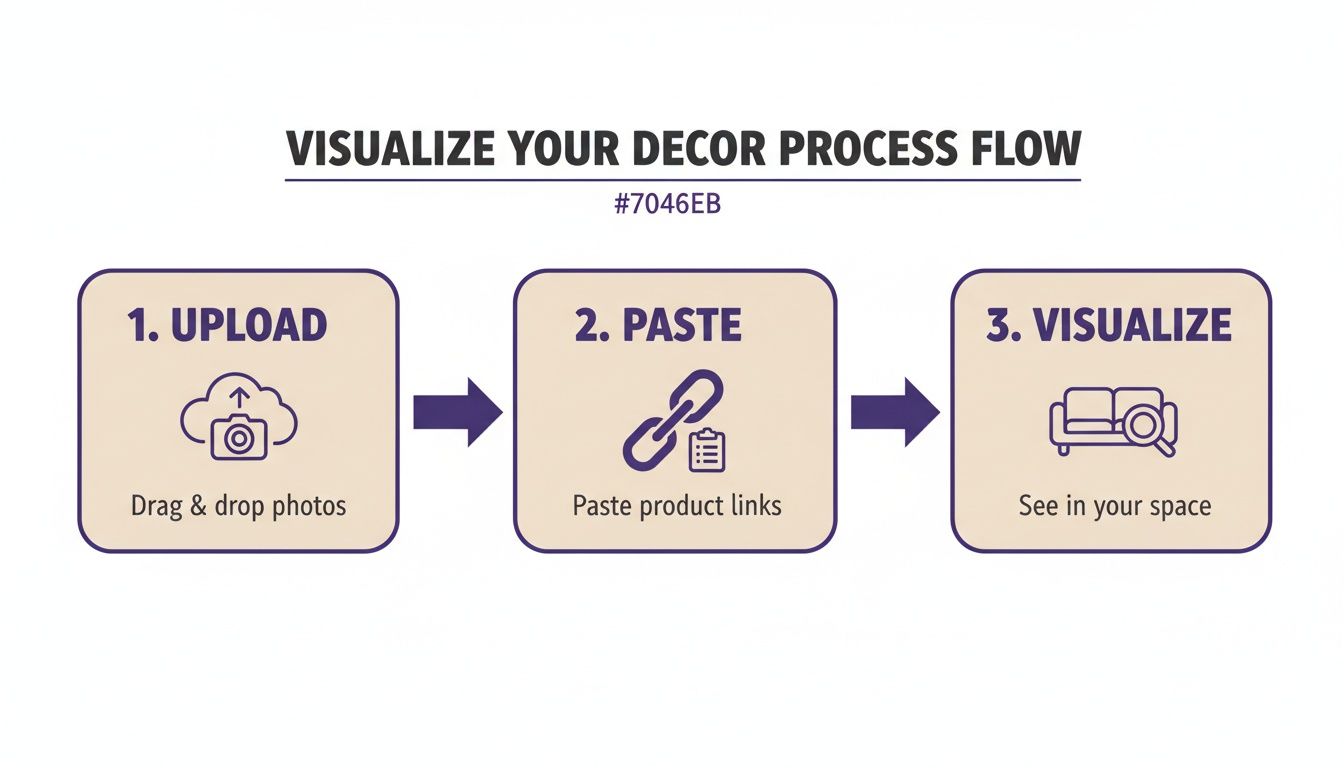
A simple workflow like this helps you test different items to make sure your layout feels open and balanced before spending any money.
What Are Some Budget-Friendly Ways to Create an Earthy Vibe?
You don’t need a huge budget to bring this look to life. It's more about being creative and focusing on changes that make a big impact for a small cost.
Paint is always my first suggestion. A gallon of warm beige or a muted terracotta can completely change the mood of a room for less than a dinner out. Next, hit up thrift stores and flea markets. I find the best unique wooden bowls, old ceramic vases, and stone bookends in places like that—they have so much more character than brand-new items.
And of course, plants are your go-to. You don't need giant fiddle-leaf figs right away. Start with a few small, affordable plants from a local nursery and enjoy watching them grow with you.
Expert Tip: Don't forget the power of found objects. An interesting branch you find on a walk can look like a piece of sculpture in a simple vase. A small collection of smooth river stones on a bookshelf adds an organic touch for free. Earthy style is about appreciating nature's beauty, after all.
Is This Just a Passing Trend?
While "earthy decor" is definitely having a moment, the core principles behind it are timeless. The style is built on our deep, human connection to the natural world—a concept called biophilic design. Research has shown that surrounding ourselves with natural elements genuinely improves our well-being.
Because you’re focusing on classic materials, quality craftsmanship, and a soothing color palette, you're creating a foundation that will easily outlast any trend cycle. A solid wood dining table or a well-made linen armchair will look great for decades. You can always swap out pillows or accessories to keep things fresh, but the soul of your design will remain constant.
Ready to see how that perfect earthy sofa will look in your apartment without any of the guesswork? With aiStager, you can preview furniture and decor in your actual room before you buy. It’s the only tool that creates photorealistic images with true-to-scale items, so you can test out different products, colors, and layouts in just a few clicks. Start making design decisions with total confidence today at https://www.ai-stager.com/en.