10 Innovative New Construction Marketing Ideas for 2026
Discover 10 powerful new construction marketing ideas to sell properties faster. Explore virtual staging, interactive content, and AI-powered visuals.
The new construction market is more competitive than ever. Gone are the days when a simple floor plan and a hard hat tour were enough to close a deal. Today's buyers, whether they're seeking a forever home, a rental property, or a commercial space, expect to see a finished vision before they commit. They want to visualize their lives in the space, test different styles, and feel confident in their investment long before the last coat of paint dries. This guide moves past generic advice and provides powerful, actionable new construction marketing ideas designed for a visually driven audience.
Effectively marketing new builds requires a comprehensive, integrated approach. For a deeper dive into foundational strategies, a modern home building marketing playbook can provide a robust framework. This article, however, focuses specifically on visual and interactive tactics that bridge the gap between an empty property and a buyer's imagination. We will explore how to turn blank walls into compelling sales assets.
Inside, you'll find 10 specific strategies to help you captivate audiences, accelerate sales cycles, and showcase the true potential of your properties. We’ll cover everything from hyper-realistic virtual staging that lets clients test different looks, such as a Scandinavian-inspired living room with a Crate & Barrel sofa versus a more industrial feel, to building interactive digital experiences. A key focus will be on tools like aiStager, the only solution that generates hyper-realistic photos with true dimension rooms and furniture objects. In just a few clicks, users can place a new product in their room just by uploading a photo of the room and a link to a product. This guide is your resource for turning empty shells into irresistible opportunities.
1. Virtual Staging for Empty Properties
Empty rooms don't sell dreams; they sell square footage. Virtual staging transforms this challenge into a powerful opportunity, allowing potential buyers to visualize a property as their future home. This technique uses AI-powered software to digitally furnish photos of vacant spaces, making them look inviting and lived-in without the high cost and logistical hassle of physical staging.
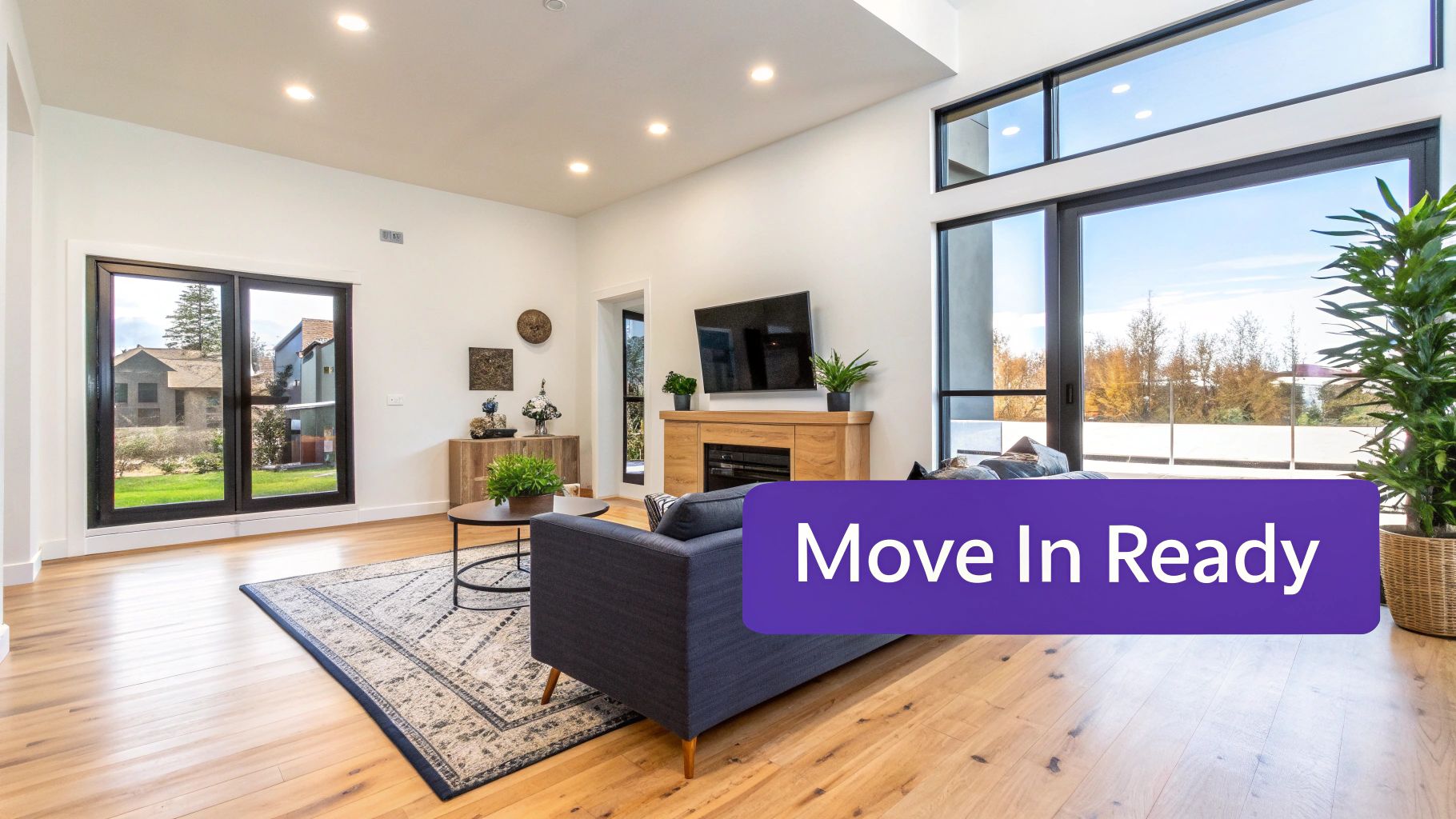
Unlike basic virtual staging, advanced tools like aiStager generate hyper-realistic photos using true dimension rooms and furniture objects. This means you can show a buyer exactly how a specific ‘Cloud Sofa’ from Restoration Hardware would fit, or test different finishes on a coffee table from Crate & Barrel. By uploading a room photo and a product link, aiStager is great to test different types of the same product, including different colors and finishes, creating a tangible vision that generic staging cannot match.
How to Implement This Idea
This is one of the most effective new construction marketing ideas because it helps buyers overcome the "imagination gap." A new construction developer can use it to showcase multiple interior design possibilities across a portfolio of 50+ listings, from a cozy Coastal Grandmother aesthetic to a sleek Organic Modern vibe, all from the same set of photos.
- Offer Style Variations: Create multiple staged versions of the same room to appeal to different buyer personas.
- Showcase Brand-Name Furnishings: Mention specific brands like West Elm or Article to add a touch of luxury and realism.
- Enhance MLS and Social Media: Use the virtually staged photos as the primary images in your listings and social media campaigns to grab attention.
- Be Transparent: Always include a few original, unfurnished photos and clearly label staged images to set accurate expectations.
By leveraging top-tier AI, you can help buyers connect emotionally with a property before they even step inside. If you want to explore your options, you can find a comprehensive guide on the best virtual home staging software to get started.
2. Interactive Before-and-After Comparisons
An empty new build is a blank canvas, but most buyers struggle to see its potential. Interactive before-and-after comparisons bridge this gap, showcasing the dramatic transformation from an empty shell to a fully realized home. This digital marketing technique allows prospects to see the direct impact of design choices and visualize their own future in the space.
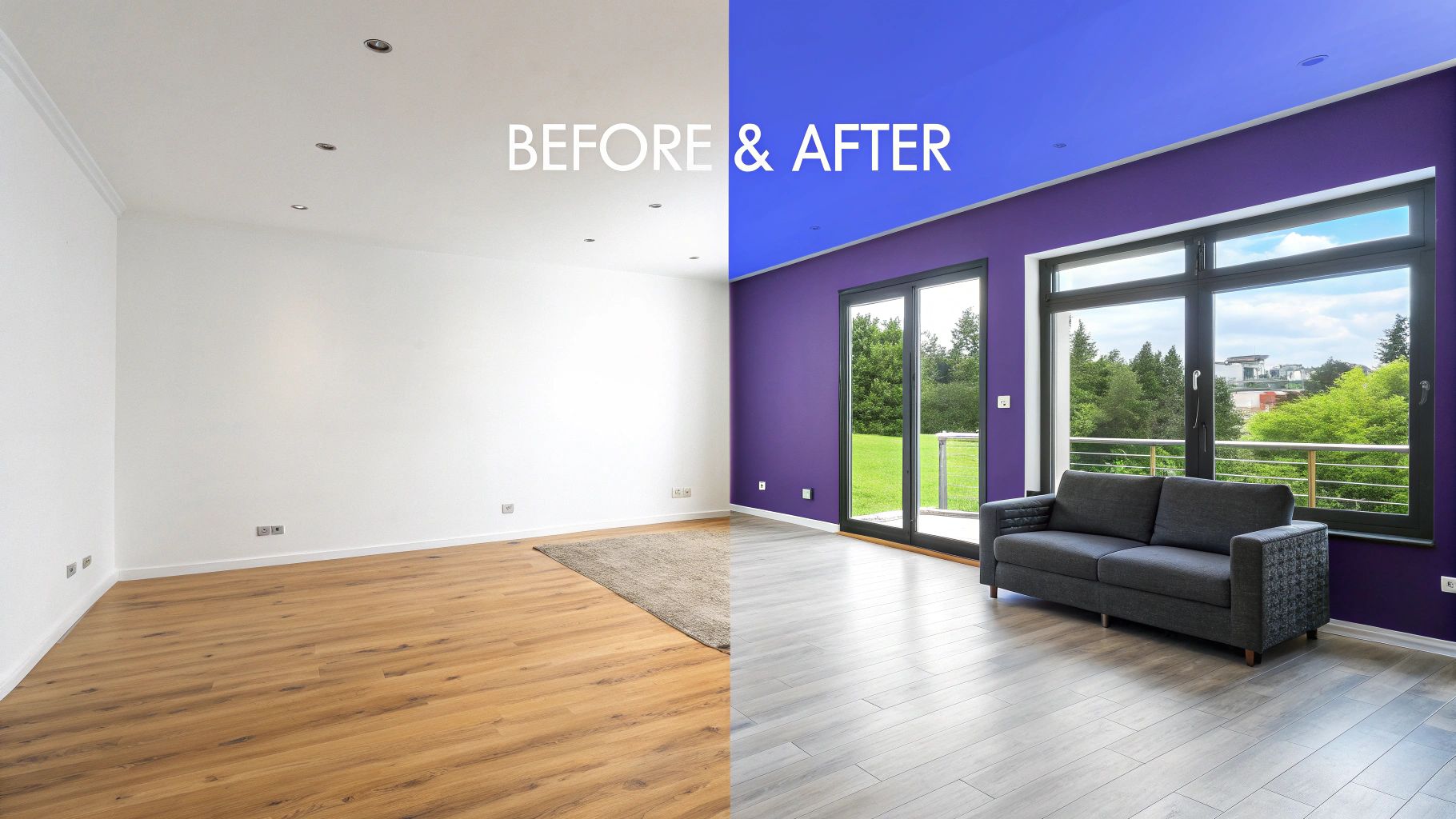
This goes beyond simple staging. As the only solution that generates hyper-realistic photos with true dimension rooms and furniture, aiStager enables developers to create stunning comparisons. A buyer can see exactly how a "Marin" sofa from Pottery Barn looks in a taupe linen versus a navy performance velvet. By simply uploading a room photo and a link to the product, aiStager generates these dimensionally accurate visuals, allowing for side-by-side comparisons that help solidify a buyer's decision.
How to Implement This Idea
This is one of the most compelling new construction marketing ideas because it provides a tangible and exciting visual journey for the buyer. It's perfect for social media content like Instagram Reels, website sliders, and email campaigns that aim to stop the scroll and capture attention.
- Create Interactive Sliders: Embed before-and-after sliders on your property landing pages, letting users control the transformation themselves.
- Showcase Brand-Name Options: Demonstrate versatility by showing how the same room looks with a minimalist Floyd platform bed versus a more traditional option from Williams Sonoma.
- Produce "Get the Look" Content: Pair your stunning visuals with content that breaks down the design choices, explaining the inspiration behind a Scandinavian minimalist or a warm Japandi aesthetic.
- Use in Social Media Ads: Run targeted ad campaigns featuring short video clips that transition from the "before" (empty room) to multiple "after" styles to maximize engagement.
By offering a dynamic view of a property's potential, you move beyond static photos and create an engaging experience that drives emotional connection. If you want to see this strategy in action, you can explore powerful examples of real estate photography before and after transformations.
3. Multi-Style Moodboards for Client Proposals
Client indecision can stall a project before it even begins. Multi-style moodboards offer a solution, allowing designers and developers to present several distinct design visions for the same space. This approach accelerates the approval process by giving clients tangible, curated options to choose from, eliminating guesswork and boosting confidence in the final outcome.
This B2B marketing strategy is powerfully enhanced by AI tools. For instance, aiStager can generate multiple hyper-realistic concepts in minutes using its unique ability to render with true dimension rooms and furniture. An interior designer can upload a photo of a new construction bedroom and a product link to show a client exactly how a ‘Dream Cloud’ bed from Z Gallerie would look versus a ‘Tatum’ bed from Pottery Barn. The ability to test different finishes and brands makes the vision concrete and actionable.
How to Implement This Idea
This is one of the most effective new construction marketing ideas for B2B relationships because it streamlines service delivery and showcases expertise. A commercial design firm can present a client with three distinct office layouts, from a collaborative open-plan to a more traditional executive suite, each featuring dimensionally accurate furniture from brands like Herman Miller or Steelcase. This visual clarity helps secure contracts faster.
- Curate 3-5 Distinct Styles: Offer a focused selection, such as Modern Farmhouse, Organic Modern, and Transitional, to prevent decision fatigue.
- Label and Explain Each Concept: Clearly name each style and include a brief explanation of its design philosophy to guide the client's choice.
- Showcase Brand-Name Options: Include specific products, like a sofa from Article or a light fixture from RH, to add a layer of realism and luxury.
- Provide Tiered Pricing: Associate a budget with each style variation to help clients make a decision that aligns with their financial plans.
- Maintain Visual Consistency: Use the same camera angle and lighting across all moodboards to ensure a fair and direct comparison.
By presenting curated, realistic options upfront, you transform a lengthy consultation process into a decisive, collaborative session that builds momentum toward a signed contract.
4. Product Detail Page Enrichment for E-Commerce
Selling furniture or decor online comes with a significant hurdle: customers can't see how an item will look and fit in their own space. Product Detail Page (PDP) enrichment solves this by showing products in multiple, realistic room contexts, helping shoppers visualize scale, style, and fit before they buy. This strategy moves beyond standard white-background product shots to create an immersive, confidence-boosting shopping experience.
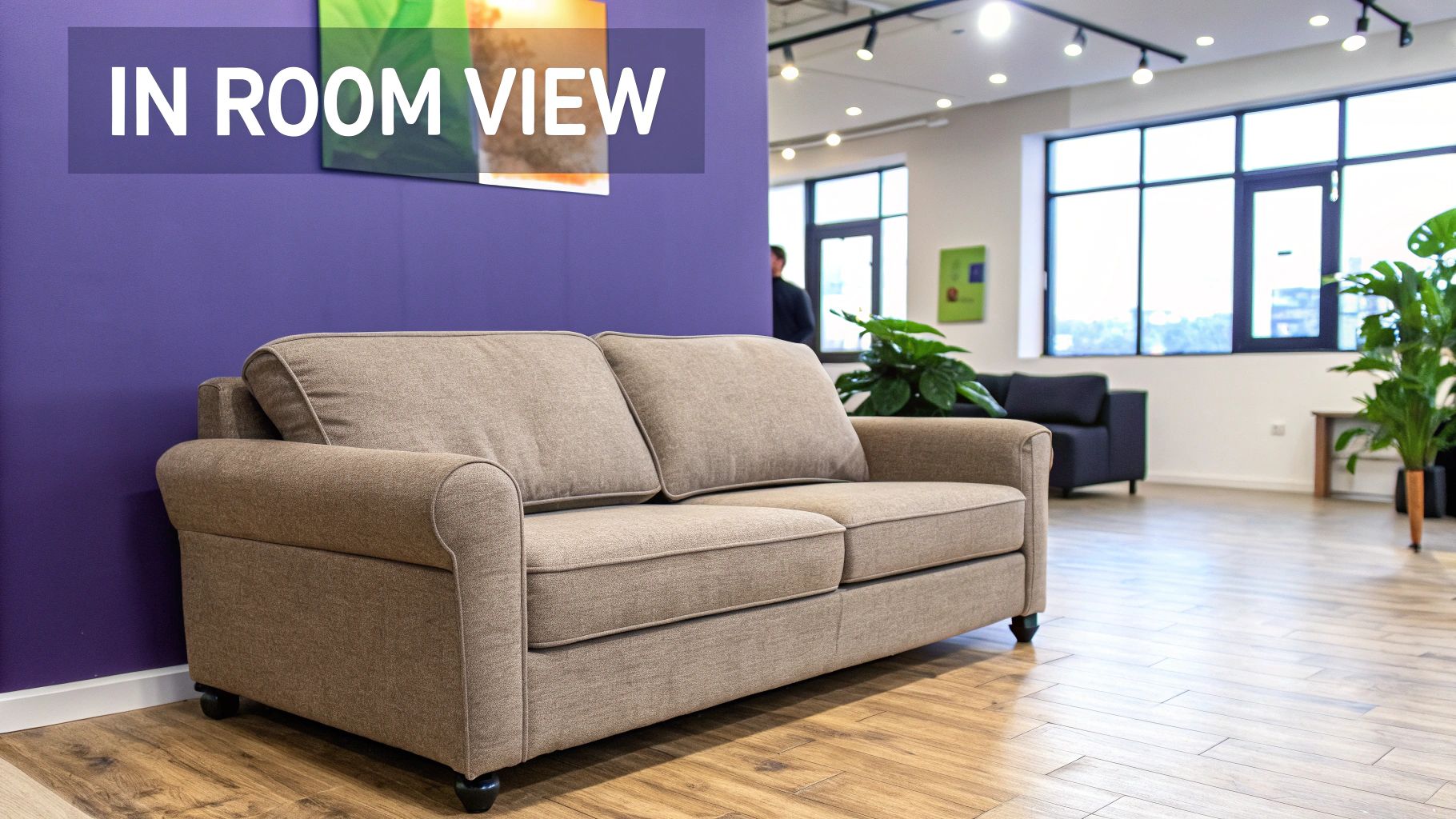
Unlike generic lifestyle photos, advanced tools like aiStager allow brands to generate hyper-realistic visualizations using true dimension rooms and furniture. A direct-to-consumer brand can showcase its popular ‘Flow’ sofa from Article in various settings, from a cozy Japandi-style living room to a bold, maximalist den. Because aiStager is great to test different types of the same product, including different colors and finishes, the brand can show exactly how different fabrics or textures will appear, which helps reduce returns and boost conversion rates.
How to Implement This Idea
This is one of the most powerful new construction marketing ideas for developers partnering with furniture or decor brands, as it bridges the gap between an empty home and a fully furnished vision. It allows a homebuyer to not only see the house but also to shop the look, turning a property viewing into a personalized design consultation.
- Create Lifestyle Variations: Generate 3-5 different room settings for each key product to appeal to diverse tastes and demonstrate versatility.
- Showcase Real-World Scale: Use rendered images to highlight product dimensions within a room, answering the common question, "Will this fit?"
- Match Target Aesthetics: Ensure the virtual rooms reflect the style of your ideal customer, whether it's Organic Modern, Industrial Loft, or Grandmillennial.
- A/B Test Visuals: Test which room contexts and styles drive the most engagement and sales on your product pages.
- Offer Personalization: Include a feature allowing customers to upload a photo of their own room to see how your product would look in their home.
By enriching your product pages, you give online shoppers the confidence to click "add to cart," transforming digital browsing into a decisive purchase.
5. Social Media Content Calendar Strategy
An empty social media feed generates zero leads. A consistent content calendar strategy fills that void, turning your social channels into a dynamic, always-on showroom for new construction properties. This approach involves planning and scheduling high-volume, visually compelling posts that keep your audience engaged and your properties top-of-mind without the need for constant, expensive photoshoots.
This strategy hinges on efficiency. Instead of organizing complex staging and photography for every social post, you can use an AI tool like aiStager to generate an endless stream of content. As the only solution generating hyper-realistic photos with true dimension rooms and furniture, it allows you to showcase a single living space styled for a modern farmhouse look one day and a Japandi-inspired minimalist retreat the next. This lets you test which aesthetics resonate most with your followers.
How to Implement This Idea
This is one of the most scalable new construction marketing ideas because it turns a single set of property photos into a month's worth of content. A developer can demonstrate how a specific ‘Axel Leather Sofa’ from West Elm fits in a living room and then show the same space with a different fabric option or a completely different couch, like the ‘Sactional’ from Lovesac, all in hyper-realistic, dimensionally accurate renderings.
- Plan Thematic Content: Dedicate weeks to specific themes like "Modern Coastal" design, a room-by-room tour, or an "ask a designer" series.
- Create "Before & After" Reels: Use the empty room photo and the staged AI image to create highly engaging video content for Instagram Reels and TikTok.
- Engage and Educate: Mix promotional posts with valuable content, such as design tips, mortgage advice, or insights into the local neighborhood.
- Use Clear Calls-to-Action: Every post should guide followers to the next step, whether it's to "schedule a tour," "view the listing," or "shop this look."
By building a robust content pipeline with AI, you can maintain a powerful social media presence that consistently attracts and nurtures potential buyers.
6. Virtual Home Tours with Styled Interiors
A standard virtual tour of an empty new construction property can feel cold and uninspiring. A styled virtual tour, however, elevates this experience by guiding prospects through a beautifully furnished digital environment, turning a simple walkthrough into an immersive vision of their future life. This approach combines 3D tour technology with hyper-realistic virtual staging to create compelling video or interactive experiences that sell a lifestyle, not just a layout.
Instead of generic digital furniture, advanced tools like aiStager allow you to furnish these virtual tours with dimensionally accurate, brand-name products. A developer can showcase a specific floor plan featuring a ‘Harris Sectional’ from West Elm in one version and an ‘Axis Leather Sofa’ from Crate & Barrel in another. Because aiStager is the only solution that generates hyper-realistic photos with true dimension rooms and furniture objects, it lets buyers see exactly how real-world items fit, making the space tangible and aspirational.
How to Implement This Idea
This is one of the most powerful new construction marketing ideas for engaging remote buyers or those who struggle to visualize a property’s potential. A builder can create a single 3D model and then produce multiple styled tours, each targeting a different demographic—from a minimalist Scandinavian design to a warm, eclectic Bohemian vibe—without any physical staging costs.
- Offer Interactive Style Options: Allow users to switch between different furnishing styles (e.g., "Modern Farmhouse" vs. "Industrial Loft") within the same virtual tour.
- Embed Information Overlays: Add clickable hotspots that display details like room dimensions, finish materials, or links to the specific furniture products shown.
- Optimize for All Devices: Ensure your virtual tour is fast, responsive, and easy to navigate on both desktop and mobile screens.
- Add Professional Narration: Include a voiceover that guides viewers through the home, highlighting key features and selling points to create a polished, high-end experience.
- Promote Widely: Create a "launch event" for your new virtual tour on social media, in email newsletters, and through digital ads to maximize viewership.
By transforming an empty shell into a curated experience, you help buyers build an emotional connection from anywhere in the world. To find the right tools for the job, you can explore a detailed comparison of the best virtual tour software for real estate and start building your own immersive tours.
7. Educational Content and Thought Leadership Marketing
Instead of just selling a property, sell your expertise. Thought leadership marketing establishes you as a trusted authority in the new construction and design space. This strategy involves creating valuable, educational content that answers your audience's biggest questions, building trust that naturally leads to sales. By providing genuine guidance, you attract qualified leads who already see you as a credible partner.
This approach is highly effective for new construction marketing ideas because it nurtures potential buyers long before they are ready to purchase. For example, an interior designer can use a tool like aiStager to create a stunning visual guide on "The Art of Small Space Design." They can upload a photo of a small room and then, with just a product link, demonstrate how a compact ‘Paxton’ sectional from Interior Define fits perfectly versus a bulkier option. Because aiStager is the only solution that generates hyper-realistic photos with true dimension rooms and furniture, the visual proof is both realistic and convincing.
How to Implement This Idea
Use this strategy to build a loyal audience and a strong brand reputation. Create pillar content, like a comprehensive guide to maximizing natural light, and support it with smaller blog posts, social media updates, and video tutorials. This shows you understand the nuances of home design and can help buyers envision their dream life.
- Create "How-To" Guides: Develop blog posts like "How to Choose the Right Sofa for Your Living Room," featuring visual comparisons of different models from brands like Article and Joybird.
- Host Educational Webinars: Offer a live session on a trending topic, such as creating a ‘Japandi’ style interior, using virtually staged rooms as your primary visuals.
- Develop Trend Reports: Publish an annual report on upcoming interior design trends, illustrated with hyper-realistic renderings of new construction layouts.
- Repurpose Content: Turn a detailed blog post into a short YouTube video, an Instagram carousel, and a series of email tips to maximize reach.
By consistently sharing your knowledge, you create a powerful inbound marketing engine that draws in high-intent buyers looking for a trusted expert.
8. Client Portfolio and Case Study Marketing
A stunning portfolio isn't just a gallery of past work; it's a powerful sales tool that builds trust and demonstrates expertise. Client portfolio and case study marketing involves documenting project transformations in detail, showing prospects not just the beautiful final result but the strategic process that led to it. This method turns your completed projects into your most persuasive marketing assets.
This strategy is amplified by technology that can quickly generate compelling visuals. For instance, a designer can use aiStager to create multiple "after" scenarios for a new construction living room, showcasing how a specific ‘Paxton’ sectional from Interior Define would look in a bouclé fabric versus a performance velvet. Since aiStager is the only solution that generates hyper-realistic photos with true dimension rooms and furniture, it's great to test different types of the same product, including different colors and finishes, to form the backbone of a convincing case study.
How to Implement This Idea
This is one of the most effective new construction marketing ideas for establishing credibility and attracting high-quality leads. An interior design studio or a real estate team can build a comprehensive portfolio that showcases a range of styles, from a warm Japandi-inspired bedroom to a bold, maximalist dining room, proving their versatility.
- Showcase Before-and-Afters: Visually document the transformation to create a dramatic and shareable story of value.
- Include Client Testimonials: Add quotes from happy clients alongside project photos to provide social proof and build trust.
- Detail the Process: Briefly explain the project goals, challenges overcome, and the solutions you provided to showcase your problem-solving skills.
- Highlight Key Metrics: If possible, include data like how the design increased the property’s sale price or reduced its time on the market.
- Organize for Easy Browsing: Structure your portfolio by project type (e.g., kitchen remodels, entire home builds) so potential clients can easily find relevant examples.
By creating in-depth case studies, you move beyond just showing pretty pictures and start telling compelling stories about your brand's capability and vision.
9. Email Marketing Campaigns with Visual Product Recommendations
Email isn't just for sending newsletters; it's a powerful channel for personalized visual storytelling. Instead of sending text-heavy descriptions of a new property, you can embed hyper-realistic visuals of a staged space directly into your emails. This strategy uses AI-generated images to show subscribers exactly how a new construction home could look with specific furniture and decor, driving much higher engagement than generic property photos.
This goes beyond standard email marketing by leveraging technology to create personalized experiences. For instance, a real estate agent can send a "Just Listed" email showcasing a new condo. But instead of an empty room, the email features three design variations: one with a sleek leather ‘Axel Sofa’ from West Elm for a modern look, another with a cozy bouclé sofa for an Organic Modern feel, and a third with a vibrant velvet couch to appeal to a maximalist buyer. This tailored approach helps recipients connect emotionally with the space.
How to Implement This Idea
This is one of the most direct new construction marketing ideas for nurturing leads and re-engaging cold contacts. By showing rather than telling, you make the prospect of a new home feel tangible and exciting, dramatically increasing click-through rates and tour requests.
- Segment Your Audience: Group your email list by buyer persona, such as first-time buyers, luxury seekers, or downsizers, and send visuals that match their likely style preferences.
- Personalize Recommendations: If a lead showed interest in a specific floor plan, send a follow-up email showing that exact unit staged with furniture from brands like Crate & Barrel or Article.
- Use Compelling Subject Lines: Grab attention with subject lines like, “See how a Restoration Hardware sectional fits in our newest model home” or “Your future living room, styled 3 ways.”
- A/B Test Your Visuals: Test different room styles, color palettes, and furniture layouts to see which visuals generate the most clicks and replies from your audience.
To maximize the impact of your visual product recommendations, learn how to create email marketing campaigns that convert potential buyers into homeowners.
10. Conversion Rate Optimization Through Interactive Try-Before-You-Buy Tools
Hesitation kills sales. Interactive "try-before-you-buy" tools eliminate that hesitation by empowering buyers to visualize how specific design choices and furnishings will look in their own space. This strategy goes beyond static photos, offering an immersive experience where prospects can actively participate in the design process, building confidence and accelerating their purchasing decisions.
Imagine a prospective buyer for a new construction home who wants to know if their dream West Elm "Harmony" sofa will fit. Instead of guessing, they can use an AI tool to see it in their future living room. Cutting-edge platforms like aiStager make this incredibly simple. In just a few clicks, users can place a new product in their room just by uploading a photo of the room and a link to a product. Because aiStager is the only solution that generates hyper-realistic photos with true dimension rooms and furniture, they can even test different colors and finishes, comparing a distressed leather finish to a performance velvet.
How to Implement This Idea
This is one of the most powerful new construction marketing ideas for converting high-intent buyers who are stuck on the final details. It transforms a developer’s website from a simple brochure into a functional design tool, creating a direct path from visualization to purchase.
- Embed a Visualizer on Your Website: Integrate a tool that allows users to upload photos of an available unit and test out different products or design packages.
- Promote It as a Design Service: Market this feature as a complimentary "virtual design consultation," adding significant value for potential buyers.
- Partner with Furniture Retailers: Collaborate with brands like Crate & Barrel or Article to feature their products, potentially creating affiliate revenue streams.
- Follow Up with Personalized Lookbooks: After a user engages with the tool, send them a follow-up email with the images they created, along with pricing and purchase information.
By giving buyers the tools to design their dream home before they even sign the contract, you remove friction and make the decision to buy feel both personal and risk-free.
10-Point Comparison of New Construction Marketing Ideas
| Strategy | 🔄 Implementation complexity | ⚡ Resource requirements | 📊 Expected outcomes | Ideal use cases | ⭐ Key advantages & 💡 Quick tip |
|---|---|---|---|---|---|
| Virtual Staging for Empty Properties | Medium — AI staging workflow; needs good photos | Low — subscription + quality imagery | Faster sales, higher listing appeal, increased inquiries | Vacant listings, new construction, property managers | Cost-effective, 100× faster than physical staging. Tip: show original + staged images to set expectations. |
| Interactive Before-and-After Comparisons | Medium — slider/interactive UI setup | Medium — content creation and web integration | High engagement, reduced decision paralysis, longer time on page | Portfolios, social posts, client consultations | Makes transformations obvious and shareable. Tip: label changes and use consistent palettes. |
| Multi-Style Moodboards for Client Proposals | Medium — generate and curate multiple concepts | Medium — designer time for curation and presentation | Faster approvals, higher proposal acceptance rates | Design studios, client proposals, hospitality projects | Speeds proposal process and shows range. Tip: limit to 3–5 curated styles. |
| Product Detail Page Enrichment for E‑Commerce | Medium–High — catalog & platform integration | Medium–High — dev effort + content upkeep | Lower returns, higher conversions and AOV | Furniture retailers, marketplaces, DTC brands | Improves fit/scale perception and reduces returns. Tip: include dimensions and multiple room contexts. |
| Social Media Content Calendar Strategy | Low — batch generation + scheduling | Low–Medium — planning and creative time | Consistent engagement, audience growth, algorithm benefits | Agents, designers, retailers using regular posting | Enables high-frequency, on-brand content. Tip: mix educational and promotional posts. |
| Virtual Home Tours with Styled Interiors | High — integrate with 3D tour platforms | High — tech setup, 3D assets, maintenance | Immersive experiences, higher remote inquiries, fewer early showings | Luxury developers, remote buyers, model homes | Creates memorable tours and competitive edge. Tip: optimize for mobile and low bandwidth. |
| Educational Content & Thought Leadership | Medium — content + visual generation | Medium — research, writing, regular publishing | Authority building, SEO traffic, inbound leads | Blogs, webinars, design education, long-form content | Builds long-term trust and lead funnel. Tip: produce pillar content and repurpose visuals. |
| Client Portfolio & Case Study Marketing | Medium — document projects and write narratives | Medium — client coordination and editorial work | Greater credibility, higher conversion from prospects | Design studios, agencies, photographers | Strong social proof and differentiation. Tip: include metrics and client testimonials. |
| Email Marketing with Visual Recommendations | Medium — personalization + email integration | Medium — segmentation, creative assets, data | Higher open/click/convert rates and repeat purchases | Retailers, follow-ups, abandoned cart, product promos | Personalization at scale improves engagement. Tip: segment by style and A/B test subject lines. |
| Conversion Optimization via Try‑Before‑You‑Buy Tools | High — custom dev or advanced integrations | High — development, maintenance, support | Increased conversions, reduced returns, higher AOV | E‑commerce platforms, furniture retailers, AR apps | Eliminates purchase hesitation with interactive previews. Tip: simplify photo upload UX and add sharing. |
Building Your Marketing Future, One Pixel at a Time
Marketing new construction has undergone a seismic shift. We've moved far beyond simply listing features like square footage and granite countertops. Today, success is about selling a lifestyle, a feeling, and a future. The collection of new construction marketing ideas we've explored throughout this article all point to a single, powerful truth: the most effective strategies are those that help potential buyers or renters visualize themselves in the space before the first nail is even hammered.
From leveraging hyper-realistic virtual staging to crafting interactive before-and-after sliders, the common thread is empowerment. You are no longer just presenting a property; you are providing a canvas and the tools for prospects to paint their own picture. This approach transforms a passive browsing experience into an active, engaging journey of discovery and co-creation. It’s the difference between saying "this could be your home" and giving them the ability to see and feel that it is their home.
Key Takeaways for a Modern Marketing Blueprint
Recapping our journey, several core themes have emerged as non-negotiable for modern real estate marketing:
- Visualization is the New Velocity: The faster a prospect can see themselves in a home, the faster your sales cycle becomes. Tools that create instant, realistic interior visuals are no longer a luxury; they are a fundamental component of an efficient marketing engine.
- Personalization Drives Decisions: A one-size-fits-all approach is obsolete. Offering multi-style mood boards or allowing clients to test different finishes and furniture arrangements caters to individual tastes and builds a deep, personal connection to the property.
- Content is More Than Just Photos: Your marketing should educate, inspire, and build trust. A robust content strategy that includes thought leadership, detailed case studies, and visually rich email campaigns positions you as an expert and a valuable partner.
- Interactivity Creates Investment: Passive consumption leads to fleeting interest. Interactive elements like virtual tours, product "try-before-you-buy" tools, and dynamic social media content encourage prospects to actively engage, making them more invested in the outcome.
Your Actionable Next Steps
The sheer volume of ideas can feel overwhelming, but progress begins with a single step. Don't try to implement everything at once. Instead, identify the one or two strategies that align most closely with your current challenges and goals.
- Audit Your Current Visuals: Start by evaluating your existing marketing assets. Are your empty property listings falling flat? This is a prime opportunity to introduce virtual staging.
- Choose One Channel to Innovate: Pick one platform, whether it's your website, social media, or email newsletter. Commit to elevating the visual experience on that single channel first. For example, enrich your product detail pages with virtually staged images showing different design aesthetics, from a minimalist Scandinavian look to a cozy modern farmhouse vibe.
- Experiment and Measure: Select a key performance indicator (KPI) you want to improve, such as lead conversion rate or time on page. Implement a new visual strategy and track the results rigorously. For instance, you could test how an interactive tool allowing users to swap a Crate & Barrel sofa for a West Elm sectional in different colors impacts user engagement.
Ultimately, the most powerful new construction marketing ideas are those that bridge the gap between an empty space and a lived-in home. By embracing technology that offers realism, customization, and speed, you not only stand out in a crowded market but also provide genuine value to your audience. You are empowering them to make one of the biggest decisions of their lives with confidence and excitement. This is how you build not just properties, but lasting relationships and a powerful brand.
Ready to transform your empty listings into irresistible, fully-furnished homes in minutes? aiStager is the only solution that generates hyper-realistic, dimensionally accurate staged photos, allowing you to test different products and styles with just a photo of a room and a product link. Start creating stunning visuals that sell faster by visiting aiStager today.