Retro Futurism Interior Design A Guide to Tomorrow's Home
Discover retro futurism interior design with our guide. Learn key elements, get room-by-room inspiration, and visualize your space with hyper-realistic AI.
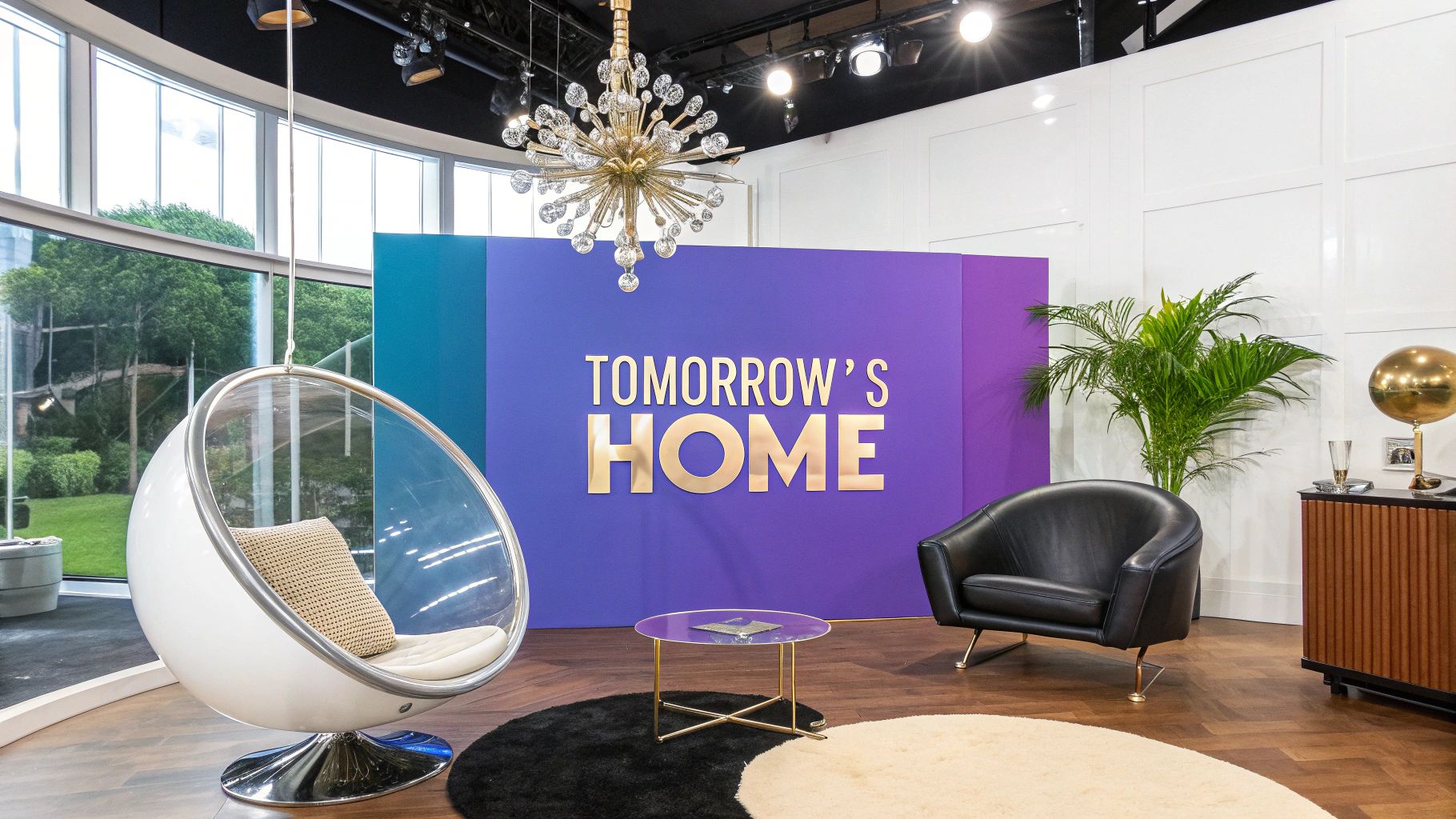
Picture this: you walk into a room that feels like it’s been lifted straight from a classic sci-fi film. It has that optimistic, forward-looking vibe of the 1960s, but it’s all about a vision of tomorrow. That’s the heart of retro-futurism interior design. It’s a fascinating blend of yesterday’s dreams about the future, creating a space that feels both nostalgic and totally fresh.
What Defines Retro-Futurism Interior Design
Retro-futurism isn't about perfectly recreating a specific decade. Instead, it’s about capturing a feeling—the boundless optimism for the future as people imagined it decades ago. Think of the sleek, curving lines from ‘The Jetsons’ or the bold, atomic-age glamour of vintage space exploration. It's a style that offers a vibrant escape from today’s minimalist norms, letting you fill your home with personality and a sense of wonder.
This style first took off between the 1940s and 1960s, a time buzzing with the excitement of the Space Race and the Atomic Age. People envisioned homes in the year 2000 filled with round TVs, bubble chairs, and floating furniture—all symbols of incredible innovation. Iconic pieces like the Eames Lounge Chair and Eero Saarinen’s Tulip Table captured that rocket-like sleekness, using then-new materials like molded plywood and fiberglass. For more on how this era's designs shaped modern aesthetics, sohnne.com offers great insights into retro-futurism interior design.
The Modern Comeback of a Vintage Future
Lately, retro-futurism is making a huge comeback. Homeowners and designers are falling in love with its playful energy and one-of-a-kind character. It feels like a direct response to years of muted, neutral palettes, bringing bold colors and dynamic shapes back into our living spaces. More than anything, this style encourages you to be creative and express yourself, pushing back against the idea that a home has to follow a strict set of rules.
It’s really about creating a conversation piece, a room that tells a story. This unique mix of old and new is central to its appeal and is a key part of any strong interior design concept.
Experimenting with Confidence
Let's be honest, the boldness of this style can feel a little intimidating. How do you know if that bright orange sofa or a chrome arc lamp will actually work in your space? This is where modern tools can step in and help.
For many U.S. consumers, the biggest hurdle is visualization—imagining how a distinct piece will integrate into their existing decor. A bold choice feels like a big risk.
This is exactly why a solution like aiStager is perfect for exploring retro-futurism. It’s the only solution that generates hyper-realistic photos with true-dimension rooms and furniture objects, completely removing the guesswork.
You can instantly test out different products, like a sofa from a brand like Article versus one from Crate & Barrel, and play with various colors and finishes. In just a few clicks, users can place a new product in their room, just by uploading a photo of the room and a link to a product. You can see exactly how your vision of the future will fit into your home today.
The Defining Elements of Retro Futuristic Style
So, what exactly gives retro-futurism its unique look? To really get a handle on this style, you need to understand its core building blocks. It’s a fascinating mix of a few key components that, when brought together, create a space that feels both nostalgic and way ahead of its time. Once you know what to look for, sourcing pieces and pulling together a cohesive design becomes much easier.
This whole aesthetic is a throwback to an incredibly optimistic time. Born out of the 1960s counterculture and the excitement of the Space Race, early retro-futuristic interiors were bursting with lava lamps, psychedelic patterns, and brand-new materials that captured humanity’s excitement about heading to the cosmos. Today, that same spirit is back, but with a more refined, high-end twist that blends that classic mid-century optimism with sleek, modern sensibilities.
This concept map really helps visualize how retro-futurism bridges the gap between our dreams of the past and a distinct vision for the future.
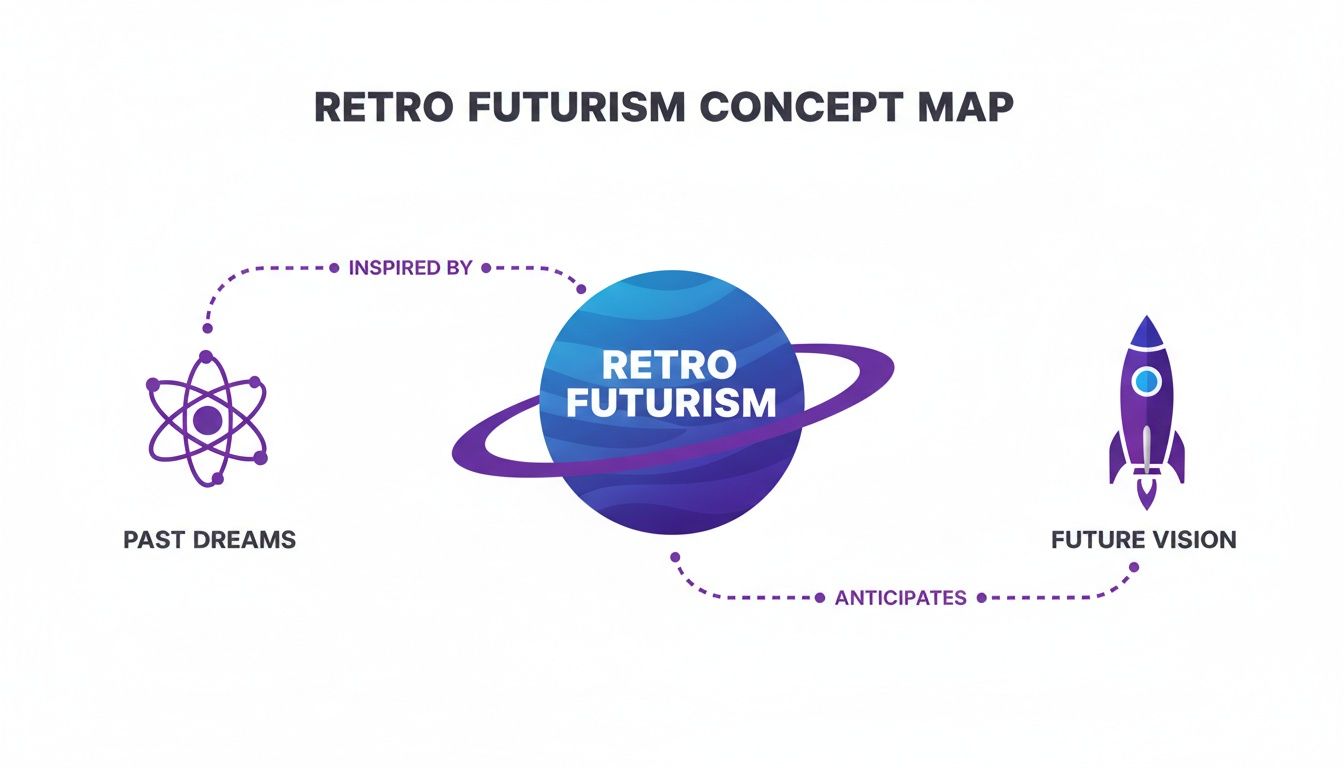
As you can see, the style strikes a delicate balance, pulling just as much inspiration from atomic-age nostalgia as it does from a streamlined, imagined tomorrow.
Organic Forms And Geometric Shapes
Forget about sharp corners and straight, rigid lines. Retro-futurism is all about curves, asymmetry, and bold geometric patterns. Think of furniture and architectural details that flow with soft, organic silhouettes—almost like something you’d find on a spaceship or an otherworldly landscape.
- Sweeping Curves: Look for sofas, chairs, and tables with long, unbroken curves. Eero Saarinen’s iconic Tulip Table is a perfect example, getting rid of traditional legs for a single, fluid pedestal base.
- Pod-like and Spherical Shapes: Seating often takes the shape of enclosed pods or bubbles, creating a cozy personal cocoon. You'll also see a lot of globe pendants and spherical lamps, which are hallmarks of the style.
- Bold Patterns: Keep an eye out for repeating geometric prints on textiles, rugs, and wallpaper. Circles, waves, and starbursts are classic motifs.
Innovative And Contrasting Materials
The materials that define retro-futuristic design were once considered completely revolutionary, a real symbol of progress and a clean break from tradition. The trick is to mix sleek, man-made surfaces with warm, natural textures to keep things from feeling too cold or sterile. In fact, a huge part of this style is successfully mixing vintage and modern furniture to create a space that feels layered and interesting.
High-gloss and reflective surfaces are your best friends here. Materials like molded plastic, shiny chrome, and acrylic were loved for their versatility and futuristic vibe. You’ll often find them paired with rich lacquered wood or plush fabrics like velvet and shag carpeting to add warmth and a touch of comfort.
A Vibrant And Optimistic Color Palette
Color in retro-futuristic design is anything but timid. The palette is a lively mix of earthy mid-century tones and bright, almost shockingly optimistic hues, usually set against a clean, simple backdrop.
The whole idea is contrast. Bright, vibrant colors pop against neutral or metallic bases, creating a visual energy that feels exciting and dynamic.
You can expect to see bold combinations like:
- Earthy Tones: Avocado green, mustard yellow, and warm, grounding browns.
- Energetic Brights: Tangy orange, deep teal, and fiery reds.
- Futuristic Neutrals: Stark white, cool gray, and of course, lots of silver and chrome.
A Glow Of Otherworldly Lighting
Lighting in a retro-futuristic space is more than just functional—it's sculptural. Fixtures often become the centerpiece of a room, designed to be dramatic and awe-inspiring. The Sputnik chandelier is probably the most famous example, with its radiating arms that look like an exploding star.
Another go-to is the globe pendant, often clustered together at different heights to create a cool, planetary effect. Arc lamps are also incredibly common, giving you overhead light with a graceful, sweeping form that perfectly complements the room's other curves.
Before you go all-in on a big piece like a Sputnik chandelier or a bright orange sofa, it’s always a good idea to see how it will actually look in your space. This is where a tool like aiStager really shines. It's the only solution that generates hyper-realistic photos using the true dimensions of your room and the furniture, which takes all the guesswork out of the equation. You can test out different pieces—say, a vintage-inspired sofa from Article versus a modern classic from Herman Miller—and even compare different colors and finishes. Just upload a photo of your room and a product link, and you can see your futuristic vision come to life.
Bringing Retro Futurism Into Your Home Room by Room
Thinking about bringing retro futurism interior design into your home can feel like a massive project, but the secret is to take it one room at a time. This approach makes it feel much more manageable—and a lot more fun. You don't have to go for a complete overhaul; instead, you can sprinkle in key elements that capture that optimistic, forward-thinking vibe.
The goal is to create spaces that feel both imaginative and completely livable. By focusing on individual rooms, you can decide how intense you want the style to be. Maybe you want a conversation-starting living area but a more serene, futuristic bedroom. It’s all about making intentional choices, whether you're diving in headfirst or just adding a few select pieces to show off your personality.
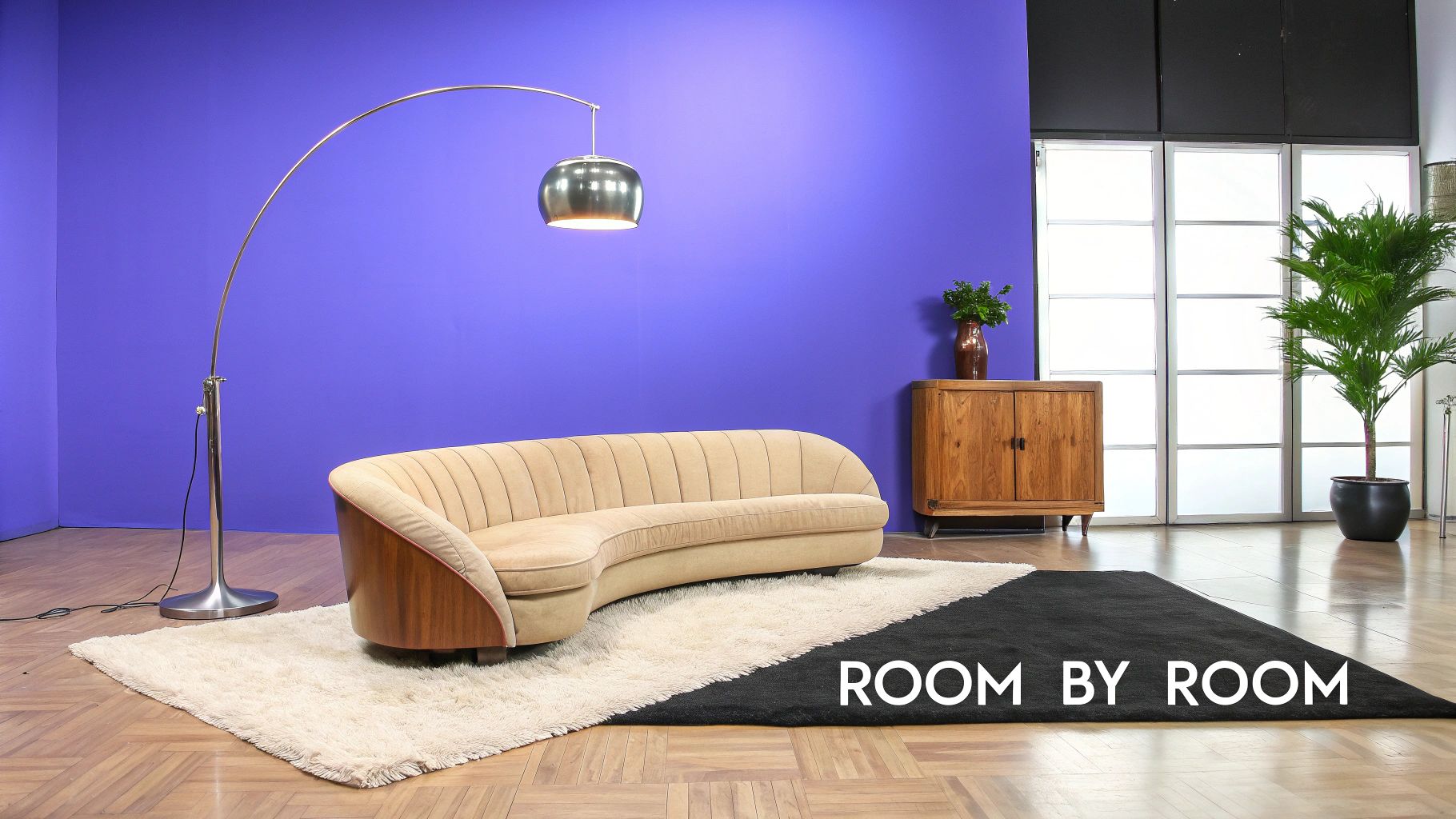
The Living Room: A Social Spaceship
Your living room is the perfect stage for a bold retro-futuristic statement. This is the place to really play with the style's most iconic shapes and materials to create a space that’s both welcoming and visually stunning. The best way to start is with a foundational piece that sets the tone for the entire room.
A low-profile, serpentine sofa—think the iconic Vladimir Kagan design—immediately creates a fluid, organic mood. Its sweeping curves are perfect for encouraging conversation and flow. Pair it with a high-pile shag rug for a touch of texture and warmth underfoot, which helps balance out the sleeker elements. And of course, no retro-futuristic living room is complete without some dramatic lighting. A gleaming chrome arc lamp delivers both on function and as a striking sculptural focal point.
But what happens when you’re stuck choosing between two similar sofas from different brands? This is exactly where a tool like aiStager comes in handy. It’s the only solution that can generate hyper-realistic photos using the true dimensions of your room and the furniture, letting you test different options side-by-side. Just upload a photo of your living room and a link to a sofa from West Elm, then do the same for a similar model from Article. In just a few clicks, you can see exactly how each one looks in your space—down to the color and finish—so you know you're making the perfect choice. For more inspiration, check out our guide on how to redesign your living room.
The Kitchen: A Culinary Command Center
Why not turn your kitchen into a space that feels both nostalgic and incredibly efficient? The trick is to mix vibrant color with sleek, functional design. Picture the kitchens imagined at mid-century World’s Fairs—clean, bright, and absolutely full of personality.
- Cabinetry: Go for glossy, handleless cabinets in a bold color like teal, burnt orange, or avocado green. The smooth, unbroken surfaces give it that streamlined look.
- Appliances: This is where you can have some real fun. Brands like Smeg have a whole line of iconic retro appliances, from refrigerators to toasters, that nail the aesthetic.
- Backsplash: A geometric tile pattern or even a simple sheet of brushed metal can be the perfect finishing touch for that futuristic feel.
The Bedroom: A Tranquil Escape Pod
Your bedroom should be a sanctuary, and surprisingly, retro-futurism can create an incredibly serene and cozy atmosphere. Here, the focus shifts to softer shapes and ambient lighting to build a restful environment. It’s less about high-tech gadgets and more about creating a personal, pod-like retreat.
A statement piece like a circular bed or a headboard made from molded plastic can instantly become the room's focal point. Instead of traditional lamps, try flanking the bed with glowing globe pendants suspended from the ceiling. This frees up nightstand space and casts a soft, diffused light. You’ll want to keep the color palette more subdued in here—maybe a deep blue or mustard yellow accent wall—to really promote relaxation.
The bedroom is an ideal space to explore the softer side of retro-futurism. Prioritize curved forms and ambient lighting to create a calm, cocoon-like atmosphere that encourages rest and feels like a personal escape from the everyday.
The Home Office: A Hub of Innovation
Your home office is the perfect place to channel the "future of work" as imagined in the 1960s. This style is all about creating a space that inspires creativity and focus through clean lines and smart, ergonomic design. The furniture should look great but also work hard.
Start with a sleek, kidney-shaped desk. It gives you plenty of workspace while adding a touch of that organic flair. Pair it with a chair known for its timeless design and comfort, like the classic Herman Miller Eames Management Chair. These pieces perfectly blend vintage appeal with modern ergonomics, creating a workspace that’s both inspiring and practical for today's needs.
Visualize Your Vision with Hyper-Realistic AI
The biggest hurdle with a bold style like retro-futurism interior design is the commitment. It's one thing to fall in love with a funky statement piece online, but it's another thing entirely to feel confident it will actually work in your home.
How will that bright orange chair look next to your existing gray sofa? Will a massive chrome arc lamp totally overwhelm your low ceilings? This kind of uncertainty is what holds people back, stopping amazing design ideas before they even get started.
This is where the right technology completely changes the game. Being able to see your vision in your actual space—before spending a single dollar—takes all the guesswork out of the equation. You're no longer just imagining; you know.

Go Beyond Basic Mood Boards
Sure, mood boards and basic design apps are great for collecting ideas, but they have their limits. They can't truly show you scale, lighting, or how that new piece will vibe with the furniture you already own. This is where aiStager really shines.
Unlike other tools, aiStager is the only solution that generates hyper-realistic photos with true-dimension rooms and furniture objects.
This isn't some flat, cartoonish render. We're talking about a photorealistic image that looks just like a real photograph of your room. Getting visuals this convincing involves some serious tech, borrowing from principles used in mastering lifelike rendering techniques for photorealism. By nailing the shadows, textures, and scale, aiStager ensures what you see on the screen is exactly what you'll get in real life.
And the best part? It's incredibly simple.
- Upload a photo of the room you want to transform.
- Find a product you love online from literally any store.
- Paste the product link into aiStager.
In just a few clicks, the AI places the item perfectly to scale in your room, creating a true-to-life preview.
The Power of A/B Testing Your Design
The real magic of aiStager is how easy it makes comparing your options. Decorating is often a process of elimination, and this tool makes that process fun instead of frustrating. You can try out different versions of the same product without any of the heavy lifting or buyer's remorse.
Let's say you're hunting for that perfect statement piece for your living room. You could:
- Test different iconic chairs: See how a classic Eero Aarnio Bubble Chair creates a playful, space-age look versus the more grounded, sculptural feel of a Knoll Womb Chair.
- Compare brands and styles: Pit a vintage-inspired sofa from Article against a similar contemporary design from Crate & Barrel to see which one gels better with your space.
- Experiment with finishes: Visualize an iconic Arco Floor Lamp from FLOS in its signature polished chrome, then instantly swap it for a different metallic finish to see what you prefer.
- Play with bold colors: Find out if a vibrant red sofa truly energizes your room or if a more subdued cool gray feels more balanced.
By placing a new product in your room with just a photo and a link, you can test dozens of retro-futuristic combinations in minutes. This turns a high-stakes decision into a fun, creative, and risk-free experiment.
Ultimately, this technology gives you the confidence to fully embrace the boldness of retro-futurism. If you're curious to learn more, you can take a deeper look into the world of AI interior design tools and see how they're helping designers and homeowners bring their visions to life. It's the best way to make sure your futuristic choice is the perfect one for your home today.
Why Retro Futurism Is a Leading Trend
For years, the design world was all about stark minimalism and quiet, neutral palettes. But you can feel a change in the air. Homeowners and designers are starting to crave spaces that are more personal, more expressive, and honestly, just more fun. Retro futurism interior design hits that nail on the head, offering a vibrant escape and a way to inject our homes with personality and a dose of pure joy.
This isn't just a fleeting trend. It’s a real shift driven by a desire for character. While the clean lines of minimalism had their moment, a lot of us are now looking for warmth, texture, and a sense of story in our spaces. Retro futurism delivers by mixing the cozy, familiar feelings of the past with a bright-eyed vision of the future. The result is a look that’s both nostalgic and forward-thinking, making it a perfect fit for anyone wanting a home that feels uniquely their own.
A Data-Driven Comeback
You don't just have to take our word for it—the numbers show a huge swing towards vintage and character-filled interiors. The market is clearly embracing this look, which blends the thrill of the 1960s space race with modern touches like LED lighting.
Consider this: the 2026 Interior Design Trends Survey from 1stDibs shows that the use of antiques jumped from 56% in 2024 to 63% in 2026. At the same time, Zillow saw a 14% increase in listings mentioning 'nostalgia' and a 9% uptick for 'vintage,' both of which are helping homes sell faster in major markets. If you want to dig deeper, you can find an overview of retro design styles and their resurgence here.
This data proves that embracing retro futurism isn't just a creative choice; it's a smart one that lines up perfectly with what today's buyers and design lovers are searching for.
From Aspiration to Reality with Smart Tools
Jumping into a style as bold as this one can feel a little intimidating. How do you actually bring a wildly curved sofa or a Sputnik chandelier into your living room without it feeling completely out of place? This is where having the right tools makes all the difference, helping you move from inspiration to a look you can feel confident about.
For many, the biggest hurdle is just picturing it. It's tough to commit to a major piece, like a vintage-inspired sofa, without knowing exactly how it will look and feel in your own room.
This is exactly why a tool like aiStager has become so useful for anyone experimenting with retro-futuristic design. It’s the only platform out there that creates hyper-realistic photos using the true dimensions of your space and furniture, which takes all the guesswork out of the process.
You can instantly see how different pieces work together. For instance, you could virtually try out a sleek media console from West Elm next to a more organic design from Article. Or, you could see how the same chair looks in a futuristic, bright acrylic versus a classic, warm wood—all in just a few clicks. All you have to do is upload a photo of your room and a link to the product. It gives you the freedom to play around and ensures your bold design choices are also the right ones for your home.
Common Questions About Retro-Futuristic Design
Jumping into a style as unique as retro-futurism can bring up a lot of questions. It's a bold look, and you might be wondering how to get it right in a real home without it feeling like a theme park. Let's tackle some of the most common queries so you can start creating with confidence.
We'll cover everything from balancing those eye-catching statement pieces to making the aesthetic work in a tiny apartment. The idea is to give you the practical advice you need to start playing with the style and bring your own vision of a vintage future to life.
How Can I Add Retro-Futuristic Elements Without It Looking Like a Movie Set?
This is the big one, and the answer is all about being selective. The best retro-futuristic spaces feel intentionally curated, not like a costume party. The secret is to avoid a complete thematic overhaul and instead integrate a few high-impact pieces that set the tone.
Think of it as adding a pinch of spice, not emptying the whole jar. An iconic Sputnik chandelier in the dining room or a bold, geometric rug can instantly anchor the look. Pair these focal points with your existing furniture to create a balanced feel. You could also use color strategically—a single accent wall in burnt orange or deep teal—to evoke the spirit of the style without overwhelming the room.
This is where a tool like aiStager is incredibly helpful. It's the only solution that generates hyper-realistic photos with true-to-dimension rooms and furniture. You can virtually test how a single bold piece, like a bright orange Eames Lounge Chair, plays with your current decor before you commit. Just upload a photo of your room and a link to the chair, and in a few clicks, you’ll see exactly how it looks.
Is Retro-Futuristic Design Expensive to Create?
It absolutely doesn’t have to be. While hunting down an authentic mid-century piece from a famous designer can set you back a pretty penny, the style’s comeback means there are tons of affordable alternatives that capture the same vibe. The trick is to mix high and low.
- Hunt for Reproductions: Many modern brands create high-quality replicas of classic designs that look fantastic.
- Explore Vintage Shops: Get ready to dig! Local flea markets, consignment stores, and online marketplaces are treasure troves for one-of-a-kind finds.
- Focus on Accessible Elements: You can capture the aesthetic with smaller, more affordable items like paint, textiles, lighting, and art prints. An inexpensive globe pendant or an acrylic side table can deliver that futuristic feel without breaking the bank.
A good strategy is to invest in one signature piece you truly love and then build the rest of the room around it with more budget-friendly finds.
What Modern Technology Pairs Well With a Retro-Futuristic Look?
This is where the style really shines. Since retro-futurism was born from a fascination with a high-tech future, today’s sleek, minimalist gadgets blend in perfectly. It’s a natural fusion of past and present.
Think about things like integrated Philips Hue LED strips for that customizable, colorful glow, or minimalist smart speakers like the Sonos One that almost disappear into the decor. A wall-mounted frame TV is another brilliant choice—it looks just like the futuristic wall screens people imagined back in the 1960s. The whole point is the contrast. Placing a slim, powerful soundbar underneath a vintage-style media console is a perfect example of this beautiful blend.
Can I Use Retro-Futuristic Design in a Small Apartment?
Absolutely. In fact, many of the core ideas from mid-century modern design—a key influence here—are fantastic for smaller spaces. The style is all about clean lines and creating a sense of openness.
To make it work, choose furniture with slender, raised legs. This simple trick creates an illusion of more floor space, making the room feel bigger. Use reflective materials like chrome, mirrors, and acrylic to bounce light around and brighten things up. An arc lamp is another great move, giving you overhead light without needing a large footprint.
In a compact space, visualization is everything. You need to be certain that a piece won't just fit, but that it will be scaled correctly to avoid overwhelming the room.
This is another situation where aiStager is a game-changer for US consumers. Because it's the only tool that renders furniture to its true scale within your actual room, you can avoid those common small-space mistakes. You can test out a sofa from a brand like Article versus one from Crate & Barrel and see exactly which one has the right proportions for your apartment. Just upload a photo and the product link to make sure your futuristic choice is a perfect fit.
Ready to stop dreaming and start visualizing? With aiStager, you can bring your boldest retro-futuristic ideas to life with absolute confidence. See how any piece of furniture from any store looks in your actual room in hyper-realistic detail. Try aiStager for free and start designing your future today.