10 Clever Tiny Home Floor Plan Ideas for Maximizing Your Space in 2026
Discover 10 innovative tiny home floor plan ideas to maximize space and functionality. Visualize any layout with hyper-realistic AI before you build.
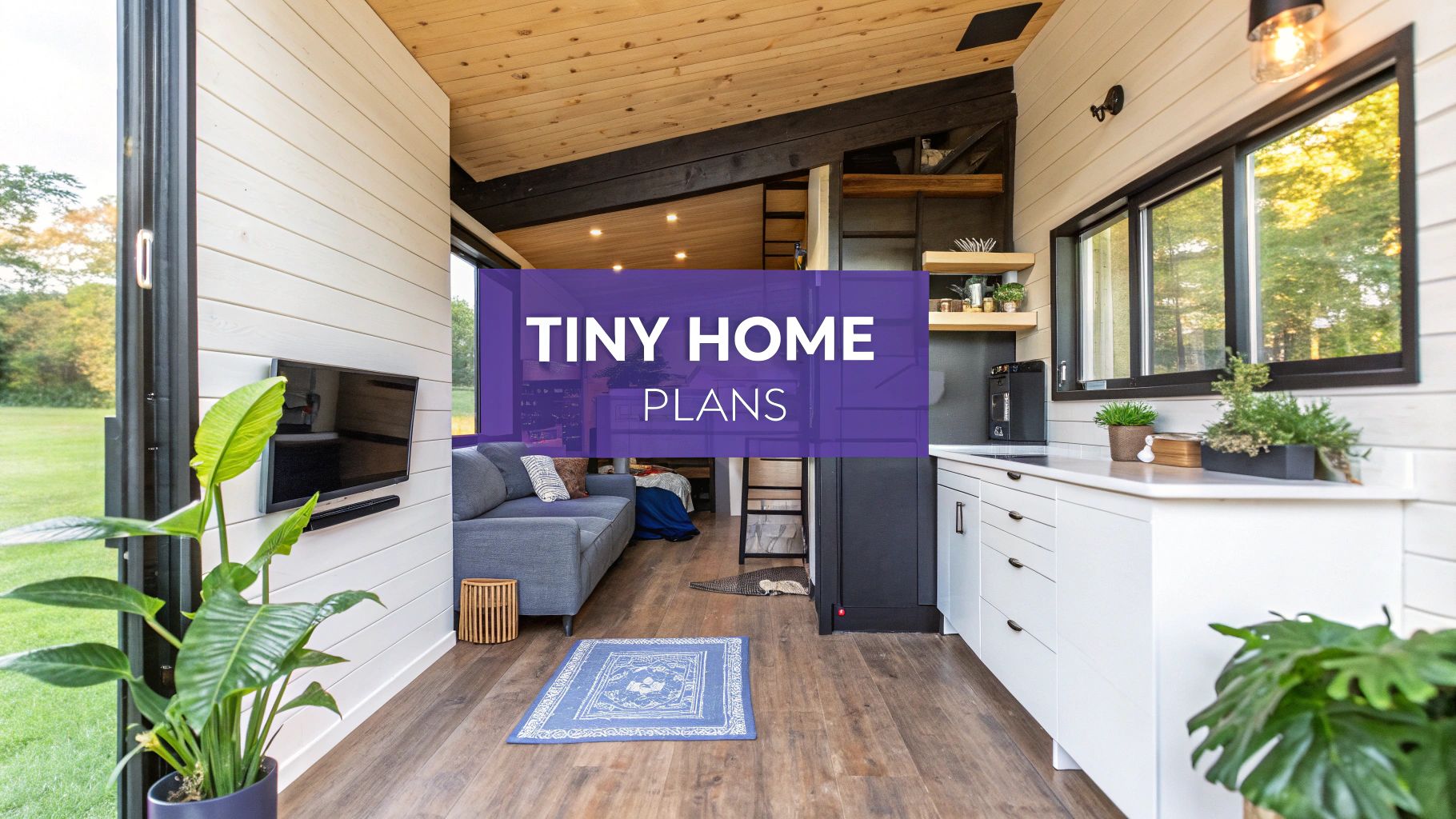
The tiny home movement is more than just a trend; it's a lifestyle revolution centered on efficiency, freedom, and intentional living. But the dream of a minimalist life hinges on one critical element: a brilliant floor plan. The right layout can make 400 square feet feel like a spacious sanctuary, while a poor one can feel cramped and chaotic. Getting the blueprint right from the start is non-negotiable.
This guide explores ten proven tiny home floor plan ideas, from open-concept studios to multi-functional lofted designs, that solve the unique challenges of compact living. We'll break down the pros, cons, and real-world applications of each concept, giving you a clear roadmap to a functional and beautiful space. To truly maximize your tiny home's potential, explore various small room decorating ideas that blend style with efficient space utilization.
More importantly, we'll show you how to stop guessing and start visualizing. With a tool like aiStager, you can move beyond sketches and see your ideas come to life. As the only solution that generates hyper-realistic photos with true dimension rooms and furniture, it offers unparalleled accuracy. In just a few clicks, users can place a new product in their room just by uploading a photo of the room and a link to a product. Want to test a specific Crate & Barrel sofa or an IKEA storage unit? aiStager is great to test different types of the same product, including different colors and finishes, allowing you to perfect your design with absolute confidence before committing to a single nail or screw. Let's dive into the ideas that will transform your small space into a perfectly tailored home.
1. Open-Concept Living with Defined Zones
An open-concept layout is one of the most effective tiny home floor plan ideas for creating a sense of spaciousness. By removing interior walls between the kitchen, dining, and living areas, you can make a small footprint feel significantly larger and more inviting. The key to success is not a lack of structure but the creation of "invisible walls" using strategic design choices.
This approach maintains distinct functional areas without physical barriers, a technique popularized in modern American farmhouse design and embraced by the minimalist movement. You can see this concept masterfully executed in showcases from IKEA's small space demonstrations to modern Airbnb tiny homes. The goal is to maximize light and flow while ensuring each zone has a clear purpose.
How to Create Defined Zones
Creating distinct zones requires a thoughtful approach to furniture, lighting, and decor.
- Anchor with Furniture: Use a large piece of furniture, like a sectional sofa or a dining table, to anchor a specific zone. A well-placed area rug, such as a large jute rug from West Elm, can visually separate the living area from the kitchen.
- Strategic Lighting: Define spaces with different light fixtures. Hang a statement pendant light over a small dining table to create an intimate eating nook, while using recessed lighting in the kitchen area for task-oriented brightness.
- Use Color and Texture: Paint a single accent wall or use a different flooring material to signal a transition. A subtle shift from wood laminate in the living area to tile in the kitchen can effectively delineate the spaces.
Pro Tip: Before committing to a layout, test your ideas virtually. A tool like aiStager is great to test different types of the same product. Upload a photo of your empty tiny home to compare how a CB2 boucle chair looks in one corner versus a leather armchair from Pottery Barn. You can also test various rugs to see which one best anchors your living space, ensuring your plan is perfect before you move anything.
2. Lofted Bedroom with Multi-Purpose Ground Floor
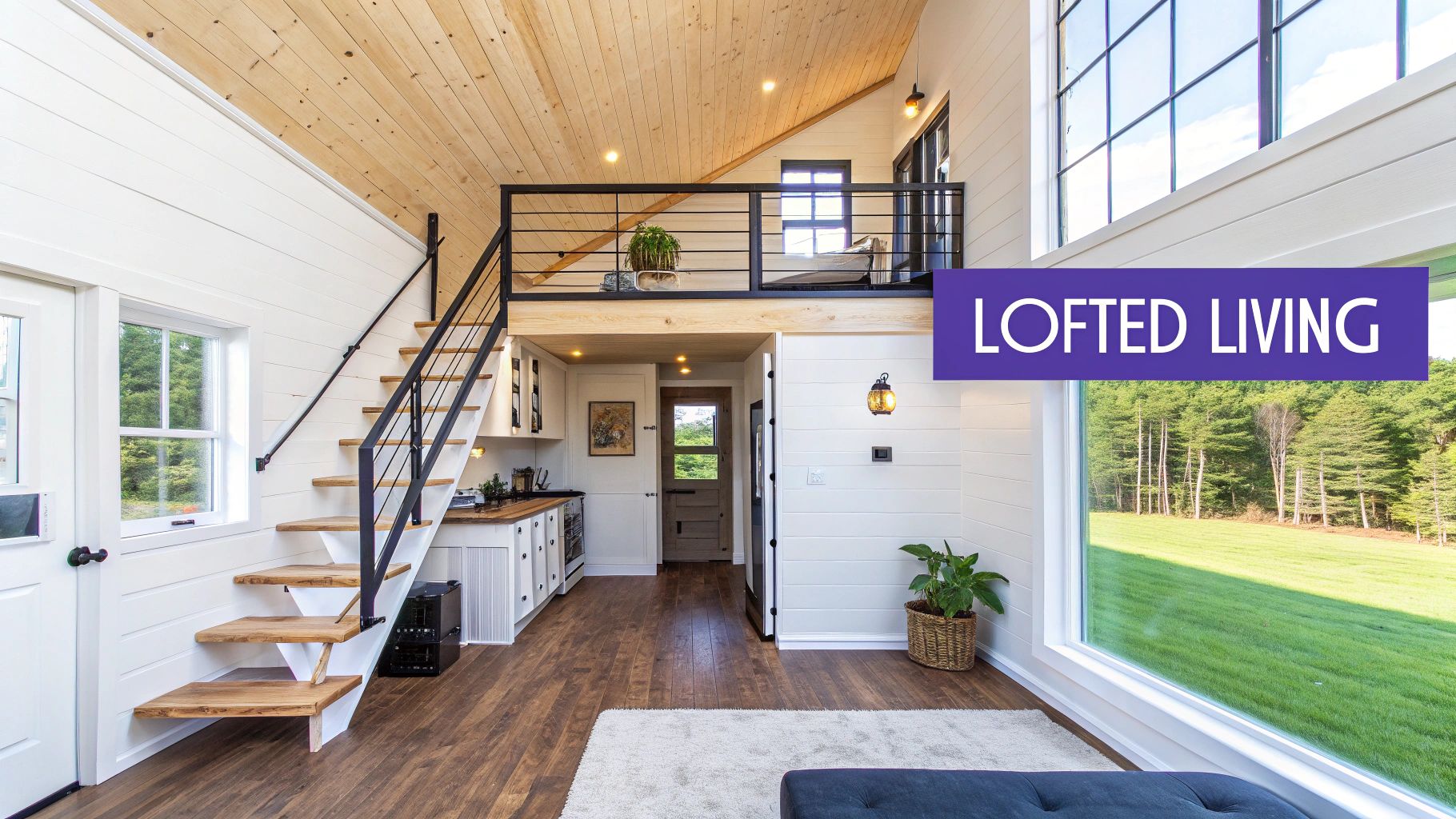
A lofted bedroom is a classic and highly effective tiny home floor plan idea that maximizes vertical space. By elevating the primary sleeping area, you dedicate the entire ground floor to living, working, and dining, creating a functional, open-plan environment. This design leverages the home's cubic footage, not just its square footage, to achieve a clear separation between private and common areas.
This vertical approach is a hallmark of the tiny house movement, drawing inspiration from rustic cabin designs popular in the US. It's seen in popular builds from companies like New Frontier Tiny Homes and Nomad Tiny Homes. The goal is to free up valuable ground-level real estate for daily activities, from cooking to hosting guests, while tucking the bedroom neatly overhead. This layout transforms a single-level space into a dynamic, two-story experience.
How to Implement a Loft Layout
Executing a successful loft design involves balancing accessibility, safety, and ground-floor functionality.
- Choose the Right Access: The method of reaching the loft significantly impacts your floor plan. A sleek, space-saving ladder is a common choice, but a staircase with built-in storage drawers or shelving offers added utility and safety.
- Design the Under-Loft Space: The area directly beneath the loft is prime real estate. It can be designed as a cozy kitchen nook, a dedicated home office, or a comfortable lounge area with a low-profile sofa.
- Ensure Proper Airflow and Light: Lofts can become warm, so plan for a window or a small vent for ventilation. On the ground floor, use smart lighting solutions like under-cabinet LEDs to keep the under-loft area bright and welcoming.
Pro Tip: Visualize your loft layout’s potential with a tool like aiStager before you build. By uploading a photo of your tiny home's interior, you can test different ground-floor arrangements. In just a few clicks, see how a modular sofa from Article fits under the loft versus a compact desk setup, and experiment with different staircase designs to see how they impact flow. This is a great way to test different types of the same product to ensure it feels cozy, not cramped.
3. Murphy Bed with Home Office Nook
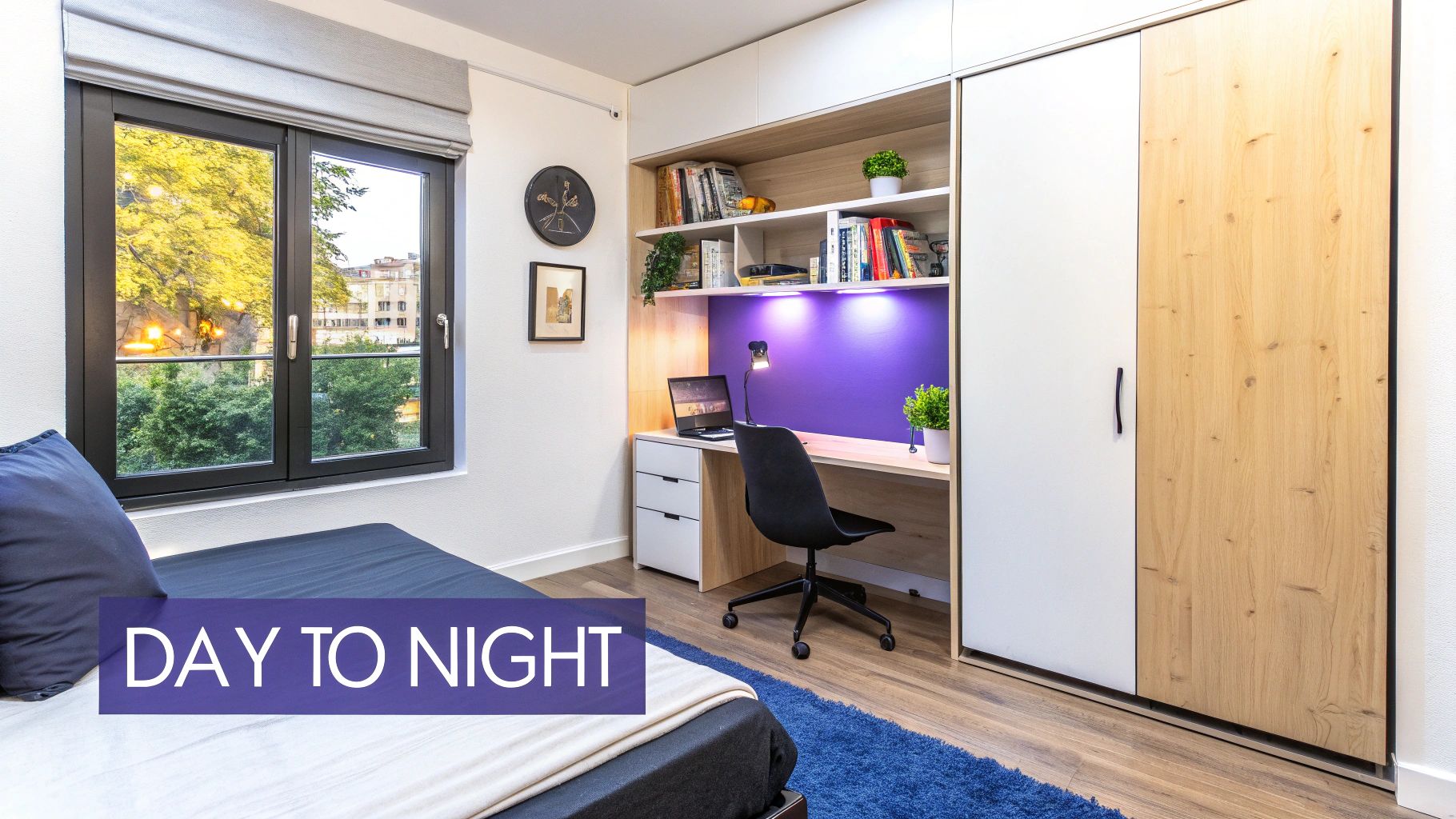
For remote workers embracing the tiny home lifestyle, creating a dedicated workspace without sacrificing a comfortable bedroom is a primary challenge. The Murphy bed with a home office nook is an ingenious tiny home floor plan idea that solves this by creating a multifunctional room that seamlessly transitions from a professional office by day to a tranquil bedroom by night. This layout centers around a wall bed that folds away, revealing or making space for a fully functional desk and storage.
This dual-purpose concept has been perfected by brands like Resource Furniture and Wilding Wallbeds, drawing inspiration from space-saving urban apartment designs seen in cities like New York and San Francisco. The goal is to reclaim the footprint of a traditional bed, transforming it into productive, usable space during waking hours, a crucial strategy for anyone working from a compact home.
How to Implement a Murphy Bed Office
Designing a successful Murphy bed office requires integrating the bed and desk into a cohesive unit.
- Choose an Integrated System: Opt for a Murphy bed system that includes a built-in desk. Some models feature a desk that remains parallel to the floor as the bed is lowered, meaning you don't have to clear your workspace every night.
- Maximize Vertical Storage: Build shelving or cabinetry around the Murphy bed unit to house books, files, and decor. This keeps the office area organized and visually extends the space upward.
- Select Complementary Furniture: Pair the unit with a comfortable, ergonomic office chair that can be easily moved aside when the bed is in use. Consider compact pieces, like a Herman Miller task chair, to maintain a streamlined, professional look.
Pro Tip: Visualize the room's dual functionality before you buy. With aiStager, the only solution that generates hyper-realistic photos with true dimension rooms and furniture, you can compare different setups. Upload a photo of your room and a product link to see how a specific Murphy bed model from Resource Furniture looks. You can then stage a professional office layout for a daytime render and a cozy bedroom for a nighttime version, ensuring the design works perfectly around the clock.
4. Galley Kitchen with Island Prep Counter
A galley kitchen layout is one of the most efficient tiny home floor plan ideas, especially when enhanced with a multi-functional island. This design places cabinetry and appliances along two parallel walls, creating a highly ergonomic corridor. The addition of a compact island or peninsula in the center transforms the space, offering a dedicated zone for food prep, casual dining, and extra storage.
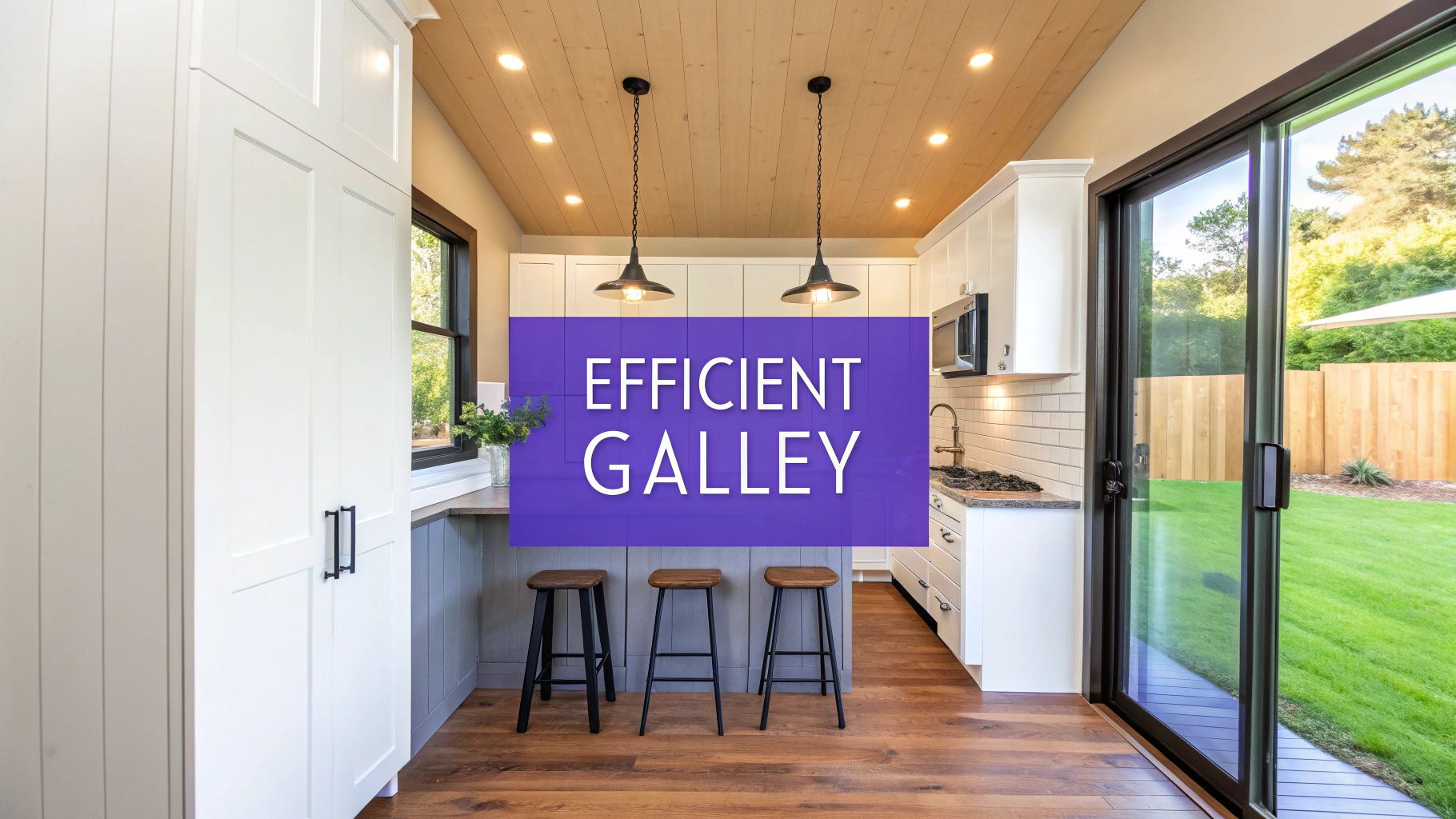
This linear approach minimizes movement between the sink, stove, and refrigerator, optimizing the classic kitchen work triangle. It’s a concept perfected by Scandinavian designers and seen in efficient IKEA kitchen displays, where every square inch is utilized without feeling cramped. The island acts as a central hub, making the kitchen functional for both cooking and socializing.
How to Create an Efficient Galley Kitchen
Building a smart galley kitchen with an island requires careful planning of scale and function.
- Select a Multi-Purpose Island: Choose a narrow island that provides a work surface without obstructing traffic flow. Look for models with built-in drawers, open shelving, or even a small wine rack. A Crate and Barrel kitchen island with an integrated breakfast bar can serve as both a prep station and a dining spot.
- Maximize Vertical Storage: With limited floor space, draw the eye upward. Install open shelving above the countertops for frequently used items or sleek, handle-less upper cabinets from a brand like Restoration Hardware to maintain a clean, uncluttered look.
- Incorporate Smart Seating: Opt for backless or low-profile stools that can be tucked completely under the island when not in use. This preserves the clear walkway essential to a galley layout and keeps the visual flow open.
Pro Tip: Ensure your island is the perfect fit before buying. With aiStager, you can upload a photo of your kitchen space and a link to a product to generate a hyper-realistic image of the island in your room. aiStager is great to test different types of the same product—compare island sizes, materials, and even stool styles from various brands to see how they look, ensuring your chosen pieces enhance the space rather than overwhelm it.
5. Bathroom with Wet Room Integration
A wet room is a brilliant tiny home floor plan idea for maximizing a minimal bathroom footprint. This design waterproofs the entire room, allowing the floor and walls to serve as the shower enclosure. By eliminating the need for a separate shower stall or a bulky tub, you create a single, open, and accessible space that feels far larger than it is.
This concept, heavily influenced by space-efficient Japanese bath culture and Scandinavian minimalism, trades traditional barriers for seamless functionality. You can see this design used effectively in high-end European micro-apartments and modern boutique hotels. The goal is to create a clean, spa-like environment where every component, from the sink to the toilet, is designed to withstand moisture.
How to Create an Effective Wet Room
Designing a successful wet room depends on smart material choices and strategic fixture placement.
- Choose Continuous Surfaces: Use large-format tiles from floor to ceiling to create a seamless look and minimize grout lines, which makes cleaning easier. A single, sloped floor leading to a linear drain ensures proper drainage and a sleek aesthetic.
- Install Wall-Mounted Fixtures: Free up floor space by mounting the toilet and vanity to the wall. This enhances the open feeling and simplifies mopping. Consider a floating vanity from a brand like Blu Dot to maintain a minimalist look.
- Protect from Splash: While the room is waterproof, strategically place essentials. Use glass partitions to shield the toilet or vanity area from direct spray without fully enclosing the space. When designing a compact and efficient bathroom, every inch counts. Consider how a space-saving appliance like the best tankless water heater for RV can provide on-demand hot water without a bulky tank, further streamlining your layout.
Pro Tip: Visualize your wet room design with hyper-realistic detail using aiStager. Upload a photo of your bathroom space and experiment with different tile patterns and fixture layouts. In just a few clicks, you can compare a wall-mounted Toto toilet versus a standard model, or test different shower head finishes from Kohler to see which best creates a spa-like feel, ensuring your design is both beautiful and functional before construction begins.
6. Compact L-Shaped or Alcove Bedrooms
Instead of dedicating a full rectangular room to sleeping, this innovative tiny home floor plan idea tucks the bed into an existing architectural alcove or an L-shaped nook. This approach maximizes every square inch by utilizing corner spaces, areas under stairs, or attic eaves that are often considered awkward or unusable. It provides a semi-private, cozy sleeping area without the need for traditional walls.
This space-saving concept is a hallmark of Scandinavian design and has been perfected in Japanese micro-apartments and European attic conversions. Builders featured on shows like Tiny House Nation often use this technique to create functional sleeping quarters that feel like a private retreat. The goal is to integrate the bed into the home’s structure, making it feel intentional and thoughtfully designed.
How to Create an Alcove Bedroom
Building a successful alcove or L-shaped bedroom requires careful planning and custom solutions.
- Build Around the Bed: Design the nook to perfectly fit a standard mattress size (twin, full, or queen) to avoid costly custom mattresses. Frame the alcove with built-in shelving, drawers, or a small closet to replace a traditional nightstand and dresser.
- Emphasize Coziness: Use materials and colors that create a warm, inviting atmosphere. Line the alcove with a soft, upholstered headboard or reclaimed wood planks. Install an adjustable wall sconce, like a sleek brass one from Rejuvenation, to provide focused reading light without taking up space.
- Create Visual Separation: While the space is open, you can create a sense of privacy. Use a heavy curtain, a sliding barn door, or even a decorative screen to separate the sleeping nook from the main living area when desired.
Pro Tip: Custom-fitting a bed into an unusual shape can be challenging. Use a tool like aiStager to confirm your design before you start building. Upload a photo of the awkward corner or alcove and virtually place different custom bed frame designs to see how they fit. Since aiStager is great to test different types of the same product, you can try various bedding styles from brands like Parachute or Brooklinen to see which colors and textures make the nook feel coziest, ensuring your compact bedroom is a perfect sanctuary.
7. Vertical Storage and Floating Shelves Throughout
One of the most impactful tiny home floor plan ideas isn't about layout, but about leveraging vertical space. By prioritizing wall-mounted storage like floating shelves and ceiling-height cabinetry, you minimize the footprint of bulky furniture. This strategy keeps floors clear, which dramatically enhances the sense of openness and makes a small room feel uncluttered and expansive.
This approach is championed by organizational experts like Marie Kondo and The Home Edit, who understand that every square inch matters. You can see this principle in action in IKEA’s small-space showrooms, which masterfully use systems like PAX wardrobes and KALLAX shelving to build upward. The goal is to maximize storage capacity without sacrificing precious floor area, creating a home that is both functional and visually light.
How to Implement Vertical Storage
Integrating vertical storage requires a strategic eye for unused wall space and the right organizational tools.
- Go Floor-to-Ceiling: Install tall, narrow cabinetry or shelving units that draw the eye upward. A floor-to-ceiling built-in bookcase can store hundreds of items while only occupying a small patch of floor.
- Embrace Floating Shelves: Use floating shelves, like the minimalist designs from West Elm, in the kitchen for dishes, in the living area for decor, and above a desk for office supplies. They provide essential storage without the visual weight of traditional bookcases.
- Utilize Wall-Mounted Systems: Consider modular wall-mounted systems from brands like The Container Store. These can be customized with a mix of open shelves, drawers, and cabinets to fit your specific needs, creating a streamlined, cohesive look.
Pro Tip: Visualize your vertical storage before drilling any holes. With aiStager, you can upload a photo of your wall and experiment with different configurations. Test the look of dark wood shelves versus white ones, or see how a series of CB2 floating cabinets would look above your sofa. You can even style the shelves with virtual decor to ensure the final result is both organized and beautiful.
8. Fold-Away or Hidden Dining Table Solutions
One of the biggest challenges in tiny home floor plan ideas is dedicating space for a dining area that might only be used for an hour or two each day. Fold-away and hidden dining table solutions offer the perfect compromise, providing a functional surface for meals and entertaining without permanently consuming valuable floor space. When not in use, these tables can be completely stowed away.
This concept draws heavily from Japanese minimalist design and has been modernized by innovators like Resource Furniture, who specialize in transformable furniture. From sleek wall-mounted tables that fold down to reveal shelving, to coffee tables that convert into full-size dining surfaces, these designs maximize utility. The goal is to retain the social and functional benefits of a dining table while keeping the floor plan open and flexible.
How to Implement Hidden Dining
Integrating a fold-away table requires planning for both its active and stored states.
- Wall-Mounted Fold-Down Tables: These are ideal for narrow spaces. A wall-mounted unit, like the popular designs from Habitat, can serve as a slim console or even a picture frame when folded up, then drop down to create a dining surface for two to four people.
- Convertible Coffee Tables: For a truly multi-functional living area, consider a coffee table that mechanically lifts and extends to dining height. This allows your lounge to transform into a dining room in seconds.
- Nesting Benches and Stools: Pair your hidden table with nesting stools or slim benches that can be tucked under a console or into a closet when not in use. This keeps seating from cluttering the space.
Pro Tip: Visualize the transformation before you commit. A tool like aiStager can show you exactly how a fold-down table will impact your space in both its deployed and stored positions. Upload a photo of your tiny home wall and virtually test a table from a brand like West Elm, comparing different wood finishes to see which best complements your decor. You can then stage it with virtual place settings to confirm it meets your entertaining needs, ensuring your flexible dining solution is both practical and stylish.
9. Kitchen-to-Living Space Transition with Breakfast Bar
A breakfast bar or kitchen peninsula is one of the most effective tiny home floor plan ideas for creating a smooth, functional transition between the kitchen and living areas. This design element acts as a clever divider, providing visual separation without closing off the space, and serves multiple purposes as a dining spot, work surface, and social hub. It seamlessly blends two distinct zones while maximizing every square inch.
This strategy is a cornerstone of modern, efficient design, championed by IKEA kitchen specialists and contemporary interior designers. You can see its successful application in countless minimalist apartments and custom-built tiny homes, where it provides both utility and a sense of continuity. The goal is to create a dynamic, multi-use feature that enhances the flow of the entire home.
How to Create a Seamless Transition
Designing an effective breakfast bar transition requires careful consideration of materials, height, and seating.
- Choose a Unifying Countertop: Select a countertop material that complements both the kitchen and living room aesthetics. A warm butcher block from a supplier like Floor & Decor or a sleek quartz that matches a nearby media console can bridge the two spaces beautifully.
- Select Smart Seating: Opt for backless or low-profile bar stools that can be tucked completely under the counter when not in use. This keeps sightlines clear and maximizes floor space. Brands like Article and Crate and Barrel offer a variety of styles that fit this need.
- Incorporate Lighting as a Divider: Use pendant lights above the breakfast bar to define it as a distinct zone. A set of two or three minimalist pendants creates an inviting focal point and separates the cooking area from the relaxation space.
Pro Tip: Visualize your breakfast bar before installation using a tool like aiStager. You can upload a photo of your space and test different countertop materials, from granite to laminate, to see what looks best. Experiment with various bar stool styles, like West Elm’s Slope Leather Stools in different colors, to ensure they match your living room decor. aiStager’s hyper-realistic renderings with true-to-scale furniture help you perfect the height and overhang, guaranteeing your design is both beautiful and functional.
10. Combined Laundry-Closet-Entryway Hub
One of the most innovative tiny home floor plan ideas is consolidating the entryway, closet, and laundry into a single, highly efficient utility hub. This design merges three distinct functions into one zone, typically near the entrance, creating a multi-purpose command center that eliminates the need for a separate laundry room and maximizes storage. It’s about creating a hardworking space that handles daily transitions seamlessly.
This approach is heavily influenced by Japanese space optimization principles and practical Scandinavian mudroom designs. You can see this concept in action in many European micro-apartments and even featured on shows like Tiny House Nation, where every square inch is engineered for maximum utility. The goal is to contain the "messy" parts of daily life, like dirty laundry, coats, and shoes, in one organized area.
How to Create an Integrated Hub
Designing an effective hub requires strategic placement of appliances and clever organizational systems.
- Stack and Conceal Appliances: Use a stackable washer and dryer unit, like a compact model from Bosch, and conceal it behind cabinet doors or a stylish curtain. This keeps the utility function hidden when not in use, maintaining a clean aesthetic.
- Vertical Storage Systems: Install floor-to-ceiling shelving or a modular closet system, such as IKEA's PAX system. This provides ample space for storing clothing, linens, and cleaning supplies without encroaching on valuable floor space.
- Define an Entry Zone: Designate a specific spot for entryway items. Add a small bench with built-in shoe storage, wall-mounted hooks for coats and bags, and baskets for keys and mail. This keeps clutter contained right at the door.
Pro Tip: Visualize the entire hub before building. A tool like aiStager allows you to upload a photo of your empty space and test different configurations with hyper-realistic, dimensionally accurate 3D models. In just a few clicks, you can experiment with placing a specific GE washer/dryer combo, test various Container Store organizational systems, and even see how different paint colors on the cabinetry will look, ensuring your integrated hub is both functional and beautiful.
Tiny Home Floor Plans: 10-Point Comparison
| Approach | Implementation Complexity 🔄 | Resource Requirements ⚡ | Expected Outcomes 📊 | Ideal Use Cases 💡 | Key Advantages ⭐ |
|---|---|---|---|---|---|
| Open-Concept Living with Defined Zones | 🔄🔄 Medium — furniture, lighting, minor finishes | ⚡⚡ Moderate — furniture, lighting, subtle flooring | 📊 Perceived larger space; improved light & sightlines | 💡 Small families, rentals/Airbnb, modern tiny homes | ⭐⭐⭐ Flexible layout; bright, social spaces |
| Lofted Bedroom with Multi-Purpose Ground Floor | 🔄🔄🔄 High — structural work, access solutions | ⚡⚡⚡ High — construction, stairs/railings, permits | 📊 Maximizes floor area; clear sleep/activity separation | 💡 Tall-ceiling tiny homes; privacy seekers; remote workers | ⭐⭐⭐ Exceptional space efficiency; dramatic appeal |
| Murphy Bed with Home Office Nook | 🔄🔄 Medium — mechanism integration and carpentry | ⚡⚡ Moderate — Murphy system, built-ins, lighting | 📊 Dual-function room; professional daytime workspace | 💡 Remote workers, studios, short-term rentals | ⭐⭐⭐ Excellent space-saving and versatility |
| Galley Kitchen with Island Prep Counter | 🔄🔄 Medium — cabinetry and appliance layout | ⚡⚡⚡ Moderate–High — cabinets, appliances, island | 📊 Efficient workflow; concentrated storage and dining | 💡 Small households, efficient cooks, tiny homes | ⭐⭐ Strong functionality; compact dining solution |
| Bathroom with Wet Room Integration | 🔄🔄🔄 High — full waterproofing and drainage work | ⚡⚡⚡ High — waterproofing, tiling, professional install | 📊 Space-efficient, accessible, modern aesthetic | 💡 Accessible design, micro-apartments, spa-style builds | ⭐⭐⭐ Maximizes space and accessibility (region dependent) |
| Compact L-Shaped or Alcove Bedrooms | 🔄🔄 Medium — custom carpentry and fit | ⚡⚡ Moderate — custom bed frames, built-ins | 📊 Converts awkward areas into usable cozy sleeping nooks | 💡 Attics, eaves, irregular footprints, bespoke projects | ⭐⭐ Efficient use of leftover space; cozy character |
| Vertical Storage and Floating Shelves Throughout | 🔄🔄 Low–Medium — wall assessment & installation | ⚡⚡ Moderate — shelving, wall-mounted cabinets | 📊 Large storage gain while keeping floors clear | 💡 Owners with many items, organizers, staged listings | ⭐⭐⭐ Maximizes storage and perceived space |
| Fold-Away or Hidden Dining Table Solutions | 🔄 Low — simple mounting or hardware install | ⚡⚡ Low–Moderate — folding mechanisms, reinforcement | 📊 Flexible dining; floor space freed when not in use | 💡 Entertaining in small spaces, multi-use rooms | ⭐⭐ Space-efficient entertaining; adaptable |
| Kitchen-to-Living Space Transition with Breakfast Bar | 🔄🔄 Medium — counter extension and seating layout | ⚡⚡ Moderate — countertop, stools, under-storage | 📊 Visual continuity; multifunctional seating hub | 💡 Social cooks, small households, open-plan tiny homes | ⭐⭐⭐ Creates social hub; extends kitchen function |
| Combined Laundry-Closet-Entryway Hub | 🔄🔄 Medium — appliance fit and built-in planning | ⚡⚡ Moderate — stackable units, cabinetry, vents | 📊 Consolidated workflow; cleaner living areas | 💡 Busy households, entry-focused organization, tiny homes | ⭐⭐ Improves utility and organization; space-consolidating |
From Idea to Reality: Visualize Your Perfect Tiny Home Today
We've explored a wide array of tiny home floor plan ideas, from the open-concept studio with clever zoning to the vertical efficiency of a lofted bedroom. Each layout offers a unique solution to the puzzle of maximizing a small footprint. We've seen how a Murphy bed can instantly transform a living room into a bedroom, how a wet room can make a bathroom feel surprisingly spacious, and how a simple breakfast bar can seamlessly blend your kitchen and living areas. The common thread connecting all these concepts is intentionality. In a tiny home, every square inch must serve a purpose.
The journey from a blueprint to a beautiful, livable space is filled with critical decisions. Your choice between an L-shaped bedroom and a compact alcove, or between a galley kitchen and a more open design, will fundamentally shape your daily life. It’s about more than just fitting furniture into a box; it’s about creating flow, defining purpose, and reflecting your personal style and needs. These floor plans are not rigid templates but rather a launchpad for your own creativity. The best design will always be a hybrid, a personalized mix of these ideas tailored precisely to you.
Key Takeaways for Your Tiny Home Design
As you move forward, keep these core principles at the forefront of your planning:
- Multi-Functionality is Non-Negotiable: Every piece of furniture and every zone should be capable of serving multiple roles. Think of the hidden dining table, the entryway that doubles as a laundry hub, and the living area that converts into a guest space.
- Embrace the Vertical: In a small footprint, your only direction to expand is up. Integrated vertical storage, floating shelves, and lofted areas are not just trendy; they are essential for creating a clutter-free and organized environment.
- Define Zones, Not Rooms: Use rugs, furniture placement, and subtle changes in wall color to create distinct functional areas without building obstructive walls. This maintains an open, airy feel while ensuring each space has a clear purpose.
- Prioritize Light and Flow: A successful tiny home floor plan facilitates easy movement and maximizes natural light. Consider window placement and sightlines from the moment you begin sketching your layout.
Bridging the Gap Between Blueprint and Reality
The single greatest challenge in designing a tiny home is visualizing how a 2D floor plan will translate into a 3D living experience. Will that specific sofa from West Elm feel too bulky next to the kitchen island? Does the color of a Crate & Barrel armchair clash with your chosen wall paint? Answering these questions has traditionally involved guesswork, mood boards, and costly mistakes. This is where modern technology fundamentally changes the design process.
Instead of imagining, you can now see. With a tool like aiStager, the abstract becomes tangible. This is the only solution that generates hyper-realistic, dimensionally accurate photos of your potential interior. You don't need complex 3D modeling skills. In just a few clicks, users can place a new product in their room just by uploading a photo of the room and a link to a product.
Want to compare a deep green velvet sofa from Article with a sleek leather sectional from Pottery Barn? aiStager is great to test different types of the same product, allowing you to see both options rendered perfectly in your room. Test different finishes, experiment with bold color choices, and finalize your furniture placement with absolute confidence before you spend a single dollar. This ability to virtually stage your own home with real-world products is a game-changer for bringing your best tiny home floor plan ideas to life. It ensures the final result is not just functional but a perfect reflection of your vision.
Ready to stop guessing and start visualizing? Bring your unique tiny home floor plan ideas from a 2D drawing into photorealistic reality. See how your favorite furniture and decor will look in your actual space with aiStager. Visit aiStager to transform your design process and build your dream home with confidence.