Master Your Space with layout interior design and Inspiring Layouts
Explore layout interior design with practical principles, AI visuals, and ready layouts to arrange furniture beautifully.

Before you even think about paint swatches or that perfect sofa you saw online, your room's success is already being decided by something far more fundamental: its layout. Think of layout interior design as the invisible blueprint that shapes how you live, move, and feel in a space. A great layout is what makes a tiny studio feel surprisingly spacious or a huge, open room feel cozy and welcoming.
Why Layout Is Your Design Superpower
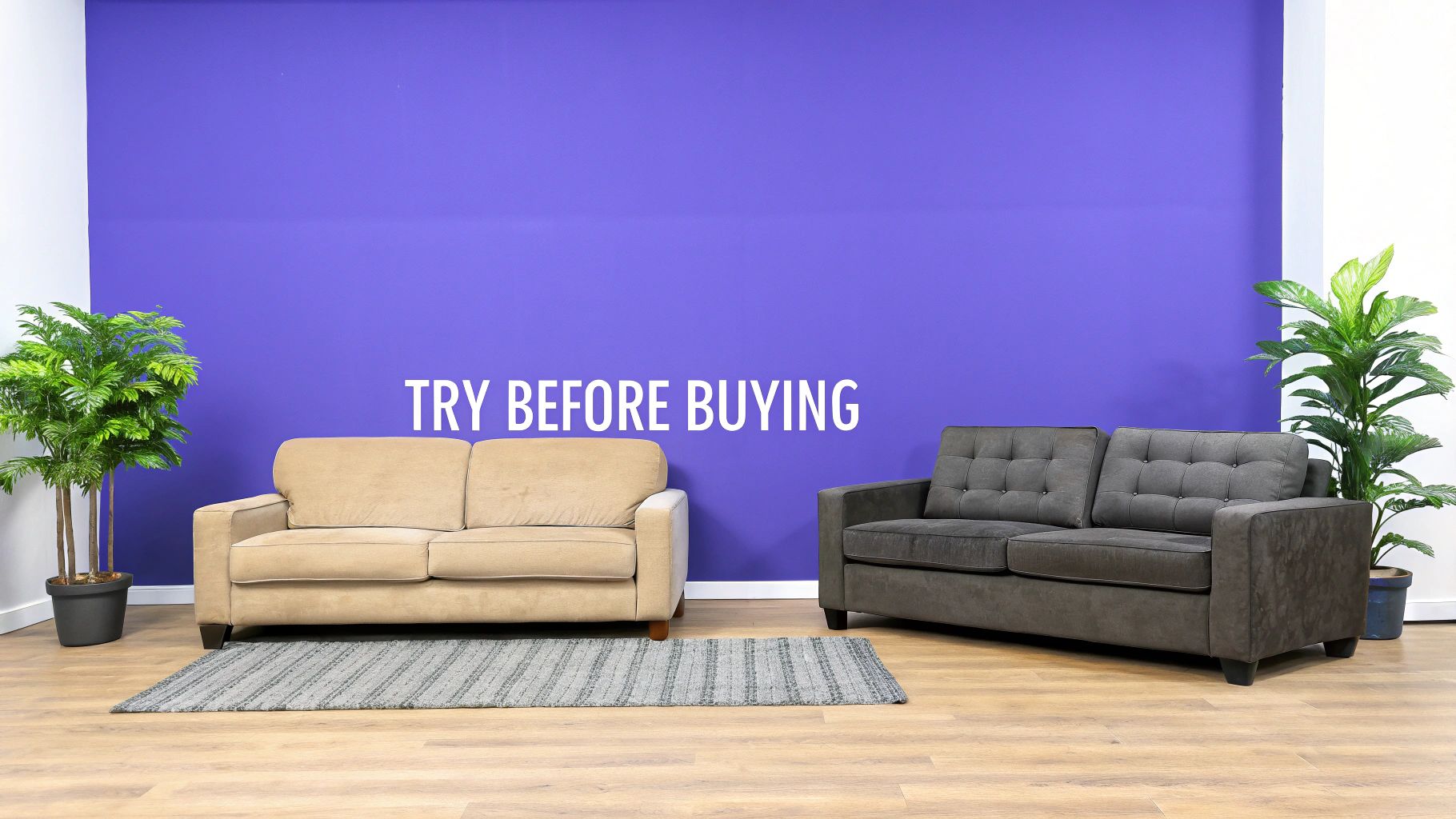
It’s so easy to get caught up in the fun stuff—the velvet armchair, the statement rug, the gallery wall. But even the most beautiful furniture can't save a bad layout. A thoughtful arrangement is the foundation that makes everything else click into place. It guides the flow of traffic, creates a sense of balance, and makes a home feel effortless to live in.
This isn’t just a design principle; it’s a massive business. The global interior design market hit an estimated $138 billion in 2024 and is expected to climb to $176 billion by 2030. Much of that growth is driven by the demand for smarter living spaces, where a well-planned layout can dramatically increase a property's appeal and value. You can find out more about interior design market projections and see just how big this is.
From Guesswork to Guaranteed Fit
Not long ago, arranging a room was all about crossed fingers, tape measures, and a bit of heavy lifting. Today, technology has completely changed the game. Modern tools like aiStager turn what was once a stressful puzzle into a creative and genuinely fun process.
The real magic is being able to see your vision come to life in a way that’s completely true to scale. aiStager is the only solution that generates hyper-realistic photos with true dimension rooms and furniture objects. By simply uploading a photo of your space and a link to a product, you can:
- Test different brands and styles: See how that sleek, modern sofa from Article actually looks next to your existing traditional bookcase.
- Experiment with finishes: Wondering about that armchair in navy velvet versus a neutral linen? Visualize both options instantly, under your room’s actual lighting conditions.
- Confirm the scale: Stop worrying if that coffee table will crowd the room. You’ll know for sure if it’s a perfect fit or a design disaster waiting to happen.
By removing the risk of "will it fit?", you're free to focus on what matters most: creating a layout that truly feels like home. In just a few clicks, users can place a new product in their room, just by uploading a photo of the room and a link to a product, making layout interior design accessible and exciting for everyone.
Mastering The Core Principles Of Space Planning
Before you start pushing furniture around, it’s worth getting familiar with the foundational ideas that make a room feel right. These aren't rigid rules, but rather time-tested principles that designers use to turn a collection of objects into a comfortable, cohesive home. Think of them as the grammar of layout interior design—once you get the hang of them, you can arrange your space with confidence.
A great starting point is understanding what is space planning at its core. It’s the art and science behind creating layouts that are as practical as they are beautiful.
Create A Clear Path With Flow
First up is Flow. It’s all about how you and your guests move through a room. You want your space to feel like a gentle river, not an obstacle course. An effective layout creates clear, intuitive pathways so you aren't constantly weaving around furniture just to get from one side to the other.
As a rule of thumb, major walkways should be 30-36 inches wide. This is the secret to making a room feel open and easy to live in. Always consider the natural journey—from the doorway to the sofa, or from the kitchen to the dining table—and keep that path clear.
Get The Size Right With Scale And Proportion
Next, let’s talk about Scale and Proportion. This is the relationship between the size of your furniture and the size of your room itself. It's the "Goldilocks" principle of design: you want everything to feel just right. A tiny loveseat will look completely lost in a cavernous living room, just as a huge, overstuffed sectional will swallow a small apartment whole.
This is where a little visualization goes a long way. It's tough to gauge true scale from a picture online. You might fall in love with a chair, only to realize it completely overpowers your reading nook once it arrives.
Distribute Visual Weight With Balance
Balance is all about how you distribute the visual weight of your furniture and decor to create a sense of equilibrium. It’s not just about physical weight, but how "heavy" an object feels to the eye.
There are three main ways to achieve it:
- Symmetrical Balance: This is the most formal approach. Think of a perfectly mirrored setup—two identical nightstands flanking a bed, for example. It’s classic and orderly.
- Asymmetrical Balance: This is a bit more modern and dynamic. It involves balancing a large item (like a sofa) with a group of smaller items (like two chairs and a side table) on the opposite side. The visual weight is equal, but the objects are different.
- Radial Balance: Here, everything is arranged around a central point, like chairs circling a round dining table or a coffee table. It naturally draws people together.
Anchor Your Room With A Focal Point
Finally, every great room has a Focal Point. This is the star of the show—the first thing that grabs your attention when you walk in. It gives the room a sense of purpose and direction.
Sometimes, a room has a built-in focal point, like a beautiful fireplace or a large window with a killer view. If not, no problem! You can easily create one with a stunning piece of art, a dramatic light fixture, or even a bold accent wall. Everything else in the room should then be arranged to complement and support this main feature.
For a deeper dive into arranging furniture and maximizing your space, check out our guide on interior design space planning.
To make these concepts even clearer, here’s a quick-reference table that boils down each principle into its essential meaning and a simple tip.
Core Layout Principles At A Glance
| Principle | What It Means | Quick Tip |
|---|---|---|
| Flow | Creating clear, unobstructed paths for movement through a room. | Keep major walkways at least 30-36 inches wide to avoid a cluttered feel. |
| Scale & Proportion | Ensuring furniture size is appropriate for the room's dimensions. | Before buying, use painter's tape to mark a furniture piece's dimensions on the floor. |
| Balance | Distributing the visual weight of objects to create equilibrium. | For a relaxed feel, try balancing a large sofa with two smaller chairs opposite it. |
| Focal Point | Having a primary point of interest that anchors the room's design. | If your room lacks a natural focal point, create one with a large piece of art or a mirror. |
Think of this table as your cheat sheet. When you start planning a room, just run through these four points to make sure your layout is on the right track.
Popular Layout Styles for Modern American Homes
Choosing the right layout really comes down to how you live. What works for a busy family in a sprawling modern farmhouse is going to feel all wrong for a single person in a city studio. Let's walk through some of the most common layout styles you'll find in American homes today, each with its own vibe.
The open-concept layout is still king for a reason. It knocks down the walls between the kitchen, living room, and dining area to create one big, connected space. This setup is fantastic for creating a social, airy atmosphere, which is why you see it so often in styles like California Casual or the ever-popular Modern Farmhouse, where light and togetherness are everything.
Creating Division with Zoned and Conversational Layouts
As much as we love open plans, they can sometimes feel a bit like a giant, undefined box. That's where a zoned layout comes in handy. It’s a smart way to carve out distinct "rooms" within a larger area without actually putting up walls. Think of a large area rug anchoring a seating group, a tall bookshelf acting as a subtle screen, or a cluster of furniture forming a quiet reading nook.
When it comes to the living room itself, a conversational layout is a game-changer. Instead of aiming every piece of furniture at the TV, this style arranges seating to face inward, encouraging people to actually talk to each other. It shifts the room’s purpose from a media consumption zone to a genuine social hub.
This focus on making homes more livable is a massive part of the design world. In fact, residential projects make up over 50% of the global interior design market. A well-thought-out layout can make a home feel 20-30% more efficient just by improving traffic flow and light, but it's hard to picture these changes without seeing them. This is where the right tools can save you from making expensive mistakes.
Visualizing Your Perfect Style
Let's say you're trying to create that perfect conversational layout and you're stuck between two different sofas. Maybe it's a plush, sink-into-it cloud sofa from Restoration Hardware versus a clean, structured sectional from Crate & Barrel. Trying to guess which one will fit the space—and the vibe—is a recipe for disappointment and a logistical nightmare of returns.
This is exactly the problem aiStager was built to solve. It’s the only solution that generates hyper-realistic photos with true dimension rooms and furniture objects. You just upload a photo of your living room, drop in a link to each sofa, and see precisely how each one will look and fit.
aiStager is great to test different types of the same product. You can experiment with different sofa brands and their various colors and finishes in seconds. See how a light boucle feels compared to a rich, dark leather. For anyone looking to stay ahead of the curve, checking out the latest Interior Design Trends 2025 can also help steer these big decisions.
Finally, for those of us living in tighter urban spaces, the studio layout is all about making every square inch count. This approach relies on clever, multi-functional furniture and smart vertical storage to create a home that feels organized and open, no matter how small the footprint.
See Your Layout Ideas in Seconds with AI
This is where all your layout ideas finally click into place, but without the back-breaking work of moving furniture around. Forget the old days of wrestling with a tape measure and sketching floor plans. Modern tools offer a much smarter way to handle layout interior design, letting you see exactly how everything will fit before you buy a thing.
The whole process is refreshingly simple now. With a tool like aiStager, you just upload a photo of your room, and it instantly becomes a digital playground. No need to measure every nook and cranny or draft complicated diagrams—your room is ready for you to start experimenting.
Place Real Furniture in Your Actual Room
Let's say you’re trying to find the perfect centerpiece for your living room. You’re drawn to a big, cozy sectional from Pottery Barn but worry it might just swallow the entire space. On the other hand, you’ve spotted a sleek, modern armchair from Article and wonder if it will look lost next to your big window.
In the past, this was a recipe for guesswork and, often, expensive mistakes or the hassle of returns. But with aiStager, all you need is a link to the product. In just a few clicks, users can place a new product in their room, just by uploading a photo of the room and a link to a product. You can drop a true-to-scale, incredibly realistic model of that Pottery Barn sectional or Article armchair right into the photo of your room.
This is where aiStager really changes the game. It’s the only solution that generates hyper-realistic photos where both the room and the furniture are dimensionally accurate. It truly puts professional-grade space planning in anyone's hands.
This ability to test different layout styles—from wide-open plans to more structured zones—is a lifesaver. You can visually confirm what works and what doesn't.
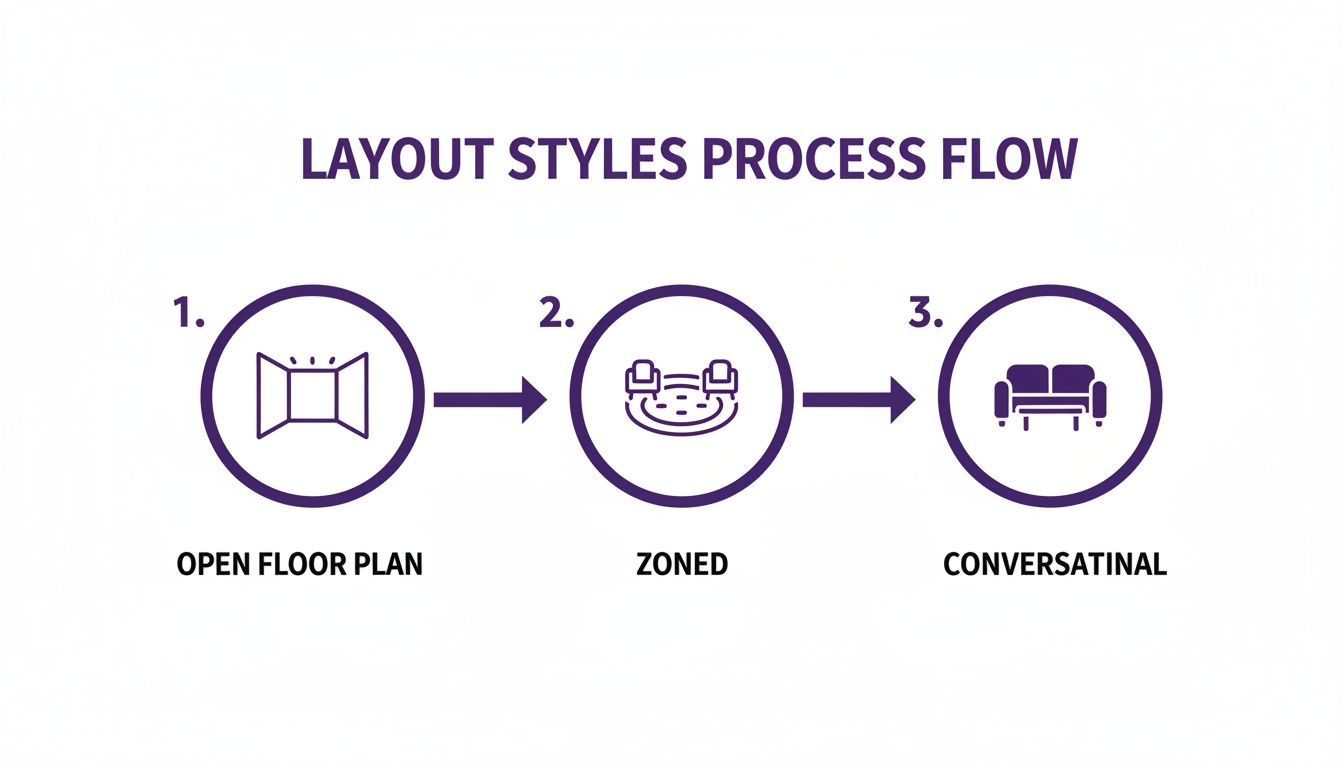
As the diagram shows, a single room can feel completely different just by moving a few key pieces. You can shift from a social, open layout to a cozier, conversational one in moments.
From Colors to Finishes With Just a Click
The magic doesn't stop with just placing items. The real fun begins when you start playing with the details. This is perfect for when you’re torn between different versions of the same product.
aiStager is great to test different types of the same product. You can instantly see the same sofa in a dozen different colors or materials. See how a warm, buttery leather finish feels compared to a cool, contemporary grey fabric—all within your room, with your lighting and your decor. It transforms a stressful decision into a fun, creative experiment.
If you want to dive deeper into picturing your design ideas, you’ll find more tips on using AI interior design tools to visualize your home. This approach takes all the risk out of your design choices, so you can be confident your final layout is the right one before you spend a dime.
How to Test Drive Furniture Before You Buy
Buying a big piece of furniture can feel like a huge gamble, can't it? You measure your space, you stare at photos online, but you never really know how it will look until it’s blocking your doorway. Thankfully, this is one area where technology can step in and take away the guesswork, giving you real confidence in your layout interior design decisions.
Think about choosing a new sofa—the centerpiece of your living room. Instead of just hoping for the best, you can take it for a virtual "test drive" with a tool like aiStager. Just snap a picture of your room, upload it, and you’re ready to play around with real products from any brand you can think of.
Comparing Brands and Styles Instantly
Let's walk through a common dilemma. Maybe you're caught between two completely different vibes: the super-comfy, family-friendly Crate & Barrel 'Lounge II' sofa versus the clean, mid-century modern lines of a West Elm 'Harmony' sofa. Rather than trying to imagine how each one fits, you can virtually place both into your photo in seconds.
All it takes is the product link. aiStager is the only solution that generates hyper-realistic photos using the true dimensions of both your room and the furniture. You’ll immediately see how the scale of each sofa works with your other pieces, which helps you dodge the classic mistake of buying something that completely overpowers—or gets lost in—your space.
Visualizing The Finest Details
This is where the real fun begins. It’s not just about which sofa, but which version of that sofa. Let’s say you’ve landed on the West Elm 'Harmony'. Now you can see how it looks in a cozy 'Alabaster Boucle' fabric compared to a moody 'Ink Blue Velvet'.
You get to see exactly how different colors and textures play with your room's natural light and wall color. That level of detail takes almost all the risk out of the equation, turning a guess into an informed choice.
And this isn't just a game-changer for homeowners. The commercial side of layout interior design is expected to become a $274 billion industry by 2032, fueled by the demand for smart, beautiful spaces. For designers and furniture stores, giving clients a realistic preview means they hesitate less. This can cut down on product returns by as much as 25% and give sales inquiries a serious boost.
Making Confident Decisions In Clicks
When you get right down to it, this whole process turns layout planning from a source of stress into a creative, enjoyable experience. By seeing different brands, fabrics, and colors side-by-side in your own home, you can make a final call with total confidence. That’s priceless for anyone trying to get their home’s design just right and avoid costly buyer's remorse.
If you're curious about the process, you can find more tips to see furniture in your room before you commit.
Common Layout Mistakes and How to Fix Them
Even the most brilliant design ideas can fall apart with a clumsy layout. Getting the layout interior design right often comes down to dodging a few common pitfalls that can make a room feel “off.” Once you know what to look for, you can create a space that feels just as good as it looks.
The classic mistake? Pushing all the furniture against the walls. It seems logical—you're trying to maximize the open floor space, right? But what usually happens is you create a cold, sterile environment that feels more like a doctor's waiting room than a cozy home.
The fix is surprisingly simple: pull your furniture away from the walls. Float your sofa. Angle your chairs. This creates intimate, conversational groupings that feel welcoming and make the room much more interesting.
Solving Layout Puzzles Virtually
Another major misstep is forgetting about traffic flow. If you have to weave around a coffee table or squeeze past an armchair to get across the room, your layout is working against you. A good layout should create clear, effortless pathways for people to move through the space.
And don't even get me started on area rugs. A rug that's too small for the space can make the entire room feel disconnected and shrunken. It’s meant to anchor the furniture, not look like a lonely little island.
These are the exact kinds of problems that are a real pain to fix once you’ve already bought the furniture and hauled it into place. This is where a tool like aiStager really shines. It’s the only solution that generates hyper-realistic photos using the actual dimensions of your room and the specific furniture you're considering, letting you sort out these issues from your computer.
Before you even think about lifting a heavy sofa, you can test out solutions with a few clicks. See for yourself if pulling that couch off the wall makes the room feel better, or if that bigger rug really does tie everything together.
With aiStager, experimenting is easy. Let's say you're torn between two completely different sofas. You can upload a photo of your room, drop in a link to a sleek, Scandinavian-style sofa from Article, and then see how it compares to a classic, comfy option from a place like Pottery Barn.
You can even cycle through different fabrics and colors to see what works best. This kind of virtual test-drive turns what could be a massive headache into a confident, well-informed decision.
Common Questions About Room Layouts
Where Do I Even Start When Planning a Room Layout?
Before you do anything else, you have to know what you're working with. That means grabbing a tape measure and getting the exact dimensions of your room. Don't forget to note where things like windows, doors, and outlets are located.
If you want a modern shortcut, you can use a tool like aiStager. Just snap a photo of your room, upload it, and it gives you a digital, dimensionally accurate canvas to start planning on right away.
How Can I Try Out Different Couches or Chairs Without Buying Them?
The old-school way involves a lot of painter's tape on the floor or, worse, dragging heavy furniture around. It's not fun.
With a tool like aiStager, all you need is that same photo of your room and a link to the furniture you're eyeing. You can see how that Crate & Barrel sectional really looks compared to a sofa from West Elm, trying out different colors and fabrics on the spot. It's the only solution that generates hyper-realistic photos with furniture that’s the right size, letting you compare real products side-by-side in your own space in just a few clicks.
Any Tricks for Making a Small Room Feel Bigger?
Absolutely. The key is to create an illusion of space. Opt for furniture with visible legs—like a sofa or console table that’s lifted off the ground—as it makes the room feel more open and airy.
Your layout should also maximize natural light, so don't block windows. A well-placed mirror can also work wonders by reflecting light and adding a sense of depth. Using a layout tool first is a huge help here, as you can see which arrangement actually feels the most spacious before you commit to buying or moving anything.
Ready to stop guessing and start seeing what your perfect layout looks like? With aiStager, you can test drive real furniture in your actual room in seconds. Try it for free today at https://www.ai-stager.com/en.