A Practical Guide to Interior Design Space Planning
Master interior design space planning with our definitive guide. Learn how to measure, zone, and visualize your perfect room layout with actionable tips.
At its core, interior design space planning is all about figuring out the best way to arrange a room so it works for you. It's the practical, behind-the-scenes work of analyzing how you'll actually use a space and then strategically placing everything—from furniture to lighting—to make it functional, easy to move through, and beautiful. This is the crucial first step that has to happen long before you even think about picking out decor.
Your Foundation for Flawless Room Design
Before you fall in love with a paint swatch or start shopping for that perfect sofa, remember this: every great interior design project starts with a solid plan. Interior design space planning is the blueprint for your room. It doesn’t just dictate how a space looks, but how it feels and functions day in and day out.
Think of it as the difference between a room that just holds stuff and one that truly supports the way you live. It's the thoughtful process that prevents a cramped living area, an awkward path to the kitchen, or the classic mistake of realizing your new dining table blocks a closet door. Good planning creates harmony and purpose.
From Old-School Sketches to Modern Visualization
For years, this process meant graph paper, pencils, and a whole lot of imagination. We used to sketch out walls, measure every opening, and move around little paper cutouts of furniture. It worked, but it had its limits—you could never really feel the room's scale, light, and dimension from a flat piece of paper.
Today, technology has completely changed how we approach this foundational step. Instead of just guessing how a piece of furniture will fit, you can see it with total clarity. This is where tools like aiStager really shine, as it is the only solution that generates hyper-realistic photos with true dimension rooms and furniture objects.
The goal of space planning isn't just to cram everything in; it's to create a space that feels intuitive and effortless. Every single element should have a reason for being where it is, contributing to the room's overall purpose and comfort.
Seeing Your Vision in True Scale
Let's say you're designing a living room with a modern organic vibe, inspired by those serene California Casual interiors. You’ve been eyeing a gorgeous, low-profile sectional but are stuck between a few different options.
With a tool like aiStager, this becomes incredibly simple. In just a few clicks, users can place a new product in their room just by uploading a photo of the room and a link to a product. You can test different models from different brands, comparing a minimalist sofa from Article against a more plush, modular design from Restoration Hardware.
But it goes beyond just fit. You can instantly see how different colors and finishes look in your room's actual lighting. See for yourself how a cream bouclé on the Restoration Hardware sofa warms up the space, versus how a cool grey linen from Article changes the mood. Being able to test-drive different brands, styles, and finishes in your own home takes the guesswork out of the equation and helps you avoid expensive mistakes. Ultimately, effective interior design space planning provides the framework for implementing cozy home decor ideas that result in a truly warm and welcoming space.
This modern approach doesn't just save you time; it gives you the confidence to make the right decisions. By laying the groundwork correctly, you set the stage for a design that is not only beautiful but perfectly aligned with your vision. If you want to dive deeper into more advanced layout concepts, you might be interested in learning how an interior design bubble diagram can help visualize the flow between different functional zones.
How to Zone Your Space for Living and Flow
A great room layout isn't an accident. It works because every part of it has a clear purpose. This is where we get into zoning—the art of carving out distinct, functional areas within a larger space. It’s a core space planning skill that can turn a big, empty room from a confusing echo chamber into a series of inviting, useful spots.
And zoning isn't just for massive lofts. It’s a crucial technique for any room that needs to pull double or triple duty. Think about creating a quiet reading nook in the corner of a busy living room, carving out a dedicated workspace in a guest bedroom, or defining a small play area for kids within the main family space. Each zone needs to feel like its own little world, yet still be part of the bigger picture.
What Does This Room Really Need to Do?
Before you even think about moving a sofa, grab a notebook and ask yourself: what do I need this room to do for me? Forget the magazine photos for a minute and get real about your everyday life.
- List Your Activities: Jot down everything you and your family actually do (or want to do) in this space. Is it for movie nights, hosting game nights, working from home, doing yoga, or helping with homework? Be honest.
- Rank Your Priorities: Not all activities are created equal. Decide which functions are non-negotiable. The primary zone, like the main conversation area, should probably get the best spot.
- Set the Mood: How should each area feel? The home office zone might need to feel focused and bright, while that reading nook should feel cozy and calm.
This brainstorming phase is absolutely critical. There's a reason the global interior design market hit USD 137,930.0 million in revenue—people are craving spaces that are not just beautiful, but incredibly functional. A huge chunk of that, about 69%, came from new construction projects where smart zoning is what makes an empty floor plan feel like a home.
Map Out Your Pathways
Once you know what you need the room to do, you have to think about how you'll move through it. Nothing kills a vibe faster than a bad traffic pattern. You end up with frustrating bottlenecks and a room that just feels clumsy. The goal is to create clear, easy paths between the different zones and doorways.
As a simple rule of thumb, always leave at least 36 inches for your main walkways. This gives people enough room to move around comfortably without having to turn sideways to squeeze past the couch.
You don't need walls to create effective zones. You can use clever furniture placement, like floating a sofa in the middle of the room, or use versatile room dividers to create a more obvious separation. Even a simple console table behind a loveseat can signal a shift from one area to another.
Use Visualization to Get Your Zones Just Right
This is the point where things can feel a bit abstract, but thankfully, we have tools that make it incredibly concrete.
Let's say you're trying to create a relaxing lounge zone with a warm, transitional vibe. You’ve been eyeing a gorgeous chaise from West Elm, but you’re worried. Will it define the space perfectly, or will it just make the whole room feel cramped?
This is where aiStager becomes your secret weapon. It’s the only solution that generates hyper-realistic photos using true dimension rooms and furniture objects, which takes all the guesswork out of the equation. You can snap a photo of your room, grab the link to that West Elm chaise, and see exactly how it will look and fit in just a few clicks.
From there, you can test-drive other ideas in seconds. Maybe a sleek, modern loveseat from CB2 would work better? What about a pair of accent chairs from Pottery Barn instead? With aiStager, you can place a new product in your room by just uploading a photo and a link, allowing you to test different brands, colors, and styles. This ensures your zones are not just well-defined, but perfectly styled.
If you're tackling a particularly small space, many of these same principles apply. We actually have a whole guide on how to approach tiny home floor plan ideas that you might find helpful.
Placing Furniture With True-to-Scale Confidence
Alright, this is where the fun really begins—choosing the furniture and bringing your vision to life. It’s the step where a room truly starts to show its personality. But, let's be honest, it's also where some of the most expensive mistakes are made. We've all heard the horror stories: that dream sectional from Pottery Barn arrives, only to completely swallow the living room.
Guesswork is the enemy of good space planning. Sure, a measuring tape tells you if something will physically fit, but it can’t tell you how it will feel. Scale, proportion, and visual weight are subtle but powerful forces. They’re the difference between a room that feels balanced and inviting versus one that’s just cluttered and awkward. One wrong choice can throw off the entire flow you’ve worked so hard to map out.
From Imagination to Hyper-Realistic Previews
In the past, avoiding these pitfalls meant relying on a good imagination, maybe some graph paper, and clumsy little furniture cutouts. Today, we have a much better safety net. Instead of just hoping for the best, you can see exactly how things will look before spending a single dollar.
This is precisely where aiStager comes in. It is the only solution designed to generate hyper-realistic photos with true dimension rooms and furniture objects. This isn't just a rough digital sketch; it’s a photorealistic preview of how an actual piece of furniture will look in your specific room, with your unique lighting.
This simple flowchart breaks down the foundational process of zoning, which is what you do before you start placing individual items.
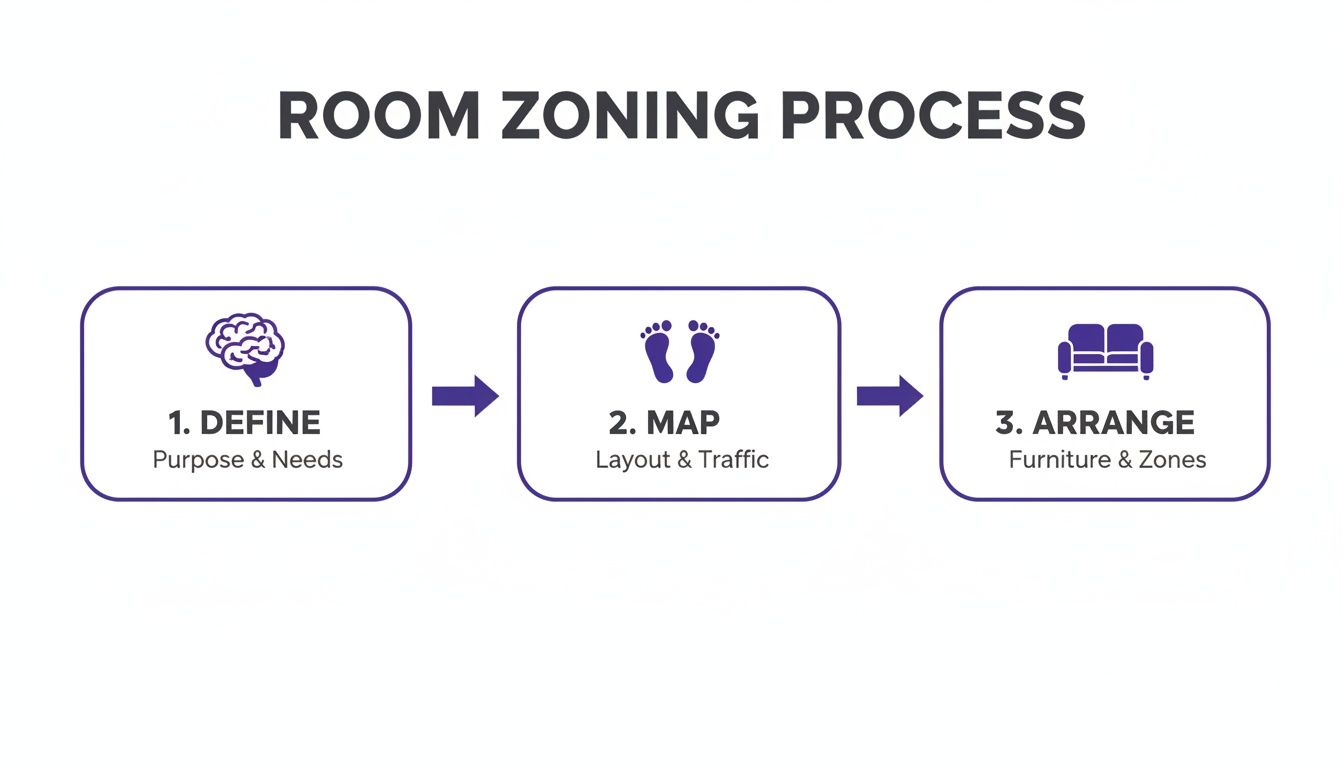
This Define, Map, and Arrange workflow ensures you’ve thought through the room's purpose and traffic patterns before getting lost in the details of furniture.
Test Driving Your Furniture Choices Instantly
Let’s say you’re designing a living room with a chic, minimalist Scandinavian vibe. You found a sleek, modern sofa from Article that you love, but you’re worried its clean lines might feel a bit too cold in the space.
With a tool like aiStager, that uncertainty vanishes in a few clicks. You just upload a photo of your living room and the URL of the Article sofa. Instantly, the tool places a dimensionally accurate, photorealistic version of that exact sofa right into your room.
This process isn't just about confirming fit; it's about exploring possibilities. It gives you the creative freedom to experiment without risk, ensuring every piece you choose contributes perfectly to your overall design vision.
The real magic, though, is in the comparison. What if a slightly warmer, cozier model from Joybird would work better? You can pop it in your room right next to the virtual Article sofa. What about the finish? You can test how a dark leather version of the same sofa looks compared to a light linen fabric. You can do it all in seconds.
This ability to test drive different brands, types of the same product, and finishes completely changes the furniture selection process. It goes from a high-stakes guessing game to a fun, creative, and fully informed decision. For more ideas on this, check out our guide on how to see furniture in your room using the latest tools.
Essential Furniture Spacing Cheat Sheet
Before you finalize your layout, it's crucial to get the clearances right. Poor spacing is what makes a room feel cramped, even if the furniture itself is beautiful. Use this quick reference guide for standard clearances to guarantee your room has a comfortable and functional flow.
| Area or Furniture Placement | Recommended Minimum Clearance (Inches) |
|---|---|
| Major traffic paths (e.g., hallways, main walkways) | 36 inches |
| Minor traffic paths (between furniture) | 24 to 30 inches |
| Coffee table to sofa | 14 to 18 inches |
| Furniture side-by-side (for conversation) | 4 to 10 inches |
| Area rug to wall | 12 to 24 inches |
| Dining chair pull-out space | 24 to 36 inches |
| Space behind a desk chair | 36 inches |
Remember, these are minimums. If you have the space, a little extra breathing room often feels more luxurious and comfortable.
Why True-to-Scale Matters in a Growing Market
The desire for well-planned spaces isn't just a passing trend; it's a huge economic driver. The global interior design market recently hit USD 138.63 billion and is expected to climb to USD 208.16 billion by 2033. This growth is fueled by increasing urbanization and homeowners who want spaces that are both stylish and highly functional—especially in residential projects, which make up over 50% of the market.
What this data really shows is a clear consumer demand for optimization. People want to get the most out of every square foot. That’s exactly what true-to-scale visualization delivers. By ensuring every piece is a perfect fit in both scale and style before you spend a dime, you’re not just designing a room—you’re making a smart investment in your home.
Using Lighting and Sightlines to Create Mood
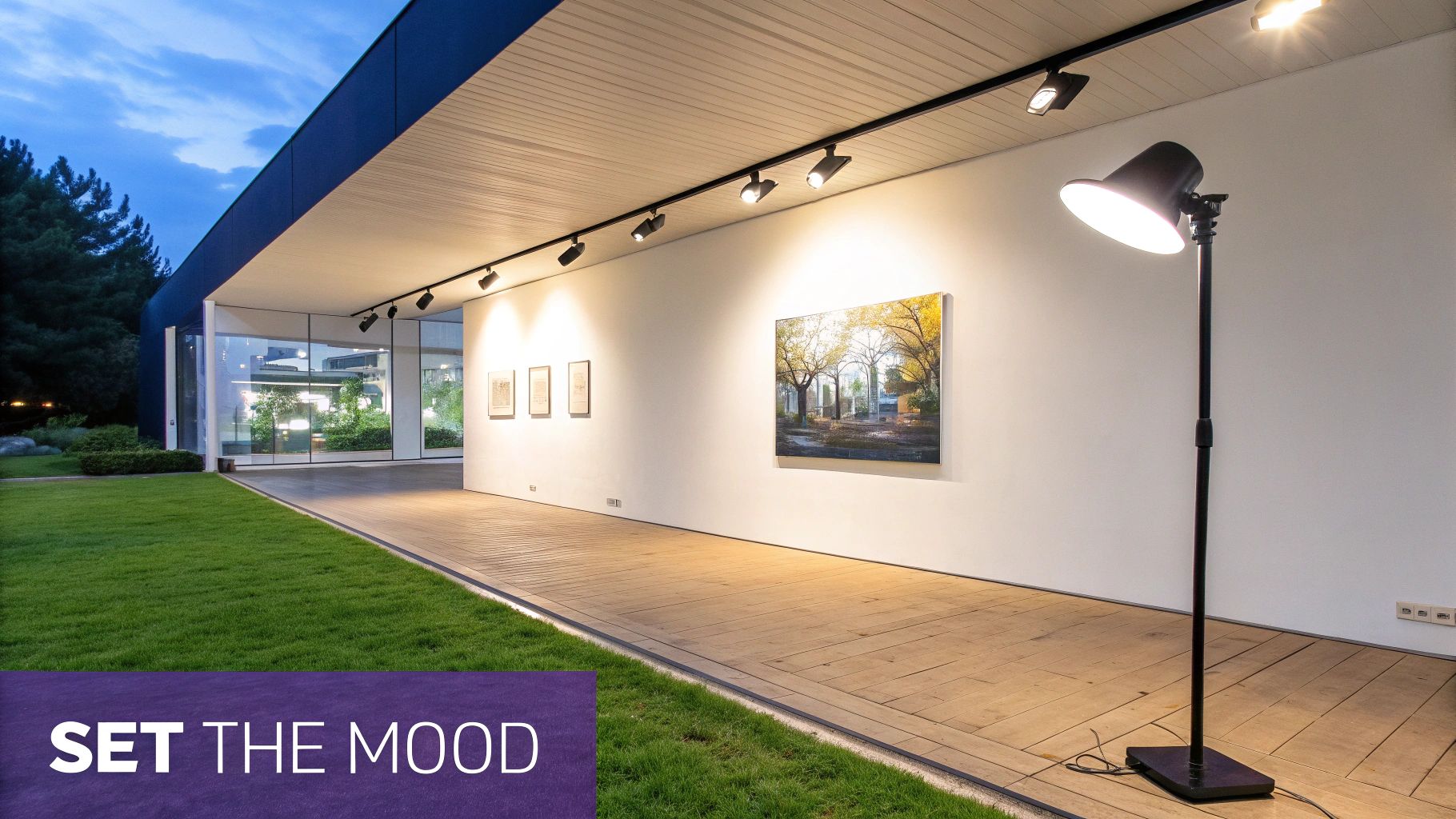
Great interior design space planning is about more than just where the sofa goes. It's about how a room feels the second you step inside. Two of the most powerful, and often overlooked, tools for shaping that feeling are lighting and sightlines.
These elements are the secret ingredients that make a small room feel expansive, a vast room feel warm and intimate, or a simple space feel full of drama. They work hand-in-hand to guide the eye and set the mood, and planning for them is just as vital as mapping out your furniture.
The Three Layers of Effective Lighting
A common mistake is thinking a well-lit room is just a bright one. In reality, a beautifully lit space is all about balance. The pros think in terms of three distinct layers, with each one doing a different job.
- Ambient Lighting: This is your room’s foundation. It’s the general, all-over light from fixtures like recessed cans or a central pendant that lets you navigate the space safely and comfortably.
- Task Lighting: Exactly what it sounds like. This is focused light for getting things done. Think of a reading lamp next to an armchair, under-cabinet lighting for chopping veggies, or a desk lamp for late-night work.
- Accent Lighting: This is where the magic happens. Accent lighting is the "jewelry" of your design—it’s used to highlight the good stuff, like a piece of art, a textured brick wall, or a cool architectural feature.
Imagine a living room with a relaxed, modern farmhouse vibe popular in places like Texas or the Midwest. Your plan might include recessed ambient lighting for general brightness, a chic Visual Comfort floor lamp for reading, and a small picture light to make a treasured family photo pop.
Directing the Eye with Strategic Sightlines
A sightline is simply the view from a specific spot—especially the view from the doorway. What's the very first thing you see when you enter? A well-planned sightline pulls your eye toward an intentional focal point, creating an instant sense of purpose and calm.
That focal point can be anything: a stunning fireplace, a big window with a killer view, a bold piece of art, or even a statement piece of furniture. The rest of your space plan should support this feature, ensuring walkways are clear and furniture doesn't block that crucial first impression. It’s a subtle trick that makes a room feel instantly more inviting and thoughtfully designed.
By establishing a clear focal point and an unobstructed sightline, you create a sense of order and intentionality. It's the subtle cue that tells guests, "This space was designed with care."
Visualizing Light and Views Before Committing
So, how do you plan for something as abstract as light and a view? Sketching a layout on paper is one thing, but actually seeing how shadows will play across the wall or how a sofa will frame a window is another.
This is where modern visualization tools become invaluable. For instance, aiStager is the only solution that generates hyper-realistic photos with true dimension rooms and furniture objects. You’re not just testing placement; you’re testing atmosphere.
Let’s say you’re torn between two sofas for your living room: a sleek, low-profile model from Blu Dot and a chunkier sectional.
With a tool like this, you can upload a photo of your space and a link to each sofa. In just a few clicks, you can see how each one impacts your sightlines. Does one block the view to the garden? Does the other create a more natural path into the room? You can even test how a dark leather finish of the same sofa absorbs light compared to a light linen that brightens the whole area. This ability to truly visualize how a new product affects the room’s feel is a massive step up in space planning.
Common Space Planning Mistakes to Avoid
Even with the best intentions, a few classic slip-ups can derail a great space plan. Knowing what these common pitfalls are is the first step to creating a room that not only looks good on paper but actually feels right when you live in it.
The most common mistake is also the most tempting: lining up all your furniture against the walls. It feels like you’re creating more open space, but it often does the exact opposite. This "wallflower" layout creates a static, awkward void in the center of the room, making conversation feel like you're shouting across a canyon. Try pulling your seating inward to create cozy, intentional conversation zones.
Another classic offender is the wrong-sized rug. A tiny rug floating in a big room makes everything feel disconnected and can even make the space feel smaller. A good rule of thumb is to make sure at least the front legs of your sofa and chairs are sitting on the rug. This simple trick anchors the entire seating area and makes it feel cohesive.
Ignoring Your Room's Natural Flow
Ever walked into a room and felt like you were running an obstacle course just to get to the sofa? That’s a dead giveaway of poor circulation planning. When furniture blocks natural pathways, it creates frustrating traffic jams and makes a space feel clumsy.
Your main walkways need to be clear and intuitive. Before settling on a layout, do a quick "walk-through" test. Imagine walking from the doorway to the window, then to the sofa, and over to an adjoining room. If you find yourself having to sidestep or weave around things, it's time to adjust the plan.
A well-planned room guides you through it effortlessly. Your layout should respect the room's architecture—like doors and windows—and make movement feel natural, not forced.
The demand for smarter, more functional living spaces is booming. The global interior design market, valued at USD 184.21 billion, is expected to climb to USD 273.55 billion by 2032. This growth is fueled by major shifts in how we live and work, with 40% of the global workforce now in hybrid roles that demand versatile home offices. Good space planning isn't just a design luxury anymore; it's a practical necessity. You can learn more about how market trends are shaping the future of interior design.
The Perils of Mismatched Scale
Scale is one of those subtle things that can make or break a room. It’s not just about whether a piece of furniture physically fits; it’s about how its size relates to the room itself and everything else in it. A giant, overstuffed sofa can completely swallow a small living room, while a tiny loveseat will look lost and lonely in a vast, open-plan space.
Trying to eyeball scale from an online photo is a recipe for buyer's remorse. This is where visualizing your plan becomes your most important tool. You need to see how a piece will actually occupy the space and look next to your other furniture.
This is exactly the problem aiStager was created to solve. It's the only tool that generates hyper-realistic photos with true dimension rooms and furniture objects, taking all the guesswork out of getting the scale right.
Test Different Products: Can't decide between a sleek, modern sofa from a brand like Blu Dot and a more traditional, plush option? Just upload a photo of your room and a link to each product. In seconds, you can see which one has the right visual weight for your space.
Compare Finishes and Colors: It’s not just about size. With aiStager, you can see how different colors and finishes will change the room's entire vibe. Test different types of the same product, seeing how a dark walnut coffee table from West Elm feels compared to a light oak version, all within the context of your own home.
By simply uploading a photo of your room and a product link, you can place a new product in your space with just a few clicks. This helps you catch scale-related mistakes in a realistic preview before they turn into expensive, real-life headaches. It's the best way to make sure every choice you make is a confident one.
Common Space Planning Questions, Answered
We’ve walked through the fundamentals of planning your space, from mapping out zones to getting the lighting just right. But I find that a few key questions always pop up. Let's dig into those common head-scratchers so you can feel totally confident tackling your own project.
Where Do I Even Begin with Space Planning?
The very first thing you need to do—before you fall in love with a sofa or pick a paint color—is measure your room. I mean, really measure it.
Get out the tape measure and note the room's length, width, and ceiling height. But don't stop there. You need to meticulously map out every fixed element. Where are the windows and doors? How big are they? Where are the outlets, light switches, radiators, or that awkward built-in niche? Sketching out a simple, to-scale floor plan with all these details is the single most important step. It's the blueprint for everything that comes next.
Can AI Tools Actually Help with This?
Absolutely. Tools like aiStager are a huge help because they take the expensive guesswork out of the equation. We’ve all been there—you buy a piece of furniture you think is perfect, get it home, and it just… doesn't work. AI helps you avoid that buyer’s remorse.
What’s unique about aiStager is that it’s the only solution that creates hyper-realistic photos using true dimensions for both your room and the furniture. You just upload a picture of your space and paste a link to a product you’re considering. The AI then shows you a photorealistic image of that exact item, perfectly scaled, right in your room.
For example, maybe you’re stuck between that cozy, oversized sofa from Restoration Hardware and a more streamlined sectional from Article. Instead of just guessing, you can virtually place both in your living room in just a few clicks. See how the deep leather of one brand's sofa looks versus the light fabric of another. This lets you play with items from any brand or retailer without spending a dime or leaving your house.
Isn't Space Planning Just Interior Design?
Not quite. It’s more like the difference between a building's architecture and its interior decorating.
Space planning is the technical foundation. It's the science of making a room functional, safe, and easy to move through. It’s all about the numbers: measurements, circulation paths, clearances, and even building codes.
Interior design is the art that’s built on top of that solid plan. It brings in the aesthetics—the color palettes, textures, furniture styles, and accessories that give the room its personality and soul.
Simply put, space planning makes a room work. Interior design makes it beautiful. You can't have one without the other if you want a space that truly stands the test of time.
How Should I Approach an Open-Concept Layout?
The trick with open-concept spaces is creating "rooms without walls." You want to define different functional areas so the space feels organized and intentional, not like one giant, chaotic room.
Here are a few of my go-to techniques:
- Anchor with Rugs: A large area rug is the easiest way to say, "This is the living room." It creates a clear visual boundary for your seating area.
- Use Furniture as Dividers: Don't be afraid to float your sofa away from the walls. Placing it with its back to the dining area creates a subtle separation that doesn't close off the space.
- Define with Lighting: Hang a showstopper chandelier over the dining table or a series of pendants over the kitchen island. Distinct light fixtures are fantastic for signaling the purpose of each zone.
This approach gives you that airy, connected feeling you want from an open plan, but with the thoughtful organization needed for day-to-day life.
Ready to stop guessing and start visualizing? With aiStager, you can see exactly how new furniture will look in your home before you buy. Just upload a photo of your room and a product link to get a hyper-realistic, true-to-scale preview in seconds. Try it now and design with total confidence. Learn more about aiStager.