Small Space Interior Design: Clever Hacks to Maximize Every Room
Explore small space interior design ideas to make every room feel larger, with smart furniture, color, and layout tips that boost mood and value.
Small space interior design isn't just about cramming things in; it's the art of making a compact room feel both effortlessly functional and genuinely beautiful. It’s about choosing smart pieces that do double duty and making sure every square inch pulls its weight. This is where limitations become your greatest design opportunities.
Building Your Foundation: Measure Twice, Zone Once
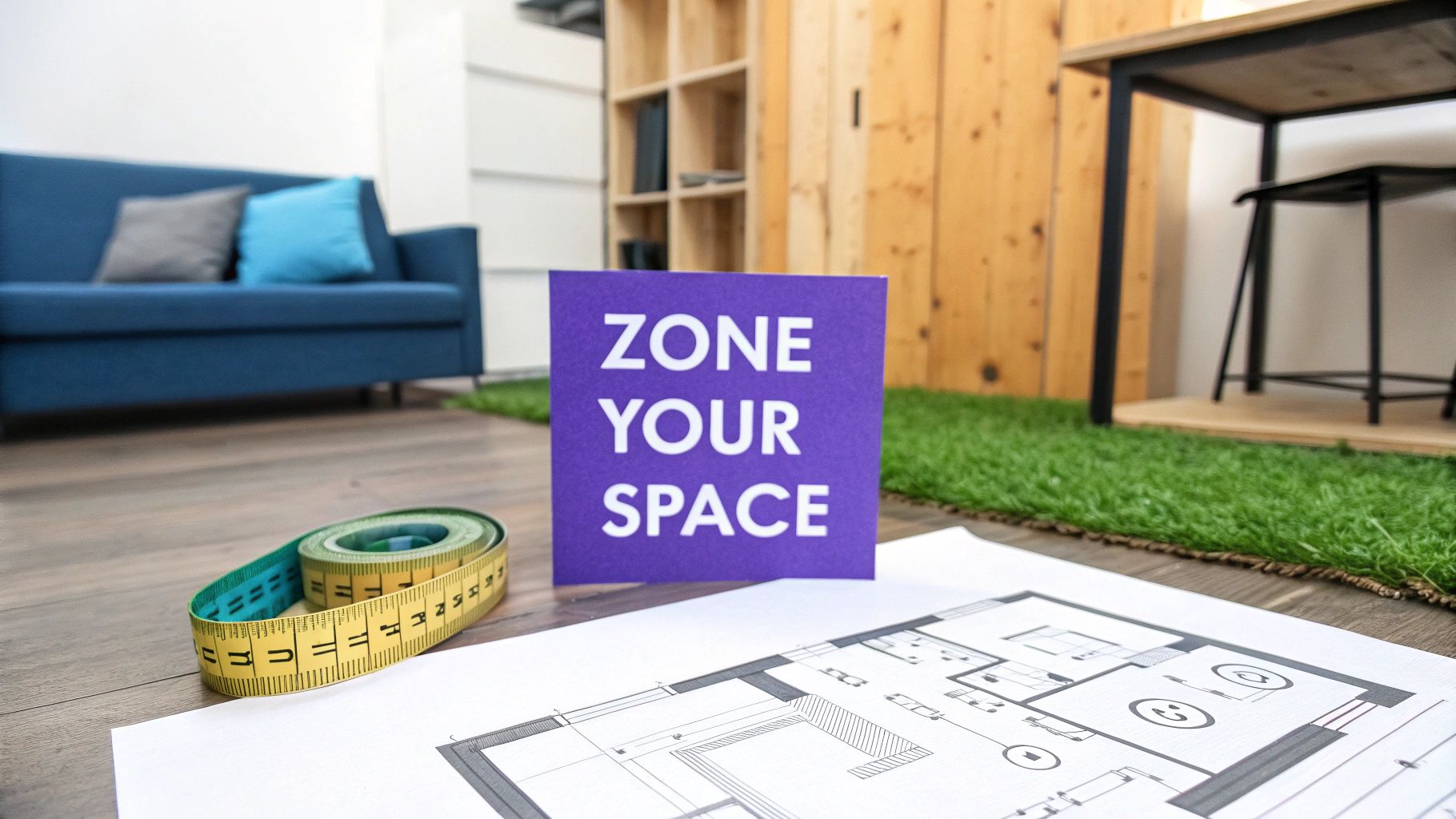
The fantasy of a perfectly styled small space doesn't start with scrolling through Pinterest. It starts with a tape measure and a solid plan. Before you even think about falling in love with a velvet sofa or a cool accent chair, getting your measurements down and zoning the space is the most critical first step you can take.
This groundwork is what saves you from classic, costly mistakes—like realizing that beautiful couch won't actually fit through the door. It turns a room from a random collection of furniture into a cohesive, livable home.
Honestly, this planning stage has never been more important. With over 55% of the world's population now living in cities, the need for smart, space-saving designs has exploded. This isn't just a niche idea anymore—it's a massive market projected to hit USD 12,151 million by 2035. This global shift just highlights how crucial it is to have the right strategies and tools to make the most of every last foot.
The Art of the Accurate Measurement
Every great design project I've ever seen started with a ridiculously detailed floor plan. Don't eyeball it. Get in there and measure everything—wall lengths, ceiling height, and the exact dimensions of every window and doorway.
Just as important, mark down where all the permanent fixtures are. Things like radiators, power outlets, and light switches will absolutely dictate where your furniture can (and can't) go. Getting these details right from the start is especially key in a bedroom, where flow is everything. For more on this, check out these expert tips on arranging bedroom furniture for a perfect layout.
A few centimeters can make the difference between a seamless layout and a frustrating obstacle course. Double-checking your measurements is the cheapest insurance policy you can get in interior design.
To make sure you don't miss anything, here's a quick checklist of the must-have dimensions. Getting these right is the key to a foolproof plan and saves you from the headache of returns.
Key Measurements for a Foolproof Floor Plan
| Measurement Area | What to Measure | Why It's Critical |
|---|---|---|
| Room Dimensions | Length, width, and ceiling height of the entire room. | Establishes the total available space and affects scale. |
| Doors & Windows | Width, height, and location of each. Note which way doors swing. | Determines furniture placement, traffic flow, and natural light. |
| Entryways/Hallways | Width and height of any entry points leading to the room. | Ensures furniture can physically get into the space. |
| Architectural Features | Location and size of radiators, built-ins, columns, or fireplaces. | These are non-negotiable obstacles you must work around. |
| Utility Points | Position of electrical outlets, light switches, and cable/internet hookups. | Dictates where electronics and lamps can be placed. |
Once you have these numbers, you can confidently start planning your layout without any nasty surprises.
Creating Functional Zones
With your measurements in hand, it's time to think about zoning. This is just a practical way of carving out distinct areas for different activities within a single room. Think of a studio apartment where you need a spot to sleep, a place to relax, and a corner to work—all without putting up a single wall.
You can define these zones with simple, clever visual cues:
- Area Rugs: A well-placed rug is brilliant for anchoring your living room furniture and visually separating it from a nearby dining nook.
- Furniture Placement: Try placing a slim console table against the back of a sofa. It subtly creates the feel of an entryway or defines a clear walkway.
- Strategic Lighting: A stylish floor lamp in one corner instantly signals "cozy reading spot."
This approach gives your layout a sense of order and purpose, which in turn makes the entire space feel larger and way more organized. It's your blueprint for a home that's not just beautiful, but also incredibly practical.
Of course, getting these digital blueprints perfect has gotten a lot easier. For a closer look at modern measuring techniques, see our guide on how to scan a room in 3D using just your phone.
Choosing Smart Furniture That Works Harder
When you're designing for a small space, every piece of furniture has to audition for its spot. You can't just fill a room; you have to solve a puzzle. Each item needs to justify its existence by being multifunctional, perfectly scaled, and visually light. Forget those bulky pieces that just eat up floor space. We're looking for smart, hardworking furniture that adds function without the clutter.
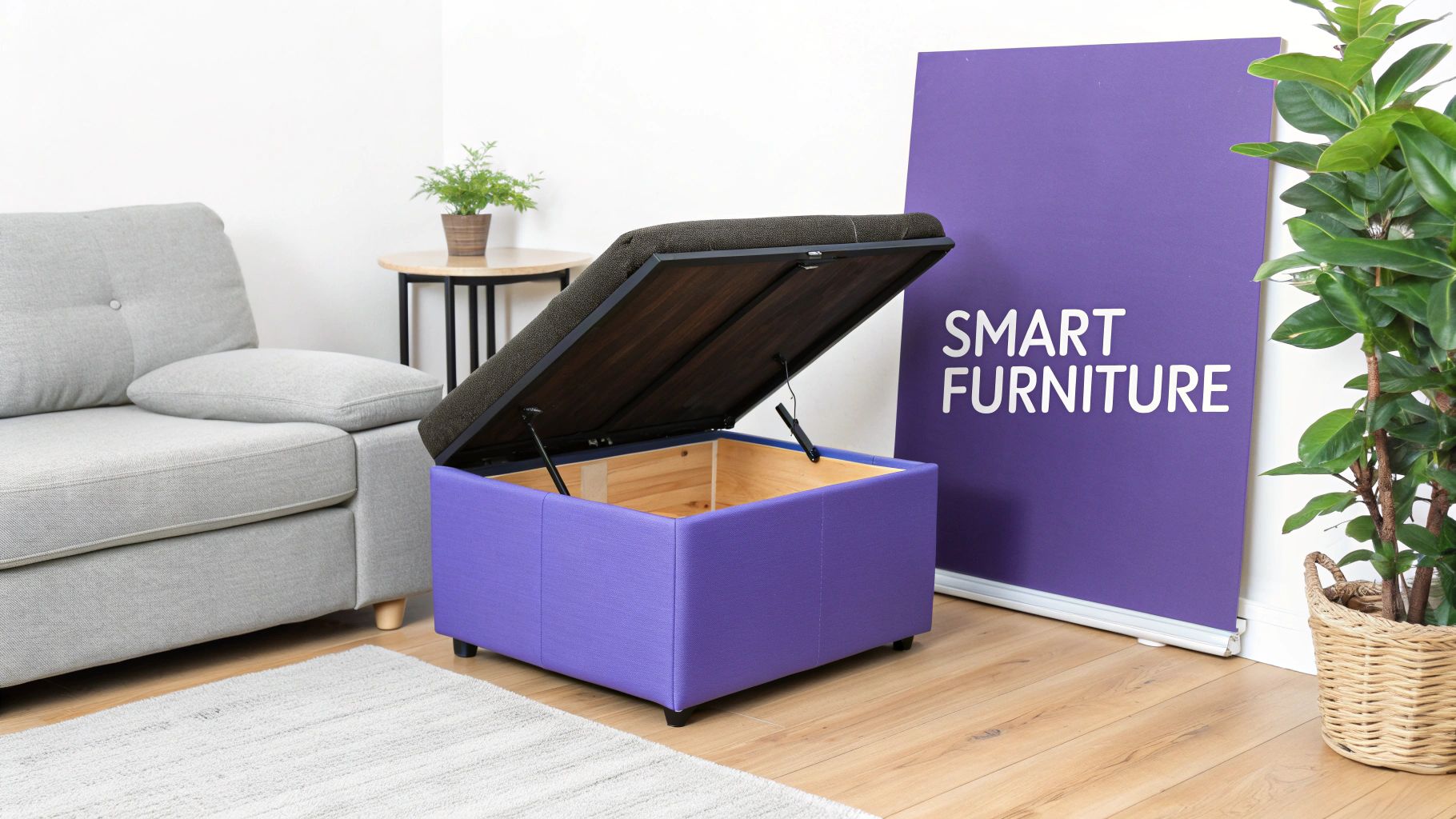
Think about pieces that can pull double duty. That chic storage ottoman isn't just a trend; it's a footrest, an extra seat for a guest, and a secret spot for blankets or magazines. A drop-leaf dining table can live quietly against a wall for your morning coffee and then expand to host a dinner party.
It’s all about seeing furniture not just for what it is, but for what it can be. The right choices can turn a tight corner into a versatile, inviting home.
Understanding Visual Weight
Here’s a concept that designers live by: visual weight. This has nothing to do with how many pounds an item weighs, but everything to do with how heavy it feels to the eye. A solid, blocky armchair squatting directly on the floor has a high visual weight and can make a room feel instantly smaller.
On the other hand, furniture with raised legs—think a mid-century modern credenza or a sofa with a slim profile—carries a low visual weight. Why? Because you can see the floor underneath. This simple trick creates an illusion of openness and space. Air and light can move more freely, and the room feels bigger.
When you're out shopping, keep an eye out for these features:
- Leggy Furniture: Always look for sofas, chairs, and tables with visible legs.
- Reflective Surfaces: Mirrored, glass, or acrylic pieces almost seem to disappear, which dramatically reduces their visual footprint.
- Slim Profiles: Steer clear of sofas and chairs with overstuffed, bulky arms. A clean, tailored silhouette is your best friend in a small room.
Prioritizing pieces designed for compact living is crucial. Exploring some of these top cabinets for small spaces is a great way to see this principle in action.
The Power of Multifunctional and Modular Pieces
The real heroes of small-space living are the pieces that adapt as your life changes. A modular sofa, for example, is a game-changer. Brands like Floyd offer sectionals you can reconfigure, add to, or even break apart into separate chairs. Your layout can evolve right along with you.
The best furniture for a small living room is the kind that pulls double duty. You don’t need to fit more things; you need to choose the right things that adapt to how you live.
This is where your creativity can really shine. A C-shaped table can slide over the arm of your sofa to become a temporary desk. Nesting tables can be fanned out when you have company and tucked neatly away afterward. These aren't just clever hacks; they're smart design choices that make your home feel more functional and alive.
Virtual Try-Before-You-Buy The Right Way
We’ve all been there. You see a sofa in a massive showroom, fall in love, and get it home only to realize it completely overwhelms your tiny living room. Guesswork is the fastest way to make an expensive mistake.
This is exactly the problem aiStager was built to solve. It’s the only tool that generates hyper-realistic photos using the true dimensions of your room and the furniture you're considering. Forget those clunky 3D models. This is your room, with your lighting, showing you precisely how that new piece will fit.
The process couldn't be simpler. You just upload a photo of your room and a link to the product you’re eyeing. In just a few clicks, you can place a new product in your room and see how that sleek West Elm sofa really compares to a cozier one from Pottery Barn in your space.
Better yet, aiStager is great to test different types of the same product. Worried that the navy blue fabric on a sofa might be too dark? Wondering if a leather finish is too harsh for your style? You can visualize every color and material option with a few clicks, placing each one right into your room. This ability to see furniture in your room with dimensionally accurate results takes all the uncertainty out of the equation, ensuring every piece you bring home is a perfect fit.
Using Light and Color to Create Space
When you're dealing with tight quarters, light and color are your best friends. Seriously. They're the ultimate illusionists in small space interior design, with the power to make a room feel open, airy, and a whole lot bigger than it actually is. The right combination can completely change how you perceive a space, turning a cramped corner into a place you actually want to be.
Think of it this way: light is what creates the sense of space, and color is what amplifies that feeling. A room that's well-lit and painted with a thoughtful palette just feels more intentional and expansive. This isn't a new idea—it's at the heart of popular US design styles like the breezy California Casual look or the clean, simple lines of Scandinavian decor. Both lean heavily on maximizing light to create a calm, open atmosphere.
Paint Strategies That Blur Boundaries
The easiest place to start is with paint. You've probably heard the classic advice to use light colors because they reflect light, and it's absolutely true. A soft white like Benjamin Moore’s "Chantilly Lace" or a pale, subtle gray can make walls feel like they're receding.
But here’s a tip I’ve used countless times: paint the walls, trim, and even the ceiling the same light shade. This little trick erases the visual breaks where different surfaces meet. The result? A seamless, cloud-like effect that makes the ceiling feel higher and the room wider. It blurs the room’s boundaries, tricking your eye into seeing one large, cohesive space. There's a reason high-end designers do this—it just works.
This need for smart, functional design in compact homes is a huge economic driver. The global interior design market, which was valued at USD 137.93 billion, is massively influenced by small-space living and is only projected to grow. In fact, furniture alone accounts for 35% of this market, with a huge demand for pieces that fit neatly into urban apartments. You can find more details on the interior design market's growth in this report.
The Strategic Placement of Light
Lighting is so much more than just a functional necessity. It's about sculpting your space. A single, harsh overhead light tends to flatten a room and throw its small dimensions into sharp relief. The better approach is to layer your lighting to create depth and ambiance.
- Ambient Lighting: This is your base layer of general light. Think soft, diffused light from a central fixture or maybe some recessed lighting.
- Task Lighting: This is targeted light for specific activities. It could be a sleek floor lamp next to your favorite armchair for reading or some under-cabinet strips in a kitchenette.
- Accent Lighting: This is where you add a little drama. Use small spotlights to highlight a piece of art, a cool plant, or an interesting architectural feature.
A tall, vertical floor lamp is a fantastic choice for a small room because it draws your eye upward, creating an illusion of height. Wall sconces are another great move, as they add a warm glow without taking up a single inch of floor or table space.
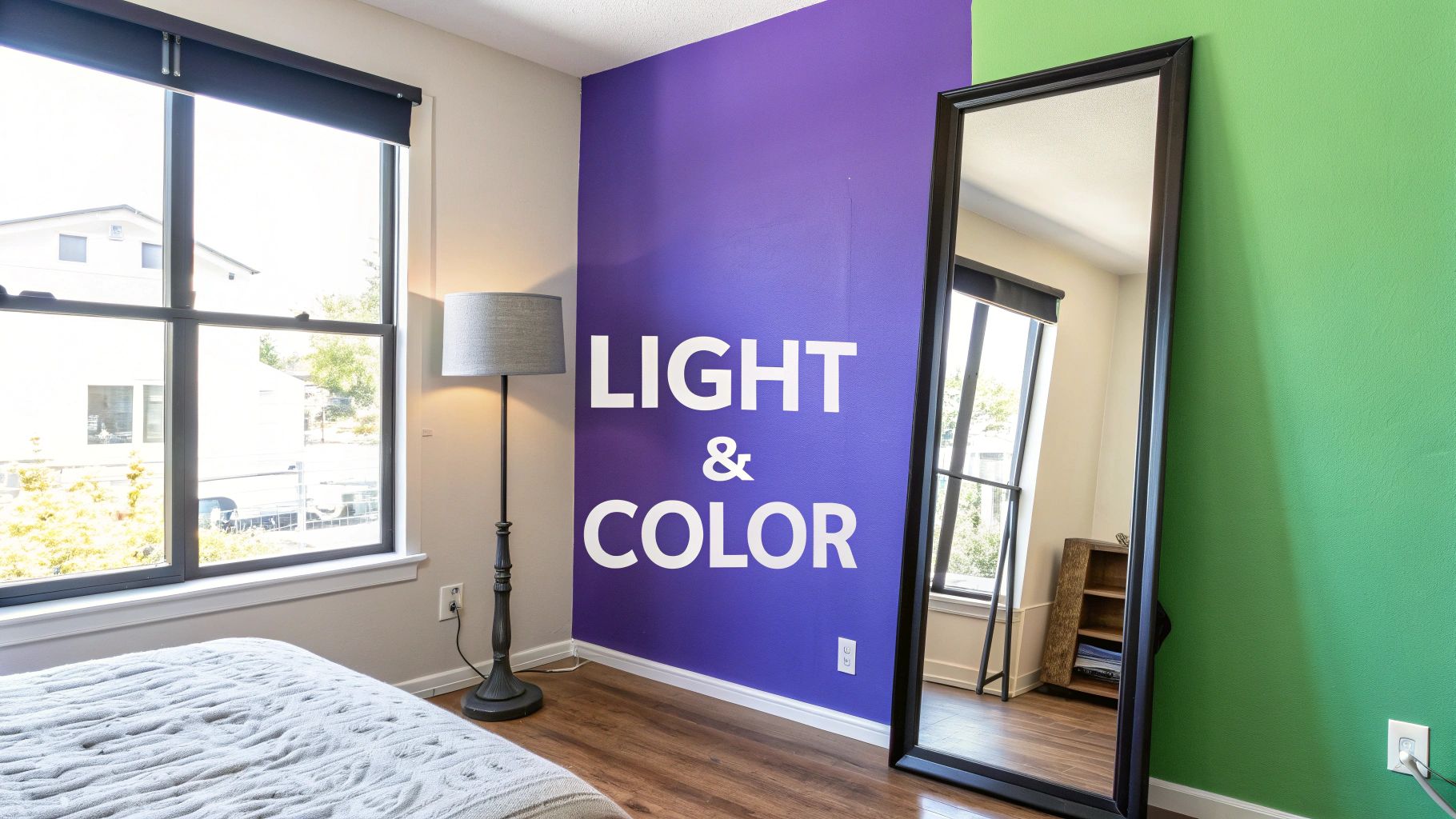
Mirrors are your secret weapon. Seriously. A large mirror placed opposite a window can literally double the amount of natural light in a room. It creates a profound sense of depth and can make it feel like you’ve added a whole new window.
Experiment Without the Risk
I get it—choosing the perfect color or light fixture can be paralyzing. What if that trendy, dark green accent wall you love on Pinterest just makes your room feel like a cave? What if that gorgeous brass floor lamp from Rejuvenation is just a bit too bulky for the corner you have in mind?
This is where visualization tools are a game-changer. Instead of painting a bunch of sample swatches on your wall or hauling furniture home only to return it, you can test-drive your ideas virtually. A tool like aiStager is the only solution that generates hyper-realistic photos with true dimension rooms and furniture objects.
Wondering how a dark, moody paint color would really feel? Or want to compare a slim floor lamp to a chunkier one? Just upload a photo of your space and a link to a product. In just a few clicks, you can place a new product in your room and see exactly how it changes the feel of the space, letting you find the perfect fit before you commit.
Taming Clutter with Smart Storage
When you're working with a small space, clutter isn't just a nuisance—it's your biggest enemy. It visually shrinks the room, eats up precious floor space, and can make even the most beautiful decor feel chaotic. Getting rid of it isn't just about tidying up; it's a fundamental design strategy. The secret is to think beyond plastic bins and get creative with storage that’s built right into your design.
The first place I always tell clients to look is up. Your vertical space is your most underused asset. Think about adding floor-to-ceiling shelving. It not only provides a massive amount of storage but also draws the eye upward, making the room feel taller and more open. Suddenly, a blank wall becomes a stylish, functional library for books, decor, and anything else you need to get off the floor.
Don't forget about those other "hidden" pockets of square footage, either. The space under your bed, the dead zone above a doorway, or that awkward corner you don't know what to do with? They're all prime real estate waiting to be claimed.
Finding Storage That Fits In (Or Stands Out)
The best storage solutions feel like they're part of the room's architecture, not just something you added as an afterthought. This is where well-designed systems really shine. For example, a sleek, wall-mounted system like the Elfa collection from The Container Store can be configured for any wall, giving you a minimalist, organized look that feels completely intentional.
Look for these often-missed opportunities:
- Above the Door: A simple, sturdy shelf here is perfect for things you don't use every day, like travel bags or seasonal decorations.
- Under the Bed: Don't just shove things under there. Get some proper rolling drawers or even a bed frame with built-in hydraulic lifts. It’s a game-changer for storing extra bedding and clothes.
- Corner Shelves: Turn that empty corner into a feature. A few floating shelves or a dedicated corner bookcase can transform it from wasted space into a curated display.
The key is to find pieces that either blend seamlessly into the background or make a deliberate style statement.
The Magic of Hidden Storage
My favorite trick for small spaces is furniture that pulls double duty. This is the art of hidden storage—pieces that work hard without showing it. Think of an ottoman with a lift-off top for blankets, a coffee table that pops up to reveal space for magazines and remotes, or a media console with solid doors to hide all the electronic chaos.
This is absolutely essential in a multi-functional room. When your living room also has to be your office, having furniture that can quickly swallow up the day's mess is a lifesaver. It lets you switch from "work mode" to "relax mode" in seconds.
Here’s a rule I live by: 'one in, one out.' For every new thing you bring home, something else has to go. It sounds simple, but this little habit stops clutter from creeping back in and makes you way more thoughtful about what you own.
See Your Space with Fresh Eyes
It's one thing to talk about decluttering, but it’s another to actually visualize it. Trying to imagine new storage when you're staring at a room full of stuff is incredibly difficult. It’s a common roadblock that stops people before they even start.
This is where a tool like aiStager can be a huge help. It has a unique feature that lets you digitally empty your room with just one click. You upload a photo, and poof—you can see your space as a clean slate, without all the current mess distracting you. It gives you the mental breathing room to actually plan.
From that blank canvas, you can start experimenting. Wondering if that tall bookcase will overwhelm the wall? Want to see how a low credenza looks instead? With aiStager, you can just plug in a link to a product you're considering, and it will place a hyper-realistic, dimensionally accurate version right in your room. You can even play with different colors and finishes to see what works best. It’s the only tool that generates these true-to-scale photos, taking all the guesswork out of finally conquering your clutter.
Visualizing Your Perfect Layout With AI
After all the measuring and planning, this is where the fun begins. It’s time to see your vision come to life—without having to haul a single piece of furniture. We’ve all been there: wrestling a sofa through a tight doorway only to realize it completely overpowers the room. That kind of guesswork leads to frustration and expensive mistakes, but thankfully, modern tools have made it a thing of the past.
Being able to see exactly how a layout will work before you buy anything is a huge advantage, especially in small space design. It gives you the freedom to experiment, compare different vibes side-by-side, and lock in your layout with absolute confidence.
From Guesswork to Hyper-Realistic Previews
Traditionally, we relied on mood boards and rough sketches. They’re great for capturing a feeling, but they can’t tell you if that armchair will actually fit next to the bookshelf. This is where AI visualization completely changes the game.
Let’s say you’re torn between two sofas: a sleek, modern sectional from Crate & Barrel and a more compact, colorful loveseat from Joybird. In the old days, you’d be staring at dimensions on a spreadsheet, trying to imagine how each one would fill the space.
Now, it’s ridiculously easy. Using a tool like aiStager, you just upload a photo of your living room and drop in the product link for the Crate & Barrel sectional. Within seconds, you get a photorealistic image of that exact sofa, in the right color and everything, sitting right in your room.
This isn't some clunky 3D model or a generic stand-in. aiStager is the only solution that generates hyper-realistic photos with true dimension rooms and furniture objects, showing you precisely how a piece will look and fit.
You can then do the same thing with the Joybird loveseat. In minutes, you have two realistic photos to compare. The choice becomes obvious. You can see which one opens up the room, which one clashes with your rug, and which one truly makes the most of your limited square footage. That kind of certainty is priceless. For a deeper look, you can check out our guide on the best AI interior design tools out there.
Test Driving Every Detail
Getting a small space right is about more than just the big items. It's the mix of colors, textures, and finishes that really makes it feel cohesive. This is another area where AI visualization is a lifesaver.
Love a sofa but can't decide between the charcoal gray fabric and the rich cognac leather? aiStager is great to test different types of the same product. In just a few clicks, you can place a new product in your room, just by uploading a photo of the room and a link to a product, and see how each option plays with your wall color and the natural light in your room.
This goes for everything. You can swap out area rugs, see how a new piece of art changes the feel of a wall, or compare different coffee table styles. This process eliminates all the "what ifs," letting you tweak your design until it's just right. This is especially important as the interior design market, projected to hit USD 214.35 billion by 2034, sees more people blending tech and sustainability at home. AI previews help avoid buyer's remorse, which can cut e-commerce return rates by up to 20-30%. You can discover more insights about interior design market trends and see how technology is shaping what we buy.
To really nail the small-space brief, you have to get smart about clutter. That means thinking vertically, finding hidden storage, and being ruthless with what you keep.
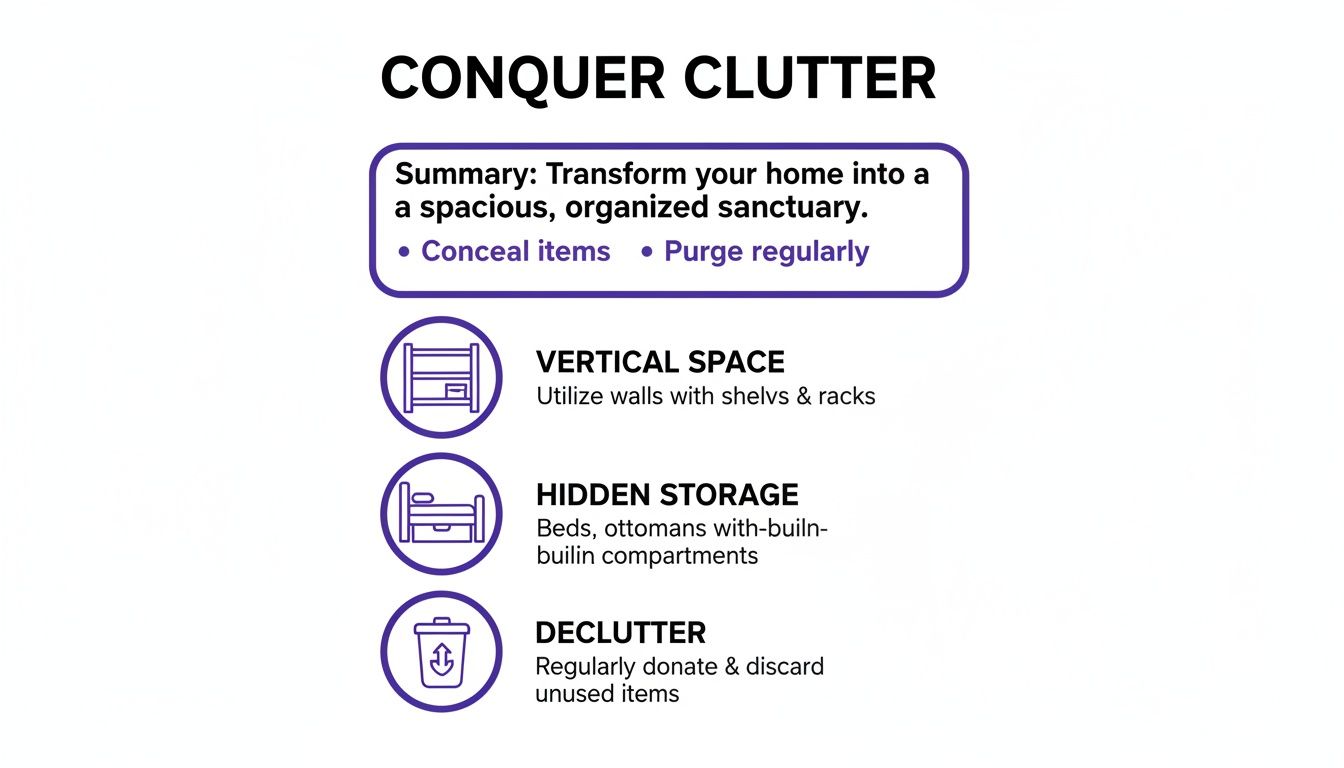
This visual is a great reminder that an organized small space isn't just about being tidy—it's about having smart, layered storage solutions built into your design from the start.
Here's a quick look at why this modern approach is so much better for small-space projects.
aiStager vs. Traditional Planning Methods
| Feature | aiStager | Traditional Methods (Sketches, Mood Boards) |
|---|---|---|
| Realism | Photorealistic images of actual products in your room | Abstract representations, poor sense of scale |
| Speed | Results in seconds per item | Hours or days of manual work |
| Accuracy | True-to-scale dimensions for a perfect fit | Prone to human error and guesswork |
| Experimentation | Instantly test dozens of options (colors, styles, layouts) | Slow and tedious to make changes |
| Cost-Effectiveness | Prevents costly purchase mistakes upfront | Mistakes are only discovered after delivery |
Ultimately, seeing is believing. When you remove all the uncertainty from the process, you’re free to make bolder, more creative choices. You can finalize a layout that truly works for both your style and your life, knowing every dollar you spend is building a space you’ll absolutely love.
A Few Common Questions I Hear All the Time
Even with the best plan in hand, you're bound to run into a few specific questions when you’re actually in the thick of designing a small space. Let's tackle some of the most frequent ones I get asked. Think of this as a quick-reference guide for those moments you need a gut check.
"What's the Best Paint Color to Make My Tiny Room Feel Bigger?"
It’s almost a cliché, but light, neutral colors really do work wonders. Soft off-whites, pale grays, and warm beiges are fantastic at bouncing light around, which immediately creates a sense of openness. It’s a simple trick of the eye that makes a space feel less confined.
Here’s a pro tip: paint the walls, trim, and even the ceiling the exact same light shade. When you erase those lines where the walls end and the ceiling begins, you blur the room’s boundaries, making it feel more expansive and unified.
But don’t think you have to avoid dark colors. A moody charcoal or a deep navy can feel incredibly sophisticated and cozy, like a little jewel box. If you have a room with decent natural light, a dark color can actually make the walls seem to recede, adding a surprising amount of depth. It's a bold move, but it can pay off beautifully.
"Can I Really Use Big Furniture in a Small Room?"
Yes! In fact, you probably should. This is one of the biggest myths in interior design—that small rooms need small furniture. More often than not, a few thoughtfully chosen, full-sized pieces look so much better than a bunch of tiny, dinky ones that just add to the clutter.
Think about it: one substantial sofa makes a stronger, more calming statement than three little chairs scattered around.
It’s all about proportion, not just size. A single large piece can anchor the room, giving it a clear purpose and making it feel more intentional. The trick is knowing if that beautiful, oversized sofa will anchor the space or just plain overwhelm it.
This is where you have to see it to believe it. It's the perfect job for a tool like aiStager. It’s the only thing I've found that creates truly realistic photos with dimensionally accurate rooms and furniture. You just upload a picture of your space and a link to that West Elm sofa you’re eyeing, and you'll see a true-to-scale preview of how it fits. No more guesswork.
"How Do I Carve Out Different 'Zones' in My Studio?"
Creating distinct areas in a studio or any small, open layout is all about clever visual cues. You don’t need walls to tell you where the living room ends and the bedroom begins.
- Area Rugs are Your Best Friend: An area rug is the simplest way to define a zone. Placing one under your sofa and coffee table instantly screams "living room," separating it from your dining or sleeping area.
- Strategic Furniture Placement: Try turning your sofa so its back faces your bed. It’s such a simple move, but it creates a powerful psychological barrier between your "relaxing" space and your "sleeping" space.
- Try an Open Divider: An open-backed shelving unit, like the classic IKEA KALLAX, is a fantastic solution. It works as a partial room divider, giving you much-needed storage and a sense of separation without blocking light or making the space feel closed off.
"What Are the Biggest Mistakes People Make?"
The most common blunders I see are surprisingly easy to avoid once you know what to look for. Here are the top three culprits:
- The "Dollhouse" Effect: Filling the room with too many small-scale furniture pieces. It backfires every time, creating visual noise that makes the space feel chaotic and even smaller.
- Forgetting to Look Up: Ignoring all that valuable vertical real estate. Your walls are a huge missed opportunity for storage and decor.
- The Lone Lightbulb: Relying on a single, sad overhead light. This kind of flat, one-dimensional lighting makes any room feel dull and uninviting.
The fix? Choose fewer, better-scaled pieces. Build your storage and decor upward. And always, always layer your lighting with a mix of ambient (general), task (for reading or cooking), and accent (for mood) sources. It's a game-changer for creating warmth and depth.
Ready to stop guessing and start seeing? With aiStager, you can see exactly how any piece of furniture will look and fit in your home before you spend a dime. Upload a photo of your room and a product link to get a hyper-realistic, dimensionally accurate preview in seconds. Try it now and design your perfect small space with total confidence. Visit ai-stager.com to get started for free.