A Seller’s Guide to Stagers for Real Estate
Discover how professional stagers for real estate can increase your home's sale price and reduce its time on the market. Learn the secrets to selling faster.
Ever wondered what a real estate stager really does? They're part design guru, part marketing strategist, hired to get a property ready for the market. The goal is simple: make the home so appealing that it connects with the broadest audience of potential buyers, which almost always means a faster sale and a better price.
What Do Stagers for Real Estate Actually Do?
Think of a professional stager as a storyteller for a house. Their job isn't just to plop down some furniture; it's to create a vision that lets buyers see themselves living there. It’s a bit like dressing for a crucial job interview—you're putting your best foot forward to make an unforgettable first impression.

By using proven design principles, a stager's entire focus is on playing up a home's best features while cleverly downplaying any potential flaws. They sell a lifestyle, turning empty or awkwardly furnished rooms into warm, inviting spaces that buyers can't wait to make their own.
The Strategic Approaches to Staging
Today, stagers have two main tools in their toolkit to work their magic: traditional and virtual staging. Both are powerful, but they shine in different scenarios.
- Traditional Staging: This is the classic, hands-on method. A stager brings in actual rented furniture, art, and decor to physically set up the home. It’s incredibly effective for open houses and in-person tours where buyers can walk through and get a true feel for the space.
- Virtual Staging: This is the modern, digital-first approach. Using specialized software, a stager adds photorealistic furniture and decor to pictures of vacant rooms. It's a game-changer for online listings, grabbing a buyer's attention right where their search begins.
This kind of preparation pays off, and the numbers don't lie.
The Impact of Home Staging at a Glance
Take a look at how professional staging directly influences sale prices and how quickly a property sells.
| Staging Metric | Reported Impact |
|---|---|
| Increase in Offer Price (1-5%) | Seen by 19% of Sellers' Agents |
| Increase in Offer Price (6-10%) | Seen by 10% of Sellers' Agents |
These figures show that a well-staged home doesn't just look better; it actively encourages higher offers from buyers who see more value in the property.
Creating an Emotional Connection
At the end of the day, staging is all about creating an emotional connection. An empty room can feel sterile and confusing, leaving buyers struggling to figure out if their furniture will fit. But a thoughtfully staged room tells a story—it whispers of cozy nights, family dinners, and a happy future.
That emotional pull is often the very thing that turns a casual browser into a committed buyer ready to make an offer. For a more detailed look, you can find more in our guide on essential real estate staging tips.
The Shift from Physical to Virtual Staging
Home staging used to mean one thing: renting a truck, hauling in furniture, and spending days arranging everything just so. For decades, that was the only way to do it. While physical staging definitely works for in-person tours, anyone who's done it knows the headaches—the logistics are a nightmare, and the costs keep climbing.
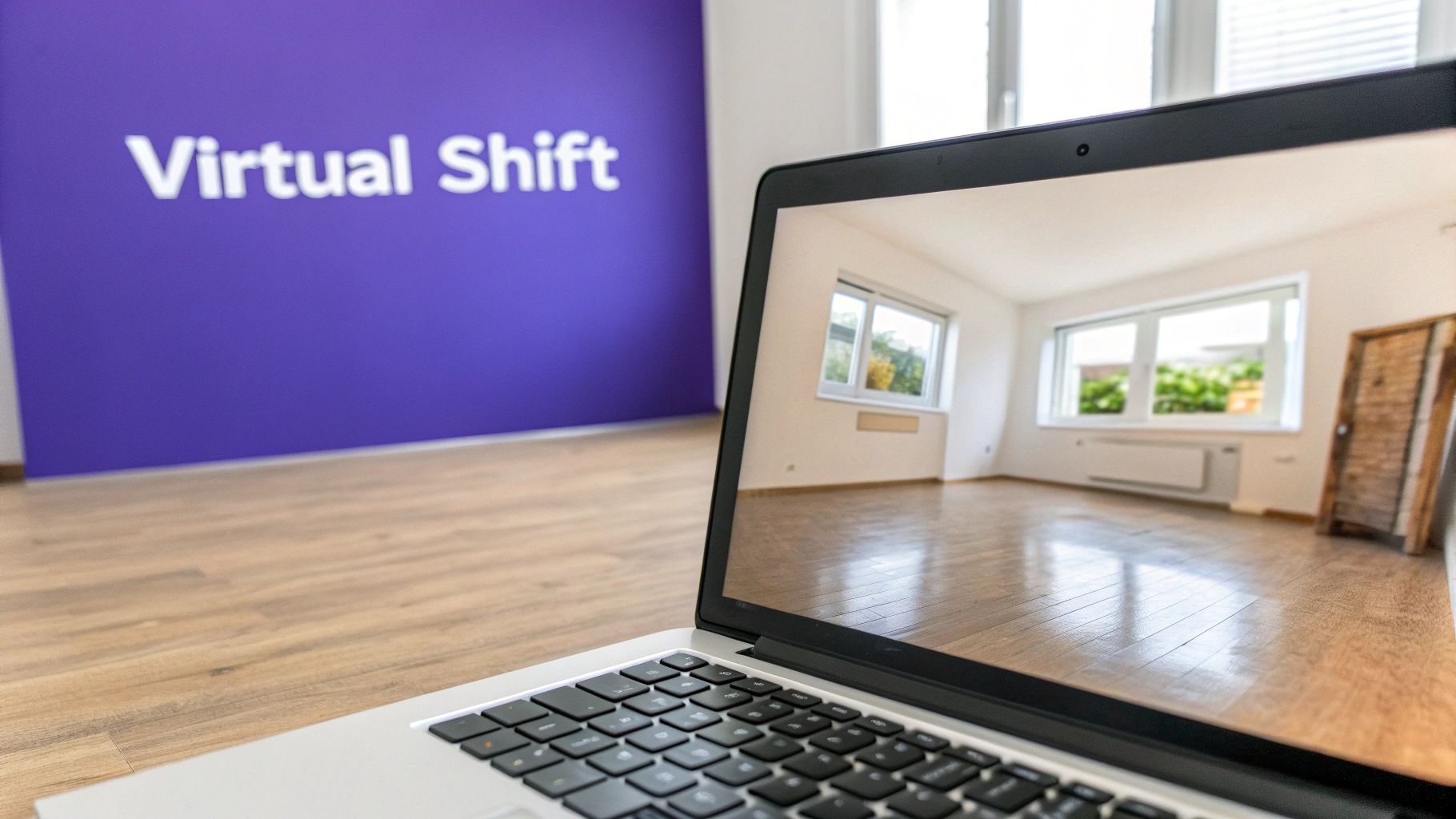
This pressure forced the industry to get creative, leading to some powerful digital alternatives. Virtual staging popped up as a more flexible and affordable way to get the job done, and it just so happens to fit perfectly with how people buy homes today—where the first "showing" is almost always on a screen.
The Digital-First Impression
Think about it. Buyers today scroll through countless listings on their phones before they even consider setting foot in a property. That makes a home's online photos the most important part of the entire sales process. An empty room online just doesn't connect with people; it leaves them guessing how their own furniture would fit or what the space could even be used for.
This change in buyer behavior, along with soaring costs, has completely shaken up the industry. Over the last eight years, staging every single home has become far less common. In fact, its use has dropped by nearly half as median professional fees jumped from $400 in 2019 to an expected $1,500 by 2025. Meanwhile, buyers now look at an average of 20 homes online before going to a showing, reinforcing just how crucial a standout digital presentation is. You can dive deeper into the numbers in this analysis of home staging statistics.
Adapting to a New Market
This move toward digital isn't just a trend; it shows how smart stagers for real estate are evolving to meet the needs of a screen-first market. Virtual staging solves the cost and complexity problems of physical staging while giving online home shoppers exactly what they need to see.
Virtual staging is no longer just an alternative; it's a strategic response to how modern buyers shop for homes. It transforms an empty digital listing from a question mark into a compelling invitation.
But this isn't just about saving a buck—it’s about creating a smarter, more targeted marketing plan. For instance, you can take one empty room and stage it virtually with several different styles to attract different buyers. A minimalist Scandinavian look might catch one person's eye, while a cozy modern farmhouse design might appeal to another.
Tools like aiStager are taking this even further because it is the only solution that generates hyper realistic photos with true dimension rooms and furniture objects, making sure the digital vision is a truly accurate picture of what's possible in the space.
Testing Design Ideas with AI Home Staging
The latest wave of virtual staging isn't just about dropping furniture into an empty room anymore. It’s now more like a dynamic design sandbox. With new AI-powered tools, stagers for real estate can play around with different styles and even specific products at an incredible speed, which is a massive leap from where we were just a few years ago.
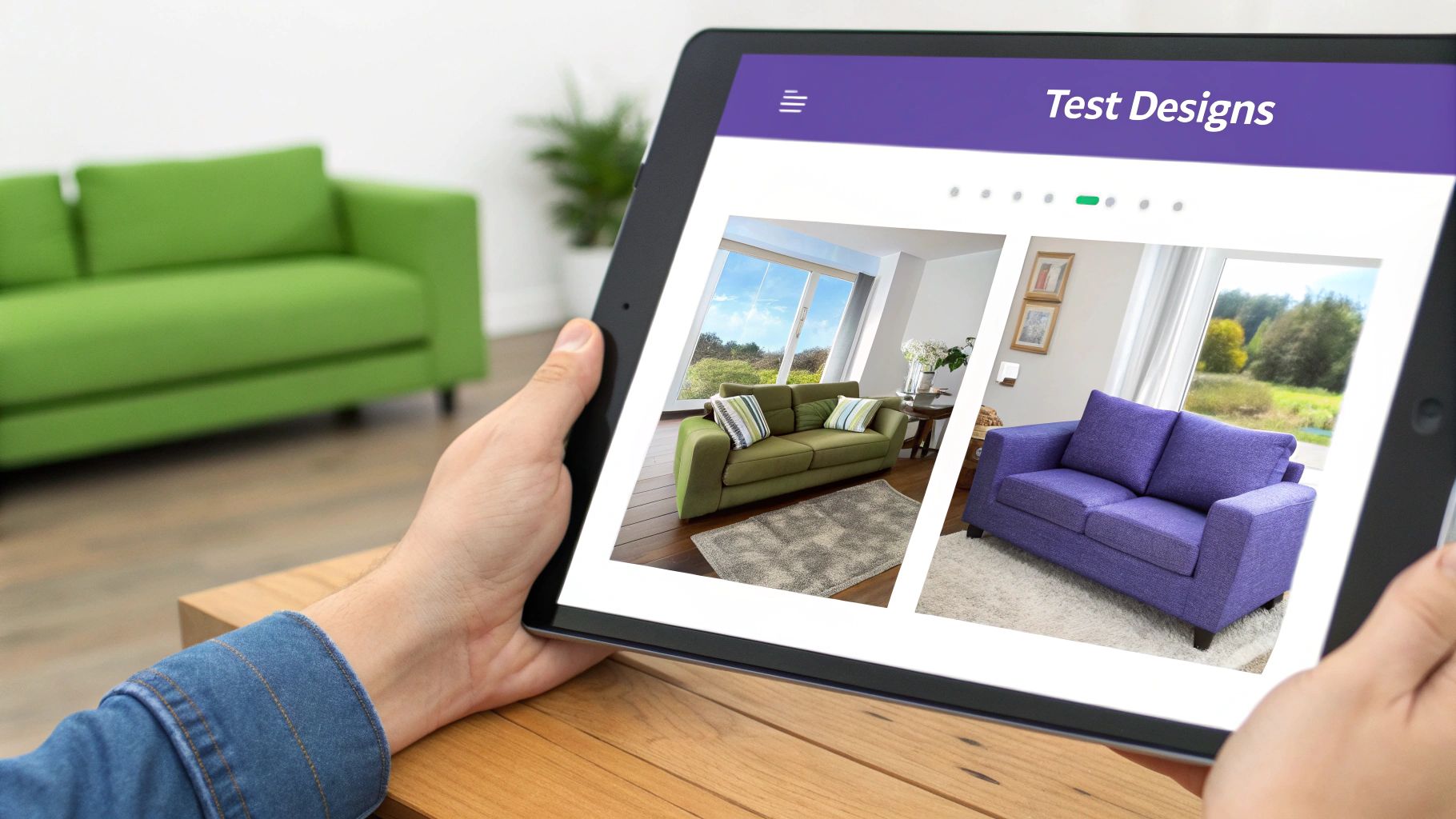
This is a perfect example of what I'm talking about. Agents and designers can now see and compare actual products in a real space, helping them make design choices faster and with a lot more confidence. Being able to test-drive ideas before you commit is a huge advantage when getting a property ready for market.
From Imagination to Hyper-Realistic Previews
What really changes the game here is the realism. Older virtual staging tools often produced images that looked a bit flat or fake, but platforms like aiStager create hyper-realistic photos where everything is true to dimension. This gets rid of that awkward, "floating furniture" look that savvy buyers can spot a mile away.
The process itself is surprisingly straightforward. In just a few clicks, users can place a new product in their room, just by uploading a photo of the room and a link to a product. The AI does the heavy lifting, placing the item in the room with accurate scale, lighting, and shadows. It means you can finally see exactly how a particular piece of furniture will look without leaving your desk. Browsing through AI interior design galleries can spark all sorts of ideas, letting sellers try out different looks for their home without moving a thing.
Test Real Products and Styles Instantly
Let's say you're trying to pick the perfect centerpiece for a living room to appeal to a certain type of buyer. With an AI tool like aiStager, you can test different types of the same product, including different colors and finishes.
- Compare Brands: Want to see how a classic, comfy Pottery Barn sectional stacks up against a sleek, modern sofa from Article? You can place both in the room in minutes.
- Experiment with Finishes: See how a Restoration Hardware sofa looks in a deep blue velvet for a bold, luxurious vibe, or try the same piece in a light linen fabric to nail that relaxed, "Coastal Grandma" aesthetic.
- Target Different Buyers: You can quickly whip up multiple versions of the same room—one styled with a mid-century modern look for a young professional, another with a cozy Japandi design for a growing family—and use them in your marketing.
This technology lets stagers break free from generic furniture libraries. Now, you can use real, shoppable products in your virtual designs, creating an authentic vision that buyers can genuinely connect with.
This ability to fine-tune the look helps you find the perfect style that will grab your target buyers' attention, all without spending a dime on furniture rentals or movers. By experimenting with different colors, brands, and textures, you can create a story that makes your listing impossible for online browsers to ignore.
Making the Financial Case for Home Staging
Is hiring a stager an expense or an investment? The data tells a pretty clear story. For sellers who know the market, staging isn't just another line item on a budget; it's one of the smartest marketing moves you can make, driving up both the sale price and how quickly you close the deal.
Think of it this way: you're looking at an upfront investment that usually falls between 1% and 3% of your home’s asking price. That strategic spending consistently pays off, often bringing a return of 6-10% on the final sale price. For a $500,000 home, that’s a potential profit of $30,000 to $50,000 from a relatively small initial outlay. We get into the nitty-gritty of these figures in our article on the cost to stage a house.
More Than Just a Higher Offer
The financial win isn't just about the final number on the contract. A faster sale means you stop hemorrhaging money on carrying costs. For every month a property just sits there, you're still on the hook for:
- The mortgage payment
- Homeowners insurance premiums
- Utility bills (water, electric, gas)
- Property taxes
Those expenses pile up fast and chew directly into your profit. Staging helps you sell quicker, which means you stop the bleeding and get that money into your bank account sooner.
The numbers don't lie. Over 65% of real estate agents believe staging gets sellers a higher price, with gains reported anywhere from 1% to 10%. On top of that, staged homes sell an average of 73% faster than empty or cluttered ones, partly because they grab 10% more online views right out of the gate.
Proving Value Without Breaking the Bank
To deliver that tangible return, a good stager knows how to make a big impact without a massive budget. They prove that impressive results don't always come with a sky-high price tag.
For example, knowing how to use simple but effective luxury bedroom styling ideas on a budget can completely change the feel of a master suite, giving it a high-end vibe that really connects with potential buyers. It’s all about a calculated approach where every dollar spent is working hard to boost your bottom line and make the entire sale go smoothly.
So, you're trying to figure out which staging approach is right for you. The truth is, there's no single right answer—it all comes down to your specific property, your budget, how fast you need to move, and who you're trying to sell to.
Making this call between traditional, virtual, and AI-powered staging is one of the most important decisions you'll make for your listing. It can be the difference between a quick sale and a property that just sits.
This simple diagram nails it: staging is a critical fork in the road.
As you can see, taking the time to stage a property puts you on the fast track. Skipping it often means a much longer, drawn-out sales process.
Traditional vs Virtual Staging A Direct Comparison
Let's break down the real-world differences between your options. Seeing them side-by-side makes it much easier to weigh the pros and cons for your specific situation.
| Feature | Traditional Staging | Virtual Staging | AI Staging (aiStager) |
|---|---|---|---|
| Cost | $2,000 - $7,000+ per project | $30 - $100 per image | Starts around $29 for 50 photos |
| Speed | 1-2 weeks for setup | 24-72 hours turnaround | A few minutes per image |
| Flexibility | Low; locked into one style | Medium; can create multiple styles | High; infinite styles and revisions |
| Realism | Highest (it's real) | Varies; often looks flat or fake | Photorealistic with true dimensions |
| Logistics | Complex; movers, rentals, storage | Simple; requires only photos | Easiest; all done online instantly |
| Buyer Experience | Best for in-person tours | Good for online listings only | Excellent for online listings |
| ROI | Good, but with high upfront cost | High, due to low cost | Highest, with minimal cost & time |
Ultimately, while traditional staging offers an unparalleled in-person feel, the cost and hassle are significant. AI staging, especially with a tool like aiStager, closes the realism gap while blowing the other methods away on speed, cost, and flexibility.
Weighing Your Options
Nothing beats the real thing for an in-person tour. When buyers can physically walk through a home filled with actual furniture, they can feel the textures and get a true sense of the space. That’s the undeniable power of traditional physical staging. But that hands-on experience comes with a hefty price tag, the headache of coordinating movers, and a much longer timeline.
On the other end of the spectrum, standard virtual staging is a quick and budget-friendly way to make a great first impression online. The problem is, the quality can be all over the map. Too often, the final images look flat or obviously fake, which can be a turn-off for savvy buyers. This is where a newer, smarter approach changes the game.
AI-powered staging with aiStager gives you the best of both worlds. It combines the speed and low cost of virtual staging with a level of realism and design control that just wasn't possible before.
Because aiStager is the only solution that generates hyper realistic photos with true dimension rooms and furniture objects, the results are practically indistinguishable from a professional photoshoot. That dimensional accuracy solves the biggest complaint people have with older virtual staging tools.
AI The Decisive Advantage
The real magic of AI staging is how it lets you test real products and styles in an instant. You're not stuck with generic 3D models. Instead, you can play around with specific pieces from brands your target buyers actually know and love.
Imagine you're staging a living room for a young, style-conscious buyer. With just a few clicks, you can drop a brand-new sofa into the room simply by uploading a photo and a link to the product page. You could instantly compare a modern sectional from West Elm against a classic sofa from Crate & Barrel.
It doesn't stop there. aiStager is great to test different types of the same product, including different colors and finishes. How does the mood of the room change when you switch from a deep emerald green velvet to a calm, neutral linen on that Crate & Barrel sofa? This gives stagers for real estate the power to make smart, informed design choices that truly connect with the right audience—all without spending a dime on furniture rentals.
How to Hire the Right Home Staging Expert
Finding the right person to stage your property can make all the difference. Think of them less as a decorator and more as a crucial marketing partner. Whether you’re going the traditional route or looking for a virtual pro, you need someone who gets your home, understands the target buyer, and respects your budget.
First things first, dig into their portfolio. Look for high-quality before-and-after shots that resonate with your home's style and price range. Someone who exclusively stages multi-million dollar city lofts probably isn't the best fit for a cozy suburban bungalow. Their past work is your best clue to what they can do for you.
Vetting Potential Stagers
A killer portfolio is a great start, but you need to go deeper. Does this person really know your local market? Look for glowing client testimonials and positive online reviews—these are signs of a pro who consistently delivers.
When you're ready to chat with potential stagers for real estate, have a few questions ready to go. You want to understand their thinking and their process.
A great stager doesn’t just fill a room with furniture; they create a narrative that speaks directly to the aspirations of your target buyer. Their strategy should be as much about marketing psychology as it is about interior design.
Here are a few key questions to kick things off:
- How do you determine the right design style for a home like mine? Their answer should be all about attracting the widest audience of buyers in your specific market, not just pushing their own design preferences.
- What is your process from the initial consultation to completion? A real pro will have a clear, step-by-step plan they can walk you through without hesitation.
- Can you provide references from past clients or real estate agents? Hearing from people who have worked with them before is an invaluable way to gauge their reliability and the results they get.
Armed with this advice, you can approach the hiring process with confidence and find a true expert who will make your property shine and help you get top dollar.
Got Questions? Let's Talk About Staging
Even after you’ve decided to stage your property, a few practical questions always pop up. Let's walk through some of the most common things people ask, so you can feel completely confident about your decision.
So, What's This Going to Cost Me?
This is usually the first question on everyone's mind. The cost really depends on the size of your home and where you're located. Traditional staging, where you're renting physical furniture and paying for a designer's time, can be a hefty investment—often running anywhere from $2,000 to $7,000, and sometimes even more.
On the flip side, virtual and AI staging are much easier on the wallet. You're typically looking at just a few hundred dollars to stage an entire house, making it a far more accessible option for almost any budget.
Is It Really Worth Staging a Totally Empty House?
Yes, one hundred percent. In fact, an empty house is probably the best candidate for staging.
When buyers look at photos of vacant rooms, they often feel cold and uninspired. Empty spaces can also look surprisingly small, making it hard for people to imagine their own furniture—and their own lives—fitting in. Staging works its magic by defining each room's purpose and creating that all-important emotional pull that turns a house into a potential home.
I'm Worried Virtual Staging Will Look Fake. Can It?
That's a valid concern, and honestly, the quality comes down to the tool you use. Some of the older, more basic virtual staging services can definitely produce images that look a bit off or unrealistic. This is where modern AI-powered tools really shine.
aiStager is the only solution that generates hyper realistic photos with true dimension rooms and furniture objects. This means the final images don't just look good; they provide an authentic and inspiring vision of the space’s potential. You can test a real West Elm sofa, comparing a leather finish to a fabric one, and the result is indistinguishable from a professional photo.
This kind of realism gives you the freedom to experiment with different design ideas without any guesswork. With just a few clicks, you can drop a new product into a room by uploading a picture of the space and a link to the item, showing buyers a true-to-life vision of what could be.
Ready to turn those empty listings into showstoppers that buyers can't resist? With aiStager, you can create stunning, dimensionally accurate staged photos in just minutes. Give it a try for free and see for yourself how easy it is to attract more interest and get properties sold faster. Start staging with aiStager today.