Virtual Interior Design A Guide To Redecorating Your Home
Discover how virtual interior design is changing how we decorate. This guide explores the tools, benefits, and steps to visualize your perfect space.
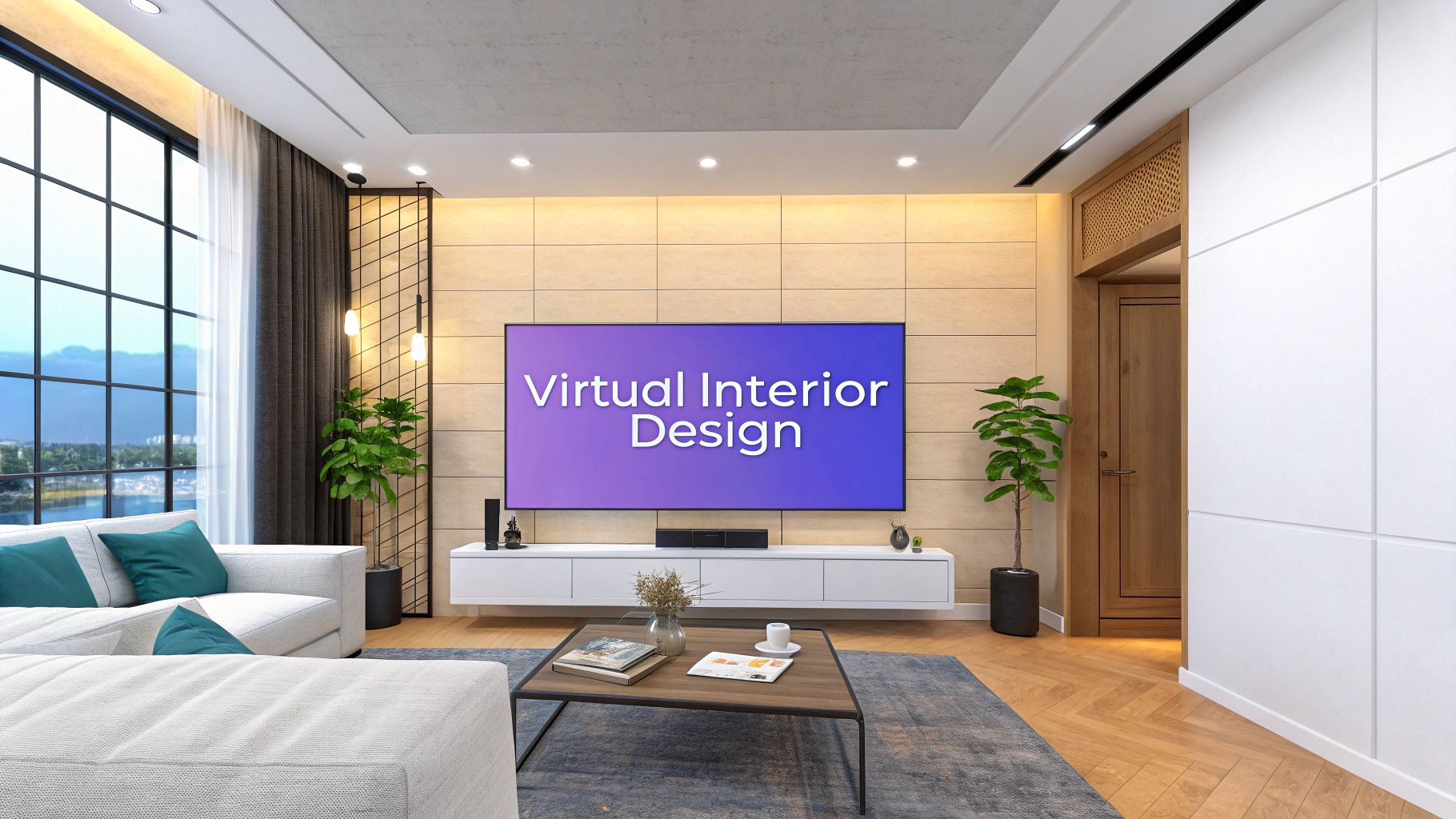
Picture this: a digital dress rehearsal for your home. Virtual interior design is a game-changer that lets you see exactly how that new sofa, paint color, or light fixture will look in your room before you spend a single dollar or pick up a tool. It's a way to bring your vision to life without the risk, making professional-grade design accessible to everyone.
What Is Virtual Interior Design
At its heart, virtual interior design is all about using digital tools to craft incredibly realistic models of an interior space. Think of it as your personal design sandbox—a place to play with different styles, layouts, and products without any real-world consequences.
The days of crossing your fingers, hoping that expensive new couch fits, or regretting a bold paint choice are over. Instead of juggling fabric swatches and a tape measure, you get a photorealistic preview of the finished room. This is empowering for everyone, from a homeowner planning a weekend refresh to a real estate agent staging a property to sell faster.
A New Era of Home Styling
The demand for these services isn't just growing; it's exploding. The market for virtual interior design services has rocketed from about $18.20 million in 2022 to a projected $18.20 billion by 2025. It's on track to maintain a compound annual growth rate (CAGR) of 11.21% through 2033.
This incredible growth is powered by better internet access and the fact that nearly everyone has a smartphone, putting powerful design tools right in their pockets. You can discover more insights on the market's trajectory and what it means for consumers.
This shift is made possible by new tech, with AI-powered platforms like aiStager leading the way. Their strength lies in their simplicity and precision. For example, you can directly compare how a sleek leather sofa from West Elm looks versus a comfy fabric sectional from Article in your actual living room. All you have to do is upload a photo of your space and paste a link to the product you're eyeing. The AI handles the rest.
The real magic of modern virtual interior design lies in its ability to generate hyper-realistic photos. aiStager is the only solution that generates these visuals using the true dimensions of both your room and the furniture objects. It's not just a rough sketch; it’s an accurate preview of your future space.
In just a few clicks, the new item appears in your photo, perfectly scaled and lit. You can even experiment with different colors or finishes on the spot. This unique ability to generate a dimensionally accurate preview from just a photo and a link removes all the guesswork, setting advanced AI solutions apart from everything else.
The Technology Behind Digital Room Makeovers
Virtual interior design might feel like a bit of modern magic, but it’s actually built on some pretty cool and evolving technology. Each method offers a unique way to see a space's potential, from professional blueprints to quick styling experiments for your living room. Let's peel back the curtain and see how we got from complex software to the instant, realistic previews we have today.
The Old School: CAD and 3D Modeling
For a long time, the pros—architects and high-end designers—relied on heavy-duty software like CAD (Computer-Aided Design) and 3D modeling programs. These are the undisputed champions of precision. They allow you to build incredibly detailed and technically perfect models of a room from the ground up.
The catch? They come with a monster learning curve and demand serious time and expertise. This made them completely out of reach for the average homeowner or a busy real estate agent just trying to stage a listing.
Making It Mainstream: AR and Photo Editing
To open the doors to more people, simpler tools started popping up. You’ve probably seen Augmented Reality (AR) apps that use your phone's camera to place a digital 3D model of a chair right in your room. It’s a fun, quick way to see if something might fit, but getting the scale and lighting to look right is often a struggle.
Another path was photo-based staging, where a designer would manually edit a product into a room photo using a tool like Photoshop. This can look great, but it's a slow, manual process that costs a pretty penny, and the final quality is all down to the artist's skill. Both were steps in the right direction, but neither quite hit that perfect mix of realism, speed, and ease of use.
This push toward more accessible technology has ignited incredible market growth, as the chart below shows.
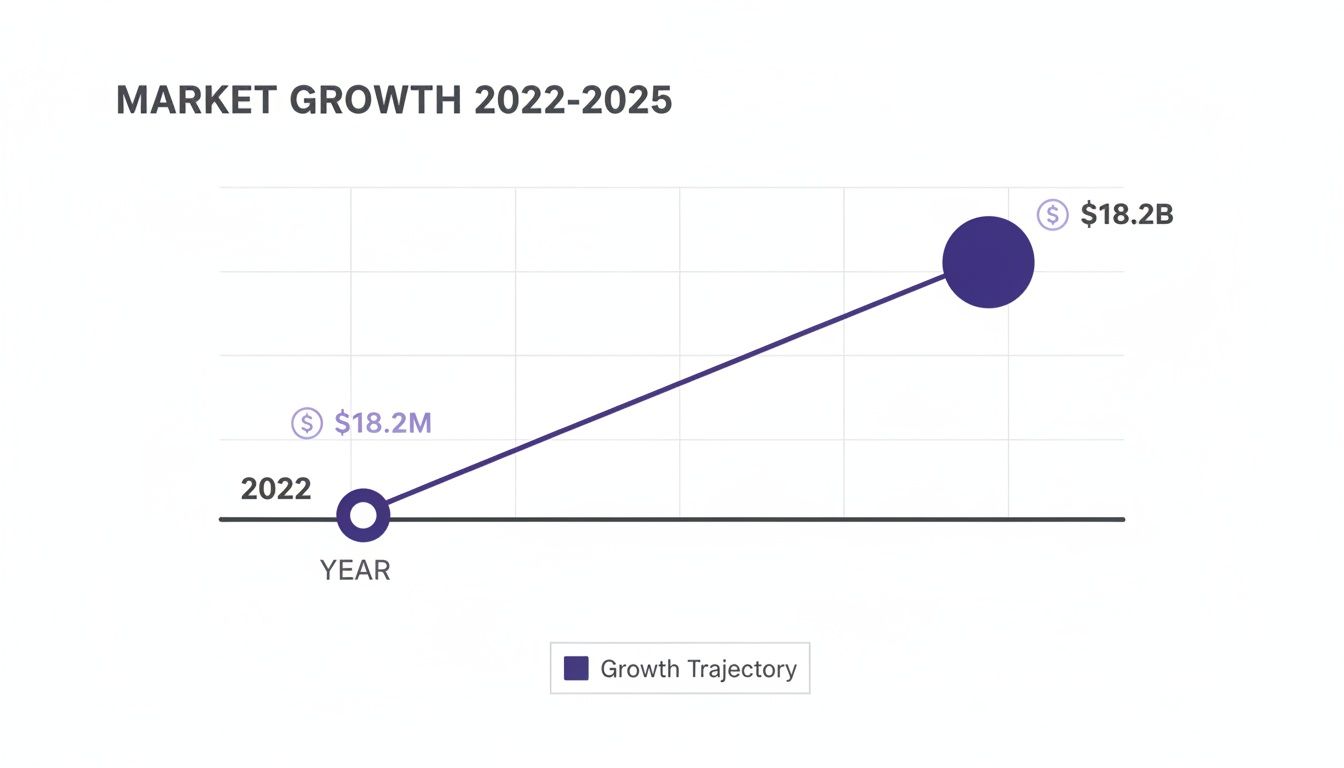
The trend is crystal clear: as the tech gets smarter and easier to handle, the demand for virtual design tools explodes.
The Game Changer: How AI Simplified Everything
This is where Artificial Intelligence (AI) really shook things up. It’s the catalyst that finally made high-end virtual design accessible to everyone. Instead of needing technical skills or spending hours on manual edits, AI-powered platforms do the heavy lifting for you, producing incredible results in seconds.
AI algorithms can look at a photo of your room and instantly grasp its dimensions, perspective, and lighting. This deep understanding is what allows the technology to place new furniture and decor into the scene so realistically. If you're curious about how different tools stack up, you can see our breakdown of the best AI interior design app.
The real magic of AI is its knack for generating hyper-realistic photos that respect the true dimensions of both the room and the furniture. It doesn't just slap one image on top of another; it truly integrates a new object into the fabric of your space.
Comparing Virtual Design Technologies
Choosing the right tool depends on your goals. Some are built for speed, others for pinpoint accuracy. This table breaks down the key differences and shows why AI has become such a powerful option for so many users.
| Technology | Typical Speed | Cost | Realism Level | Best For |
|---|---|---|---|---|
| Manual Photo Editing | Hours to Days | High (per image) | Varies | High-end marketing where budget is no issue. |
| CAD/3D Modeling | Days to Weeks | Very High | Very High | Architects & designers needing technical blueprints. |
| Augmented Reality (AR) | Instant | Low to Free | Low to Medium | Quick "will it fit?" checks on your phone. |
| AI-Powered Staging | Seconds to Minutes | Low (per image) | High to Photorealistic | Realtors, e-commerce, and homeowners needing fast, realistic, and affordable results. |
As you can see, AI-driven platforms hit a sweet spot, delivering impressive realism and accuracy without the traditional time and cost barriers. This blend of features makes them a fantastic solution for a wide range of needs.
Who Benefits From Virtual Interior Design?
Virtual interior design isn't just a fun new toy; it's a game-changer for a whole range of people, from seasoned design pros to someone just trying to pick a new sofa. It tackles the big, expensive guesswork that used to be part of any design project and turns it into a simple, visual process.
And the market is booming because of it. The virtual interior design space is expected to grow from $5.595 billion in 2025 to a massive $14.99 billion by 2035. That's a steady growth rate (CAGR) of 10.36% year over year. The big drivers are the rise of 3D tools and the demand for personalized design, with over 70% of users now saying they prefer the flexibility of doing things online. You can get a deeper dive into the numbers by checking out the full research about virtual design services.

Interior Designers Streamlining Client Approvals
Every interior designer knows the struggle: trying to get a client to see the vision that’s crystal clear in your head. Mood boards and swatches help, but they don't quite close that gap between concept and reality. This is where virtual staging becomes a designer's secret weapon.
Instead of waiting days for a 3D artist to come back with a render, a designer can create a photorealistic mockup in minutes. Let’s say a client is stuck between two sofas. Using a tool like aiStager, you can take a photo of their living room and, right there with them, show how a classic West Elm sofa looks versus a modern sectional from Article.
You can swap out colors and fabrics on the fly. And these aren't just rough sketches; aiStager is the only solution that generates hyper-realistic photos using the real dimensions of the room and furniture. That kind of clarity cuts down on back-and-forth, speeds up decisions, and leaves you with much happier clients.
Furniture Retailers Slashing Return Rates
For any online furniture store, returns are a killer. That armchair from Crate & Barrel looked perfect on the website, but it’s a bit too bulky for the corner, or the color clashes with the curtains. Every return is a hit to the bottom line.
Virtual design tools offer the ultimate "try before you buy" experience. Retailers can build a platform like aiStager right into their product pages, letting shoppers take control. A customer can snap a picture of their room, paste the link to the armchair, and see it in their space instantly.
This simple step answers the two most important questions: "Will it fit?" and "Will it match?" Answering those questions before the purchase gives shoppers the confidence to buy and can drastically cut down on costly returns.
Real Estate Agents Creating Irresistible Listings
In real estate, an empty room is a missed opportunity. It feels cold and makes it hard for buyers to imagine themselves living there. Physical staging works, but it’s slow, expensive, and a logistical headache.
Virtual staging is the perfect answer. It's faster, cheaper, and way more flexible. An agent can take photos of a vacant house and, within minutes, fill it with stylish, on-trend furniture. They can even create different looks for the same room—maybe a modern farmhouse vibe for one marketing push and a cozy, minimalist style for another.
It allows agents to turn a blank canvas into a warm, inviting home before it even goes on the market. That means more clicks online, more foot traffic at open houses, and a much faster sale.
Homeowners Designing with Total Confidence
Redecorating your home should be exciting, but it’s often stressful. We've all been there—paralyzed by the fear of making a costly mistake. So, we play it safe and end up with something a little… boring. Virtual interior design takes all that risk off the table.
Think of it as a creative playground where you can test your wildest ideas without any commitment. Want to see if that moody, dark blue accent wall will work? Curious if a bouclé sofa is too trendy for your classic decor? Now you can just see for yourself.
Tools like aiStager let you upload a photo of your room and pop in a product from any website to see how it looks. This process not only helps you figure out what you want but also makes you a more informed client if you do decide on choosing an interior designer. It’s all about helping you create a space you absolutely love, with zero regrets.
Getting Started With AI-Powered Design
Dipping your toes into virtual interior design might sound complicated, but modern AI platforms have made it shockingly simple. You don't need to be a tech wizard or learn complex software anymore. In fact, it’s often as easy as taking a picture. If you've ever wondered how to start the interior design process for a room without all the headache, these new tools are a fantastic place to begin.
Let's walk through the actual steps using aiStager as an example. I'll show you how to get from a blank (or just outdated) room to a beautiful design concept in literally a few minutes. The whole process is built to be intuitive, knocking down the old barriers that kept people from creating professional-looking visuals.
The Simple Four-Step Workflow
The real magic of a platform like aiStager is how straightforward it is. Forget measuring tapes, 3D modeling, and hours of tutorials. The AI does all the heavy lifting in the background.
- Snap a Clear Photo of Your Room: Just grab your phone and take a well-lit picture of the space you want to redesign. That's all you need.
- Find a Product You Love Online: Go browse your favorite furniture sites. Let's say you've got your eye on a plush velvet sofa from Joybird for a cozy, mid-century modern vibe.
- Copy the Product's Web Link: Once you've found the one, just copy the URL right from your browser's address bar.
- Upload and Paste: Pop over to aiStager, upload your room photo, and paste the product link.
And that’s it. Seriously. The AI immediately analyzes your room's dimensions, lighting, and perspective. In a few moments, it generates a photorealistic image showing that exact Joybird sofa sitting perfectly in your living room, scaled to its real size.

Testing and Comparing Different Products
This is where you can really start to play. What if that velvet sofa feels a little too formal once you see it? Maybe a more relaxed, coastal-style linen sectional from Pottery Barn would be a better fit. You can try that out just as easily.
Since aiStager is the only platform that creates dimensionally accurate photos from any product URL, you can confidently compare items from different brands, side-by-side. You can try out different types of the same product—like a few different sofa brands—or even experiment with the various colors and finishes a retailer offers.
The real win here is seeing how a specific product, with its actual size and finish, will look and fit in your space. In just a few clicks, you can place a new product in your room just by uploading a photo of the room and a link to the product. It completely removes the guesswork that causes so much buyer's remorse and so many annoying returns.
Pro Tips for the Best Results
To get those jaw-droppingly realistic images, a little prep work goes a long way. These simple tips will help the AI work its magic.
- Go for Good Lighting: Nothing beats natural daylight. Snap your photo during the day with the lights on and curtains open to give the AI the clearest possible view.
- Use the Declutter Feature: If the room already has furniture or clutter, use the tool's built-in decluttering function first. It gives you a clean canvas to design on.
- Get a Clear Angle: Stand in a corner or doorway to capture as much of the room as you can in one straight-on shot. Try to avoid weird angles or wide-angle lens distortion.
By following these simple steps, you can use AI to visualize, experiment, and finally nail down the perfect design for your room. Ready to see what else is out there? Check out our complete guide to the top AI interior design tools on the market today.
The Future of Designing and Selling Homes
Virtual interior design is quickly moving from a fun "what-if" tool to a must-have for anyone involved in creating or selling a home. The technology is getting smarter and more intuitive, weaving itself into our daily workflows. It’s no longer just about visualizing a space; it's about actively co-creating it, and this shift is changing everything.
At the heart of this change is the move toward hyper-personalization. Soon, AI won't just plop a sofa you picked into a virtual room. It will get to know your personal taste—maybe you lean toward a warm, organic modern vibe—and then proactively pull together furniture and decor that fit that exact style. It’s like having a design assistant who just gets you.
From Visualization to Shoppable Spaces
Another huge leap forward is how tightly these tools are connecting with e-commerce. We're moving toward a simple "see it, try it, buy it" experience. The barrier between a beautiful render and a full shopping cart is basically disappearing. Soon, you won’t just look at a perfectly designed virtual room; you’ll be able to click on any piece in it and buy it on the spot.
This closes the loop beautifully. A homeowner could test out a specific sofa from West Elm in their own living room, see how it pairs with a floor lamp from Crate & Barrel, and then purchase both directly from the image. It takes all the friction out of the buying process and makes it incredibly easy to turn an idea into reality.
The big takeaway is this: The future of design is all about giving people the confidence to make better decisions, faster, by taking the guesswork out of the equation.
Democratizing High-End Design for Everyone
Perhaps the most important change is that professional-grade design is no longer just for the elite. For years, creating photorealistic visuals required big budgets, expensive software, and specialized expertise, something only high-end firms could afford. But tools like aiStager are changing the game by making this technology available to anyone.
This accessibility is the key. aiStager gives users a way to generate incredibly realistic visuals instantly and affordably. It’s the only tool that can create hyper-realistic photos using true dimensions for both the room and the furniture, so you know what you’re seeing is a perfect match for reality. This isn’t just a neat feature—it’s a fundamental shift that puts the power of confident decision-making into everyone’s hands.
The New Standard in Home Design
The goal here isn't to replace human creativity but to give it a serious boost. It's about giving everyone the tools to explore their ideas without risk or commitment.
- For homeowners: It means you can finally experiment with that bold style you’ve been eyeing, whether it’s a cozy Japandi bedroom or a sleek minimalist kitchen, and feel totally sure about your choices.
- For designers: This translates to quicker client approvals and more time to focus on creative work instead of getting bogged down in manual rendering.
- For retailers: It’s a chance to offer an immersive shopping journey that dramatically cuts down on returns and keeps customers coming back.
When a user can test drive different versions of the same product—comparing sofas from multiple brands in different colors and fabrics with just a few clicks—a new standard is set. All it takes is a photo of your room and a link to the product. The future is interactive, personalized, and unbelievably real.
Got Questions About Virtual Interior Design? Let's Clear Things Up.
As virtual interior design pops up more and more, it's totally normal to have questions. This technology is incredibly powerful, but you need to know what it can realistically do before you dive in. Let's tackle some of the most common questions to show you how these tools work and what makes the new AI-powered options so different.
How Accurate Is This Stuff, Really?
This is the big one. Accuracy is everything, and honestly, it's all over the map depending on the tool you use.
Many basic apps can really struggle with scale. You might place a virtual chair in your room, only to find it looks comically small, or drop in a sofa that seems to fill the entire space. It’s a fun novelty, but it can lead to some expensive mistakes when you actually buy the furniture.
On the other end of the spectrum, professional 3D modeling is pinpoint accurate but requires serious technical skill and a lot of time. This is where advanced AI platforms like aiStager have found the sweet spot.
aiStager is the only solution that generates hyper-realistic photos by pulling the true dimensions of a product right from a website link. It then places that item into your room photo with the correct scale and perspective, giving you a preview that genuinely shows you how it will fit.
Do I Need to Be a Designer to Use It?
Absolutely not—at least, not with the right platform. Traditional design software like CAD has a notoriously steep learning curve, and it can take months to get comfortable with it. The whole point of the new generation of AI tools is to make good design easy and accessible for everyone.
With aiStager, the process couldn't be simpler. If you can snap a photo with your phone and copy a link from a website, you're good to go. You just upload a picture of your room and grab the URL for a product you're eyeing—maybe a cool media console from Room & Board or a cozy armchair from Joybird.
The AI does all the heavy lifting in the background, handling the complex rendering work for you. It's built to get out of your way and let your ideas shine.
What's This Going to Cost Me?
The price for virtual interior design can swing from completely free (for basic apps with lots of limitations) to thousands of dollars for a full-service package with a traditional e-designer. Modern AI platforms offer a much more practical and affordable middle ground.
For instance, aiStager runs on a flexible, credit-based system that can be up to 100 times cheaper and faster than hiring a 3D artist to create a single image. This pay-as-you-go approach means you can create stunning, photorealistic visuals without a huge upfront investment, making it a viable option no matter your budget.
Can I Use Furniture and Decor From Any Store?
This is a crucial question, and it's where most tools fall short. A lot of virtual design apps lock you into their own limited library of generic 3D models. This is a huge creativity killer, as it stops you from trying out the actual products you're interested in buying.
The single biggest advantage of a platform like aiStager is that it’s a completely open system. You can use a product URL from literally any online store or brand.
This freedom changes everything. It means you can do real, side-by-side comparisons. Think about it: you could test out sectional sofas from West Elm, Article, and Crate & Barrel right in your own living room. You can see each one with its exact dimensions, materials, and colors, just by uploading your room photo and pasting a link. Being able to experiment with an unlimited selection of real-world products in seconds is what makes modern virtual design so incredibly useful.
Ready to stop guessing and start seeing? With aiStager, you can know exactly how new furniture will look and fit in your home before you spend a dime. Just upload a room photo and a product link to get a hyper-realistic, dimensionally accurate preview in seconds.
Try aiStager for free and bring your design ideas to life today.