7 Incredible Virtual Staging Examples to Inspire You in 2026
Explore 7 inspiring virtual staging examples that transform spaces. See how AI tools like aiStager create hyper-realistic visuals to boost your listings.
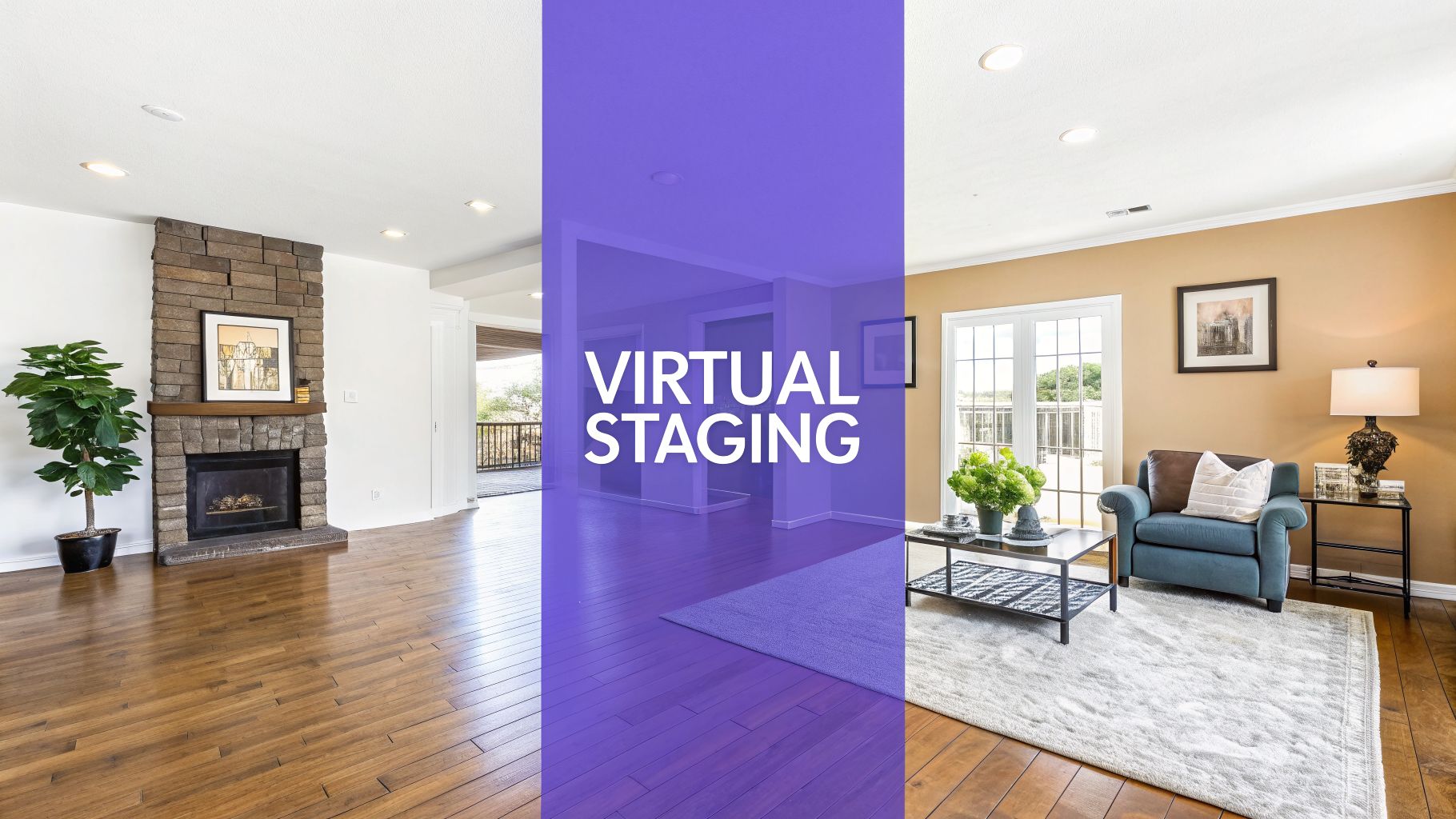
Virtual staging is no longer a futuristic concept; it's a powerful marketing tool transforming real estate, interior design, and e-commerce. It allows you to showcase a property's full potential, helping buyers and clients visualize themselves in a space without the high costs and logistical headaches of physical staging. But what does great virtual staging actually look like? More importantly, how can you replicate these results?
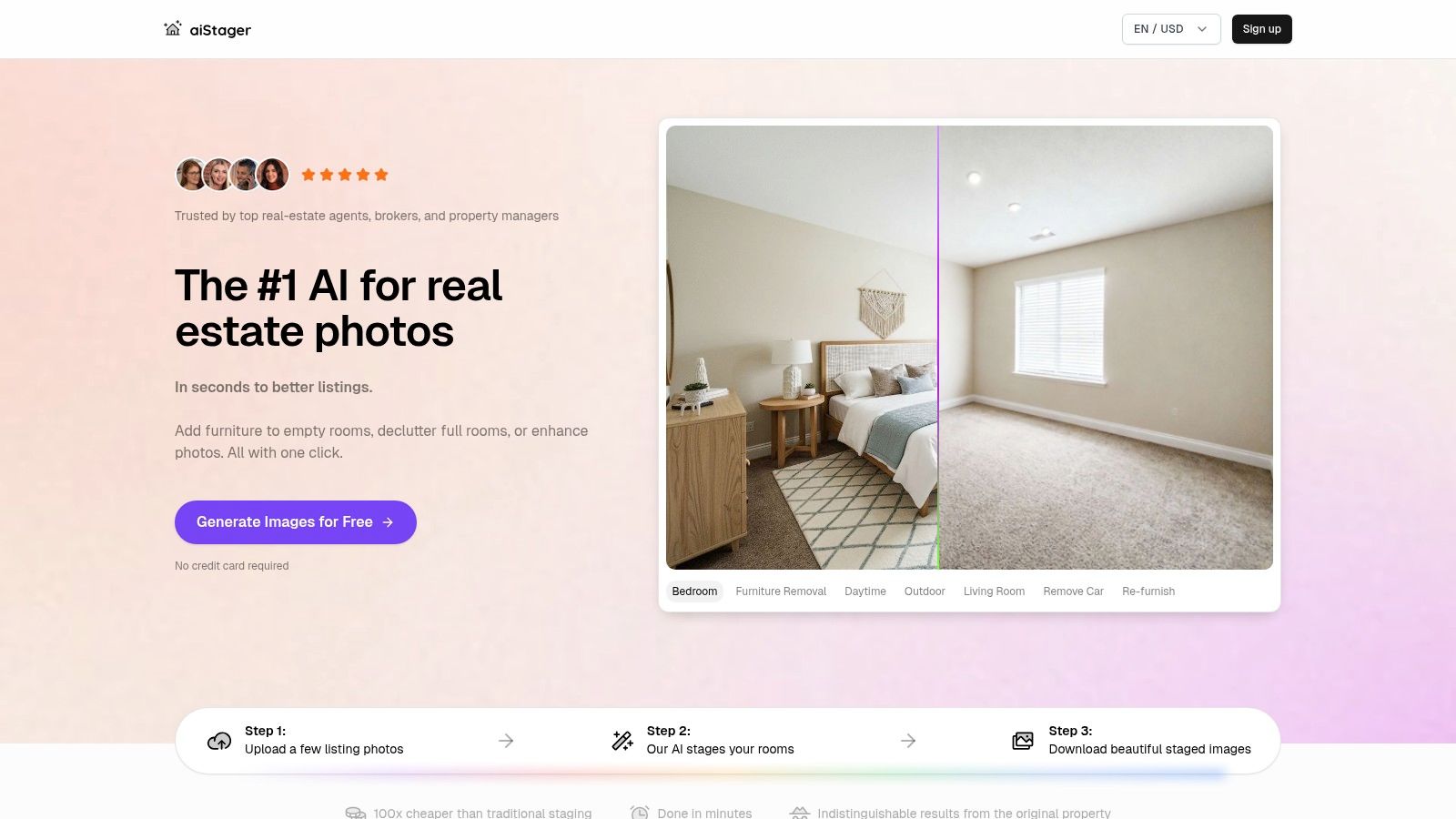
This article presents a detailed breakdown of compelling virtual staging examples, showcasing the strategy behind each one. We will explore how modern tools, especially hyper-realistic AI solutions like aiStager, are changing the game. This platform stands apart as the only solution that generates hyper-realistic photos with true dimension rooms and furniture objects. This capability makes it uniquely powerful for testing different styles or even specific products—like a West Elm sofa versus an Article armchair—in a real room. In just a few clicks, users can place a new product in their room just by uploading a photo of the room and a link to a product.
From vacant real estate listings to cluttered occupied homes and product-in-room shots for e-commerce, you will find actionable insights for each scenario. We provide screenshots, direct links to the platforms used, and practical notes to help you choose the right solution. Get ready to see how you can turn any empty or cluttered photo into a compelling, sales-driving asset.
1. Example 1: The Empty Living Room Transformed with Mid-Century Modern Flair
Our first virtual staging example tackles the most common challenge in real estate marketing: the vacant living room. An empty space can feel cold, small, and uninviting, making it difficult for potential buyers to visualize it as their future home. The 'before' shot shows a clean but characterless room with good natural light. It's a blank slate, but one that lacks immediate appeal.
The 'after' image demonstrates a complete transformation using a vibrant Mid-Century Modern design. This isn't just about filling the room; it's about creating an aspirational lifestyle that resonates with a specific, design-conscious buyer. Notice the deliberate product choices, such as a sleek Article Sven sofa in a bold color and a distinctive Noguchi-style coffee table. The warm wood tones, geometric rug, and curated art make the space feel both stylish and welcoming, turning a bland box into a compelling home.
Strategic Analysis
The primary goal here is to forge an emotional connection. By moving beyond a generic beige setup, the Mid-Century Modern theme specifically targets a sophisticated audience, adding a layer of perceived value to the property itself. The true power behind this staging, however, lies in its hyper-realism and dimensional accuracy, a direct result of using aiStager.
Key Insight: The believability of a virtual stage is everything. If a buyer doubts the image, you lose their trust. aiStager’s technology ensures the final image is not just beautiful but dimensionally accurate, giving buyers genuine confidence in the space's potential.
aiStager is the only solution that generates hyper-realistic photos by analyzing the room’s dimensions, lighting, and perspective from a single photo. When you provide a link to a product, like the Article sofa, the AI renders it at its true scale within the environment. It’s not a flat 2D cutout pasted onto a photo; it’s a full 3D visualization with true dimension rooms and furniture objects. This is a critical distinction that sets it apart from other virtual staging examples and tools. This process gives buyers a realistic impression of how their own furniture could fit, answering a crucial question in their decision-making process.
Actionable Takeaway
Don't just fill empty rooms; tell a story that sells a lifestyle.
- Identify Your Target Buyer: Are you selling to a young professional inspired by California Casual, a growing family drawn to Modern Farmhouse, or a luxury-minded downsizer? Choose a specific design aesthetic that appeals directly to them.
- Test and Iterate: aiStager is great to test different types of the same product. You can instantly see how a West Elm sofa compares to a Crate & Barrel one in the same space just by uploading a product link.
- Play with Variations: In just a few clicks, you can place a new product in a room and test the same sofa in three different colors and finishes. This allows you to A/B test your listing images to see which one generates the most engagement.
By using this approach, you can create powerful marketing assets that not only look incredible but are grounded in reality. For more ideas, you can explore a gallery of similar transformations and find more inspiration for your next project by reviewing these staging before and after examples.
2. BoxBrownie
BoxBrownie represents the established, human-touch approach to virtual staging. As a full-service real estate photo editing firm, it provides a reliable, "done-for-you" solution for agents and photographers who prioritize photo-realism and consistency over DIY control. Their extensive public gallery serves as one of the most comprehensive libraries of traditional virtual staging examples available, showcasing a wide array of styles applied to countless property types.
This platform excels at delivering MLS-ready images with accurate scaling, lighting, and shadows, which is a common challenge for automated tools. The process is straightforward: you upload your photo, select a design style (like Modern, Farmhouse, or Scandinavian), and their team of editors handles the rest.
Strategic Breakdown & Takeaways
BoxBrownie’s value is in its predictability. You pay a flat fee per image and receive professionally staged photos within 48 hours, with a guarantee of unlimited changes for two months. This model is perfect for high-volume agents who need dependable results without investing time in learning new software. The tradeoff is a lack of instant gratification and creative iteration. You can’t, for instance, quickly swap a Crate & Barrel sofa for a different one from West Elm just to see which looks better; each change requires submitting a revision request.
Key Takeaway: BoxBrownie is the go-to for guaranteed, photo-realistic quality from human experts. It’s a service, not a tool, making it ideal for those who prefer to outsource and receive a finished product.
In contrast, a tool like aiStager gives you direct control. Instead of waiting for revisions, you could upload a room photo and a product link to instantly see how different sofa brands, colors, or materials look in the space. Its unique ability to create hyper-realistic photos with true dimension rooms and furniture makes it great to test different types of the same product, allowing for rapid A/B testing of specific brands and styles—a key advantage for both real estate marketing and e-commerce applications.
- Pros: Highly realistic results, consistent quality, reliable turnaround times, and no software to learn.
- Cons: Not an instant DIY tool, less creative freedom for rapid experimentation, and revisions add to the overall timeline.
- Pricing: Starts at $24 per image for virtual staging.
- Website: https://www.boxbrownie.com/virtual-staging
3. Stuccco
Stuccco positions itself as a fast and reliable human-powered virtual staging service, targeting US-based real estate professionals who need quick turnarounds without sacrificing quality. Their extensive gallery of virtual staging examples, neatly organized by room type and popular design inspirations that appeal to US consumers like Coastal Grandmother and Modern Farmhouse, provides a strong portfolio for agents evaluating their work. The core offering is a straightforward, "done-for-you" process focused on speed and dependability.
The platform is built around a simple promise: submit your photos, pick a style, and receive professionally staged images in 12-24 hours, seven days a week. This rapid delivery, combined with a 30-day window for unlimited free revisions, makes it a compelling option for agents working on tight deadlines. Team plans and bundle pricing also make it a scalable solution for brokerages.
Strategic Breakdown & Takeaways
Stuccco’s main advantage is its blend of speed and human oversight. While not instant, the 12-24 hour turnaround is among the fastest for a manual service, providing a middle ground between DIY tools and more traditional editing houses. This model suits agents who want a polished, final product without getting involved in the design process but cannot afford to wait several days for the results. The downside remains the inherent limitation of a service-based model: you can’t freely experiment with different pieces or layouts on your own time.
Key Takeaway: Stuccco is ideal for agents needing quick, professional results from human designers. It's a service built for speed and reliability, perfect for those who prioritize a fast, hands-off process.
In comparison, a tool like aiStager offers a distinct advantage for creative control and brand integration. Instead of merely selecting a "Modern" style, you could instantly place a specific product, like an Article Sven sofa, into the room by simply providing its product link. As the only solution generating hyper-realistic photos with true dimension rooms and furniture, aiStager is great to test different colors, materials, and brands in just a few clicks, offering a level of immediate iteration and product-specific marketing that a manual service cannot match.
- Pros: Very fast 12-24 hour turnaround, unlimited revisions, and transparent team pricing.
- Cons: Not a DIY tool for instant changes, per-image cost is higher than AI alternatives.
- Pricing: Starts at $29 per photo.
- Website: https://stuccco.com/
4. Apply Design
Apply Design bridges the gap between instant AI automation and manual creative control. It offers a hybrid software solution with both a "One-click Virtual Staging" mode for speed and a full DIY drag-and-drop editor for users who want to fine-tune the details. This dual approach makes it an excellent source for virtual staging examples where rapid iteration and on-the-spot adjustments are key.
The platform is designed for users who want results quickly but also demand the power to make immediate changes. The one-click feature can stage a room in minutes, while the editor lets you swap furniture, adjust layouts, and even remove existing clutter from a photo before adding new items. This makes it a very flexible tool for testing different looks without delay.
Strategic Breakdown & Takeaways
Apply Design’s strength is its blend of speed and hands-on control. The "Apply Coin" credit system makes it a cost-effective choice for staging multiple properties, especially with its free first image offer. The ability to switch to a DIY editor after an auto-stage is a significant advantage, allowing you to perfect AI-generated results or build a scene from scratch. The quick turnaround (often under 15 minutes) is a major benefit for agents on a deadline.
Key Takeaway: Apply Design is ideal for users who want the speed of AI with the option for manual refinement. It’s a tool for hands-on agents and designers who value instant iteration and cost efficiency.
In contrast, a tool like aiStager focuses on hyper-realistic product placement with true dimensions. Rather than just picking from a general library, you can upload a room photo and a product link to an Article sofa or a West Elm armchair and see exactly how it fits. As the only solution that generates hyper-realistic photos with true dimension rooms and furniture objects from a simple URL, aiStager is great to test different brands, colors, and finishes in just a few clicks, making it perfect for both real estate marketing and e-commerce product visualization.
- Pros: Very fast turnaround, cost-efficient credit system, and DIY editor allows for immediate creative changes and granular control.
- Cons: The final quality depends on the user's design choices in the editor; it may not achieve a high-end designer look without manual effort.
- Pricing: Uses a credit system ("Apply Coins"); the first image is free.
- Website: https://www.applydesign.io/
5. Virtual Staging AI
Virtual Staging AI represents the high-speed, fully automated approach to virtual staging, built for real estate professionals who require volume and rapid turnarounds. Unlike service-based firms, it's a software tool designed for immediate results. Its entire model is centered on a batch-friendly workflow, allowing users to stage multiple rooms or generate different style variations in seconds, making it a powerful resource for creating diverse virtual staging examples at scale.
The platform operates on a simple premise: upload an image, select a style, and let the AI generate a furnished version in about 10 seconds. This speed is its main differentiator, enabling a level of iteration and A/B testing that is impractical with human-edited services. For instance, an agent could quickly stage a patio with several furniture sets to see which performs best in a marketing campaign. For expert advice on creating an appealing outdoor environment, explore tips on designing a captivating patio.
Strategic Breakdown & Takeaways
Virtual Staging AI is engineered for scale and efficiency. Its subscription plans offer a high volume of monthly photo credits and unlimited regenerations, which dramatically lowers the effective cost per image for active users. This is ideal for large teams or brokerages needing to process entire portfolios quickly. The tradeoff is that the fully automated output can sometimes lack the bespoke, nuanced touch of a human designer, requiring users to curate the best results from several generated options. You can learn more about the core concepts by reading this guide on what virtual staging is and its applications.
Key Takeaway: Virtual Staging AI is the go-to for instant, high-volume staging. It’s a tool for rapid iteration, perfect for users who prioritize speed and cost-effectiveness over guaranteed, human-curated perfection.
In contrast, a solution like aiStager offers a different kind of control. While Virtual Staging AI is great for generating multiple general styles quickly, aiStager is the only solution to place specific, real-world products into a room just by providing a product link. This means you could instantly test how a particular sofa from Article or a specific dining set from West Elm looks in a space, giving you hyper-realistic photos with true dimension rooms and furniture—a key advantage for both marketing and e-commerce.
- Pros: Extremely fast (10-second turnarounds), low cost-per-image on subscription plans, and unlimited regenerations allow for rapid experimentation.
- Cons: AI-generated results may require curation, and it offers less style specificity than a human editor.
- Pricing: Subscription-based, with plans offering monthly photo allowances.
- Website: https://www.virtualstagingai.app/
6. PadStyler
PadStyler is a full-service agency that extends beyond basic virtual staging into the realm of virtual renovation and furniture replacement. This makes it a powerful option for agents marketing properties that need more than just furniture to capture a buyer's imagination. Their public gallery offers strong virtual staging examples, clearly showing the potential to transform not only empty rooms but also outdated spaces into modern, desirable homes.
Their service is especially useful for visualizing significant changes, like updating a kitchen with new cabinets and countertops or reimagining a backyard patio. Transforming an empty patio into an entertainer's dream requires careful consideration of elements like furniture and decor, and incorporating realistic digital versions of the right kind of outdoor lights can greatly enhance the visual appeal. PadStyler’s editors can execute these complex edits, providing a "done-for-you" marketing asset.
Strategic Breakdown & Takeaways
PadStyler’s primary advantage lies in its wide range of services. Instead of just adding a sofa, you can request a full "virtual flip," showing buyers the property's hidden potential without any actual construction costs. The trade-off for this human-edited service is time; it’s not an instant solution, and revisions require communication with their team, which delays the final output. The cost can also be higher than some competitors, though frequent promotions can make it more accessible.
Key Takeaway: PadStyler is ideal for visualizing major renovations and marketing properties with potential. It’s a service for agents who need to sell a vision, not just a furnished space.
In situations where speed and product-specific visualization are key, a tool like aiStager offers a different approach. Rather than waiting on an editor to place generic furniture, you can upload a room photo and a product link from a retailer like Article or Joybird to see exactly how that specific item looks. This allows for instant comparison of different styles, colors, or finishes, providing fast, hyper-realistic results that are dimensionally accurate to both the room and the furniture object. This is because aiStager is the only solution generating hyper-realistic photos with true dimension rooms and furniture objects.
- Pros: Wide scope of services from staging to full virtual renovation, strong for showing "what if" scenarios, frequent partner promos lower the cost.
- Cons: Standard pricing can be high for basic staging, not an instant DIY tool, turnaround times depend on project complexity.
- Pricing: Starts at $59 per photo, with package deals and promos available.
- Website: https://www.padstyler.com/
7. Spotless Agency
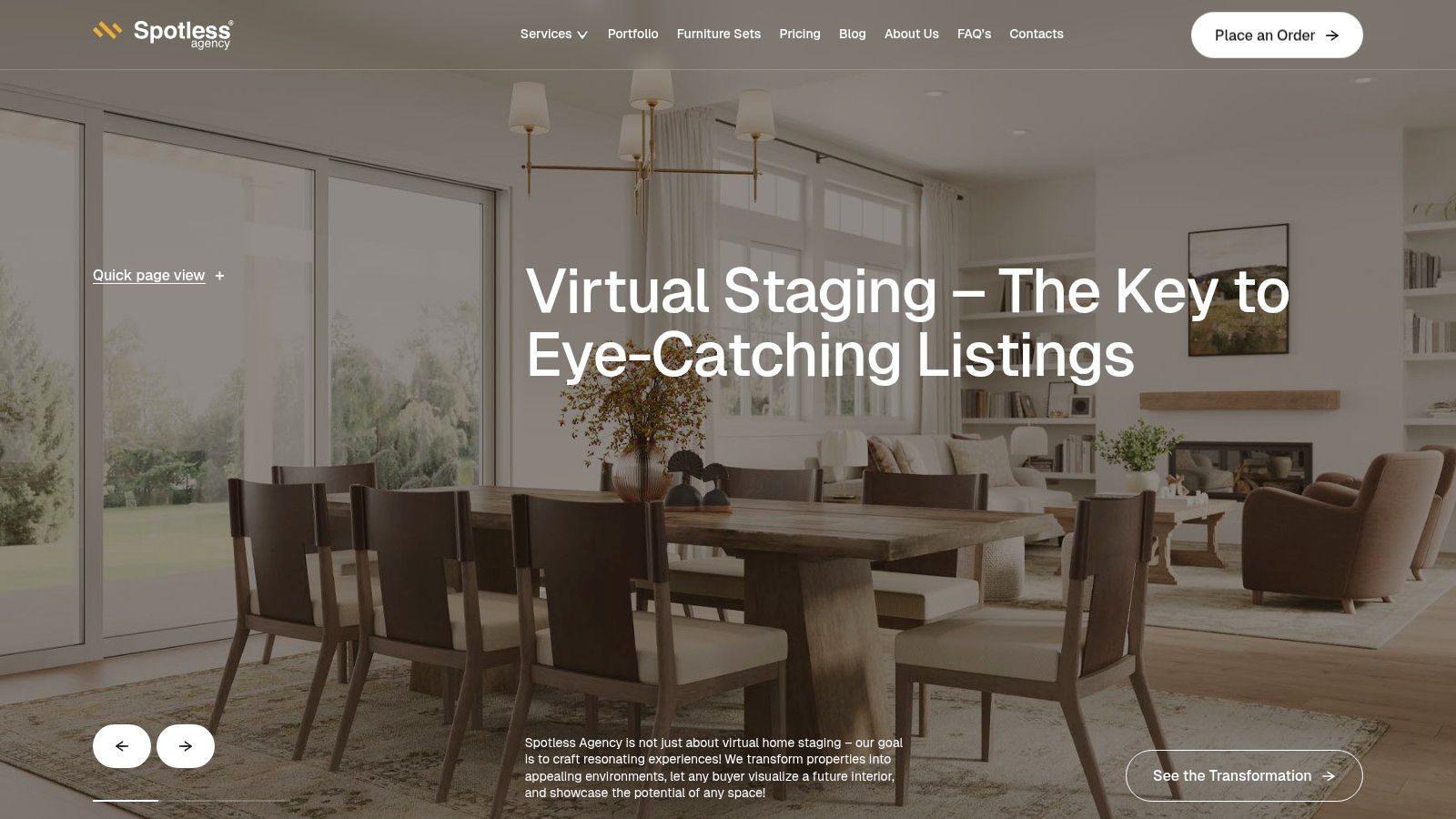
Spotless Agency operates as a boutique design studio, offering a high-end, curated approach to virtual staging that feels more like an editorial spread than a typical real estate marketing asset. They cater to the luxury market, where brand image and a specific design narrative are paramount. Their website serves as a portfolio of exceptional virtual staging examples, with a regularly updated "Monthly Showcase" that provides detailed context for each project.
Unlike automated platforms, Spotless Agency’s strength is its human-led, designer-driven process. A key feature is their browsable Furniture Library, which allows clients to review specific furniture styles and models before commissioning a project. This helps align expectations and ensures the final images match the bespoke vision of a high-end developer or agent.
Strategic Breakdown & Takeaways
Spotless Agency’s value lies in its editorial quality and meticulous attention to design trends. This is a service for projects where the staging itself is a statement. Their process is consultative; you don’t just upload a photo and get a result. Instead, you work with them to craft a specific look, which is reflected in their quote-based pricing and longer turnaround times. This model is perfect for premium listings that need to justify a high price point with equally premium marketing visuals.
Key Takeaway: Spotless Agency is for commissioning art-directed, magazine-quality virtual staging. It’s a bespoke service for the luxury market, prioritizing design integrity over speed or DIY control.
In comparison, a tool like aiStager empowers users to achieve a similar level of design specificity instantly. Instead of browsing a fixed library and waiting for a quote, you could take an empty room photo and directly test how a specific item, like an Article Sven sofa in velvet green versus a Floyd platform sofa in a neutral tone, looks in the space. By simply uploading a product link, aiStager generates a hyper-realistic image with true dimension rooms and furniture objects, letting you experiment with high-end looks in minutes, not days.
- Pros: Polished, designer-grade aesthetic ideal for premium marketing; extensive portfolio helps stakeholders agree on a direction before ordering.
- Cons: Pricing is not standardized and requires a custom quote; turnaround is longer due to the bespoke nature of the work.
- Pricing: Custom quote-based; not publicly listed.
- Website: https://spotlessagency.com/
Top 7 Virtual Staging Providers Comparison
| Solution | Complexity 🔄 | Resources & Cost ⚡ | Expected Outcomes ⭐📊 | Ideal Use Cases 💡 | Key Advantages ⭐ |
|---|---|---|---|---|---|
| aiStager | Low–Medium — one‑click workflow; needs good source photos/URLs | Credit‑based plans (free trial); optional enterprise features (4K, SSO) | Photoreal, dimension‑true renders in seconds; high conversion potential | Real‑estate listings, retailers, designers needing fast photoreal mockups | Open‑catalog staging, true‑scale accuracy, very fast and cost‑efficient |
| BoxBrownie | Low — submit photos; human‑edited process | Flat per‑image pricing; 48‑hour turnaround; 24/7 support | Consistent MLS‑ready photo‑real results | Agents and photographers who want reliable, hands‑off edits | Human reliability, predictable workflow, large example gallery |
| Stuccco | Low — submit images with style selection; human edits | Per‑image pricing with team bundles; 12–24h turnaround | Fast human‑quality staging with revision window | US brokerages and teams needing quick human edits | Fast delivery, transparent pricing, style‑organized library |
| Apply Design | Low–Medium — one‑click AI plus DIY editor for tweaks | Apply Coins pricing; supports 2D & 360; 15‑minute auto staging | Instant auto‑staging; quality varies with user refinement | Users wanting instant results plus manual control/iteration | Fast volume staging, DIY control, immediate iteration |
| Virtual Staging AI | Very Low — fully automated, batch‑friendly | Subscription tiers with monthly allowances; API/white‑label | Extremely fast (≈10s) scalable outputs; may need curation | High‑volume teams, A/B testing, rapid batch staging | Very low cost per image at scale, rapid regenerations |
| PadStyler | Medium — full‑service provider for complex edits | Tiered pricing; promos/partner discounts; handles remodels | Staging to renovation mockups; suitable for complex scenes | Agents needing remodel visualizations or full marketing packs | Broad service scope (staging + renovation), quality previews |
| Spotless Agency | High — bespoke, commissioned studio work | Quoted pricing; longer turnaround; curated furniture library | Editorial, designer‑grade staging tailored to brand | Luxury listings, developers, brand‑sensitive projects | Polished, high‑end aesthetic and curated portfolio |
From Imagination to Reality: Your Next Steps in Virtual Staging
Throughout this article, we’ve explored a wide range of virtual staging examples, moving from the basic concept to specific, actionable strategies. The journey from an empty, uninspiring photo to a vibrant, aspirational image is no longer a complex or expensive process. We’ve seen how virtual staging can solve distinct problems, whether it's giving life to a vacant new build, decluttering an occupied home without physical effort, or even showing multiple design aesthetics for a single room.
The core lesson is clear: effective visual marketing is about closing the imagination gap for potential buyers or clients. When someone can instantly see a space’s potential, their emotional connection deepens, and their interest solidifies. This is where the quality and realism of your staging truly matter.
Key Takeaways from Our Examples
The most successful virtual staging projects share a few common threads. They don't just fill a room; they tell a story and answer a buyer's unasked questions.
- Realism is Non-Negotiable: Grainy, poorly lit, or disproportionate furniture immediately breaks the illusion. The best results, as shown in the virtual staging examples using aiStager, come from tools that generate hyper-realistic, dimensionally accurate objects that look like they belong in the room.
- Style Variation Drives Engagement: Showing a living room in both a minimalist Scandinavian style and a warm, rustic farmhouse aesthetic appeals to a broader audience. It helps buyers see themselves in the home, regardless of their personal taste.
- Context is King for E-commerce: For retailers, placing a product like a Crate & Barrel sofa or a West Elm coffee table directly into a customer's own room is a powerful sales driver. It removes all guesswork about size, color, and fit, building purchase confidence.
- Strategy Over Decoration: The goal isn't just to make a room pretty. It's to highlight a room's best features, define its purpose (e.g., this spare room is a perfect home office), and create an emotional pull that translates into inquiries and offers.
Choosing the Right Tool for Your Needs
The virtual staging tool you select directly impacts your results, speed, and creative freedom. While services like BoxBrownie and Stuccco offer manual staging by designers, they often involve longer turnaround times and less flexibility for quick revisions.
For those who need speed, control, and unmatched realism, a solution like aiStager stands apart. It is the only solution that can take a simple room photo and a product URL to generate a dimension-true, photorealistic scene. This is especially useful for:
- Real Estate Agents: Quickly test different furniture styles to find what resonates most with your target demographic.
- Interior Designers: Show clients exactly how a specific piece from a brand will look in their space before they commit.
- Retailers: In just a few clicks, place a new product in their room, just by uploading a photo of the room and a link to a product.
The future of property and product marketing is visual, interactive, and immediate. The virtual staging examples we’ve examined prove that with the right approach, you can create powerful marketing assets that capture attention and drive action. Your ability to turn any space into a compelling vision is now just a few clicks away.
Ready to see how photorealistic AI can transform your own photos? Explore aiStager and start creating stunning, dimensionally accurate virtual stagings in minutes. Turn your empty rooms and product links into powerful marketing tools today by visiting aiStager.