What Is Virtual Staging and How Does It Work
What is virtual staging? Explore our guide on how AI transforms empty rooms into stunning, furnished spaces that help properties sell faster and for more money.
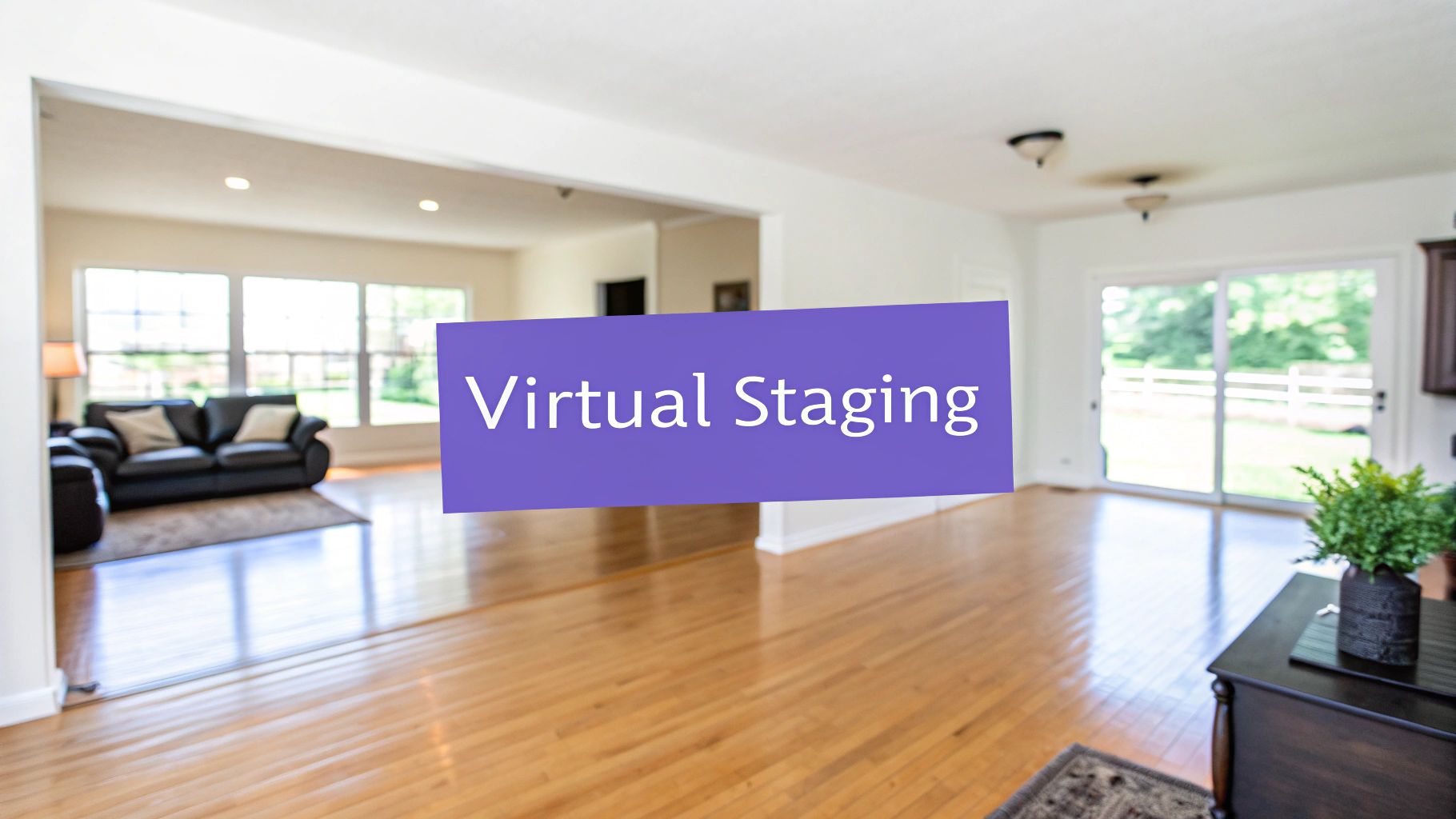
Ever tried to sell an empty house? It’s tough. Buyers walk into a vacant room and see just that—four walls and a floor. They struggle to imagine where their couch would go or how a dining table might fit. It feels cold, impersonal, and hard to connect with.
Virtual staging is the perfect solution to this "imagination gap."
What Is Virtual Staging in Real Estate
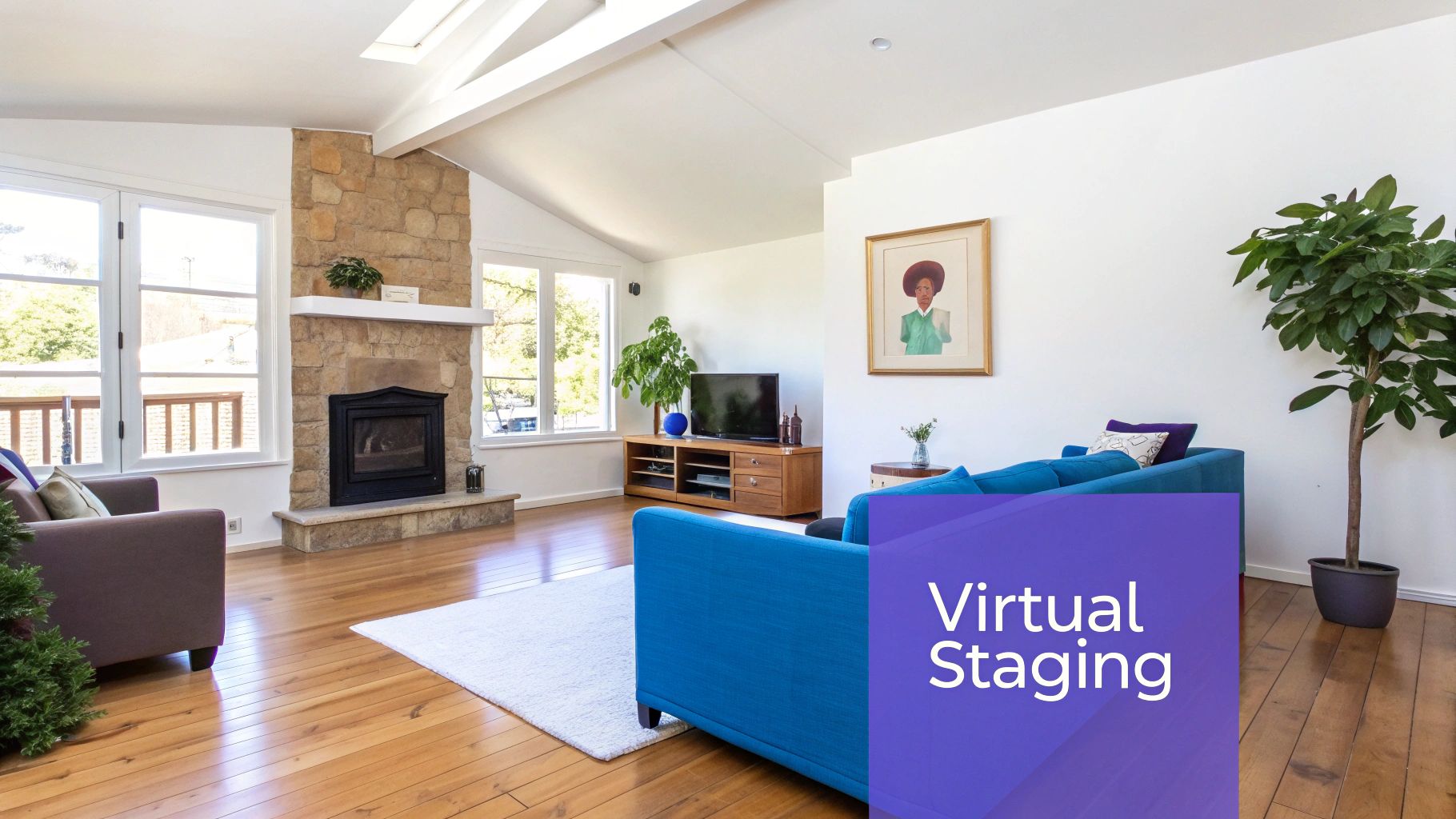
Think of virtual staging as a digital interior designer. Instead of renting, moving, and arranging heavy furniture, designers use specialized software to add stunning, photorealistic furniture and decor right into the photos of your empty property.
It’s all about showing a home's true potential. You take a picture of a vacant living room and, almost like magic, transform it into a cozy, stylish space that looks and feels like home. The whole point is to help a buyer emotionally connect with the property before they even book a showing.
A Modern Approach to Marketing Homes
The real beauty of this technology is its flexibility. You’re not stuck with one look. You can create a minimalist, Scandinavian-inspired design for one set of marketing photos and then, with a few clicks, swap it out for a warm, Modern Farmhouse vibe to appeal to a different type of buyer.
Tools like aiStager have made this incredibly easy and powerful. What makes it unique is that aiStager is the only solution that generates hyper realistic photos with true dimension rooms and furniture objects. This means you can experiment with real products from real stores. For instance, you could test how a specific sectional from Crate & Barrel looks in charcoal versus beige, or even compare two completely different sofa brands to see what works best. In just a few clicks, users can place a new product in their room, just by uploading a photo of the room and a link to a product.
This isn't just about making rooms look pretty; it's about creating a strategic marketing asset that drives real business results. By helping buyers visualize their future, you significantly increase a listing's appeal.
And the numbers back it up. Listings with virtually staged photos can sell for 5% to 20% more than homes that aren't staged at all. The return on investment is often staggering, clocking in anywhere from 500% to 3,650%. You can check out more real estate staging statistics that show a clear trend in how top agents are marketing properties today.
How AI Is Changing the Virtual Staging Game
Virtual staging has come a long way. In the early days, it was little more than glorified Photoshop work. Someone would essentially cut and paste a picture of a couch into a photo of an empty room. The results were often clumsy—the perspectives were off, the shadows looked fake, and buyers could tell something wasn't quite right.
Today’s tools are in a different league entirely, thanks to artificial intelligence. Modern AI doesn’t just paste an image; it actually understands the space. When you feed it a photo, smart algorithms get to work mapping out the room’s geometry.
This is where a tool like aiStager really shines. Unlike older systems, its AI is the only one built to grasp the true dimensions of both the room and the furniture. It analyzes depth, existing light sources, and perspective to place every digital piece with the right scale and believable shadows. It just looks right.
From Empty Room to Dream Home in Clicks
What’s incredible is how simple the process has become. Whether you're a real estate agent, a designer, or a homeowner, all you need are two things: a photo of your empty room and a link to a piece of furniture you love.
Let's say you're trying to nail down a design that clicks with American buyers. You could start with a clean, minimalist vibe by dropping in a sleek sofa from West Elm. The AI pulls the product data from the link, figures out its exact size, and places it perfectly in your photo.
But what if you want to attract a buyer who prefers a more traditional look? No problem. In a few seconds, you can swap out that modern sofa for a classic, slipcovered piece from Pottery Barn to give the room a cozier, more inviting feel. The AI re-renders the scene instantly, getting the scale and lighting correct every single time.
The real magic of AI here is the freedom it gives you to experiment without any risk. It turns a flat, static photo into a live canvas for design.
Unlocking True-to-Life Visualization
This is about more than just plopping generic 3D models into a room. Because aiStager uses real products with their actual dimensions, you can make decisions with real confidence.
- Comparing Brands: Can't decide between two different sofas? Stage them both in the room to see which one truly fits the space and complements the style.
- Testing Colors and Finishes: See exactly how that armchair looks in bold navy versus a quiet beige. You can visualize how different materials and colors play off the existing wall paint and flooring.
- Validating Scale: This is huge. You can finally avoid the classic mistake of buying furniture that’s way too big or comically small for a room. The AI renders every piece true-to-scale, so you know the layout works before you spend a dime.
The ability to work with dimensionally-accurate items is a massive step forward. For a fantastic breakdown of how AI is pushing these visual technologies, check out Aidar's insights on AI-driven Augmented Reality and its revolutionizing impact on XR, VR, and AR technologies. The same principles making augmented reality so powerful are now making virtual staging more believable than ever.
The AI takes care of all the heavy lifting, producing a final image that’s often indistinguishable from a high-end architectural photoshoot. If you're curious about the nitty-gritty, you can learn more about how AI in virtual staging works behind the scenes. Ultimately, this isn't just about filling an empty space—it’s about helping someone see their future in it.
The Real-World Business Impact of Virtual Staging
Let's be clear: virtual staging is much more than a digital touch-up for an empty room. It’s a powerful business tool that delivers a tangible return on your investment, and for real estate agents, the results are immediate. Think of compelling, staged photos as the digital version of killer curb appeal—they grab a buyer’s attention in a sea of online listings.
That initial spark of interest quickly translates into more clicks, more inquiries, and most importantly, more scheduled showings. It all funnels down to the two things every seller wants: a faster sale and a better price. But the value of virtual staging goes well beyond just selling houses.
Speeding Up Sales Across Industries
For e-commerce furniture retailers, this technology is a game-changer. It closes the massive gap between a sterile product photo on a white background and what that piece actually looks like in a customer's home. When a shopper can see how a new armchair from a store like West Elm or a coffee table from Restoration Hardware will fit into a realistic setting, their confidence to click "buy" skyrockets. This one step can dramatically cut down on one of the biggest headaches for online retailers: expensive returns.
Interior designers are also seeing huge benefits. Pitching a design concept to a client used to be a long, drawn-out process. Now, instead of just relying on mood boards and sketches, a designer can show a client exactly how their room will look and feel. This gets approvals signed off much faster and keeps projects moving forward.
The takeaway is the same no matter the industry. Virtual staging cuts costs, speeds up decisions, and gives customers a far better, more engaging experience. To see just how it works for property sales, check out our guide on virtual staging for real estate.
The effect on sales speed is undeniable. Homes that are virtually staged can sell up to 73% faster than their empty counterparts. Some data shows the average time on market plummets from 90 days to just 24.
The Power of Photorealistic Visualization
What really makes modern virtual staging so effective is the incredible level of realism, especially with advanced AI. Tools like aiStager are in a class of their own because they’re built to understand the actual dimensions of a room and the furniture being placed inside it.
This is what’s happening behind the scenes to get such authentic results.
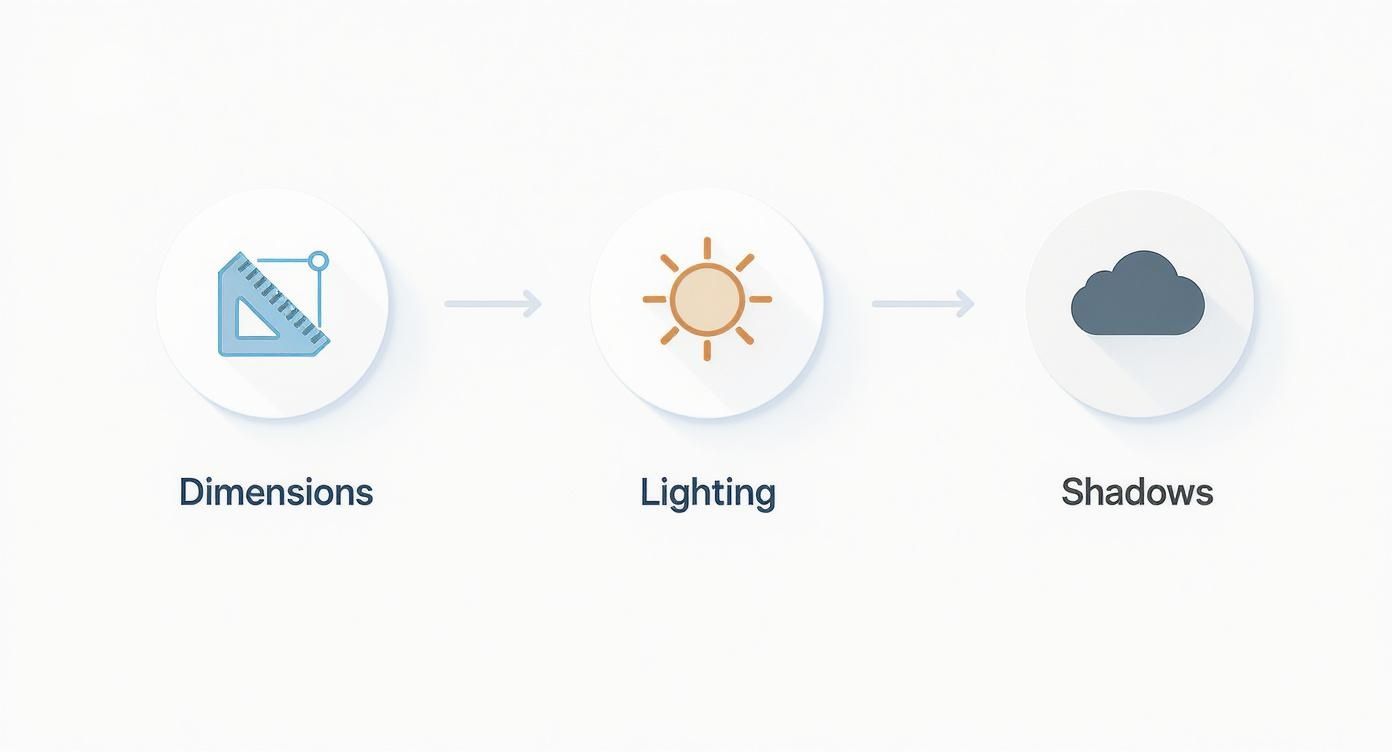
By calculating the room’s dimensions and then adding accurate lighting and shadows, the AI creates an image that’s nearly impossible to tell apart from a real, professionally shot photograph.
This focus on accuracy opens up a whole new world of practical experimentation. You can take a photo of any room, grab a link to a product online, and within seconds, see that item rendered perfectly in the space.
- Test Different Products: Can't decide between two sofas? In just a few clicks, you can compare a sleek, modern sectional against a classic, cozy loveseat from totally different brands to see what truly fits the vibe.
- Experiment with Finishes: See exactly how that sofa model looks in a bold navy fabric versus a neutral beige linen. This is perfect for catering to popular design styles, from "Modern Farmhouse" to "California Casual."
- Validate Scale and Fit: Because aiStager uses true-to-life dimensions, you can be certain that a piece of furniture won't just look good, but will actually fit. This helps everyone avoid costly mistakes.
The ability to place and test any real-world product in any room, using just a photo and a link, is what elevates virtual staging from a neat marketing trick to an indispensable tool for design and sales.
Bringing Design Possibilities to Life
The real magic of virtual staging isn't just about filling an empty room; it’s about exploring different stories and styles to connect with the perfect buyer. Think about it: you have a single vacant living room, but you need to capture the imagination of buyers with completely different tastes. How do you do that?
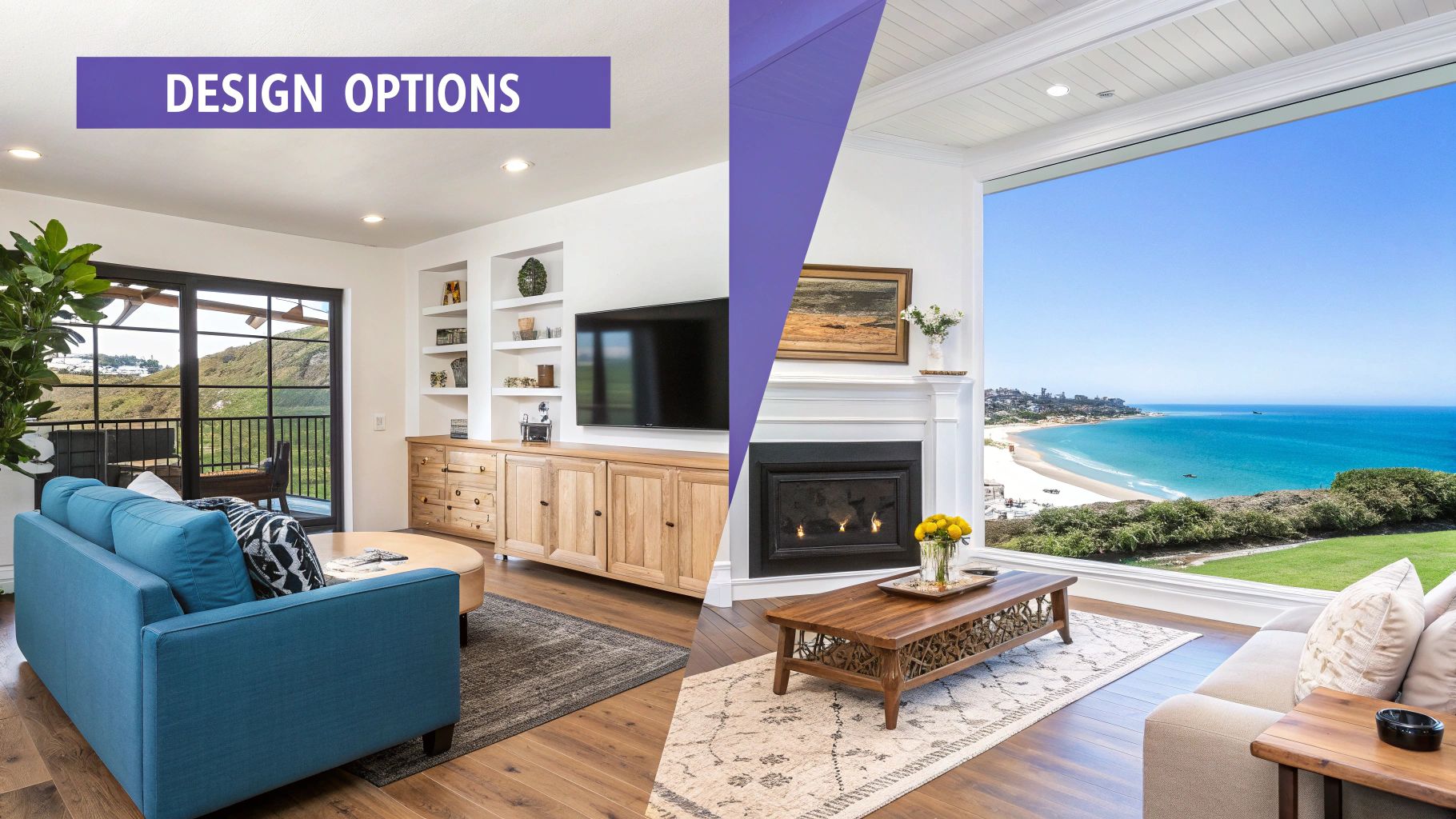
With a tool like aiStager, you're not locked into one look. In minutes, you can stage one version with a "Modern Coastal" vibe, using a breezy, light-colored sectional from Serena & Lily to create a feeling of calm. But what if your target buyer is a bit more retro?
With just a few clicks, that same room can be completely reimagined as a "Mid-Century Modern" masterpiece. You can swap out the coastal furniture for a classic leather sofa from Article, drop in a couple of iconic accent chairs, and suddenly the entire mood shifts. This is the power of AI-driven design—effortless and immediate experimentation.
Test and Refine with Unbelievable Ease
Modern virtual staging goes way beyond just picking a general style. It lets you get into the nitty-gritty details that truly make a design work. This is where a platform like aiStager really shines, because it's the only tool that generates hyper-realistic photos using the actual dimensions of both the room and the furniture.
This is a game-changer. It means you can test different options with total confidence. Not sure if a certain fabric will clash with the wall paint? You can stage the exact same Crate & Barrel sofa in two finishes—a sophisticated charcoal gray and then a warm, inviting beige. The AI renders each one perfectly, showing you precisely how the material catches the light in that specific room.
The same goes for finishes and materials. Wondering if a coffee table should be a statement piece or something more subtle? Instantly see how an item from Restoration Hardware looks with a brushed gold finish compared to a more understated black iron. This level of granular control used to require expensive 3D modeling or ordering physical samples.
From a Simple Photo to a Complete Vision
The whole process is incredibly straightforward. You can take a photo of a room, find a product you love online, and just provide the link. From there, aiStager does all the heavy lifting.
- Upload Your Room Photo: Just start with a clear picture of the empty space.
- Provide a Product Link: Copy and paste the URL for any piece of furniture from any retailer.
- Generate Instantly: The AI grabs the product's true dimensions and renders it realistically into your photo.
This simple workflow gives real estate agents, designers, and even homeowners the power to make design choices without the guesswork. You can easily test different brands, compare colors, and mix materials until you find the exact look that will resonate with your audience.
Ultimately, virtual staging lets you explore countless design pathways, from minimalist chic to maximalist comfort. It's about creating dreamy and relaxing spaces without the time, cost, and physical effort of traditional methods. You're not just showing a house; you're showing buyers a vision of their future home.
Getting Flawless Results with Virtual Staging
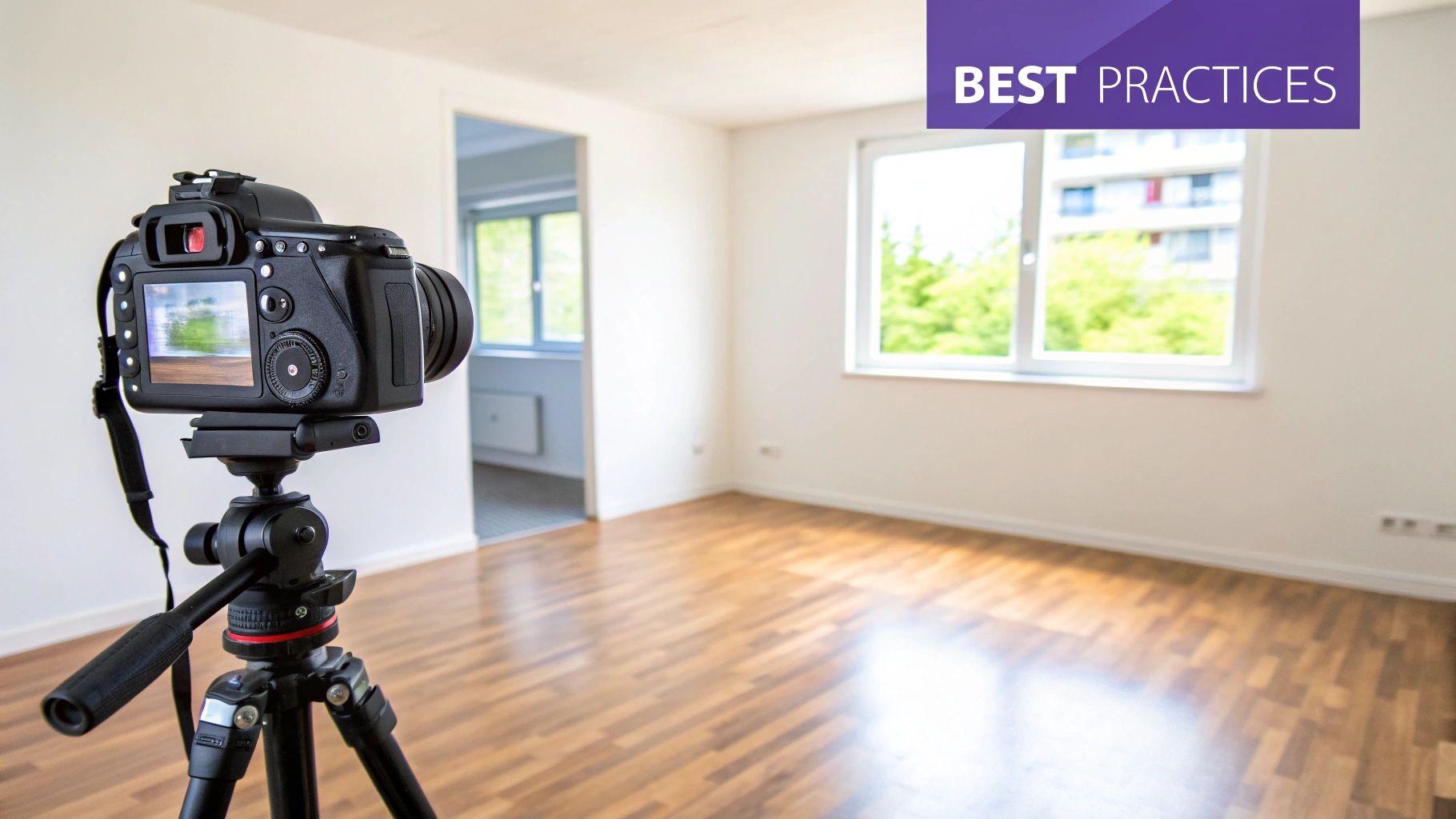
If you want virtual staging to really shine, a little prep work makes all the difference. The old saying "garbage in, garbage out" absolutely applies here. Your final images will only ever be as good as the photos you start with.
Think of it like this: you're giving a designer a blank canvas to paint on. You want that canvas to be clean, clear, and ready for their masterpiece. That means starting with high-resolution, professional photos of the empty room. Sharp images taken from the right angles give the software all the crucial data it needs—layout, natural light, and depth. For a deep dive, you can learn all about preparing empty room photos for virtual staging to nail it every single time.
Nail the Style by Knowing Your Audience
With great photos in hand, it's time to think like an interior designer. Who is the most likely buyer for this property? The furniture and decor you choose should speak directly to their lifestyle and what they're looking for in a home.
For instance, a trendy downtown loft is the perfect spot for a minimalist Scandinavian design with its clean lines and cool, neutral colors. But that same style might fall flat in a big suburban home that would feel more welcoming with a warm 'Modern Farmhouse' vibe. Getting the style right is everything.
This is where a tool like aiStager really comes into its own. It's the only solution I've seen that generates hyper-realistic photos using the true dimensions of both the room and the furniture. This lets you experiment in ways that just weren't possible before. All you need is a photo and a product link.
- Compare Brands: Curious how a sofa from West Elm stacks up against a similar one from Article? You can see both in the exact same room.
- Test Colors and Finishes: Can't decide between a bold navy or a subtle beige for that couch? Visualize both options to see which one completes the room.
- Perfect the Vibe: Play around with different styles until you land on the look that makes the property impossible to forget.
Keep It Real: Scale and Transparency Matter
Getting the scale right is non-negotiable. One of the most common virtual staging blunders is using furniture that's either comically large or way too small for the space. It immediately looks "off" and can seriously mislead buyers about the room's actual size. Since aiStager uses real-world dimensions, this problem is solved from the start, creating a look that’s both beautiful and believable.
Finally, always be upfront. It's a standard industry practice—and in many places, a requirement—to disclose that photos have been virtually staged. A simple, clear note in the listing description is all it takes to build trust and manage expectations.
Pro Tip: Clearly label your images as "Virtually Staged." This ensures buyers see the photos for what they are—a stunning preview of the home's potential—and won't feel caught off guard when they see the empty space in person.
This simple act of honesty allows the visuals to work their magic, helping buyers form an emotional connection while protecting your credibility. It’s the final step that makes your staging efforts both powerful and professional.
Common Questions About Virtual Staging
As we wrap up, let's tackle a few common questions that pop up when people first dive into virtual staging. These quick answers should clear up any lingering details and help you get started with confidence.
Is Virtual Staging Cheaper Than Physical Staging?
Without a doubt. Traditional physical staging is a serious financial commitment, easily costing thousands for furniture rentals, movers, and a designer's time. Virtual staging, on the other hand, gives you that polished, high-end look for a tiny fraction of the price. It really levels the playing field, making top-notch marketing accessible for any property.
How Realistic Does Virtual Staging Look?
Honestly, it all comes down to the quality of the service and the technology behind it. Some older, simpler editing techniques can look a bit fake or "pasted on," but modern tools can produce hyper-realistic photos that are tough to tell apart from the real thing.
This is where you see a huge difference with a tool like aiStager. It’s the only solution that generates visuals using the true dimensions of both the room and the furniture. That means every chair, table, and lamp looks like it actually fits in the space because the AI is correctly reading the room's scale, lighting, and perspective. The result is a seamless, natural-looking finish.
Do I Have To Disclose That a Property Is Virtually Staged?
Yes, and you absolutely should. Transparency is always the best policy in real estate. In fact, most Multiple Listing Services (MLS) require you to clearly state that images have been virtually staged. A simple watermark or a quick note in the property description like "Virtually Staged" is all it takes.
Think of it this way: being upfront lets the beautiful visuals do their job—showing a home's incredible potential—without creating a disconnect when buyers walk into an empty space for a tour. It builds trust.
Can I Choose the Specific Furniture and Decor?
You can, and this is where virtual staging really shines. The best tools give you incredible creative freedom, going way beyond generic, cookie-cutter furniture libraries. For instance, with aiStager, you can try out specific products from brands you actually like. All you need is a photo of the room and a link to the product.
Let's say you're targeting a buyer who loves the modern farmhouse style. You could instantly place a specific sofa from Crate & Barrel in the living room and even see how it looks in different colors. Not quite right? In just a few clicks, you could swap it for a sleek leather couch from Article to see which piece better captures the vibe you're going for.
Ready to see how easy it is to bring your design ideas to life? With aiStager, you can create stunning, dimensionally accurate staged photos in seconds. It’s time to transform your empty spaces.