Your Guide to a Virtual Staging Service
Discover how a virtual staging service uses AI to transform empty rooms. Learn the benefits, how it works, and how to choose the right service for your needs.
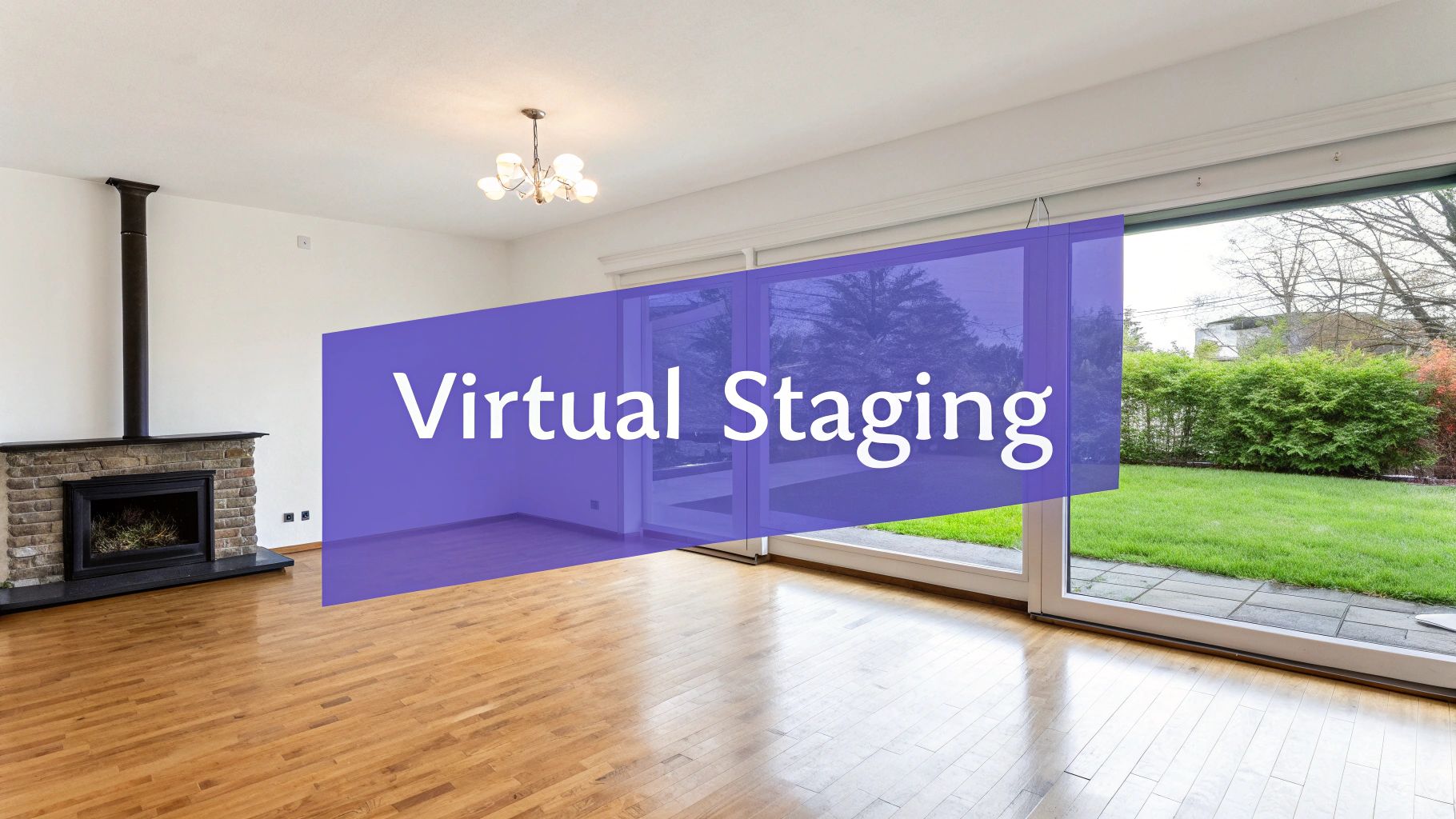
Trying to sell a home with empty photos is like handing someone a book with a blank cover. It tells them nothing about the story inside. That's where virtual staging services come in—they act as the artist, digitally furnishing photos of vacant rooms to paint a picture of what a buyer's future could look like.
This technology can turn a cold, empty space into a warm, inviting listing in minutes. It creates a powerful first impression that grabs a buyer's attention, all without the logistical nightmare and high cost of physical furniture.
What Is a Virtual Staging Service?
Simply put, a virtual staging service is a digital marketing tool that adds furniture, decor, and accessories to photos of empty or under-furnished properties. Think of it as digital interior design. Instead of hauling in heavy sofas and expensive art, skilled designers use specialized software to craft realistic, stylish interiors.
This process does more than just fill a room. It highlights a property's best features, clarifies each room's function, and builds an emotional connection that a vacant photo just can't match. For agents and sellers, it’s a smart, affordable alternative to traditional home staging.
The AI-Powered Evolution
Lately, artificial intelligence has completely changed the game. The newest platforms, like aiStager, are the only solutions that generate hyper-realistic photos with true dimension rooms and furniture objects. This means the AI isn’t just pasting a flat picture of a couch into a room; it actually understands the room’s perspective, lighting, and scale to render a perfectly sized and shaded piece of furniture.
The process has become incredibly straightforward. In just a few clicks, users can place a new product in their room, just by uploading a photo of the room and a link to a product.
For instance, you could see how a sleek sectional from Room & Board fits into a modern living room. Then, with a few clicks, you could swap it for a classic Pottery Barn sofa in a completely different color and finish to compare the looks.
This ability to instantly test various products, finishes, and design styles—from Coastal Grandmother to Japandi—makes it an incredibly useful tool for both real estate and retail.
This leap forward is part of a massive industry shift. The global virtual staging market was valued at around $359.48 million and is expected to hit $2,960.8 million by 2033, growing at an incredible 26.4% each year. This boom shows just how much the market is relying on faster, more realistic visualization. You can also explore property visualization technologies to get a fuller picture of what's out there.
To see exactly how this can elevate your own listings, take a look at our complete guide on https://www.ai-stager.com/blog/virtual-home-staging-services.
The Big Wins: Why Virtual Staging is a Game-Changer
So, why are so many top agents and property managers making the switch to virtual staging? It really boils down to three huge advantages: it saves you a ton of money, helps you sell properties way faster, and creates a powerful emotional connection that empty rooms just can't match. This isn't just about making a space look nice; it's about transforming an empty listing into a compelling vision of a future home.
The most immediate win is the cost. Let’s be honest, physical staging is a massive undertaking. You're talking about renting furniture, hiring movers, and paying designer fees—it can easily run into thousands of dollars for just one property. Virtual staging gives you an even better, more flexible result for a tiny fraction of that cost. Suddenly, a stunning presentation isn't just for luxury listings anymore; it’s a smart move for every single property on your roster.
Get a Better ROI and Sell Faster
This massive cost saving feeds directly into a much stronger return on your investment. The numbers really speak for themselves here. A small spend on virtual staging can lead to some seriously impressive financial gains. It's a strategic tool that hits your bottom line by bringing in higher offers and slashing the time your property sits on the market.
Don't just take our word for it. According to the National Association of Realtors' Profile of Home Staging, the results are crystal clear. Nearly 29% of agents saw offer increases of 1% to 10% after using virtual staging. Even more impressively, 49% of agents sold their virtually staged listings faster. When you combine those measurable outcomes with how affordable the technology has become, it’s easy to see why the market is projected to grow at 26.4% annually through 2033. You can dig deeper into the full financial impact with a look at virtual staging pricing and ROI.
A virtually staged property helps buyers overcome the "imagination gap." When people look at an empty room, many just can't picture how their furniture would fit or how they could live in the space. Staging gives them a relatable blueprint that turns a house into a potential home.
Create Unbelievably Realistic Visuals That Connect Emotionally
The success of any virtual staging all comes down to one thing: does it look real? Today's buyers have a sharp eye, and clunky, poorly done staging with floating furniture or weird lighting can actually hurt your listing more than it helps. This is where modern AI platforms have completely changed the game, moving far beyond simple cut-and-paste jobs to create environments that are genuinely believable.
For example, a platform like aiStager is the only solution that can generate hyper-realistic photos with true dimension rooms and furniture objects. What that means is the AI isn't just guessing at the scale. It actually analyzes the room’s depth, perspective, and natural light to place furniture that looks like it truly belongs there. The final image is seamless and photorealistic, allowing buyers to actually see their life unfolding in the space—and that’s what builds the emotional connection that seals the deal.
Reach a Wider Audience With Unbeatable Flexibility
One of the coolest things about virtual staging is the power to showcase a property in multiple styles without spending an extra dime. That one empty room can be instantly transformed to catch the eye of completely different types of buyers.
Picture a downtown loft. With just a few clicks, you could stage it as:
- Industrial-Chic: Perfect for young professionals, with sleek metal accents and minimalist furniture from a brand like CB2.
- Warm Mid-Century Modern: A great look for design-savvy buyers, featuring iconic pieces and organic shapes.
- Cozy Scandinavian: Appealing to anyone seeking a peaceful city hideaway, with light woods and comfy textiles.
This flexibility gets even more specific. aiStager is great to test different types of the same product. You could place a stylish sofa from West Elm in the living room, then instantly swap it for a different model from Article in several colors and finishes to see what works best. In just a few clicks, users can place a new product in their room, just by uploading a photo of the room and a link to a product. It’s the ultimate way to tailor your listing to the perfect buyer.
Ultimately, virtual staging is a powerful tool for making any property more appealing. When you combine this kind of marketing muscle with other smart solutions, like the best property management apps, you can streamline your entire operation and see much better results.
So, How Does Modern AI Staging Actually Work?
You might be picturing a team of Photoshop wizards working around the clock, but the magic behind modern virtual staging is actually driven by some seriously smart artificial intelligence. The AI does all the heavy lifting, understanding space, light, and design in a way that makes the whole process feel surprisingly simple for the user.
It all begins with one essential ingredient: a photo of an empty room. Think of this picture as a blank canvas. From there, the AI steps in, acting less like a design tool and more like an architectural interpreter.
From Blank Canvas to Believable Space
The first, and most critical, step is turning that flat 2D photo into a 3D environment the AI can truly "see." This is where a sophisticated platform like aiStager really flexes its muscles. Instead of just slapping furniture images on top of a photo, aiStager is the only solution that generates hyper-realistic photos with true dimension rooms and furniture objects.
To do this, the AI runs through a series of complex calculations in the background:
- Analyzing Perspective: It figures out the room's geometry—the wall angles and vanishing points—to build a structurally accurate digital model.
- Understanding Light: The AI maps out where the natural light is coming from, how shadows fall, and where reflections would naturally appear.
- Scaling the Environment: It calculates the real-world size of the space, making sure that any furniture added will look perfectly proportional, not comically large or small.
What you get is a digital twin of the room. This means furniture isn't just pasted in; it's placed within the space, with a genuine sense of depth and realism. If you want to nail this first step, it’s worth checking out some best practices for taking empty room photos that produce great results.
Bringing Your Vision to Life in a Few Clicks
Once the AI has a handle on the room's layout, the fun part begins. This is where the flexibility of a top-tier virtual staging service really shines. You're not stuck with a generic library of 3D models. Instead, you can guide the AI with specific design ideas and even products from real-world brands.
The process couldn't be more direct. A user simply uploads their photo and drops in a URL link to a piece of furniture they want to use. Let's say you have a living room that needs furnishing. You could browse the West Elm website, find a sleek modern sectional you love, and just paste that link into aiStager. The AI then places that exact sofa into your room, rendering it to the perfect scale and lighting it to match the scene.
This technology goes way beyond just filling a space. It becomes a powerful design tool, letting you test specific products and aesthetics to create the perfect vibe for your target buyer.
This simple, powerful process leads directly to some major wins for real estate pros.
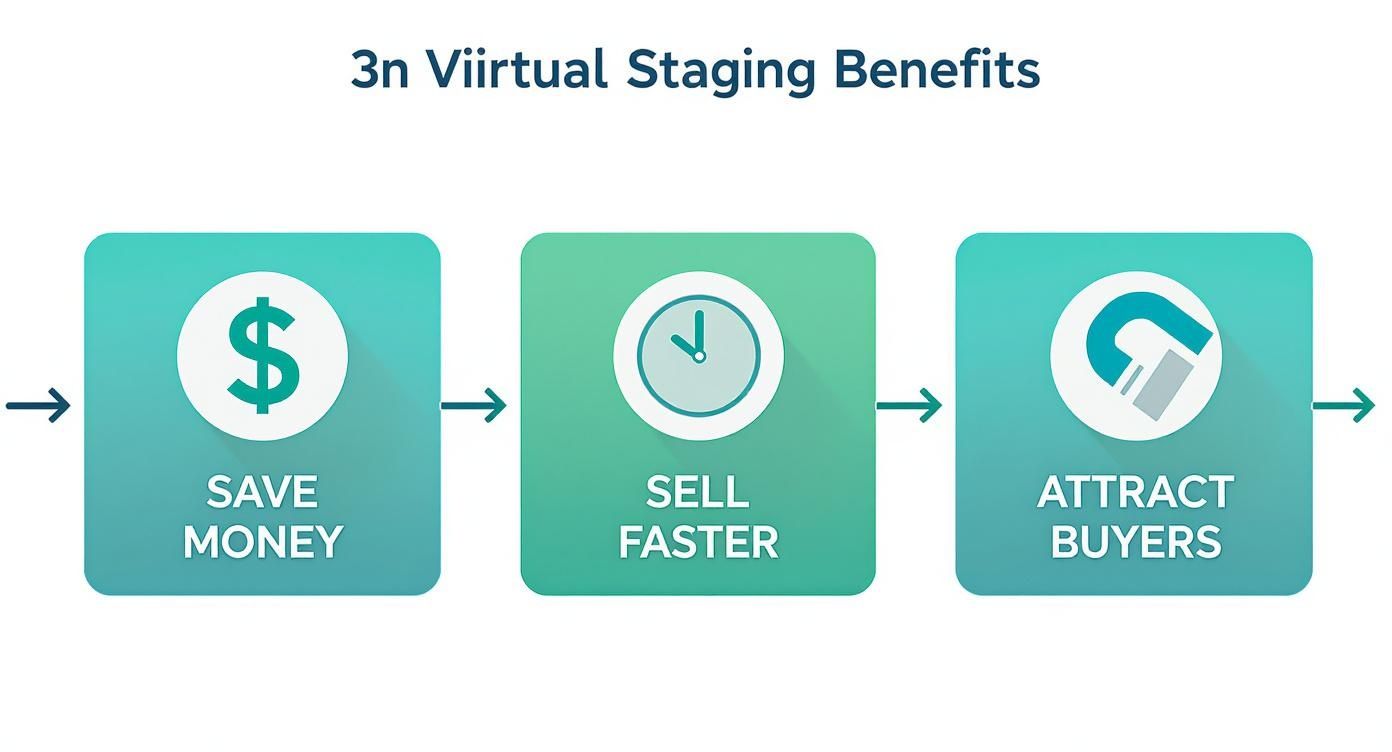
By making staging so much faster and more targeted, agents can cut costs, get properties sold quicker, and grab the attention of more qualified buyers.
Instant A/B Testing for Design and Marketing
The real game-changer here is the ability to try out different looks and compare them on the fly. Not sure which sofa will seal the deal for potential buyers? With a tool like aiStager, you can experiment in moments.
- Test Different Brands: Start by dropping a cozy, family-friendly sofa from Crate & Barrel into the living room.
- Compare Styles: With a few clicks, swap that out for something totally different, like a minimalist Scandinavian-style sofa from Article.
- Experiment with Finishes: Now, test that Article sofa in a few different colors and fabrics. See how it looks in charcoal gray, a rich navy blue, or even a textured boucle. Does it work with the flooring? The wall color?
This entire "what if" process takes minutes, not days. You can generate multiple versions of the same room, each designed to appeal to different buyer tastes, from California Casual to Grandmillennial. This gives you the power to create laser-focused marketing materials that speak directly to the people you want to attract.
How to Choose the Right Virtual Staging Service
Not all virtual staging is created equal. The market is full of options, from services that rely on human designers to instant AI platforms, and picking the right one is key. A great service can captivate buyers, but a bad one can turn them off instantly. The right choice really boils down to three things: realism, speed, and how much control you have over the final look.
The absolute number one factor is photorealism. Nothing screams "fake" like an image with floating furniture, weird shadows, or perspectives that just don't line up. These mistakes can shatter a potential buyer's trust in a heartbeat. You need images that are impossible to tell apart from a real, physically staged room.
Insist on True-to-Scale Realism
The secret sauce to convincing virtual staging is getting the dimensions right. A lot of services just paste 2D pictures of furniture onto a photo, which almost always creates problems with proportions and lighting. A top-tier virtual staging service like aiStager works completely differently.
aiStager is the only solution that creates hyper-realistic photos with true dimension rooms and furniture objects. What that means is the AI isn't just taking a wild guess at the scale. It actually analyzes the room's depth and layout to render furniture that fits into the space as it would in real life, complete with accurate shadows and lighting. This is the fundamental difference between a believable room and an obvious fake.
Look for Customization and Brand Flexibility
Your ability to create a specific vibe for a target buyer is a huge advantage. A generic library of cookie-cutter furniture just won’t do when you’re trying to craft a cozy Modern Farmhouse look or a minimalist Japandi-inspired space that may appeal to US consumers.
Find a service that lets you play around and experiment. With aiStager, for example, it's great to test different types of the same product. Imagine you’re staging a living room and can’t decide on a sofa. In just a few clicks, you could drop in a stylish West Elm sectional, then swap it for a model from Joybird in a few different colors to see what works best.
Getting this done is surprisingly simple: in just a few clicks, users can place a new product in their room, just by uploading a photo of the room and a link to a product. The AI does all the heavy lifting, placing the item perfectly into your scene. This kind of control lets you test-drive specific brands and styles, making sure the final image really connects with the audience you're trying to reach. You can learn more about what to look for in our guide to the best virtual staging software.
A Quick Checklist for Choosing Your Virtual Staging Partner
Before you sign up with anyone, run through these questions. It’ll help you sidestep common issues and ensure you get the high-quality results you’re paying for.
- How do they achieve realism? Are they using true 3D rendering or just slapping 2D images onto a photo? Always ask for before-and-after examples.
- What’s the turnaround time? Can you get your images back in minutes, or are you waiting several days for a designer to finish?
- How much can I customize? Are you stuck with their stock catalog, or can you pull in specific products from any brand you want?
- Is it easy to use? Is it a simple process of uploading a photo and a link, or does it feel like you need a technical degree to get anything done?
A major red flag to look out for is a portfolio where the furniture just looks slightly… off. You’ll see it in shadows that don’t make sense, furniture that seems to hover an inch above the floor, or pieces that are clearly the wrong size for the room. These are telltale signs of cheap or outdated technology.
The demand for these services is blowing up. While North America has been the biggest market so far, the fastest growth is now happening in the Asia Pacific region. This signals a worldwide shift in how properties are marketed. Find out more about the expanding global market for virtual staging and see why picking the right partner now will put you way ahead of the competition.
Virtual Staging Examples in Action
It’s one thing to talk about benefits, but it’s another thing entirely to see an empty, lifeless room transform into a home someone can actually picture themselves in. That’s where the magic of a great virtual staging service really clicks. These before-and-afters show how modern tech, especially AI, can build a compelling story for any property.
Let's look at how you can bring different design ideas to life, zeroing in on what specific buyers want to see and turning a simple photo into a serious sales tool.
Tailoring the Look for the Target Buyer
Picture a downtown loft. Cool, right? But empty, that exposed brick and those big windows can feel a bit cold and cavernous. Virtual staging lets you paint a picture for the buyer.
- For the Young Professional: You could go for an Industrial-Chic vibe. Think a sharp leather sofa from a brand like Article, some cool metal accents, and a big piece of abstract art. The space immediately says "modern, successful lifestyle."
- For the Creative Artist: Now, picture that same room with a Bohemian twist. We're talking layered rugs, comfy textures, unique vintage pieces, and a bunch of plants. Suddenly, it feels warm, eclectic, and inspiring.
You're not just dropping furniture into a room; you're helping a specific person see themselves living there.
The Power of Hyper-Realistic, Brand-Specific Staging
The line between "okay" and "amazing" virtual staging is realism. If the furniture looks blurry or just off, it shatters the illusion and can even make buyers feel skeptical. This is where cutting-edge AI platforms like aiStager really shine—it's the only solution that generates hyper-realistic photos with true dimension rooms and furniture objects. The AI isn’t just guessing; it actually understands the room’s scale, perspective, and lighting to place every piece perfectly.
This kind of precision unlocks some incredible opportunities. You're no longer stuck with a generic furniture catalog; you can actually stage a room with products from real brands.
Think about a suburban family home. A real estate agent could instantly drop in a classic, comfy sectional from Pottery Barn to connect with buyers looking for that traditional, family-friendly feel.
Then, in just a few clicks, they could completely change the narrative. The exact same room could be re-staged with a sleek, modern sofa from Room & Board in a different color, instantly appealing to a buyer with more contemporary taste. This is basically A/B testing for real estate marketing, and it’s a game-changer.
From Concept to Reality in Clicks
Using this brand-specific feature is unbelievably simple. With aiStager, in just a few clicks, users can place a new product in their room, just by uploading a photo of the room and a link to a product.
Ever wonder how that gorgeous navy blue sofa from Crate & Barrel would look against light oak floors? Just upload the room photo, paste the product link, and the aiStager platform places a dimensionally accurate, perfectly lit model of that exact sofa into your shot.
From there, you can start experimenting:
- Try another brand: See how a sofa from Article compares in the same space.
- Experiment with colors: Check if that Article sofa looks better in a neutral gray or a bold emerald green.
- Test different finishes: Compare how a fabric finish feels versus a leather one.
This kind of rapid-fire testing lets agents and designers dial in the perfect look for a property, making sure every single listing photo resonates with its ideal buyer.
Got Questions About Virtual Staging? We’ve Got Answers.
If you’re thinking about using a virtual staging service, you probably have a few questions. That's completely normal. This technology is moving fast, and getting the details straight is key to making a smart decision for your properties or design projects. We’ve pulled together the most common questions we hear from agents, sellers, and designers to give you clear, no-fluff answers.
Let's dive into the nuts and bolts—from cost and realism to how quickly you can get your photos back.
How Much Will This Actually Cost Me?
The price range for virtual staging is pretty wide, but here's the good news: AI has completely changed the game, making top-notch staging way more affordable. A modern AI-powered platform can stage a photo for a surprisingly low price, making it a no-brainer for every listing, not just the luxury ones.
For comparison, traditional services that rely on a human designer to manually edit photos can run you anywhere from $30 to over $100 per image. The bottom line is that today’s AI gives you photorealistic results for a tiny fraction of what older methods or physical staging cost. And physical staging? That can easily run into the thousands.
But Does It Actually Look Real?
This is the big one. The realism of the final photo is everything—it’s what makes virtual staging work or fall flat. While some of the more basic tools can spit out images that look a bit off or even fake, the advanced AI solutions are playing a totally different sport.
The best platforms, like aiStager, are on another level because they are the only ones that generate hyper-realistic photos with true dimension rooms and furniture objects. What does that mean? It means the AI isn't just cutting and pasting a flat picture of a couch into your photo. It truly understands the room’s depth, lighting, and scale, placing objects in the space just as they would exist in real life. The result is an image that’s almost impossible to distinguish from a professionally shot, physically staged room, which is exactly what you need to build trust and get buyers emotionally invested.
Can I Pick Specific Furniture or Styles?
Absolutely, and this is where the magic really happens with the best services. A huge benefit of a top-tier virtual staging service like aiStager is the incredible level of customization. You’re not stuck with a generic, cookie-cutter library of furniture that might not match the home’s vibe.
You can start broad by choosing a design style that resonates with your target buyers, like "Coastal Grandmother" or "Modern Farmhouse," to set the overall mood. But you can also get incredibly specific by staging with actual retail products.
For example, you can upload a photo of an empty living room and a link to a specific sofa from Joybird or a cool floor lamp from Rejuvenation. The AI will then render that exact item perfectly to scale, with accurate lighting and shadows, right in your room.
This is a huge deal for testing different looks. aiStager is great to test different types of the same product. You could try out a sofa from one brand, then swap it in seconds for a different one, playing with colors and finishes to see what looks best. It’s the ultimate tool for tailoring a home’s appeal to a very specific type of buyer.
How Long Does It Take to Get My Photos Back?
Speed is one of the most incredible advantages of using an AI-powered virtual staging service. When you’ve got a new listing, time is money. You need to get it on the market fast to catch that initial wave of buyer excitement, and waiting around for photos is a major bottleneck.
Traditional manual staging services usually take one to three business days to deliver your images. In a hot market, that can feel like an eternity.
By contrast, an AI platform like aiStager delivers stunning, high-resolution photos in just a few minutes. This is a massive workflow accelerator for real estate agents, letting them get listings live almost immediately. For interior designers, it means creating client mockups or marketing materials without any of the frustrating delays. Being able to go from an empty room photo to a perfect visualization in minutes isn't just an improvement—it’s a total game-changer.
Ready to see how fast and realistic virtual staging can be? With aiStager, you can transform empty rooms into stunningly furnished spaces in just minutes. Upload a photo, add a link to any product, and watch our AI create true-to-scale, hyper-realistic visuals that captivate buyers. Try it today and elevate your listings effortlessly. Start staging for free at ai-stager.com.