Explore ai for interior design: Transform Visualization and Staging
Discover how ai for interior design speeds up visualization, virtual staging, and realistic mockups with smart AI tools.
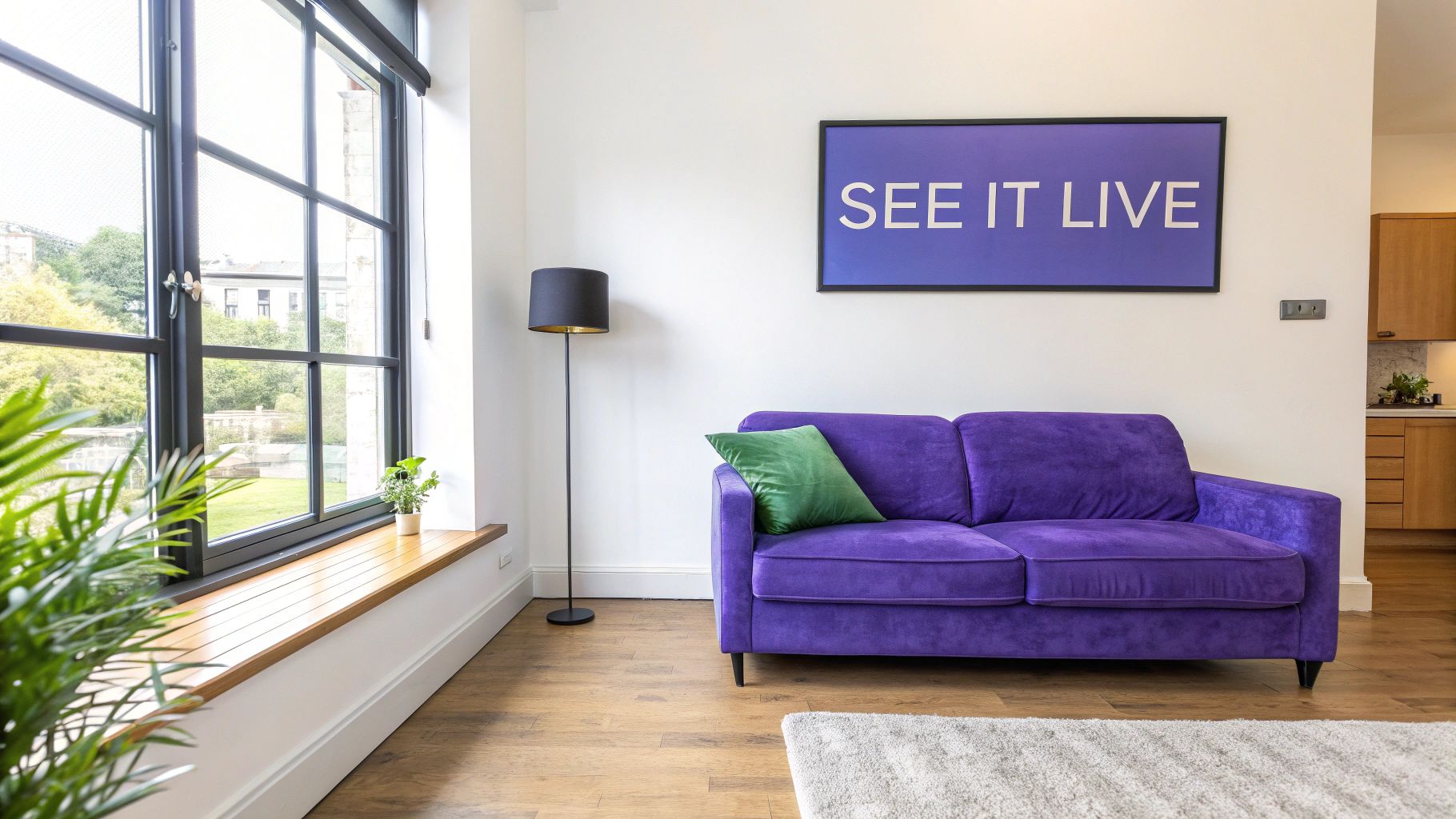
Ever wondered if that perfect sofa you saw online would actually fit in your living room, let alone look good? What if you could see it there, in your space, looking as real as if a photographer just snapped a picture? That’s exactly what AI for interior design makes possible. It’s a new breed of smart tool that can look at a photo of your room, understand its layout and lighting, and then magically place new furniture inside it with stunning realism.
How AI Is Redecorating the Design World
This isn't just another tech gimmick. It’s a genuine shift that puts professional-grade visualization tools into anyone’s hands. The days of fighting with complicated rendering software or just crossing your fingers and hoping a piece fits are numbered. AI is making interior design a far more intuitive and visual process.
This change is a huge help for everyone from professional designers and real estate agents to everyday homeowners. It closes the gap between what you can imagine and what you can actually see. For anyone just figuring out the initial steps in home design, these tools offer a massive head start.
Bridging the Imagination Gap with True Realism
The real magic here is the move toward hyper-realistic images. A lot of the early tools created visuals that screamed "computer-generated"—they were flat, the lighting was all wrong, and nothing was to scale. Today’s best AI tools produce images so lifelike, you’d be hard-pressed to tell them apart from a real photograph.
This is where platforms like aiStager are really pushing the envelope. It stands out as the only solution that generates hyper-realistic photos using true-to-life dimensions for both rooms and furniture. The AI doesn’t just make a good guess; it understands an object's real-world size and renders it with perfect scale and perspective right in your space.
By creating dimensionally accurate visualizations, AI eliminates the most common and costly design mistakes, ensuring that what you see on the screen is exactly what you get in reality.
Let's say you're trying to nail a modern farmhouse vibe and are stuck between two sofas. You like a comfy sectional from Crate & Barrel, but you're also drawn to a modular design from Floyd. Instead of just staring at product shots online, you can drop both of them into a photo of your living room and see which one feels right.
Testing Real Products in Just a Few Clicks
Getting this done is surprisingly easy. With aiStager, all you have to do is upload a picture of your room and provide a link to the product you want to try. In just a few clicks, users can place a new product in their room. The AI takes it from there, adding the new item complete with realistic lighting and shadows.
This is a game-changer when you're trying to decide on the details. aiStager is great to test different types of the same product (eg different sofa brands), including different colors and finishes. So you've picked that Crate & Barrel sofa—now you can instantly see how it looks in different fabrics or colors.
- Test Fabrics: How does it look in a durable tweed versus a plush velvet?
- Compare Colors: Should you go with a safe, neutral beige or a statement-making navy blue?
- Check Finishes: What if you swapped the standard wooden legs for a more modern metal option?
You can see each change in just a few clicks, getting immediate visual confirmation. This takes all the guesswork out of the equation, giving you the confidence that your final choices will come together beautifully, whether you’re aiming for a relaxed coastal feel or a sleek mid-century modern look. It’s this practical, hands-on application that makes AI such a powerful tool for interior design.
Putting AI to Work in Real Spaces
It's one thing to talk about AI in theory, but seeing it in action is where things get really interesting. For designers, real estate agents, and even homeowners, these tools are solving real-world problems by completely changing how we picture and plan our homes.
Take real estate, for instance. We’ve all seen photos of empty, sterile rooms online. They feel cold and make it hard for buyers to imagine themselves living there. This is where virtual staging comes in. Instead of asking someone to use their imagination, an agent can use AI to fill that empty space with beautiful, stylish furniture in just a few minutes. Suddenly, a vacant property feels like a warm, inviting home, creating an emotional pull that sterile photos just can't match.
Interior designers are finding huge value here, too. The old way of creating mockups and mood boards could be a real grind—slow, expensive, and often requiring complicated software. Now, designers can generate gorgeous, photorealistic images almost instantly. This lets them show clients multiple ideas quickly, getting everyone on the same page and moving projects forward with a lot more confidence.
From Layouts to Finishes with a Single Click
It’s not just about dropping in a sofa and a coffee table. Modern AI tools are smart enough to help with the foundational parts of a room’s design, from finding the perfect furniture arrangement to trying out different materials.
- Layout Optimization: The AI can look at a room’s dimensions and suggest the best way to arrange furniture for flow, function, and visual appeal. It answers those nagging questions like, "Will this armchair make the room feel cramped?" without you having to move a single heavy object.
- Material Swaps: Curious if you should go with dark hardwood floors or a plush, light-colored carpet? AI lets you swap out flooring, wall colors, and even fabric textures in a heartbeat. You can see the options side-by-side in a realistic setting, making the decision so much easier.
This even works for the smaller details that pull a room together. Tools can offer up inspiration for specific elements, like a curated list of top window design ideas for living rooms, helping you nail every aspect of the design.
Testing Real Products in Your Own Home
Here’s where it gets really exciting. While many tools use generic 3D models, platforms like aiStager focus on putting real, shoppable products into your space. It's the only solution that generates hyper-realistic photos using the true dimensions of both your room and the actual furniture you want to buy.
Imagine you’re decorating and you’ve been eyeing a beautiful upholstered bed from Crate & Barrel. With aiStager, you just upload a photo of your empty bedroom, paste the link to the bed, and within seconds, you see it perfectly placed in your room. It’s scaled correctly and lit naturally, looking exactly like it would if you’d just had it delivered.
The core function of advanced AI design tools is to bridge the imagination gap. By rendering real, purchasable products in a user's actual space, it removes uncertainty and empowers confident decision-making.
This is the ultimate "try before you buy" experience. You can compare a sleek, modern sofa from West Elm against a more traditional one from Pottery Barn to see which one truly fits your home’s vibe. You can even take it a step further and play with colors and fabrics. See how that West Elm sofa looks in a bold navy velvet versus a neutral linen, or change the leg finish from dark wood to brushed brass—all with just a few clicks. If you're starting from scratch, you might want to check out our guide on how to use an empty room photo to kickstart your project.
This kind of detailed, accurate visualization is what’s fueling incredible growth in the market. The virtual interior design AI industry is expected to jump from $1.52 billion to $1.98 billion in a single year. These aren't just vanity numbers; they’re driven by real results. For example, virtual staging is known to increase listing views by 73% and boost inquiries by a whopping 117%. You can dive deeper into the explosive growth of the virtual interior design market to see just how big this is becoming.
The Technology Behind the Transformation
Ever wonder how a quick photo of your room and a product link can magically produce a photorealistic design? It’s not magic, but it is a brilliant combination of technologies working in sync. Knowing what's going on under the hood helps you understand why some AI for interior design tools are miles ahead of others.
The image below gives you a bird's-eye view of how AI serves everyone involved in the design world.
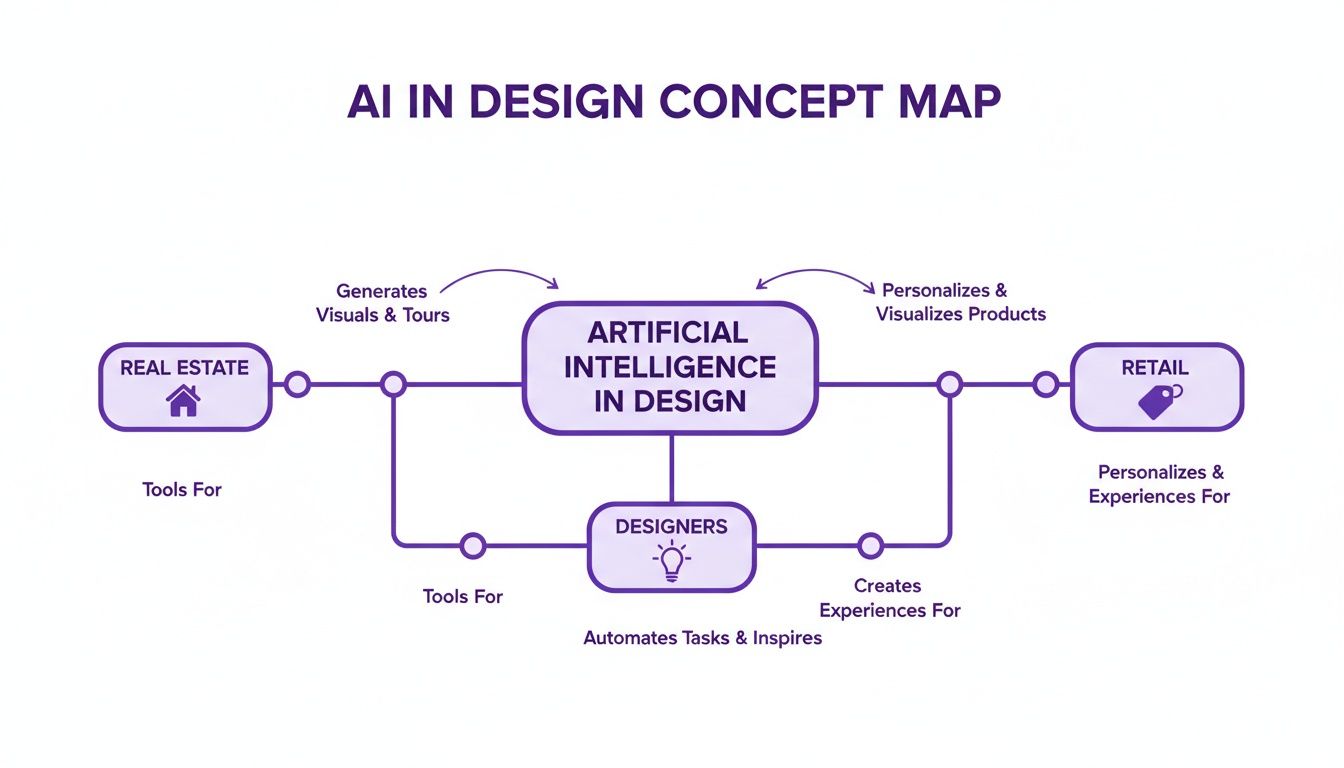
As you can see, AI has become a central connector, offering specific, high-value tools that help real estate agents, retailers, and designers bring their visions to life faster than ever.
The AI's Eyes and Brain
At the core of it all are two main technologies: computer vision and generative models.
Think of computer vision as the AI's "eyes." When you give it a photo, it doesn't just see a picture; it analyzes the room's layout, recognizes existing furniture, and maps out how light and shadows fall across every surface.
Then, the generative models kick in as the "creative brain." Once the AI understands the space, this is the part that dreams up and draws the new pixels. It’s what adds, removes, or swaps objects so seamlessly that the final image looks completely real, not like a sloppy cut-and-paste job.
Ensuring a Perfect Fit
Another piece of the puzzle is 3D reconstruction. This is the technology that makes sure a new sofa looks like it truly belongs in your space, with the right scale and perspective. It's the reason a massive sectional doesn't end up looking like a miniature dollhouse couch in your living room.
The real breakthrough is when an AI can combine these technologies to render real-world products with true-to-scale dimensions, making virtual design a reliable and practical tool for actual purchasing decisions.
This is a major hurdle for many tools out there. They often rely on generic 3D models that get the look right but completely miss the mark on accurate size and proportion.
The aiStager Advantage: Product Integration
What really sets a platform like aiStager apart is its unique product integration technology. You’re not stuck with a limited, pre-loaded library of generic items. Instead, its AI has the incredible ability to analyze a product URL from just about any online store.
Let's say you're designing a calm, Japandi-style bedroom and you've found the perfect low-profile bed frame from Joybird. All you have to do is provide the link.
- aiStager’s system instantly pulls the product's visual information.
- It analyzes its exact dimensions—width, height, and depth.
- The AI then renders it perfectly to scale right inside your room photo.
This is what gives you genuine creative freedom with real-world products. You can compare a sleek, modern sofa from Article against a more traditional one from Pottery Barn, right in your own space. Curious how that Article sofa looks in a different fabric? In just a few clicks, users can place a new product in their room. With a simple photo upload and a product link, you can visualize the sofa in various colors and finishes, right in your design.
This is a game-changer missing from most other platforms. The power to work with actual products and their true dimensions is what elevates a tool from a fun novelty to an essential part of the design process. You can learn more about what to look for in our guide to choosing an AI interior design app.
Why AI Is a Must-Have for Design Professionals
For anyone working in design, retail, or real estate, adopting AI for interior design has moved past being a neat idea—it's now a serious competitive advantage. The conversation is no longer about if you should use it, but how you can get it working for you. The return on investment is just too compelling to overlook.
This technology directly tackles some of the industry's oldest headaches: the endless hours spent on manual work, the back-and-forth of client uncertainty, and the steep costs of physical staging.
The numbers tell the story. The AI interior design market is already valued at $1.82 billion and is expected to rocket to $12.46 billion by 2032. This isn't just hype; it's fueled by real-world results. AI tools are already saving designers up to 50% of their time compared to old-school CAD work and helping boost client approval rates by as much as 40%. You can dig deeper into the rapid expansion of the AI design market to see what's driving this shift.
Accelerating Workflows for Interior Designers
If you're an interior designer, your time is your most precious asset. We all know the traditional process for creating mockups is a grind, often taking hours, if not days, to get a single high-quality render just right. AI tools can cut that mockup time by up to 100x, turning what used to be a full day's work into something you can finish in a few minutes.
This kind of speed is a game-changer. It frees you up from tedious technical tasks so you can focus on what really matters: creative strategy and building strong client relationships.
Imagine you’re pitching a modern farmhouse living room. With a tool like aiStager, you can instantly show your client how that specific leather sofa from Article looks next to a rustic oak coffee table. Even better, you can swap out finishes in seconds—showing the sofa in a rich cognac leather versus a distressed black—all with just a few clicks. This speed gets you to "yes" faster, cuts down on revisions, and keeps your projects moving forward smoothly.
A New Era for Furniture Retail and E-commerce
Furniture retailers constantly battle the "imagination gap." Shoppers see a beautiful piece of furniture online, but they can't quite picture how it will look or fit in their own home. That hesitation is a huge reason for abandoned carts and, even more painfully, expensive returns.
AI visualization is the perfect answer. By letting shoppers upload a photo of their space and a link to a product, retailers can finally offer a true "try before you buy" experience. A customer can virtually place a new dining table from Crate & Barrel in their room and see with photorealistic clarity how it complements their existing decor.
What makes platforms like aiStager so effective is their unique ability to generate hyper-realistic images that use the true dimensions of both the room and the furniture. This level of accuracy gives customers the confidence to know an item will fit, which directly boosts conversion rates and slashes returns.
Transforming Real Estate Listings
In the cutthroat world of real estate, you only get one chance to make a first impression. Empty properties are notoriously tough to sell; they feel cold and make it hard for buyers to imagine a life there. AI-powered virtual staging flips that script, allowing agents to turn vacant listings into warm, inviting homes that grab a buyer's attention right away.
Instead of shelling out thousands for physical staging, real estate teams can create stunning, aspirational scenes in minutes. This doesn't just make listings look better online—it drives more views, more inquiries, and ultimately helps properties sell faster and for better prices. By using AI, you can show a property’s true potential and help buyers form an emotional connection before they even walk through the door.
The table below breaks down how different professionals are seeing tangible returns from adopting AI design tools.
AI Impact Across Design-Related Industries
This table shows the specific benefits and ROI metrics that AI tools like aiStager deliver to different professional groups, highlighting improvements in efficiency, sales, and client satisfaction.
| Professional Group | Key Benefit | Potential ROI / Impact Metric |
|---|---|---|
| Interior Designers | Drastically reduced mockup and rendering time. | Up to 100x faster design iteration; 40% higher client approval rates. |
| Furniture Retailers | Overcoming the "imagination gap" for online shoppers. | Increased conversion rates; significant reduction in product returns. |
| Real Estate Agents | Cost-effective and rapid virtual staging. | Faster property sales; higher selling prices; more online listing engagement. |
| E-commerce Platforms | Enhanced "try before you buy" user experience. | Lower cart abandonment; increased customer satisfaction and loyalty. |
As you can see, the impact isn't just theoretical. From saving time to closing deals faster, the benefits are clear, measurable, and directly tied to the bottom line.
A Practical Guide to Using aiStager
Theory is great, but the real test of any AI for interior design tool is how easily it turns your ideas into a stunning, believable visual. This is where aiStager really shines, offering a straightforward process that delivers incredible results in just a few minutes.
You don't need to be a tech wizard. If you can take a picture with your phone and copy a link, you have all the skills you need. Let’s walk through the simple, three-step process.
Step 1: Upload a Photo of Your Space
First things first: give the AI its canvas. Just snap a clear photo of the room you want to redesign. It doesn’t need to be professionally shot—a quick picture from your smartphone is perfect.
Whether it’s an empty living room, a cluttered bedroom, or a dining area that feels a bit stale, this photo is the foundation for your new design. The AI uses it to understand the room’s dimensions, lighting, and unique perspective.
Step 2: Find a Product You Love Online
Now for the fun part. Browse your favorite online stores and find a piece of furniture you want to try out. This is where you can explore all those design ideas you’ve saved, no matter your style.
- Modern Coastal Living Room: Found a breezy, light-wood coffee table from a brand like Floyd? See how its clean lines and natural finish look in your bright, airy space.
- Bohemian Bedroom: Maybe you've spotted a bold, velvet accent chair on West Elm. Here’s your chance to see if that pop of color works before you even think about buying it.
- Industrial Loft: You could experiment with a rugged leather sofa from Article to see how it grounds an open-concept loft with exposed brick.
The real power here is freedom. You aren't stuck with a pre-set catalog. Any product, from any online store, is fair game.
Step 3: Paste the Link and Let AI Do the Work
Once you've found your item, just copy its URL from the product page. Then, head back to aiStager and paste the link. That’s it.
This is where the magic happens. Unlike other tools that generate generic, often wonky CGI renders, aiStager is the only solution that generates hyper-realistic photos with true-to-life dimensions for both the room and the furniture. The AI analyzes the product link, extracts its exact measurements and visual data, and then perfectly places it into your room photo.
The result is a flawless, photorealistic image. The new item looks like it was always there—perfectly scaled, lit, and integrated into your space. You'd think a professional photographer shot it.

This simple interface shows just how easy it is to drop new products into your own scene and see what works.
Go Beyond Just Adding Furniture
But aiStager is more than a one-trick pony. It’s a complete visualization toolkit built to solve common design headaches with the same one-click simplicity.
aiStager is great for testing different versions of the same product, including various colors and finishes. In just a few clicks, you can place a new product in your room—all you need is a photo of the space and a link to the product.
For instance, if you're stuck between two different sofas from Pottery Barn, you can instantly compare them side-by-side in your actual living room. Wondering how that same sofa looks in a classic beige linen versus a modern grey tweed? Swap the fabrics and colors in seconds.
Other powerful features include:
- Declutter Your Space: Got a messy room? The AI can instantly remove the clutter, giving you a clean slate to design from.
- Restyle Existing Furniture: Love your current sofa but hate the color? aiStager can virtually "reupholster" it with a new fabric or color to show you how a small change can refresh the entire room.
This hands-on approach takes all the guesswork out of design. You can experiment freely, compare real products, and make confident decisions knowing exactly how your choices will look in your home. You can start exploring these features and more by visiting the aiStager platform.
The Future of AI in Home Design
The world of AI for interior design is moving at lightning speed. We're quickly heading towards a future where AI isn't just a tool for visualizing a room, but a true creative partner that deeply understands how we live.
Think about an AI that doesn’t just place a new sofa in your virtual living room. Instead, it suggests sustainable fabrics and materials for that sofa, helping you make eco-friendly choices without giving up on style. This is where we're going. Soon, AI systems will connect with smart home devices to create living spaces that adapt to you—adjusting the lighting, furniture arrangement, and even the room's acoustics based on what you're doing.
The numbers back this up. The market for AI in interior design has seen explosive growth, jumping from $1.09 billion to $1.39 billion in just a single year. Projections show it could hit $3.59 billion by 2029, driven by our growing desire for personalized homes and huge advancements in generative AI. You can dig deeper into this rapidly growing market on ResearchAndMarkets.com.
Overcoming Today’s Challenges
Of course, the tech isn't perfect—at least, not yet. It’s worth being honest about its current limitations. For instance, AI can sometimes get tripped up by tricky, mixed lighting, like a room lit by both a warm lamp and cool daylight from a window. Odd architectural features, like a sharply sloped ceiling or historic molding, can also be tough for some platforms to handle accurately.
But these are temporary hurdles. Developers are constantly improving the algorithms that process light, shadows, and complex shapes. With every new software update, we get closer to an AI that can perfectly render even the most unique and challenging spaces.
The key thing to remember is that AI isn't here to replace designers. It's an incredibly powerful assistant that frees them from tedious tasks, allowing them to focus on the creativity, expertise, and vision that only a human can bring.
A More Intuitive and Collaborative Future
The future of home design is all about technology and human creativity working hand-in-hand. It’s a future where you can see exactly how that sofa from West Elm looks in ten different colors and fabrics, all perfectly scaled and lit in your own living room, in an instant. This is the vision that tools like aiStager are turning into a reality today.
As the only solution that generates hyper-realistic photos with true-to-life room dimensions and furniture, aiStager is leading the charge. It lets you test out different versions of the same product—like various sofa brands with their specific colors and finishes—which helps get rid of that last bit of guesswork. With just a photo of your room and a product link, you can place a new item and see how it fits, making the whole process of creating a beautiful home feel more intuitive and collaborative than ever.
Your Questions About AI Design Tools, Answered
Got questions about using AI for interior design? Let's clear a few things up.
Just How Realistic Is AI Interior Design?
Honestly, it depends on the tool. Some are pretty basic, but the top-tier platforms like aiStager can produce images that are almost impossible to tell apart from a real photograph.
What makes the difference? It's all about accuracy. aiStager is the only tool out there that uses the actual dimensions of your room and the furniture you want to add. It pulls data straight from a retailer’s product page to render every piece perfectly to scale. You’ll know for sure if that sofa is going to fit.
Can I Use Furniture and Decor from Any Store?
This is a big one. A lot of AI tools lock you into their own library of generic, unbranded 3D models. That can be pretty limiting when you have a specific vision in mind.
This is where a tool like aiStager really changes the game. It’s built to work with pretty much any retailer. Want to try out a plush sofa from Restoration Hardware? Go for it. How about a minimalist coffee table from Floyd? No problem. You just upload your room photo, paste the product link, and the AI handles the rest. That kind of freedom is what lets you create a space that’s truly yours.
Is This Stuff Hard for a Beginner to Use?
Not at all. The whole point of the best new AI tools is to make powerful design technology simple for everyone. You don't need any technical skills to get started.
With aiStager, the process is as simple as it gets: upload a photo of your room and paste a link to the product you're considering. It’s perfect for testing different versions of the same item—like a chair in multiple colors—and seeing it in your space in just a few clicks.
This user-friendly approach opens the door for anyone to create professional-quality visuals. Whether you’re a homeowner trying to nail a Japandi vibe or a realtor who needs to quickly stage a mid-century modern listing, you get instant, photorealistic results. No steep learning curve, just clarity and confidence for your next design decision.
Ready to stop wondering and start seeing? With aiStager, you can see how that piece of furniture you’ve been eyeing will actually look in your room. Get hyper-realistic, dimensionally accurate images in seconds.
Try it for free and bring your vision to life.