7 Best Books on Interior Design for 2026
Find the best books on interior design for pros and hobbyists. Turn theory into reality and visualize your space with practical application tips.

Your shelf is full of books on interior design. You’ve dog-eared pages, saved rooms to mood boards, and circled details you want to borrow. Then you stand in your own space and hit a common wall. A beautiful spread explains the idea, but it doesn’t prove whether that walnut console, curved sofa, or smoky green finish will work in your room.
That gap matters. Interior design books teach proportion, layout, lighting, materials, and style logic. They give you the “why.” But many still need a way to test the “what happens if I put this exact item here?” question before buying, moving, or presenting anything to a client.
That’s where this list takes a different angle. These aren’t just books worth owning. They’re books worth using. Each one earns its place because it helps with a specific design decision, and each one becomes more useful when paired with aiStager, which can turn a room photo plus a product link into a hyper-realistic, true-dimension visualization. If you want to compare a CB2 sofa against a West Elm sofa in the same room, try two upholstery colors, or see whether a boucle finish reads soft or bulky in your actual layout, that bridge from book knowledge to visual proof is the missing piece.
The interior design field itself is large and still growing. The industry was valued at $133 billion in 2022 and projected to reach $204 billion by 2030 at a 5.5% CAGR. That growth helps explain why readers still keep returning to foundational references, practical handbooks, and visual guides that make good decisions easier.
Here are the books on interior design I’d keep close, and exactly how I’d put each one to work.
1. The Interior Design Reference & Specification Book
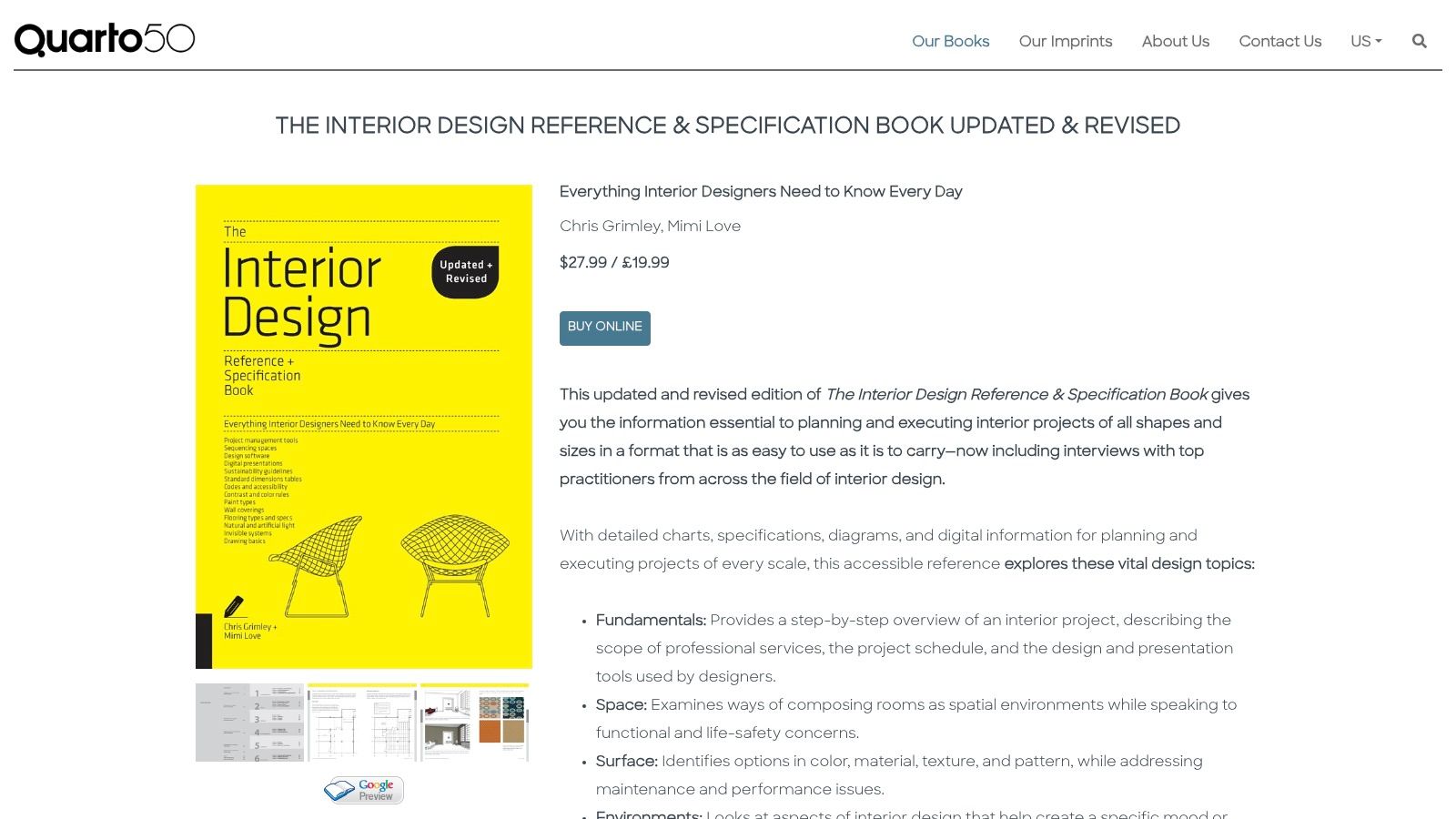
The fastest books on interior design usually become the most used. This one is the book I’d keep within arm’s reach because it’s built for quick answers, not long reading sessions. It condenses a lot of day-to-day information into a compact format, so you can move from question to decision without digging through a textbook.
That matters in real projects. You’re not always solving a grand style problem. Sometimes you’re checking clearances, reviewing finishes, refreshing your memory on lighting basics, or making sure a furniture plan still supports flow once a larger sectional goes in.
Why it earns shelf space
Its structure is what makes it practical. The sections move through fundamentals, spaces, surfaces, environments, elements, and resources, which mirrors how many designers think when they’re under deadline. It’s broad instead of specialized, and that’s the trade-off.
- Best use case: Daily reference during planning, sourcing, and client prep.
- What works well: Checklists, diagrams, and standards that help you make fast calls.
- Where it falls short: It won’t replace a deeper technical reference if you’re handling specialty lighting or detailed construction coordination.
The portable format also makes it easy to carry into meetings or site visits. That sounds small until you’ve had to answer a client question while standing in an empty room with a phone, a floor plan, and ten minutes left.
You can find the book on the Quarto book page for The Interior Design Reference & Specification Book.
How to use it with aiStager
Theory quickly becomes useful. Use the book to set the planning logic, then use aiStager to test actual pieces in the room. If the room needs a sofa with a lighter footprint, pull a product link from West Elm and another from Article, upload the room photo, and compare the visual weight of each option in true dimension instead of guessing from a retail product page.
Practical rule: Reference books help you avoid bad choices. Visualization helps you choose between good ones.
I also like this pairing for retail and staging work. You can test the same chair in two finishes, or swap one dining table for another from a different brand, without rebuilding the room manually. If you want a broader view of the digital side, this breakdown of what software interior designers use is a useful companion.
2. Human Dimension & Interior Space
Some books on interior design are about taste. This one is about whether a room works for a human body. That sounds dry until you’ve seen a beautiful room where the dining chairs can’t clear properly, the vanity layout pinches movement, or the bed leaves too little room to pass.
This book remains a core planning reference because it gives you dimensioned guidance rooted in human use. It’s especially valuable when style starts to distract from function. A room can photograph well and still feel wrong the minute someone lives in it.
Where this book is strongest
It shines in layout work. The dimensioned plans and sections help with clearances, circulation, and use ranges across residential, commercial, and institutional settings. It’s not a style book, and that’s exactly why it’s so reliable.
A few trade-offs are worth saying plainly. It’s older, so it shouldn’t replace current code checks. And if you want decorative inspiration, this won’t give it to you. It gives fit, motion, and usability.
Good interior design isn’t just about what fits in the room. It’s about what still feels effortless after the furniture is in.
That’s why I like it so much for kitchens, baths, tight bedrooms, and compact living spaces. The book helps you decide whether a layout deserves to be visualized at all.
Turning dimensions into a believable room
Once the clearances are defensible on paper, aiStager becomes the testing ground. Upload a photo of the room, then compare exact products you’re considering. If you’re choosing between a deeper performance-fabric sofa and a slimmer track-arm version, the visual difference in a tighter room can be huge. Product pages rarely tell that story well enough.
This pairing is also great for homeowners who’ve learned enough design vocabulary to get into trouble. They know what they like, but they need to see whether the bench, bed, or sectional keeps the room usable. A room can look fine in isolation and still fail at the doorway, the nightstand clearance, or the path to the closet.
For dimension-first decisions, this book stays relevant because it solves the oldest problem in interiors. Not “what’s pretty?” but “what works?”
You can review the title on the Penguin Random House page for Human Dimension & Interior Space.
3. The Interior Design Handbook
If you want one of the most approachable books on interior design for everyday rooms, this is an easy recommendation. It explains why arrangements work without sounding academic, and that makes it useful for both clients and professionals. You can hand it to a design-savvy homeowner and they’ll put it to use.
What I like most is its emphasis on principle over trend. The book focuses on proportion, layout logic, viewing distance, fixture placement, and practical rules of thumb. Those ideas hold up whether the room leans coastal, modern organic, classic American, or something more unique.
What it does better than glossy inspiration books
It translates design judgment into decisions. A lot of books show beautiful rooms and leave readers to reverse-engineer the thinking. This one does more explaining. That makes it strong for people who know a room feels off but can’t yet name the reason.
- Best for: Readers who want usable principles they can apply room by room.
- Most helpful strength: It keeps attention on flow and function instead of trend-chasing.
- Main limitation: It isn’t a technical manual for code, systems, or specialist detailing.
That balance is why it works so well during the middle of a project. Not the first inspiration burst, and not the final technical review. The messy middle, where you’re trying to choose the right scale, the right distance, and the right amount of furniture.
Best way to activate it
Use the book’s rules of thumb, then test competing options in aiStager with real products. If the handbook suggests a lighter arrangement and better sight lines, take a room photo and try two coffee tables, one with a thick plinth base and one with an open metal frame. The difference in perceived density becomes obvious once you see it inside the actual room.
This is also a great book for comparing color and finish changes. Keep the same product, then test a lighter linen versus a darker velvet, or oak versus blackened wood. aiStager is especially useful here because it can place the exact item from the product link into the room and render the choice in true dimension, not as a rough mockup.
The book is available on the Penguin Random House page for The Interior Design Handbook.
4. The New Design Rules How to Decorate and Renovate
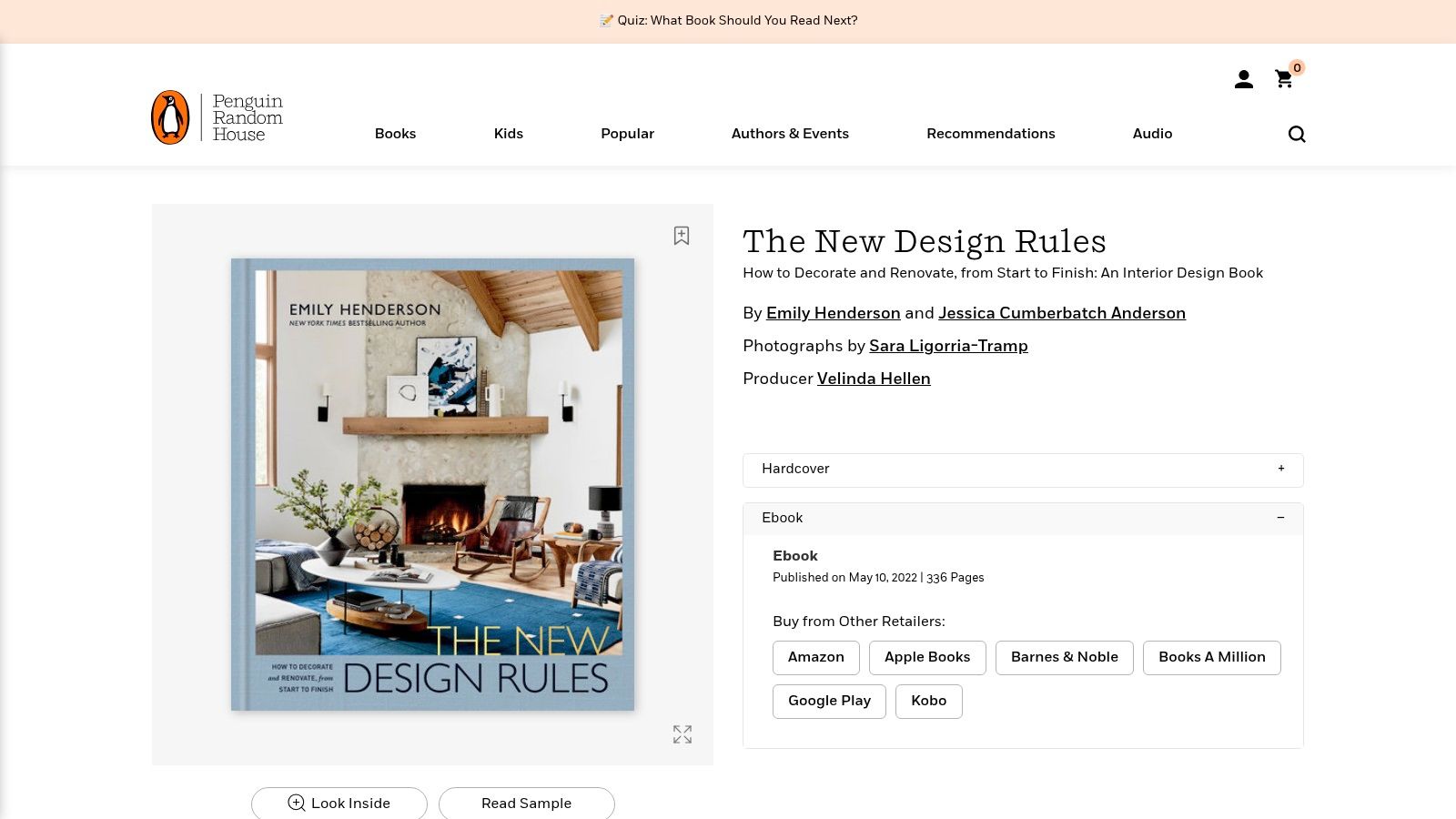
Some books on interior design are best for pure inspiration. This one is more useful than that. It helps readers move through real decorating and renovation decisions in a sequence that makes sense, which is why it works so well for residential projects.
That sequencing matters. Clients often want to jump to sofas, paint, and pendants before the room has a workable order of decisions. This book slows that down in a productive way. It helps with placement, finish selection, measurements, and knowing when a project needs a professional.
Why it’s so practical
The photography makes it accessible, but its core strength is process. It’s very good at answering the kinds of questions that create expensive backtracking later. Which piece should anchor the room? What should get measured first? What changes are cosmetic, and what changes affect the room more permanently?
Its focus is residential, so I wouldn’t use it for commercial standards. And it’s more styling and process oriented than technical. But for homes, that’s often exactly the right mix.
Field note: The best decorating advice is usually sequencing advice. Wrong order creates most room mistakes.
I also like how easy this book is to use in conversations with clients who don’t speak design language fluently. It gives enough visual support that a homeowner can quickly understand why a room needs fewer competing moves.
The publisher page is the Penguin Random House listing for The New Design Rules.
Pair it with live product testing
This is one of the strongest candidates for aiStager because it naturally leads to side-by-side visual trials. Say a client is torn between a lighter Serena & Lily slipcovered sofa and a cleaner-lined Crate & Barrel option. Upload the room, paste each product link, and compare how both affect scale, softness, and light in the same space.
The same goes for finishing decisions. If a room needs warmth, try the same wood bed in two finishes or test alternate dining chairs with and without upholstery. A related guide to AI interior design tools can help if you’re building a broader workflow around quick concept iterations.
And if you’re layering the room with greenery after the larger furnishings are set, this article on how to decorate with houseplants is a nice visual companion.
5. Residential Interior Design A Guide to Planning Spaces
A client approves the mood board, loves the sofa, and signs off on the palette. Then the plan hits reality. The hallway pinches at the bedroom door, the dining chairs cannot clear comfortably, and the kitchen island that looked generous on paper starts stealing circulation. This is the book I reach for before that happens.
Residential Interior Design: A Guide to Planning Spaces is the most technical title in this list, and that is its value. It focuses on how rooms work: circulation paths, adjacency, access, systems, room functions, and the planning decisions that hold up once contractors, family routines, and square footage all enter the conversation. Style matters, but planning decides whether a room feels calm or constantly compromised.
I recommend it for designers and serious homeowners who need more than taste. They need reasoning they can defend.
Its strongest contribution is room planning with consequences attached. A living room layout is not only about a prettier focal wall. It affects traffic flow, furniture clearances, sightlines, storage, and how the room will be used at 7 a.m. versus 9 p.m. The trade-off is straightforward. The tone is more academic than inspirational, so it is not the book I would hand someone looking for quick decorating ideas.
That said, it is one of the best references on this list for catching expensive mistakes early.
- Best for: Designers, students, and homeowners who want to plan rooms with more rigor
- What it does well: Connects space planning to circulation, systems, accessibility, and real residential use
- Trade-off: Better for solving layouts than sparking a style direction
The practical move is to read a chapter, then test the principle in a real room. Use the book to set furniture zones and clearances first. After that, build the room in aiStager and check whether the plan still feels balanced once actual products, ceiling height, window placement, and material weight are visible. That step matters because a layout can be correct on paper and still feel crowded in perspective.
If you want a sharper framework before staging concepts, this guide to interior design space planning pairs well with the book. And if a homeowner is still defining scope, this article on how to start the interior design process for a room helps set the project up in the right order.
A simple workflow works well here. Pull the room dimensions from the site measure. Set the primary circulation path. Place the largest pieces first. Then use aiStager to compare two or three layout options with realistic furniture scale and finishes, so the client is reacting to a believable room rather than a flat plan. That is how book knowledge turns into decisions people can trust.
The book itself is available on the Wiley page for Residential Interior Design A Guide to Planning Spaces.
6. Lighting for Interior Design
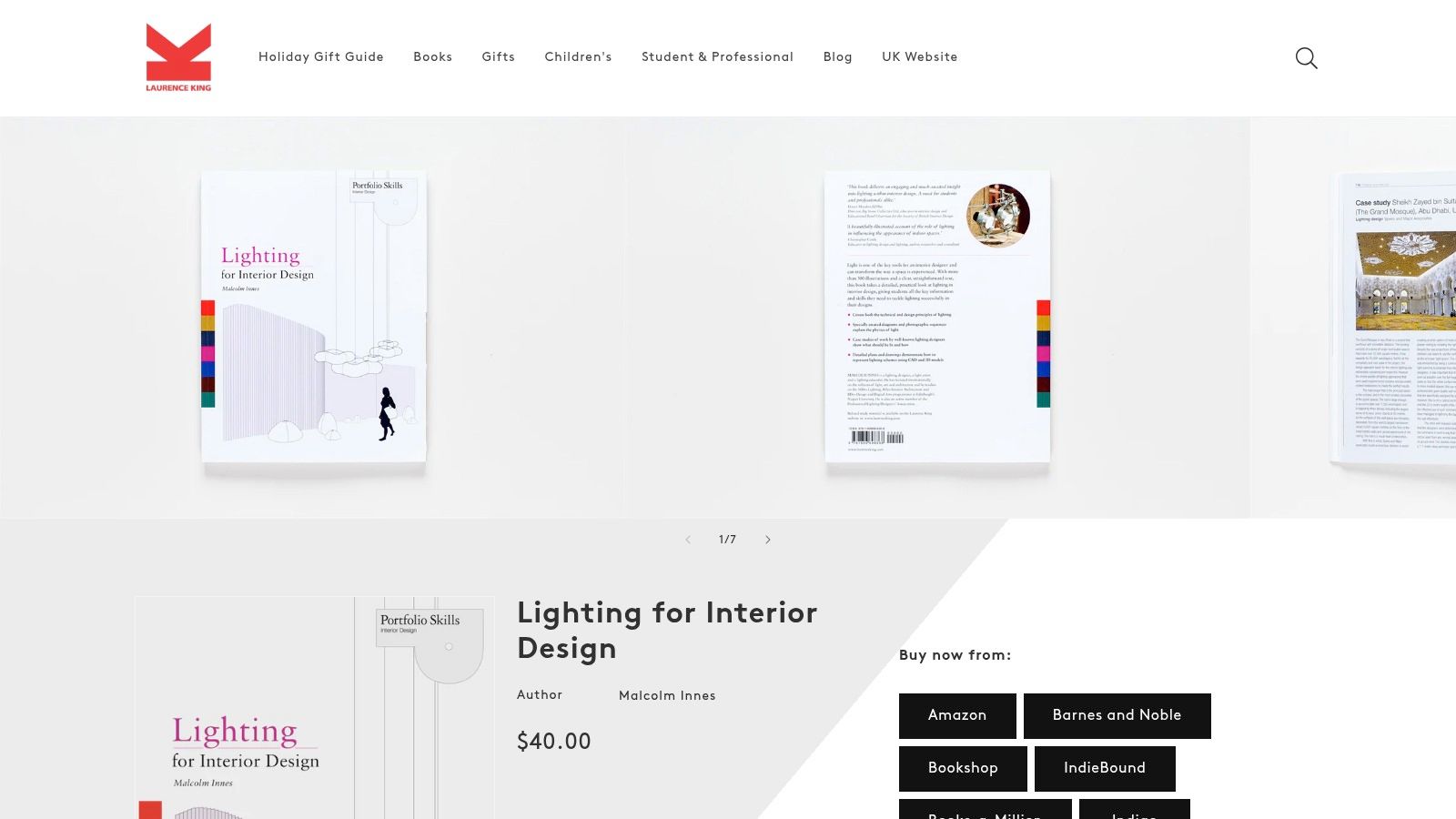
Many books on interior design mention lighting. Far fewer teach it in a way that improves the room. This one does. And if your renderings or finished rooms ever look flat, harsh, or strangely lifeless, lighting is usually the reason.
The book is focused rather than broad. That’s a strength. It connects lighting theory, technology, communication, and representation with actual interior outcomes. It helps designers think beyond “add a lamp” or “swap the pendant” and toward a layered lighting approach that shapes mood, depth, and realism.
Why lighting books matter more now
Digital visualization has made weak lighting more obvious. As software use has grown globally, interior design software adoption was cited at 45% globally and projected to reach 60% by 2025. That shift has made lighting literacy more important because clients now see proposals, alternates, and revisions in more visual form.
This book helps close a common gap. Designers may understand style and layout well, but they often need more confidence in how light behaves across surfaces, tones, and fixture types.
A room with the right furniture can still fail if the lighting flattens every texture and kills the mood after sunset.
One practical note. The publisher’s U.S. shop shows it as sold out at times, so you may need to buy through retailers. That’s annoying, but the content is worth tracking down.
How to use it with aiStager
This pairing is especially strong for day and night comparisons. Use the book to decide how ambient, task, and accent light should work together. Then use aiStager to preview those choices in a realistic room image with accurate perspective and lighting.
That’s useful for living rooms, hospitality-style bedrooms, dining areas, and listings that need to look good in both bright daytime and warmer evening scenes. It’s also useful when comparing finishes. A boucle chair, matte black sconce, and warm oak sideboard can all read very differently under cooler versus warmer lighting conditions.
You can review the title at the Laurence King page for Lighting for Interior Design.
7. domino Your Guide to a Stylish Home
This is the most editorial book on the list, and that’s why it deserves a place. Some books on interior design are strongest when you need standards, dimensions, or code-aware planning. This one is strongest when you need a room to look inviting, current, and camera-ready without becoming overdesigned.
That makes it especially useful for real estate, styling, and consumer-facing work. The room-by-room format is easy to scan, and the visual curation has broad appeal. If you need a polished but approachable result, this is a good sourcebook.
Where it shines
It’s very good at teaching mix. Not in a theoretical way. In a “this room needs contrast, some softness, one personal note, and less matching” way. That’s what helps spaces feel finished on camera.
Its limitation is obvious. It isn’t trying to be technical. You won’t use it to solve building systems or detailed planning. You’ll use it to sharpen the final read of the room.
- Best for: Staging teams, homeowners, and designers building mass-appeal rooms.
- Biggest strength: Strong visual instincts that translate well to listing photos and product imagery.
- Main drawback: More style-forward than specification-focused.
I also think this is one of the easiest books to hand to someone who says, “I know what I don’t like, but I don’t know what to do next.”
Best modern use case
aiStager becomes especially powerful. domino can help you define the vibe. aiStager lets you test the exact pieces that produce it. If a room needs a softer California casual look, compare a lighter linen sofa with a deeper, richer performance velvet version. If you want to move from generic staging toward something warmer and more editorial, swap coffee tables, accent chairs, and rugs until the room reads right.
A useful historical counterweight is also worth noting. John Pile and Judith Gura’s A History of Interior Design remains one of the foundational books in the field. The fourth edition was published by Wiley in 2013, and the work is known for its broad survey of interiors, architecture, and furniture across periods and cultures. That kind of historical grounding can keep trendy rooms from feeling thin.
The domino title is available on the Simon & Schuster page for domino Your Guide to a Stylish Home.
Comparison of 7 Interior Design Books
| Item | 🔄 Implementation Complexity | ⚡ Resource Requirements | 📊 Expected Outcomes | 💡 Ideal Use Cases | ⭐ Key Advantages |
|---|---|---|---|---|---|
| The Interior Design Reference & Specification Book | Low, concise checklists and diagrams for quick decisions | Minimal, portable paperback; no special tools | Reliable, standards-based quick decisions (not specialist depth) | On-site reference, client meetings, fast standards lookup | Portable, time-saving, broad practical coverage |
| Human Dimension & Interior Space | Medium, requires interpreting anthropometric data | Low–Medium, book plus measuring/CAD tools | Precise ergonomic clearances and user-centered layouts | Space planning, accessibility checks, pre-CAD validation | Extensive dimensioned diagrams and anthropometric data |
| The Interior Design Handbook | Low, principle-first, heuristic-based | Minimal, conceptual tools, moodboards or basic CAD | Balanced, proportionate designs and clearer design rationale | Beginners, client explanations, rapid on-site checks | Accessible principles applicable across styles |
| The New Design Rules: How to Decorate and Renovate | Low–Medium, process-oriented with sequencing | Moderate, photos, material samples, possible trades | Actionable renovation/styling plans and communicable examples | Residential renovations, client conversations, staging | Photo-rich, practical process guidance bridging idea→execution |
| Residential Interior Design: A Guide to Planning Spaces | Medium–High, textbook depth with code considerations | Higher, code references, technical tools, professional input | Defensible, code-aligned space plans suitable for practice | Professional residential planning, NCIDQ prep, systems coordination | Room-by-room technical guidance aligned with contemporary codes |
| Lighting for Interior Design | Medium, technical lighting theory and representation | Moderate, lighting specs, CAD/3D tools, fixture info | Convincing day/night moods and realistic lighting renders | Lighting schemes, render fine-tuning, contractor coordination | Connects lighting physics to practical interior outcomes |
| domino: Your Guide to a Stylish Home | Low, editorial, styling-focused workflows | Low, furnishings, props, photography staging resources | Camera-ready, broadly appealing rooms for listings or PR | Real-estate staging, consumer-facing decorating, quick styling | Strong visuals and editorial curation for mainstream appeal |
Your Design Library, Activated
A common failure point in interior work happens after the reading, mood boards, and product sourcing are done. The principles are sound, but the room is still unresolved. A clearance that looked acceptable on paper feels tight in the photo. The sofa scale is close, but not quite right. A finish that seemed warm in a sample starts reading orange against the existing floor.
Good books sharpen judgment. They teach proportion, circulation, sequencing, lighting, and styling language you can use with confidence. What they do not provide is a room-specific test of your exact choices in your exact space.
aiStager closes that gap by turning design knowledge into a visual decision process. Instead of stopping at theory, you can upload a photo of the room, add the product you are considering, and see how it sits in place with dimensionally accurate, photorealistic output. That changes the job from abstract preference to informed comparison.
The practical benefit is straightforward. You can read Human Dimension & Interior Space, then check whether the walkway around a dining table still feels comfortable once the chairs are pulled out. You can use Lighting for Interior Design to build a better lighting plan, then review how that scheme reads at night in a furnished room. You can take the styling cues from domino or The New Design Rules and test whether the room looks layered or overworked before anything is ordered.
That capability matters for homeowners, stagers, designers, retailers, and listing teams because each group is making a different kind of decision under time pressure. Homeowners are trying to avoid expensive mistakes. Designers need cleaner client approvals. Stagers need broad appeal without flattening the room into something generic. Retail teams need to show shoppers how a specific piece works in context, not as an isolated cutout on a white background.
You are not limited to a closed furniture library. If the better option comes from another brand, a marketplace listing, or a product page you already have open, you can test that real item in the room. If the form is right but the finish is questionable, compare the walnut against the oak. If the sectional fits physically but dominates the sightline, swap to a shallower profile and review the difference side by side.
Speed changes the workflow too. Fast visualization makes early testing realistic, which is when it has the most value. Instead of waiting until a scheme is nearly fixed, you can pressure-test layout, materials, and styling while decisions are still inexpensive to change.
That is the strongest reason to pair these seven books with modern visualization tools. The books build taste, discipline, and technical judgment. aiStager helps you apply that knowledge to a real room, with real products, before you buy, present, or stage anything.
If you want to turn your favorite books on interior design into room decisions you can see, try aiStager. Upload a room photo, add a product link from any real brand or marketplace, and generate hyper-realistic, true-dimension visuals in just a few clicks. It’s one of the fastest ways to compare sofas, finishes, layouts, and styling directions before you buy, pitch, or stage anything.