Home Office Interior Design That Boosts Productivity
Discover home office interior design ideas that blend style and function. Learn how to create a productive and inspiring workspace with expert tips and tricks.
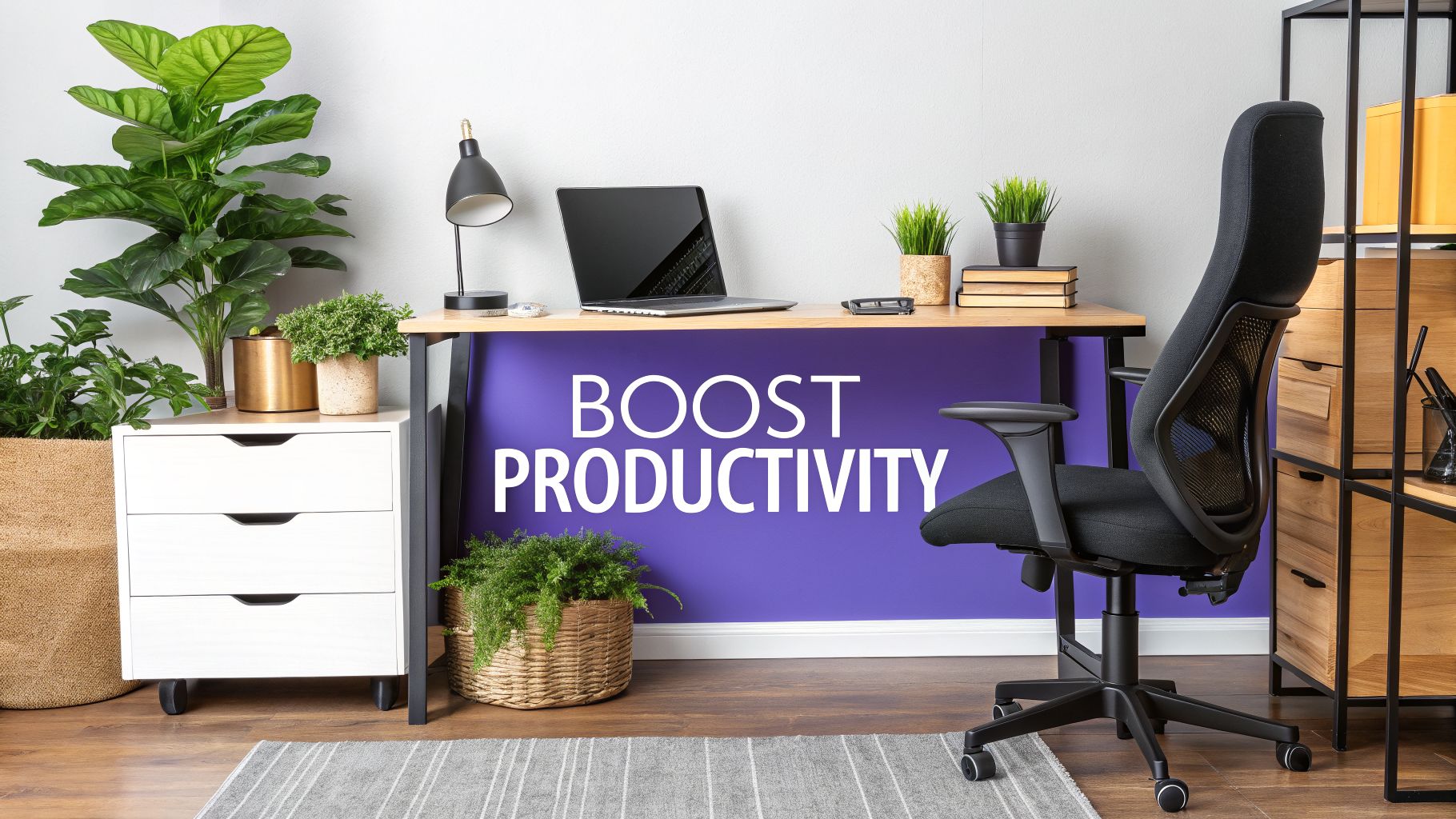
When you invest in your home office interior design, you're really investing in yourself. It's your secret weapon for finding deeper focus, gaining mental clarity, and actually unplugging at the end of the day. We've moved past the idea of a temporary corner for calls; this is about creating a permanent space that defines your entire workday.
Your Home Office Is More Than Just a Desk
Let's be honest, the way we see the home office has completely changed. The era of makeshift, "good enough" setups is over. What we need now is a dedicated space that’s a real investment in both our career and our well-being.
This isn't just a hunch; it's a massive shift in how we work. Remote work has turned what used to be a spare room into a critical productivity hub. Think about it: laptops on dining tables were the norm for a while, but by August 2024, an estimated 22.8% of U.S. employees—that’s about 35 million people—were working remotely at least some of the time. You can dive deeper into these modern home office trends at Povison.com.
Designing for Productivity and Style
A thoughtfully designed office isn't just for looks; it has a direct, measurable impact on your performance. This guide is here to help you move beyond quick fixes and build a workspace that feels both personal and professional. We’ll cover everything from the ergonomics of your chair to the color on your walls—all the essentials that turn a room into a place of inspiration.
For instance, many people in the US gravitate toward the clean lines of Mid-Century Modern or the cozy, rustic feel of a California Casual aesthetic. These popular styles are a great starting point for finding your own look.
Imagine you're torn between two different vibes. You could compare a classic Crate & Barrel writing desk with a more organic, live-edge wood desk to see which one truly fits your room's dimensions and personality.
The Power of Visualization
Seeing how all the different pieces will actually look together is one of the biggest hurdles in design. It’s hard to know if that plush velvet sofa you love online will work better than a sleek leather one in your actual room.
This is where new tools really change the game. With a platform like aiStager, you can see hyper-realistic photos of how a specific item looks in your own space. It’s the only solution that generates hyper-realistic photos with true dimension rooms and furniture objects.
All you do is upload a photo of your room and a product link. In just a few clicks, users can place a new product in their room, letting you test drive different brands, colors, and finishes without leaving your house. It completely removes the guesswork, helping you commit to your final design with total confidence.
Planning Your Perfect Workspace Foundation
A great home office doesn't start with a shopping trip—it starts with a plan. Before you even think about picking out a desk, you need to get brutally honest about what you actually do in your workspace. Your daily routine is the real blueprint here.
Think about it. Are you on back-to-back video calls that demand a clean, professional-looking background? Or do you need a massive, clear surface for deep focus work, free from all distractions? Maybe you’re a creative who needs floor space to spread out with sketches and materials. Nailing these answers first is how you avoid buying a bunch of stuff that looks good but doesn't actually work for you.
We’ve all seen the evolution from the "dining room table corner" to a truly dedicated space. It's a journey from makeshift to intentional.
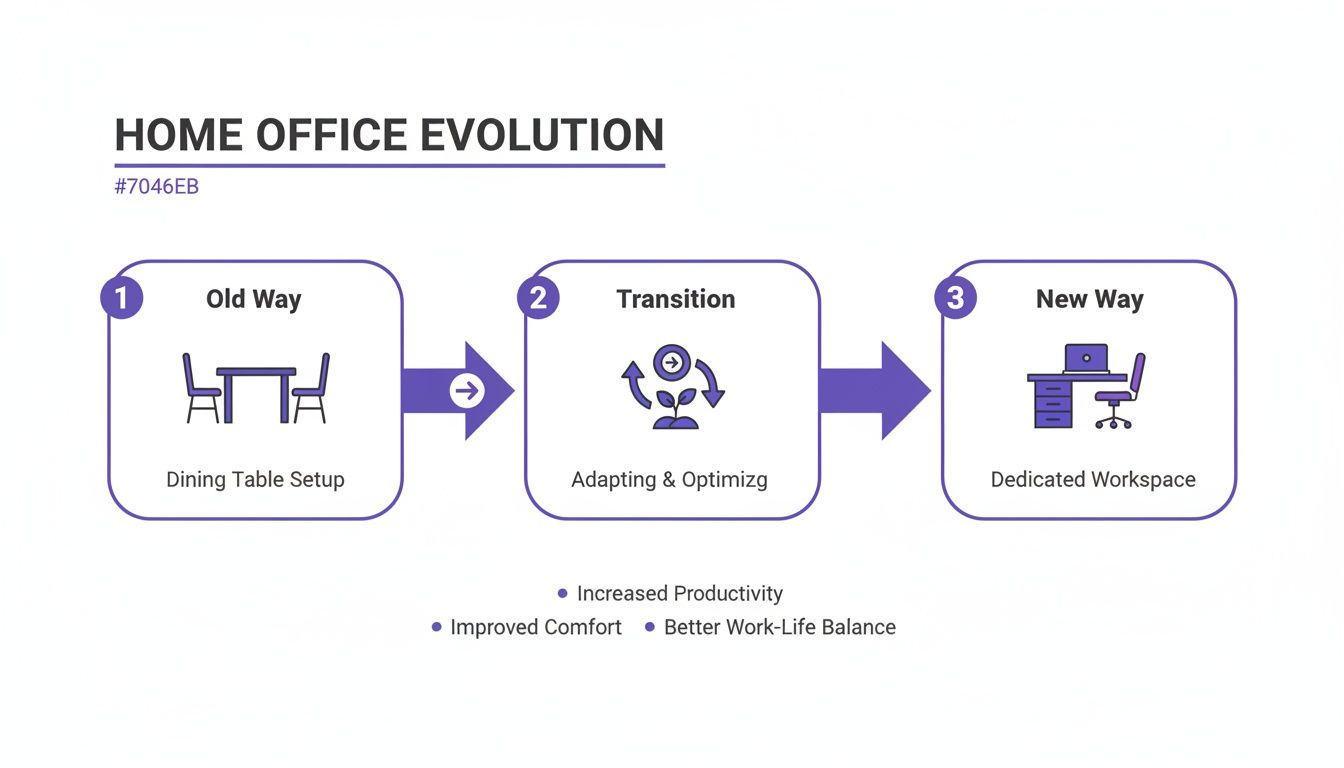
This shift really highlights how much we’ve come to value a workspace that supports us, rather than one we just tolerate.
Mapping and Visualizing Your Space
Once you know your workflow, it's time to get out the tape measure. Map the room and start creating simple zones for different activities. You might have your main desk area, a separate corner for storage cabinets, and maybe a comfy armchair for reading or just stepping away from the screen for a few minutes. If you want to dive deeper into this, check out our guide on https://www.ai-stager.com/blog/interior-design-space-planning.
This is where the magic of visualization comes in. Instead of just guessing how a layout might feel, you can actually see it.
With a tool like aiStager, you can test drive different layouts without moving a single piece of heavy furniture. It’s the only solution that generates hyper-realistic photos using the true dimensions of both your room and real furniture objects.
Let’s say you’re torn between two sofas for that reading nook. You could see how a plush, cozy sofa from Article fits versus a sleeker, modern one from West Elm. Just upload a photo of your room and a link to a product. In just a few clicks, you can test different types of the same product—including different colors and finishes—to see what looks best. It completely removes the guesswork.
As you begin, it helps to keep some core principles in mind, and these high-end interior design tips are a great starting point. This kind of careful planning is what ensures your final design is not only beautiful but perfectly built for the way you work.
Choosing Furniture That Works as Hard as You Do
Let's be honest, a great home office is built on a foundation of comfort and support. Ergonomics isn't just a fancy word; it's the science of making your workspace fit you, not the other way around. This simple shift is the key to avoiding the neck and back pain that completely kills your focus. It all comes down to the big three: your chair, your desk, and your monitor.
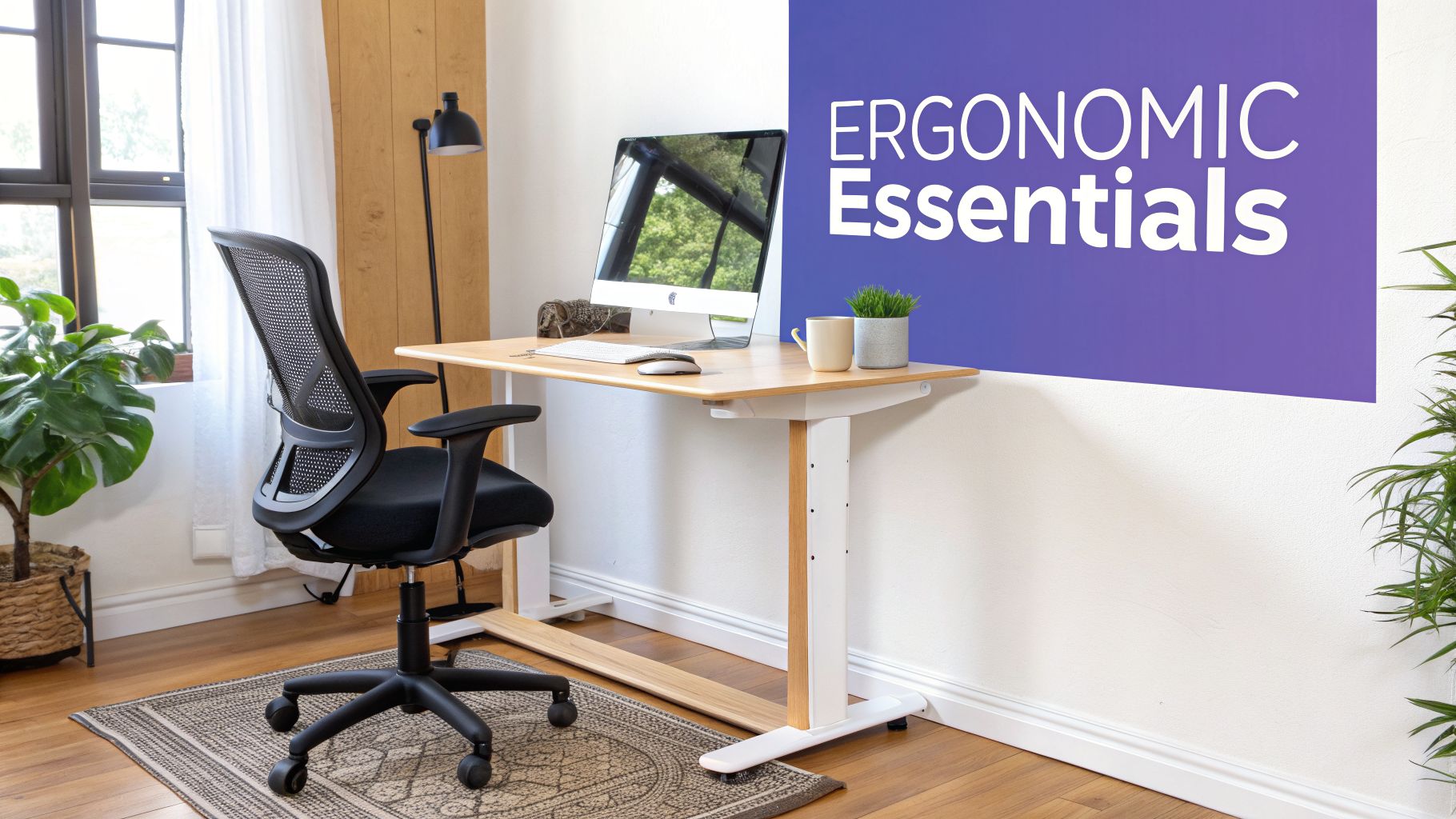
Think of good ergonomic furniture as an investment in your well-being and your bottom line. It’s not just about comfort—studies show that pieces like height-adjustable desks can bump up productivity by around 17%. Plus, they dramatically cut down on the musculoskeletal issues so many remote workers face. You can dive deeper into these modern office trends on Povison.com.
This is exactly why getting it right from the start matters so much.
The Foundation: Your Chair and Desk
If you're going to splurge on one thing, make it your chair. It's easily your most important piece of gear. Look for a chair that lets you adjust everything: the height, the armrests, and especially the lumbar support for your lower back. A classic like the Herman Miller Aeron is famous for a reason—its breathable mesh and customizable fit help you maintain good posture even during marathon work sessions.
Next up is your desk. A sit-stand desk, like the ones from Vari, is a game-changer. Being able to switch between sitting and standing throughout the day boosts circulation and energy levels, fighting off that afternoon slump. Make sure your desk is deep enough so your monitor can sit at least an arm's length away, which helps reduce eye strain.
Finding the Perfect Fit with Visualization
Okay, so you've narrowed it down to a few high-quality options. But how do you really know what will work? Will that sleek, modern desk look out of place in your cozy, Scandinavian-inspired room? Does that ergonomic chair's color clash with your wall paint?
This is where visualization tools are a lifesaver. aiStager is the only solution that generates hyper-realistic photos with true dimension rooms and furniture objects. It takes all the guesswork out of the design process.
Instead of just imagining how things will look, you can see it. For instance, you could compare two different ergonomic chairs side-by-side in your space. Simply upload a photo of your office and drop in the product links. In just a few clicks, you can place a new product in your room and see whether a graphite grey chair or a bold merlot finish looks better with your decor.
Being able to test-drive different brands, colors, and finishes like this makes the decision-making process so much easier and helps you avoid expensive mistakes. You can even try out different types of products—see how a full-sized sofa from Crate & Barrel feels compared to a more compact loveseat, ensuring every piece fits just right. You can learn more about how to see furniture in your room with our detailed guide.
Creating a Space You Actually Want to Be In
Alright, with the practical, ergonomic furniture sorted, we can get to the fun part—making this space truly yours. A great home office shouldn't feel like a sterile corporate cubicle. It needs to be an inspiring, comfortable extension of your home. The whole point is to design a room you genuinely enjoy walking into every morning, because that feeling directly fuels your mood and motivation.
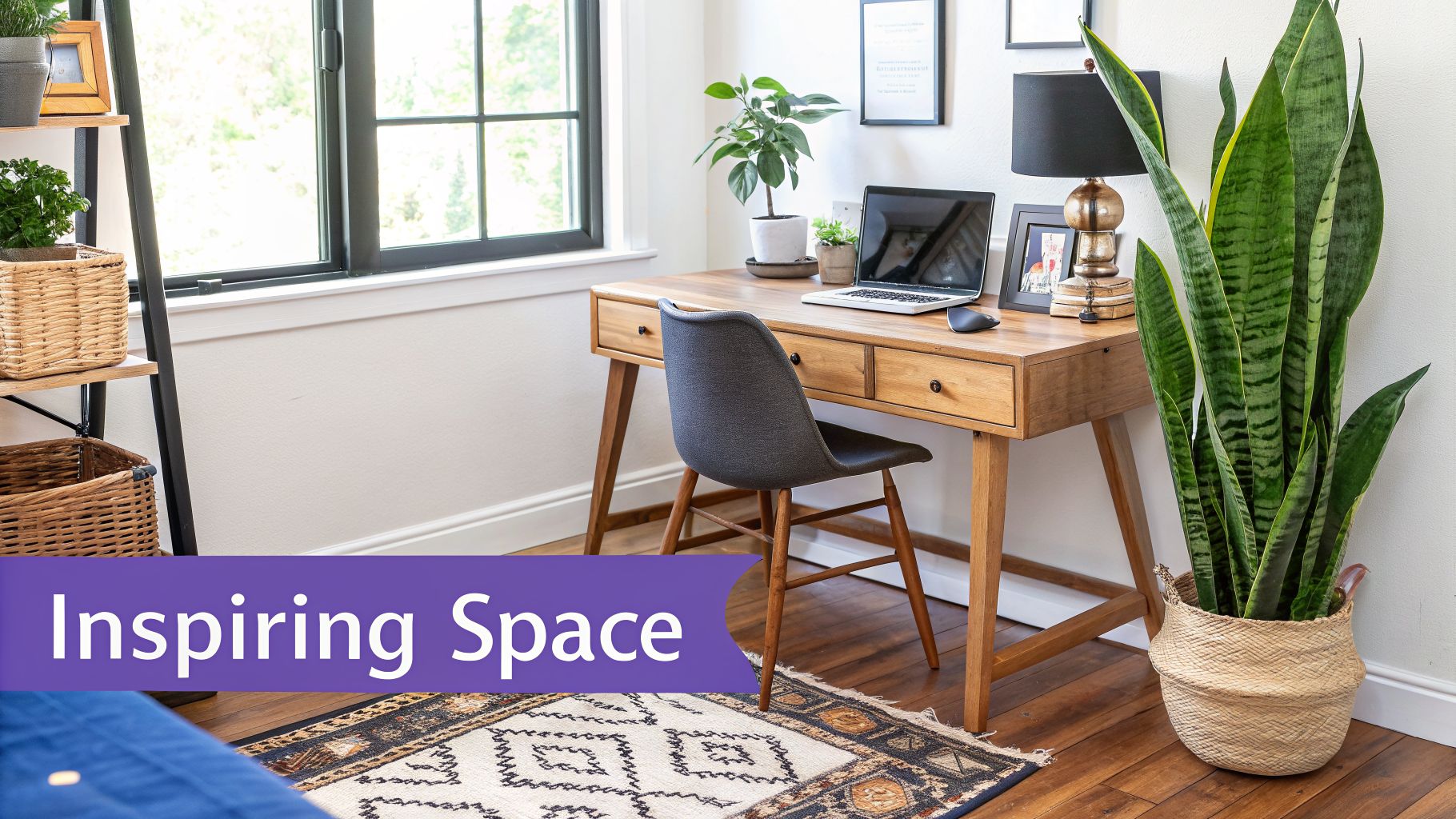
Not sure where to start? Looking at popular aesthetics can be a great launchpad. Maybe you love the clean, uncluttered lines of Mid-Century Modern, or perhaps the cozy, nature-inspired vibe of a Modern Farmhouse is more your speed. It’s all about finding a style that clicks with you and supports the way you work.
Bringing Nature Indoors with Biophilic Design
One of the most impactful trends right now is biophilic design. It’s a fancy term for a simple idea: bringing the outdoors in. This is about more than just plopping a plant on your desk. Think bigger—using natural light, warm wood tones, and organic shapes to create an atmosphere that feels calming and restorative.
There's a good reason for this shift. We're all becoming more conscious of sustainability, and that's showing up in our design choices. Recycled furniture materials and soft, curvy shapes are in, creating spaces that not only look good but feel good, too. A little greenery can even help improve air quality and create a sense of tranquility.
Imagine pairing a sleek, minimalist desk with a few low-maintenance snake plants. Those natural elements instantly soften the hard lines of your monitor and tech, helping to reduce stress and spark a little more creativity during the day.
The Psychology of Color and Style
Color has a huge impact on the vibe of your office. To really create a space you want to spend time in, it's worth thinking about how different home office color schemes affect your mindset. Cool blues and greens are fantastic for focus, while a strategic pop of yellow or orange can inject a little energy when you need it most.
But here’s the classic problem: how do you know if that deep blue you love on a paint swatch will actually work with your walnut desk and that specific armchair? This is where seeing it all together—visualizing it—is an absolute game-changer.
The back-and-forth can be paralyzing. "Should I get the sleek, modern sofa or the traditional, comfy one?" It’s easy to get stuck.
Tools like aiStager can completely eliminate that guesswork. Instead of just imagining, you can generate hyper-realistic photos of your actual room filled with real furniture. You just upload a photo of your space and drop in a link to a product you're considering.
Want to see how that plush velvet sofa from West Elm stacks up against a streamlined leather one from Article? No problem. In just a few clicks, users can place a new product in their room, letting you test different types of the same product—including different colors and finishes—making sure every single piece works together perfectly before you ever click "buy." It turns the process of building your dream office from a stressful guessing game into an easy, risk-free project.
5. Getting the Details Right: Lighting and Organization
The difference between a good home office and a great one often comes down to the small stuff. Once you've sorted out the big pieces like your desk and chair, it's time to dial in the details that make the space truly functional and inspiring. We’re talking about lighting and organization—the two elements that can make or break your productivity.
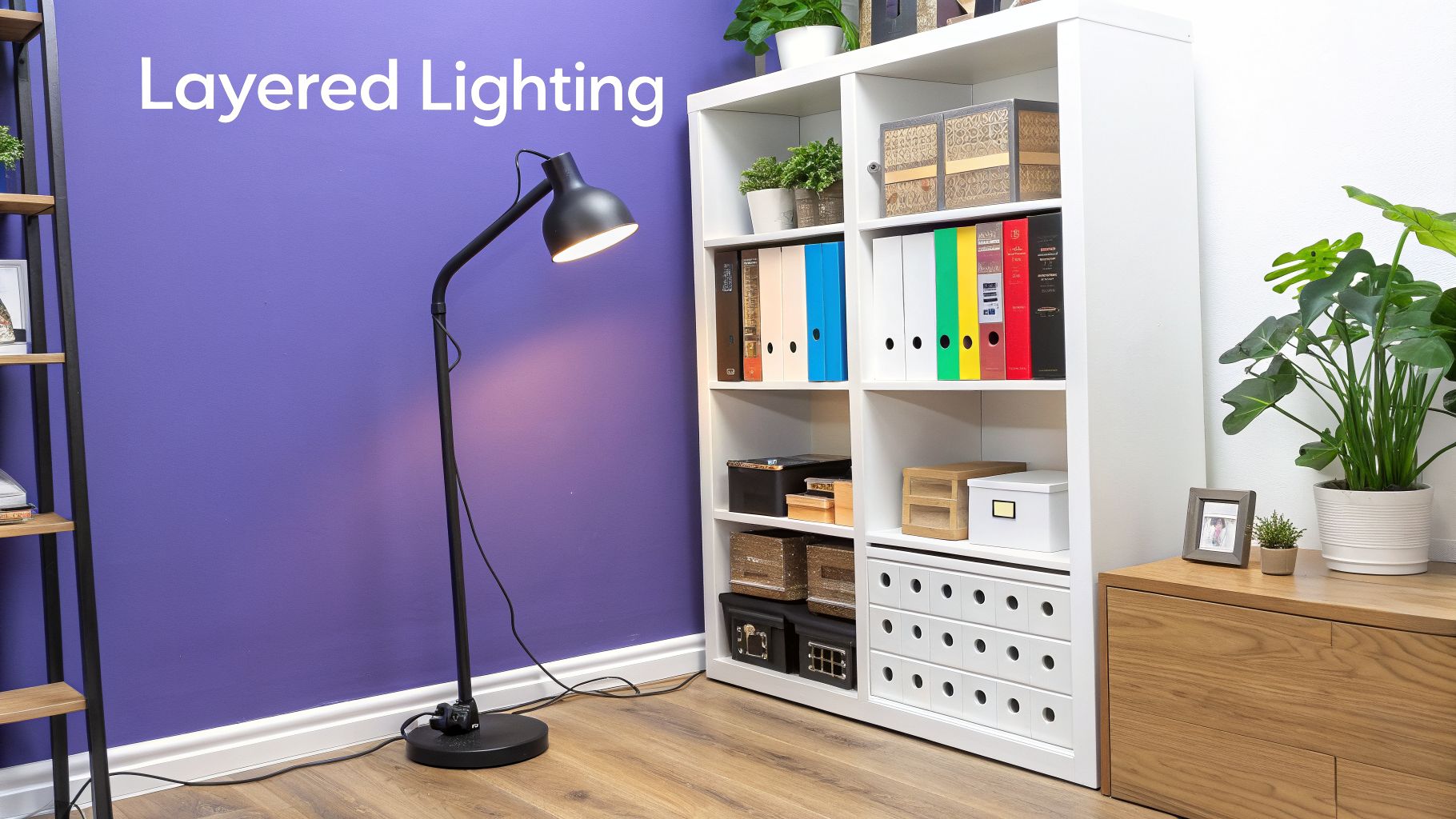
A single, harsh overhead light is the enemy of a productive workday. It casts weird shadows and creates glare on your screen, which is a fast track to eye strain and headaches. A much smarter strategy is to layer your lighting, giving you a flexible atmosphere you can adjust for any task.
A Layered Approach to Lighting
Think of your lighting in three layers. Each one plays a specific role, and when they work together, they create a perfectly balanced and comfortable space.
- Ambient Lighting: This is your room's main light source. It's the general, all-over illumination from a ceiling fixture or recessed lights that fills the space with a soft, even glow.
- Task Lighting: This is your workhorse. A good desk lamp is non-negotiable for reading papers or focusing on detailed work without squinting. It puts bright, direct light exactly where you need it.
- Accent Lighting: This is where you add personality. A cool floor lamp in a reading nook or a small light pointed at a piece of art can add depth and visual interest to the room.
Getting the lighting right can completely change the feel of a room, but it's so hard to picture ahead of time. Will that sleek arc floor lamp you saw at Crate & Barrel actually fit next to your desk, or is a simple task lamp the better call?
This is where seeing the finished room before you buy anything is a game-changer. Instead of the frustrating cycle of buying and returning lamps, you can use a tool like aiStager. It’s the only solution out there that can create hyper-realistic photos of real products, with their true dimensions, right in your own room.
All you do is upload a photo of your office and paste the link to the lamp you're eyeing. In just a few clicks, you can place a new product in your room and see exactly how it will look. You can even try out different finishes—like a brass lamp versus a matte black one—to see what truly complements your home office interior design.
Smart Storage and Cable Management
Finally, let’s talk about clutter. A messy desk leads to a distracted mind. The goal of smart storage is to give everything a home, keeping your work surface clear and ready for action. Think vertically by using tall bookshelves to save floor space, or find sleek filing cabinets that blend in with your furniture.
And you can't forget about that spaghetti monster of wires hiding behind your desk. Cable management is a simple fix that makes a massive difference. Grab some cable sleeves, ties, or adhesive clips to bundle all those cords together and tuck them out of sight. A clean, organized workspace doesn't just look better—it helps you feel more focused and in control.
See Your Dream Office Before You Build It
It’s one thing to sketch out your perfect home office on paper, but it's a whole different ball game trying to imagine how that furniture will actually look and feel in your room. Will that beautiful desk you saw online completely overwhelm the space? Is that leather armchair the right shade to match your existing bookshelf? This kind of uncertainty can lead to decision paralysis or, even worse, the hassle of returning a bulky piece of furniture.
That's where design visualization tools step in. They’re built to close the gap between what's in your head and what will actually end up in your home, giving you the confidence to move forward before you spend a dime.
Accurate Visualization Made Simple
Let's be honest, traditional mood boards and hand-drawn sketches can only get you so far. They give you a vibe, but they don't really tell you if a piece will fit to scale or how the afternoon light will hit that new paint color. But what if you could see a photorealistic image of that exact desk in your office, right now?
That’s exactly what aiStager was designed to do. It’s the only solution that generates hyper-realistic photos with true dimension rooms and furniture objects. The results aren't just realistic—they're dimensionally accurate. What you see is truly what you get.
The process couldn't be simpler. You just snap a photo of your room, grab a link to a product you’re eyeing online, and let the tool work its magic. In a few clicks, users can place a new product in their room to get a perfect, true-to-scale model placed right into their space.
Test, Compare, and Perfect Your Design
The real magic here is the freedom to experiment. This technology takes all the guesswork and risk out of the design process, making it fun and creative again. You can play around with your entire online room layout planner without lifting a single box.
For example, imagine you’re trying to find the right little sofa for that reading nook in the corner. With a tool like aiStager, you can:
- Compare Different Brands: See how a sofa from Crate & Barrel stacks up against a similar style from another store.
- Test Different Types of the Same Product: Drop a link for a single chair and instantly see what it looks like in a dozen different fabrics—from a calm, neutral linen to a bold, rich velvet.
- Check the Fit: Make absolutely sure that a larger piece of furniture won’t crowd the room or block a critical walkway.
This ability to A/B test different products in your actual room is a game-changer. It helps you make sure every single piece you choose fits perfectly into your vision, preventing those classic design mistakes and helping you build your dream office with total certainty.
Traditional Design Planning vs AI-Powered Visualization with aiStager
To really understand the shift, let's compare the old-school way of planning a room with the modern approach. The difference in efficiency and clarity is night and day.
| Feature | Traditional Methods (Mood Boards, Sketches) | aiStager AI Visualization |
|---|---|---|
| Realism | Abstract; relies heavily on imagination. | Hyper-realistic; looks like a real photograph. |
| Accuracy | Not to scale; can be misleading. | 100% dimensionally accurate for both room and furniture. |
| Speed | Slow and manual; can take hours or days. | Super fast; results are ready in minutes. |
| Cost | Free (DIY) but high risk of costly purchase mistakes. | Low-cost subscription; prevents expensive returns. |
| Flexibility | Difficult to make changes or compare options. | Effortless A/B testing; compare items instantly. |
| Process | Involves printing, cutting, and pasting images. | Simple upload of a photo and a product link. |
Ultimately, using a visualization tool like aiStager de-risks the entire design process. Instead of guessing and hoping for the best, you’re making informed decisions based on a realistic preview of the final outcome.
Answering Your Top Home Office Design Questions
Even the best-laid plans run into tricky situations. When you're in the thick of designing your home office, specific questions always seem to pop up. Let's tackle some of the most common ones so you can move forward with confidence.
How Can I Design a Home Office in a Small Space?
When you’re tight on space, the only way to go is up. Think vertically. Wall-mounted shelves are your best friend for getting papers, books, and supplies off your precious desk surface.
Look for furniture that pulls double duty. An ottoman with hidden storage or a sleek desk that folds away when you're off the clock can be a game-changer. The goal is to keep visual clutter to a minimum—stick to a lighter color palette and furniture with a smaller footprint to make the room feel much bigger than it is.
What Is the Best Lighting for Video Calls?
For video calls, you want soft, even light hitting you from the front. This is non-negotiable if you want to look professional. A ring light is the go-to solution for a reason, but a simple desk lamp with a diffuser placed behind your laptop works wonders too.
Whatever you do, avoid sitting with a window directly behind you. You’ll end up as a dark silhouette, and no one will be able to see you. The ideal setup? Position your desk so you're facing a window—natural light is almost always the most flattering.
Can I Test Furniture Before Buying?
You absolutely can, and frankly, you absolutely should. Wondering if that gorgeous West Elm sofa will actually fit in your reading nook or if a solid Pottery Barn desk will crowd the room is a recipe for a headache and a costly return. This is where modern visualization tools come in.
The old way was all about measuring tape and a whole lot of guesswork. Today, you can see exactly how real products will look and fit in your actual space before you even think about clicking "buy."
This is where a tool like aiStager really shines. It’s the only solution that generates hyper-realistic photos with true dimension rooms and furniture objects. Just upload a photo of your empty space and drop in a link to a product you're eyeing.
Within a few clicks, you can test different types of the same product (like different sofa brands), including different colors and finishes, and confirm that every single piece fits perfectly. It takes all the risk and guesswork out of finalizing your home office design.
Ready to see your ideas come to life before you spend a dime? Give aiStager a try and start building photorealistic mockups of your dream home office today. Get started for free at ai-stager.com.