Home Staging Real Estate A Guide to Sell Faster for More
Our 2026 guide to home staging real estate covers physical and virtual staging tips to boost property value and attract serious buyers faster.

Home staging is simply the art of making a house feel like a home to potential buyers. It’s a strategic marketing move that goes way beyond just cleaning up. We're talking about arranging furniture, adding thoughtful decor, and highlighting the property's best assets to help it sell faster and for a better price. Essentially, you're transforming a building into a lifestyle someone can't wait to buy.
Why Home Staging Is a Real Estate Game Changer
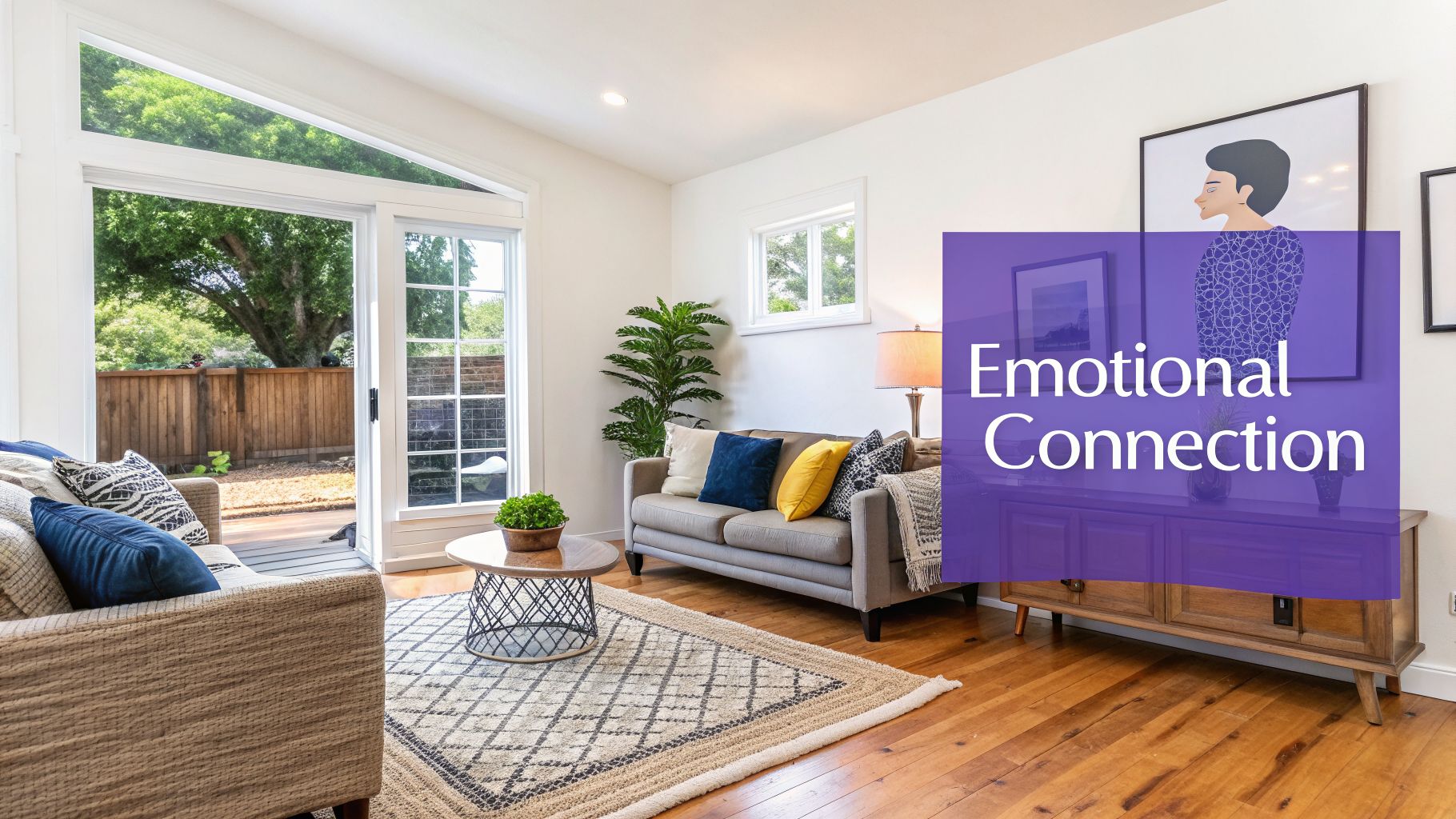
Let's be real—an empty house is a tough sell. It feels cold, impersonal, and leaves far too much to the imagination. When buyers walk into a vacant room, they see blank walls and struggle to connect or picture their life unfolding there. Home staging is the fix for that. It’s less about decorating and more about creating an experience that makes buyers feel something.
The psychology behind it is straightforward. When a buyer can see exactly how the living room flows for entertaining or imagine themselves making breakfast in the kitchen, they stop seeing a property and start seeing their home. That emotional hook is what leads to quicker offers and drives up the final sale price.
The core ideas of great home staging are actually quite similar to the principles behind mastering how to furnish a new home—it’s all about creating an inviting and functional space.
From Aspirational to Attainable
Staging isn’t one-size-fits-all. You can—and should—create specific styles that resonate with your target market. Think about crafting a cozy California casual look with a big, comfy sofa, or a sleek Organic Modern vibe with natural textures and an iconic armchair. These design inspirations appeal to many US consumers and help buyers fall in love with a complete vision, not just the floor plan.
And the best part? Modern tools have made this more accessible than ever. Physical staging is fantastic, but virtual staging opens up a world of possibilities. A tool like aiStager, for instance, is a game-changer because it’s the only solution that generates hyper-realistic photos with true dimension rooms and furniture objects.
The Power of Virtual Experimentation
With a platform like aiStager, you can play around with different furniture styles, brands, and layouts with just a few clicks. For example, you can test different types of the same product, like seeing if the Restoration Hardware Cloud Sofa in a dark fabric works better than a light linen version from Pottery Barn. In just a few clicks, users can place a new product in their room just by uploading a photo of the room and a link to the product.
This gives you the freedom to test different design ideas—and even different colors and finishes of the same item—to nail the perfect look for your listing photos without ever having to move a single piece of furniture. You can see some incredible examples of this in our gallery of staging before and after photos.
This isn't just about convenience; it's a strategic move with a proven return. Some real estate pros have reported an ROI on home staging as high as 3,551%. Even a small 1% investment in staging can boost a home's selling price by as much as 10%, making it one of the smartest things you can do to prepare a home for the market.
Preparing the Canvas: Decluttering and Essential Repairs
Before we even think about bringing in stylish furniture or accessories, we have to deal with the basics. Think of it as prepping a canvas for a painting. For any home staging real estate project, this starts with a simple but non-negotiable process: declutter, depersonalize, and deep clean.
A home overflowing with personal belongings makes it nearly impossible for a potential buyer to imagine their own life unfolding there. This is a tough conversation to have with sellers, so I always frame it carefully. It’s not about erasing their family’s memories; it's about creating a clean slate that allows someone else to start dreaming.
That means all the quirky collections, piles of magazines, and half the clothes in the closet need to be packed up and moved out. A great trick is to recommend off-site storage units, which can feel less overwhelming than trying to cram everything into a garage. This step alone dramatically opens up a room, making it feel larger and more inviting.
The Power of Depersonalization
Once the clutter is gone, it’s time to depersonalize. This is where you remove the seller’s specific identity from the space, and it’s a game-changer. There's a reason 83% of buyers’ agents say staging helps buyers visualize a property as their future home—and this is a huge part of it.
I give sellers a clear list of what needs to go into a box:
- Family photos and personal portraits
- Your kids' amazing artwork from the fridge
- Any political or religious items
- Bold decor that screams a very specific personal style
The aim here is to create a vibe that feels like a high-end boutique hotel. It’s welcoming and incredibly stylish, but it doesn't feel like you’re snooping around in someone else’s private home.
A pre-listing walkthrough is your secret weapon. Walk through the home with a buyer's critical eye and create a punch list of minor but noticeable issues that could detract from the home's value.
Tackling Minor Repairs for Major Impact
With the clutter and personal items cleared out, every little flaw suddenly becomes glaringly obvious. That dripping faucet, the scuffed-up baseboards, or the patch of chipped paint might seem like no big deal to the seller, but to a buyer, they can be red flags that suggest poor maintenance.
Focus your energy on the fixes that deliver a huge visual return on a small investment. A fresh coat of neutral paint is probably the single most effective thing you can do. Swapping out dated cabinet pulls, old light fixtures, or dingy switch plates also makes a massive difference.
These small, affordable updates prevent buyers from getting distracted and mentally labeling the property as a "project." What you're selling is a move-in ready feel, and that’s what gets top-dollar offers and a much faster sale.
Mastering Physical Staging to Create an Irresistible Vibe
Once the cleaning and repairs are done, you have a blank slate. Now for the fun part: bringing the home to life through staging. This is where you move beyond a simple house and start telling a story that buyers can see themselves in. The goal is to create a natural flow from room to room and make sure every space has a clear, defined purpose.
Every room needs a job. I've seen it time and again—that awkward bonus room or empty nook confuses buyers. Turn that bonus room into a home office. Make the empty space by the kitchen a cozy breakfast spot. By giving every area a function, you’re not just filling space; you're showcasing the home's full potential and making it feel larger and more valuable.
Creating a Specific and Appealing Style
Staging is your chance to really inspire someone. You can create a specific vibe that speaks directly to your target buyer. In the US, for instance, many people are drawn to the warm, inviting feel of a modern farmhouse or the clean lines of a Mid-Century Modern design.
Think about crafting that modern farmhouse look with a classic, comfortable slipcovered sofa from Pottery Barn as the anchor. Or, you could go for a sleek Mid-Century Modern feel with a statement armchair from Article. The trick is to pick a style that feels aspirational yet accessible, so buyers can easily imagine their own lives unfolding there.
Of course, actually getting furniture into the house is a huge logistical hurdle. Do you rent everything, which offers flexibility but gets expensive fast? Do you buy a few key pieces you can reuse for other projects? A great strategy is often to work with what the seller already has, picking their best items and building the design around them for a more authentic look.
Physical staging is incredibly effective, but it comes with a serious investment of time and money. Before you commit to a certain look or start buying expensive furniture, you can test drive your ideas virtually.
Testing and Perfecting Your Vision with Technology
This is where a tool like aiStager can be a real game-changer. It’s the only platform that generates hyper-realistic photos with true dimension rooms and furniture objects, giving you an exact preview of how your design ideas will pan out.
Wondering if a certain style will actually work in the living room? With aiStager, you can test different products with just a few clicks. For example, you could see how a sleek leather sofa from one brand looks compared to a plush velvet one from another—in all their different colors and finishes.
The process couldn't be simpler: you just upload a photo of the room and a link to a product. Suddenly, you're experimenting with high-end pieces from Restoration Hardware or West Elm without spending a dime. You can perfect the layout, tweak the color palette, and nail the overall vibe before a single piece of real furniture is ever moved. This ensures your staging efforts hit the mark and deliver the biggest possible return.
To see this process in action, you can check out our complete guide on how to stage a house to sell.
A Smarter Way to Stage: Why Virtual Staging is a Game-Changer
What if you could perfectly stage a home in minutes, not days, and for a tiny fraction of the cost? That’s the promise of virtual staging. It completely sidesteps the heavy lifting and logistical nightmares of traditional staging, giving you a fast, flexible, and powerful way to market any property.
Let's be real: while physical staging is great for in-person tours, the first impression happens online. A staggering 95% of buyers start their search on the web. This is especially true for vacant properties. An empty room online just looks cold and sterile, making it hard for buyers to imagine themselves living there. Instead of spending thousands on rental furniture, you can use virtual staging to create stunning photos that capture a buyer’s imagination from the very first click.
The traditional staging process, while effective, is a major undertaking. It involves defining each room's purpose, hauling in furniture, and styling every last detail.
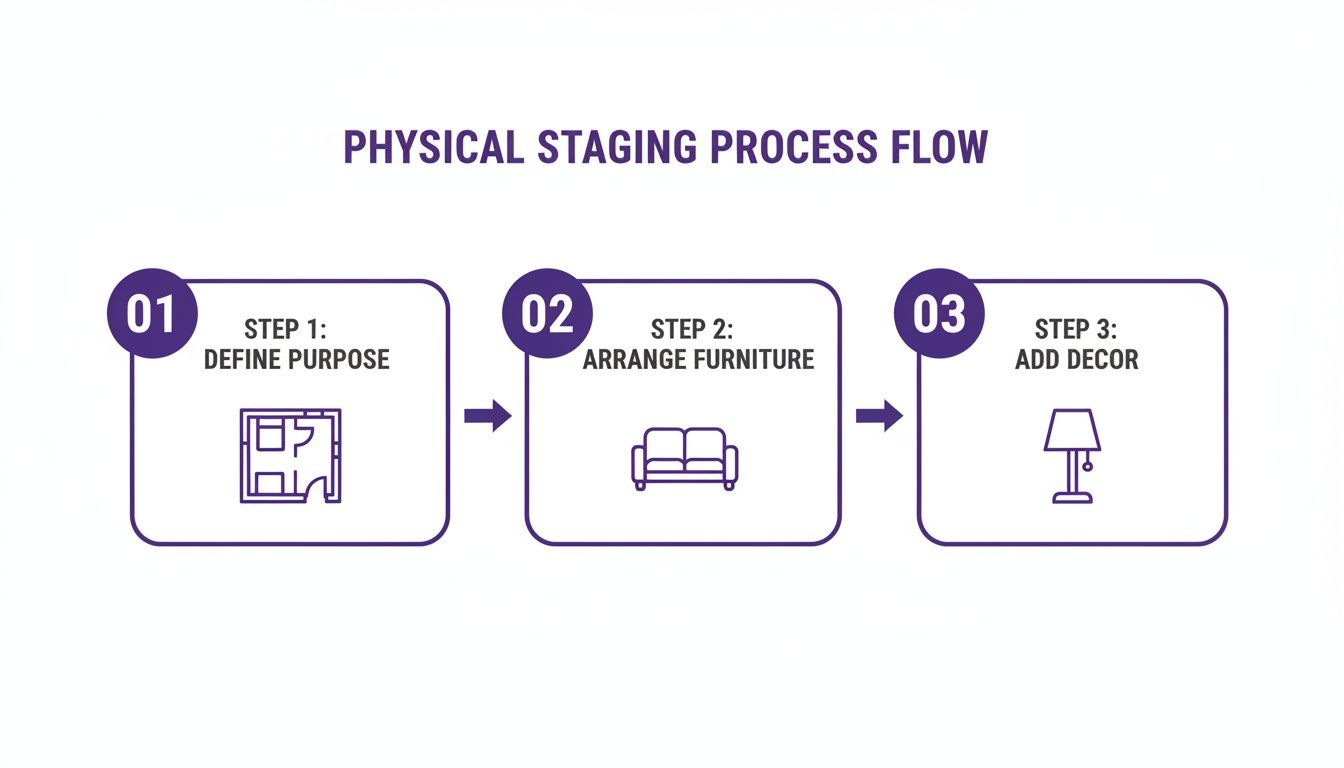
As you can see, this physical approach costs a lot of time and money—two things most agents and sellers don't have to spare. This is exactly where virtual staging comes in.
To see just how different the two approaches are, let's compare them side-by-side.
Physical Staging vs Virtual Staging with aiStager
| Feature | Physical Staging | Virtual Staging (aiStager) |
|---|---|---|
| Cost | $3,000 - $8,000+ per project | Starts at a few dollars per photo |
| Speed | 1-3 weeks (planning, delivery, setup) | Under 5 minutes per photo |
| Logistics | Movers, furniture rental, insurance, storage | Just upload a photo from your computer or phone |
| Flexibility | One look per room, fixed | Unlimited styles and revisions with a few clicks |
| Risk | Damage to property, furniture doesn't fit | Zero physical risk |
The table makes it clear: for online marketing, virtual staging offers incredible advantages in cost, speed, and creative freedom.
The aiStager Difference: It Has to Look Real
Here’s a hard truth: not all virtual staging is good. I’ve seen plenty of listings with flat, cartoonish furniture that looks like it was poorly pasted into the photo. This actually does more harm than good, making a property look cheap or, even worse, deceptive.
This is where a tool like aiStager really shines in the home staging real estate world.
What makes it different? aiStager is the only solution that generates hyper-realistic photos by rendering dimension-true furniture objects into any room. This means the furniture doesn't just look real; it's scaled perfectly to the room's actual dimensions, with lighting and shadows that match the space. The final image is practically indistinguishable from a professional photograph of a physically staged room.
That realism is what helps buyers connect. They aren't just looking at a picture; they're seeing a believable layout and can start picturing their own life there.
Experiment with Designs in a Few Clicks
One of the biggest perks of using aiStager is the freedom to play interior designer. You can test out completely different looks in seconds, which is a massive advantage when trying to appeal to a specific type of buyer. Want to see if a modern farmhouse vibe works better than a minimalist Scandinavian one? Go for it.
The process is refreshingly simple:
- Upload a photo of the room—it can be empty, cluttered, or just outdated.
- Find a product link from any online store (like Wayfair, West Elm, etc.).
- Paste that link into aiStager.
In seconds, the tool drops that exact item into your photo, perfectly scaled and rendered.
Imagine you're working on a dining area. You could instantly test a sleek, modern dining set from Crate & Barrel to see how it fills the space. Not quite right? With another click, you can swap it for a rustic, wooden table from Pottery Barn to create a totally different feel.
Find the Perfect Item for Every Room
The real power of aiStager is in the details. You can compare specific products side-by-side in the actual room. Are you torn between two different sofas for the living room? Stop guessing and see for yourself.
For example, aiStager is great to test different types of the same product. You might be debating whether a bold, navy velvet sofa from Joybird would make a stronger statement than a neutral, beige linen sofa from West Elm. Instead of creating a mood board and hoping for the best, you can see both options in the room's true lighting. You can even try different colors and finishes of the same product to find the perfect match.
This ability removes all the guesswork from home staging real estate. It helps you fine-tune your listing's visual appeal with incredible precision, ensuring every photo shows the home at its absolute best. If you're looking for more tips on getting started, check out our guide on using a virtual staging app.
Does Staging Really Lead to Faster Sales and Higher Offers?
Let's get straight to the point. All the effort you put into staging a home—whether physical or virtual—has one goal: to get that property sold faster and for more money. It’s not just about making things look pretty; it's about seeing a real return on your investment. And the good news is, the numbers consistently back this up.
More than just a higher offer, staging drastically cuts down the time a home sits on the market. Fewer days on market means your seller saves a ton on carrying costs like mortgage payments, utilities, and taxes. For you, it means a quicker commission check and a happy client.
The data is pretty compelling. On average, professionally staged homes sell an incredible 73% faster than homes that aren't staged. That means they spend 73% less time on the market, which is a massive advantage in any selling environment.
Your First Showing Happens Online
Think about it: over 90% of buyers start their search online. Your listing photos aren't just pictures; they're the first showing. This is your one shot to make an impression that stops them from scrolling to the next property.
This is where staging, whether you do it physically or with a virtual tool, works its magic. You’re showing buyers the potential of the home from the moment they see it online. That initial "wow" factor is what convinces them to book a viewing in person.
Staging can even breathe new life into a listing that's gone stale. I’ve seen it happen time and again. Properties that sat for 90 days without a single good offer were staged, re-listed, and sold in an average of just 31 days. You can dig into more of this data by reading these findings on home staging statistics.
Turning Clicks Into Showings
Great photos are the bridge between online curiosity and real-world foot traffic. When a buyer sees a home that looks bright, open, and inviting, they start to imagine themselves living there. That emotional connection is what gets them to pick up the phone.
This is why it pays to find the perfect style for your target buyer. For instance, using a tool like aiStager, you can quickly see if a clean, minimalist "Japandi" look gets a better reaction than a cozy farmhouse vibe. By showcasing the home's most attractive self online, you're not just getting more clicks—you're getting the right buyers to walk through the door.
Answering the Tough Questions About Home Staging
Even when everyone agrees staging is a good idea, a few practical questions always pop up. It’s one thing to know staging works; it’s another to put it into practice. Let's walk through the common hurdles I see agents and sellers face.
A big one I hear all the time is about cost, especially for homes on the lower end of the market. Is it really worth it? Absolutely. Staging isn't just for luxury listings. For a more affordable home, it’s often the one thing that makes it pop in a sea of similar properties.
Proper staging makes a home feel cared for and move-in ready. That’s a huge plus for buyers, particularly first-timers who might be intimidated by a "project." Even a small spend on decluttering and virtual staging can shave weeks off your time on the market, saving a seller way more in carrying costs than the staging ever cost.
Physical vs. Virtual: Which Is the Right Call?
This is where you have to get strategic. The best choice really boils down to the specific property and your budget.
Physical staging is incredible for vacant, high-end homes. When buyers are walking through a luxury property, they expect that full sensory experience—to see and feel the quality of the space. It helps them emotionally connect.
But for almost every other situation? Virtual staging is the smarter play. Think about it:
- Occupied homes: You don't have to disrupt the seller's life or rent a storage unit.
- Dated furniture: You can instantly show the home's potential without replacing a thing.
- Tight budgets: The ROI is undeniable. You get stunning listing photos for a fraction of the cost.
A hybrid approach is often my secret weapon. I'll virtually stage every room for the online listing to cast the widest net and get people excited. Then, I’ll just physically stage a couple of key areas—like the living room and primary bedroom—for the in-person showings.
How Can I Experiment with Different Furniture Styles?
This is where technology has completely changed the game. The old way of creating mood boards and just hoping that sofa would fit is officially over.
With a tool like aiStager, you can test-drive furniture options almost instantly. It is the only solution that generates hyper-realistic photos with true dimension rooms and furniture objects, so you know the scale is spot-on every single time. No more awkward, floating furniture in your listing photos.
The process is unbelievably simple. Just upload a photo of your empty room and paste a product link from any online retailer. Want to see if that media console from Restoration Hardware works? Paste the link. Not feeling it? Grab a sofa link from Joybird and compare them side-by-side in seconds.
This ability to swap out different brands, colors, and styles with a few clicks is a game-changer. You can fine-tune the room's aesthetic to appeal to your target buyer without spending a dime or lifting a single box.
Ready to see how incredible visuals can transform your listings? Find out how aiStager can help you sell homes faster and for a better price. You can have your first virtually staged room ready in just a few minutes. Explore what's possible at ai-stager.com.