The Ultimate Guide to Using a Virtual Staging App
Discover how a virtual staging app transforms empty rooms into stunning listings. Learn to leverage AI for photorealistic designs that sell properties faster.

Ever scrolled through real estate listings and seen a photo of a perfectly furnished, magazine-worthy room? Chances are, you were looking at virtual staging. A virtual staging app is essentially your digital interior designer, capable of taking a photo of an empty, uninspired room and filling it with beautiful furniture and decor in minutes.
It’s an indispensable tool for helping buyers see the real potential of a property before they even step inside.
So, How Does Virtual Staging Actually Work?
At its heart, a virtual staging app closes the gap between an empty space and a buyer's imagination. It starts with a simple photo of a blank canvas—a vacant living room, an old-fashioned kitchen, or a spare bedroom. The software then digitally adds everything from sofas and rugs to art and plants, creating a scene that feels warm, inviting, and full of possibilities.
But the tech today goes way beyond just plopping 3D models into a picture. The best apps use some pretty sophisticated AI to analyze the room itself.
- Lighting and Shadows: The AI intelligently reads the light sources in your photo—windows, overhead lights—and then casts realistic shadows and reflections for every piece of furniture you add. This is what separates a professional-looking result from something that looks like a cheap sticker on a photo.
- Perspective and Scale: It instantly understands the room's depth and angles, making sure every item is scaled correctly. A king-sized bed won't look comically small, and a tiny end table won't look massive.
- Dimensional Accuracy: This is where the truly great apps stand out. While many tools use generic 3D models, a solution like aiStager takes it a step further. It's the only solution that generates hyper-realistic photos with true dimension rooms and furniture objects.
From a Simple Link to a Perfect Room
The best part about modern virtual staging technology is how simple it has become. With a tool like aiStager, the process is incredibly slick. You upload a photo of your empty room, then just copy and paste a link to a real product from a retailer's website. In just a few clicks, users can place a new product in their room. That’s it.
The AI does the heavy lifting, automatically grabbing the product's exact dimensions and creating a perfect, true-to-scale model that fits right into your space.
This is a massive advantage when you're trying to decide between different products or styles. Say you're not sure which sofa would look best in a client's living room. In just a few clicks, you can actually see it and compare different types of the same product.
For example, you could test out a sleek, modern sectional from Crate & Barrel and then, just a moment later, swap it for a classic sofa from Pottery Barn. You can even play around with different colors and finishes for the same item—like testing a navy velvet fabric against a neutral linen—to find the perfect match, all without ever leaving your chair.
This isn't just about aesthetics; it's a powerful strategic tool. It gives real estate agents, interior designers, and even furniture shoppers the confidence to make smart decisions. By creating visuals that are not only compelling but also dimensionally accurate, a modern virtual staging app completely changes how we market, design, and sell homes. It turns empty listings into captivating spaces that get more clicks, more inquiries, and ultimately, faster sales.
The Shift From Physical Staging To AI-Powered Design
Staging a home has always been a tug-of-war between making a great impression and managing a tight budget. For years, physical staging was the only game in town, and while it works, it brings a familiar list of headaches. You’re renting furniture, hiring movers, and paying a designer, all of which can easily run into thousands of dollars.
Beyond the cost, the logistics are a nightmare. Coordinating everyone and getting access to the property can take days, sometimes weeks. And once it's done, it's done. If a potential buyer walks in and hates that mid-century modern vibe you paid so much for, there's no easy fix. You've lost the chance to make that all-important emotional connection.
The Rise Of Digital Agility
This is where a modern virtual staging app completely changes the game. Instead of hauling heavy sofas, you’re working with a digital library of furniture that you can place, move, and swap out with a few clicks. It’s an agile, efficient alternative that sidesteps the logistical mess and brings the cost down dramatically. This shift is part of a larger trend where savvy professionals are using the best AI marketing tools to work smarter, not harder.
But the real leap forward is in the tech itself. Early virtual staging often looked clunky and fake. Today’s advanced AI platforms, like aiStager, are a different beast entirely. What makes it stand out is its ability to generate hyper-realistic photos with true dimension rooms and furniture. It’s not just about making a pretty picture; it’s about creating something that looks and feels completely real because it’s dimensionally accurate.
The process is refreshingly simple: upload a photo, grab a link to a real product you like online, and let the AI do the heavy lifting. This unique approach makes the entire design process up to 100 times faster and more affordable than old-school manual mockups.
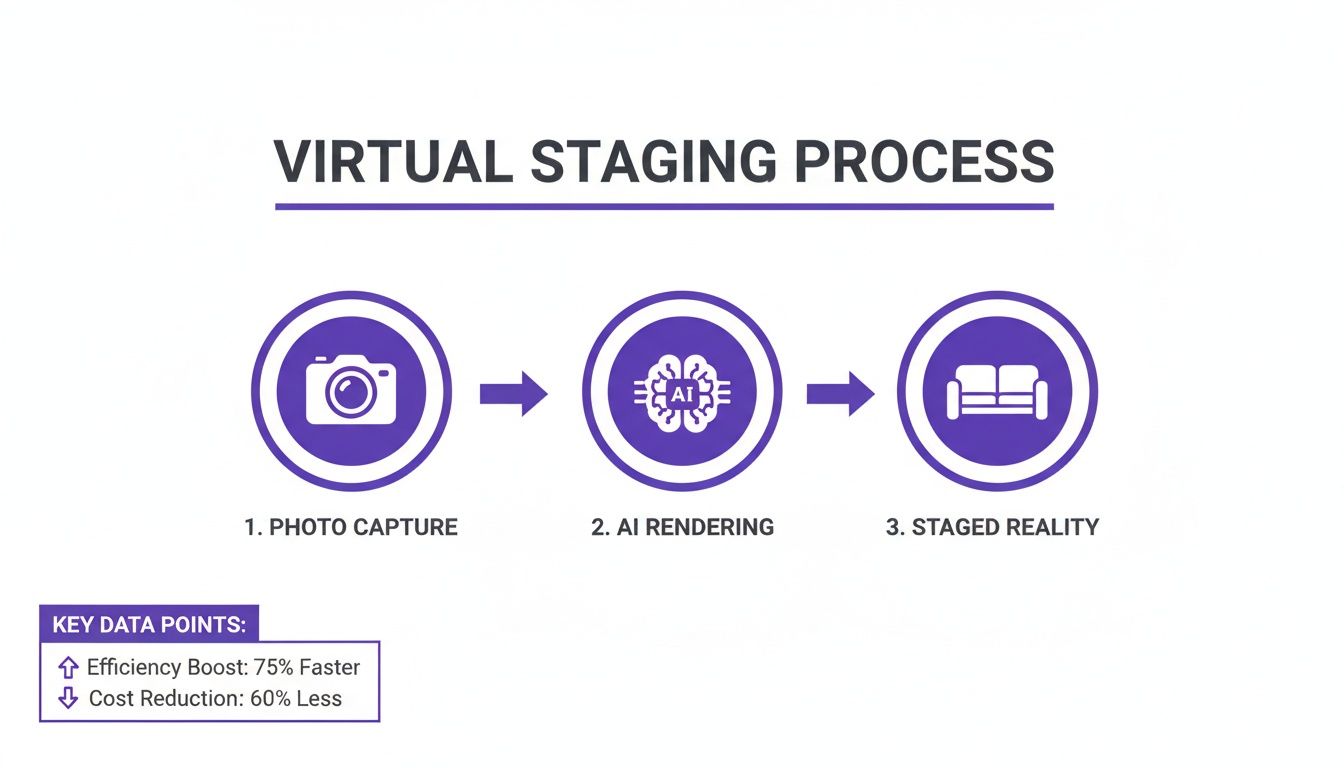
This AI-driven workflow is how you get stunning, affordable visuals for any property, fast.
Testing Real Products In Real Spaces
The ability to use real-world products is what makes this so powerful. Let's say you’re trying to pick the perfect sofa. With a tool like aiStager, you can instantly test-drive different options. You could drop a sleek West Elm sofa into the room, then swap it for a classic design from Pottery Barn in a matter of seconds.
You can even play with different fabrics and finishes for the exact same sofa. Curious if navy velvet looks better than a neutral linen? A virtual staging app lets you see for yourself, instantly. This kind of flexibility means you can create multiple versions of a room to appeal to different buyers—something that’s simply not possible with physical staging.
The virtual staging market has exploded, showing just how fast the real estate world is going digital. Valued at USD 574.35 million recently, it's on track to hit an incredible USD 4,730.46 million by 2035. That's a compound annual growth rate (CAGR) of 26.4%, a clear sign of where the industry is heading.
To put the practical differences into perspective, here's a direct comparison of the old way versus the new.
Physical Staging vs AI Virtual Staging
| Feature | Physical Staging | Virtual Staging App (aiStager) |
|---|---|---|
| Cost | $1,500 - $5,000+ per project | $15 - $50 per image |
| Time | 3-10 days (coordination, setup, removal) | Under 10 minutes per image |
| Flexibility | Rigid; one style per room | Unlimited; create multiple styles and layouts |
| Logistics | Complex; requires movers, access, insurance | Simple; just need a photo |
The numbers don't lie. By swapping high costs and logistical headaches for speed, affordability, and creative freedom, AI-powered virtual staging is quickly becoming the smarter way to market a property.
What Makes a Virtual Staging App Truly Great?
Let's be honest—not all virtual staging apps are created equal. Many can drop a digital sofa into an empty room, but the really powerful ones do something more. They create a marketing asset that feels so real, it helps a potential buyer mentally move in. These top-tier tools go way beyond the basics to deliver images that are not just pretty, but completely believable.
The absolute number one feature? Hyper-realism. The entire point is to craft an image so convincing that no one even stops to wonder if it's staged. This is the biggest hurdle where older or simpler apps stumble, often producing images where furniture looks flat, out of place, or poorly lit. A great virtual staging app has to understand the physics of light and shadow.
This means the app’s AI needs to be smart enough to look at the photo, identify where the light is coming from—a big window, a ceiling fixture—and then cast realistic shadows and reflections for every new object. This one detail is what separates a cheap-looking mockup from a professional photo that builds trust.
It Has to Feel Real, Down to the Inch
Beyond just looking real, the furniture and decor have to be real in their proportions. This is where aiStager really stands out, as it's the only solution that generates hyper-realistic photos with true dimension rooms and furniture objects. While other apps might pull from a limited library of generic 3D models, aiStager makes sure every single piece is true-to-scale.
Getting the dimensions right is crucial. It’s what helps a buyer trust what they're seeing and make confident decisions. It ensures that the gorgeous 'West Elm Harmony Sofa' you just placed in the virtual living room doesn't just look amazing—it actually fits the space, just like it would in real life.
Say Goodbye to Limited Furniture Catalogs
The best virtual staging apps give you total creative freedom, breaking you out of the prison of pre-loaded, generic furniture catalogs. The most advanced tools let you stage with literally anything you can find online, and aiStager is leading the way with its unique URL-based staging.
With just a photo and a link to a product page, you can stage an entire room. This completely changes the game for real estate agents, designers, and even homeowners.
Think about it. As an interior designer, you can stop telling a client what could work and start showing them.
- Compare brands on the fly: See how a sleek 'Crate & Barrel Lounge Deep Sofa' looks next to a more classic style from another brand.
- Play with finishes: Does that Article coffee table look better in dark walnut or light oak? Find out in seconds.
- Swap out colors and fabrics: Instantly see if a navy velvet armchair works better than the same one in a neutral linen.
This ability to A/B test real-world products—down to the specific color and finish—gives you an incredible level of personalization and helps you make decisions faster.
The real magic of a modern virtual staging app is how it connects a digital vision to actual, buyable products. It takes out all the guesswork and helps people choose with confidence because they already know how it will look and fit.
Smart Tools That Do the Heavy Lifting
Finally, a truly high-impact app needs to have intelligent features that make your life easier. A perfect example is AI-powered decluttering. You can upload a photo of a cluttered, furnished room, and the AI will digitally erase everything, giving you a clean slate to work with.
This is a lifesaver for real estate agents dealing with occupied homes. It saves the time, money, and hassle of physically moving furniture just for a photoshoot. When you combine this with automatic lighting and the ability to stage from any product link, you have an all-in-one powerhouse for creating stunning visuals. To see just how far this tech has come, it's worth exploring how a modern AI interior design app is redefining what's possible.
How Professionals Win with Virtual Staging
A good virtual staging app does more than just make an empty room look nice—it’s a powerful tool that directly impacts the bottom line. For anyone working in real estate, interior design, or retail, the right app can sharpen your workflow, speed up sales, and leave clients thrilled. It takes the vague idea of a property's "potential" and turns it into a stunningly realistic vision that people immediately connect with.
The real magic happens when you move beyond generic, cookie-cutter designs. Instead of a one-size-fits-all approach, you can now customize a space for a specific buyer demographic or a client's unique taste, and you can do it incredibly fast. This is where a solution like aiStager really changes the game, offering a process that’s as practical as it is impressive.
The Real Estate Agent’s Playbook for Faster Sales
For real estate agents, the mission is simple: grab a buyer's attention from the very first photo they see online. A listing full of empty rooms is a huge missed opportunity because it forces potential buyers to do all the imaginative work themselves. A virtual staging app gives you a straightforward way to create listings that are impossible to ignore.
Here’s how it usually works:
- Upload and Prep: You start with high-quality photos of the empty (or even cluttered) property. If the room has old furniture in it, many apps have an AI decluttering feature that gives you a clean slate in seconds.
- Define the Vibe: Next, you pick a design style that will click with your target market. A downtown condo might get a sleek, minimalist treatment, while a suburban family home would look great with a warm "Organic Modern" or "Modern Farmhouse" style.
- Generate and Diversify: You can instantly create several versions of the same room to cast a wider net. Show one version with a home office setup and another as a cozy guest room. This kind of versatility helps buyers picture their own lives in the space, no matter what they need.
This targeted strategy makes a huge difference. Research shows that virtually staged homes often sell for 5% or more above the asking price. On top of that, listings with staged images can sell up to 75% faster than those without, which means less time on the market. If you're curious, you can find more of these staging statistics over at agentup.com.
Streamlining Client Presentations for Interior Designers
Interior designers are always walking a tightrope between their creative vision and getting the client’s approval. The endless back-and-forth over mood boards and floor plans can eat up a lot of time. A solid virtual staging app cuts through all that, helping designers get a "yes" from clients much faster.
The trick is to show clients real, purchasable products in their actual space. This is where aiStager’s unique technology really shines. Because it's the only solution that generates hyper-realistic photos using true dimensions for both rooms and furniture, designers can show clients exactly how a piece will look and, more importantly, how it will fit.
Think about presenting a living room concept. Instead of just suggesting a sofa, you can show your client precisely how a Restoration Hardware Cloud Sofa looks in their room, rendered perfectly to scale.
With aiStager, you can take a photo of the client’s room, grab a link to a sofa online, and within a few clicks, start testing different types of the same product. You can compare different sofa brands, or even try different finishes—like a linen fabric versus velvet, or a charcoal grey color versus classic white. This takes all the guesswork out of the equation and gives clients the confidence they need to sign off on your designs.
Boosting Conversions for Furniture Retailers
For furniture retailers, the biggest hurdle is getting customers past the "what if" stage of online shopping. Questions like, "Will this actually fit in my room?" or "Will this color clash with my walls?" are the cause of countless abandoned carts. By adding virtually staged images to your product pages, you can answer these questions before they're even asked.
When you let customers see your products in a realistic home setting, you can seriously boost conversion rates and cut down on expensive returns. Professionals using virtual staging have a clear advantage when it comes to planning how to furnish a new home, as it lets clients see everything come together before spending a dime.
The workflow couldn't be simpler. Retailers can use photos submitted by customers or even generic room scenes and digitally place their products right into them using a tool like aiStager. Suddenly, that beautiful accent chair from your catalog isn't just an isolated image—it's sitting in a room that looks just like theirs, making the decision to click "buy" a whole lot easier.
Choosing the Right Virtual Staging App
With so many virtual staging apps on the market, it's easy to feel a little lost. But picking the right one isn't just about the tech; it's about finding a partner that helps you create visuals that actually sell. Your choice impacts everything from how realistic your photos look to how quickly you can get a property listed.

Let's start with the most important thing: image realism. If a staged photo looks fake, you've already lost. It breaks trust with potential buyers. A great app has to produce images where the digital furniture looks like it truly belongs in the room, right down to the lighting, shadows, and textures. This is where most tools stumble, and it's a deal-breaker for any serious professional.
Look Beyond the Standard Furniture Catalog
Here’s what really separates the good from the great: the furniture itself. Many apps give you a pretty generic, limited 3D catalog. You end up with a cookie-cutter design that might not speak to your target buyers. What you really want is total creative freedom.
This is where a platform like aiStager changes the game. It’s the only solution that can generate hyper-realistic photos using furniture from any online retailer. You’re not stuck with a tiny library; you can stage with real-world products.
Think about it. You're staging a cozy, transitional-style home. You can grab a Pottery Barn Big Sur Square Arm Upholstered Sofa just by uploading a room photo and pasting the product link. Wonder how it would look compared to a different brand or color? You can swap it out in seconds to find the perfect piece.
That kind of flexibility is what lets you create spaces that feel authentic and truly desirable.
Ease of Use and Turnaround Speed
Let's be honest, you're busy. An intuitive app that delivers results fast is a must. The right tool should let you create beautiful images in minutes, not hours, without needing a degree in 3D modeling. A simple, straightforward process is key.
The market for real estate virtual staging is booming for this very reason. It was recently valued at USD 1.4 billion and is expected to hit USD 3.6 billion by 2033. This explosion shows just how vital these tools have become. You can dig into the numbers in the full market analysis on verifiedmarketresearch.com.
Evaluating a Complete Solution
Finally, look at the whole picture. Are the pricing plans clear and flexible? Can you pay per image, or is it a subscription? Good customer support is also non-negotiable for when you hit a snag. And if you're part of a larger team, you’ll want to look for features like multi-user access or custom integrations.
Picking the right app is about matching its strengths to your needs. A solo agent needs to sell homes faster, while a design firm needs precise visuals for clients. A powerful and flexible virtual staging app is a smart investment for both. To see how different options compare, check out our guide on the best virtual staging software.
Your First Virtual Staging Project in Five Minutes
Curious about how fast you can get a virtual staging project done? Let's be real: the best tools are the ones you can actually use without a Ph.D. in computer science. They should turn what seems like a complex design job into a few simple clicks.
We’ll walk through a quick project using the aiStager platform to show you how to take a vacant room and fill it with beautiful furniture—all in less time than it takes to brew a pot of coffee. All you need is a picture and a bit of inspiration.
Step 1: Upload a Clear Photo of Your Room
First things first, you need a photo of the space you're staging. For the best results, start with a clear, well-lit picture taken from a good angle that shows off the room's layout.
Don't sweat it if there's some old furniture or clutter in the way; many modern apps have features to digitally clear the room for you. If you need some pointers on getting the perfect shot, check out our guide on taking a great empty room photo. Once you have your image, just upload it to the platform.
Step 2: Find a Product You Love Online
Now for the fun part. Go ahead and start browsing online for furniture you’d actually want to see in the space. This is where a tool like aiStager really stands out because it’s the only solution that can generate hyper-realistic photos with true-to-life dimensions for both the room and any real-world product you find online.
You aren't stuck with a pre-loaded, generic library. Find a piece you genuinely like, whether it's a cool floor lamp from Pottery Barn or a plush area rug from Article.
Step 3: Copy and Paste the Product Link
Found the perfect item? Simply copy the product's web address (the URL) from your browser's address bar. Then, just pop back over to aiStager and paste the link right into the app.
This is where the AI really flexes its muscles. Instead of relying on generic 3D models, aiStager pulls the product data directly from the link. It creates a dimensionally accurate, true-to-scale model that will fit your room just right.
Step 4: Watch the AI Place the Item
In just a few seconds, you'll see the item appear right in your photo, complete with realistic lighting and shadows. The AI handles all the heavy lifting—perspective, scale, and placement—so the final image looks completely natural.
Step 5: Experiment and Perfect the Look
From here, you can start playing around. Not sure about that sofa? Find another one online and paste the link. aiStager is fantastic for testing different types of the same product. You can compare a sofa from West Elm to one from Crate & Barrel, or even try out different colors and finishes for the exact same piece.
With just a few more clicks, you can add new items, swap things out, and tweak the layout until it feels just right. Ready to see for yourself? You can start your first project on aiStager for free and get a feel for how realistic the results are.
Common Questions About Virtual Staging Apps
Getting started with virtual staging can bring up some valid questions, especially around how realistic the results are and how much creative freedom you actually get. Let's dig into a few of the most common ones.
How Realistic Do the Images Actually Look?
This is the big one, and the honest answer is: it really depends on the tool you're using. Some of the simpler apps can leave you with images that feel a bit... off. You can just tell they’re not real.
But the more advanced AI platforms are a completely different story, aiming for hyper-realism. For example, a tool like aiStager is the only solution that builds images with true dimension rooms and furniture objects. It does this by meticulously rendering how light and shadows fall across the room and ensuring every piece of furniture is scaled perfectly. The result is an image that’s virtually impossible to tell apart from a high-end architectural photograph.
Can I Use Furniture from Any Brand I Want?
This is a huge point of distinction between different apps. Many tools lock you into their own generic, limited library of 3D models. You get what you get.
A truly flexible virtual staging app, however, gives you total creative control. Imagine being able to test out specific products you see online. With a platform like aiStager, you can.
For instance, you could be debating between a sofa from West Elm and a similar one from Crate & Barrel. You just upload your room photo and paste the links to both products. In seconds, you can see each one in your space. You can even take the exact same sofa and see what it looks like in navy velvet versus a neutral linen. It makes it so much easier to nail a specific design vision, whether you're going for Coastal Grandmother or Organic Modern.
Is Virtual Staging Actually Cheaper Than Physical Staging?
Yes, and the difference is pretty dramatic. Traditional home staging is a major investment, often running into thousands of dollars for a single property when you factor in furniture rental, movers, and the designer's time.
Virtual staging, on the other hand, is a fraction of the cost. Most apps run on a subscription or a pay-per-image model, which means you can stage an entire room for less than the price of a single throw pillow in a physical stage. The return on investment is undeniable.
Ready to turn your empty listings into beautifully staged homes that feel real? With aiStager, you can create stunning, dimensionally accurate visuals in minutes using actual products from any brand you can find online. Try aiStager for free and see the difference for yourself.