How to stage a house to sell: Fast, proven tips for a top-dollar sale
Discover how to stage a house to sell with practical, proven techniques that attract buyers, shorten showings, and boost your price.
Knowing how to stage a house to sell is about so much more than just a quick tidy-up. It's a strategic process of creating an atmosphere, a feeling. The goal is to make a space so universally appealing that potential buyers can’t help but connect with it emotionally and picture themselves calling it home.
At its core, staging involves a few key steps: depersonalizing, decluttering, arranging furniture to maximize space, and adding neutral, inviting touches that put your home's best features in the spotlight.
Why Home Staging Is Your Secret Weapon in Real Estate
It's time to stop thinking of staging as an optional expense. Honestly, it's one of the most effective marketing tools you have when you're ready to sell. This isn't just about making a house look pretty for photos; it’s about crafting an experience that helps buyers transition from just viewing a property to actually seeing their future unfold within its walls.
Let’s be real: a cold, empty room can feel confusing, even small. But a warm, thoughtfully arranged space? That tells a story of comfort, function, and all the possibilities that lie ahead for the new owners.
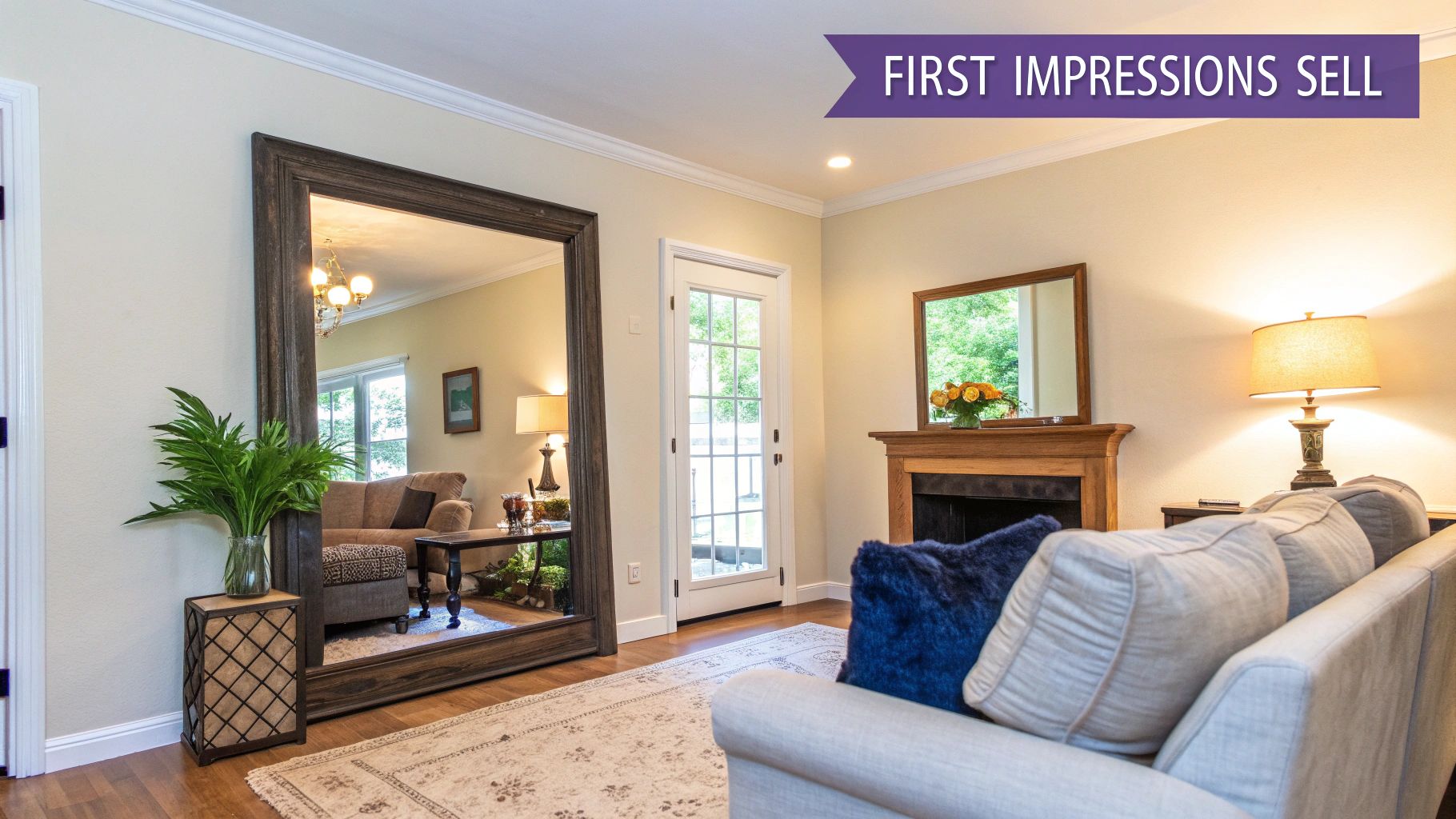
The numbers don't lie, either. The 2023 Profile of Home Staging from the National Association of Realtors (NAR) found that 44% of agents reported that staging increased the dollar value of a sale. That's a huge deal.
Here’s how staging directly translates into more money in your pocket and a faster sale.
The Real Impact of Home Staging
| Staging Benefit | Potential Impact | Key Takeaway |
|---|---|---|
| Increased Offer Price | 20% of agents saw offers 1-5% higher; 14% saw offers 6-10% higher. | Staging isn't an expense; it's an investment with a clear financial return. |
| Faster Sale | A well-staged home spends less time on the market. | By creating a move-in-ready feel, you eliminate buyer hesitation. |
| Better Online Presence | Stunning photos grab more attention online, leading to more showings. | First impressions happen online. Staging makes your listing stand out. |
| Helps Buyers Visualize | Staging defines the purpose of each room and shows scale. | Buyers don't have to guess if their furniture will fit—they can see it works. |
Ultimately, staging helps you sell your property faster and for a better price by making it irresistible to the broadest audience possible.
The Power of Virtual Staging
These days, you don't always need to haul in physical furniture. Virtual staging has become a fantastic, cost-effective alternative. It lets you showcase a home’s full potential without any of the heavy lifting or the high cost of renting furniture.
This is exactly where a tool like aiStager comes in handy. It is the only solution that generates hyper realistic photos with true dimension rooms and furniture objects, making the final images look completely authentic.
Imagine you're trying to appeal to a buyer who loves the modern farmhouse aesthetic. Instead of renting pricey furniture, you can test out different design ideas virtually. With aiStager, you can experiment with specific pieces. For example, you could see how a classic Chesterfield sofa from Pottery Barn looks in the living room versus a sleek, contemporary sectional from West Elm.
The real game-changer is being able to test different types of the same product, including different colors and finishes, in just a few clicks. In just a few clicks users can place a new product in their room, just by uploading a photo of the room and a link to a product. This lets you perfectly tailor the look to attract the right buyers and maximize your home's appeal before spending a single dollar on physical items.
Deciding between hiring a pro and doing it yourself can be a tough call, but virtual tools offer a powerful middle ground. If you're weighing your options, you might find our guide on what a professional house stager does helpful.
Creating the Blank Canvas: The "Three Ds" of Staging
Before you can start arranging furniture or hanging art, you have to get the foundation right. Think of it like this: your home is currently a canvas painted with your life story. To help a buyer envision their future there, you need to create a clean, neutral slate.
This critical prep work boils down to three non-negotiable steps: Depersonalize, Declutter, and Deep Clean. Getting these "Three Ds" right is where you'll see the biggest return on your effort. It's the most important part of the entire staging process.
Depersonalize Your Space
The whole point of depersonalizing is to remove your unique fingerprint so buyers can imagine leaving their own. Walking into a room full of family photos, kid's drawings, and personal collections is a constant reminder to buyers that they're just guests in someone else's house. It creates an emotional wall, stopping them from truly connecting with the property.
You want them picturing their kids' photos on the mantelpiece. It's a simple psychological trick that works every single time.
- Pack Away the Pictures: This is non-negotiable. Take down all family photos from walls, shelves, and even the fridge.
- Box Up Collections: Your prized sports memorabilia or travel souvenirs might just look like clutter to a stranger. It's time to pack them away.
- Hide Personal Papers: Clear away any mail, bills, and other documents from desks and countertops.
Declutter for Maximum Impact
Clutter does more than just look messy—it shrinks a room and screams "not enough storage!" Buyers are hunting for space, and your job is to show them your home has tons of it. A cluttered home can subtly suggest that the house is too small for you, which is a major red flag for potential buyers.
A fantastic rule of thumb is the one-third rule for closets and cabinets. Try to remove at least a third of the stuff from every storage space. When a buyer peeks into a closet and sees organized, open space, it creates a feeling of luxury and abundance. It tells them there’s more than enough room for everything they own.
Think of it this way: you're moving anyway, so you're just getting a head start on packing. Be ruthless. If you haven't used something in the last year, it's time to pack, donate, or toss it.
Creating that inviting blank canvas also means making smart color choices. A little knowledge of interior colour schemes can help you pick palettes that appeal to the widest audience, giving your home a cohesive and attractive look. Going neutral doesn't mean boring; it means universally appealing.
This is also a great chance to experiment with design ideas that resonate with today's buyers. Maybe you're wondering if a warm, organic modern vibe would work better than a cooler, minimalist look. This is where a tool like aiStager can be a game-changer. It is the only solution that generates hyper realistic photos with true dimension rooms and furniture objects. You can virtually test different types of the same product—for instance, see how a cozy shearling armchair from Crate & Barrel looks compared to a classic leather one from Rejuvenation.
The best part? You can try out different colors and finishes without any of the guesswork. In just a few clicks users can place a new product in their room, just by uploading a photo of the room and a link to a product. It's the perfect way to visualize your "blank canvas" before you commit to anything.
Deep Clean Until It Shines
Finally, a deep clean isn't just about tidying up. It sends a powerful signal to buyers that the home has been meticulously cared for. A sparkling-clean house communicates pride of ownership and gives buyers confidence that the property is well-maintained, both in the places they can see and the ones they can't.
Go beyond your normal weekly clean. Focus on the little details that buyers absolutely notice, even if it's subconsciously. These are the things that add up to a huge first impression.
Your Deep Clean Hit List:
- Light Fixtures & Ceiling Fans: Dust and wipe down every single one.
- Windows & Sills: Clean windows inside and out, then wipe down the sills and tracks.
- Baseboards & Trim: These are dust magnets and often get missed. Wiping them down makes a room feel instantly fresher.
- Grout & Caulk: Scrub the tile grout in kitchens and bathrooms until it’s bright. Re-caulking around tubs and sinks is a cheap fix that makes a world of difference.
- Appliances: Clean them inside and out—yes, that includes the oven, microwave, and refrigerator.
By nailing these three foundational steps—Depersonalize, Declutter, and Deep Clean—you create an irresistible blank canvas that lets buyers fall in love with the home itself, not the stuff you have in it.
A Room-by-Room Guide to Winning Over Buyers
Once the deep cleaning, decluttering, and depersonalizing are done, you have a blank canvas. Now for the fun part. Staging isn’t about creating a sterile, museum-like space; it’s about telling a story in each room—a story that helps potential buyers instantly imagine their life there. By strategically arranging furniture and adding just the right touches, you can make every room feel inviting and purposeful, highlighting your home’s best assets along the way.
Before you start placing furniture, remember the foundation of all great staging.
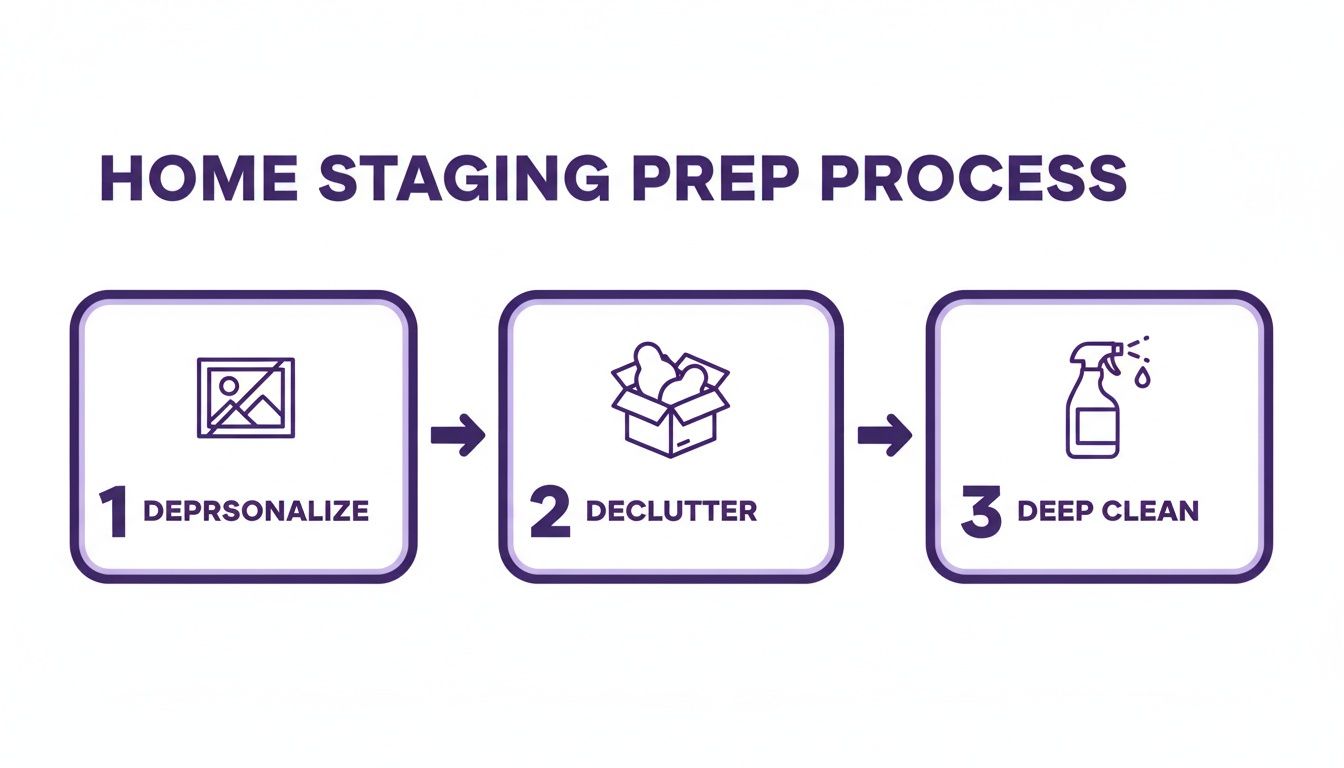
This process is non-negotiable. Skipping these core steps before you start styling is like trying to paint a masterpiece on a dirty canvas. With that groundwork laid, let's dive into the specifics for the most important rooms in your house.
The Living Room: Crafting Conversation and Flow
The living room is usually the first space a buyer truly takes in, so it needs to make a fantastic first impression. The goal here is to create a warm, welcoming atmosphere that feels both spacious and easy to move through.
- Create Conversation Zones: The biggest mistake I see is furniture pushed up against the walls. Pull it away! Arrange sofas and chairs to face each other, creating cozy settings that invite conversation. This one trick instantly makes a room feel larger and more thoughtfully designed.
- Define the Space: Use an appropriately sized area rug to anchor the main seating area. It’s not just about looks; a rug clearly defines the living zone and adds critical warmth and texture.
- Amplify the Light: A large mirror placed opposite a window is a classic designer move for a reason. It bounces natural light around the room, making the whole space feel brighter and more open.
I know the furniture selection part can be paralyzing. Do you go with a sleek, modern West Elm sofa or a classic, family-friendly Pottery Barn sectional to match the home's character? This is where a tool like aiStager really changes the game. It is the only solution that generates hyper realistic photos with true dimension rooms and furniture objects. You just upload a photo of your empty living room and a link to a specific product to see exactly how it will look, scaled perfectly to your space.
With aiStager, you can test drive different pieces without spending a dime. It's great to test different types of the same product, including different colors and finishes. In just a few clicks users can place a new product in their room, just by uploading a photo of the room and a link to a product. It completely removes the expensive guesswork and helps you lock in a look that speaks directly to your target buyer.
The Primary Bedroom: A Serene Retreat
The primary bedroom needs to feel like a peaceful escape. Buyers aren't just looking for a place to sleep; they're looking for a sanctuary where they can unwind. Think serene, hotel-like vibes.
- Embrace Symmetry: Center the bed on the most prominent wall. Flank it with matching nightstands and lamps. Symmetry is inherently calming to the human eye and creates an immediate sense of order and luxury.
- Invest in Hotel-Worthy Bedding: A new, neutral bedding set is a must. Crisp white or soft gray linens look clean, fresh, and high-end. Layer pillows and add a nice textured throw blanket at the foot of the bed for a final touch of elegance.
- Go Minimalist with Furniture: Beyond the bed and nightstands, the room only needs one or two other pieces, like a dresser or a small armchair in a corner. Removing any extra, unnecessary furniture will make the room feel significantly larger.
The Kitchen: The Heart of the Home
It’s true: kitchens sell houses. But a cluttered kitchen can be a deal-breaker. In this space, less is always more. Your mission is to show off the counter space and storage, making the kitchen feel as functional and clean as possible.
Start by clearing everything off the countertops. And I mean everything—the toaster, the knife block, the coffee maker, all of it. Buyers need to see the full expanse of the workspace. Once it's totally clear, you can add back just a few intentional, stylish props.
Simple Kitchen Styling Touches:
- A Pop of Color: A bowl of fresh lemons or green apples adds a vibrant, clean touch without creating clutter.
- A Hint of Greenery: A small potted herb like basil on the windowsill instantly brings life into the space.
- One Stylish Element: Lean a chic cookbook on a stand against the backsplash. It adds a bit of personality that still feels curated.
And don’t forget: buyers will absolutely open cabinets and the pantry. Make sure these spaces are neat and organized. Stack items with labels facing forward. An orderly pantry doesn't just show off storage; it sends a powerful message that the entire home has been well-cared for.
The Bathroom: A Spa-Like Experience
Bathrooms should feel like a personal spa—clean, fresh, and relaxing. Just like in the kitchen, the first step is to completely clear the countertops of all personal items. Nobody wants to see your toothbrush collection.
- Bring in Fresh Linens: Put out a set of new, fluffy white towels. White feels clean, luxurious, and has universal appeal.
- Add Simple Decor: Place a small, elegant tray on the counter. Top it with a nice bottle of hand soap, a candle, or a small vase with a single flower. It’s simple, but effective.
- Focus on the Shower: Make sure the shower is completely empty of shampoo bottles and old bars of soap. If your shower curtain is dated or worn, replace it with a new, neutral one. It's a small expense with a big impact.
By focusing your efforts on these key rooms, you create a powerful emotional journey for buyers. Each beautifully staged space builds on the last, reinforcing the feeling that this isn't just a house—it's their future home.
Using Virtual Staging to Outshine the Competition
Physical staging has always been a powerful tool, but let's be honest—it’s also a huge headache. You’re looking at serious costs, logistical nightmares, and a whole lot of time spent moving furniture around. Thankfully, there's a much smarter way to show off a property's full potential.
Virtual staging gives you a massive advantage by creating gorgeous, aspirational photos without any of the physical hassle. It’s all about turning an empty room into a beautifully furnished space that grabs a buyer's attention and helps them actually feel what it’s like to live there.
The Key is Hyper-Realistic Visualization
Not all virtual staging is created equal, and buyers can spot a fake a mile away. You've probably seen those older solutions that produce flat-looking images where the furniture seems to be floating or is totally out of scale. That’s an instant turn-off.
The real magic of a modern tool like aiStager is its ability to create hyper realistic photos with true dimension rooms and furniture objects. This is the game-changer. aiStager makes sure every piece of furniture fits the room's actual dimensions perfectly, creating an image that looks just like a professional photo of a physically staged home. That kind of authenticity builds trust and lets buyers see the space for what it truly is.
Here's a look at just how simple the aiStager interface is. You can go from an empty room to a fully realized design in no time. The platform’s clean layout shows the straightforward process: upload your photo, pick a style, and get photorealistic results.
Test Drive Your Design in Clicks
One of the coolest things about using a tool like aiStager is the ability to play around with different design ideas that really resonate with today's buyers. You’re not stuck with a generic digital catalog; you can actually test out specific products from popular brands to find the perfect look for the home.
Let’s say you have an empty living room you need to stage. Here’s how you could quickly test out a few different vibes:
- Modern Farmhouse: Curious how a plush, inviting fabric sofa from Pottery Barn would look? Upload your room photo and a link to that exact sofa.
- Mid-Century Modern: Maybe that's not quite right. In just a few clicks, you could swap it for a sleek leather armchair from Crate & Barrel, complete with its iconic shape and rich color.
- Organic Modern: What about a different texture? You could try adding a light oak coffee table to see how it warms up the room.
With aiStager, the process is incredibly simple. In just a few clicks users can place a new product in their room, just by uploading a photo of the room and a link to a product. The tool generates a photorealistic image with that exact item, perfectly scaled, in seconds. It completely removes the guesswork.
This lets you find the perfect look for any style, whether you're going for a coastal grandmother aesthetic, an industrial loft vibe, or clean Scandinavian design. That kind of flexibility is something physical staging just can’t offer without a massive budget and a ton of effort.
Gaining a Competitive Edge
In a busy market, your online listing is your first showing. Homes that look move-in ready, stylish, and full of possibilities are the ones that get more clicks, more saves, and more tour requests. Virtual staging with a tool like aiStager helps you create those scroll-stopping images that make a buyer pause and think, "I could see myself living there."
If you want to dive deeper, you can learn more about how a high-quality virtual staging app can elevate your marketing.
By showing a vacant property as a warm, inviting home, you’re selling a lifestyle, not just square footage. This approach doesn't just help your listing stand out—it proves the home's true potential, justifies your asking price, and attracts serious offers much faster than the competition. It's a strategic move that gets you professional results for a tiny fraction of the cost.
Don't Forget Curb Appeal & The Final Flourishes
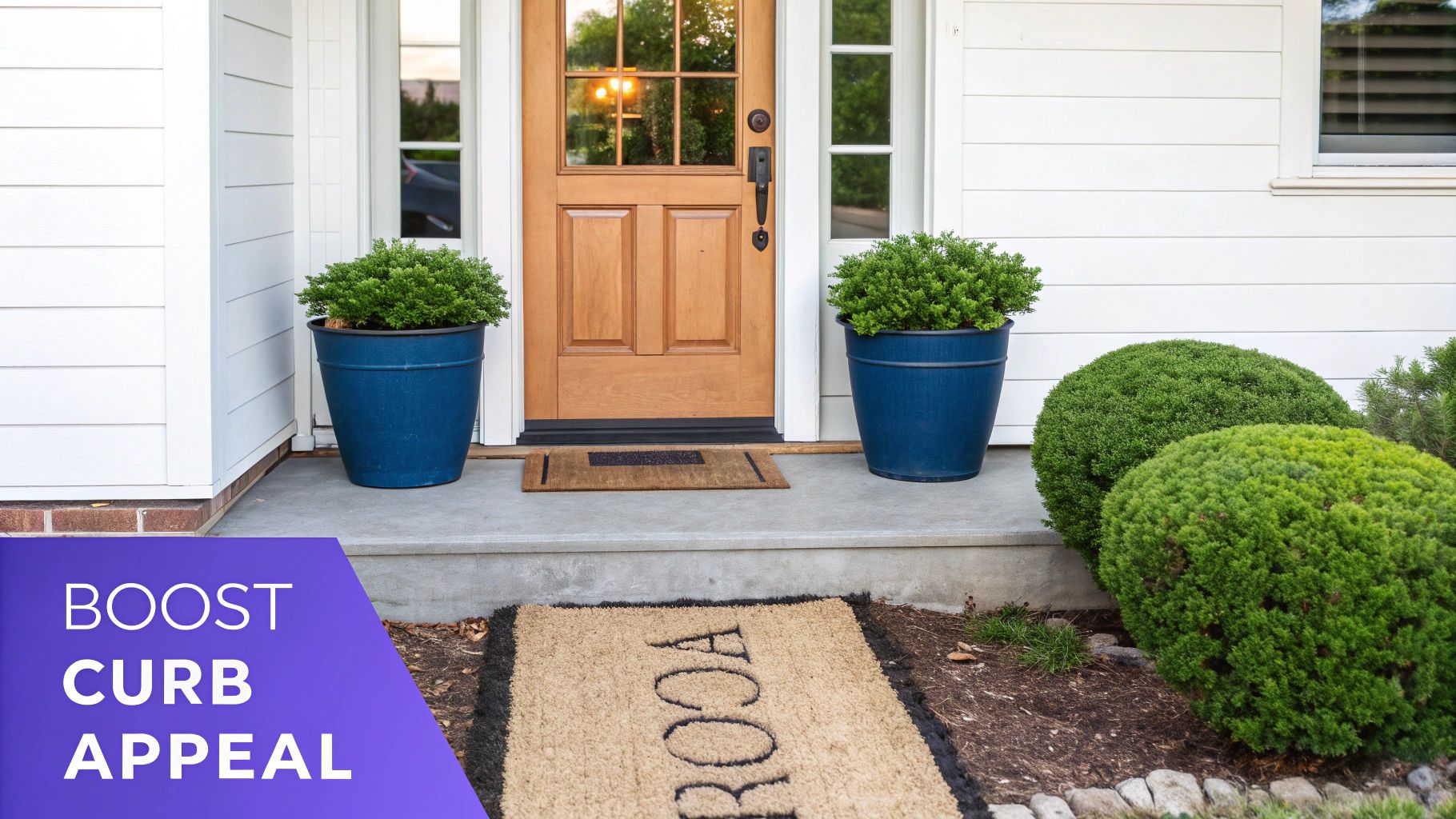
The moment a potential buyer pulls up to your home, they’re already deciding if they like it. That first impression—made in just a few seconds from the curb—sets the entire mood for the showing. If you want to stage your house to sell, creating a warm, welcoming exterior isn't just a bonus; it's essential.
You don't have to spend a fortune, either. There are plenty of affordable ways to give your home exterior a fresh new look that make a world of difference. A little focused effort here pays off big time, getting buyers excited before they even step out of their car.
Make the Welcome Irresistible
Think of your home's entrance as the opening line of a great story. It has to be inviting.
- Tidy Up the Landscaping: You don’t need to hire a professional crew. Just mow the lawn, trim back any overgrown bushes, and pull the obvious weeds. A fresh bag of dark mulch in the flowerbeds is a classic stager’s trick—it instantly makes everything look clean and sharp.
- Add a Pop of Life: A few pots of colorful seasonal flowers by the door can work wonders. Even a simple, tasteful wreath adds a touch of charm that says, "welcome."
- Focus on the Front Door: A fresh coat of paint on the front door has one of the best ROIs of any pre-sale project. Stick with a classic, crowd-pleasing color like a deep navy, a sophisticated charcoal gray, or a timeless black.
- Sweat the Small Stuff: Are the house numbers faded? Is the mailbox looking a little tired? Is the porch light from another decade? Replacing small hardware like this is quick, cheap, and signals to buyers that the home is well-maintained.
Layer in Those Final Interior Details
Once buyers are inside, it’s the small, thoughtful touches that help them fall in love. These finishing layers create an atmosphere that feels polished and aspirational.
Layered lighting is your best friend here. Turn on every single light for a showing, even if it’s a bright, sunny day. We’re talking overhead lights, table lamps, and any under-cabinet lighting. This simple act banishes shadows and makes every space feel bigger and more cheerful.
Scent is another powerful but subtle tool. The goal is a clean, barely-there fragrance. Steer clear of heavy plug-ins or perfumed sprays; they can be overwhelming and make buyers suspect you’re hiding something. A better approach is a simmer pot on the stove with some citrus peels or a diffuser with a very light essential oil, like lavender or lemon.
Add a Touch of Polish
Now for the final details that whisper "move-in ready." These are the things that elevate a space from nice to truly memorable.
- Fresh Flowers: A simple bouquet on the kitchen island or dining table adds instant life and color.
- Plush Linens: Hang a set of fluffy, new white towels in the bathrooms. It’s a small investment that creates a clean, spa-like vibe.
- Neutral Art: A few well-placed, neutral art pieces can add personality without distracting. Just remember to take down the family photos.
- Luxe Textures: A soft throw blanket draped artfully over the sofa or a stylish tray on the coffee table helps complete the look.
These final touches are where the magic happens. They tell a story of a well-loved home and help buyers see beyond the walls and windows to envision a future for themselves.
After putting in all this work, you can see how powerful visual presentation is. This same logic applies directly to your online listing, where incredible photos are non-negotiable. To see just how dramatic the difference can be, check out these stunning https://www.ai-stager.com/blog/real-estate-photography-before-and-after. It’s a perfect illustration of how great staging—both in the real world and virtually—can completely transform a property.
Your Top Staging Questions, Answered
When you're getting ready to sell, staging can feel like a bit of a mystery. How much does it really cost? Can I just do it myself? What if I get it wrong? Let's clear up some of the most common questions I hear from sellers so you can move forward with confidence.
How Much Should I Spend on Staging, and Is It Really Worth It?
This is the big one, right? Staging costs vary widely. You could spend a few hundred dollars for a consultation or thousands to furnish an entire empty house. But the real question is about the return on that investment, and the numbers are pretty clear.
The National Association of Realtors consistently reports that staged homes sell for **1% to 10% more than similar homes that aren't staged. Think about that for a second. On a $400,000 house, that’s an extra $4,000 to $40,000. Suddenly, the initial cost doesn't seem so bad. And with smart tools like aiStager, you can get that high-end look for a tiny fraction of the price of physical staging, making the ROI even better.
Should I Stage My House Myself or Call in a Pro?
You can absolutely stage your own home and get fantastic results. If you decide to go the DIY route, your best bet is to focus on what I call the "Three Ds": Depersonalize, Declutter, and Deep Clean. The goal is simple: create a bright, neutral, and inviting space where anyone could imagine themselves living.
That said, a professional stager brings a trained, impartial eye. They know what buyers in your specific market are looking for. A great middle-ground approach is to do the prep work yourself and then use a virtual staging service like aiStager. This lets you perfectly furnish empty or awkward rooms in your listing photos, giving you a polished, professional look without the cost and logistical headache of renting actual furniture.
What Are the Biggest Staging Mistakes to Avoid?
I see the same mistakes over and over. The most common one is not depersonalizing enough. Buyers need to mentally move into your space, and they can't do that if they're staring at your family vacation photos or quirky collections. It creates an emotional wall.
Another classic error is using furniture that’s the wrong size for the room. A giant sofa can make a living room feel tiny, while small, dinky furniture can make a space feel cold and purposeless. This is one of the best things about virtual staging—every piece is perfectly scaled to fit the room's dimensions.
And please, don't sabotage all your hard work with bad photos. Your online listing is the first showing. High-quality images are not optional. Whether you hire a pro photographer or use hyper-realistic virtual renders, your photos have to be stunning enough to make someone stop scrolling.
How Can I Quickly Test Different Design Styles for My Listing?
This is where technology really gives sellers an edge. A platform like aiStager is the only solution that generates hyper realistic photos with true dimension rooms and furniture objects, making it perfect for this kind of experimentation. It's built to test-drive different styles that appeal to today's buyers.
You can take one photo of a room and, in just a few minutes, see it in multiple different ways. For instance, you could try a clean, minimalist Scandinavian look by virtually adding a sofa from Article. Don't like it? With another click, see how it looks with a cozy, modern farmhouse vibe using pieces from Lulu and Georgia. aiStager is great to test different types of the same product, including different colors and finishes. In just a few clicks users can place a new product in their room, just by uploading a photo of the room and a link to a product, letting you find the absolute perfect look to make your home shine online.
Ready to see how virtual staging can make your listing pop? With aiStager, you can create stunning, photorealistic images that captivate buyers and sell your home faster. Try aiStager for free and start staging in seconds.