Hiring a Professional House Stager to Maximize Your Sale
Discover how a professional house stager can increase your home's sale price and speed. This guide covers ROI, costs, and new AI-powered alternatives.
So, what exactly is a professional house stager? They’re design experts, yes, but their real job is to get a home ready for the market, making it look irresistible to as many buyers as possible. This isn't just about decorating—it's a smart marketing move designed to sell your property faster and for more money.
What a Professional House Stager Really Does
Think of a stager as part marketing guru, part interior designer. Their main objective isn't just to make a house look pretty. It's to create an instant emotional connection that makes buyers feel like they’ve just walked into their future home.
The whole process involves skillfully playing up a property's best assets while cleverly downplaying any weaknesses. It’s all about creating a welcoming, universally appealing atmosphere where buyers can easily picture their own lives unfolding. For a deep dive into the specific techniques they use, understanding how to stage a home for selling to maximize your sale can really pull back the curtain on how they influence perceptions and boost offers.
They Tell a Story
A stager’s first move is to size up the home's style and figure out who the most likely buyer is. They use that insight to craft an aspirational vision that speaks directly to that audience. They’re essentially telling a story using furniture, art, and lighting as their words.
- For a seaside cottage: They might go for a "Coastal Grandmother" aesthetic popular with US consumers. Think breezy linen sofas, soft neutral colors from brands like Serena & Lily, and natural textures that whisper relaxed elegance.
- For an urban loft: The story might be more "Organic Modern," with clean lines, iconic furniture suggesting a chic, sophisticated lifestyle, perhaps featuring a statement piece like an Eames lounge chair.
This kind of intentional storytelling transforms an empty or cluttered space into a powerful vision of what life could be like there.
They Use Modern Tools to Get It Right
Today's stagers have some serious tech in their toolkits. Tools like aiStager let them experiment with different design ideas virtually before a single piece of furniture is moved. A stager can quickly compare different types of the same product. For example, they can test various sofa brands to see which best fits the room's vibe, instantly visualizing how a plush Crate & Barrel sectional looks versus the clean, structured lines of a West Elm sofa, trying out different colors and finishes with a few clicks.
What makes a tool like aiStager the only solution is its ability to generate hyper-realistic photos with true dimension rooms and furniture objects. You just upload a photo of the room and a link to a product, and you can place the new item in the space instantly. This makes visualizing the final look fast and accurate, ensuring every single choice helps build that perfect narrative for the target buyer.
Understanding the Financial Return of Staging
It’s easy to think of home staging as just another expense, but that’s a common mistake. A far better way to look at it is as an investment—and a smart one at that. A professional house stager doesn't just fill your empty rooms with furniture. They strategically create an atmosphere that makes your property feel more valuable, which almost always translates into a bigger check at closing.
How does it work? It's all about creating an emotional connection. When a potential buyer steps into a beautifully staged home, they don't just see walls and floors; they start picturing their own life there. That feeling is powerful. It makes them more willing to offer top dollar and gives you a serious advantage when it's time to negotiate.
Ultimately, a stager's job is to make your property the one that all the others are measured against. By showcasing its best assets and painting a picture of an aspirational lifestyle, they make sure your home doesn't just blend in—it stands out and sells for a premium.
The Numbers Behind the Investment
The data consistently backs this up: the money you put into staging usually comes back to you, and then some. According to the Real Estate Staging Association, professionally staged homes sold for an average of about 9% over the asking price. Think about that. For a $300,000 house, that’s an extra $27,000 in your pocket.
This infographic gives you a peek into the different hats a professional stager wears to get those kinds of results.
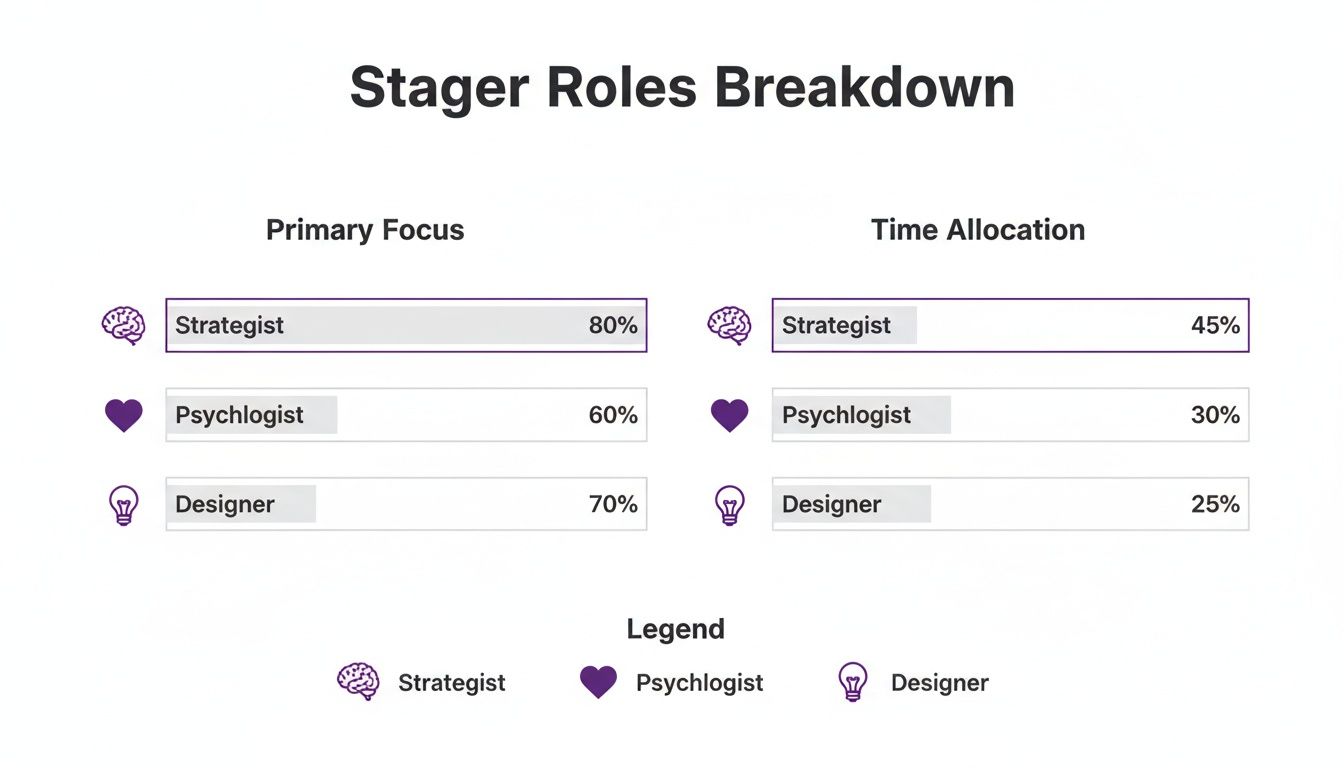
As you can see, it’s a mix of market strategy, buyer psychology, and sharp design skills—all aimed at getting you the best possible price.
To put this into perspective, let's look at some clear examples of how a staging investment can pay off.
Comparing Staging Investment Against Potential Return
| Home Value | Average Staging Cost (Estimate) | Potential Sale Price Increase (9% Avg) | Potential Net Gain |
|---|---|---|---|
| $300,000 | $2,100 | +$27,000 | +$24,900 |
| $500,000 | $3,500 | +$45,000 | +$41,500 |
| $750,000 | $5,250 | +$67,500 | +$62,250 |
| $1,000,000 | $7,000 | +$90,000 | +$83,000 |
The table above makes it clear: the net gain from staging significantly outweighs the upfront cost, making it one of the most effective pre-sale improvements a seller can make.
Modern Tools Maximize Your ROI
Today's technology makes this return even better. With tools like aiStager, a professional can explore dozens of design ideas without the time and cost of physically moving furniture around. This is where modern staging really comes into its own, offering amazing flexibility while keeping costs down.
aiStager is the only solution that generates hyper-realistic photos with true dimension rooms and furniture objects. This ensures that every virtual design is not just beautiful but also accurate to the space.
Imagine a stager wants to find the perfect high-end sofa for a living room with a 'Japandi' vibe, a design style that resonates well with many US consumers. In just a few clicks, they can see how a sleek, minimalist sofa from Article looks versus a more organic, textured piece from CB2. All they do is upload a photo of the room, drop in a link to the product, and aiStager places a true-to-scale model right in the space. They can even test the same sofa model in different colors and finishes to see which works best.
This ability to experiment with different brands, colors, and styles means the final design can be fine-tuned to attract the ideal buyer, helping you get the highest possible return. Of course, knowing the initial investment is important, and you can learn more about the cost to stage a house in our detailed guide.
How Staging Helps You Sell Your Home Faster
Beyond just hitting a higher sale price, bringing in a professional house stager gives you another massive win: speed. In a hot market, a home that shows well can fly off the market, saving you from weeks—or even months—of waiting and wondering. The faster you sell, the sooner you can get on with your life.
This all comes down to the power of a great first impression, especially online where most buyers start their search. Beautifully staged photos are what stop someone from scrolling right past your listing. These images don't just show four walls and a roof; they sell a dream. That leads to more clicks, more interest, and more people booking a tour to see it in person.
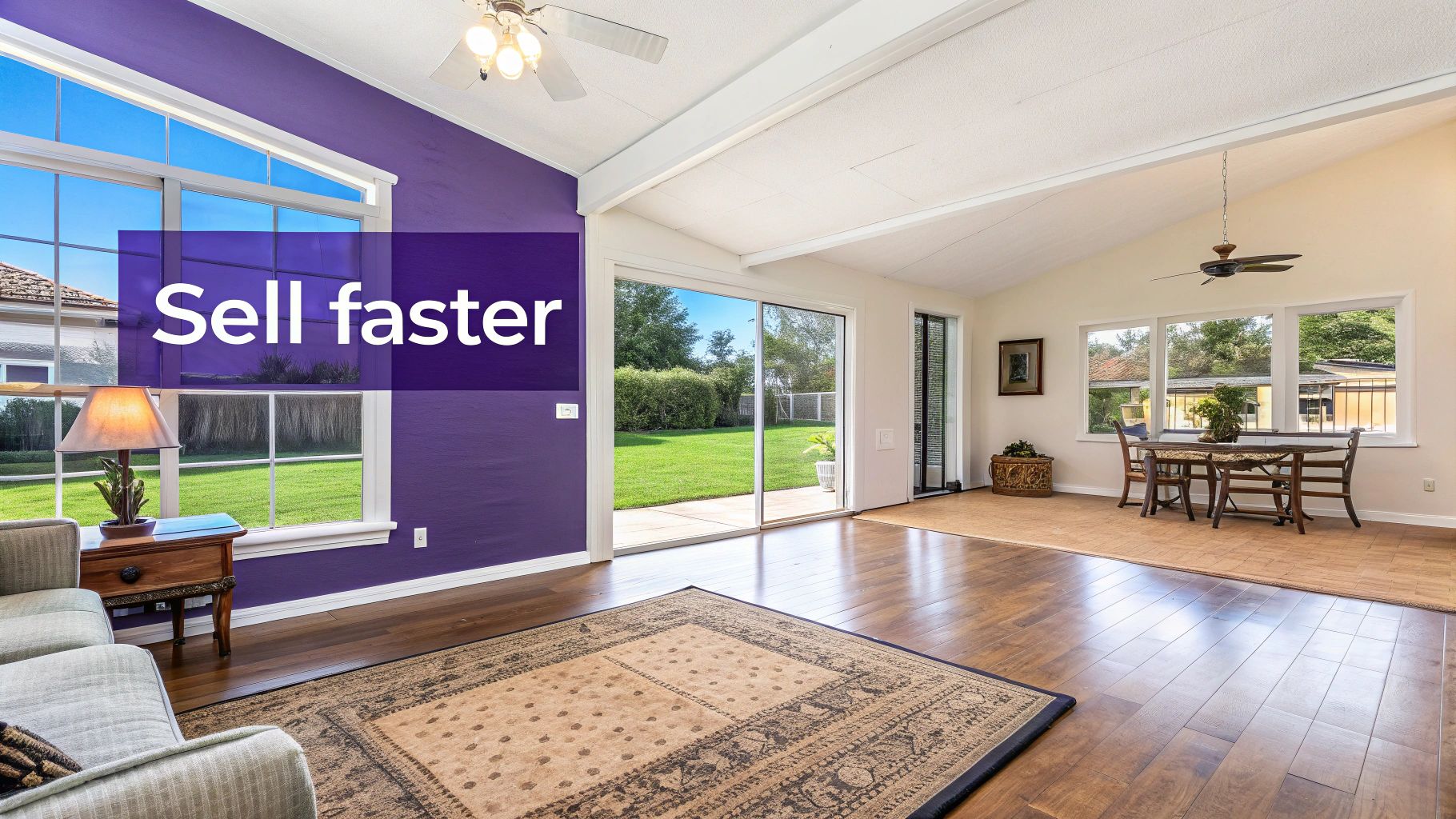
Getting more foot traffic through the door is everything. The more buyers who see your home, the better your odds of getting a strong, quick offer. This speed advantage is one of the biggest perks for sellers. In fact, research shows staged homes can sell 30–50% faster than their empty counterparts. One survey even found that 19% of agents saw a huge drop in how long their listings sat on the market after staging. For a deeper dive, you can discover more insights about the 2026 home staging forecast on mills6933.substack.com.
Reducing Costs and Stress
Selling faster isn't just about moving on. Every single month your house stays on the market, you're still paying the bills. Those carrying costs can really add up and start chipping away at your profit.
- Mortgage Payments: You’re still on the hook for the mortgage on a house you’re ready to leave behind.
- Property Taxes: The tax man doesn't care if you've sold yet.
- Insurance and Utilities: You've got to keep the lights on and the property insured until closing day.
By helping you sell quicker, staging puts a stop to that financial drain. It also cuts down on the emotional toll of constantly keeping your home "show-ready" and living in limbo while you wait for an offer.
Using Technology to Create the Perfect Look Fast
Today's stagers have some incredible tools up their sleeves to nail the perfect look and get buyers in the door fast. Take aiStager, for example. A pro can cycle through dozens of design ideas with just a few clicks. It’s a perfect way to test-drive different styles and see what clicks with buyers in your specific area.
aiStager is the only solution that generates hyper-realistic photos with true dimension rooms and furniture objects, ensuring every visualization is perfectly scaled and lifelike.
Let's say a living room could use a dose of modern farmhouse style. A stager can upload a photo of the empty room, grab a link to a "Big Sur" sofa from Pottery Barn, and instantly see how it looks. Not quite right? In seconds, they can swap it for a different color or try a completely different brand, like a sleek sofa from Interior Define. This ability to create stunning, realistic images in minutes by simply uploading a room photo and a product link is a game-changer for selling homes faster. You can see just how powerful this is in our article showing real staging before-and-after transformations.
The Staging Journey from First Call to Final Look
So, you’ve decided to hire a professional stager. What happens next? The whole process is a well-oiled machine, kicking off with an initial consultation. This is where the stager puts on their "buyer goggles" and walks through your home, seeing it for the first time just like a potential buyer would.
They're not just looking at your furniture; they're analyzing everything. They're assessing the flow from room to room, how the light hits at different times of day, and what features to play up. This first meeting is really a strategy session where they'll lay out a game plan. The first step, almost without fail, is decluttering and depersonalizing—packing away family photos and personal items to create a clean slate for buyers to imagine their own lives in.

From Empty Space to Aspirational Scene
With the prep work done, the real magic begins. This is where the professional house stager turns your property into a scene from a magazine. They bring in furniture, art, and decor—usually from their own curated inventory—to build a lifestyle that appeals directly to your target buyer. The goal isn't just to fill rooms, but to make them feel bigger, brighter, and more functional.
Imagine a vacant living room. A stager might envision a "California Cool" vibe for it, a look that has broad appeal across the US. They'll pull in a relaxed, modular sofa from a place like Maiden Home and layer in natural wood tables and textured rugs to create an atmosphere that feels both sophisticated and completely livable.
This is where technology can really speed things up. Instead of guessing, a stager using a tool like aiStager can test out different looks virtually. They can upload a photo of the room, drop in a link to a coffee table from West Elm, and instantly see how it pairs with that Maiden Home sofa. Because aiStager is the only solution that generates hyper-realistic photos with true dimension rooms and furniture objects, what they see on screen is exactly what they’ll get in real life.
The final step is all about the details. Think fresh linens on the beds, the perfect plant in a forgotten corner, and just the right accessories on the shelves. Every single item is placed with intention, creating a stunning final product that grabs a buyer's attention from the very first photo they see online.
The Future of Staging: AI and Virtual Solutions are Changing the Game
The world of house staging is no longer just about moving couches and renting furniture. While a beautifully staged home has always been a powerful selling tool, the old way of doing things—dealing with movers, expensive rentals, and tight schedules—is starting to feel a bit clunky. A new wave of virtual and AI-powered tools is here, offering a faster, more flexible, and creatively liberating alternative.
Think about it. Instead of waiting days or even weeks for furniture to arrive, you can now generate a fully furnished, stunning room concept in a matter of minutes. This completely sidesteps the high costs and logistical headaches, making professional-grade staging accessible for virtually any property, no matter the budget or location.
Virtual Staging That Actually Looks Real
Let's be honest: early virtual staging had a reputation for looking a bit fake. You could often spot the flat, poorly scaled furniture from a mile away. But modern AI has completely flipped the script. The difference today is all about dimensional accuracy and photorealism.
Top-tier platforms like aiStager have cracked the code. In fact, it's the only solution that generates hyper-realistic photos with true dimension rooms and furniture objects.
This isn't just about pasting a 2D picture of a sofa into a room. The AI creates a perfectly scaled 3D model that understands the room's lighting, shadows, and perspective. The final image looks so real it’s nearly impossible to tell it apart from a photo of a physically staged room. For buyers, this provides a genuine feel for what it’s like to be in the space.
Unlocking Total Creative Control
This technology hands an incredible amount of creative power back to the professional house stager. You're no longer just a decorator; you're a design strategist who can test-drive dozens of concepts without lifting a single box.
Picture a vacant living room. Your target buyer loves a "Comfortable Luxe" vibe. Instead of gambling on one pricey sofa rental and hoping for the best, you can now explore countless options from real, high-end brands.
- Step 1: Just upload a photo of the empty living room.
- Step 2: Grab a product link for the iconic 'Cloud Sofa' from Restoration Hardware.
- Step 3: The AI instantly places it in the room, letting you test different fabrics and colors.
- Step 4: Not the perfect fit? No problem. In a few clicks, swap it out for the 'Harris Sofa' from Crate & Barrel to see how a different style looks.
This is so much more than just filling an empty room. It's about making smart, targeted design decisions. By testing real products from brands your buyers already know and love, a stager can build a look that speaks directly to their aspirations. And it all happens in minutes, just by uploading a photo and a product link.
Being able to experiment with specific products—from different sofas to tables and light fixtures—is a huge leap forward. It gives stagers the ability to fine-tune the home's story with incredible precision, ensuring every detail helps build a compelling vision that buyers can't resist. With the speed and realism of AI, staging professionals can create more powerful listings, draw in more buyers, and ultimately, get better offers, faster.
Choosing the Right Professional House Stager
Finding the right stager is a make-or-break decision. It directly impacts how quickly your home sells and for how much. You’ve got a lot of options out there, from traditional interior designers to virtual staging pros, so it’s all about finding someone whose style and expertise fit your property like a glove.
Start by digging into their portfolio. You're not just looking for pretty pictures; you're looking for a track record that matches the feel of your home. A stager who does amazing work with cozy suburban farmhouses might completely miss the mark on a sleek, modern condo in the city.
Key Checklist for Vetting a Stager
Before you sign on the dotted line, take a moment to run through a quick background check. Any true professional will have this information ready and waiting for you.
- Review Their Portfolio: Does their work actually look good? More importantly, would it appeal to the kind of person who will buy your house? Look for consistency and a sharp eye for detail.
- Verify Insurance: This is non-negotiable. Your stager must have liability insurance to protect your property from any accidental bumps or scrapes during the process.
- Check Online Reviews: See what real clients have to say on Google, Yelp, or Houzz. This is where you’ll get the unfiltered truth about their results and how they are to work with.
Crucial Questions to Ask in an Interview
Once you have a shortlist, it's time to talk to them. A good interview helps you understand their process and see if you click. Here’s what you need to ask:
- What is your specific vision for my home? This tells you if they've really thought about your property's best features and who you're trying to sell it to. You want a custom plan, not a cookie-cutter solution.
- How is your pricing structured? Get the full breakdown. Ask about consultation fees, what the monthly furniture rental costs are, and if there are any other charges hiding in the fine print.
- Who handles the logistics? You need to know if they manage everything from start to finish—the delivery, the setup, and the final removal of all the furniture and decor.
- Do you use modern tools to visualize the design? It's worth asking about their tech stack. Do they use tools like aiStager to experiment with different layouts or furniture styles before hauling anything in? This simple step can save a ton of time, hassle, and money.
For a deeper dive into what separates the pros from the amateurs, check out our guide on what to look for in stagers for real estate. Taking the time to make an informed choice is the first step toward a successful sale.
Got Questions About Professional Staging?
If you're thinking about hiring a professional stager, you're not alone. Most sellers have a few questions before they dive in. Let's tackle some of the most common ones.
So, What's the Typical Cost for a Stager?
The price tag really depends on where you live, the size of your house, and what you need done.
For a simple consultation where a stager walks through and gives you a game plan, you can expect to pay anywhere from $200 to $600. If you're staging an empty house and need to rent furniture, the cost usually starts around $2,000 and can go up to $7,000+ for the first month or two.
This is where AI-powered virtual staging comes in as a game-changer, offering a powerful alternative for a fraction of that cost.
Can't I Just Stage My House Myself?
You can certainly get a head start with things like deep cleaning and decluttering—those steps are essential. But a professional house stager brings something different to the table: an objective, expert eye.
They aren't just decorating; they're marketing. They know what local buyers are looking for and use proven design tricks to make your home appeal to the largest possible audience. Most homeowners are too emotionally attached to see their own space objectively. That expert touch is often what leads to a higher selling price, easily paying for the staging fee and then some.
Is Staging Worth It for a Smaller Home or Condo?
Yes, one hundred percent. In fact, staging can be a secret weapon for smaller spaces.
A pro knows exactly how to use smaller-scale furniture, clever layouts, and good lighting to make a tight room feel open, bright, and way more functional. When buyers are scrolling through listings online, that first impression is everything. Great staging makes a small property pop and grabs their attention immediately.
This is where modern tools can really help you see the potential. With a platform like aiStager, you can test out design ideas instantly. Wondering how a sleek sofa from a brand like Interior Define might look in your small living room? You can drop it into a photo and see how it opens up the space.
What's really cool is that aiStager is the only solution that generates hyper-realistic photos with true dimension rooms and furniture objects, so you know what you're seeing is accurate.
Just upload a photo of your room and a link to a piece of furniture you're curious about. In just a few clicks, you can place a new product in the room and experiment with different brands, colors, and finishes to find the absolute perfect fit. It takes the guesswork out of making every square foot count.
Ready to see how different styles could transform your listing? With aiStager, you can create stunning, photorealistic visualizations in minutes. Get started for free on ai-stager.com.