Interior Design and Staging: interior design and staging differences explained
Explore how interior design and staging differ and why both matter for your space. Learn how AI tools help homeowners and pros visualize stunning results.
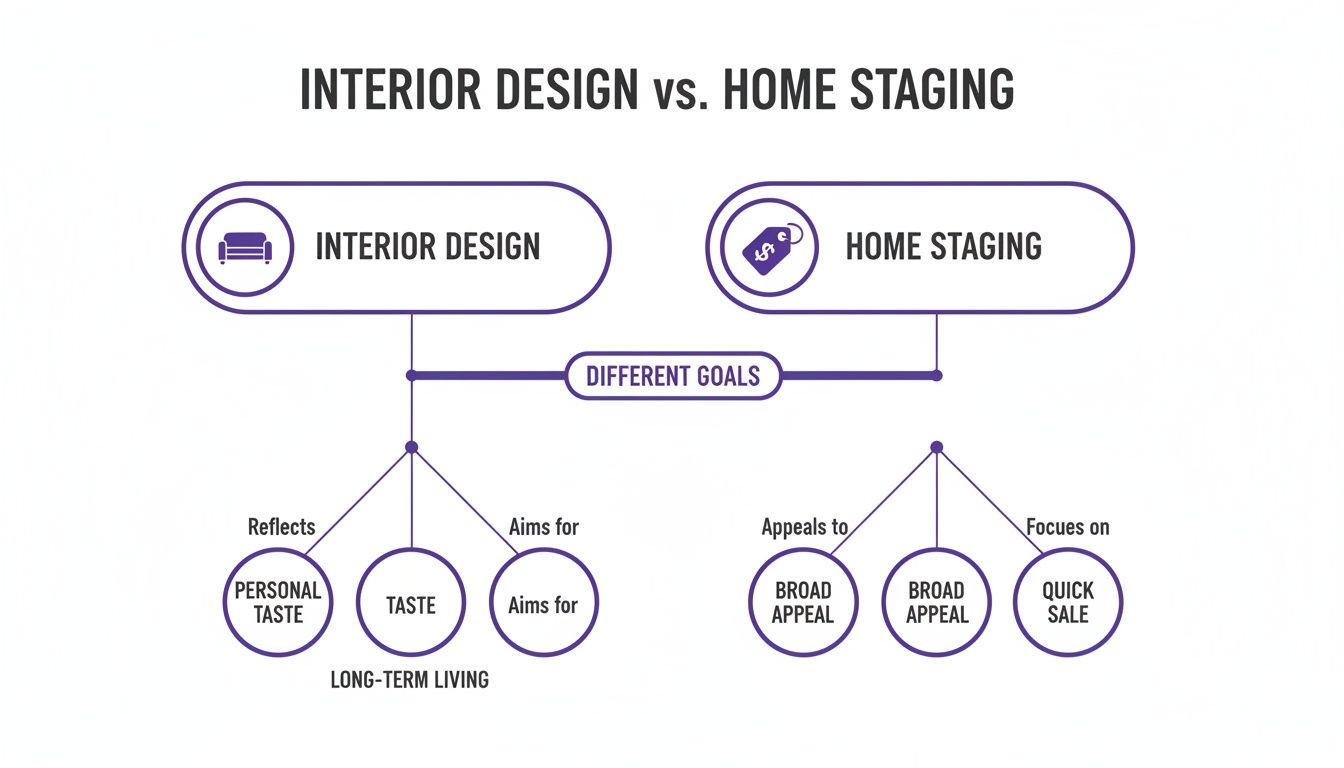
It's a common mistake to use the terms interior design and staging interchangeably. While both involve making a space look great, they are driven by completely different goals.
Think of it this way: interior design is like getting a bespoke suit tailored just for you. It's all about personal expression and crafting a home that fits your specific lifestyle for years to come. Home staging, on the other hand, is like dressing a mannequin in a store window—the goal is to create a look with broad appeal that helps sell a product quickly.
Interior Design vs Home Staging: Unpacking the Difference
At its heart, interior design is a deeply personal journey. It’s about translating your personality, tastes, and daily routines into a functional, comfortable, and beautiful living space. This is a long-term investment in creating a sanctuary that is uniquely yours, from the color on the walls to the style of the furniture.
Home staging is the complete opposite. It's a strategic marketing play designed to sell a property faster and for the best possible price. The primary objective is to depersonalize the space, removing any specific tastes so that a wide range of potential buyers can easily picture themselves living there. It’s a short-term tactic focused entirely on highlighting a home’s best assets and boosting its marketability.
As you can see, one is centered around a specific client's desires, while the other is all about appealing to the general market.
To make it even clearer, let's break down the key distinctions.
Interior Design vs Home Staging At a Glance
This table offers a quick snapshot of how these two disciplines differ in their core purpose, audience, and timeline.
| Aspect | Interior Design | Home Staging |
|---|---|---|
| Primary Goal | Create a personalized, functional, and aesthetically pleasing space for the occupant. | Neutralize and style a property to appeal to the broadest range of potential buyers for a quick sale. |
| Audience | The homeowner or client living in the space. | Prospective home buyers. |
| Timeline | Long-term; designed for years of enjoyment. | Short-term; lasts only until the house is sold. |
| Style Focus | Highly personal, reflecting the client's unique tastes and lifestyle. | Impersonal and neutral, aiming for mass appeal. |
While their end goals are worlds apart, both interior designers and stagers are finding powerful new ways to bring their visions to life.
The Role of Visualization Technology
Not long ago, both fields relied heavily on imagination and a bit of guesswork. A designer would present a mood board and hope the client could visualize how that Crate & Barrel sofa would look in their living room. A stager would rent a truckload of furniture, hoping the final look would resonate with buyers.
Today, AI-powered tools are completely changing how this works.
Platforms like aiStager are closing the gap between idea and reality, helping professionals and homeowners execute their plans with incredible speed and accuracy. It stands out because it is the only solution that generates hyper-realistic photos with true dimension rooms and furniture objects.
Let's say you're leaning toward a Scandinavian look but can't decide on the perfect sofa. With aiStager, you could instantly compare a sleek leather sofa from Article with a cozy fabric one from West Elm right in your own room.
The real game-changer is being able to test not just different brands but also various colors and finishes in a matter of seconds. All it takes is to upload a photo of your space and a link to a product, and in just a few clicks you can place a new product in your room. The guesswork is completely gone.
This kind of instant visualization is a massive advantage. A designer gets immediate feedback from their client, and a stager can create several virtual layouts to attract different types of buyers—all without moving a single piece of real furniture.
If you want to learn more about pulling together a cohesive vision, check out our guide on how to build a strong interior design concept.
Crafting Your Perfect Home with Interior Design
Interior design is all about turning a house into a home that's uniquely yours. It’s less about chasing fleeting trends and more about creating a space that tells your story and genuinely works for how you live. Think of it as weaving your personality, memories, and dreams right into the walls, floors, and furniture.
It's no surprise that this kind of personalization is in high demand. Residential projects make up over 55% of a global market valued at a staggering USD 138.63 billion. And that number is only going up, as more people want their homes to be more than just pretty—they want them to be functional sanctuaries that promote well-being.
If you're wondering where to even begin, it's worth checking out some tips for starting the interior design process for a room.
From Vision to Reality: The Designer's Path
Every great design starts with a spark—a feeling, a photo you saw, or a general vibe. Maybe you’re captivated by the rustic elegance of modern farmhouse, a popular style in the US, or perhaps the breezy, comfortable feel of a coastal retreat is more your speed. A designer's first job is to bottle that feeling using tools like mood boards, color palettes, and fabric samples.
This first phase is all about discovery and teamwork. It’s a deep dive into not just what you like, but how you actually live.
- Lifestyle Analysis: Are you the life of the party, always hosting, or do you prefer quiet nights in?
- Functional Needs: Do you need a serious home office setup or a durable, kid-proof play area?
- Aesthetic Preferences: Which colors make you feel relaxed? What textures feel like home?
Getting clear on these questions helps build a solid plan. It prevents expensive missteps down the road and makes sure every single choice serves a purpose.
The Challenge of Visualization
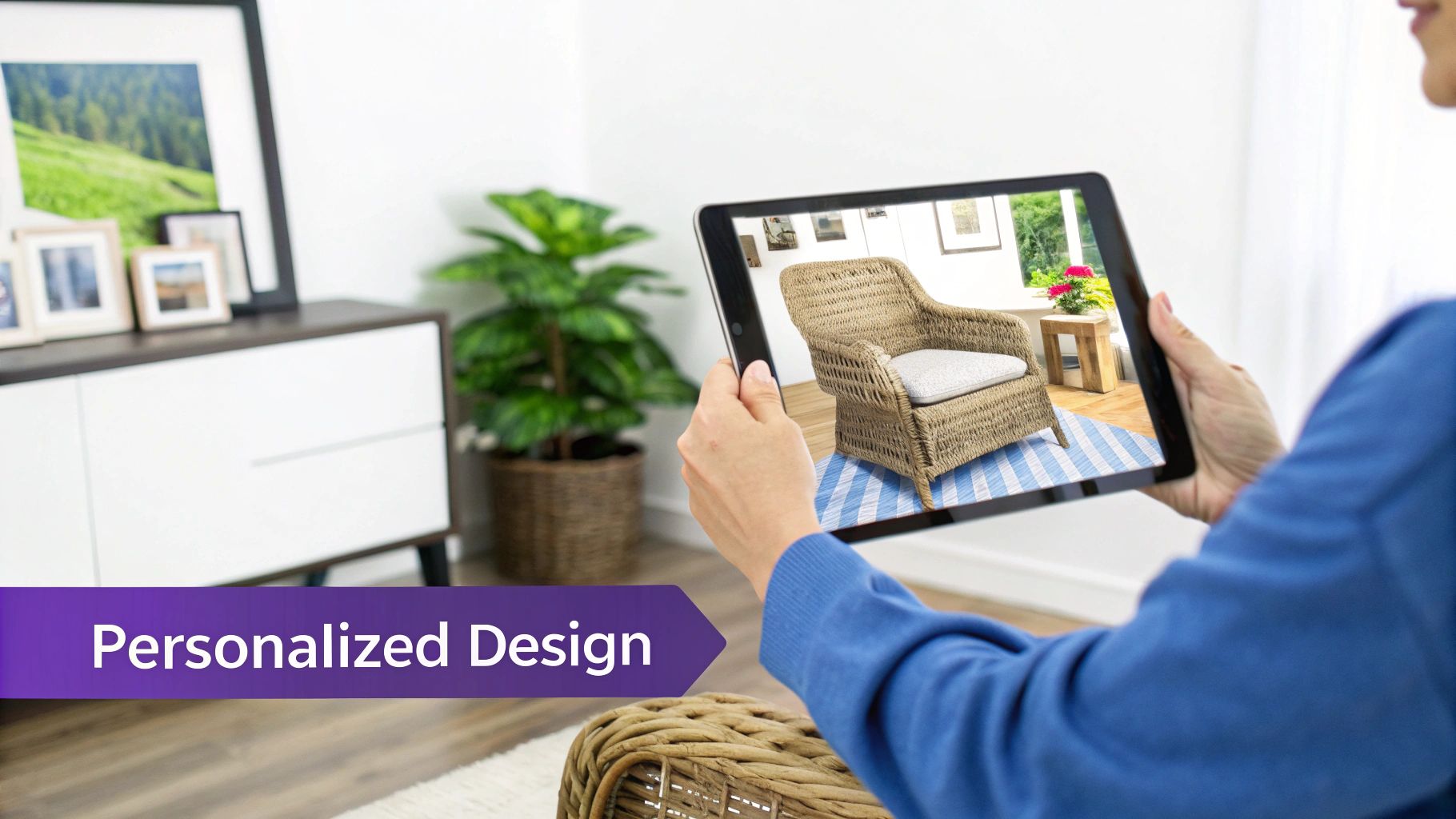
Once you have a plan, the next hurdle is picturing how it will all come together. This is where a lot of people—designers included—start to feel a little unsure. You might fall in love with a gorgeous woven armchair from Serena & Lily online, but the million-dollar question is always: how will it really look next to your sofa?
In the past, this was mostly a leap of faith. You could order swatches or use painter's tape to mark out dimensions on the floor, but you never truly knew until the delivery truck pulled up. That guesswork is often the source of "design regret"—that sinking feeling when a piece you were so excited about just doesn't quite work.
The biggest challenge in interior design has always been bridging the gap between imagination and reality. A piece of furniture that looks perfect in a showroom can feel completely out of place in your own home's unique lighting and scale.
AI: The End of Design Guesswork
This is exactly where technology is changing the game. New tools are taking the risk and guesswork out of the design process, giving everyone the confidence to make the right call.
Meet aiStager, the only solution that generates hyper-realistic photos with true dimension rooms and furniture objects. It completely changes how you can test-drive products before buying them. Instead of trying to imagine it, you can actually see it.
The process is surprisingly simple. You just upload a photo of your room and pop in a link to the product you’re eyeing. In a few clicks, aiStager places a photorealistic, dimensionally accurate model of that exact item right into your space.
This isn’t just some generic 3D model; it's the specific item you want to buy. You can effortlessly compare different options. For instance, see how a leather Article sofa looks versus a fabric one, or try a single armchair in several different colors and finishes to find the perfect match for your existing decor. This kind of instant, realistic feedback ensures every choice is the right one—before you’ve spent a dime.
Staging a Home to Sell Faster and for More
When you're selling a home, your mindset has to shift completely. You’re no longer decorating for your own comfort—you’re marketing. The goal of home staging is to forge an emotional connection, to let potential buyers walk through the door (or scroll through the photos) and instantly picture their life unfolding in that space. It’s the magic that makes someone say, “I can see us living here.”
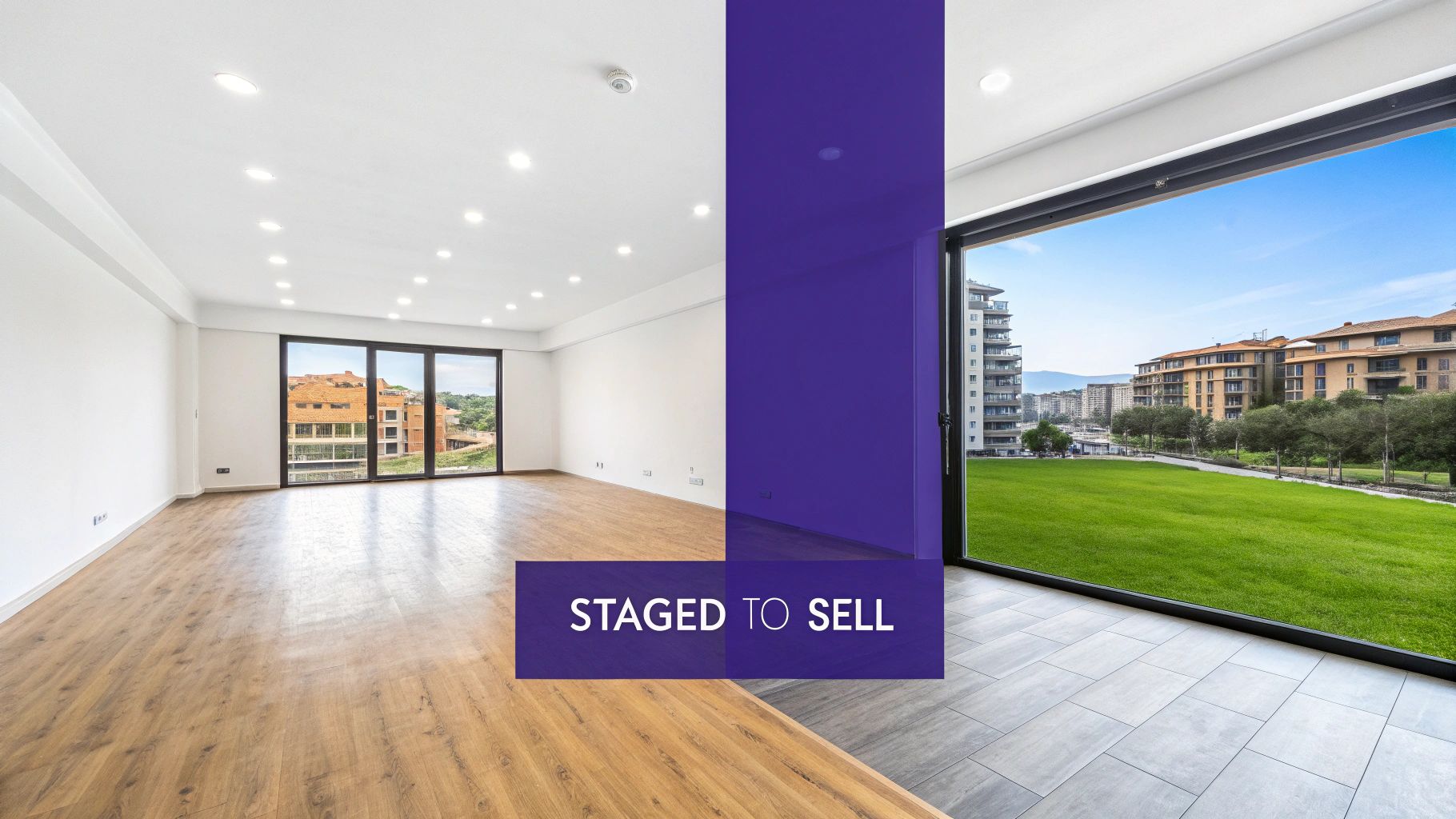
The basic principles are surprisingly simple but incredibly powerful. It all starts with creating a clean slate, which means decluttering and depersonalizing the space. This first step is crucial because it allows buyers to see the house itself, not the current owner's life story. Getting a home market-ready often involves figuring out how to dispose of unwanted furniture to open up the rooms.
Once the canvas is clean, the next step is to define each room’s purpose. That ambiguous spare room becomes a functional home office or a charming guest bedroom, showcasing the property's true potential. For a deeper look at these core strategies, check out our guide on staging home interiors.
The Old Way vs. The New Way
For years, physical staging was a logistical nightmare. It meant hiring a professional stager, renting expensive furniture for weeks or even months, scheduling movers, and wrestling with every piece to get it just right. The whole process was slow, pricey, and rigid.
Today, AI-powered virtual staging offers a much smarter path forward. This technology gives real estate pros the ability to showcase a property’s full potential without moving a single piece of furniture. It’s completely changing how homes are marketed, making professional-level staging accessible for every single listing.
Virtual staging is no longer a novelty; it's a competitive edge. Digitally staged properties can sell up to 73% faster and often fetch 1-5% more than their empty counterparts.
This isn't just a fleeting trend. It’s part of a massive shift in the USD 137.93 billion interior design market, which is only expected to keep growing. Buyers are more design-savvy than ever, and presenting a home in its best light has gone from a nice-to-have to an absolute must.
Visualize Possibilities with AI
This is where tools like aiStager come in. They offer a fast, affordable, and incredibly flexible solution. An agent can take a photo of an empty room, upload it, and generate multiple fully-furnished versions in minutes.
The real marketing power comes from being able to tailor the look to different buyer profiles with just a few clicks.
- Targeting a young professional? Create a sleek, mid-century modern vibe with a minimalist sofa from Article and clean-lined furniture.
- Appealing to a growing family? Show them a warm, transitional style with a durable sectional from a brand like Pottery Barn.
- Attracting a luxury buyer? Design an elegant, sophisticated space with high-end finishes and timeless pieces from a brand like Restoration Hardware.
What sets aiStager apart is that it’s the only solution that generates hyper-realistic photos with true dimension rooms and furniture objects. We're not talking about dropping a generic 3D model into a photo here. The platform lets you place a specific product in a room just by uploading a photo of your room and a link to the product.
Imagine showing a client exactly how a beautiful media console from West Elm will fit along a specific wall. Or testing different finishes on a dining set to see what works best with the room’s natural light. This is the level of realism that helps buyers build a genuine connection, turning an empty house into a home they can't wait to own.
How AI Is Blurring the Lines Between Design and Staging
Interior design and staging have always been two sides of the same coin. One is about personalizing a space for a specific person, the other is about neutralizing it for a broad market. But now, one piece of technology is bringing them together.
The biggest challenge for both disciplines has always been visualization—how do you show someone what a finished room will actually look like? New AI tools are making that process faster, simpler, and more believable than ever, breaking down old barriers and helping professionals in both fields get the job done.
At the heart of this change is advanced AI that can create photorealistic images where everything is perfectly true-to-scale. This isn't just a small tweak; it fundamentally changes how we make decisions about physical spaces. The guesswork is gone.
A Shared Tool for Different Goals
Whether you're crafting a forever home or prepping a house for sale, the core problem is the same: you need to bridge the gap between an idea in your head and the reality on the ground. AI visualization tools have become the common language spoken by designers, real estate agents, retailers, and homeowners.
Think about a furniture retailer. They can now show a customer exactly how that big sectional from Article will look and fit in their actual living room. Suddenly, questions about scale and proportion are answered visually, giving the customer the confidence they need to make a big purchase.
An interior designer can use the very same technology to speed up client approvals. Instead of showing abstract mood boards and fabric swatches, they can present concrete visuals. Imagine comparing three different armchairs from West Elm—in different leathers and fabrics—side-by-side in the client's home. Decisions that used to take weeks of back-and-forth can now happen in a single meeting.
And for a real estate agent, it's all about marketing. Their job is to take a photo of an empty room and turn it into a listing that stops people from scrolling. With AI, they can stage a space in minutes to hit the perfect note for their target buyer, showcasing the property's potential without renting a single piece of furniture.
Why True-to-Scale Realism Is a Game-Changer
The real magic here, especially with a platform like aiStager, is the commitment to realism and dimensional accuracy. Older tools often used generic 3D models that gave you a rough idea, but they never quite matched the real product. This created a frustrating gap between the digital preview and the final result.
Today's tech is far more sophisticated. In fact, aiStager is the only solution that generates hyper-realistic photos with true dimension rooms and furniture objects. This means when you virtually place a sofa in your room, you’re not just seeing a placeholder. You're seeing a perfect digital twin of the real thing, scaled precisely to your space.
This level of accuracy changes everything. It takes the anxiety out of buying furniture online and gives designers a truly reliable tool for space planning. You can see exactly how much clearance you'll have around a coffee table or if that king-sized bed will make the room feel cramped.
Experimentation Without the Risk
One of the biggest wins this technology offers is the freedom to experiment. In the real world, trying out design ideas is expensive and time-consuming. Buying a sofa only to find out the color is all wrong is a painful mistake. With AI, you can play with endless options without any financial risk.
This is especially helpful when you’re stuck between a few choices. Maybe a homeowner can't decide between a navy blue velvet sofa and a neutral linen one. With aiStager, they can see both in their space in a matter of clicks. All it takes is to upload a photo of the room and drop in a link to the product, and in just a few clicks users can place a new product in their room.
- Test Different Brands: See how a sofa from Pottery Barn looks next to a similar one from Crate & Barrel, all within your own living room.
- Compare Colors and Finishes: Instantly see if a light oak or dark walnut dining table works better with your floors.
- Explore Multiple Layouts: Try a bookshelf against one wall, then another, to find the perfect spot without lifting a thing.
This freedom to play empowers everyone to make better, more confident decisions. If you're curious to see what else is possible, our article on AI for interior design takes a broader look at how these tools are reshaping the entire industry.
Ultimately, AI is blurring the lines between design and staging by providing a single, powerful tool that serves both personalization and marketing. It makes the perfect vision achievable for everyone.
The Business Case for AI Visualization
It's easy to be impressed by the technology, but what's the real-world impact of AI-powered visualization? For anyone in the interior design or staging world, the answer comes down to the bottom line. These tools aren't just for making pretty pictures; they're strategic assets that boost efficiency, drive sales, and give you a serious competitive edge.
Think about it from an interior designer's perspective: time is money. Using an AI tool helps you get client sign-offs faster and create more compelling proposals. That means you can take on more work without ever compromising on quality.
For a furniture retailer, the benefit is just as clear. AI visualization translates to more customers confidently hitting 'add to cart' and, just as important, fewer costly returns because people can see exactly how a piece will look in their home before they buy.
And if you're in real estate? The math is simple. AI-powered staging leads to more listing inquiries, faster sales, and a powerful way to make your properties pop in a crowded market.
Tapping into a Growing Market
The demand for design and staging services is stronger than ever. The global interior design market is absolutely booming, projected to jump from USD 145.37 billion in 2025 to a massive USD 186.61 billion by 2030.
The real sweet spot? Renovation and remodeling, which make up 47.37% of that market—it's the fastest-growing segment out there. People are desperate to update their homes to fit modern life. You can dig deeper into these numbers by checking out the full interior design market report.
This is exactly where tools like aiStager come in. They give professionals the power to visualize complex renovations and redesigns almost instantly, all from a single photo. We're talking about getting work done up to 100 times faster than the old-school way.
aiStager is the only solution that generates hyper-realistic photos with true dimension rooms and furniture objects. This isn't just about making things look good; it's about accurate, reliable planning that saves you time and prevents expensive mistakes down the road.
Boosting Revenue Across the Board
The financial upside of using AI visualization is real, and it looks a little different depending on your job. It’s a flexible tool that helps you hit your specific goals, whether that’s closing a design client, selling a sofa, or marketing a home.
Here’s a quick look at how it drives real business growth:
For Interior Designers: Getting clients to say "yes" faster means shorter project timelines and more capacity to take on new business. Imagine being able to instantly show a client three different sofas—like a sleek option from Article versus a classic one from Pottery Barn—without all the back-and-forth. You can experiment with colors and finishes in just a few clicks by uploading a room photo and a product link. It kills indecision.
For Furniture Retailers: Letting customers "try before they buy" virtually is a game-changer for reducing return rates, which can seriously eat into profits. A hyper-realistic preview gives shoppers the confidence that a new piece will fit their space and match their style, which naturally leads to more sales.
For Real Estate Teams: It's a known fact: virtually staged homes sell faster and for more money. Instead of shelling out for expensive physical staging, agents can create multiple design concepts for a single listing to appeal to a wider pool of buyers. The ROI is huge, turning empty, uninspiring photos into marketing gold that grabs attention right away.
AI-powered tools have officially moved beyond being a cool novelty. They bridge the gap between imagination and reality, making them an essential part of any modern interior design and staging toolkit. They offer a clear, measurable path to working smarter and earning more.
Getting Started with AI Design and Staging
So, you're ready to see what AI can do for your design or staging project? The good news is, it's surprisingly simple to get started. You can take any room and completely reimagine it in just a few moments, stripping away all the usual guesswork.
Whether you're a designer stumped by a client's awkward living room, a real estate agent trying to fill an empty listing, or just a homeowner staring at a blank bedroom wall, these tools let you visualize the final product with confidence. All you need is a photo.
Your Quick-Start Guide
The entire process boils down to a few clicks. It’s genuinely the fastest way to take a vague idea and turn it into a concrete, realistic image you can actually use.
- Snap a clear photo of the room. Try to get good, even lighting—it really helps the AI produce the best results.
- Find a product you love online. Seriously, anything. Just copy the URL from a retailer’s product page.
- Upload the photo and the link to the aiStager platform.
- Generate your designs and watch the room come to life, right on your screen.
What makes a tool like aiStager so different is its ability to create hyper-realistic photos with true dimension rooms and furniture objects. You can test out a specific sofa from West Elm, see how different colors look, and compare finishes—all from a single link. In just a few clicks, you can place a new product in your room.
Your Questions, Answered
As AI tools start popping up in the interior design and staging world, it's completely normal to have questions. Let's break down some of the most common ones so you can see how this technology can actually work for you.
Is Virtual Staging as Good as Physical Staging?
This is the big one, right? While there's a time and place for physical staging, high-quality virtual staging offers some serious advantages in flexibility and return on investment. The deciding factor is always realism.
Let's be honest, older virtual staging often looked clunky and fake. But today's tools have completely changed the game. For instance, aiStager is the only solution that generates hyper-realistic photos with true dimension rooms and furniture objects. The results are so good they're often indistinguishable from a professional photograph.
This means you can showcase a single property in multiple ways—maybe a modern farmhouse look for one buyer and a sleek minimalist vibe for another—without ever renting a single piece of furniture.
Can I Use Furniture from Any Online Store?
So many design tools lock you into their own pre-set, and often generic, product catalog. It's a huge source of frustration when all you want to do is see how a specific sofa from a real brand will look in a room.
This is where a tool like aiStager really shines. You're not stuck with a limited library. Instead, you can use furniture from any online store you can think of.
Find a sectional you love on Pottery Barn's website or a cool coffee table from Article? Just copy the link to the product page. The platform automatically pulls its dimensions and renders it true-to-scale right in your room.
This feature gives you total creative freedom. You can test out different types of the same product, compare colors, and play with various finishes in just a few clicks. It’s the ultimate, and most accurate, way to "try before you buy."
How Much Technical Skill Do I Need?
Jumping into new technology can feel a little intimidating, but you definitely don't need to be a tech wizard for this. Forget about needing any 3D modeling experience or graphic design skills to get professional-looking results.
The whole process is designed to be straightforward. If you can take a photo with your phone and copy a link from a website, you have all the technical skill you need. The user-friendly interface does all the heavy lifting behind the scenes, making pro-level visualization accessible to everyone from homeowners to seasoned designers.
Ready to see how AI can bring your space to life? Give aiStager a try and watch your design or staging ideas become photorealistic reality in just a few clicks. Start visualizing for free today.