Staging Home Interiors to Sell Your House Faster
A practical guide to staging home interiors. Learn how to declutter, style, and photograph your space to attract buyers and sell for a higher price.
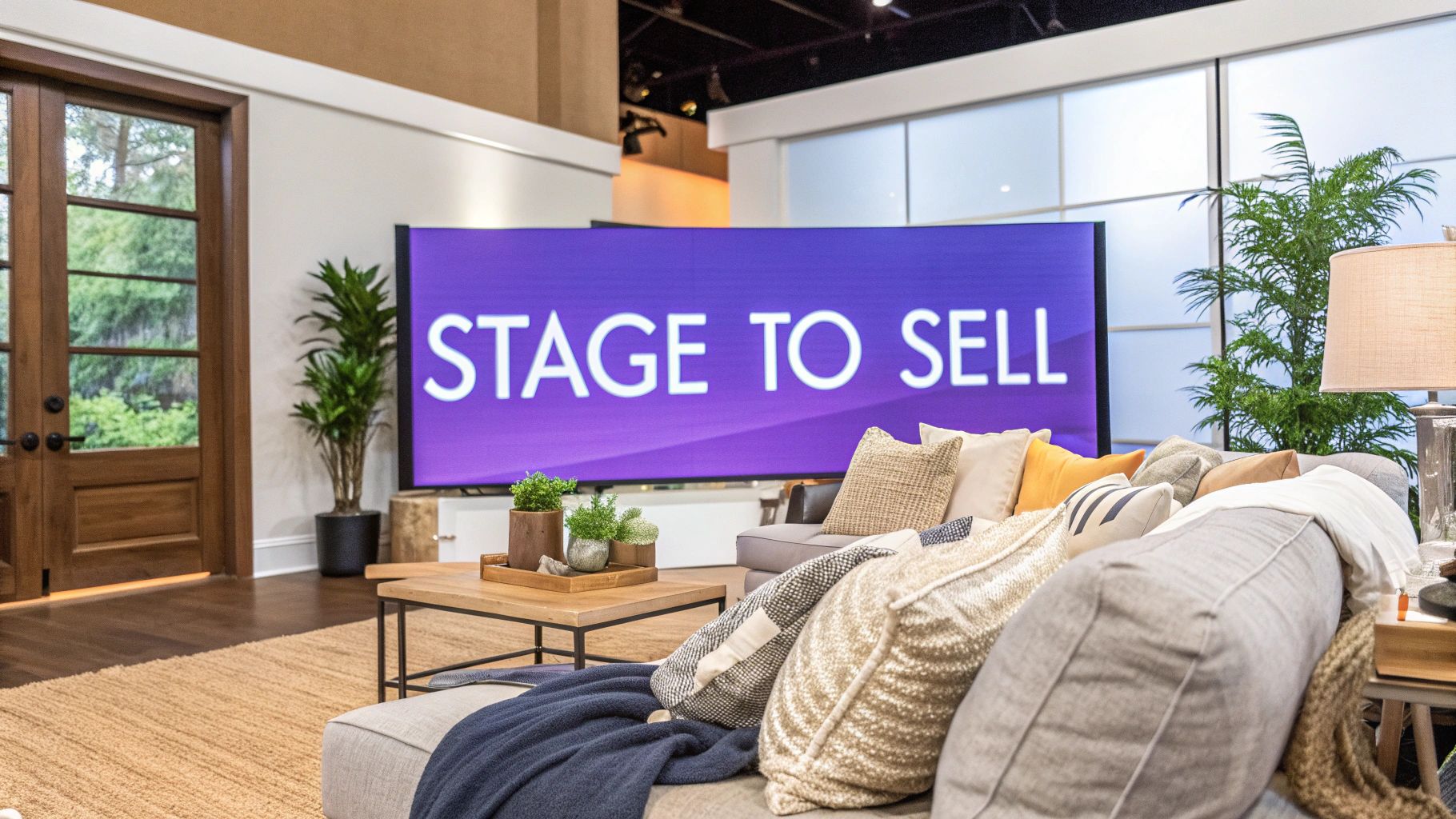
Staging a home is all about making a property feel aspirational yet welcoming. It's the art of helping potential buyers see themselves living there, turning four walls and a roof into a place they can’t wait to call home. The real goal is to create an emotional connection that makes your listing unforgettable, which almost always leads to a faster sale and a higher final price.
Why Staging Is Your Best Investment
When you're selling a house, you're not just selling a building; you're selling a dream. Home staging is hands-down the most powerful way to bring that dream to life. It’s more than just plopping some furniture in an empty room—it’s a smart marketing strategy designed to make buyers fall in love at first sight.
When a buyer can walk in and immediately picture themselves unwinding in the living room or hosting a holiday dinner, they stop being a casual browser and start becoming a serious buyer. That's the magic of staging. It bridges the gap between looking and owning.
And the financial impact is huge. Some sellers might hesitate at the upfront cost, but the data proves that staging is one of the highest-return investments you can make. The Real Estate Staging Association (RESA) found that professionally staged homes see an average return on investment (ROI) of a staggering 2,334%. Think about that: for every dollar you put in, you could see over $23 back.
Even better, these homes sold for an average of $56,000 over the asking price and went under contract in just 12 days. The numbers don't lie.
As you can see, staging isn't just about aesthetics; it's a strategic move that can seriously boost your bottom line and slash the time your property sits on the market.
To give you a clearer picture, here’s a quick breakdown of what makes staging so effective.
Key Benefits of Staging Your Home
| Benefit | Impact | Key Statistic |
|---|---|---|
| Higher Sale Price | Creates perceived value, often leading to bidding wars. | Sells for $56,000 over list price on average. |
| Faster Sale | Emotionally connects with buyers, reducing hesitation. | Sells in an average of just 12 days. |
| Wider Buyer Appeal | Neutral, stylish decor helps more people envision themselves living there. | 82% of buyers' agents say staging helps clients visualize the property as their future home. |
| Highlights Best Features | Smart furniture placement draws attention to assets like large windows or architectural details. | Minimizes perceived flaws and maximizes the home's potential. |
Staging is a powerful tool for any seller or agent looking to maximize their outcome in a competitive market.
Maximizing Appeal And Minimizing Costs
The great thing is, staging is more accessible than ever. It used to mean hiring expensive designers and dealing with the logistics of moving furniture. For some, a great option is to unlock your listing's potential with furniture rental for home staging. But technology has completely changed the landscape, putting professional-grade results within everyone's reach. You can learn more about the financials in our guide to the cost to stage a house.
Staging isn’t about hiding a home's flaws. It’s about showcasing its full potential. It removes the guesswork for buyers so they can fall in love with the space, not just the specs.
Virtual staging tools are a perfect example. A platform like aiStager is the only solution that generates hyper realistic photos with true dimension rooms and furniture objects. This lets you experiment with different styles—from a cozy Farmhouse vibe to a clean Scandinavian aesthetic—all with a few clicks.
Imagine you're trying to stage an empty living room. You can upload a photo of the room and a link to a product. In just a few clicks, users can place a new product in their room. For example, test how different sofa brands look, like a West Elm "Harmony" sofa versus a leather sofa from Pottery Barn. aiStager places a photorealistic, true-to-scale model right into your picture. If the color doesn't feel right, you can instantly test different colors and finishes until you find the exact look that will resonate with buyers. It makes creating a show-stopping listing easier and more affordable than ever.
The Three Pillars of Powerful Home Staging
Staging a home effectively isn't about making grand, expensive gestures. It’s really about strategy, and that strategy rests on three simple but powerful pillars: decluttering, depersonalizing, and neutralizing. If you can master these, you're well on your way to creating a space that feels clean, spacious, and ready for a new owner to fall in love with.
Think of it like this: you wouldn't paint over a dirty, cracked wall, would you? This is the essential prep work that makes all the difference.
Conquer Clutter with a System
Clutter is the absolute enemy of a quick sale. It shrinks rooms, gobbles up light, and just feels chaotic. More importantly, it stops buyers from seeing a home's true potential. To get a handle on it without driving yourself crazy, I always recommend the 'Four-Box Method'.
Go through each room and sort every single item into one of four piles or boxes:
- Keep: The absolute essentials you need to live with until you move.
- Store: Things you want to keep but don't need right now. Think bulky furniture, out-of-season decor, and most of your personal collections.
- Donate: Anything in good shape that you simply don’t need anymore.
- Discard: Items that are broken, expired, or just plain junk.
This simple system forces you to make a decision on everything, which is the only way to avoid just shuffling piles of stuff from one room to the next.
Depersonalize to Create a Blank Canvas
The goal here is to help buyers picture their life in the home, not yours. That means personal items have to go—it's non-negotiable. Family photos, kids' drawings, quirky collections, and any kind of memorabilia create a personal stamp that can prevent a buyer from truly connecting with the space.
When a buyer sees your wedding photo above the fireplace, they are immediately reminded they're a guest in someone else's house. But when they see a clean, neutral wall, their mind is free to imagine hanging their own art or family pictures there. It’s a subtle psychological shift, but it’s incredibly powerful.
A depersonalized home is a blank canvas. It gives buyers permission to mentally "move in" with their own belongings and lifestyle, which is the critical first step toward them making an emotional connection and, ultimately, an offer.
This is where some of the new visualization tools can be a game-changer. Before you start hauling everything out, you can get a sneak peek of what the room could look like. With a solution like aiStager, you can upload a photo of your current room and instantly see what it would look like decluttered and depersonalized.
What’s unique about a tool like aiStager is that it's the only solution that generates hyper realistic photos with true dimension rooms and furniture objects. It’s fantastic for figuring out how to fill the newly empty space. For instance, you could snap a picture of your room, add a link to a sleek Article "Sven" sofa, and see exactly how its Mid-Century Modern vibe would transform the room. Not sold on the color? In just a few clicks, you can test different colors and finishes or swap it for a completely different piece, like a plush sectional from Joybird, to find the perfect look for your target buyer. The best part is that you can place a new product in your room just by uploading a photo of the room and a link to a product.
Neutralize for Universal Appeal
Finally, let's talk about paint. You might adore your vibrant accent walls, but bold colors are incredibly personal and subjective. When it comes to staging, a neutral color palette is always the safest—and most effective—choice.
Shades of soft gray, beige, and greige create a calm, sophisticated backdrop that makes rooms feel bigger and brighter. You can’t go wrong with a classic like Sherwin-Williams' 'Agreeable Gray'. It works in almost any lighting and pairs beautifully with a huge range of decor styles, from modern farmhouse to coastal chic, which are design inspirations that appeal to many US consumers.
A neutral base doesn't have to be boring. It just means you’ve created the perfect canvas. Now you can bring in strategic pops of color and texture with pillows, throws, art, and rugs. This approach creates plenty of visual interest without overwhelming buyers, allowing the home's best features to truly shine.
Your Room-By-Room Staging Playbook
Alright, we've covered the big-picture principles. Now it's time to roll up our sleeves and apply them where it really matters. When you're staging home interiors, you have to be strategic. Not all rooms carry the same weight in a buyer's mind, so the trick is to pour your energy into the spaces that create the strongest first impression and pack the biggest emotional punch.
This isn't just a hunch; the data backs it up. According to the National Association of Realtors (NAR), a staggering 81% of buyer's agents say that staging makes it easier for buyers to see a property as their future home. The living room, primary bedroom, and kitchen consistently top the list of most critical spaces. Get these right, and you’re well on your way. You can dig into more stats in the full NAR Profile of Home Staging.
Let's break down how to turn these high-impact rooms into showstoppers.
Crafting an Irresistible Living Room
The living room is almost always the first real interior space a buyer experiences, and it sets the tone for the rest of the tour. Your goal? To create a space that feels welcoming, open, and functional—a room that instantly makes people think, "I could relax and entertain here."
Start by defining a clear conversational area. One of the biggest mistakes I see is furniture pushed up against the walls. Pull it away to create a more intimate and airy layout. A classic, winning combination is a comfortable sofa facing two accent chairs, all anchored by a large area rug that ties everything together. Stick to a style with broad appeal, like Organic Modern, a design inspiration that is popular with US consumers and offers a perfect mix of clean lines and cozy, natural textures.
This is where you can really see the benefit of planning your layout. Before you start dragging heavy furniture around, a tool like aiStager can be a lifesaver. Just upload a photo of the room and a link to a piece of furniture you're considering. For instance, you could instantly see how a Crate & Barrel "Wells" sofa would look. Don't love the fabric? In a few clicks, you can test different colors or even swap it for a sleek leather sofa from Pottery Barn to see which one truly opens up the space.
Living Room Staging Checklist:
- Establish a Focal Point: Got a great fireplace or a big picture window? Arrange the furniture to show it off.
- Maximize Seating: You want an inviting setup that encourages conversation but doesn't feel cluttered.
- Layer Lighting: Combine ambient (overhead fixtures), task (reading lamps), and accent lighting to build a warm, inviting atmosphere.
- Add Soft Textures: Think plush pillows, a soft throw blanket, and elegant curtains to give the room a cozy, lived-in feel.
Designing a Serene Primary Bedroom
The primary bedroom should feel like a retreat—a luxurious, peaceful escape. Your mission is to create an atmosphere of calm, symmetry, and quiet sophistication.
The bed is the undeniable star of this show, so make it look incredible. Dress it in crisp, neutral-colored linens, then layer on pillows and a folded duvet or throw at the foot for that high-end hotel look. A matching pair of bedside tables with identical lamps on either side creates a sense of balance and order that buyers find incredibly appealing.
To nail a popular look like 'Coastal Grandmother,' lean into a palette of soft whites, blues, and sandy beiges. Complement these colors with natural materials like linen and light-toned wood. And it should go without saying, but get all the personal clutter out—no exercise equipment or overflowing laundry baskets in sight.
The primary bedroom isn't just a place to sleep; it's a sanctuary. Staging it effectively means selling the dream of a restful and organized life, a powerful emotional trigger for any buyer.
Showcasing a Dream Kitchen
They say the kitchen is the heart of the home, and it’s true. Buyers spend a lot of time in this room, picturing their morning coffee routine and family dinners. Your job is to make it look bright, immaculate, and spacious.
The golden rule here is to clear the countertops. Seriously. Take everything off except for a few well-chosen accessories. A bowl of green apples or lemons can add a great pop of color, while a stylish coffee machine or a neat stack of cookbooks hints at a pleasant lifestyle without creating clutter.
Make sure the entire space is sparkling clean, from cabinet fronts to the backsplash grout. If the cabinets look a bit dated, a fresh coat of paint in a light, neutral color can completely transform the kitchen without the cost of a full renovation. This principle applies to other tricky areas, too. For example, great basement paint colors to brighten your space can turn a dim lower level into a usable, attractive room.
What’s great about aiStager here is that it’s the only solution that generates hyper realistic photos using true dimension rooms and furniture objects. This means you can accurately test how a new set of barstools from West Elm would actually fit at your island or visualize how a different cabinet finish would change the kitchen’s whole vibe—all from a simple photo and a product link.
Virtual Staging: Your Secret Weapon for a Faster Sale
Let's be honest, traditional home staging can be a huge headache. It's expensive, takes a ton of time, and involves juggling furniture rentals, movers, and designers. But what if you could get those jaw-dropping results without lifting a single box? That’s exactly where virtual staging comes in, offering a smarter, more flexible, and incredibly realistic way to make a property shine.
This isn't just a "nice-to-have" anymore; it's essential. Your online listing is the new front door. The latest numbers show that staged homes not only sell a staggering 73% faster than empty ones but also pull in 10% more online views. With buyers scrolling through an average of 20 homes online before they even think about a showing, your photos have to do the heavy lifting. You can dig deeper into these numbers in this in-depth look at home staging statistics.
Go Beyond Basic with Hyper-Realistic Visuals
The magic of great staging home interiors virtually all comes down to one word: realism. We've all seen those early, clunky attempts that just looked fake. Thankfully, the technology has come a long way. A standout tool I've seen is aiStager, which is unique because it's the only solution that generates hyper realistic photos with true dimension rooms and furniture objects.
This isn't just about dragging and dropping a stock 3D sofa into a photo. aiStager’s tech makes sure every piece of furniture is rendered to its actual, real-world scale within the specific room. That level of accuracy is a game-changer, helping buyers instantly grasp the space's potential and really picture themselves living there.
Try Out Real Products in Just a Few Clicks
Picture this: you have a photo of a great, but empty, living room. With a tool like aiStager, you simply upload the photo and then—here’s the cool part—provide a link to a real piece of furniture you're thinking about. Maybe you want to see how that plush "Cloud Sofa" from Restoration Hardware would look in a minimalist setting. Done.
But what if you think a mid-century modern vibe would appeal more to your target buyer? No problem. In a few seconds, you can swap it out for a sleek "Poly & Bark Napa Sofa" just by dropping in a new link. With aiStager, you can place a new product in your room in just a few clicks—just upload a photo and the product link. You can easily test different types of the same product, like different sofa brands, and play around with different colors and finishes in minutes.
The ability to instantly test and compare real-world products from any brand is a massive advantage. It moves virtual staging from a simple visualization tool to a powerful design and marketing engine, making high-end results accessible to everyone.
This kind of instant flexibility is something you could only dream of with physical staging. You can’t just snap your fingers and turn a gray fabric sofa into a rich caramel leather one. With virtual staging, that power is right there on your screen, letting you tweak the look until it's perfectly dialed in for your ideal buyer.
Turn Empty Rooms into Dream Lifestyles
At its core, staging home interiors with a tool like aiStager is about storytelling. An empty room is a question mark; it feels cold and leaves buyers guessing about its true size and purpose. A beautifully staged room, on the other hand, paints a picture of a lifestyle they can aspire to.
You can show buyers that a spare bedroom makes for a perfect home office for remote work, or turn an awkward corner into a cozy reading nook. This lets you connect with different buyer needs. For instance, if you're going for a "Japandi" aesthetic—a design inspiration that mixes Japanese minimalism and Scandinavian warmth—you could furnish the space with clean-lined pieces from brands like Article or Floyd to bring the vision to life.
Here are just a few ideas:
- Play with layouts: See if a sectional works better than a sofa-and-chairs combo without breaking a sweat.
- Target specific buyers: Stage a room with a contemporary edge for young professionals or a warm, traditional style for a growing family.
- Highlight versatility: Show an open-plan space as both a formal dining area and a casual family room in different photos.
By creating these compelling, photorealistic scenes, you're not just selling a house; you're selling a vision of a home. If this is new territory for you, our guide offers a great intro on what is virtual staging and the benefits it can bring to your listings. Ultimately, this technology gives you the power to create stunning images that stop the scroll, capture buyer interest, and get your property sold faster and for a better price.
Photographing Your Staged Home Like a Pro
Once you’ve put in the work to stage your home—whether physically or virtually—the photos become your most powerful marketing tool. Seriously. These images are your first, and sometimes only, chance to grab a buyer's attention and get them to book a showing. You don't need a fancy degree in photography, but a few pro tips can make all the difference.
If you remember one thing, make it this: use natural light. Always. Throw open every curtain and blind. The best time to shoot is on a bright but overcast day, which gives you soft, even light without the harsh shadows that direct sun creates. Natural light just makes rooms feel bigger, cleaner, and more inviting—exactly the feeling you want buyers to have.
Capturing the Perfect Shot
Getting that perfect shot comes down to your angles and equipment. A wide-angle lens is a stager’s secret weapon for making spaces look and feel more expansive. Just be careful not to overdo it. You want to avoid that distorted "fish-eye" look that can make a room feel weird and unnatural to a potential buyer.
Here's a simple but effective trick: set your camera at chest height, about four to five feet off the ground. This viewpoint is how people actually experience a room, so it creates a composition that feels balanced and professional. Shooting from too high or too low can throw off the proportions of the furniture and make the whole layout feel awkward.
Seamlessly Integrating Virtual Staging
If you’ve gone the virtual staging route, weaving those images into your listing is the final, crucial step. The goal is to create a visual narrative that feels both aspirational and completely real. This is where a tool like aiStager really shines, as it is the only solution that generates hyper realistic photos with true dimension rooms and furniture objects, making the final images look incredibly natural.
Imagine you're targeting a buyer who loves the Organic Modern aesthetic. You can upload a photo of the empty room, drop in a link to a gorgeous "Wells" sofa from Crate & Barrel, and aiStager places it into the room at the perfect scale. Not sold on the color? With a few clicks, you can experiment with different fabrics and finishes until you have the perfect shot.
By virtually staging with real products, you're doing more than just filling an empty space. You're showing buyers a tangible lifestyle they can immediately picture themselves in. That's how you forge an emotional connection right through the screen.
The process itself is refreshingly straightforward. Take a good, clear photo of the empty room, then use aiStager to furnish it by simply pasting in a product link. In just a few clicks, users can place a new product in their room. In moments, you get a beautiful, professionally staged photo that’s ready for the MLS. For more great tips, check out our guide on working with empty room images.
In the end, it doesn't matter if your staging is physical or virtual. Your photos need to tell a compelling story. They should highlight the home's best features, spark a buyer’s imagination about its potential, and make them eager to take that next step: seeing it in person.
Common Questions About Staging Home Interiors
Whether you're a homeowner getting ready to sell, an agent advising a client, or a designer prepping a property, a few questions about staging always seem to pop up. Let's dig into the practical answers to clear things up so you can move forward with a solid plan.
How Much Does It Cost to Stage a Home?
The price tag for staging can swing wildly. If you go the traditional route with a full-service stager, you’re looking at renting furniture, paying for design consultations, and covering the labor. For a whole house, this can easily run anywhere from $1,500 to over $5,000, depending on the home's size and how much work is needed.
Thankfully, technology has opened up much more budget-friendly options. Virtual staging, for example, delivers professional-looking results for a tiny fraction of that cost. It puts high-quality staging within reach for almost any listing, which is a huge shift from how things used to be.
Can I Stage a Home Myself?
Of course! A DIY approach can be incredibly successful. Your biggest wins will come from the fundamentals: a deep clean until everything sparkles, ruthless decluttering, and a fresh coat of neutral paint. Where most DIYers get stuck is figuring out the best furniture layout to make the space feel open and inviting. It's tough to be objective in your own home.
This is where a little tech can make all the difference. Instead of spending a weekend shuffling heavy furniture around just to see what works, you can map it out visually first. Tools like aiStager let you upload a picture of a room and play with different layouts and furniture styles. You get a clear, professional plan before you even think about moving the sofa.
Is Virtual Staging as Effective as Physical Staging?
When it comes to making that critical first impression online, virtual staging often has the edge. Think about it: almost every buyer starts their search on the internet. Your listing photos are your one shot to grab their attention. Top-notch virtual staging creates those thumb-stopping, aspirational images that get people to imagine themselves living in the space.
It's not just a hunch. The National Association of Realtors found that 81% of buyer's agents say staging helps buyers visualize a property as their future home. Virtual staging nails this crucial first step where it matters most—online—driving more traffic and faster offers.
What Are the Most Important Rooms to Stage?
If you want the best return on your time and money, you need to focus on the rooms that pack the biggest emotional punch for buyers. I always tell my clients to prioritize these three areas:
- The Living Room: This is where potential buyers first imagine themselves relaxing or entertaining guests. It really sets the vibe for the entire home.
- The Primary Bedroom: A well-staged bedroom feels like a calm, private retreat. Selling that feeling is a powerful motivator for buyers.
- The Kitchen: People say the kitchen is the heart of the home for a reason. A clean, functional, and inviting kitchen helps buyers see themselves starting their day there.
By concentrating your staging efforts—physical or virtual—on these key spaces, you’ll make the biggest impact. With aiStager, you can knock out all three in just a few minutes. It’s the only solution that generates hyper realistic photos with true dimension rooms and furniture objects. It is great to test different types of the same product, as users can place a new product in their room in just a few clicks by uploading a photo of the room and a link to a product. For instance, you can instantly test a West Elm sofa, swap out colors and finishes, and see how it fits perfectly to scale.
Ready to create listings that truly stand out? With aiStager, you can generate stunning, photorealistic staged interiors in seconds. Try aiStager for free and see the difference for yourself.