Interior design for small rooms: Maximize Tiny Spaces
Discover interior design for small rooms with practical tips on layout, color, and furniture to make any space feel larger.
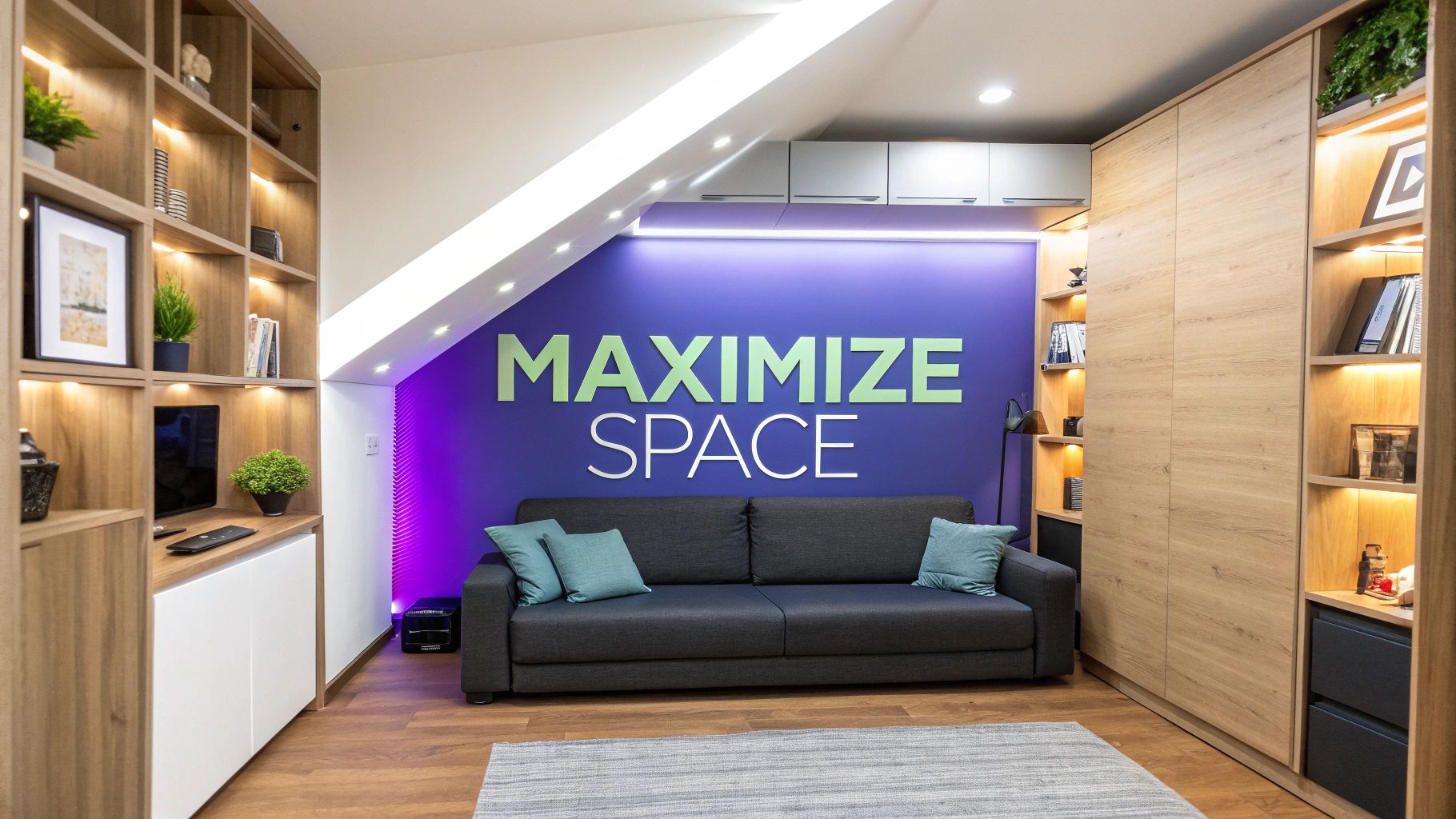
Designing for small rooms is all about making a space feel both functional and stylish. It’s a design puzzle that proves limited square footage doesn't have to mean limited potential.
The trick is to be clever. With smart layouts, furniture that actually fits the scale of the room, and the right color choices, you can make even the most compact space feel intentional and surprisingly open. Get the strategy right, and the tiniest room can become a beautiful, practical sanctuary.
Embracing Style in Small Spaces
Welcome to your guide for mastering small-space design. In a world where more and more of us are living in cities, making every inch count has become less of a trend and more of a necessity. We're going to move past the quick fixes and dive into the core principles that help you create a home that feels stylish and works for you, no matter the size.
This guide covers it all—from the fundamentals of space planning and layout to the huge impact of color, light, and even a little bit of smart tech. You'll learn how to take popular styles you love, like the cozy vibe of a California Casual or the clean warmth of Japandi, and make them work beautifully in a smaller footprint.
The Growing Need for Smart Design
It's no surprise that the demand for smart interior design has skyrocketed, especially in crowded urban areas. The global interior design market was recently valued at a staggering USD 137.93 billion, and a huge chunk of that growth is coming from residential projects in cities where space is the ultimate luxury.
Think about it: in many cities around the world, the average apartment is under 50 square meters. That reality is exactly what’s pushing the need for clever, small-space strategies.
The ultimate goal is to create a space that feels curated, not cramped. This means every object must have a purpose, every color a reason, and every layout a clear flow.
Visualization is Key
One of the biggest challenges in designing a small room is just trying to picture how everything will fit together. You might fall in love with a gorgeous sofa from a brand like Article, but will it completely overwhelm your living room? This is where getting a visual preview is a game-changer.
Tools like aiStager are built for this exact problem. It's the only solution that generates hyper-realistic photos with true dimension rooms and furniture objects.
Instead of just guessing, you can test-drive your ideas. See how that Article sofa looks in a rich navy velvet versus a light gray linen. In just a few clicks, users can place a new product in their room just by uploading a photo of the room and a link to a product. This completely removes the guesswork, letting you perfect your design before you spend a dime. For more inspiration on this, check out our guide on applying these principles to tiny house interior design ideas.
And for those of you looking to bring big style into a small space, a key part of the process is sourcing designer furniture and decor for your home by finding unique pieces that are perfectly scaled.
Mastering Your Layout and Flow
Every great design for a small space begins with a solid plan, not with picking out furniture or paint. Before you can make a tiny room feel open and purposeful, you have to get to know its bones—the exact dimensions, how people will walk through it, and where everything is bolted down. Nail this first, and you'll avoid those expensive "oops" moments later.
First things first: get out your tape measure. Measure the room's length and width, the ceiling height, and the size of every window and door. And don’t stop there. Note where every outlet, radiator, and weird architectural quirk is. This isn't busy work; this data is your roadmap.
Sketching Your Foundation
With your measurements in hand, draw a quick floor plan. This doesn't need to be a masterpiece—a simple sketch on graph paper works just fine. Drawing the room to scale helps you truly see the space you're working with.
On your sketch, mark all the things you can’t change. Think about the swing of each door and the clearance needed for windows to open. Knowing these limitations from the start is the key to creating a layout that’s actually livable, not just pretty.
Creating Functional Zones
Even the smallest room can wear multiple hats if you zone it properly. The idea is simple: dedicate specific areas to different activities. This simple act brings a sense of order and makes the room feel much more intentional.
Think about a studio apartment. You can easily divide the main living space into a few key zones:
- A relaxation zone: Just a small-scale sofa and a coffee table can create a cozy spot to unwind.
- A work zone: Tuck a slim desk and a chair into a bright corner to carve out a dedicated office nook.
- A dining zone: A compact bistro table with two chairs is all you need to define a place for meals.
By giving each part of the room a clear job, the entire space feels more organized and, surprisingly, a lot bigger.
Here's a pro tip I swear by: use painter's tape on the floor. Before you buy a single thing, mark out the footprint of the major pieces you’re considering, like the sofa or a bookcase. This little trick gives you a real-world feel for the scale and lets you physically walk the pathways to check the flow.
The Power of Digital Visualization
Taping out a floor plan is a fantastic start, but it still requires a lot of imagination. This is where modern tools really shine. The hardest part of designing a small room is trying to picture how everything will actually look and fit together. Will that West Elm sofa overwhelm the space? Does that Pottery Barn armchair clash with the wall color?
This is exactly the problem aiStager was built to solve. It’s the only tool that generates hyper-realistic photos with true dimension rooms and furniture objects. The guesswork is completely gone.
You just upload a photo of your empty room and drop in a link to a product you’re considering. In seconds, aiStager places the item right into your space so you can see exactly how it looks. You can compare different sofas from different brands to see which one has the right scale, or test a chair in both dark leather and light fabric to see what works. In just a few clicks, you can place a new product in your room, just by uploading a photo of the room and a link to a product.
If you want to dig deeper into this critical first step, our detailed guide on how to plan a room layout has even more great advice.
Choosing Smart Furniture That Works Harder
When you're working with a small room, your furniture choices can either make the space feel cramped or create a surprising sense of openness. It's not about cramming in as much as you can; it’s about choosing pieces that are smart, functional, and don't visually overwhelm the area. Every single item needs to earn its place.
Think about furniture in terms of its visual weight. This has nothing to do with how many pounds something weighs, but everything to do with how heavy it looks. A bulky, dark armchair that sits flat on the floor can feel like a solid block, eating up visual real estate. Now, picture a modern chair from a brand like Article with slender legs and a trim profile. You can see the floor underneath it, which instantly makes the room feel lighter and more spacious.
Lighten the Visual Load
The key is to look for furniture with clean lines and an airy feel. A sofa with raised legs, a classic Mid-Century Modern feature you'll see in designs from brands like Floyd, feels far less dominant than a skirted one that hides the floor. This principle works for tables and storage units, too.
- Glass Tops: A glass coffee table or console seems to almost disappear, keeping the sightlines open.
- Slender Legs: Pieces with thin, tapered legs look like they're floating, which is a huge win for small spaces.
- Reflective Surfaces: Mirrored or metallic finishes are fantastic for bouncing light around the room, making furniture feel less solid.
The material you choose is just as important for both looks and longevity. If you're unsure where to start, learning how to choose upholstery fabric can help you find something that's both durable and stylish.
Before you start shopping, it's essential to have a solid plan. A little bit of prep work goes a long way.
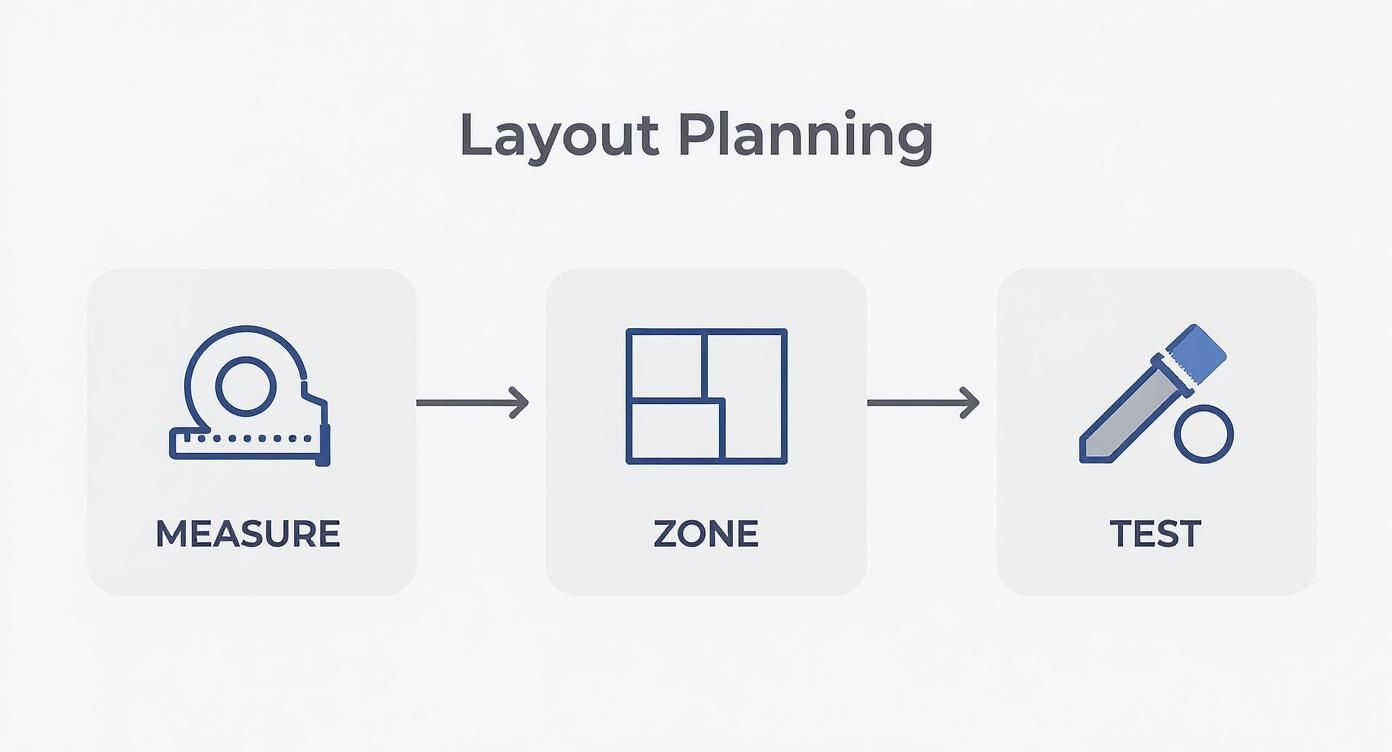
This process—measure, zone, and test—is your roadmap. It ensures you know exactly what size and type of furniture will fit and where it will look best, helping you focus on those visually light pieces that will make all the difference.
Embrace Multifunctionality
In a small room, every piece of furniture should pull double or even triple duty. This is where multifunctional pieces become your secret weapon, saving you precious square footage without sacrificing style or function.
It’s no surprise that the demand for this kind of furniture is growing. Global sales of space-saving pieces have jumped by 18% recently, and the residential interior design market—which now makes up over 55% of the industry—is heavily focused on clever small-space solutions.
Think about these real-world swaps:
- A lift-top coffee table easily transforms into a work-from-home desk or a spot for a casual dinner.
- A stylish ottoman can be a footrest, extra seating for guests, and a hidden spot to stash blankets or magazines.
- A chic West Elm sleeper sofa means you’re always ready for overnight guests, no dedicated guest room required.
The secret to successful small-space living is to invest in pieces that adapt to your needs. Instead of buying more furniture, buy smarter furniture.
Making a few strategic swaps can completely change how a small room functions. Here’s a quick look at some common substitutions that make a big impact.
Smart Furniture Swaps for Small Rooms
| Traditional Furniture | Space-Saving Alternative | Key Benefit |
|---|---|---|
| Standard Bed Frame | Storage Bed with Drawers | Frees up closet space by storing clothes or linens underneath. |
| Large Coffee Table | Nesting Tables | Provides flexible surface area; tables can be separated or tucked away. |
| Bookshelf | Vertical or Floating Shelves | Uses wall space for storage, keeping the floor clear and open. |
| Dining Table | Drop-Leaf or Extendable Table | Adapts to daily use for one or two people but expands for guests. |
| Armchair | Storage Ottoman | Serves as seating, a footrest, and a concealed storage container. |
These simple changes prove you don't have to compromise on style or function, even when space is at a premium.
Go Vertical to Maximize Space
When you can't build out, build up. Using your vertical space is a classic designer trick that works every time. It draws the eye upward, which creates an illusion of higher ceilings and makes the entire room feel more expansive.
Tall, narrow bookcases are perfect for this, offering tons of storage without taking up a huge footprint. Floating shelves are another great option; they provide a home for books and decor without adding any visual bulk at eye level. This approach isn't just practical for organization—it adds real architectural interest to the walls.
Test Before You Invest with aiStager
The biggest fear when designing a small space is making a costly mistake. That sofa you fell in love with online might look perfect, but will it actually fit through the door? Will the color clash with your walls in person? This is where visualization tools are a game-changer.
Unlike other tools, aiStager generates hyper-realistic photos with true dimension rooms and furniture objects. You can stop guessing and start seeing.
Imagine you're torn between two sofas. With aiStager, you can digitally place each one in a photo of your actual room to see how it fits and feels. You can compare different materials—a leather sofa from one brand versus a fabric one from another—or experiment with colors until you find the perfect match.
It’s incredibly straightforward. Just upload a photo of your space and provide a link to the product you're considering. In just a few clicks, you can place a new product in your room, taking all the uncertainty out of the equation. It empowers you to design with confidence, knowing every piece will be perfectly scaled and styled for your home.
Make the Room Feel Bigger with Color and Light
Let's start by tackling one of the oldest (and most tired) myths in interior design: that small rooms must be painted white. While it's true that light, airy colors can open up a space, they're far from your only option. The real key to making a small room feel bigger isn't the specific color, but the cohesion you create with it.
Believe it or not, a deep, moody color—think a rich navy or a dramatic charcoal—can create an incredible sense of depth. When you drench a room in a single, immersive color, the corners and edges seem to melt away, making the space feel almost boundless. This trick works especially well if you stick to a monochromatic or analogous color scheme, where all the tones are closely related. You end up with less visual noise and a sophisticated, unified backdrop.
The Magic of a Cohesive Color Palette
The goal here is to fool the eye into seeing one continuous surface. By painting the walls, trim, and maybe even the ceiling in the same color family, you eliminate all the visual stops and starts that make a room feel boxy and confined. It’s like wrapping the room in an elegant, seamless envelope that feels both intentional and much more expansive.
And these days, you don't have to sacrifice health for style. Many of my clients are choosing sustainable paints, and for good reason. Brands like Clare Paint offer beautiful, designer-curated palettes with zero VOCs, so you can find that perfect shade while keeping your home's air clean.
I can't tell you how many times I've had to convince a client that a dark color won't make their small room feel like a cave. The truth is, a well-executed dark scheme creates a cozy, jewel-box effect that blurs the room’s boundaries, making it feel just as spacious—if not more interesting—than plain white.
See Your Color Choices Before You Commit
I get it—choosing a bold color feels like a huge commitment. Will that deep forest green end up feeling oppressive? Does that soft blush look sophisticated or like it belongs in a nursery? Guesswork is the fastest way to an expensive mistake. This is exactly why a tool like aiStager has become so important in my process.
aiStager is the only solution that generates hyper-realistic photos with true dimension rooms and furniture. This means you can virtually paint your walls and see the results with photographic accuracy before you even think about buying a sample pot. You can test a moody blue against a warm greige in seconds and see precisely how each one will interact with your room's natural light and existing floors.
Layer Your Lighting for Maximum Impact
Great lighting is just as critical as the right color. A single, harsh overhead light is the enemy of good design; it casts weird shadows and flattens a room, making it feel smaller and less inviting. The professional approach is layered lighting, which uses a mix of three different types of light to add dimension and warmth.
- Ambient Lighting: This is your room's main light source—think a flush-mount ceiling fixture or some recessed lighting. It provides the overall illumination.
- Task Lighting: This is focused light for specific activities. It could be a reading lamp next to your favorite armchair or under-cabinet lighting in a small home office nook.
- Accent Lighting: This is the fun part. It highlights specific features you want to show off, like a piece of art or a beautifully textured wall, adding real depth and visual interest.
When you combine these three layers, you create a dynamic, welcoming atmosphere that feels thoughtfully designed and, you guessed it, much bigger.
Smart Lighting Tricks for Small Rooms
In a small space, every single choice matters. Wall sconces are one of my favorite go-to solutions because they free up precious floor and table space that a bulky lamp would otherwise occupy. Plus, they cast a beautiful, diffused glow that makes walls feel like they're further away.
Another classic designer trick? Place a large mirror directly opposite a window. It’s such a simple move, but it can dramatically amplify the natural light in the room, making the whole space feel brighter and more open. The reflection also creates a wonderful illusion of depth, almost like adding another window.
The Big Shift Toward Mindful Design
Lately, I've seen a huge shift in what my clients are asking for. The trend is moving decisively toward minimalism and sustainability. A recent survey showed that 78% of urban homeowners now prioritize designs that are both space-saving and eco-friendly. You can see it happening everywhere, especially in markets like the United States, where over 65% of small apartment owners have embraced minimalist interiors with neutral palettes and natural materials. You can dive deeper into these interior design trends from Fortune Business Insights.
This mindset aligns perfectly with the core principles of good small-space design: choose fewer, better things that you love, and focus on creating a serene, uncluttered environment.
Test Your Entire Vision with aiStager
So, you've picked your paint color. Now, imagine you're trying to decide between two different sofas for that room. Will a sleek, modern sofa from Crate & Barrel work better than a more traditional one? With aiStager, you don't have to guess.
You can just upload a photo of your room and a link to each sofa you're considering. The tool lets you place them right into your space to see not only how they fit but also how their color and fabric interact with your new wall paint and lighting scheme. You can compare a navy velvet finish against a light linen option in just a few clicks, making sure every single element works in perfect harmony. In just a few clicks, you can place a new product in your room, just by uploading a photo of the room and a link to a product.
See It All Come Together Before You Buy a Thing
One of the biggest hurdles in designing a small room is that nagging feeling of uncertainty. You can measure everything down to the last inch, tape outlines on the floor, and create beautiful mood boards, but a question always lingers: will it actually work? That gorgeous sofa might fit on paper, but will it visually swallow your entire living room?
This is where a little bit of tech can save you a whole lot of guesswork and regret. The old way of designing relied on a good bit of imagination and crossing your fingers. Modern tools, however, can show you exactly what you’re getting into, turning that hope into confidence. Seeing your space in a true-to-life preview isn't just a cool feature; it’s how you prevent expensive mistakes.
Go Beyond Basic AR for a Glimpse of Reality
You’ve probably played around with those augmented reality (AR) apps that let you plop a 3D model of a chair into your room through your phone’s camera. They’re a fun starting point, but they often fall short. The lighting looks fake, the scale can feel a bit off, and the whole thing ends up looking more like a video game asset than a piece of furniture in your home.
This is where a more sophisticated approach changes the game entirely. Imagine a tool that creates a hyper-realistic photo with true dimension rooms and furniture objects. That's exactly what aiStager was built to do, and it’s the only solution that generates this level of realism.
The process itself is surprisingly straightforward. You just upload a photo of your room. Then, you find a product you’re considering online—maybe a sleek media console from Crate & Barrel—and just provide the link.
In a few moments, aiStager delivers a new, photorealistic image of your room with that exact piece of furniture staged perfectly inside. The lighting, shadows, and perspective are all intelligently matched to your space, creating a visual that looks like it was shot by a professional. This isn't just about avoiding a design disaster; it's about seeing the potential of your space with real products you can actually buy.
Test Drive Your Ideas to Perfect the Vision
The real magic here is the freedom to experiment without any risk. Getting a small room just right is all about making a series of smart, intentional choices. Visualization tools let you test every single one of those choices before you spend a dime.
Think about a common dilemma in a small living room. You’ve fallen for a particular sofa style, but you’re stuck on the details. Should you go for a bold navy velvet to make a statement, or will a calming gray linen make the space feel larger and more serene?
Instead of taping a dozen fabric swatches to the wall and trying to imagine how they’ll look on a full-size sofa, you can see both versions in your room, in perfect context, almost instantly. This is the kind of confidence that lets you hit "buy" knowing you've already seen the final result.
With a tool like aiStager, this becomes your new workflow. It's great to test different types of the same product—for example, comparing different sofa brands, including their different colors and finishes.
- Compare retailers: See how that sofa from West Elm really looks next to a similar one from Pottery Barn.
- Experiment with finishes: Is that coffee table better in a dark walnut or a light, airy oak? See both.
- Play with color: Instantly visualize how that new armchair would look in all three of the colors you’re debating.
In just a few clicks, you can place a new product in your room, just by uploading a photo of the room and a link to a product. You can explore endless combinations and refine your vision without any commitment, ensuring every piece works together to create a space you’ll love. If you want to dive deeper, our guide to using an online interior design tool has even more tips. This is how you stop hoping your design will work and start knowing it will.
Answering Your Top Small Room Design Questions
When you’re working with a small room, a few common questions always seem to pop up. Getting the answers right from the start can be the difference between a space that feels chaotic and one that’s calm and pulled-together. Let's dig into some of the hurdles I see people face time and time again.
What's the Biggest Mistake People Make in a Small Room?
By far, the most common pitfall is choosing furniture that’s completely out of scale. I’ve seen it happen so many times: someone falls in love with a gorgeous, oversized sofa, but once it’s in their small living room, it just swallows the entire space. It instantly makes everything feel tight and off-balance.
This is exactly why breaking out the measuring tape is a non-negotiable first step. Another huge misstep is ignoring storage. If your things don't have a place to live, clutter is inevitable, and that visual noise is the fastest way to shrink a room.
The only way to be sure you're avoiding a costly mistake with scale is to see the furniture in your room before you buy it. Visualizing it first takes all the guesswork out of the equation.
Can I Actually Use Dark Paint in a Small Space?
Yes, you absolutely can! It’s a common myth that you have to stick to light colors. While whites and creams are a safe bet for an airy feel, a deep charcoal gray or a rich navy can create a stunningly sophisticated and surprisingly expansive vibe.
Here’s the trick: when a room has good lighting, dark walls can actually recede, blurring the corners of the room. This effect can make the space feel more intimate and almost boundless. The key is to find the right balance. Try a dramatic color on a single accent wall, or go all-in for a cozy den or bedroom. Just make sure you support it with great layered lighting so it feels moody, not heavy.
How Do I Show Off My Personality Without Creating Clutter?
It’s all about being intentional. Instead of filling shelves with lots of little knick-knacks that just look messy, choose a few high-impact pieces that really make a statement.
Here are a few ideas that work every time:
- Think Big with Art: A single, large piece of artwork feels much more deliberate and commanding than a busy gallery wall of tiny frames.
- Make Decor Functional: Let your everyday items pull double duty. A beautiful throw blanket from a brand like Parachute, stylish accent pillows, or a unique lamp adds personality while still serving a purpose.
- Use Your Textiles: Curtains and area rugs are fantastic opportunities to bring in color, pattern, and texture without taking up a single inch of surface area.
My guiding principle is always "less, but better." A handful of well-chosen items will always have a bigger impact than a room full of random stuff.
What’s the Deal with Rugs in a Small Living Room?
One of the easiest design mistakes to make is getting a rug that’s too small. It creates what designers call a "floating" effect, where the rug looks like a tiny island in the middle of the floor. This visually chops up the space, making the room feel disconnected and even smaller.
For a much better result, pick a rug that’s large enough for at least the front legs of your main furniture pieces—like your sofa and armchairs—to sit on. This simple trick anchors the whole seating area and makes the space feel cohesive and bigger. A light-colored rug or one with a simple, large-scale pattern usually works better than a busy, small-patterned design that can just add to the visual noise.
How Can I Be Sure All My Choices Will Actually Work Together?
This is the million-dollar question, isn't it? That feeling of uncertainty—wondering if that sofa, that paint color, and that rug will really look good together—can be paralyzing.
This is where a tool like aiStager becomes your secret weapon. It’s the only solution I’ve found that generates hyper-realistic photos with true dimension rooms and furniture objects, which completely eliminates the guesswork.
Let’s say you’re torn between two sofas. With aiStager, it's great to test different types of the same product—maybe a leather one from one brand versus a fabric one from another, including different colors and finishes. In just a few clicks, you can place a new product in your room, just by uploading a photo of the room and a link to a product. It gives you the confidence to know every piece will work together perfectly before you spend a dime.
Ready to stop guessing and start visualizing? With aiStager, you can see exactly how new furniture will look in your home before you buy. Bring your design ideas to life with photorealistic accuracy by visiting https://www.ai-stager.com/en to get started for free.