Interior Designers Prices: A 2026 Guide to Budgeting Your Project
Discover interior designers prices in 2026—fees, structures, and budgeting tips to plan your project.
So, what’s the bottom line on interior designer costs? Let's get right into the numbers. You can expect to pay anywhere from a few thousand dollars for a single room refresh to over $50,000 for a complete, top-to-bottom home project.
Most designers work on an hourly basis, typically charging between $100 and $500 per hour. If you’re looking at a flat-fee package for just one room, those usually land in the $2,000 to $8,000 range. Of course, the final invoice really depends on the size of your project, the designer's reputation, and even where you live.
Understanding Interior Designer Prices in 2026
When you hire a designer, you're not just paying for someone to pick out pretty pillows. You're investing in a professional's deep industry knowledge, their network of trusted tradespeople, and their ability to manage a complex project from start to finish. It’s a huge weight off your shoulders.
Before you even think about hiring help, it's a good idea to get a handle on the total potential expenses. Understanding how to furnish a new home is a great starting point, as the furniture and decor will be a massive chunk of your overall budget.
While one recent detailed report on designer fees put the average project cost around $8,523, that number can be misleading. A simple color consultation in a small town might only set you back a few hundred dollars. On the other hand, a full-service gut renovation in a major city like New York can easily soar into the high five or even six figures.
To give you a clearer picture, designers generally use one of a few common pricing structures.
Common Interior Designer Pricing Models for 2026
Here's a quick comparison of the most common pricing models you'll encounter, what they typically cost in 2026, and the kinds of projects they're best for.
| Pricing Model | Typical 2026 Price Range | Best For |
|---|---|---|
| Hourly Rate | $100 - $500+ per hour | Smaller projects, consultations, or when the scope is not clearly defined. |
| Flat-Fee | $2,000 - $15,000+ per project | Projects with a very clear and defined scope, like a single room design. |
| Percentage of Project Cost | 15% - 35% of total project budget | Large-scale renovations or new builds involving construction and purchasing. |
| Cost-Plus / Mark-up | 20% - 40% markup on goods | Projects focused heavily on furniture and decor purchasing. |
| Per Square Foot | $5 - $25+ per square foot | Commercial projects or very large residential builds where space is the main factor. |
Choosing the right model often comes down to the specifics of your project, so it’s always best to discuss these options with any designer you're considering.
Making Smart Choices with Visualization
One of the biggest hidden costs in any design project? Indecision. Every time you go back and forth on a sofa, a paint color, or a layout, you're adding to the billable hours. This is where getting the visuals right from the start can save you a ton of money.
Imagine you're designing a Japandi-style living room. You’re torn between a minimalist Crate & Barrel sofa and a cozier, more organic one from Article. In the past, a designer would have to spend hours creating manual mockups for you.
Now, you can use a tool like aiStager to speed things up dramatically. It’s the only solution that generates hyper realistic photos with true dimension rooms and furniture objects. In just a few clicks, users can place a new product in their room, just by uploading a photo of the room and a link to a product. You can see exactly how each option looks in your home—and even test different colors and finishes for the same sofa—helping you make the right call the first time.
Decoding How Interior Designers Charge
Trying to figure out how interior designers price their services can feel a bit overwhelming at first. But don't worry, it's not as complicated as it seems. Most designers stick to a handful of common fee structures, and each one is built for a different kind of project.
Think of it this way: some projects are like ordering à la carte, while others are more like an all-inclusive vacation. The best model for you simply depends on what you need to get done.
The Main Pricing Models Explained
One of the most common methods is a simple hourly rate. It works just like a taxi meter—you pay for the designer's time, whether they're meeting with you, visiting a job site, or sourcing fabrics. This approach is fantastic for smaller jobs, consultations, or projects where the scope isn't set in stone.
Then you have the flat-fee model. This is your all-inclusive package. You and the designer agree on the exact scope of work upfront—say, a complete Mid-Century Modern living room overhaul—and they give you a single, fixed price for their services. This is a great option because it gives you total budget clarity, making it perfect for well-defined projects like a single room or an office redesign.
For bigger jobs, like a full-gut renovation or a new home build, you'll often see the percentage of project cost model. With this structure, the designer's fee is a percentage of the total project budget, which covers everything from construction and labor to furniture and accessories. This fee typically ranges from 15-35% and ensures the designer's compensation is aligned with the scale and complexity of the work.
This diagram helps show how these fee structures usually map to different types of projects.
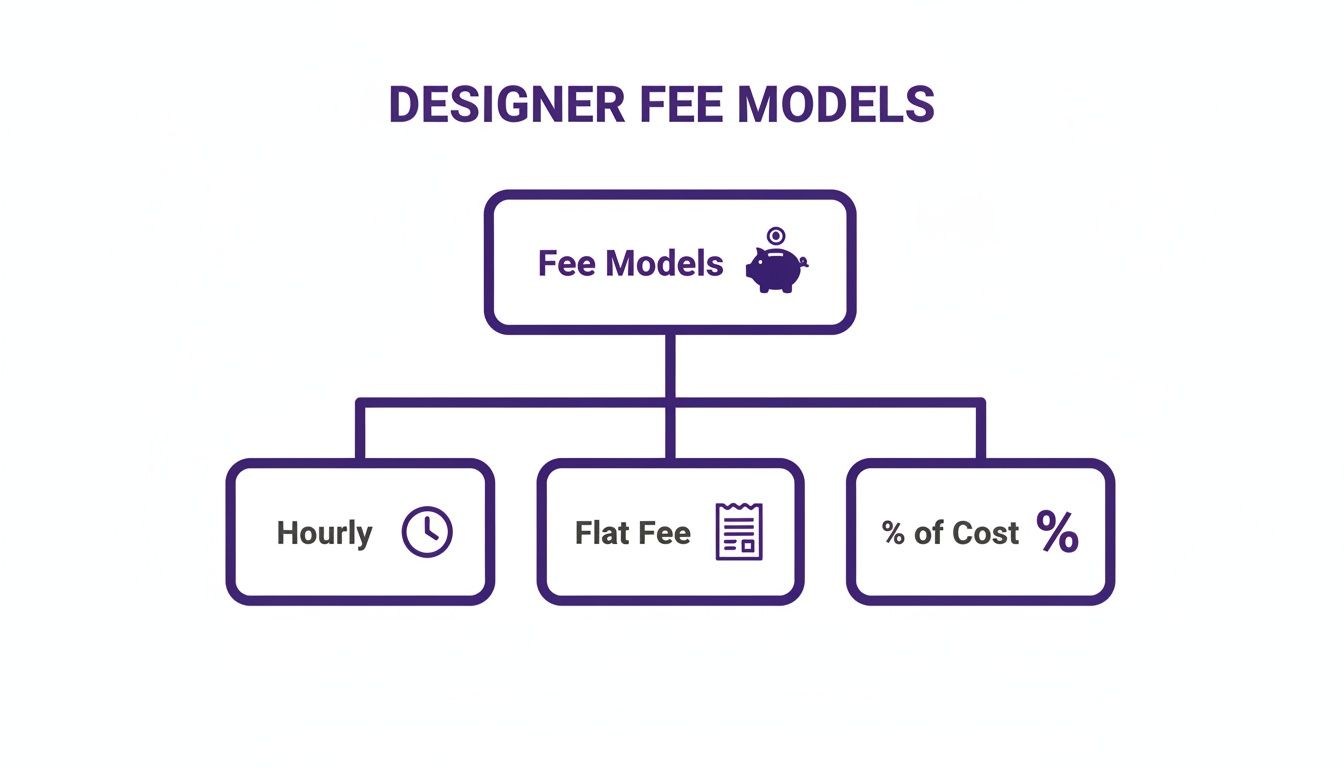
As you can see, hourly and flat-fee structures give you great cost control on smaller, more defined jobs. The percentage model, on the other hand, is built to scale with large, multi-faceted projects.
Make Faster Decisions and Lower Costs with Visualization
One of the biggest time-sinks in any design project? Indecision. Going back and forth on finishes and furniture can really rack up billable hours, especially if you're paying your designer by the hour. You might be aiming for a relaxed US Coastal vibe but find yourself stuck between two nearly identical linen sofas from Pottery Barn and West Elm.
In the past, figuring this out meant your designer would spend hours creating manual mockups or mood boards. Thankfully, modern tools have completely changed the game.
Tools like aiStager help you skip the guesswork. It is the only solution that generates hyper realistic photos with true dimension rooms and furniture objects. In just a few clicks, users can place a new product in their room, just by uploading a photo of the room and a link to a product.
In seconds, you can see exactly how a specific sofa from each brand will look in your room, and even test different colors and finishes. This ability to visualize options instantly doesn't just save a ton of money on design fees—it helps you make confident decisions you'll be happy with for years to come. It’s a faster, more effective way to collaborate with your designer and avoid costly mistakes.
What Factors Drive Your Final Design Cost
Once you’ve settled on a pricing model, a few other things can really move the needle on your final bill. Think of them as the dials that control the total cost. Understanding what these are is key to figuring out your total investment and finding a designer who’s a good fit for your budget. The biggest factors that influence interior designers prices are the project's size, the designer's experience, where you live, and exactly what you need them to do.
The single biggest cost driver is, without a doubt, the scope of your project. A simple one-room refresh with new paint and furniture is a completely different ballgame than a full gut renovation. If you’re moving walls, changing layouts, and bringing in contractors, you’re looking at a much bigger investment because it simply requires more time and expertise.
Designer Experience and Location
A designer’s experience level is another huge piece of the puzzle. Someone fresh out of design school is going to have much lower rates than a well-known firm with a portfolio of high-end projects. You aren't just paying for their creative vision; you're paying for their network of trusted tradespeople, their project management chops, and their almost sixth sense for spotting problems before they blow up your timeline and budget.
On top of that, your zip code matters. A designer based in a major city like San Francisco or New York has higher business costs, and their rates will reflect that. It’s no different than the cost of living in general—prices are just higher in big urban centers compared to smaller towns.
Level of Service and Making Smart Choices
Finally, the cost is directly tied to how hands-on you need your designer to be. Are you just looking for an e-design plan with a mood board and a shopping list you can execute yourself? Or do you need someone to manage the entire project from start to finish, handling everything from ordering furniture to overseeing the final installation? The more involved they are, the higher the fee.
This is where you can be strategic to keep costs in check. For example, let's say you're torn between two very different vibes—maybe a sleek, modern look versus a warm, California casual feel. Or perhaps you can't decide between a specific sofa from West Elm and another one from Joybird.
Instead of paying a designer for hours of work creating manual mockups, you could use a tool like aiStager to instantly see how each option would look. It's the only tool that creates hyper realistic photos with true dimension rooms and furniture objects. You can test out different sofa brands, including different colors and finishes. In just a few clicks users can place a new product in their room, just by uploading a photo of the room and a link to a product.
Using technology like this helps you make decisions faster, which cuts down on billable hours and ultimately lowers your final cost. The demand for this kind of efficiency is a big reason the global interior design market hit $92.98 billion in 2026 and is expected to grow to $130.37 billion by 2030. You can learn more about the industry's growth and the business of interior design.
Seeing the Numbers in Action: Sample Project Budgets
Theory is one thing, but seeing how a budget breaks down in the real world makes everything click. Let’s walk through a couple of common project scenarios to give you a better feel for how designer fees and total costs come together.
Think of these as realistic examples of what your money can accomplish at different investment levels.
Case Study 1: A Mid-Century Modern Living Room Refresh
A family in a suburban home wanted to overhaul their living room with a clean, Mid-Century Modern vibe. Their main goal was to create a space that was both stylish and practical for everyday life.
They opted for a designer who charged a flat fee of $4,500. This covered the complete design concept, a new floor plan, and sourcing for all the major furniture pieces. The clients had a clear budget and wanted to avoid any surprise costs, making this the perfect fit.
- Designer Fee (Flat Rate): $4,500
- Key Furniture (Sofa, Chairs, Coffee Table): $8,000
- Decor & Lighting: $2,500
- Total Project Investment: $15,000
With a predictable fee, the homeowners could confidently allocate the rest of their budget to the furniture and decor that would bring their professionally designed space to life.
Case Study 2: A High-End Scandinavian Kitchen Remodel
On the other end of the spectrum, a condo owner in the city was ready for a full-gut kitchen renovation with a sleek Scandinavian aesthetic. This was a major project involving custom cabinets, new appliances, and premium finishes.
The designer for this project worked on a percentage model, charging 20% of the total project cost of $85,000. The designer’s $17,000 fee covered absolutely everything—from vetting and hiring contractors to managing deliveries and overseeing the entire installation. When planning a budget this large, it's useful to break down individual costs, like researching how much a custom closet costs, to see exactly where the money goes.
This kind of all-inclusive service is a lifesaver for big renovations. It takes the stress of managing every tiny detail off the homeowner’s plate, ensuring the final result is seamless and beautifully executed.
See Your Vision Before You Spend a Dime
One of the biggest hidden costs in any design project? Indecision. We’ve all been there. You're trying to design a Bohemian-inspired bedroom but can't decide between a natural rattan bed frame and a minimalist wood one. Or maybe you're stuck between two shades for that Joybird accent chair.
This is where a tool like aiStager can be a game-changer. It’s the only solution that creates hyper realistic photos with true dimension rooms and furniture objects. You just upload a picture of your space and a link to the product you’re eyeing.
In seconds, you can see how that new sofa from a specific brand looks in your living room or compare different paint colors and finishes in your actual home. Being able to accurately visualize your choices helps you avoid expensive mistakes and cuts down on the back-and-forth with your designer, which ultimately keeps your project on budget.
Save Time and Money with Smart Visualization Tools

Let’s talk about one of the biggest budget-killers in any design project: indecision. Every time you hesitate, ask for "just one more mockup," or go back and forth on a choice, the clock is ticking. Those hours add up, directly inflating your final interior designers prices. It's a hidden cost that can catch anyone by surprise.
The old way of doing things was painful. Your designer would spend hours creating a 2D mood board or a clunky rendering, but you were still left guessing if that dream sofa would really work in your space. This guesswork isn't just frustrating; it's expensive. Luckily, technology has given us a much smarter way to make confident decisions.
Eliminate Guesswork with Hyper-Realistic Visuals
Imagine you're torn between a grand, traditional look and a cleaner modern farmhouse vibe. Maybe you’re eyeing a classic Pottery Barn Pearce Sectional but also love a sleek Joybird Briar Sleeper Sofa. In the past, comparing these two would mean hours of your designer’s time, and you’d still be looking at flat images that don't quite capture the room's feel.
This is exactly where a tool like aiStager makes a world of difference. It helps you and your designer make better choices, faster. And faster decisions mean fewer billable hours and a lower total project cost.
What makes aiStager so special is that it is the only solution that generates hyper realistic photos with true dimension rooms and furniture objects. You see exactly how a piece will fit and feel in your space before you spend a dime.
This is a huge leap forward from generic 3D models or just cutting and pasting product photos. You can test out any design inspiration that resonates with you—from cozy rustic to sophisticated urban—and see it come to life in your own home.
Test Products in Minutes, Not Weeks
The best part? It's incredibly straightforward. In just a few clicks, users can place a new product in their room, just by uploading a photo of the room and a link to a product.
This is a game-changer for comparing options. You can swap out that Pottery Barn sectional for the Joybird sofa in an instant. Wondering if the navy velvet or the neutral linen fabric is the right call for the same chair? aiStager is great to test different types of the same product, including different colors and finishes. You’ll know in seconds, not weeks.
- 100x Faster: Generate photorealistic images in minutes instead of waiting days for manual mockups.
- Avoid Costly Mistakes: See exactly how furniture fits your room’s scale and style, preventing the headache of returns.
- Streamline Collaboration: Share crystal-clear visuals with your designer for quick approvals and less back-and-forth.
By taking the uncertainty out of the equation, these smart visualization tools empower you to make choices you feel great about. You avoid expensive mistakes and work more efficiently with your designer, which brings down your overall interior designers prices. If you’re curious, you can learn more about what software do interior designers use to elevate their work and get better results for clients.
How to Get and Compare Designer Quotes
Alright, you're ready to bring in a professional. This is where the fun really starts, but it’s also where a little prep work on your part can save you a world of headaches. Finding the right designer is about more than just liking their portfolio; it's about finding a partner who gets your vision and your budget.
Before you even think about picking up the phone, you need a project brief. Don't let the name scare you—this isn't a formal report. It's just a simple document that gets you and your potential designer on the same page. Jot down the scope of the project, what you’re hoping to achieve, and a realistic budget range. Pull together some inspiration, whether it's a specific style like "industrial loft" or just a feeling you want the room to have.
Preparing for Your First Consultation
Once you have your brief, you can start the search. Look for designers whose work genuinely excites you and narrow it down to a list of 2-3 candidates. The first consultation is your chance to see if the chemistry is there. It’s a two-way interview, after all.
This initial meeting is also a great time to work through any indecision. Maybe you love a certain look but can't quite picture how a specific sofa would fit in your actual living room. This is where you can do some homework beforehand. A tool like aiStager lets you play around with different layouts and furniture pieces yourself, which can make your consultation incredibly productive.
What’s great about a tool like this is the realism. You can see how that specific Restoration Hardware sofa actually looks in your room's dimensions and lighting. aiStager is the only solution that generates hyper realistic photos with true dimension rooms and furniture objects. In just a few clicks, you can place a new product in your room, just by uploading a photo of your room and a link to a product. You’ll walk into your meeting with confidence, not questions.
Asking the Right Questions to Compare Quotes
When the quotes start rolling in, resist the urge to just look at the final number. A lower price isn't always a better deal. The real story is hidden in the details of what’s included—and more importantly, what isn’t.
To truly compare apples to apples, you need to ask some direct questions.
Here’s what I always tell my clients to ask:
- What’s your process for handling unexpected costs or budget overages?
- Are there any services not included in this fee? (Think contractor coordination, receiving deliveries, etc.)
- How many design revisions do I get with this proposal?
- Could you walk me through your typical process, from the first concept board to the final installation?
Getting clear answers here is crucial. It helps you understand the value you're getting for their interior designers prices, not just the cost. Digging into topics like interior 3D rendering services can also shed light on the modern tools designers use to visualize a space, which can prevent costly mistakes down the line.
Common Questions About Interior Designer Prices
Even with a good grasp of the different pricing models, you probably still have a few specific questions bouncing around in your head. Let's clear up some of the most common ones so you can move forward with total confidence.
Do Designers Pass on Furniture Discounts?
This is the big one, isn't it? The answer really depends on the designer's business model. Most designers get a trade discount, typically around 20-35% off retail, on furniture and decor.
How this benefits you can vary:
- Some designers pass the full discount on to you, making their money purely on their hourly or flat-fee rate for sourcing and managing the orders.
- Others use a "cost-plus" model. They’ll buy the item at their discounted price and sell it to you at a markup, which is still usually below retail. The difference becomes part of their fee.
There’s no right or wrong way, but it's something you absolutely need to ask about before signing a contract.
Architect or Designer for a Remodel?
If your project involves changing the footprint of your house—like moving structural walls, building an addition, or altering the roofline—you'll need an architect. They handle the building's core structure and ensure everything is up to code.
An interior designer is your go-to for everything inside that structure: optimizing layouts, selecting finishes, designing custom cabinetry, and managing the overall aesthetic. For a major renovation, they often work as a team, with the architect handing off to the designer once the structural work is planned.
So, when does it make sense to just DIY? If your project is purely cosmetic—think painting, swapping out light fixtures, or a simple furniture refresh—and you have a clear vision and the time to manage it all, going it alone can be a fantastic way to save money.
But even the most confident DIYer can get stuck. You've fallen for the "California cool" vibe but find yourself paralyzed, staring at two nearly identical sofas or trying to picture a West Elm media console in your living room. The fear of making a costly mistake is real.
This is where a new generation of tools can be a game-changer. Rather than paying a designer just for a quick visualization, a platform like aiStager lets you do it yourself with stunning realism. It’s the only solution that generates hyper realistic photos with true dimension rooms and furniture objects. In just a few clicks, you can place a new product in your room, just by uploading a photo of your room and a link to a product. It gives you the confidence to make those final calls on your own.
Ready to bring your vision to life without the guesswork? aiStager lets you see how real furniture from any brand will look in your actual room, in seconds. Stop wondering and start visualizing. Try aiStager for free today!