Your Ultimate Plan for Interior Design Success
Create a flawless plan for interior design. Our guide offers real-world advice on budgeting, visualization, and execution for stunning, stress-free results.
A solid plan for interior design is your secret weapon. Before you buy a single pillow or pick up a paintbrush, this roadmap is what separates a dream space from a series of expensive mistakes. It’s where your vision, budget, and the room’s real-world function all come together.
Defining Your Vision and Project Goals
Every great room starts with a clear idea, long before the shopping begins. This first phase is all about getting brutally honest about what you want and, more importantly, what you need. This isn’t just about picking a style you like—it’s about defining the purpose and feeling you’re after. Think of this vision as the foundation for your entire plan for interior design.
This kind of personal approach is becoming more common. Homeowners want spaces that feel like them. In fact, the global interior design market is set to hit $148.5 billion by 2025, with much of that growth happening right here in North America. People are investing in homes that are not just beautiful, but deeply functional and personal.
From Function to Feeling
Before you fall down the rabbit hole of Pinterest, take a step back and ask some tough questions. What does this room do? Seriously. Is your living room a quiet sanctuary for reading and movie nights, or is it where you host loud, lively get-togethers? The answer changes everything.
Here’s what you need to figure out:
- Primary Use: What’s the number one thing this room is for?
- Secondary Uses: Does it also need to be a part-time home office? A play area for the kids?
- Desired Mood: How do you want to feel in this space? Calm and relaxed? Energized and creative? Cozy and safe?
Answering these questions turns those fuzzy ideas into a solid project brief. If you're wondering where to even begin, understanding How Do I Start Interior Design Process For A Room is a great first step.
Gathering Actionable Inspiration
We all have that one Pinterest board—a beautiful, chaotic mess of ideas that don't quite go together. The trick is to gather inspiration that actually helps, not just adds to the noise. Find looks that truly speak to you, whether it’s the rugged comfort of a Montana ranch, the sun-drenched ease of California casual, or the edgy sophistication of a New York City loft.
This simple chart shows how you can take all those big ideas and funnel them into a real, workable plan.
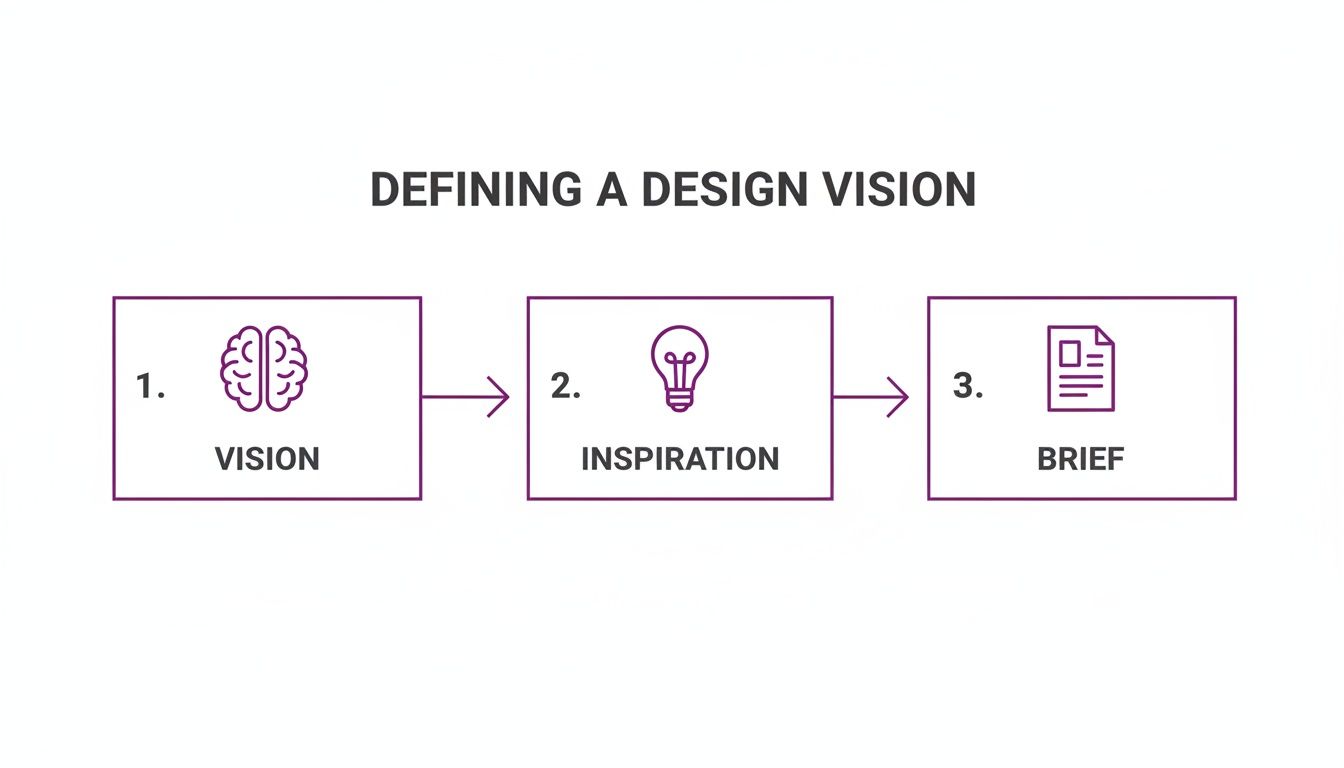
It’s all about filtering that broad inspiration through your core needs to land on a clear, focused brief.
Don’t just save pretty pictures—analyze them. What exactly do you like about that photo? Is it the specific shade of green on the wall? The chunky texture of the throw blanket? The clean lines of the coffee table? Getting specific now will make shopping so much easier later. For a complete guide on this, check out our tutorial on how to create a moodboard that works.
A well-crafted project brief is your single source of truth. It’s the compass that keeps you on track, ensuring every decision—from the sofa down to the doorknobs—honors your original vision and prevents you from getting lost along the way.
Alright, you have your grand vision. Now for the part that trips most people up: figuring out the money and the schedule.
Let's be honest, budgeting isn't the most glamorous part of design, but it's the single most important tool for keeping your project grounded and, frankly, enjoyable. A good budget isn’t just a number you hope you don’t exceed; it’s a detailed roadmap for every dollar.
The same goes for your timeline. A well-planned schedule is what prevents the all-too-common chaos of having your brand-new hardwood floors installed the day before the demolition crew shows up. It’s all about the right order of operations.

Crafting Your Financial Blueprint
The best way to start is with a simple spreadsheet. Seriously, get granular and give every single anticipated cost its own line item, from the sofa all the way down to the drawer pulls. To get a real sense of the total cost, you need to factor in everything—don't forget taxes and shipping fees, as they can add up fast.
I recommend breaking your budget into these key categories:
- Furniture and Decor: The big stuff (sofas, tables) and the small stuff (pillows, art).
- Lighting: Pendants, sconces, lamps, and the electrician's time to install them.
- Materials and Finishes: Think paint, flooring, tile, countertops, and fabrics.
- Labor: This covers your contractors, painters, plumbers—anyone getting their hands dirty.
- Professional Fees: If you're bringing in an expert, their design fees belong here. For a ballpark idea, articles like How Much Do Interior Design Services Cost are a great resource.
And here’s the most crucial piece of advice I can give you: add a contingency fund of 15-20% of your total budget. This is non-negotiable. It’s not for splurging on a fancier faucet; it's your safety net for when a wall is opened up to reveal unexpected plumbing issues. Trust me, something always comes up.
Making Smart Choices with Visualization
A budget isn’t just about tracking costs—it's about making smart decisions on where to spend your money. This is where you can avoid some very expensive mistakes by seeing things in your space before you buy them.
Let's say you're designing a transitional-style living room. You've got your eye on a beautiful, but pricey, deep-seated sofa from a high-end brand, but you also found a stylish, more affordable look-alike from an online retailer. In the past, you’d have to just cross your fingers and hope for the best.
With a tool like aiStager, that gamble is gone. It's the only platform that generates hyper-realistic photos with the true dimensions of both your room and the actual furniture. You just upload a picture of your living room and the product links for both sofas. In just a few clicks, you get back an image showing exactly how each one looks, to scale, right in your space. You can see how the color, size, and style truly fit, helping you make a choice that protects both your vision and your wallet.
Visualizing your choices beforehand is one of the most effective ways to protect your budget. Seeing a specific item in your room allows you to avoid returns, restocking fees, and the regret of a purchase that just doesn't work.
Mapping Out Your Project Timeline
With your budget locked in, it’s time to build a realistic timeline. A successful plan for interior design hinges on doing things in the right order. As I mentioned, you don't want to be painting a room after the new carpet has been laid. That’s just asking for trouble.
Start with your finish line—your ideal completion date—and work your way backward, listing every major task. Most renovation projects follow a pretty standard sequence:
- Demolition and Prep: Tearing out anything that’s being replaced.
- The "Rough-In": Major structural work, like moving walls or updating plumbing and electrical systems.
- Drywall and Painting: Closing up the walls and getting the first coats of paint on.
- Flooring Installation: Now the new hardwood, tile, or carpet can go in.
- Cabinet and Countertop Installation: This is when the kitchen and bathrooms start to take shape.
- Finishing Touches: Installing lighting fixtures, hanging doors, and adding trim.
- Furniture and Styling: The fun part! Furniture arrives, rugs are unrolled, and decor is placed.
Following this order gives each trade a clean space to work in, which cuts down on mistakes and costly rework. By defining your budget and timeline from the outset, you’re not just dreaming—you’re building a solid plan for success.
7. Visualize Your Space with AI-Powered Realism
Now for the fun part. You’ve got a plan, you’ve got a budget, and now you get to see it all start to take shape. This is where we move past the ideas floating around in your head and create concrete visuals for your plan for interior design.
It all starts with a mood board and a color palette that nail the style you’re going for. Are you aiming for that light, airy Coastal Grandmother vibe popular in the Hamptons? Or maybe the collected, character-rich feel of an Eclectic room inspired by travels abroad? Getting this right on paper (or on screen) is your first major step toward a real-world result.
Going Beyond the Mood Board
The classic mood board is a fantastic starting point. Gathering fabric swatches, paint chips, and images you love helps set the overall tone. But let’s be honest—it has its limits. A two-inch square of fabric can’t tell you if that massive sofa you’re eyeing will swallow your living room whole.
This is where things have gotten so much better for homeowners and designers alike. Seeing your vision come to life before you spend a dime is no longer a luxury; it’s a crucial step for making decisions you won’t regret later.
The real game-changer is seeing specific, real-world products in your actual room. We're seeing a huge push for personalization in design. People are moving beyond the "Big Three"—Modern, Contemporary, and Luxury—to create truly unique spaces. For instance, the "Dark Academia" aesthetic is gaining traction in the U.S. for its moody, intellectual vibe, while the "Coastal Cowgirl" trend blends rustic and beachy elements. This trend away from cookie-cutter looks makes accurate visualization more important than ever.
Hyper-Realistic Visualization with AI
This is where a tool like aiStager completely changes the design process. It’s the only platform out there that generates hyper-realistic photos using the true dimensions of both your room and the exact furniture you want to buy. The process couldn't be simpler: you upload a photo of your empty (or cluttered) room and drop in a link to a product.
Let's say you're stuck trying to choose a new sofa. You're torn between two great options:
- A classic leather sofa from West Elm, like their popular Axel model.
- A modern fabric sectional from Article, such as the versatile Ceni.
Instead of just guessing, you can actually see each one in your space. Upload your room photo, provide the product links, and aiStager creates photorealistic images of each sofa in your home. It renders them with their exact dimensions, color, and finish, all under your room's specific lighting.
This isn't about placing a generic 3D model in a room. It's about seeing the real deal. Curious if that West Elm sofa looks better in traditional brown leather or a bold navy velvet? With just a few clicks, you can place a new product in your room and compare them side-by-side in your own living room. It's an incredible way to build confidence in your choices.
Comparing Traditional vs AI-Powered Visualization Methods
To see the difference between the traditional design approach and the speed and accuracy of modern AI tools like aiStager, take a look at this breakdown. One method gives you a general feeling for the design, while the other provides near-certainty.
| Feature | Traditional Method (Mood Boards, 2D Sketches) | AI Visualization (aiStager) |
|---|---|---|
| Accuracy | Conceptual; provides a "vibe" or general feel. | Hyper-realistic; uses true product and room dimensions. |
| Speed | Slow and manual; requires collecting physical samples or digital clippings. | Extremely fast; generates visuals in minutes from a photo and a link. |
| Product Testing | Difficult to visualize scale and fit of specific items. | Instantly places real-world products into your actual room photo. |
| Cost of Error | High; mistakes are often discovered after purchase and delivery. | Extremely low; identifies issues with scale, color, or style before you buy. |
Understanding how to use these new tools is key. They don’t just make things prettier; they make the entire process smarter and safer.
Key Takeaway: Using AI to visualize your design isn't just about aesthetics; it's a powerful risk-management tool. It eliminates the "will it fit?" anxiety and prevents the costly mistake of buying furniture that looks perfect online but completely overwhelms your space in reality.
This level of detail ensures that every piece you choose works together perfectly. You can learn more about using AI interior design tools to visualize your home and see how they can radically improve your project's outcome. By making visualization a core part of your plan, you move from hoping your design works to knowing it will.
Getting the Flow Right: Space Planning and Furniture Layout
A beautiful room you can't actually move around in is a failed design. It’s as simple as that. This is why getting the space planning right is the absolute foundation of a successful plan for interior design. It’s all about creating flow and function, making sure every single piece not only fits but feels right. We're not just filling a room; we're making it work for the people living in it.
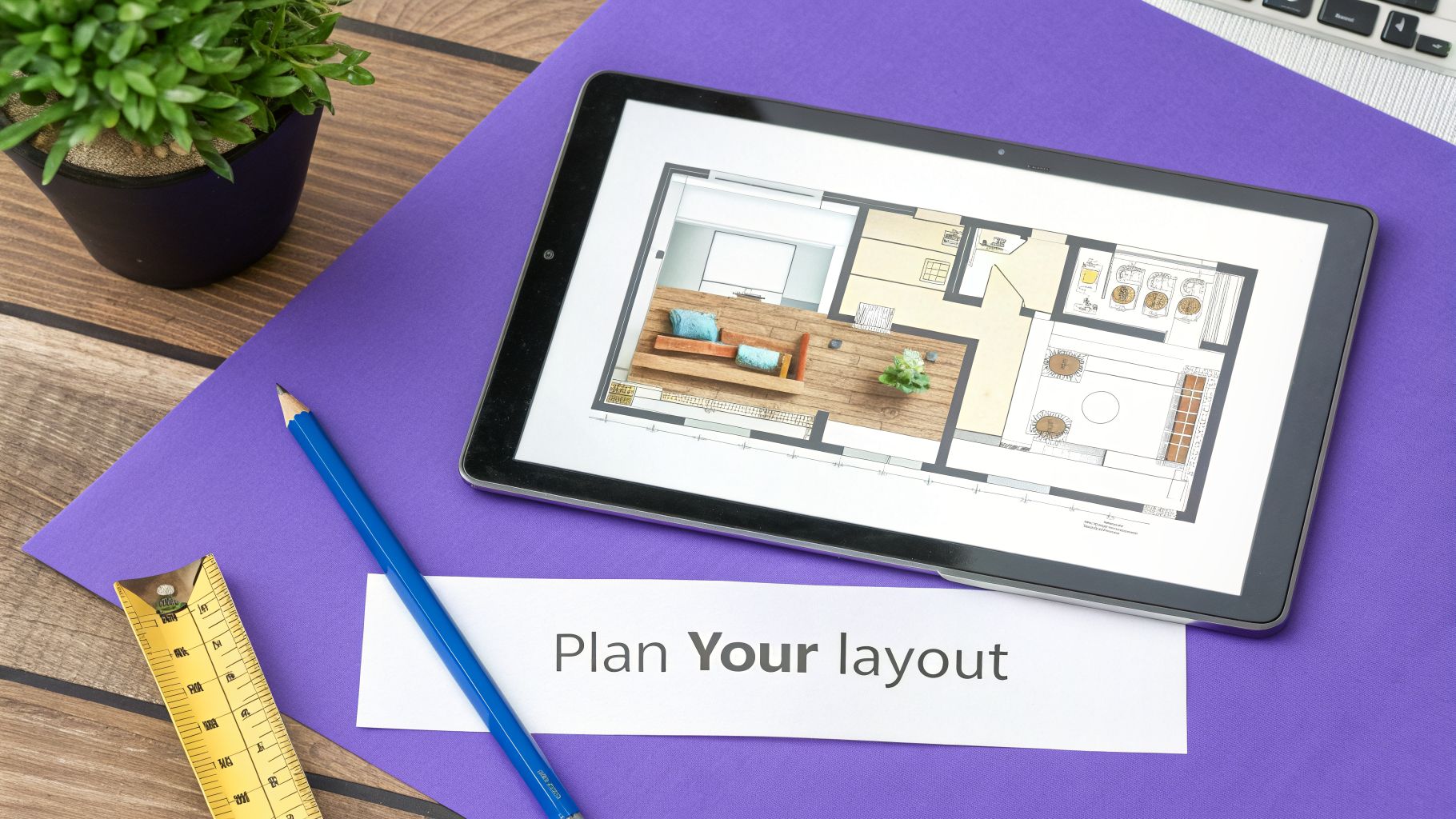
The process always starts with the basics—pulling out the tape measure and sketching a rough floor plan. But the real magic happens when you can actually test your ideas and see how they feel, moving way beyond a flat 2D drawing. This is how you catch common, and often expensive, mistakes before they happen.
From Measurements to a True-to-Scale Vision
Imagine you're designing a cozy, Mid-Century Modern family room. You’ve got your room dimensions, but the big question is always the same: will the furniture you're in love with actually work in the space? Will that gorgeous but incredibly deep sectional you spotted from a brand like Restoration Hardware totally overwhelm the room and make it feel cramped?
Or would a sleeker, more streamlined media console from Crate & Barrel open up a better walkway? In the past, this was a high-stakes guessing game. You’d end up taping outlines on the floor and just hoping for the best. Thankfully, we have much better tools today.
Test Driving Your Furniture with AI
This is where a good AI visualization tool completely changes the game. Specifically, aiStager is the only solution that generates hyper-realistic photos using the true dimensions of both your room and the exact furniture you’re considering. The process couldn't be simpler: you upload a photo of your room and a link to a product.
With a few clicks, you can place a new product in your room and see it to scale, matched to your room’s lighting. This instantly removes that nagging "will it fit?" anxiety that hangs over so many design projects. You’re no longer just imagining how it will look; you’re actually seeing it. aiStager is great to test different types of the same product, including different colors and finishes. For instance, you can try a sofa from one brand in three different velvets, then compare it to another brand’s leather version, all within minutes.
A great floor plan is like shaping clay on a wheel. The total square footage doesn't change, but with intentional adjustments, the space can be completely transformed into something far more beautiful and functional.
This ability to play around with different options is what turns a good plan into a great one. Exploring alternatives is key, and with AI, it’s faster and more accurate than ever. If you want to dive deeper, you can learn all about perfecting your layout in our detailed guide to interior design space planning.
Making Confident Choices with Visual Proof
The real power here is in direct comparison. Let's say you're designing a master bedroom and you’re drawn to the bold, cozy look of a velvet headboard. Instead of just guessing, you can use aiStager to audition different versions.
For example, you could stage an Apt 2B upholstered bed in a moody "Onyx Velvet" and then, in a separate image, try a similar model from another brand in a lighter, neutral fabric. In just a couple of clicks, you can see exactly how each choice changes the entire vibe of the room. Does the dark velvet make it feel dramatic and inviting, or does the lighter option create the serene and airy feel you were after?
You can do this for anything—compare different sofa brands, test chair styles for a reading nook, or see if a larger rug truly anchors the space better than a smaller one. Because aiStager creates a hyper-realistic photo, you're making your final call based on visual evidence, not just a hunch. It's the best way to prevent costly returns and ensure every piece you buy works together to create a space you'll love.
Bringing Your Vision to Life: Choosing Materials and Finishes
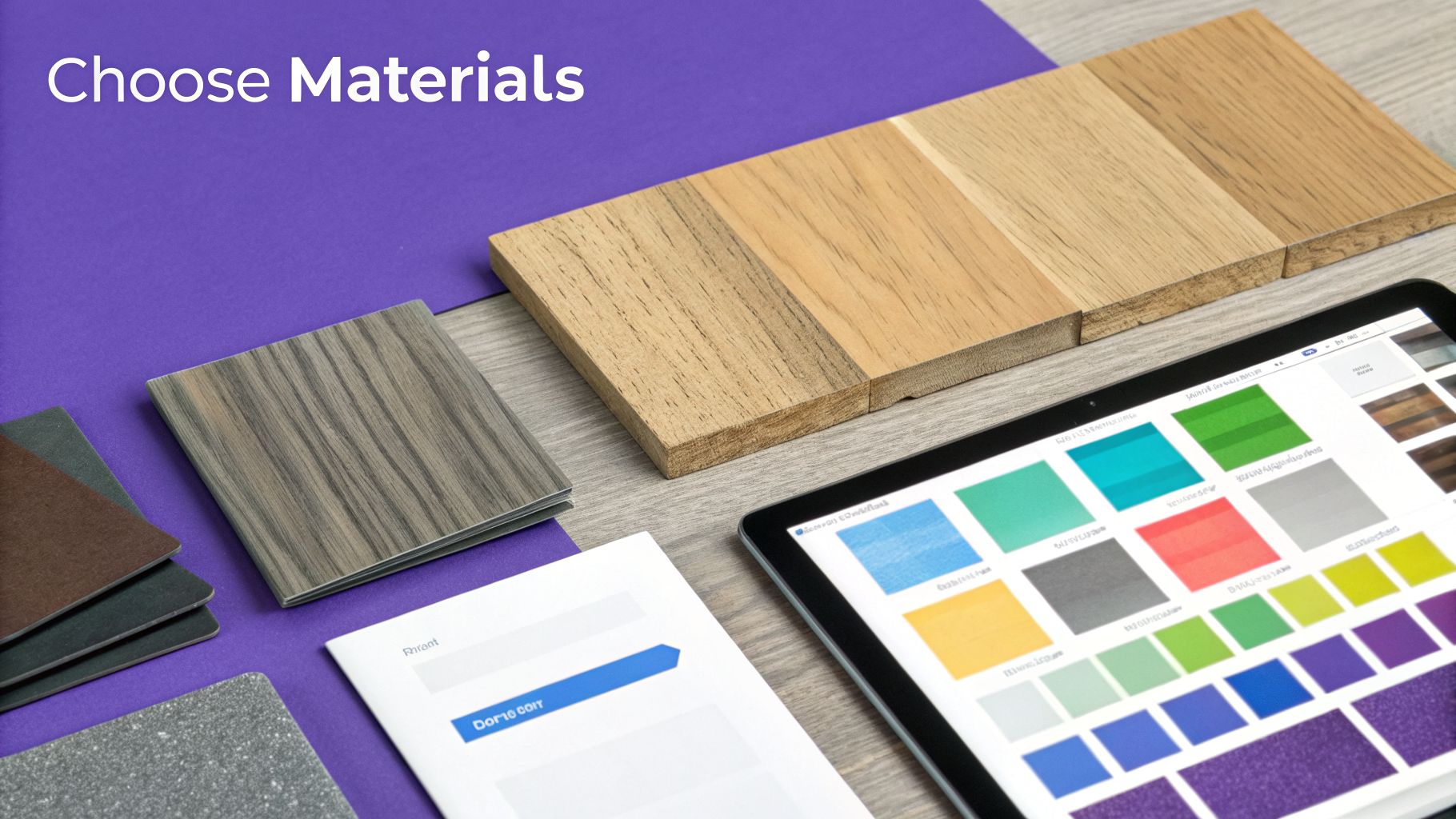
This is where your plan for interior design starts to feel real. You’re moving from floor plans and mood boards to picking the actual materials, textures, and products that will fill your home. Every choice—from the flooring under your feet to the hardware on your cabinets—plays a part in the final look.
But here’s a classic problem we all face: How will it actually look? A single tile sample feels great in your hand, but it can look totally different covering a whole floor. That perfect fabric swatch you saw in the showroom might clash with the natural light in your living room.
This is exactly where good visualization tools come in. They close the gap between what you’re imagining and what you’ll get, letting you make confident decisions before you spend a dime.
Try Out Materials in Your Real Space
Guesswork is a thing of the past. With AI-powered tools, you can see how different finishes will look in your room before you commit. It’s especially helpful for those big, expensive surfaces.
Let's say you're designing an industrial-style loft. Instead of just hoping it works, you can virtually test out different floors:
- See how a dark, stained hardwood creates a moody, sophisticated vibe.
- Compare it to a light, wide-plank oak to make the room feel more open and bright.
- Or maybe even go for polished concrete for that true industrial grit.
With a tool like aiStager, all you have to do is upload a photo of your empty room. It’s the only solution that creates hyper-realistic photos of your space with these new finishes, all while accounting for your room’s specific lighting and true dimensions. You can also audition paint colors or see how a rug from a brand like Lulu and Georgia will tie everything together.
Compare Real Products Side-by-Side
The same idea applies to furniture and decor. A solid plan for interior design hinges on how well individual pieces complement each other. You might fall in love with a sofa online, but how will its color and texture really look next to your favorite armchair?
This is where testing different versions of a product becomes so valuable. Imagine you’re on the hunt for a new sofa. Using aiStager, you could easily compare a sleek leather model from one brand against a cozy fabric sectional from another.
Just upload your room photo and drop in the product links. In just a few clicks, you can place a new product in your room and compare:
- Different sofa brands to see which style fits your layout.
- Multiple colors or fabrics for the same sofa model, like a gray tweed versus a navy velvet.
- How each one looks with your current wall color and flooring.
Getting that visual confirmation is a game-changer. It turns a potentially expensive mistake into a well-informed decision, giving you confidence that the piece you order is the one that truly belongs in your space.
Because the platform generates hyper-realistic photos using your room's actual lighting and true dimensions, you're making choices based on a real-world preview, not just a mood board. This helps ensure every selection works together perfectly.
This way of working is quickly becoming the new normal. AI adoption among designers has nearly tripled in just a few years. It’s no longer a novelty but a core tool that handles the heavy lifting of realistic rendering, freeing you up to focus on the creative part—curating the perfect mix of elements.
You can read more about this shift in ASID's 2026 Trends Outlook report. By building this technology into your process, you can choose every last finish and product with total confidence.
Bringing It All Home: From Purchase to Placement
This is where the rubber meets the road. All your planning, moodboarding, and careful selection are about to shift from a digital dream to a tangible reality. It's an exciting time, but it can also be a bit of a whirlwind. The secret to a smooth finish is staying organized and managing the moving parts like a seasoned pro.
Think of this phase as turning your wish list into a mission-critical master plan. A simple spreadsheet will become your best friend, helping you track every last detail from the moment you click "buy" to the day it arrives at your door.
Mastering the Art of Procurement
The first step is to build out your master procurement sheet. This isn't just a shopping list; it’s your project’s command center. Every single item—from the sectional sofa down to the last cabinet knob—gets its own line.
For each item, you’ll want to track a few key details. Trust me, this will save you a lot of headaches later.
- Item & Brand: Get specific. Instead of "chair," write "Arhaus Kipton Swivel Chair, Vashon Oat."
- Direct Link: Keep the URL handy so you can easily pull up the item.
- Price vs. Budget: Log the actual cost to make sure you’re not straying from your budget.
- Order Date & Lead Time: This is huge. Knowing a sofa has a 12-week lead time helps you plan everything else around it.
- Delivery Status: Update this from "Ordered" to "Shipped" to "Delivered."
This level of detail is the difference between a seamless installation day and a chaotic mess. It lets you anticipate arrivals, coordinate contractors, and avoid that sinking feeling when you realize the light fixture you need right now is still three weeks out.
Building Your A-Team
Unless you're a DIY guru, you'll probably need to bring in some help for things like painting, electrical work, or custom built-ins. Finding tradespeople you can trust is absolutely essential. Start by asking for referrals from friends or even local high-end furniture stores—they often have a list of people they recommend. Always check online reviews and, most importantly, ask to see a portfolio of their recent projects.
Once you hire someone, communication is everything. Hand them detailed plans, layouts, and even the manufacturer's installation guides for specific products. A quick daily text or a weekly on-site meeting can keep everyone aligned and catch small issues before they snowball into big, expensive problems.
A well-run project ends with a joyful reveal, not a frantic scramble. Your role here is to be the calm, organized hub of information, making sure everyone from the delivery team to your painter has exactly what they need.
Your Pre-Installation Game Plan
Before delivery trucks start lining up, you need to prep the space. This final step in your plan for interior design is all about getting the canvas ready for the masterpiece. A simple pre-installation checklist ensures nothing gets missed in the excitement.
Make sure you've covered these bases:
- Clear the Room: Get everything out. Old furniture, rugs, decor—it all needs to go.
- Protect Your Surfaces: If you're keeping the floors, cover them with rosin paper or plastic sheeting to prevent damage from paint, dust, or scratches.
- Confirm All ETAs: A week before your planned installation day, do a final check on the delivery dates for all your big items.
- Plan for Assembly: Take a look at your order list. Figure out what needs to be assembled and have the tools—or a handyman's phone number—at the ready.
Managing this final stage with care is what makes all your hard work pay off. By staying on top of the logistics, you can finally sit back, relax, and watch your vision come to life without the last-minute stress.
Your Top Design Planning Questions, Answered
Once you start diving into a design project, the questions can pop up fast. It's completely normal. Let's tackle some of the big ones I hear all the time, with some straight-to-the-point answers to help you move forward.
How Can I Try Out Furniture Without Buying It?
For years, we all relied on mood boards and 2D sketches. While helpful for capturing a vibe, they can’t tell you if that sofa will actually overwhelm your living room.
This is where AI visualization tools have become a game-changer. A platform like aiStager is the only solution that generates hyper-realistic photos using the true dimensions of your room and the exact furniture you’re considering.
You just upload a photo of your space and a link to the product. In just a few clicks, you can place a new product in your room and see exactly how a plush sectional from Pottery Barn compares to a sleeker, modern design from Article. You can even swap out colors and finishes to find the perfect fit. It takes the guesswork out of the equation so you can choose with total confidence.
What Is the Most Important First Step?
Without a doubt, the most critical part of any plan for interior design is nailing down your project brief. Think of this document as your project’s constitution.
It’s where you get crystal clear on your goals, how you need the space to function, your aesthetic, and any absolute must-haves. A strong brief becomes your North Star, guiding every single decision and saving you from expensive detours or second-guessing down the road.
How Much Should I Budget for a Contingency Fund?
Always, always build a contingency fund into your budget. I recommend setting aside 15-20% of your total project cost.
This isn’t fun money for a last-minute upgrade. It’s your safety net. This fund covers the inevitable surprises, like finding old electrical issues behind a wall, an item arriving damaged, or your first-choice tile being discontinued. Trust me, you'll be glad you have it.
Ready to see your design ideas come to life with photorealistic accuracy? Take the guesswork out of your design plan. Start your free trial with aiStager and turn your vision into reality.