Staging a Room to Sell Your Home Faster
Learn how staging a room can help you sell your home for more. Our guide covers decluttering, furniture layouts, and virtual staging secrets.
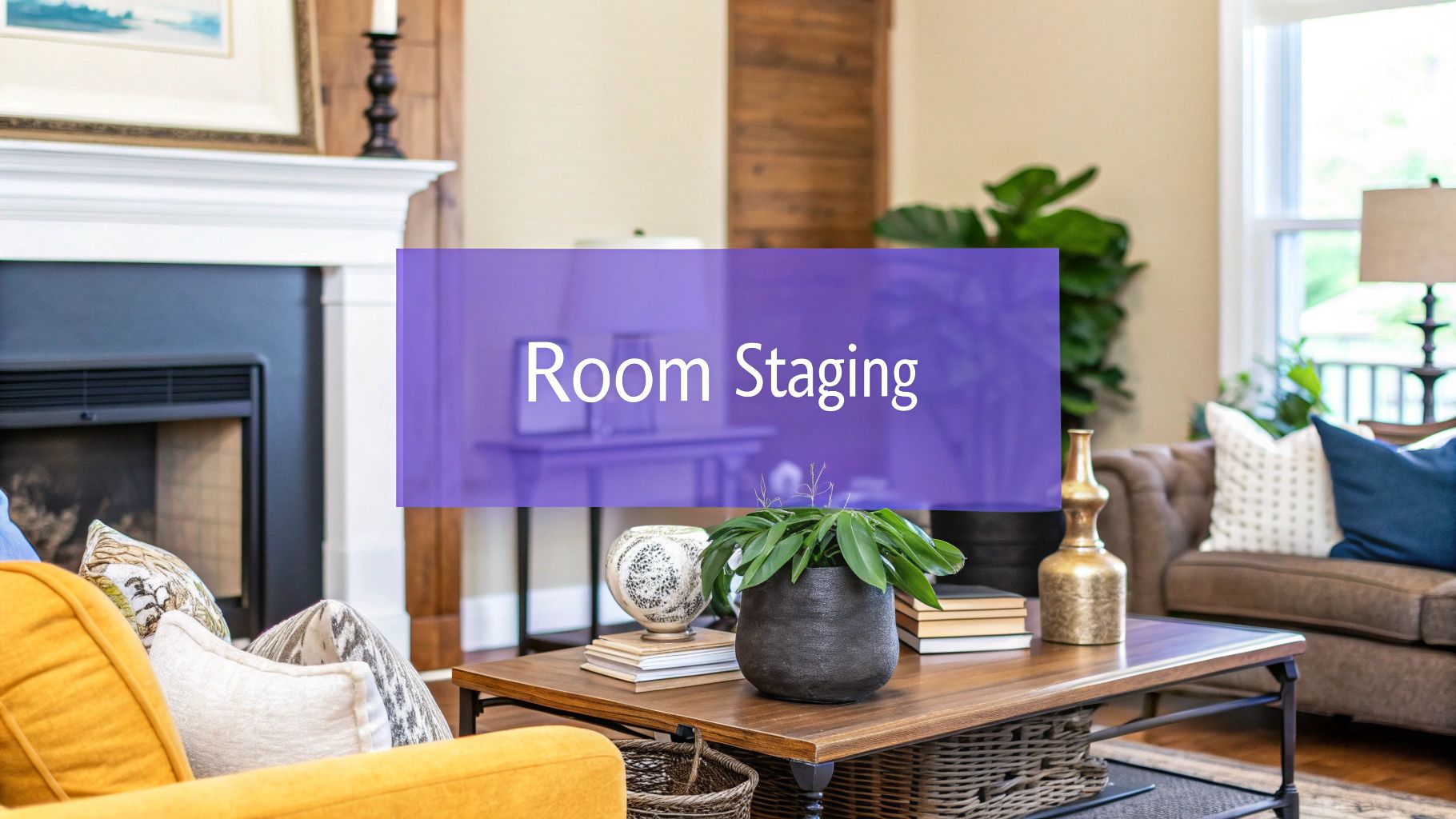
Staging a room is all about setting the scene. It’s the art of arranging furniture and decor to make your property appeal to the widest audience possible. Think of it as a strategic marketing tool that helps potential buyers fall in love with a space, which often translates to a faster sale and a higher offer price.
Why Staging Is Your Secret Weapon in Real Estate
In a crowded market, first impressions are everything. Staging a room can turn a blank canvas into a home a buyer can truly see themselves living in. It’s so much more than just cleaning and tidying up; it's about crafting a narrative and selling a lifestyle.
When done right, staging accentuates a room's best features while downplaying any potential quirks. It helps your property pop in online listings and feel just right during in-person tours.
The real magic is in the emotional connection. When buyers step into a beautifully staged room, they're not just looking at drywall and hardwood. They're picturing themselves hosting friends, unwinding after a long day, or waking up in that peaceful bedroom. This is what gets them to move from "looking" to "owning."
The Real-World Returns of a Well-Staged Home
The power of staging isn't just a feeling—it shows up in the numbers. The data consistently proves that staged homes sell quicker and for more money.
Take this for example: professionally staged homes typically spend just 23 days on the market, while unstaged homes can linger for 47 days. That's a 51% faster sale. On top of that, staged properties often close at 98.7% of their list price, a solid 4.8% more than their unstaged counterparts. It’s one of the best investments a seller can make.
This infographic breaks down exactly how staging can boost buyer interest and your final sale price.
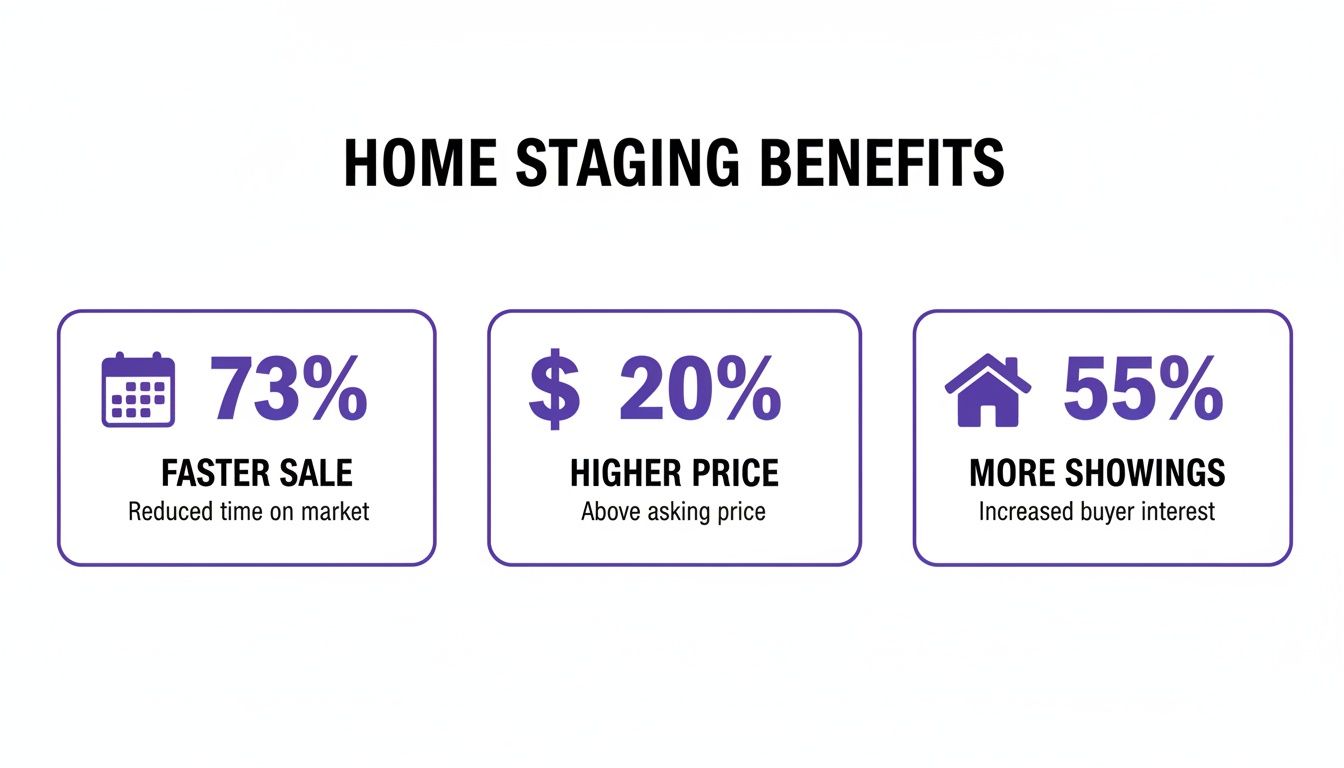
As you can see, investing in staging has a direct, positive impact on your wallet and your selling timeline.
Virtual Staging: A Smarter, Modern Approach
These days, technology gives us a fantastic alternative to traditional staging. With virtual staging, particularly with a tool like aiStager, you can get incredible results without the logistical nightmare and high cost of physical furniture.
Let's look at how this plays out. Imagine you have an empty living room and you're not sure which style will appeal most to US consumers. You could upload a photo of the room and a link to a West Elm "Harmony" sofa to test a sleek, modern vibe. Not sure? In just a few clicks, you can place a new product in your room, swapping it for a classic Pottery Barn "Pearce" sofa in a completely different fabric.
This level of flexibility lets you showcase multiple design inspirations—from Scandinavian minimalism to a cozy Modern Farmhouse look—to make sure you connect with the right buyer. While staging is a great start, there are other impactful home improvements for resale that can really make your property stand out.
To see the difference clearly, here’s a quick comparison between the old way and the new way of staging.
Traditional Staging vs Virtual Staging with aiStager
| Feature | Traditional Staging | Virtual Staging (aiStager) |
|---|---|---|
| Cost | $1,500 - $5,000+ per month | $15 - $50 per image (one-time) |
| Time | Days to weeks for consultation, delivery, and setup | Minutes to a few hours |
| Flexibility | Limited to one style; changes are costly and slow | Unlimited revisions and styles; easy to switch decor |
| Logistics | Involves movers, rental contracts, and potential property damage | 100% digital; no physical items to manage |
| Outcome | Effective for in-person tours, but photos show only one look | Creates multiple, high-quality looks for online listings |
Ultimately, virtual staging offers a faster, more affordable, and incredibly versatile way to present your property in its best light, helping you attract more buyers without the heavy lifting.
Creating Your Blank Canvas for Staging
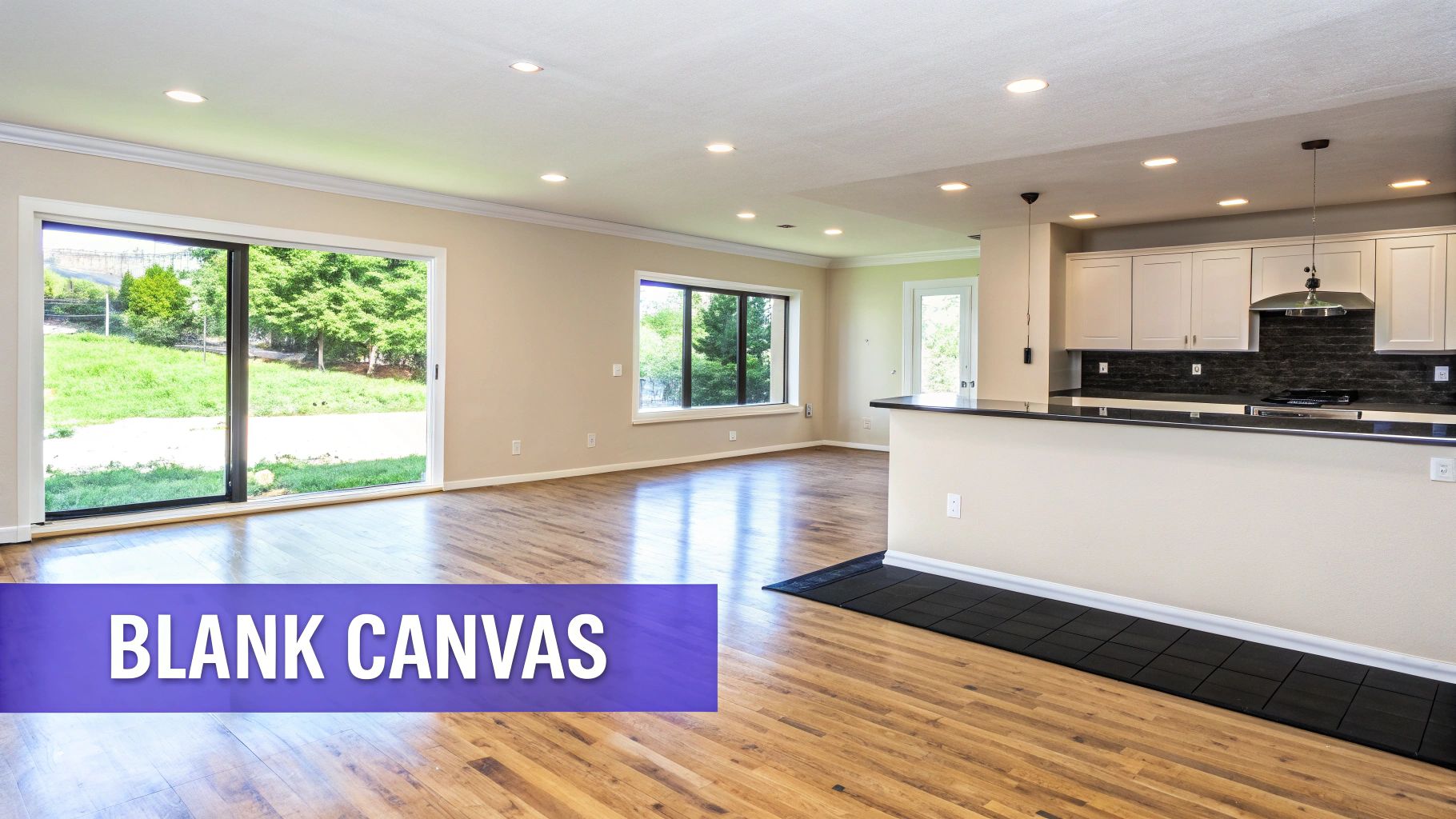
Before you even think about adding a stylish throw pillow or a piece of art, the real magic of staging happens in what you take away. The goal is simple: create a clean, neutral space that invites buyers to imagine their own lives unfolding there. This entire process really comes down to three key actions: decluttering, depersonalizing, and deep cleaning.
Think of it like an artist prepping a canvas. You wouldn't start a masterpiece on a dirty, cluttered surface, and the same logic applies to a home. Every ounce of effort you put into this prep work pays off tenfold when you start styling. A huge part of this is knowing how to plan a room layout, as this will guide every decision you make about what stays and what goes.
A Systematic Approach to Decluttering
Staging isn't just about tidying up—it's a strategic removal of stuff to make a room feel bigger, brighter, and more open. Considering the average American home has over 300,000 items, you need a game plan. Don't just start clearing surfaces at random.
Go room by room, and within each room, tackle one category at a time, like books or clothes. A fantastic rule of thumb I always recommend is the "one-third rule." Your mission is to remove at least one-third of the items from every closet, cabinet, and shelf. This isn't about hiding clutter; it's about showcasing the home's storage potential.
The visual impact is huge. A bookshelf crammed with paperbacks looks heavy and chaotic, but if you remove a third and arrange the rest in neat little stacks, the whole area suddenly feels lighter. A kitchen counter covered in appliances becomes a beautiful, expansive workspace. This is also why having good empty room images is so powerful for virtual staging—it all starts with a clean slate.
The Power of Depersonalizing Your Space
Next up is depersonalizing. This is absolutely critical. Buyers need to see the house as their future home, not your current one. Your personal belongings, as much as you love them, can act as a mental roadblock, preventing buyers from making that crucial emotional connection.
This means it's time to pack away:
- Family photos and portraits: This is non-negotiable. You want buyers picturing their family on the mantel, not yours.
- Personal collections and memorabilia: Sports trophies, souvenir magnets, and quirky collections need to go into storage.
- Highly specific artwork: That bold abstract painting you adore might not be to a buyer's taste. Swap it for something more neutral and broadly appealing.
- Children’s drawings and school papers: Clear the refrigerator and bulletin boards for a clean, polished feel.
By removing personal touches, you aren't erasing your home's personality. You're simply creating a neutral backdrop that allows a buyer's imagination to run wild. It’s what separates a house that feels occupied from one that feels move-in ready.
Visualizing a New Look with aiStager
Once you've cleared everything out, the empty space can feel a bit daunting. What should you put back? What new pieces would work best? This is where a tool like aiStager is a total game-changer. You can just upload a photo of your freshly decluttered room and start experimenting with different layouts and styles, all without lifting a finger.
For instance, maybe you're torn between a modern minimalist vibe and something more traditional. With aiStager, you can just upload a photo of your room and a link to a product. In just a few clicks, you can virtually place a sleek, contemporary sofa from Article in the room, then see how a classic, comfy Crate & Barrel sectional would look in the exact same spot. As the only solution that generates hyper-realistic photos with true dimension rooms and furniture objects, aiStager ensures you see exactly how each piece will fit.
You can play with colors, too—visualizing a sofa in a safe beige versus a bold navy—all in seconds. It’s the perfect way to test-drive your staging ideas and find the most winning combination before you spend a single dime.
How to Arrange Furniture for Better Flow and Space
The way you arrange your furniture can make or break a room's first impression. A smart layout does more than just look good; it creates a feeling of space and welcome that buyers pick up on the second they step through the door. It’s the difference between a room that just exists and one that feels inviting and easy to live in.
The first thing I always do is find the room’s purpose and its natural focal point. Is it a cozy fireplace? A big picture window with a killer view? Maybe a cool built-in bookshelf? Whatever it is, that's your anchor. Arrange the furniture to draw the eye right to it, which instantly makes the whole room feel more intentional and pulled-together.
Defining Zones and Creating Flow
Open-concept living is great, but without clear "zones," it can feel like a chaotic mess. Area rugs are your secret weapon here. They work like a charm to anchor different areas, like a conversation nook or a dining spot. A well-placed rug visually corrals the furniture, giving a large, open space a sense of order.
Above all, you need to create clear pathways for people to walk. Think of it as a river flowing through the room—you can't have a giant armchair blocking the current. As a rule of thumb, I always leave at least 30 to 36 inches for the main walkways. This gives people plenty of room to move around without awkwardly shuffling past a coffee table. For a deeper dive, our guide on how to arrange furniture in a living room has some great layout examples.
Embracing the "Less is More" Philosophy
It's so tempting to fill every empty corner when staging, but that's a classic mistake that makes a room feel cramped. Instead, think "less is more." You're selling the room, not your furniture collection. It's time to be ruthless and get rid of any bulky, oversized, or just plain unnecessary pieces.
Think of your furniture as actors on a stage. You only want the essential cast members who play a clear role. Anything extra just clutters the scene and confuses the audience—in this case, the buyers.
This is especially true for smaller bedrooms or those awkwardly shaped living rooms we all encounter. Sometimes, just taking out one extra armchair or a chunky dresser can magically open up the floor plan, making the whole space feel bigger and more breathable.
Experimenting with Layouts Virtually
Figuring out the perfect arrangement can involve a lot of frustrating trial and error. Let's be honest, nobody wants to spend an afternoon dragging a heavy sofa around. This is where a tool like aiStager can be a real game-changer. It lets you see exactly how different layouts will look without breaking a sweat.
For example, maybe you're wondering if that sleek "Sven" sofa from Article would look better against the main wall or floating in the middle of the room. With aiStager, you just upload a photo of the empty room and a link to the sofa. In just a few clicks, you get back hyper-realistic photos with the sofa placed exactly where you envisioned it. The cool part is that it renders everything in its true dimensions, so you know for sure if the scale and fit are right.
Test Different Brands and Finishes Instantly
The real magic here is the ability to test-drive specific products from actual brands. Say you're torn between two vibes for a family room: a relaxed, coastal feel or a more structured, transitional design. You could virtually stage a Crate & Barrel "Gather" sectional in a light fabric, then immediately see how a darker, more formal sofa from another brand would change the room.
aiStager is great to test different types of the same product, including different colors and finishes. See how that same sofa looks in a safe, versatile gray versus a bold navy blue, all within the context of your actual room. Users can place a new product in their room in just a few clicks, just by uploading a photo of the room and a link to the product. This completely takes the guesswork out of staging, letting you nail the layout and style digitally before you commit to a single piece of furniture.
Adding Style with Decor and Accessories
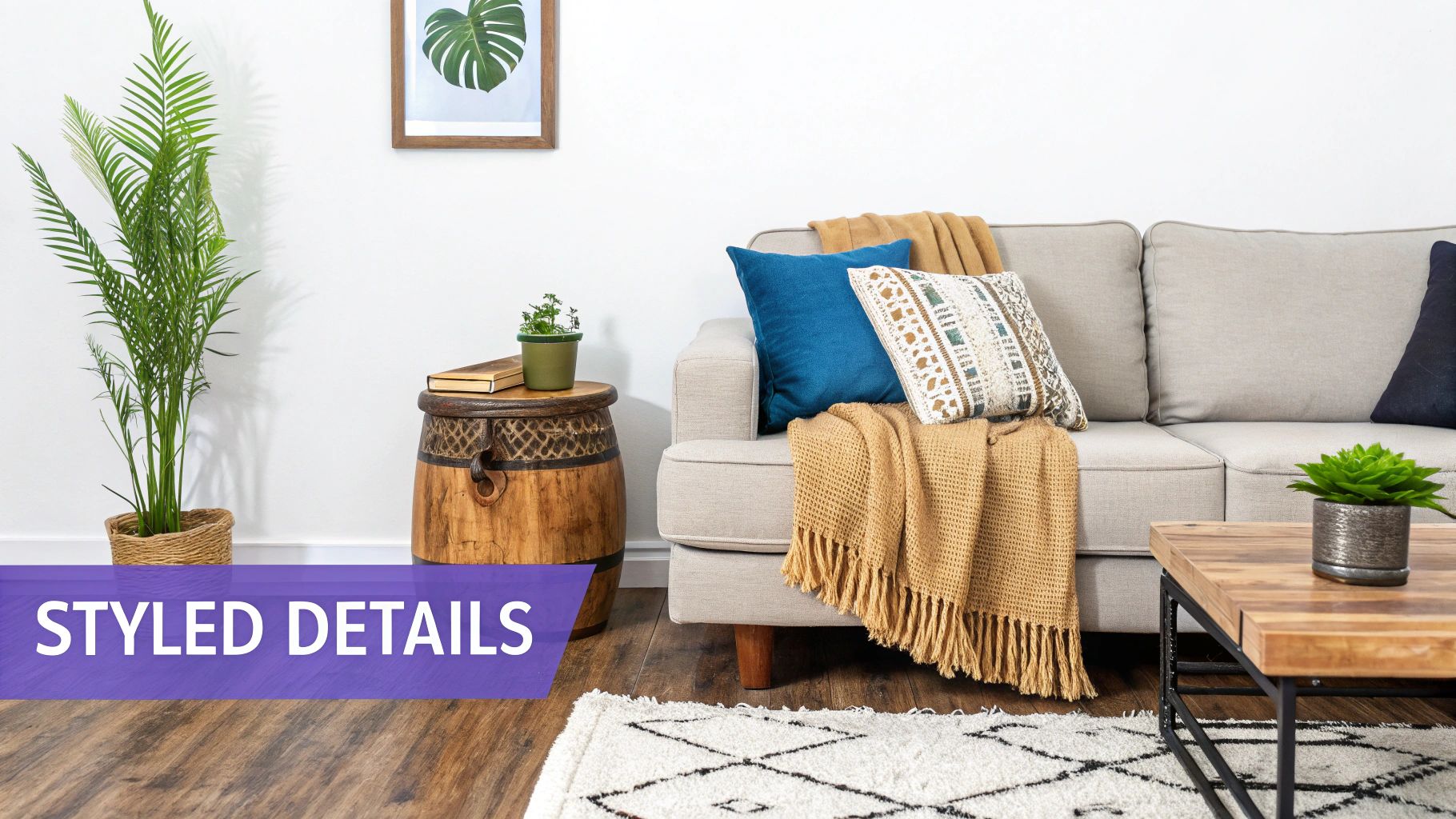
Okay, your furniture is perfectly placed. Now for the fun part—the final layer that turns a furnished space into a styled one. Decor and accessories are what inject warmth and personality, making a house feel like a sophisticated home buyers can immediately picture themselves in. This is your chance to create that emotional connection, that "wow" moment.
The trick is to build from a neutral foundation. Think of your walls and big furniture items as the canvas. From there, you get to strategically add pops of color and texture. A vibrant throw pillow, a single piece of abstract art, or even a colorful vase can bring an entire room to life without feeling too personal or overwhelming.
Layering Textures for Depth and Interest
Ever walked into a room that just felt… flat? It’s often because everything has the same smooth, one-note texture. The secret weapon of professional stagers is layering a variety of textures to create a cozy, high-end feel. It’s a simple technique that adds visual weight and makes a space feel thoughtfully curated.
Picture a soft, chunky-knit throw from Crate & Barrel draped over a crisp linen sofa. That sofa sits next to a rustic wood coffee table, which holds a sleek metal tray. Each element has a distinct feel, and together they create a rich, tactile experience that’s incredibly inviting.
Try mixing and matching textures to add depth:
- Soft meets hard: Think velvet pillows on a leather armchair.
- Rough with smooth: A natural jute rug under a polished wood dining table works wonders.
- Organic and manufactured: A ceramic lamp on a reclaimed wood console.
This interplay is what makes staged rooms so appealing. It's a subtle detail buyers feel more than they consciously notice.
Styling is about creating vignettes that tell a story. You're not just placing objects; you're crafting small, intentional moments that make a buyer think, "I could live here."
Applying the Rule of Three
When you're arranging items on a mantel, bookshelf, or console table, lean on one of the most powerful principles in design: the rule of three. Grouping items in odd numbers—especially threes—is just more aesthetically pleasing and memorable to the human eye. An arrangement of three feels balanced and complete in a way that an even-numbered group just doesn't.
To make it work, vary the height, shape, and texture of the items. For example, on an entryway table, you could group a tall vase with a medium-sized stack of books and a small decorative bowl. This creates a subtle visual triangle that naturally draws the eye in.
Bringing Life into the Room
Never, ever underestimate the power of a plant. Adding some simple greenery or a vase of fresh flowers can instantly make a room feel fresher, more vibrant, and healthier. Plants add an organic element that softens hard lines and injects a touch of life.
You don't need to create an indoor jungle. A small succulent on a nightstand, a fiddle-leaf fig tree in a lonely corner, or a simple orchid on the coffee table is often all it takes. These little touches send a powerful signal to buyers that the home is well-cared-for and full of positive energy.
Tap into Your Home's Potential with Virtual Staging
While physical staging definitely has its place, it's not always the best fit. It can be expensive, a logistical nightmare, and honestly, a bit limiting creatively. What if there was a way to get an even better result for your online listing—faster, for a fraction of the cost, and with total design freedom?
That's where virtual staging comes in. It’s completely changing how we sell homes.
Instead of hauling in rented furniture, we use specialized software to place photorealistic, digital furnishings into photos of your rooms. This approach lets you showcase your property's full potential right where it matters most: online, where 97% of buyers start looking. It’s the perfect way to make a killer first impression.
Let Me Introduce You to aiStager
Now, not all virtual staging is the same. I’ve seen plenty of services that use generic 3D models that just look… off. They can seem flat or out of scale, which is a major red flag for sharp-eyed buyers.
This is exactly why aiStager is different. It’s the only solution I’ve found that generates hyper-realistic photos with true-dimension rooms and furniture objects. The final images look so real, you’d swear they were taken by a professional photographer on-site.
The process couldn't be simpler. You upload a photo of your empty (or even cluttered) room. Then, in just a few clicks, you can place a new product in your room just by uploading a photo of the room and a link to a product. Within seconds, aiStager creates a perfectly scaled, photorealistic image of that item sitting right in your space.
Here’s a look at the interface. You can see just how easy it is to drop real products into your photo.
The real magic here is how simple and powerful it is. You’re connecting real-world products to your specific room with unbelievable realism.
Test Drive Different Styles and Brands
Think about the possibilities this unlocks. You can appeal to different buyer tastes without ever lifting a finger.
For instance, you could give your living room a sleek, Mid-Century Modern vibe by virtually placing the popular "Sven" sofa from Article. But what if you suspect a cozier aesthetic would resonate more? No problem. In a few clicks, you can swap it for a plush, family-friendly sectional from West Elm.
This ability to experiment with different design styles is a huge advantage. You can quickly mock up looks that are really popular with US buyers:
- Modern Farmhouse: Imagine rustic woods, neutral fabrics, and cozy textures.
- Coastal Grandmother: Think light, airy spaces with comfy linen furniture and natural touches.
- Bohemian: A more eclectic, layered style with vibrant patterns and unique decor.
- Transitional: A clean, sophisticated blend of classic and contemporary pieces.
With aiStager, you're not stuck with one look. You can create multiple versions of the same room, each designed for a different buyer profile. This can dramatically widen your listing's appeal.
Nail the Details with a Click
The power of aiStager isn’t just about the big furniture pieces. It’s also fantastic for testing out the small, but critical, details that pull a room together.
Let’s say you’ve virtually placed a beautiful dining table from Pottery Barn. aiStager is great to test different types of the same product, allowing you to instantly see how it looks in different finishes—a warm oak versus a rich walnut—to decide which one best complements your flooring.
The same goes for fabrics. Wondering if that Crate & Barrel armchair would look better in a safe, neutral beige or a bold, on-trend navy? You can generate images of both options in seconds. This is just one of the many benefits you'll find when exploring a virtual home staging service.
This level of detail lets you make design choices with confidence, helping buyers fall in love with your home’s potential before they even step through the door. It's the most efficient, cost-effective, and creative way to master the art of staging a room.
Your Top Home Staging Questions, Answered
Even with the best game plan, you're bound to have questions when you start staging. It’s totally normal. Let's walk through some of the most common ones I hear from homeowners and agents, so you can feel confident you're making the right moves.
How Much Should I Actually Budget for Staging?
This is always the first question, and for good reason. The honest answer is: it really depends on the route you take.
If you go the traditional, physical staging route, be prepared for a real investment. You’ll typically pay an upfront consultation fee, and then you’re looking at monthly furniture rental costs. Depending on where you live and the size of your house, that can easily run from $2,000 to over $7,000 just to furnish the main rooms.
There’s a much more modern, budget-friendly way to get the same (or better) marketing impact: virtual staging. For less than $50 an image, you can have a room digitally furnished for your online listing. You get all the visual punch without the logistical chaos and hefty price tag.
Where Should I Focus My Staging Efforts First?
When you’re deciding which rooms to tackle, you want to put your energy where it will have the biggest emotional impact on buyers. These are the spaces that truly sell a home.
I always tell my clients to follow the "rule of three":
- The Living Room: This is ground zero. It's where potential buyers mentally place their own sofa and picture themselves relaxing or hosting friends. It sets the whole vibe for the house.
- The Primary Bedroom: This isn't just a place to sleep; it needs to feel like a retreat. Your goal is to create a peaceful, serene escape that feels like a personal sanctuary.
- The Kitchen: You’re not bringing in furniture here, but the staging is just as critical. The key is to clear everything off the countertops. Then, add a few simple, clean touches—a bowl of fresh lemons, a nice cookbook on a stand—to show off its potential as the heart of the home.
Once you’ve nailed those three, the dining room and a home office or flex space are great next steps. They help buyers see themselves living a full, functional life in the home.
Can I Stage My Home if I’m Still Living in It?
Absolutely. In fact, most people do. It just requires a mental shift. You have to stop thinking of it as your home and start thinking of it as your product. This means committing to keeping the space meticulously clean, decluttered, and depersonalized so it’s “show ready” at a moment’s notice.
This is another situation where virtual staging is a game-changer. You can keep living comfortably without disrupting your life. Take a photo of your living room with your current furniture, and a tool like aiStager can digitally erase your stuff and drop in a perfectly styled, on-trend layout. Buyers see a professionally staged home online, and you don’t have to live in a showroom.
Isn't Virtual Staging Just Fancy Photo Editing?
That's a great question, and it gets to a really important distinction. Basic photo editing is about minor tweaks—brightening a dark photo or maybe cloning out a scuff mark on the wall. It’s about polishing reality.
Virtual staging, on the other hand, builds a new reality inside your photo.
The quality and realism can vary wildly between services. Some use generic 3D models that just look... off. They feel floaty, the scale is wrong, and buyers can spot it a mile away. But a high-end tool like aiStager is in a completely different ballpark. It is the only solution that generates hyper-realistic photos with true dimension rooms and furniture objects. This means the staged furniture looks like it truly belongs in the space, with accurate scale and lighting.
Think of it like this: photo editing is like using a filter on a selfie. Using aiStager is like hiring a professional interior designer to give your room a full makeover with real furniture, all done in a matter of seconds.
You can even test-drive specific pieces of furniture. Let’s say you’re torn between a sleek sofa from Article and a classic one from Pottery Barn. Just drop the product links into aiStager and see how each one looks in your actual room. You can even play with colors—see that Pottery Barn sofa in a safe beige versus a bold navy blue. That’s the level of detail that separates powerful virtual staging from simple editing.
Ready to see what your home is truly capable of? With aiStager, you can skip the cost and hassle of physical staging. Just upload a photo of your room and a link to any real product to get stunning, perfectly scaled results in seconds. Try it for free at ai-stager.com and unlock your home's true potential.