Sell Faster with a Virtual Home Staging Service
Discover how a virtual home staging service helps sell properties faster. Learn to use AI to create stunning, realistic interiors that attract more buyers.

A virtual home staging service is, at its heart, a way to digitally furnish photos of empty or outdated rooms. The goal is to make them look aspirational and move-in ready for online real estate listings. Instead of physically hauling in sofas and beds, this technology uses specialized software to add stylish, realistic decor. It helps potential buyers see past the empty walls and imagine the property's true potential.
It's a much faster and more affordable approach than traditional staging, and it offers a level of design flexibility you just can't get with physical furniture.
What Is a Virtual Home Staging Service?
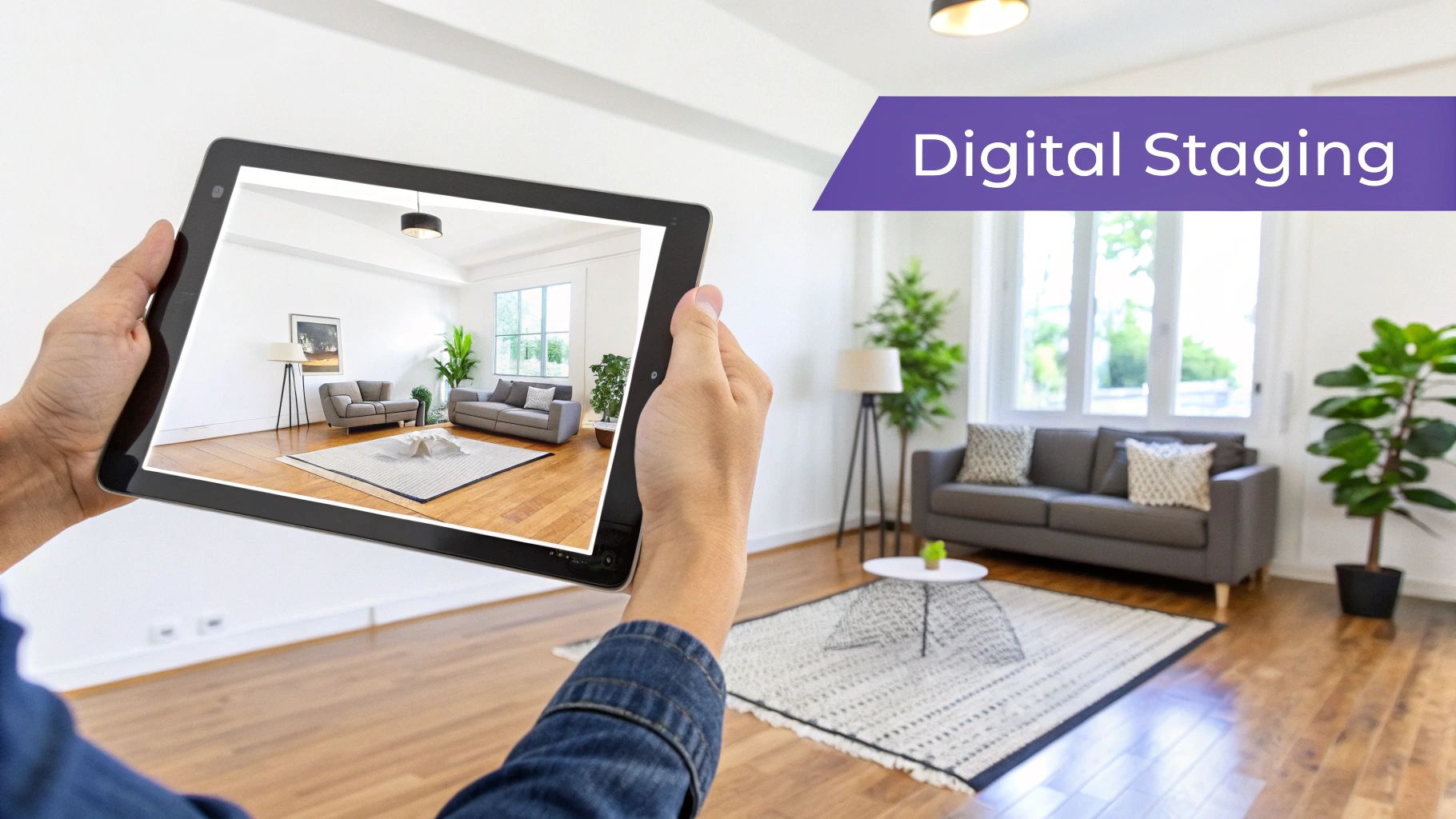
Think of it as a digital makeover for a house. You start with a simple photograph of a space—maybe it's a completely empty living room, a bedroom with dated furniture, or even an unfinished basement. From there, the service transforms it into what looks like a beautifully designed and fully furnished home.
This technology is all about bridging the gap between an empty shell and a buyer's imagination. It’s about helping them form an emotional connection with the property before they even set foot inside. The process is straightforward: you upload a photo, and the service uses design software to add furniture, art, rugs, and even lighting. It’s like hiring an interior designer, but everything happens online in a fraction of the time.
The Evolution from Manual Edits to AI Realism
In the early days, virtual staging was a manual, painstaking process where designers would place 2D images of furniture into a photo. It worked, but the results could sometimes look a little flat or fake. Today, powerful AI platforms have completely changed the game.
Modern solutions like aiStager are the only ones that can now generate hyper-realistic photos with true-dimension rooms and furniture objects. This is a huge leap forward. Instead of just pasting a generic sofa into a room, the AI ensures the furniture is scaled perfectly, casts realistic shadows, and fits naturally within the room's actual dimensions. Honestly, the final image is often impossible to tell apart from a photo of a traditionally staged home.
This focus on dimensional accuracy is critical. When a buyer who saw the listing online walks into the home, the space feels familiar and correctly proportioned. That consistency builds trust and reinforces their initial positive impression.
Unlocking Limitless Design Possibilities
One of the best parts of a modern virtual home staging service is the creative freedom it gives you. You can test out different design ideas instantly without being stuck with a limited catalog of virtual furniture.
With a tool like aiStager, you can even experiment with specific products from real-world brands. Want to see how a particular sofa looks in your listing? Just upload a photo of the room and a link to the product you want to try. In just a few clicks, users can place a new product in their room, and it's there. This opens up a whole new world of customization.
- Test different brands: See how a sleek leather sofa from Restoration Hardware feels in the space compared to a cozy sectional from Crate & Barrel. You can even try different versions of the same product, like comparing a West Elm "Harmony" sofa in velvet versus linen.
- Experiment with styles: Instantly swap a warm, Japandi design for a bold, Industrial aesthetic to see which one better suits the property and appeals to different US consumers.
- Visualize colors and finishes: Not sure if a dark walnut coffee table will work? Compare it to a light oak version side-by-side with zero physical effort.
This level of customization means you can tailor every single listing to its target audience. You're not just selling a house; you're selling a potential lifestyle.
When it comes to selling a property, that first impression is everything. For decades, the only real option was traditional staging—renting physical furniture and decor to turn an empty house into something that felt like a home. But anyone who's been through it knows the headaches: it's expensive, slow, and surprisingly rigid.
This is where a virtual home staging service completely changes the game.
Virtual Staging vs. Traditional Staging: A Head-to-Head Comparison
Let's break down exactly how these two approaches stack up against each other. The differences in cost, time, and flexibility are pretty staggering when you see them side-by-side.
| Feature | Virtual Home Staging Service | Traditional Physical Staging |
|---|---|---|
| Cost | Typically a small fraction of physical staging costs, often a few hundred dollars. | A significant investment, usually $2,000 to $5,000+ per property. |
| Speed | Extremely fast. Images can be staged and ready in minutes or hours. | A slow process that can take weeks for coordination, delivery, and setup. |
| Flexibility | Nearly limitless. Easily swap styles, furniture, and layouts with a few clicks. | Very limited. Changes are expensive, time-consuming, and restricted to available inventory. |
| Logistics | None. It's all digital—no movers, no trucks, no furniture rental contracts. | Complex. Involves movers, insurance, furniture rental, and on-site coordination. |
| ROI | Massive. Can reduce staging expenses by up to 90% while achieving the same goal. | Lower. High upfront costs eat into the final profit margin. |
| Risk | Zero risk of property damage from moving heavy furniture in and out. | Potential for scuffs, scratches, and damage to floors, walls, and doorways. |
As you can see, virtual staging isn't just a minor improvement; it's a completely different and more efficient way to prepare a property for sale. It delivers stunning results without the financial and logistical baggage of the old-school method.
From Weeks on the Calendar to Minutes on the Clock
One of the biggest drags of physical staging is the timeline. It’s a slow, cumbersome process. You have to find a good staging company, pick out furniture from their limited inventory, schedule the movers, and then wait for them to set everything up—all before you can even bring in a photographer. This can easily eat up weeks.
AI-powered platforms have completely demolished that timeline. With a service like aiStager, you can upload a photo of an empty room and get back a photorealistic, fully staged image almost instantly. It's up to 100 times faster than even manual 3D modeling, let alone physical staging. This incredible speed means you can get your listings live faster and start capturing buyer attention right away.
In real estate, speed is a serious competitive advantage. While your competitor is still on the phone trying to coordinate a furniture delivery, you can already have a full set of gorgeous, professionally staged photos ready for the MLS.
Unlocking Total Design Freedom
Maybe the most exciting part of a virtual home staging service is the creative freedom it gives you. When you're staging a physical home, you're stuck with whatever furniture the staging company has in its warehouse. Swapping a sofa or changing the color scheme is a major, expensive hassle.
Virtual staging throws those limitations out the window.
Want to appeal to a younger, more modern buyer? You can instantly try out some of the most popular design aesthetics that are catching on with US consumers.
- Modern Farmhouse: Add a rustic dining table and some cozy textiles to create that warm, Joanna Gaines-inspired feel.
- Coastal Grandmother: Think light woods, soft blues, and natural textures for a calm, breezy vibe that feels like a weekend in the Hamptons.
- Organic Modern: Instantly furnish the room with neutral tones, curved furniture, and natural materials that define this serene, sophisticated style.
This is where a tool like aiStager really shines, as it is the only solution that generates hyper-realistic photos using true-dimension rooms and furniture. This allows you to experiment with actual products from well-known brands.
For example, you could see exactly how a stylish West Elm "Harmony" sofa would look in a living room. If you don't love the color, you can try a different fabric in a few clicks. Wondering if it would look good with a specific Crate & Barrel coffee table? Just upload a photo of the room and a link to the product, and aiStager places a true-to-scale 3D model right in your space. This unique feature lets you test-drive different versions of the same product—exploring various brands, colors, and finishes—to create that perfect, aspirational scene that helps buyers emotionally connect and moves your property off the market faster.
How to Use an AI Virtual Staging Service
Getting started with a modern virtual home staging service is incredibly straightforward. You don't need a design degree or any tech skills to create visuals that look like they came straight from a magazine. Platforms like aiStager have boiled the process down to a few simple steps, completely changing the game for marketing a property.
Let's break down how you can take a photo of an empty room and, in just a few minutes, transform it into a stunning, fully furnished space that buyers will fall in love with.
Step 1: Upload Your Room Photo
It all starts with a single, clear photograph. Think of this picture as your blank canvas—the better the canvas, the better the final masterpiece. A good shot is truly the most critical part of the process.
For the best, most realistic results, you'll want a high-quality photo of the empty space. Good lighting and a straight-on perspective are your best friends here. I always recommend shooting from a corner to capture as much of the room as possible, which helps the AI understand the layout. For a complete rundown on getting that perfect shot, check out our guide on how to photograph an empty room for staging. Once you’ve got the picture, just upload it to the platform.
Step 2: Define Your Objective
Next, you need to know what you're trying to accomplish. It's not always about filling a totally empty room. A good AI staging tool is flexible and can handle a few different situations depending on what a property needs.
- Stage an Empty Room: This is the classic scenario. You add furniture, rugs, art, and decor to a blank slate to help buyers see its true potential.
- Declutter and Restyle: Sometimes a room is packed with personal items or furniture that just isn't doing it any favors. The AI can digitally "remove" all that clutter and replace it with a fresh, modern design.
- Visualize a Remodel: You can even use it to show buyers what a room could look like with new paint colors, different flooring, or other updated finishes. It’s a powerful way to sell the vision.
Step 3: Select Your Products and Style
This is where the fun really begins. It's where you get to be the designer, and it's what makes a platform like aiStager so different. You aren't stuck with a limited, generic library of 3D furniture models that everyone else is using. Instead, you can pull in pretty much any piece of furniture you can find online.
Let's say you're staging a living room and want a sophisticated, inviting feel. You can browse your favorite furniture store online, find the perfect sofa, and simply provide the product link. For example, you could see exactly how a beautiful leather Sven sofa from Article would look in the space. In just a few clicks, you can place this new product in your room—all you do is upload your room photo and the product link, and aiStager generates a hyper-realistic, dimensionally perfect model of that exact sofa right in your room.
This ability to use any real-world product is a game-changer. It means your staged photos are not just generic concepts; they are tangible, shoppable visions of what a home could be.
Step 4: Generate and Perfect Your Look
Once you've picked your furniture, the AI takes over. With just a click, it generates the staged image. But you're not locked into that first version. What if it’s not quite right? This is your chance to experiment.
You can instantly try out different variations. Maybe you want to see that Pottery Barn dining chair in a darker wood finish or a different fabric. With AI, you can make those swaps on the fly, comparing options side-by-side without any extra cost or time. This freedom to tweak and refine lets you craft the perfect scene that truly connects with your target buyers, making the property feel both aspirational and completely achievable.
Measuring the Real-World Impact of Virtual Staging
While the stunning visuals from a virtual home staging service are impressive on their own, their real value shows up in the numbers. This isn't just about making a listing look pretty; it's a strategic tool that directly impacts your bottom line. The data doesn't lie: virtually staged properties consistently outperform unstaged ones on everything from sale price to how long they sit on the market.
At the end of the day, the goal is to spark an emotional connection that gets buyers to take action. When you help them truly visualize their future in a home, you're no longer just selling square footage—you're selling a lifestyle. That emotional pull is what leads to faster sales, better offers, and a much stronger negotiating position for your clients.
Sell Listings Faster and Reduce Market Time
An empty house can feel cold, sterile, and uninviting, leaving far too much to a buyer's imagination. A well-staged home, however, tells a compelling story and feels instantly livable. This one change can dramatically speed up the entire sales process.
This speed is a massive advantage. Every single day a listing stays on the market, it's costing the seller money. By presenting a move-in-ready vision right from the start, you attract serious buyers more quickly and can often get a deal done weeks, or even months, sooner. The faster you sell, the happier your client is, and the quicker you can focus on the next deal. The small initial investment in staging easily pays for itself by slashing those holding costs. You can see a detailed breakdown by exploring the typical cost to stage a house versus the potential returns.
Achieve a Higher Sale Price
One of the most powerful arguments for using a virtual home staging service is its direct link to the final sale price. Staged homes don't just sell faster—they almost always sell for more money. Buyers are simply more willing to pay a premium for a home they can see themselves in, and staging is what builds that crucial connection.
In fact, research shows that staged homes can command a 1-10% higher sale price than comparable unstaged properties. On a $500,000 home, that’s an extra $5,000 to $50,000 in your seller's pocket. What's more, listings with virtual staging sell at or above the asking price 73% of the time, a huge jump from just 56% for unstaged homes. This delivers a clear and powerful return on investment, often exceeding 10 times the initial cost of the service. You can dig into more data on how staging boosts home values from HTF Market Insights.
Boost Online Engagement and Attract More Buyers
In today's market, the first showing happens online. Your photos are your first impression, and you only get one chance. Stunning, professionally staged images are absolutely essential for cutting through the noise on crowded platforms like Zillow and Redfin. Listings with high-quality, aspirational photos get more clicks, more saves, and, most importantly, more tour requests.
A visually appealing listing doesn't just attract more views; it attracts the right views. When buyers can clearly see the potential of a space, they are more qualified and more motivated when they schedule an in-person visit.
This flood of initial interest creates a competitive atmosphere right out of the gate. More interest often leads to more offers, giving you and your client a huge advantage. It immediately positions the property as a hot commodity, setting the stage for a smooth and profitable sale.
Who Can Benefit from a Virtual Home Staging Service?
While the real estate market is the most obvious place for virtual staging, its power extends much further. Think of it as a powerful visualization tool for anyone in the home and property industry. Professionals from different fields can use it to solve their own unique problems, whether that's speeding up a sale or simply getting on the same page with a client.
The real magic is its ability to close the gap between an idea and what’s real. Whether you're selling a house, designing a space, or marketing a new couch, showing someone the final picture is always better than just describing it.
Real Estate Agents
For real estate agents, virtual staging is a secret weapon that helps at every step. It can impress potential sellers and help you win more listings by showing them you have a modern, effective marketing plan. Once the property is on the market, those beautifully staged photos can help it sell faster and for more money. It’s a key piece of the modern playbook for marketing for real estate and helps agents stand out.
- Win More Listings: A polished virtual staging plan shows you mean business and offer real value.
- Attract More Buyers: High-quality staged photos grab attention online, leading to more clicks and calls.
- Close Deals Faster: When buyers can picture themselves in a home, they connect emotionally and make decisions more quickly.
Interior Designers
Interior designers are all about turning a client's dream into reality, a process that relies heavily on clear visuals. A virtual home staging service helps them create incredibly realistic previews that take the guesswork out of design and build a client's trust. Instead of just showing a mood board, a designer can show a client exactly how that new armchair will look in their own living room.
Imagine sitting with a client and testing out different options in real-time. With a tool like aiStager, a designer can take a photo of the client's space, drop in a link to an armchair from Room & Board, and place a perfect 3D model of it in the room. In just a few clicks, they can swap it for another color or a completely different sofa to find the absolute perfect match.
Furniture Retailers
For online furniture stores, the biggest challenge has always been the "try before you buy" problem. How can a customer be sure that sofa will look good in their home? Virtual staging technology is the answer. By letting shoppers see how products look in their own space, retailers can boost sales and, more importantly, cut down on expensive returns.
When a customer can see how a new sofa fits in their living room—confirming its size, style, and color in context—their purchase confidence skyrockets. This turns a hesitant browser into a committed buyer.
Homebuilders and Developers
Selling a property that isn't even built yet is tough. How do you get someone excited about a home that's just a floor plan? Virtual staging fills that void by creating stunning, realistic images of the finished space long before construction is complete.
This lets homebuilders kick off their marketing campaigns early and start pre-selling units. The numbers don't lie: virtually staged new homes can sell up to 75% faster than unstaged ones. For developers, this can mean boosting pre-sales by 20-30% simply by giving buyers a clear and exciting vision of their future home.
How to Choose the Right Virtual Staging Partner
Finding the right virtual home staging service is a make-or-break decision for your listings. The market is crowded with options, and it’s easy to feel lost. But if you know what to look for, you can quickly separate the basic tools from the partners who will genuinely help you sell properties faster and for more money.
Your ideal choice will depend on your specific needs, of course. Still, a few features are absolute must-haves for anyone serious about getting high-quality, efficient results. A great solution does more than just plop digital furniture into a photo; it creates realistic, flexible, and fast visuals that work.
Look for Quality and Hyper-Realism
Realism is everything. If a buyer can spot that the staging is fake from a mile away, you've already lost them. The whole point is to forge an emotional connection, and that illusion shatters the second something looks "off." You need images that are virtually indistinguishable from a professionally shot and staged room.
This is where a lot of services just don't measure up, giving you flat-looking images with furniture that's obviously the wrong scale. In contrast, aiStager is the only solution that generates hyper-realistic photos with true-dimension rooms and furniture objects. This means every detail, from the way light casts a shadow to the size of a couch in the living room, looks completely believable.
When a potential buyer walks into the property after seeing your listing, the room should feel just as they imagined it. True-to-dimension rendering builds trust and makes the space feel instantly familiar and welcoming.
Prioritize Design Flexibility
Think about your creative control. Are you stuck with a small, cookie-cutter catalog of virtual furniture, or can you use any product from any brand you want? This is a huge deal, as it's the difference between a generic-looking space and a thoughtfully designed one.
A truly flexible virtual home staging service gives you the freedom to experiment. With aiStager, for example, you aren't boxed into a pre-selected library. You can try out a sleek West Elm "Andes" sectional and then, with a couple of clicks, swap it for a more traditional Pottery Barn "Pearce" sofa to see which one works better. All you have to do is upload your room photo and a link to the product you want to try. You can visualize countless colors, finishes, and styles from any retailer out there.
Evaluate Speed and Ease of Use
In real estate, speed is the name of the game. You can't afford to wait two days for staged photos to come back while a great listing just sits there. You need a partner who can turn things around quickly without cutting corners on quality. While some traditional services can take 24-48 hours, modern AI-powered platforms can deliver stunning images in just a few minutes.
The platform also needs to be easy to use for everyone, not just the tech-savvy. A straightforward interface means you can get in, create your visuals, and get them online without a frustrating learning process. To help you navigate the market and select the ideal provider, here is a helpful list of the best virtual staging software options.
Understand the Pricing Structure
Finally, take a close look at the cost. You're looking for transparent pricing that provides real value. Some services bill you per photo, which can add up. Others use subscription or credit-based models that are often a better deal for agents, designers, or marketers who are staging properties regularly. You can learn more by exploring our guide to the best virtual home staging software.
By weighing these factors—realism, flexibility, speed, and cost—you'll be able to confidently pick a partner who will make your listings stand out.
Common Questions About Virtual Home Staging
As you start exploring virtual staging, a few key questions always seem to pop up. Let's tackle these head-on so you can feel confident about using this powerful tool for your property listings.
Is Virtual Staging Ethical?
Yes, absolutely—when it's done with transparency. The point of virtual staging isn't to trick anyone; it's to help buyers see a property's true potential. Think of it as painting a picture of what life could be like in that home.
The best practice is simple: just add a small, discreet disclaimer like "Virtually Staged" to the images. This lets everyone know they're looking at a digitally furnished space, which is a completely standard and ethical marketing practice in real estate today.
Can I Use Specific Furniture in My Photos?
This is a great question, and the answer really depends on the service you use. It's also where modern AI platforms have a massive advantage. Many traditional services work from a limited, generic catalog of furniture, which can feel a bit cookie-cutter.
But what if you could use any piece of furniture you see online? aiStager is the only solution that generates hyper-realistic photos with true-dimension rooms and furniture objects from any product URL. This means you can stage a room with a specific sofa from Restoration Hardware and instantly see how it looks. Just upload your photo, paste a product link, and the exact item appears in your room in seconds.
How Fast Is the Turnaround Time?
The difference in speed is night and day. Traditional virtual staging, which relies on designers manually editing photos, typically takes 24 to 48 hours to get your images back. When you're trying to get a listing up quickly, that delay can feel like an eternity.
On the other hand, AI-powered tools like aiStager work almost instantly. You can upload a photo and have a beautifully staged image ready in just a few minutes. This means you can shoot photos in the morning and have your listing live that same afternoon.
Ready to see just how fast and realistic virtual staging can be? With aiStager, you can turn an empty room into a buyer's dream with a few simple clicks. Give it a try and see the difference for yourself at https://www.ai-stager.com/en.