A Guide to Contemporary Home Exteriors
Explore the essential elements of contemporary home exteriors. Our guide covers materials, colors, and how to visualize your dream design before committing.
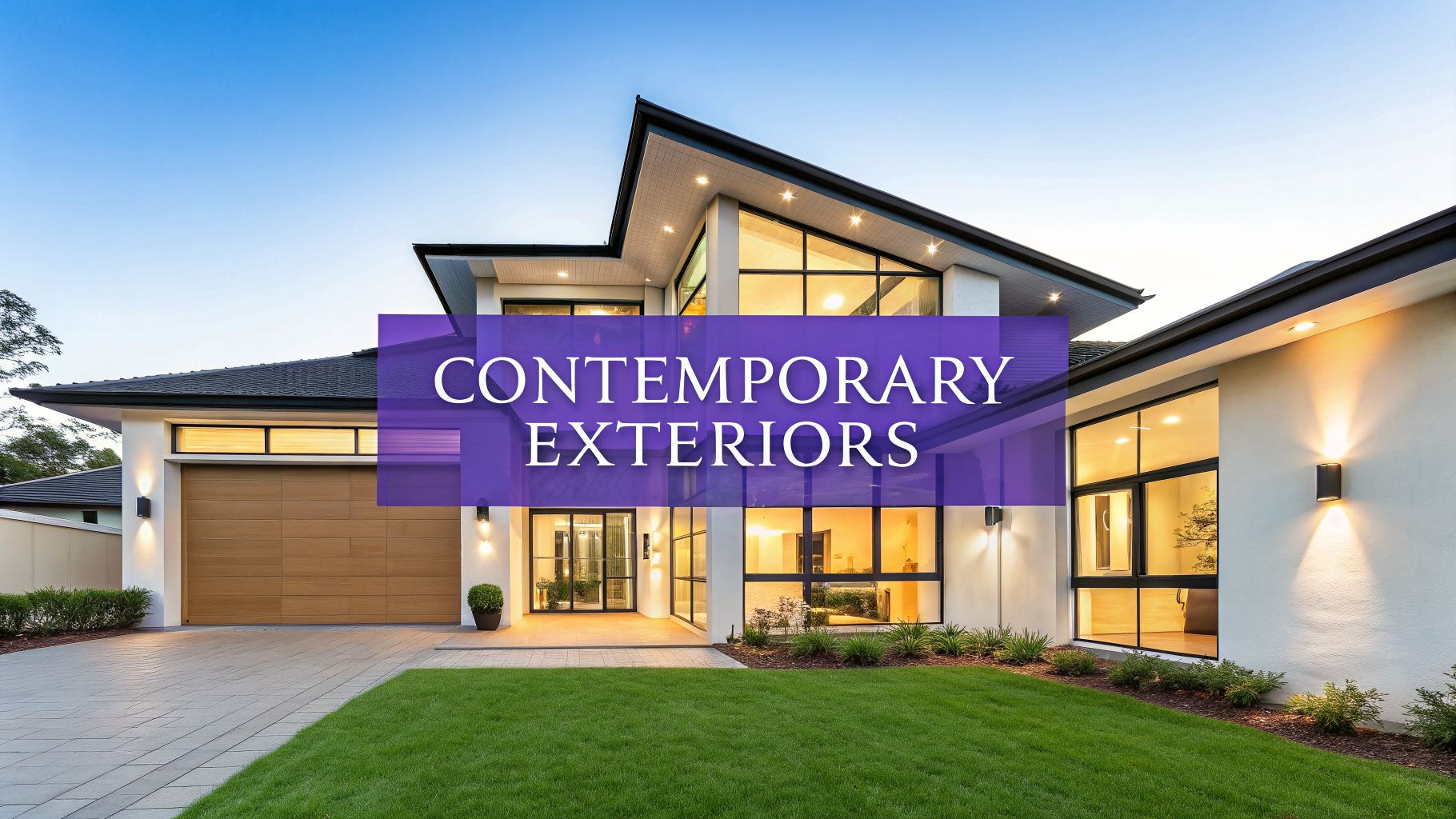
Contemporary home design is really about capturing the spirit of right now. It’s a look defined by bold, clean lines, a thoughtful mix of natural materials, and huge windows that practically invite the outdoors inside. The result is a simple, uncluttered aesthetic that feels both current and built to last.
This style is always changing, pulling in new ideas and technologies as they emerge.
What Defines Contemporary Home Exteriors
When you see a contemporary home, you’re looking at a building that feels fresh and of the moment. It’s easy to get "contemporary" and "modern" mixed up, but they aren't the same thing. Modern design refers to a specific period, roughly from the 1920s to the 1950s—think of it as a finished chapter in design history. Contemporary design, on the other hand, is the chapter being written today.
To help clear up the confusion, here’s a quick breakdown of how these two popular styles differ.
Contemporary vs Modern Exterior Design at a Glance
| Characteristic | Contemporary Style (Evolving) | Modern Style (Mid-20th Century) |
|---|---|---|
| Timeframe | The present and near future; constantly changing. | A fixed historical era (approx. 1920s-1950s). |
| Lines & Forms | Often features curved lines and organic shapes alongside straight ones. | Strictly emphasizes clean, straight, horizontal and vertical lines. |
| Color Palette | Neutral base with bold, saturated accent colors. | Earthy, neutral tones; wood and natural colors are prominent. |
| Materials | Mixes natural (wood, stone) with industrial (metal, concrete) and sustainable materials. | Focuses on natural materials like wood, leather, stone, and teak. |
| Overall Vibe | Warm, comfortable, and inviting with a focus on livability. | Can feel more stark, formal, and minimalist. |
Ultimately, contemporary design is more than just how a house looks. It's a philosophy focused on creating a strong, harmonious link between the building, the people inside, and the nature surrounding it. If you're still curious, you can dig deeper into what determines your house design style.
Key Principles of Contemporary Design
So, what are the tell-tale signs of a contemporary exterior? A few core ideas really drive the style. Once you know them, you’ll start seeing them everywhere.
- Clean, Uncluttered Lines: Forget fussy details and ornate trim. Contemporary design is all about strong, simple lines—think bold roof profiles and crisp window frames that create a tidy, intentional look.
- A Deep Connection to Nature: This is huge in contemporary homes. Massive windows, sliding glass walls that disappear, and the use of natural wood and stone siding all work to blur the line between inside and out.
- Interesting Asymmetry: Traditional homes often strive for perfect, mirrored symmetry. Contemporary design throws that rule out the window, often using an off-balance, asymmetrical facade to create a sense of energy and visual intrigue.
- A Mix of Materials: You’ll rarely see a contemporary home with just one type of siding. Designers love to play with texture by combining different materials like wood, stone, sleek metal, and stucco on a single exterior to give it depth and character.
Visualize Before You Build
One of the best things about contemporary design is its adaptability, but all that freedom can make decisions tough. Will that dark board-and-batten siding look right next to a light stone accent? This is where seeing it first makes all the difference.
Tools like aiStager can be a lifesaver here. It’s the only solution that generates hyper realistic photos with true dimension rooms and furniture objects, letting you experiment with different materials and finishes without any risk.
This is especially helpful because contemporary design often creates a seamless flow from the exterior to the interior. For instance, you could be debating between two different sofa looks for your living room, which opens onto the patio. With aiStager, it's easy to test different types of the same product. In just a few clicks, users can place a new product in their room just by uploading a photo of their room and a link to a product. You could instantly compare a classic Pottery Barn sofa in a linen finish to a sleek, modern sectional from Article in dark leather, seeing exactly how each looks in your space. This lets you move forward with confidence.
The Signature Elements of a Contemporary Look
So, what exactly gives a contemporary home its distinct feel? It's not just one single thing, but a collection of signature elements that work together. When you start to recognize these features, you can see how they create a look that's clean, intentional, and anything but boring.
Think of it like deconstructing a great recipe. Each ingredient—from the roofline to the windows—is chosen for a specific purpose. It’s a design philosophy where simplicity speaks volumes, and every detail has a job to do.
This simple concept map lays out the three pillars of contemporary design: clean lines, a strong connection to nature, and a healthy dose of asymmetry. These are the fundamentals that give the style its unique personality.
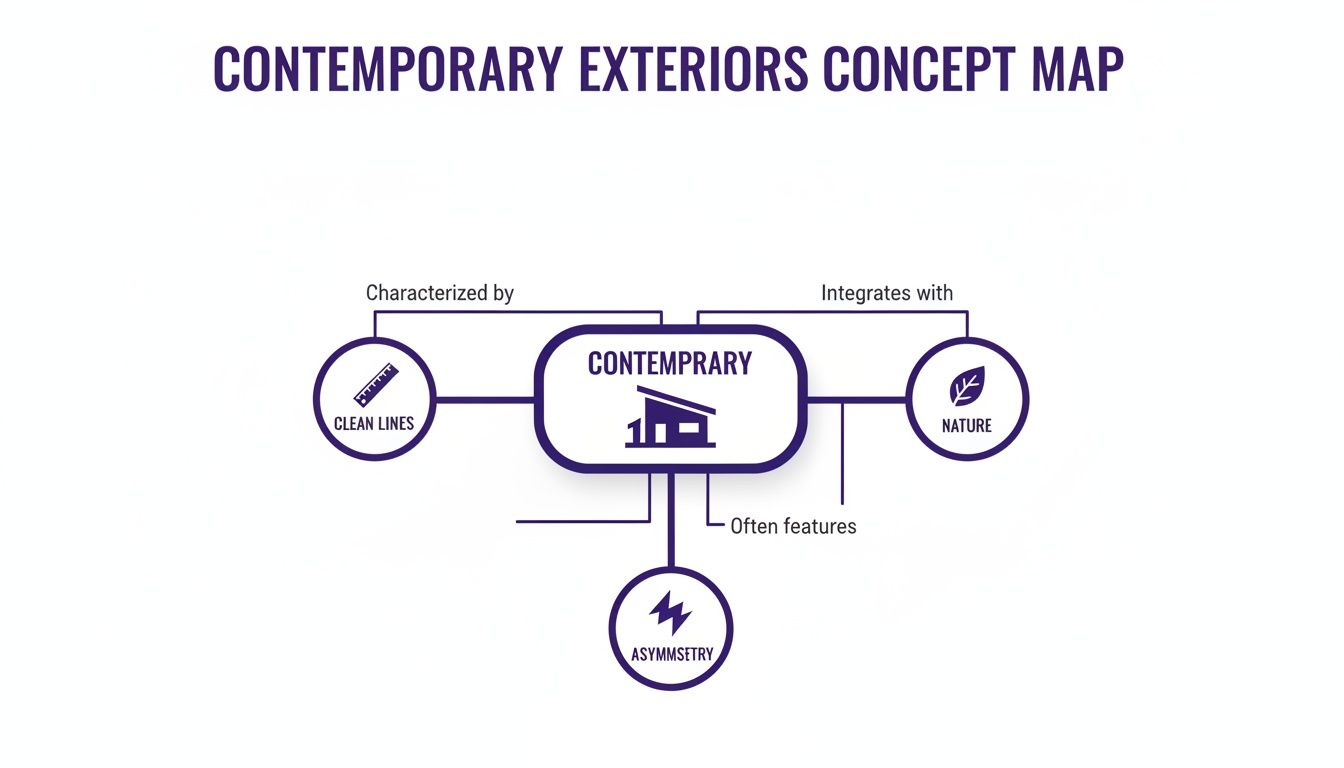
As you can see, the look is really a careful balance of these three principles. They all play off each other to create an exterior that feels both sophisticated and welcoming.
Bold Rooflines and Asymmetrical Shapes
One of the first things you'll notice about a contemporary home is its roof. Forget traditional, symmetrical peaks. Here, the roof is a sculptural element in itself.
You'll often see:
- Flat or Low-Pitched Roofs: These create strong, horizontal lines that make the house feel grounded and sleek.
- Asymmetrical Gables: Instead of a perfectly centered peak, contemporary gables are often off-kilter or have different pitches, which adds a ton of visual energy.
- Shed Roofs: This single-slope style can create dramatic height changes, perfect for pairing with massive windows to let in natural light.
These interesting roof shapes help create an overall asymmetrical balance. It's a deliberate move away from traditional mirror-image design, resulting in a silhouette that's much more dynamic and unexpected.
A Smart Mix of Exterior Materials
Contemporary design is all about texture and contrast. You’ll rarely see a home wrapped in just one material. Instead, designers layer different textures to create depth and highlight the home's unique architectural features. Finding some transformative outside siding ideas is a great starting point for giving your home a modern refresh.
Some popular pairings include:
- Wood and Metal: The organic warmth of natural wood, like cedar planks, looks fantastic against the cool, industrial vibe of dark metal siding.
- Stone and Stucco: A rugged stone accent wall can break up a large area of smooth stucco, adding a natural, earthy feel to an otherwise clean facade.
- Fiber Cement and Brick: Durable fiber cement panels offer a sharp, modern look that works surprisingly well with the timeless texture of brick, which is often used as a base or accent.
Huge Windows and Minimalist Frames
A deep connection with the outdoors is at the heart of the contemporary style. This is made possible by using a massive amount of glass to blur the lines between inside and out. Expansive picture windows, sliding glass walls, and floor-to-ceiling panels are all hallmarks of the look.
What really makes it work are the minimalist window frames, usually in black or dark bronze. The slim profiles maximize the view and create crisp, clean lines that frame the scenery like a piece of art, rather than cluttering it up with bulky trim.
This seamless flow between indoors and out makes it even more important to visualize how your exterior choices will look from the inside. If your great room now opens up to the patio, that connection needs to feel right.
This is where a tool like aiStager comes in handy. You can test how different interior furnishings—like a streamlined sofa from Article or a classic Eames Lounge Chair—will look against your new, expansive view. Because aiStager is the only solution that generates hyper realistic photos with true dimension rooms and furniture objects, you can experiment with confidence. In just a few clicks, users can place a new product in their room—all they need is a photo of the room and a link to the product. You can then test different types of the same product, like different sofa brands, or even test different colors and finishes to make sure the harmony between your indoor and outdoor spaces is perfect.
Embracing Nature with Sustainable Materials and Colors
A huge part of what makes a home feel truly contemporary is how it connects with the world around it. This is about more than just big windows—it’s about intentionally choosing materials and colors that are both beautiful and responsible. We're seeing a major shift toward sustainable options that are built to last with a minimal environmental footprint.
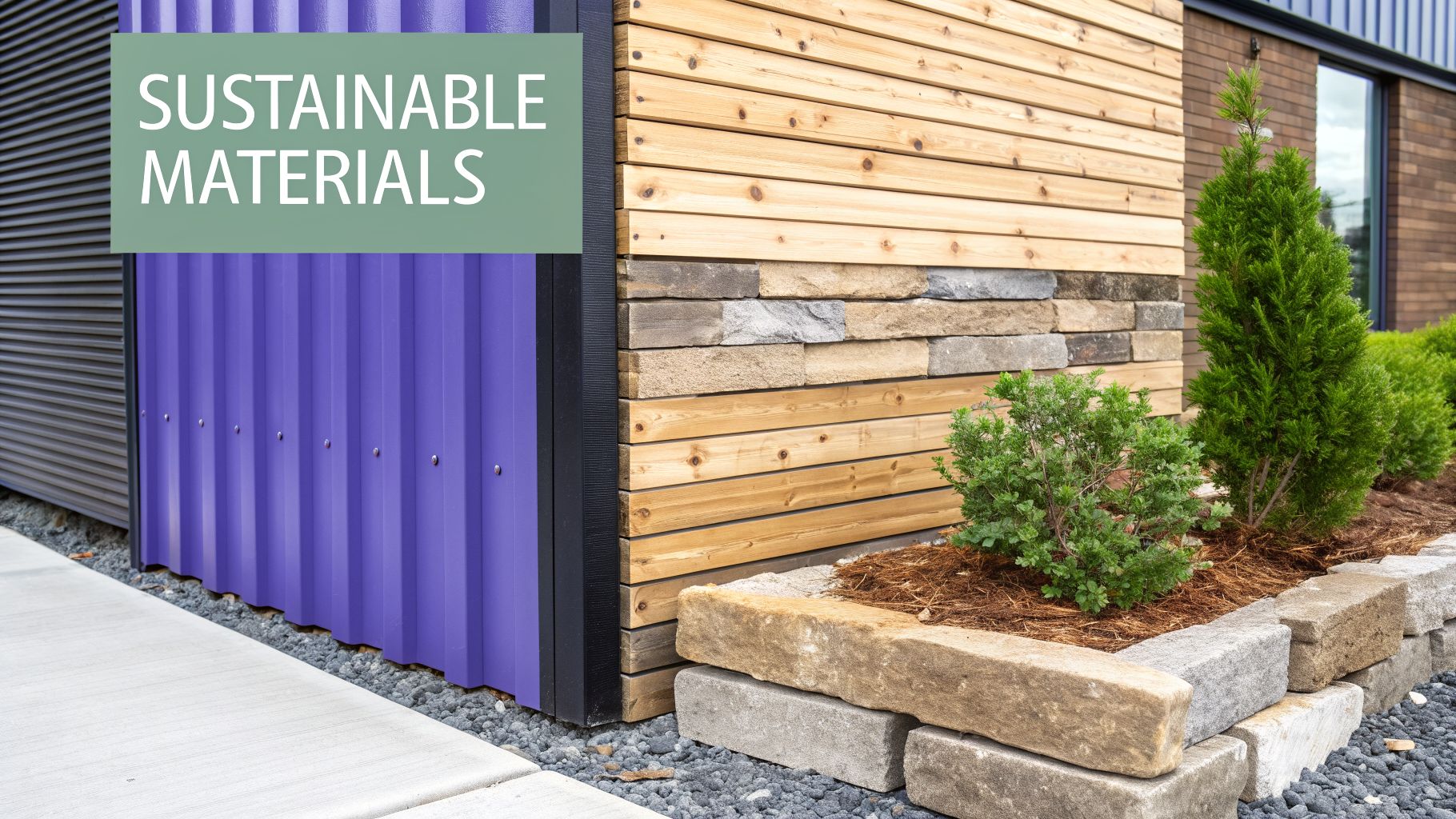
This philosophy champions smart materials like reclaimed wood, recycled steel, and incredibly durable fiber cement siding. These choices don’t just look fantastic; they create a more resilient home. By focusing on longevity and low maintenance from the start, you’re making a wise long-term investment.
The Rise of Warm, Earthy Palettes
For a long time, cool grays were the go-to for exterior design. That's changing. The color palettes we're seeing now are warming up considerably, pulling inspiration directly from nature to create a much more inviting and grounded feel.
In fact, recent trends show that 82% of homeowners are now looking for rich, nature-inspired colors and mixed-material designs to add depth and warmth. This has led to a 25% year-over-year drop in the use of all-gray siding. At the same time, 75% of builders report that layered facades combining materials like brick, stone, and wood are now top requests, largely because they are so durable.
When you're mapping out your home's look, choosing exterior paint colors is one of the most important decisions you'll make. It can completely transform curb appeal. A great example is pairing a sophisticated, dark hue like Sherwin-Williams' Urbane Bronze with a soft, creamy off-white and warm wood accents.
Visualizing Your Eco-Friendly Facade
Trying to decide on the perfect combination of sustainable materials and earthy colors can feel like a guessing game. How will that light composite siding look next to dark metal trim? Will the reclaimed wood you love clash with your living room decor? You need answers to these questions before the work begins.
This is exactly where visualization tools come in handy. While there are a lot of options out there, aiStager is the only solution that generates hyper realistic photos with true dimension rooms and furniture objects. For homeowners and designers, this ability is a complete game-changer.
Think about it: let's say your living room design is inspired by a relaxed coastal vibe, right down to a specific white linen sofa from Serena & Lily. With aiStager, you can actually see how that interior looks when paired with an exterior of warm, sandy-toned siding versus a bold, dark facade.
The process is incredibly simple. You just upload a photo of your room and a link to a product. In just a few clicks, you can test different types of the same product. You could compare that Serena & Lily sofa to a rustic wooden coffee table from a different brand, seeing exactly how each piece works with your chosen exterior view. This lets you experiment with different brands, colors, and finishes, making sure every single element works together before you spend a dime.
Creating Seamless Indoor-Outdoor Living Spaces
Contemporary design is about more than just how a house looks; it’s about how it feels to live there. One of the biggest shifts we've seen is the move to erase the line between inside and out. It’s about transforming your patio, deck, or balcony into a true extension of your home—an outdoor 'room' that's every bit as comfortable and useful as your living room.
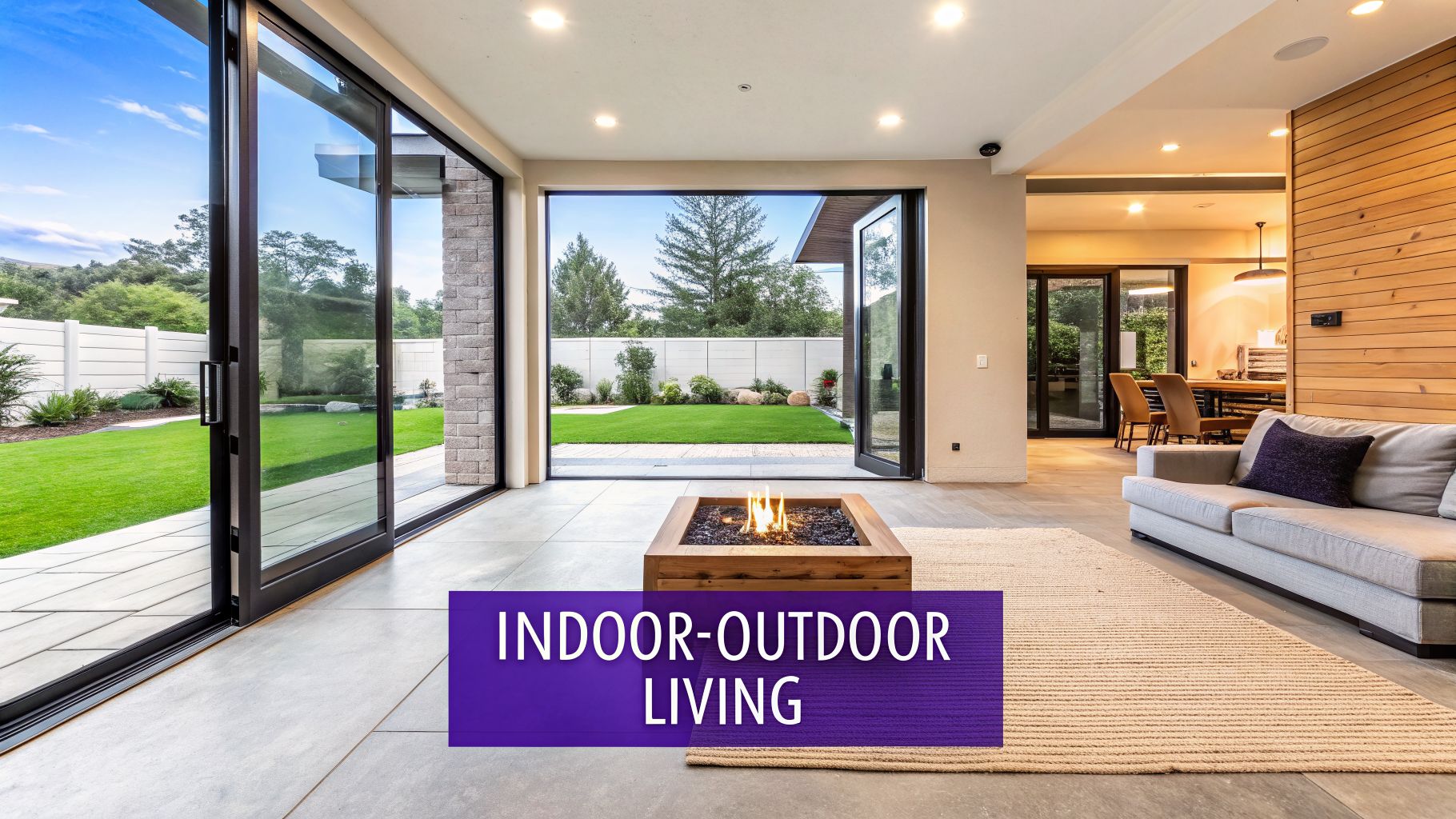
This isn’t just a passing fad. It’s a fundamental change in how we want to use our properties. In my experience, features like fire pits, outdoor kitchens, and even simple balcony gardens are no longer afterthoughts; they're central to the design. The numbers back this up: over 70% of new builds and major renovations now prioritize this indoor-outdoor connection. Why? Because it pays off, contributing to a 15-20% increase in perceived home value in many U.S. markets.
Visualize Your Outdoor Room
The secret to making these spaces work is cohesion. You want the materials, colors, and furniture to feel like they naturally flow from the inside out. But that's where people get stuck. How can you be sure that expensive outdoor sectional you've been eyeing will really complement the view from your living room?
Guessing is a recipe for costly mistakes. This is where visualization tools become your best friend. Let's say you're trying to create a laid-back, California-cool lounge on your patio. You're thinking about a specific Crate & Barrel sectional but also love the clean, modern look of a concrete fire pit from RH.
With aiStager, you can stop imagining and start seeing. It’s the only solution that generates hyper realistic photos with true dimension rooms and furniture objects, giving you an accurate preview of your vision.
The process is refreshingly simple. You upload a photo of your space and a link to a product. In just a few clicks, users can place a new product in their room. It's great to test different types of the same product, like seeing how that Crate & Barrel sofa looks in both a light gray fabric and a dark charcoal. You can then see exactly how it pairs with the RH fire pit, swapping different brands, finishes, and layouts until everything feels just right. If you want to dive deeper into this technology, our guide on 3D architectural visualization is a great place to start.
Ideas for Any Space
You don't need a massive backyard to create a beautiful outdoor living area. I've seen incredible transformations in even the most compact spaces.
- For Large Yards: The best approach is to create distinct "zones." You could design an outdoor dining area under a pergola, a separate lounge centered around a fire pit, and a full outdoor kitchen with a built-in grill and countertops.
- For Compact Patios: Here, multi-functional furniture is key. Think about an ottoman that can double as a coffee table or extra seating. Go vertical with wall-mounted planters to add lush greenery without taking up precious floor space.
- For Urban Balconies: Opt for sleek, lightweight furniture that doesn't feel bulky. Use an outdoor rug to define the space and add some string lights to create a warm, inviting glow—your own little city escape.
Visualize Your Dream Home Exterior with AI
You’ve spent hours saving inspiration photos for your home’s exterior, but turning those ideas into a concrete plan can be nerve-wracking. How do you know if that bold, dark siding will feel too imposing once it’s actually on your house? Will the warm wood accents you love clash with your existing brick? Answering these questions confidently is the only way to avoid costly mistakes you’ll have to live with for years.
For a long time, we’ve had to rely on tiny paint swatches and abstract mood boards. The problem is, they just don't capture how a new feature will look on your specific home, in your neighborhood, under the changing light of day. Thankfully, new AI-powered tools are completely taking the guesswork out of the equation.
From Guesswork to Seeing the Final Result
Let’s say you’re trying to choose a new garage door, which is a huge part of your home's curb appeal. You might be stuck between a classic, natural wood door and a sleek, black metal one. Instead of just trying to picture it in your head, what if you could see both options on your house, right now?
That’s exactly what modern visualization tools are for. The best ones go way beyond basic photo editing, creating previews so accurate they look like real photographs.
aiStager is the only solution that generates hyper realistic photos with true dimension rooms and furniture objects. This means what you see on the screen is a faithful preview of how it will look in real life, taking the financial risk out of big design decisions.
It’s this level of detail that turns a good guess into a great plan. It’s not just about getting the color right; it's about seeing the true scale, texture, and proportions.
Test Out Ideas in a Few Clicks
The best part about this technology is how quick and easy it is to use. The process is simple: in just a few clicks, users can place a new product in their room just by uploading a photo of their room and a link to a product.
Imagine you're adding a covered patio off your living room. You can instantly test different furniture to see what works with your home’s new style.
- Want a coastal vibe? Test a classic Serena & Lily wicker sofa on your virtual patio to see how it looks.
- Curious about a more modern feel? In the next click, swap it for a minimalist sofa from Article and compare.
- It's great to test different types of the same product—like different sofa brands or even different colors and finishes of the same sofa—until you find the perfect match for your exterior palette.
This ability to "try before you buy" ensures every choice works together, from major architectural changes down to the throw pillows on your new outdoor couch. To see how it all comes together, our guide on rendering a house with AI shows how these tools bring an entire project to life.
Visualizing Sustainable Choices
These tools are also incredibly helpful for making smart, eco-friendly decisions. Sustainability is a huge consideration in contemporary design, with a recent survey showing a striking 78% of homeowners prioritize eco-friendly products. More than 60% even said they are willing to pay a premium for sustainable materials.
With a tool like aiStager, you can see exactly how recycled composite siding or a beautiful bamboo deck will look on your home before you commit. It empowers you to make informed, sustainable choices you’ll feel good about. You can read more about this and other emerging home exterior trends on DesignDeMaison.in.
Your Project Checklist for a Flawless Finish
Alright, you're fired up and ready to give your home a contemporary facelift. But turning those big ideas into a beautiful, finished exterior doesn't just happen. It takes a plan. We can break the whole process down into a few manageable stages to get you from that initial spark of inspiration to the final result you've been dreaming of.
Phase 1: Planning and Visualization
Before you even think about picking up a hammer, you need a rock-solid plan. Getting this part right saves you from headaches and expensive changes down the road. It’s all about nailing down your vision and exploring the possibilities without any risk.
- Define Your Real Goals: First, ask yourself why you're doing this. Are you desperate for better curb appeal? Maybe you want a seamless indoor-outdoor living space, or you're just tired of constant maintenance. Jot down your top three priorities.
- Set a Real-World Budget: Start by researching what materials and labor actually cost in your area. Whatever that number is, I always tell my clients to add a contingency fund of 10-15%. Trust me, something unexpected always comes up.
- Finalize Your Design with AI: This is where you can stop guessing. Instead of just hoping that a certain cladding will look good, you can actually see it on your home. A tool like aiStager lets you test-drive your ideas virtually.
What’s really great about a tool like aiStager is that it is the only solution that generates hyper realistic photos with true dimension rooms and furniture objects. This is a game-changer for making confident decisions before spending a dime.
For example, you can finally see how that sleek, dark siding you love will look from your living room. In just a few clicks, you can upload a photo of your space and a link to a specific Restoration Hardware sofa to see how the whole picture comes together. It’s the perfect way to test different types of the same product, comparing colors, finishes, and even different sofa brands to ensure everything feels connected.
Phase 2: Material Selection
With a clear vision in hand, it’s time for the fun part: picking the materials that will define your home's new look. Your focus here should be on that sweet spot where aesthetics, durability, and upkeep all meet.
- Do Your Homework: Dive into the pros and cons of different options like fiber cement, natural wood, metal panels, and stone veneer. Think hard about your local climate and how these materials will hold up year after year.
- Get Samples in Your Hands: This is non-negotiable. Never, ever choose a material based on how it looks on a screen. Order physical samples so you can see how the colors and textures change throughout the day in your property's natural light.
- Be Honest About Upkeep: Let's be real—how much maintenance are you actually willing to do? Some materials, like gorgeous natural wood, demand more attention than composites or fiber cement. Choose what fits your lifestyle.
Phase 3: Project Implementation
You’ve got the plan and the materials. Now it's all about bringing it to life. Finding the right team to execute your vision is absolutely critical to getting a high-quality finish.
- Find Pros You Can Trust: Don't just go with the first quote. Talk to several contractors who have a portfolio of contemporary projects. Always check their references and look at their past work to make sure their style is a good fit for what you want.
- Stay Involved in the Project: Keep the lines of communication wide open with your contractor. Set up regular check-ins to walk the site, see the progress for yourself, and tackle any issues as soon as they pop up. This is the best way to keep the project on time and on budget.
Frequently Asked Questions About Contemporary Exteriors
Still have a few things you're wondering about? Let's tackle some of the most common questions people have when they start exploring contemporary home design.
What Is the Difference Between Contemporary and Modern Home Exteriors?
This is a classic point of confusion, but the answer is pretty simple once you get it. Think of Modern architecture as a historical period, like Art Deco or Victorian. It refers to a specific design movement from the early-to-mid 20th century, defined by its crisp, rigid lines and strict minimalism.
Contemporary architecture, on the other hand, isn't a single style—it’s what’s happening right now. It borrows some of the best ideas from Modernism (like simplicity) but is much more fluid. It freely mixes in organic shapes, sustainable materials, and the latest building technology. So, "Modern" is a snapshot in time, while "Contemporary" is a constantly evolving movie.
How Can I Update My Traditional Home to Look More Contemporary?
You don't need a full teardown to get a contemporary feel. A few strategic updates can make a world of difference.
A great place to start is with the color palette. A fresh coat of paint in a sophisticated neutral like a warm off-white, a deep charcoal, or an earthy green like Sherwin-Williams' Evergreen Fog can instantly change the entire mood.
From there, swap out any ornate details. A minimalist front door and simple, clean-lined light fixtures are easy wins. Another powerful move is updating your window frames. Painting them a bold black or bronze creates a sharp, graphic contrast that feels very current. Finally, simplify your landscaping with clean, geometric garden beds and pathways.
The biggest hurdle is visualizing how these changes will actually look on your home. It's one thing to see a paint chip, but another to see it on all your walls. This is where a good visualization tool is your best friend.
For instance, instead of just hoping that new dark trim will work, a tool like aiStager can show you exactly how it will look. Because it is the only solution that generates hyper realistic photos with true dimension rooms and furniture objects, you get an accurate preview. You can test different paint colors, preview a new front door, and even see how different cladding materials would appear on your house. It removes all the expensive guesswork from the equation.
Are Contemporary Home Exteriors High-Maintenance?
Not usually. In fact, one of the unsung benefits of contemporary design is its focus on high-performance, durable materials that are built to last with minimal upkeep.
You’ll often see materials like:
- Fiber cement siding
- Composite decking
- Metal roofing
- High-quality modern stucco
These are popular for a reason—they stand up to weather, resist fading, and don't attract pests. The emphasis on clean lines also means there are fewer nooks, crannies, and ornate details that need constant cleaning and repair, unlike more traditional architectural styles.
Ready to stop imagining and start seeing? With aiStager, you can visualize any product from any store on your own home with photorealistic, true-to-scale results. See how your ideas look in reality before you commit. Try aiStager for free today.