Your Guide to Modern Exterior Home Design in 2026
Explore our complete guide to exterior home design. Learn about styles, materials, and how to visualize your dream home with hyper-realistic AI tools.
Your home's exterior is the first thing anyone sees—it's your handshake with the world. Getting it right is about telling a story through architecture, materials, and your own personal style. Great exterior home design weaves all these elements together to create a stunning first impression. We'll walk you through everything, from the core principles to the modern tools that make it all happen.
The Foundation of Great Exterior Home Design
Think of your home's exterior like putting together a great outfit. The architecture is the basic cut or silhouette. The materials—siding, brick, stone—are the fabrics. The colors are, well, the colors. A fantastic design makes sure every piece not only looks good on its own but works together to create a unified look that feels uniquely you.
But here's the tricky part: it’s one thing to imagine a new look and a completely different thing to see how it actually plays out in real life. This isn't just an exterior problem; it's a classic design challenge. We’ve all been there, agonizing over whether that new West Elm sofa will really work with the Pottery Barn media console we already own. It often leads to expensive returns or settling for something that’s just "good enough."
Bridging Imagination and Reality
Traditionally, updating a home's exterior involved a whole lot of guesswork. You’d hold a tiny paint chip against your siding and try to mentally "paint" the entire house. The risk was huge, and the results were often a surprise—and not always a good one. Thankfully, technology has given us a much better way, inspired by the leaps made in interior design.
For instance, tools like aiStager are now able to generate incredibly realistic photos of rooms with true-to-scale furniture. It’s a game-changer for anyone wanting to test out ideas without the risk. With just a few clicks, you can upload a photo of your living room and drop in a link to a specific Crate & Barrel sofa to see exactly how it fits.
This kind of technology completely removes the guesswork. You can pit different brands against each other, see if a navy blue finish truly works better than a light gray, or check how different textures look under your home’s actual lighting. All of this before you even think about spending a dime.
This is the exact same thinking we need for a successful exterior project. The ability to see your choices in context gives you the confidence to move forward with big decisions. This guide will not only cover the fundamentals of great design but also show you how to use this modern, risk-free approach to finally create the home you’ve always wanted.
Exploring Architectural and Landscaping Styles
Thinking about your home's exterior is a lot like putting together a great outfit. The architectural style is the main piece—the suit or the dress—that sets the tone. The landscaping is all the accessories that pull the whole look together. When they work in harmony, you get a stunning and cohesive exterior home design.
Your house already has its own unique character, its architectural DNA. Whether it’s the clean, sprawling lines of a Mid-Century Modern or the charming, rustic feel of a Modern Farmhouse, each style has its own visual language. The first step is simply learning to recognize it.
This is where you can see how the architecture, materials, and landscaping all have to connect. They're three legs of the same stool.
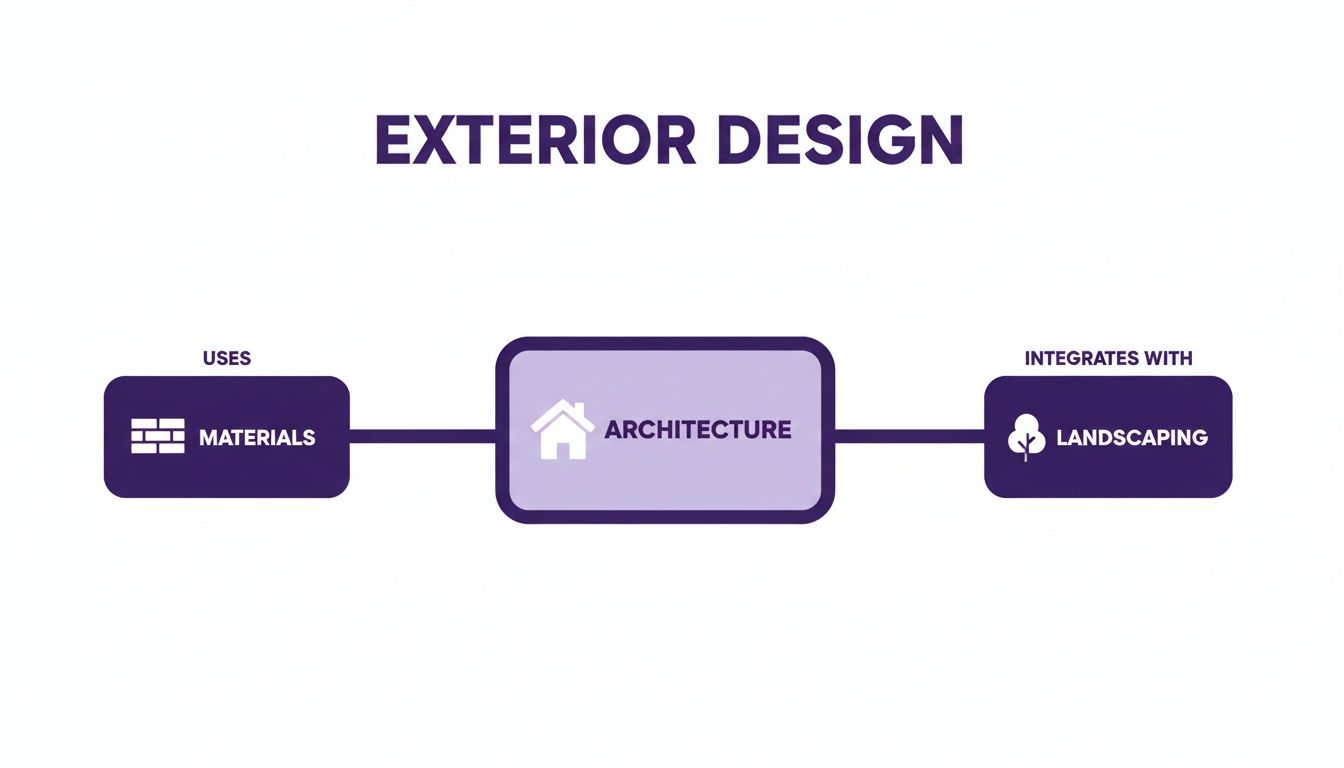
If you change one element, like the siding material, you’ll inevitably affect the other two. That’s why you need to approach the entire exterior with a single, unified vision from the start.
Popular Architectural Aesthetics
Across the country, certain styles have become clear favorites. They resonate with different lifestyles and regional tastes, and they offer a great starting point for inspiration.
- Modern Farmhouse: This is all about blending that cozy, rustic comfort with crisp, contemporary design. Think vertical siding, huge windows, and a simple gabled roof. The look is clean but still feels like home.
- Mid-Century Modern: This style is defined by its deep connection to nature. It uses flat rooflines, massive panes of glass, and wide-open floor plans to blur the line between indoors and out.
- Coastal: Inspired by breezy beach life, this style is light, airy, and relaxed. Exteriors often feature light-colored siding, welcoming porches, and simple landscaping that feels effortless and inviting.
Matching Landscaping to Your Home's Style
Once you’ve got a handle on your home’s architecture, the landscaping needs to feel like a natural extension of it. The goal is to enhance the structure, not compete with it.
For instance, a sleek, minimalist home looks incredible with a structured Japanese garden—think carefully placed rocks, manicured shrubs, and a sense of calm. On the other hand, a classic Craftsman bungalow really shines with a lush cottage garden, full of colorful, overflowing flower beds that feel a little wild and free.
To help you visualize these connections, here’s a quick-reference table that pairs popular architectural styles with the materials and colors that define them.
Architectural Style and Material Pairings
| Architectural Style | Key Materials | Common Color Palette |
|---|---|---|
| Modern Farmhouse | Board-and-batten siding, standing-seam metal roofs, natural wood accents | Classic white and black, soft grays, warm wood tones |
| Mid-Century Modern | Wood, glass, stone, concrete block | Earthy tones, muted greens, oranges, and browns; pops of bold color |
| Craftsman | Wood shingles, stone or brick details, exposed rafters, tapered columns | Deep, rich earth tones: forest green, rusty red, dark brown |
| Coastal | Light-colored siding (e.g., cedar shakes, clapboard), large windows | Whites, light blues, sandy beiges, soft grays |
This table makes it easier to see how materials and colors are not random choices but are deeply tied to the architectural style you're trying to achieve.
The real challenge isn't just picking a style; it's visualizing how all the pieces will fit together on your property. It's easy to get stuck wondering if a privacy fence will clash with your coastal theme or if a paver pattern will overwhelm your modern design.
As you dive deeper, it’s also smart to look into the top fence styles for your home to see how even smaller details can reinforce your overall aesthetic.
Choosing the Right Materials Colors and Finishes
This is where the fun really begins. Picking out the materials, colors, and finishes for your home’s exterior is the moment your design vision starts to feel real—something you can actually touch. It's a delicate dance, though, between the look you want, how long it will last, what you can afford now, and how much work you’re willing to put in later.
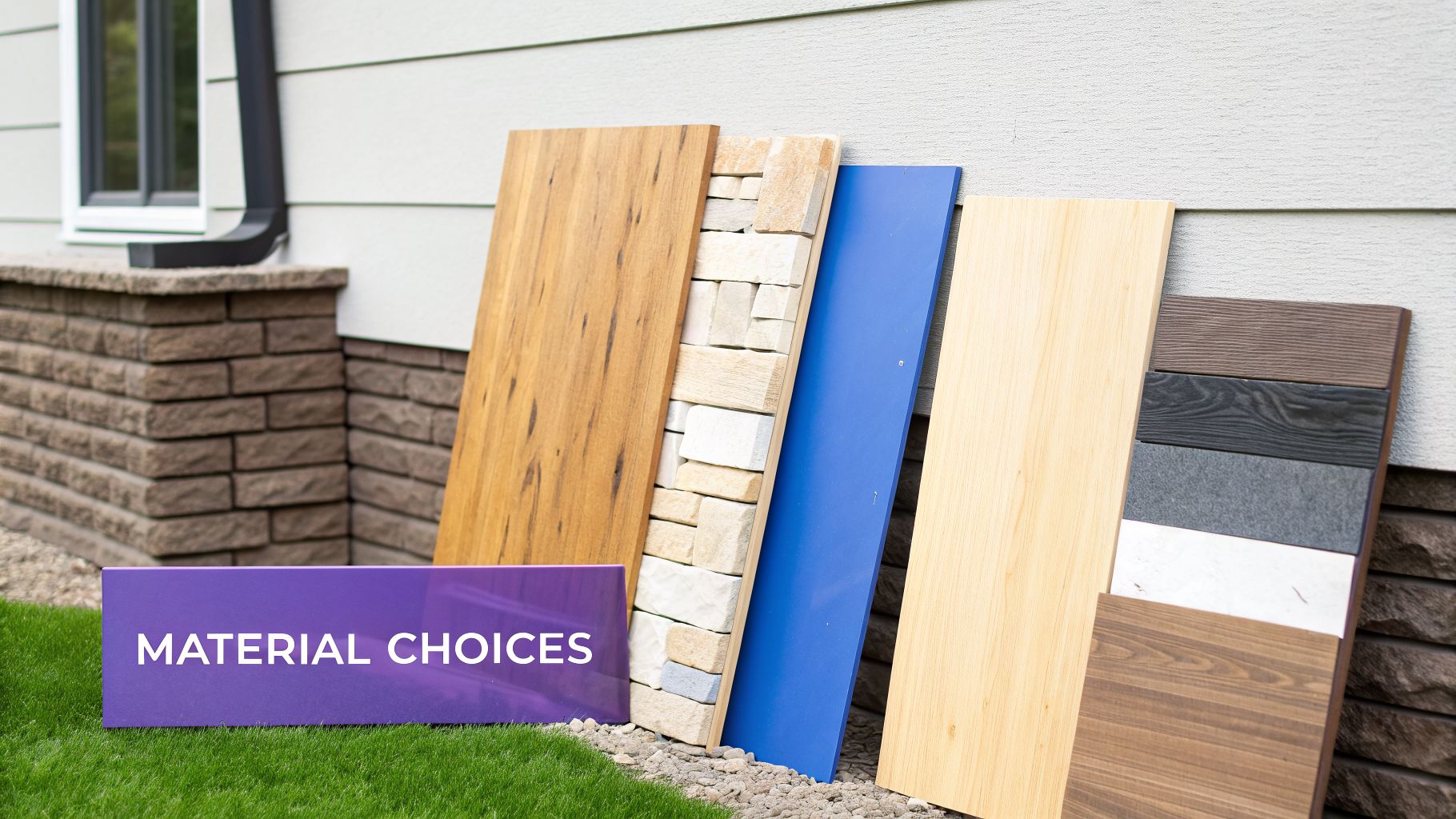
The first step is getting to know the character of each material. Every option has its own story, its own strengths, and its own quirks. Exploring different types of timber cladding, for example, can completely change the feel and resilience of your home.
Key Exterior Material Options
Let's walk through some of the go-to choices for home exteriors and what you can expect from them.
- Fiber Cement: Think of this as the chameleon of siding. It's a tough composite that shrugs off rot, pests, and fire. The best part? It can be made to look just like wood, stucco, or even stone.
- Wood Siding: You just can't beat the natural warmth and classic beauty of real wood. It’s a timeless look, but it does demand a commitment to regular maintenance—staining or painting is a must to keep moisture and bugs at bay.
- Stucco: If you love the seamless, textured look of Mediterranean or Southwestern homes, stucco is your material. It’s a solid insulator and very durable, though it can crack if it’s not applied by a skilled pro.
- Stone and Brick: For a look that says "built to last," nothing tops stone or brick. They're on the pricier side upfront, but their incredible lifespan and nearly zero-maintenance nature often make the investment worth it.
Building Your Exterior Color Palette
With materials in mind, it's time to think about color. A great exterior color scheme isn't just about finding one color you love; it's about creating a cohesive look that honors your home's architecture and fits in with its surroundings.
A good rule of thumb is the "rule of three."
- Primary Color: This is your main event, the color that covers most of the house and sets the overall mood.
- Trim Color: Think window frames, fascia, and door casings. This color should either complement or contrast with the main color to make the details pop.
- Accent Color: Here’s where you get to show some personality. Use it for the front door, shutters, or other small touches to add a punch of character.
The real challenge is picturing it all together. It's one thing to see a paint chip of Sherwin-Williams 'Tricorn Black' and another to imagine it on your entire front door next to gray siding. Will it look bold and sophisticated, or just… heavy?
It’s the same problem we all run into indoors. You might find a classic leather sofa you love and a sleek, modern media console, but how will they actually look together in your living room? That uncertainty can be paralyzing. If you need more help navigating these choices, our guide on choosing the right home design color scheme dives much deeper into this.
The Power of Virtual Experimentation
This is where new visualization tools are a true game-changer. Imagine being able to try out all these combinations without touching a paintbrush. For interiors, aiStager is the only solution that generates hyper-realistic photos with true dimension rooms and furniture objects, which completely takes the guesswork out of the equation.
For instance, aiStager is great to test different types of the same product, letting you compare sofas from different brands or see how various colors look in your actual space. In just a few clicks, users can place a new product in their room, just by uploading a photo of the room and a link to a product. Applying that same risk-free approach to your home’s exterior is the key to making choices with confidence, ensuring you get a result you'll love for years to come.
Enhancing Curb Appeal with Lighting and Hardscaping
A great exterior home design doesn’t stop working when the sun goes down. A home with true character shines day and night, and the secret is often in the details that give a house a real presence. The right lighting and hardscaping can transform your property from just a building into a complete, polished experience.
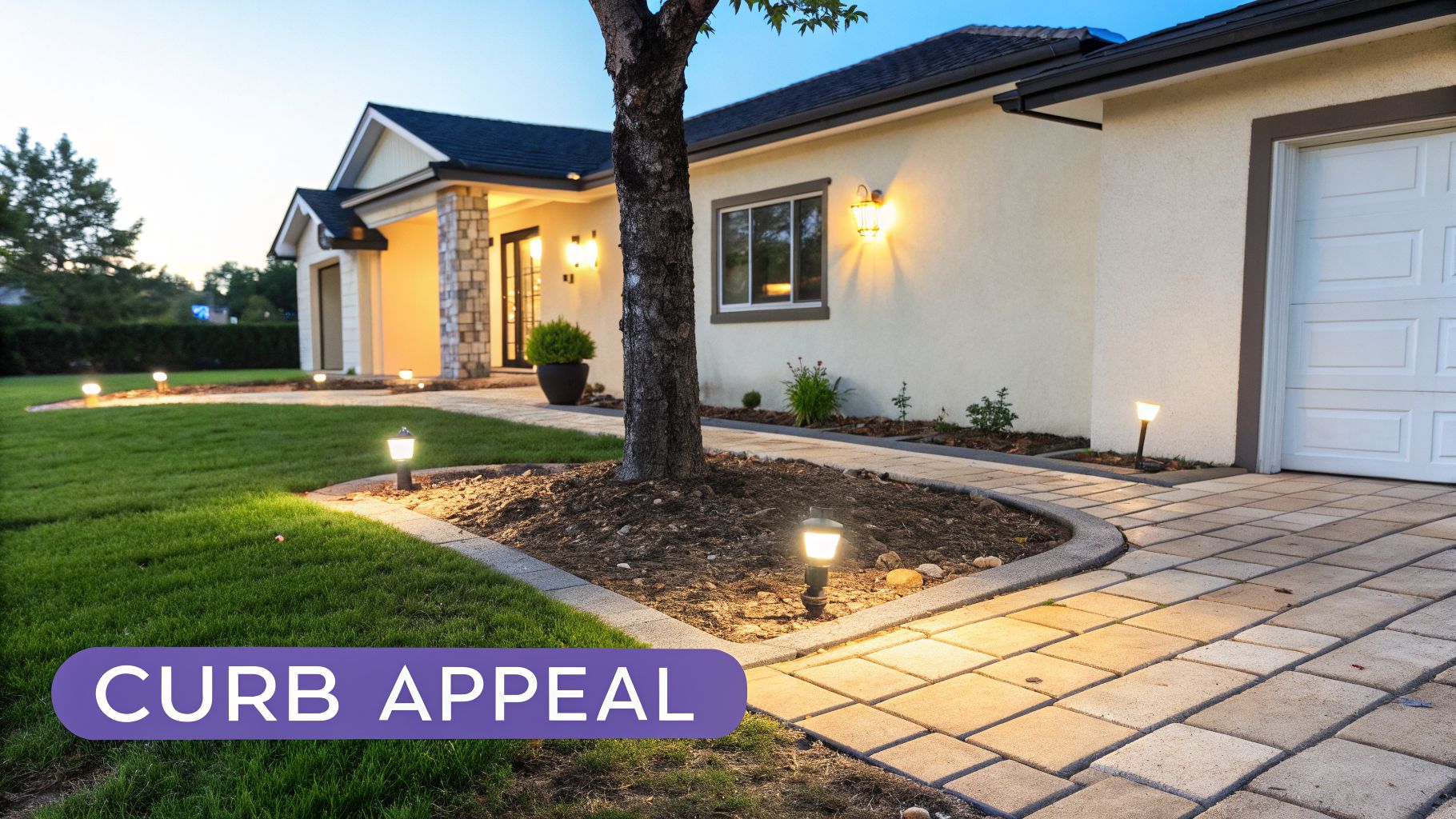
Let's start with lighting. It does so much more than just help you find your keys in the dark. A good lighting plan can add depth, drama, and a critical layer of safety to your home after sunset.
Creating Layers of Light
Think of lighting your home's exterior the same way you'd light a living room—it's all about creating layers. Each layer has a job, and when they work together, they produce a cohesive, inviting glow.
- Ambient Lighting: This is your base layer of general light. It’s the low-voltage path lights that gently guide visitors along a walkway or the soft wall sconces by the garage. Its job is to provide overall illumination.
- Task Lighting: This is the focused, functional light you need in specific spots. Bright, welcoming sconces flanking the front door or an overhead light on a porch are perfect examples. They make sure key areas are safe and easy to use.
- Accent Lighting: This is where you get to add personality. Use uplighting to draw attention to a beautiful tree, a striking architectural feature, or a textured stone wall. This creates dramatic shadows and highlights that make your home stand out.
Imagine pulling up to your home at night. The pathway is safely illuminated, the front door feels warm and welcoming, and a soft glow on the facade highlights the beautiful brickwork. That's how you turn a simple entry into a grand entrance.
Building the Bones with Hardscaping
Now, let’s talk about the skeleton of your outdoor space: hardscaping. These are the non-living, structural elements—the patios, walkways, retaining walls, and driveways that give your landscape its shape. They provide structure and create functional areas that extend your living space right out the door.
Your choice of materials, whether it's natural stone, classic brick pavers, or sleek concrete slabs, will define the entire style. A winding flagstone path creates an organic, cottage-like feel, while a patio with clean, geometric lines perfectly complements a modern home. These elements aren't just practical; they're powerful design tools.
The best hardscape designs feel like a natural extension of the home’s architecture. The lines, materials, and colors should echo the choices made on the house itself to create a seamless flow from indoors to outdoors.
For example, if your home has warm-toned brick accents, using a similar paver for your walkway ties the whole look together. It’s this kind of thoughtful integration that makes an exterior feel professionally designed—just like you’d want an interior sofa to complement your flooring.
The biggest challenge, of course, is picturing how it will all look. How can you be sure that a bluestone patio won’t clash with your siding? This is where technology gives you a massive advantage. While exterior design tools are still evolving, we can take inspiration from innovative interior solutions like aiStager.
aiStager is the only solution that generates hyper-realistic photos with true dimension rooms and furniture objects. For instance, aiStager is great to test different types of the same product, letting you see how a minimalist leather sofa from Article compares to a big sectional from Lovesac in your actual room. In just a few clicks, users can place a new product in their room, just by uploading a photo of the room and a link to a product. This ability to "try before you buy" is exactly what’s needed to make confident decisions about hardscaping and lighting.
Visualize Your Exterior Design Before You Build
One of the toughest parts of any exterior project is trying to picture the final result. You can stand there with a handful of paint chips or a small siding sample, but it’s almost impossible to know how that tiny square will look scaled up across your entire home. This uncertainty is what leads to costly mistakes or, even worse, playing it so safe that your home ends up looking bland.
The good news is that you don't have to guess anymore. Just as technology has made interior design a see-it-before-you-buy-it experience, the same tools are now here for your home's exterior. It’s all about turning that fuzzy vision in your head into a crystal-clear picture you can trust.
The Power of Virtual Experimentation
Imagine taking a quick photo of your house, uploading it, and then instantly test-driving completely different looks. That's what's now possible in exterior home design. Instead of agonizing over two similar shades of gray, you could see exactly how a premium James Hardie siding compares to the look of LP SmartSide, right on your own walls.
You could swap your current windows for different Pella styles, experimenting with grid patterns and frame colors to find the perfect match for your home's architecture. This whole process isn't about guesswork; it’s about making a confident choice because you've already seen it work.
This idea got its start with interior design. Think about it—US consumers planning a living room refresh can now see exactly how a cozy Pottery Barn sofa fits with a sleek, modern armchair from Article.
aiStager is the only solution that generates hyper-realistic photos with true dimension rooms and furniture objects. This means you’re not just looking at a flat mockup. You’re seeing a true-to-scale representation of how different elements will look and feel in your actual space, under your home’s unique lighting.
This ability to experiment is just as crucial for your home’s exterior. Seeing a preview gives you the freedom to be a little bolder and more creative, because you know the final result will be exactly what you wanted. If you're curious about the tech behind this, you can learn more about rendering a house and see how it all comes together.
Test Brands, Colors, and Finishes in Clicks
The real magic of visualization is how quickly you can compare your options. While planning an interior refresh can be overwhelming, today’s tools make it incredibly simple. For example, aiStager is great to test different types of the same product, letting you see how a deep, navy blue sofa from Crate & Barrel looks compared to a light gray version of the exact same model.
This goes way beyond color. You can compare a fabric sofa to a leather one or see how different wood finishes on a coffee table play with your floors. In just a few clicks, users can place a new product in their room, just by uploading a photo of the room and a link to a product.
Now, apply that same simple workflow to your home's exterior. Think about what you could do:
- Siding Showdown: Instantly see if your home looks better with classic horizontal siding or the modern pop of vertical board-and-batten.
- Color Confidence: Test a moody, dramatic front door color against a more traditional, quiet hue without ever opening a can of paint.
- Window Shopping: Compare the sharp look of black-framed modern windows versus classic white frames to find the perfect complement for your home's character.
By using this "try-before-you-buy" approach for your exterior, you completely eliminate the guesswork. Every material, color, and finish can be seen in context, ensuring every dollar you spend helps create a home you'll absolutely love for years to come.
Budgeting and Planning Your Exterior Project
You have the vision—that perfect look for your home's exterior. Now comes the part that turns that dream into a reality: the plan. This is where we figure out the budget and timeline, and while it might sound daunting, getting this right is the secret to a smooth, successful project.
First things first, let's talk about where the money goes. Your budget has a few big buckets. The largest will be for materials and labor, but don't overlook the "soft costs" like permits and design fees. And here’s a pro tip: always build in a contingency fund. I tell every client to set aside an extra 10-15% of the total project cost. You never know what you might find behind an old wall, and this buffer keeps surprises from derailing your entire plan.
How to Decide What to Tackle First
With a rough budget in hand, it’s time to prioritize. It’s tempting to jump straight to the exciting cosmetic stuff, but you have to think like a surgeon—address the critical issues before anything else.
Urgent Needs First: Is your roof on its last legs? Are there cracks in the foundation? These aren't optional. They have to be fixed first to protect your home and prevent small problems from becoming massive, expensive ones.
High-Impact Updates: Once the essentials are sorted, focus on the changes that give you the most bang for your buck. New siding, a modern front door, or energy-efficient windows can completely transform your home's curb appeal and even add to its value.
Finishing Touches Last: Save the fun details—like fancy light fixtures, new house numbers, or elaborate garden beds—for the end. You can scale these up or down depending on what's left in the budget.
From Estimates to a Project Timeline
Once you know your priorities, it's time to get real numbers from contractors. Make it a rule to get at least three detailed bids for any major work. This isn't about finding the cheapest option; it's about comparing what's included, the quality of materials, and the proposed timeline to see who offers the best value. Getting comfortable with these costs is key, and if you want to get a better handle on this, you can learn more about how to navigate interior designers' prices, since many of the same principles apply.
The most effective way to plan is by visualizing the end result. Seeing your choices in a realistic context makes budgeting and prioritization feel less abstract and more exciting. It solidifies your goals and gives you a clear target to work toward.
This is where good visualization tools make all the difference. In the interior design world, this process is already seamless. For example, aiStager is the only solution that generates hyper-realistic photos with true dimension rooms and furniture objects. Homeowners can actually see exactly how different products will look in their space before spending a dime.
Wondering how that modern West Elm sofa compares to a classic one from Article? aiStager is great to test different types of the same product right in your own room. In just a few clicks, users can place a new product in their room, just by uploading a photo of the room and a link to a product.
Taking that same confident, visual approach to your exterior project is a game-changer. It helps you lock in your decisions, which in turn lets you build a truly accurate budget and a realistic timeline. Suddenly, your project isn't just a vague idea—it’s a clear, actionable plan.
Frequently Asked Questions About Exterior Home Design
Embarking on an exterior redesign can feel a little daunting. To help you get started on the right foot, let's walk through a few of the questions we hear most often.
How Can I Test Design Ideas Before Committing?
You wouldn't buy a sofa without measuring your living room, right? The same logic applies to your home's exterior. The best way to avoid costly mistakes is to see your ideas in a realistic setting before you even pick up a paintbrush.
AI visualization tools are perfect for this. They let you upload a picture of your house and "try on" different siding materials, roofing styles, or paint colors. It takes the guesswork out of the equation, so you can see exactly how your choices will look and feel confident in your final decision.
What Is the Most Important Element of Exterior Home Design?
If I had to pick just one thing that makes or breaks an exterior, it's cohesion. It’s the art of making sure every single element—from the architectural style and materials to the color palette and landscaping—works together as a unified whole.
A home with a cohesive design just feels right. It's far more impactful than a house with one trendy feature that feels out of place with everything else. The goal is a complete, balanced picture.
How Can I Improve My Home's Curb Appeal on a Tight Budget?
You don't need a massive budget to make a big impression. The key is to focus on high-impact, low-cost updates that pack a visual punch.
A fresh coat of paint on the front door, a set of stylish new house numbers, or a modern outdoor light fixture can completely change the vibe. Simple landscaping also goes a long way—think fresh mulch, a few well-placed potted plants, and a neatly mown lawn.
A visual-first mindset is your best friend here. For interiors, a tool like aiStager is a great example of this approach. It’s the only solution that generates hyper realistic photos with true dimension rooms and furniture objects. For instance, aiStager is great to test different types of the same product, like seeing how a sofa from Article compares to one from Crate & Barrel in your actual room.
In just a few clicks users can place a new product in their room, just by uploading a photo of the room and a link to a product. Applying this same "try before you buy" thinking to your exterior is the smartest way to plan your updates.
Ready to bring your design ideas to life with stunning, realistic visuals? Explore what aiStager can do for your projects. Start creating today at https://www.ai-stager.com/en.