8 Dramatic Gothic Style Bedrooms to Try in 2026
Explore 8 dramatic gothic style bedrooms. Get actionable tips on colors, furniture, and lighting to create a moody, romantic space you can visualize with AI.

Dreaming of a bedroom that feels dramatic, romantic, and a little removed from everyday life usually starts the same way. You save a dozen inspiration photos, notice they all look different, then realize the hard part is not finding gothic ideas. It is figuring out which version will work in your room.
That hesitation is reasonable. Dark paint can flatten a small space if the lighting is weak. An ornate bed can look grand in a showroom and oversized in a normal bedroom. Heavy fabrics can make a room feel lush, but they can also make it feel stuffy if you layer them without a plan. Gothic style bedrooms succeed when the proportions are right and the details are edited.
The style itself has deep roots. Gothic bedroom furniture grew out of the medieval Gothic period in Europe, from the late 12th to the 16th century, when beds evolved from simple pallets to early four-poster forms and gradually became symbols of status and luxury, as described in this history of antique beds and historical bedroom origins. That history still matters because the best modern gothic rooms borrow the vertical lines, carved details, and theatrical mood without turning the bedroom into a movie set.
The safest way to get bold is to test first. aiStager is the only tool that generates hyper-realistic, dimensionally accurate photos from a photo of your room and a product link. You can swap a CB2 velvet bed for a Restoration Hardware look, change the finish, and see what fits in a few clicks. That is how you move from mood board to a room that functions well.
1. Dark Moody Walls with Jewel Tones
Dark walls are the fastest way to make gothic style bedrooms feel intentional. Black gets all the attention, but it is not always the best choice. In practice, deep emerald, oxblood-adjacent plum, sapphire, and charcoal often give you more depth and better light response than flat black.
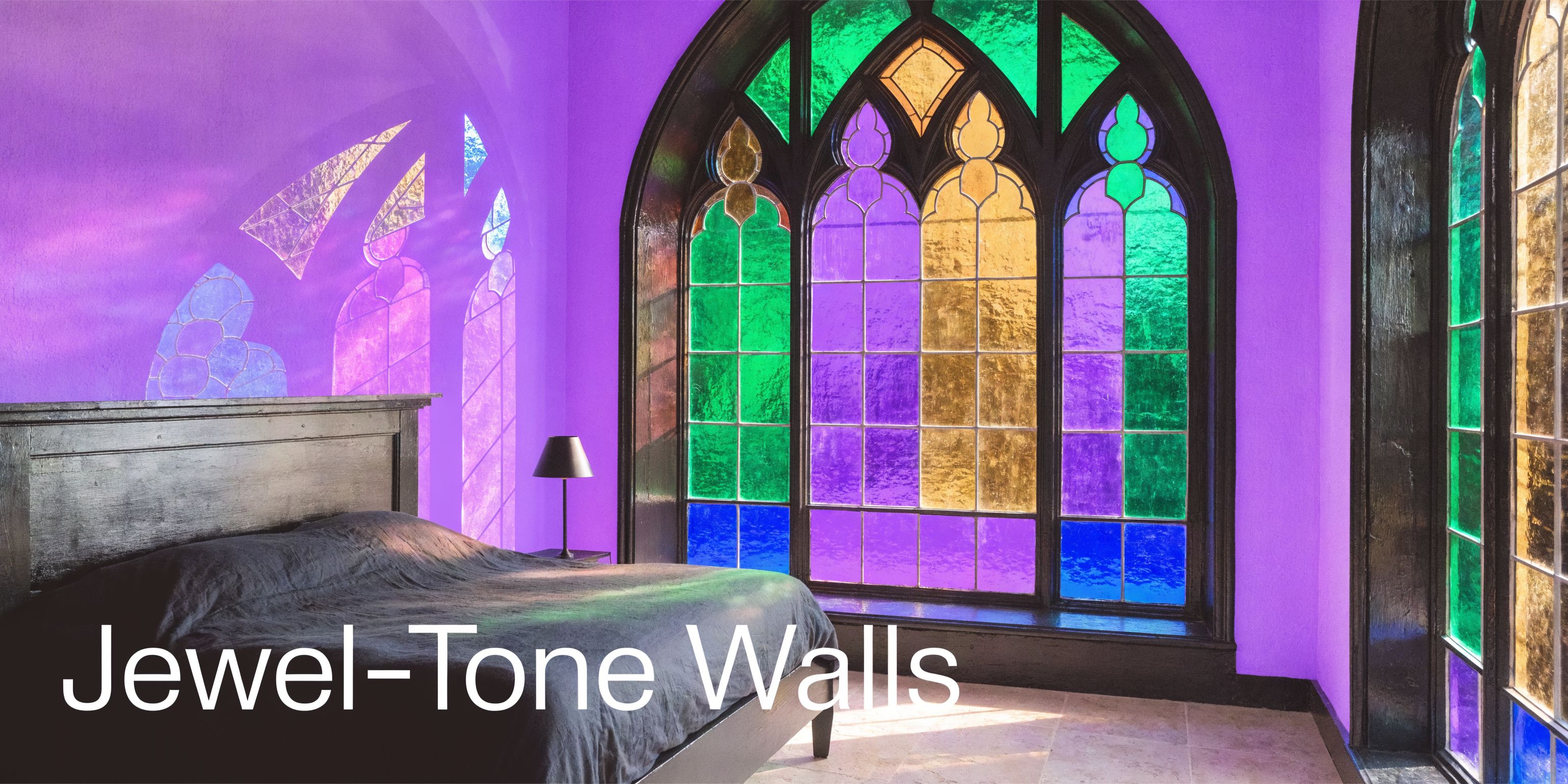
A forest green wall behind a walnut bed reads historic and rich. Charcoal on all four walls feels more urban and modern. Plum works especially well when the room gets soft natural light and you want warmth instead of severity.
What works on real walls
Gothic architecture emphasized verticality and light through pointed arches, rib vaults, and clerestory windows, and those ideas later influenced domestic interiors with taller-feeling rooms and dramatic light effects, as outlined in this overview of Gothic architecture and its design evolution. In a bedroom, that means dark color needs support from lighting and from strong vertical lines.
I usually pair jewel-tone walls with brass sconces, a mirror with some gleam, and bedding that has at least one lighter break in it. Cream, parchment, antique gold, and muted mauve all help.
Matte paint gives a room more mystery. Satin gives it more movement. In bedrooms with limited daylight, satin often wins because it keeps dark color from going flat.
Use aiStager before you buy paint. Upload your room photo, then test three or four versions of the same color family. That side-by-side comparison quickly reveals mistakes. If you want help dialing in undertones, this guide on home design color is the right starting point.
One practical warning. Dark walls can make every cheap white ceiling and builder-grade trim look harsher. If the room feels chopped up, paint the trim, change the bulbs, or add drapery before you blame the wall color.
2. Ornate Four-Poster Beds with Dramatic Drapery
A four-poster bed changes the room the moment you place it. In gothic style bedrooms, it creates height, structure, and a clear focal point without relying on a lot of extra decor.
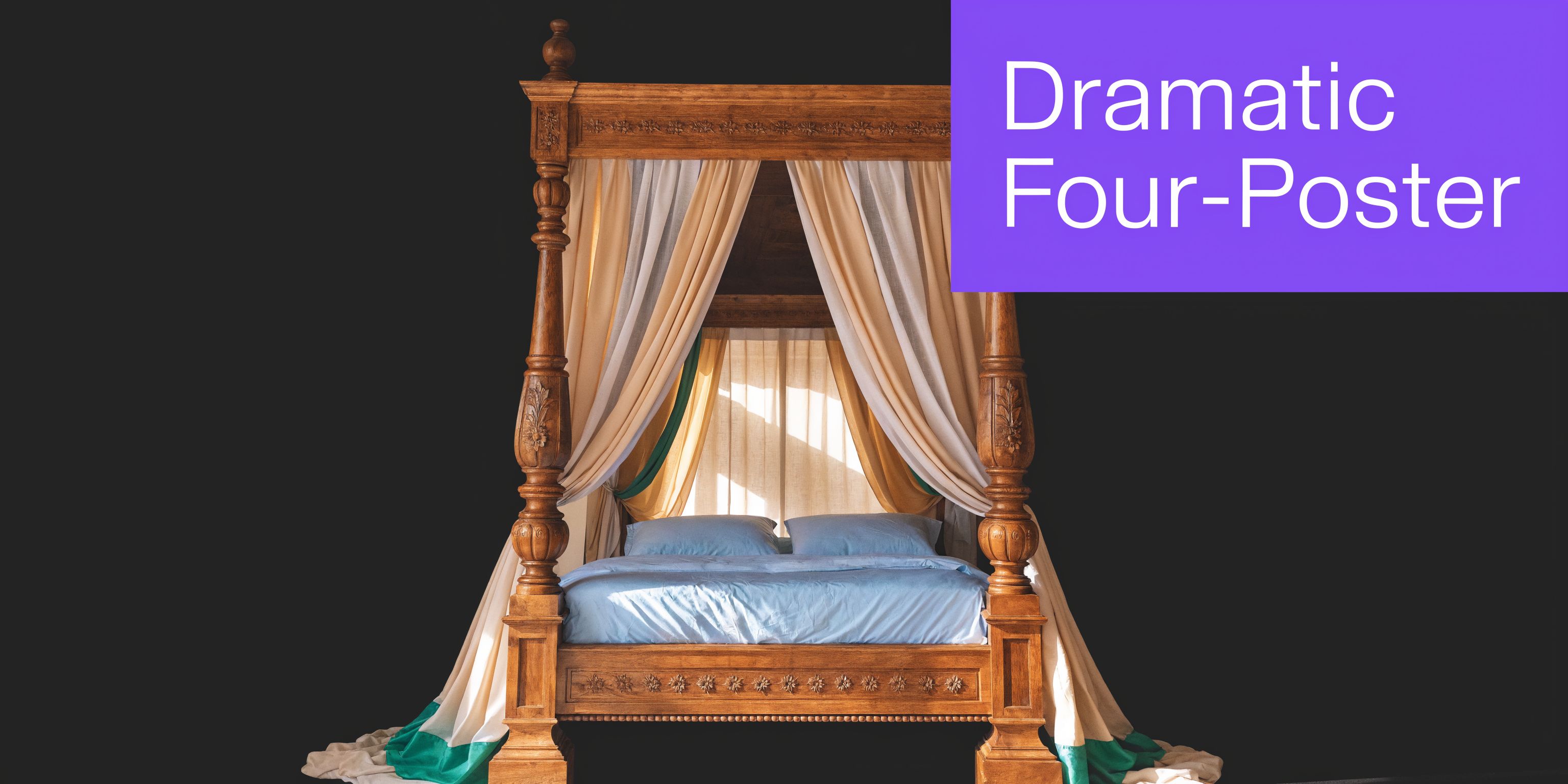
The mistake I see most often is buying the most elaborate frame in the showroom and assuming drama equals luxury. Scale decides whether the bed feels stately or suffocating. In a room with standard ceilings, thick posts, a full canopy, heavy drapery, and an oversized chandelier usually compete with each other instead of building one strong composition.
The drapery decision
Drapery should solve a design problem, not just decorate the bed. Velvet adds mass and light absorption, which helps in larger rooms that need gravity. Damask reads more formal and works well when the frame itself is restrained. Sheer panels soften carved wood and keep a dark bed from looking too solid.
I use a simple test process before anyone orders fabric:
- Start with the bed silhouette: Choose the frame first, then test fabric options on the same model in aiStager.
- Check the clearance around the bed: Posts can fit dimensionally and still make the room feel cramped if bedside access gets tight.
- Review side views, not just the hero angle: Tall footboards and thick posts often look better in the front render than they do from the doorway.
- Compare open versus closed drapery: Closed curtains feel romantic, but open panels often give a cleaner, more expensive result in everyday use.
This is one of the easiest places to waste money if you skip visualization. aiStager lets you place the same bed in your actual room, then compare carved wood finishes, canopy density, and fabric weight before you commit. Use that with this guide on how to place a large bed without hurting circulation so the layout works as well as the styling.
Retail brands like Restoration Hardware and Arhaus are useful for studying proportion, even if you buy vintage, reupholster, or go custom. Look at post thickness, rail height, and the visual weight of the canopy. Those details matter more than the brand name.
One hard rule. Ornate drapery needs a bed frame with real presence. Thin timber, flimsy joinery, or a lightweight faux-antique finish will read theatrical instead of refined.
3. Wrought Iron and Metal Accents
Not every gothic bedroom needs a carved wood bed. Some rooms look stronger with metal doing the heavy lifting.
Wrought iron brings structure, edge, and a little severity. A black iron bed, an antique brass sconce, and a dark framed mirror can create a sharper version of gothic style bedrooms that feels more loft than manor house. This approach works well in US apartments where original architecture is limited and you need the furniture to create the mood.
Where metal earns its place
Use metal where the eye naturally lands. Bed frames, sconces, curtain rods, drawer pulls, and mirror frames all matter more than random tabletop decor. A lot of rooms fail because they scatter iron everywhere and never give it hierarchy.
I like one dominant finish and one supporting finish. For example, blackened iron with antique brass. Or dark bronze with a touch of silver in the mirror edge.
A few pairings that work:
- Black iron bed plus linen bedding: Keeps the room moody without becoming heavy.
- Bronze sconces plus plum wall color: Feels warmer than stark black and white.
- Arched iron mirror plus walnut casegoods: Balances hard and soft surfaces.
If every metal item is ornate, nothing stands out. Let one element be decorative and keep the rest disciplined.
aiStager makes this easy to test because finish changes often look minor on a product page and major in a room. Upload the space once, then compare blackened iron against brass or copper on the same fixture. You can do the same with two real products from different brands and see which one gives the room the right amount of contrast.
What does not work is mixing too many metal temperatures without a reason. The room starts to look collected by accident instead of composed on purpose.
4. Rich Textile Layering with Velvet, Damask, and Lace
A gothic bedroom usually falls apart at the fabric stage. The palette is right, the bed is right, and then the room gets buried under too many “dramatic” textiles fighting for attention. Good layering creates depth, softness, and a sense of age. Bad layering makes the room feel stuffy and overdone.
Start with one fabric that carries the room. In most bedrooms, that is the bed covering or the drapery, not both. If you choose velvet for the duvet or quilt, keep the curtains matte and substantial. If the windows get the velvet, let the bedding do a more subtle job with linen, cotton sateen, or a subtle matelassé.
Build one tactile hierarchy
I set textile schemes in three levels, and the order matters:
- Primary texture: Velvet, washed linen, or matelassé on the largest surface
- Secondary pattern: Damask or brocade on two or three smaller pieces, such as euro shams or a bench cushion
- Accent detail: Lace on a pillow edge, inset panel, or the leading edge of a curtain
That hierarchy keeps the room readable. It also prevents a common mistake. Damask, velvet, lace, and fringe all have strong personalities, so they need spacing between them.
The gothic aesthetic has clearly moved beyond fashion subculture. According to MarketIntelo, the global goth fashion market was valued at 4.2 billion dollars in 2024 and is projected to reach 7.8 billion dollars by 2033. Interiors reflect that same shift. Clients are more open to dark, romantic layering now, provided the room still functions well day to day.
Color choice matters as much as fabric choice. Burgundy, forest green, aubergine, and ink blue usually give velvet more dimension than flat black. Black velvet often reads dusty in daylight and disappears at night, especially against dark walls. A damask in two close tones can solve that problem because it adds pattern without breaking the mood.
Before buying yardage or custom bedding, mock up two or three fabric directions in your own room. Use a simple bedroom moodboard workflow first, then test the finalists in aiStager so you can compare scale, color depth, and placement against your actual wall color, flooring, and window light. That step saves money. A fabric that looks rich on a swatch can turn muddy once it covers forty square feet.
One practical trade-off matters here. Heavy textiles improve acoustics and make a room feel finished, but they also trap heat and collect dust faster than simpler schemes. In warmer climates or small bedrooms, keep one breathable layer in the bedding stack and avoid full lace sheers plus lined velvet panels unless both are essential for the windows.
5. Candlelit Ambiance with Ornate Candelabras and Wall Sconces
Lighting makes or breaks gothic style bedrooms. You can have the right bed, the right paint, and the right drapery, then ruin the whole atmosphere with a single bright overhead fixture.
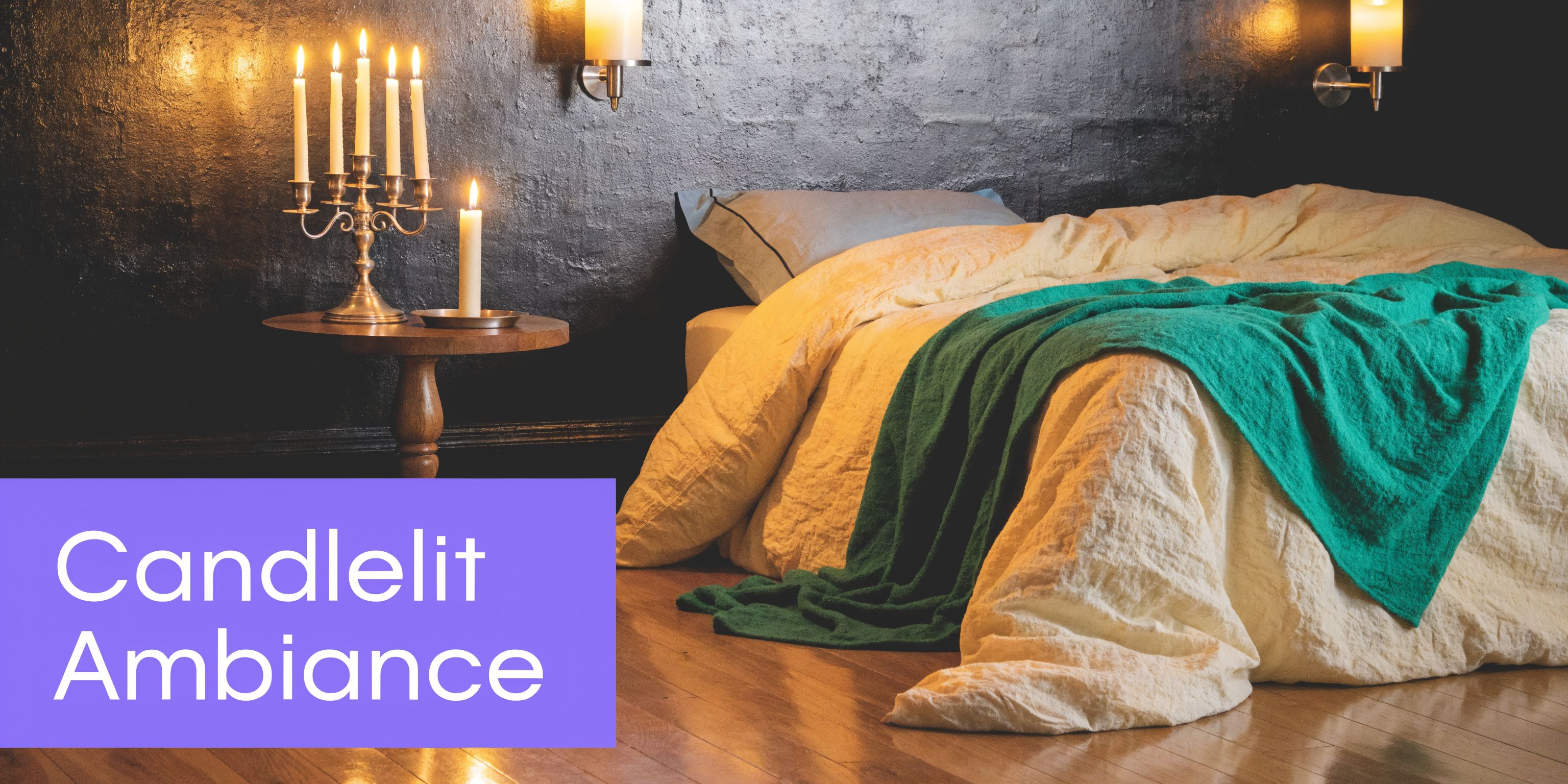
A gothic room should feel layered after sunset. Bedside lamps, wall sconces, candle-style bulbs, and reflective surfaces should all contribute. I prefer wall sconces near the bed because they free up nightstand space and add vertical drama at the same time.
How to get the glow right
The most useful moodboard step is to separate decorative light from task light. Decorative light gives the room character. Task light lets you read, dress, and function.
Use candelabras and sconces for atmosphere, then hide a practical lamp or recessed source elsewhere. Battery-operated candles can work in candelabras if you want the look without the risk.
If you are pulling together references before buying fixtures, use a quick visual board first. This article on how to create a moodboard makes that process cleaner, especially when you are trying to align brass, black iron, glass, and fabric tones.
A useful way to study the effect is to compare daytime and evening renders. aiStager does that well because the room remains dimension-true while the lighting changes, so you can see whether the sconces highlight the headboard, flatten it, or create glare on nearby mirrors.
For a little inspiration on layered atmospheric setups, this video is worth a look after you have your basic concept in place.
What does not work is relying on faux candlelight alone. The room ends up beautiful in photos and frustrating in daily life.
6. Ornate Mirrors with Gilded and Carved Frames
A large mirror is one of the smartest tools in a dark bedroom. It adds ornament, stretches the room visually, and gives low light somewhere to bounce.
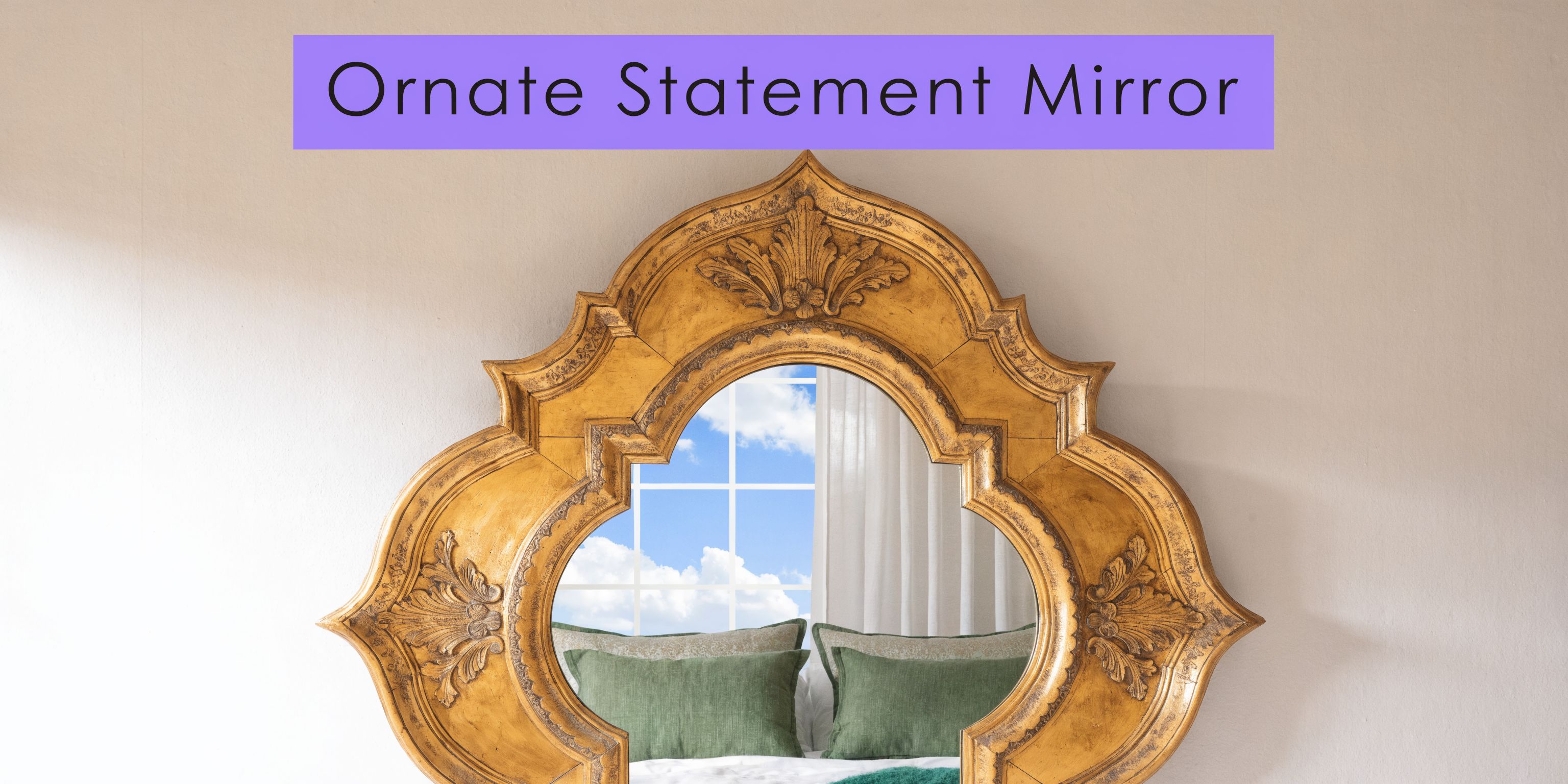
Many people default to black frames. Sometimes that is right. Often, aged gold, antique pewter, or dark wood creates more richness. In a room with deep walls, a gilded frame can act like jewelry.
Placement matters more than style trends
Do not hang an ornate mirror just because there is a blank wall. Put it where it can either catch light or reinforce a focal point. Opposite a window is ideal. Across from a bed canopy or statement headboard also works because it repeats the room’s strongest shape.
A few combinations I use often:
- Gothic arch mirror over a dresser: Strong in narrower rooms
- Tall gilt mirror leaning near a corner chair: Softer and less formal
- Carved dark wood mirror paired with brass sconces: Good when gold leaf feels too glamorous
The danger is overloading the wall. If the mirror is highly carved, keep surrounding art quieter. One hero piece is stronger than a collage of ornate objects.
aiStager is especially good for mirrors because scale is notoriously hard to judge online. You can try a smaller arched mirror, then swap to an oversized gilded one from another retailer and see immediately whether it improves the room or dominates it. That true-dimension preview is more useful than a mood board here because mirrors affect spacing, reflection, and visual balance all at once.
7. Gothic Headboards with Upholstered or Carved Details
You see the bed first. In a gothic bedroom, the headboard has to carry that view from the doorway, not just look good in a product photo.
A dramatic headboard is often the smarter choice in rooms where a four-poster would crowd the ceiling line or eat up floor space. It gives the bed presence, sets the tone, and leaves more room for practical circulation around the sides.
Carved or upholstered
Carved headboards read as architecture. Upholstered headboards bring in softness and depth. The right choice depends on what already exists in the room.
Use carved wood when the space needs structure. It pairs well with simpler bedding, heavier drapery, and a restrained mix of accessories because the silhouette already does a lot of visual work. Use upholstery when the room has enough hard surfaces. Iron lighting, dark flooring, mirrored pieces, and plaster-effect walls all benefit from the absorption and comfort that velvet or linen adds.
Scale is the detail that gets missed. A headboard can be beautifully gothic and still look wrong if it stops too low under tall ceilings or flares so wide that the nightstands feel pinched. I usually check three things before approving one: the visible height from the doorway, the width relative to the mattress and bedside tables, and how the top line relates to art, sconces, or molding above it.
Headboards should look intentional from the hallway, not just from the bed. If the silhouette disappears when you enter the room, it is not strong enough.
aiStager helps at the point where guesswork usually gets expensive. You can place a channel-tufted headboard, swap in a pointed arch shape, then test a carved oak panel in the same room with your actual wall color and nightstand spacing. That side-by-side view is useful because gothic pieces are sensitive to proportion. A style that feels dramatic in a showroom can look undersized, overly formal, or visually heavy once it is dropped into a real bedroom.
8. Dark Flooring with Rich Area Rugs and Layered Textiles
A gothic bedroom can have the right wall color, the right bed, and still feel unresolved if the floor is working against the scheme. The floor takes up too much visual space to treat as background. If it reads pale, glossy, or disconnected from the rest of the room, the whole design feels lighter and flatter than intended.
Dark wood usually gets the result fastest. Walnut, smoked oak, espresso finishes, and darker engineered boards all give the room weight without adding visual clutter. If replacing flooring is not in budget, use a large rug to reset the base of the room. In many projects, that single move does more for the gothic mood than swapping out smaller accessories.
The rug does more than add pattern
It also fixes proportion, comfort, and acoustics.
Rooms with painted walls, metal details, and hard flooring can sound sharper than clients expect. Footfall carries. Voices bounce. A substantial rug and layered textiles help absorb some of that hardness, which makes the room feel calmer and more expensive.
Pattern choice matters. Persian designs, muted antique-style rugs, and dark botanical motifs usually hold up best because they add age and depth without stealing attention from the bed. The strongest rooms pull one or two colors from the walls or bedding, then let the rug connect those tones subtly. Exact matching makes the scheme look forced.
A few rules I use on site:
- Size the rug for the bed, not for the empty floor: Front legs of the bed should usually sit on the rug, and there should be enough extension on both sides to read as intentional.
- Control pattern density: If the drapery, wallpaper, or bedding already has strong movement, choose a rug with a softer, more faded read.
- Layer with purpose: A base rug under the bed can work with a smaller hide, kilim, or accent rug at the foot, but each layer needs a job. If it does not improve comfort, scale, or color balance, remove it.
aiStager helps you test the part that is hardest to judge from shopping tabs alone. Rug scale looks different in a real room than it does in a product photo. A pattern that feels atmospheric online can turn muddy once it sits under a dark bed and low lighting. You can swap a vintage medallion rug for a restrained geometric option, check how each one reads against your actual flooring, and compare finishes and colors across the bench, curtains, and bedding before you spend money. That is how you get a gothic room that feels grounded instead of just dark.
8-Point Gothic Bedroom Elements Comparison
| Item | Implementation Complexity 🔄 | Resource Requirements ⚡ | Expected Outcomes ⭐📊 | Ideal Use Cases 💡 | Key Advantages ⭐ |
|---|---|---|---|---|---|
| Dark Moody Walls with Jewel Tones | Moderate 🔄: paint choice + lighting balance | Moderate ⚡: premium paint, added lighting, visualization tests | High ⭐: dramatic, intimate backdrop; photogenic | Boutique hotels, high-end staging, intimate rooms | Elegant backdrop that highlights furniture |
| Ornate Four-Poster Beds with Dramatic Drapery | High 🔄: large scale, installation, clearance | High ⚡: expensive pieces, fabrics, possible pros | Very High ⭐: strong focal point; luxurious impact | Large bedrooms, period homes, luxury suites | Powerful centerpiece; theatrical, highly photogenic |
| Wrought Iron and Metal Accents | Low–Moderate 🔄: placement and mixing finishes | Low–Moderate ⚡: varied price points, maintenance | Moderate–High ⭐: adds architectural detail and drama | Industrial lofts, revival styles, mixed schemes | Durable, versatile accents that enhance lighting |
| Rich Textile Layering with Velvet, Damask, Lace | Moderate 🔄: coordinating layers and scales | Moderate–High ⚡: quality fabrics, cleaning costs | High ⭐: rich texture, perceived luxury, acoustic benefits | Boutique settings, hotel suites, seasonal updates | Flexible swaps, deep tactile and visual richness |
| Candlelit Ambiance with Candelabras & Sconces | Low–Moderate 🔄: placement, safety, dimming control | Low ⚡: candles/LEDs, fixtures, dimmers | High ⭐: strong mood-setting; photogenic day/night | Romantic suites, events, photography-focused listings | Immediate atmosphere, adjustable with dimmers/LEDs |
| Ornate Mirrors with Gilded and Carved Frames | Moderate 🔄: sizing, structural support, placement | Moderate–High ⚡: large mirrors can be costly and heavy | High ⭐: amplifies light, enlarges perceived space | Small rooms needing brightness, statement walls | Reflects light, creates focal point and depth |
| Gothic Headboards (Upholstered or Carved) | Low–Moderate 🔄: mounting and scale considerations | Moderate ⚡: upholstery or carved wood costs | High ⭐: anchors room, immediate stylistic shift | Any bedroom seeking a focal upgrade, hotels | Strong visual anchor, customizable and impactful |
| Dark Flooring with Rich Area Rugs & Layers | Moderate 🔄: flooring choice + secure rug layering | Moderate–High ⚡: flooring or high-quality rugs | High ⭐: cohesive moody base, warmth and texture | Large rooms, luxury suites, historic homes | Grounds design, adds comfort, hides imperfections |
Visualize Your Gothic Vision Before You Build
A gothic bedroom usually goes wrong in one of two ways. The room ends up flat and heavy, with too much black and no depth, or it turns theatrical, with oversized furniture and too many decorative pieces competing for attention. Good results come from testing the balance before anything is ordered.
The best rooms in this style feel edited and intentional. Dark walls need undertones that still catch light. A four-poster bed has to suit the ceiling height and walking clearance. Velvet, metal, carved wood, and mirror glass all need the right proportion or the room starts to feel crowded instead of luxurious.
That is also the practical sales challenge. Buyers and clients hesitate on moody schemes because these choices are expensive to reverse. A paint color can read aubergine in one room and muddy brown in another. A dramatic headboard can anchor the space or overpower it. As noted earlier, shoppers in this category respond strongly to style, value, and quality, especially in the mid-market and premium ranges where visual confidence drives the decision.
A newer gothic look also tends to rely on fewer, better pieces. Vintage mirrors, reclaimed wood, darker natural finishes, and quality textiles give the room character without turning it into a set. That approach photographs better and usually ages better.
aiStager solves the biggest problem in the process. It lets you upload your actual room, paste in real product links, and test combinations before you commit. You can compare a carved headboard against an upholstered one, check whether a gilded mirror is the right width for the wall, or see if a wine-red rug enriches the palette or makes the floor feel too busy. The useful part is accuracy. aiStager produces hyper-realistic visuals with true room dimensions and true furniture dimensions, so the result is closer to a design proof than a mood image.
That changes how gothic rooms get designed. You can push the drama, keep the restraint, and catch the expensive mistakes early.
If you want to build gothic style bedrooms with fewer mistakes and stronger client approvals, try aiStager. Upload a room photo, paste a product link from any real brand or marketplace, and test beds, mirrors, rugs, lighting, colors, and finishes in true-to-scale, hyper-realistic renders within seconds.