Home Interior Picture Values: A 2026 Guide to Higher Sales
Discover how home interior picture values impact sales price and time-on-market. Learn pro tips and how AI tools like aiStager boost listing performance.
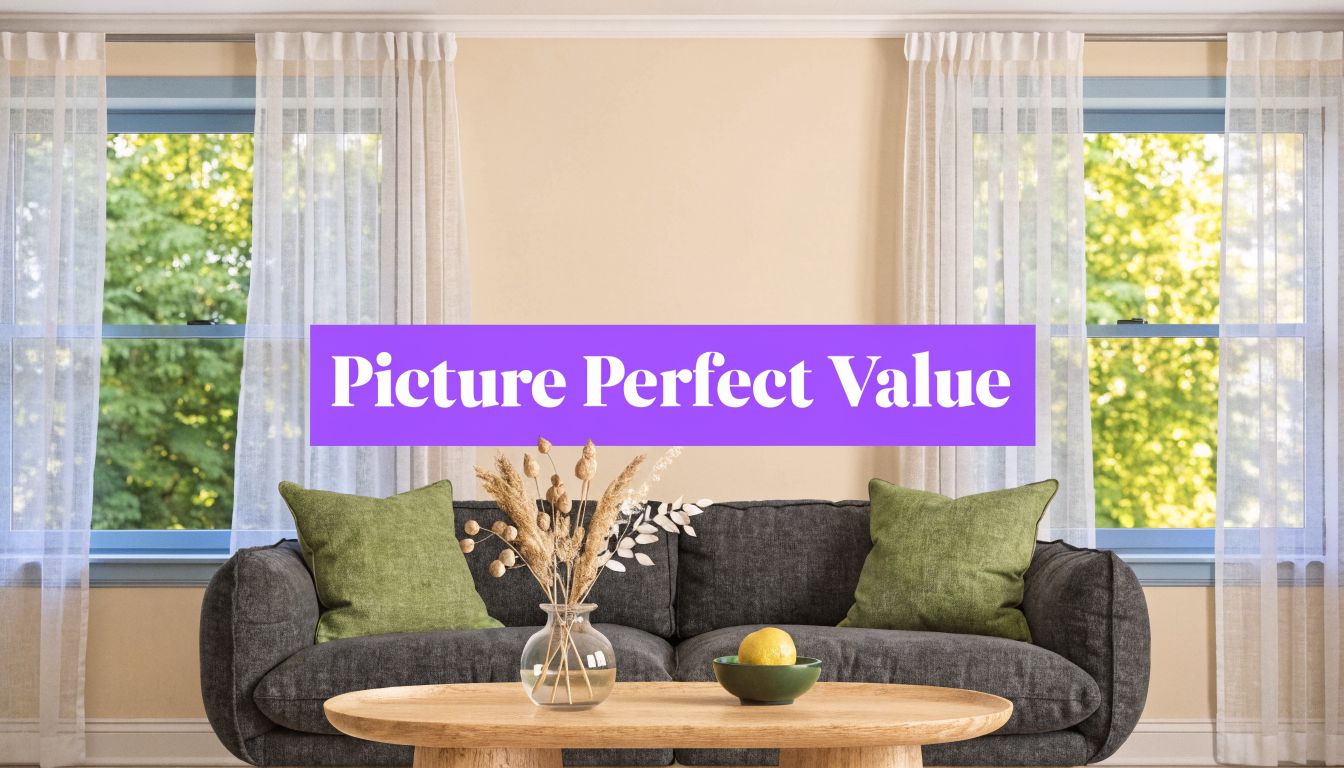
A lot of people still treat listing photos like admin work. Take the pictures, upload them, move on.
That mindset leaves money on the table.
Research analyzing over 115,000 listings found that homes marketed as “interior designer-designed” sold for up to 120% more than comparable properties, and in one suburb that premium equaled an average $566,435 for a two-bedroom home, according to Elite Agent’s report on interior design premiums. That number changes the conversation. Interior pictures aren't just visual records. They're value carriers.
When buyers scroll, they aren't only checking room count or countertop finishes. They're deciding whether a space feels finished, cared for, modern, calm, and worth a closer look. That's why understanding home interior picture values matters for agents, designers, builders, and sellers alike.
Why Your Listing Photos Are Financial Assets
Listing photos shape a buyer's price perception long before they book a showing.
That matters because online listing images do the job that curb appeal used to do first. For many buyers, the photos are the first showing. If the images suggest order, quality, and care, buyers often carry that impression into the price they believe the home can justify.
As noted earlier, large-scale listing research found that design-led presentation can correlate with much stronger sale outcomes. The practical lesson for agents and designers is straightforward. Buyers do not pay only for square footage and finishes. They also pay for how clearly a property communicates quality on screen.
Photos don't just record a room. They help set the asking-power of the listing
A floor plan tells buyers what exists. Photos help buyers decide what that space is worth.
A useful comparison is product packaging. The item inside may be identical, but presentation changes what people expect to pay and how seriously they take the offer. Real estate works the same way online. A dark, crooked image can make a well-maintained room feel smaller or less updated. A balanced, well-lit image can make the same room feel calm, functional, and move-in ready.
Buyers use interior photos to make fast judgments about things they cannot inspect yet:
- Condition: Clean, bright rooms suggest consistent upkeep.
- Usefulness: Clear angles help buyers understand how the room works.
- Seller discipline: Strong presentation signals that the home has been prepared thoughtfully.
- Competitive pressure: Better visuals can make a listing feel like one other buyers will notice quickly.
That last point affects money. Once a listing feels desirable, buyers are more likely to save it, share it, and book a tour before they have fully analyzed every detail.
For agents who want a broader pre-listing checklist, this resource on how to increase home value before selling is useful because it connects visual presentation with practical improvements buyers notice fast.
Where newer agents and designers often misread the opportunity
This applies to all market segments.
A starter condo, suburban resale, furnished rental, or new-build model home all benefit from stronger visual presentation. The goal is not to make every property look luxurious. The goal is to remove friction from the buyer's decision and present the home at its best credible value.
That is also where better tools can improve return on visual assets. If a room is empty, dated, or awkwardly furnished, physical staging is only one option. Platforms such as aiStager make it possible to create dimensionally accurate, hyper-realistic virtual stagings using products from any retailer, which helps agents and designers test looks that fit the property and the target buyer without the cost and delay of full physical installation.
Home interior picture values come down to one question. Do the images increase confidence enough to support stronger interest, faster action, and better pricing power? When the answer is yes, those photos are financial assets, not admin work.
The Psychology Behind Picture-Perfect Listings
Buyers don't evaluate photos like appraisers. They evaluate them like people making a life decision.
A useful analogy is a first date. In the opening minutes, small signals influence everything that comes next. A warm smile, good eye contact, and a calm tone create a halo effect. Listing photos work the same way. If the first few images feel polished and inviting, buyers assume the rest of the property is more appealing too.

A bright living room with a clean sofa, layered pillows, and controlled daylight does more than show furniture placement. It helps the buyer mentally rehearse living there. They start thinking, “My coffee table could go there,” or “This feels calmer than the last place.”
Buyers are trying to reduce uncertainty
Most buyers can't instantly judge construction quality, insulation, or future maintenance costs from a listing page. So they use visual clues.
If the room feels orderly, proportional, and well cared for, buyers often read that as lower risk. If the room feels dark, cramped, or chaotic, they may assume hidden problems even when the issue is only presentation.
That's why styling details matter. A textured rug, a centered bed, a balanced nightstand setup, or a simple Crate & Barrel lamp can make a room feel intentional. The buyer reads that intention as competence.
Cognitive load changes what people do next
Good interior photos make it easier to understand the room. Bad photos make the buyer work.
When chairs block circulation, cords hang visibly, or the camera angle hides the corner geometry, the buyer has to decode the room instead of responding to it. That's tiring. Most won't spend extra effort. They'll just move to the next listing.
A cleaner image lowers cognitive load because the room reads fast. The buyer can immediately grasp scale, layout, and mood.
Great interior photos don't merely show a room. They remove friction from the buyer's decision.
Emotion comes before justification
Later, buyers may explain their interest with logical points like school district, square footage, or resale potential. But the first spark usually comes from emotion.
A warm neutral room may appeal to someone looking for a calm, move-in-ready home. A sharper black-and-oak space may resonate with a buyer drawn to modern loft style. Even subtle differences in color, texture, and composition influence who feels connected.
That's why home interior picture values can't be judged only by technical sharpness. The image has to help the right buyer feel at home.
Quantifying the Impact on Listing Performance
The psychology matters because it changes outcomes buyers and sellers can measure. Better visuals affect three things that every agent tracks. Price, speed, and engagement.

Faster sales
The clearest speed metric in the source set comes from MLS-related data highlighted by Hommati’s write-up on real estate aerial photography and sales speed, which notes that properties featuring high-quality visual assets like aerial images sell 68% faster than those with only standard photos.
That source focuses on aerial images, but the takeaway for interiors is straightforward. Buyers respond to strong visual presentation. Exterior context may attract the click, but interior pictures usually determine whether the listing feels worth pursuing.
A faster sale can help a seller reduce carrying costs and avoid the stigma that can follow a stale listing. It also helps agents keep momentum, especially in competitive neighborhoods where buyers compare homes side by side.
Higher price potential
Interior photos don't raise value in isolation. They help buyers perceive value, and perception shapes offers.
Well-crafted visuals can support stronger list-price confidence, reinforce a staged look, and reduce the “what needs work?” discount buyers mentally apply when photos are poor. This is especially true when the property is clean but empty, recently updated but not styled, or architecturally strong but visually flat in person.
Consider two versions of the same condo listing. One has dim kitchen photos and a cluttered family room. The other uses balanced light, clear room lines, and styling that makes the layout legible. The floor plan hasn't changed. Buyer confidence has.
More engagement online
Online listing behavior is brutal. People skim fast.
Visual assets are often the deciding factor in whether someone clicks deeper, saves the listing, shares it with a partner, or asks for a showing. Text matters later. Photos carry the early part of the funnel.
A practical way to think about it is this table:
| Listing element | What the buyer learns | What happens next |
|---|---|---|
| Weak interior photos | “I can't tell if this space works” | They skip or hesitate |
| Clear, polished room images | “I understand the layout” | They keep browsing |
| Strong styling and visual flow | “I can see myself here” | They save, share, or inquire |
Key takeaway: Good pictures don't just make a listing prettier. They improve how efficiently a buyer moves from curiosity to action.
How to apply the numbers without overcomplicating them
You don't need to promise a client a specific return from every shoot. That's where people overreach.
Instead, use the data to explain a pattern. Strong visual assets are linked to faster movement and better positioning. Your job is to remove visual friction, help the home compete, and give buyers enough clarity to take the next step.
That is the practical meaning of home interior picture values. The value lives in the behavior the image creates.
Best Practices for High-Value Photography
A strong photo isn't accidental. It usually comes from a few repeatable decisions that make rooms feel larger, brighter, and easier to understand.
A summary of Redfin-backed findings discussed by Coohom reports that homes with professional-quality photos sell for up to $3,400 more on average and 32% faster, and it ties that result to techniques like HDR merging and the use of 16-24mm lenses to capture the full room. Those technical choices matter because they solve common interior-photo problems.
Start with room readability
Before thinking about editing, make the room legible.
The buyer should be able to answer three questions quickly: How big is this room? How does it connect to nearby spaces? Where would furniture go? If the photo doesn't answer those, it won't perform well.
Use this checklist before the camera comes out:
- Clear pathways: Remove bins, pet beds, cords, and side tables that choke circulation.
- Anchor the room: In a living room, keep the sofa, rug, and coffee table arranged as one intentional grouping.
- Edit surfaces: Kitchen counters, vanities, and dressers should carry only a few items.
- Fix visual noise: Crooked art, wrinkled bedding, and half-open doors distract more than people expect.
Use width carefully
Wide-angle lenses help interior photography because rooms are tight. The cited range of 16-24mm is popular for a reason. It captures the room without forcing the photographer into the hallway.
But new agents often make one mistake. They go too wide or shoot from a corner that bends the room into something unrealistic. A buyer arrives and feels disappointed because the image oversold the space.
A better approach is balanced width. Show enough of the room to communicate layout, but protect proportions so the image still feels honest.
If a room looks bigger in the photo than it feels in person, the photo did its job poorly.
Solve difficult light with technique, not luck
Interiors usually contain bright windows and darker corners in the same frame. That's hard for a single exposure to handle.
HDR merging helps because it blends multiple exposures into one image with a more balanced result. Done well, it preserves detail in the windows while keeping cabinetry, floors, and furniture visible. Done poorly, it looks fake and crunchy.
A few practical lighting habits help even before editing:
- Open window coverings to use available daylight.
- Turn on lamps when they add warmth and don't create color conflict.
- Avoid shooting directly into harsh glare if a slight angle can soften it.
- Schedule the shoot when the room's natural light is stable, not blasting.
Compose for trust
Composition isn't only artistic. In real estate, it's functional.
A kitchen should show enough cabinetry to communicate storage and enough floor to show circulation. A bedroom should feel restful, not crowded. A bathroom shot should look clean and squared up, not distorted.
For a deeper tactical checklist, this guide on real estate photography tips for better listing images is a helpful companion because it walks through practical photo decisions room by room.
Small styling choices that lift perceived value
High-value photography often comes down to restraint.
A few examples work well across many U.S. listings:
- Modern organic living room: Light oak tones, an oatmeal sectional, and a simple CB2 bowl on the coffee table.
- Coastal transitional bedroom: Crisp bedding, soft blues, and one oversized framed print instead of a busy gallery wall.
- Warm contemporary dining area: Matte black accents, a wood table, and one centerpiece with natural shape, not holiday-themed decor.
These choices help the camera read the room clearly. They also give buyers fewer reasons to mentally subtract value.
Elevating Value with Physical and Virtual Staging
Staging can change the financial outcome of a listing, not just its appearance. According to the National Association of Realtors staging findings summarized by Level Frames, staging can lead to a 5% average increase in sale price, and 73% of buyers’ agents say it helps clients visualize the property as their future home. For an agent or designer, that means photos of a staged interior are not decoration. They are sales assets that help buyers understand the room faster and attach value to it more confidently.
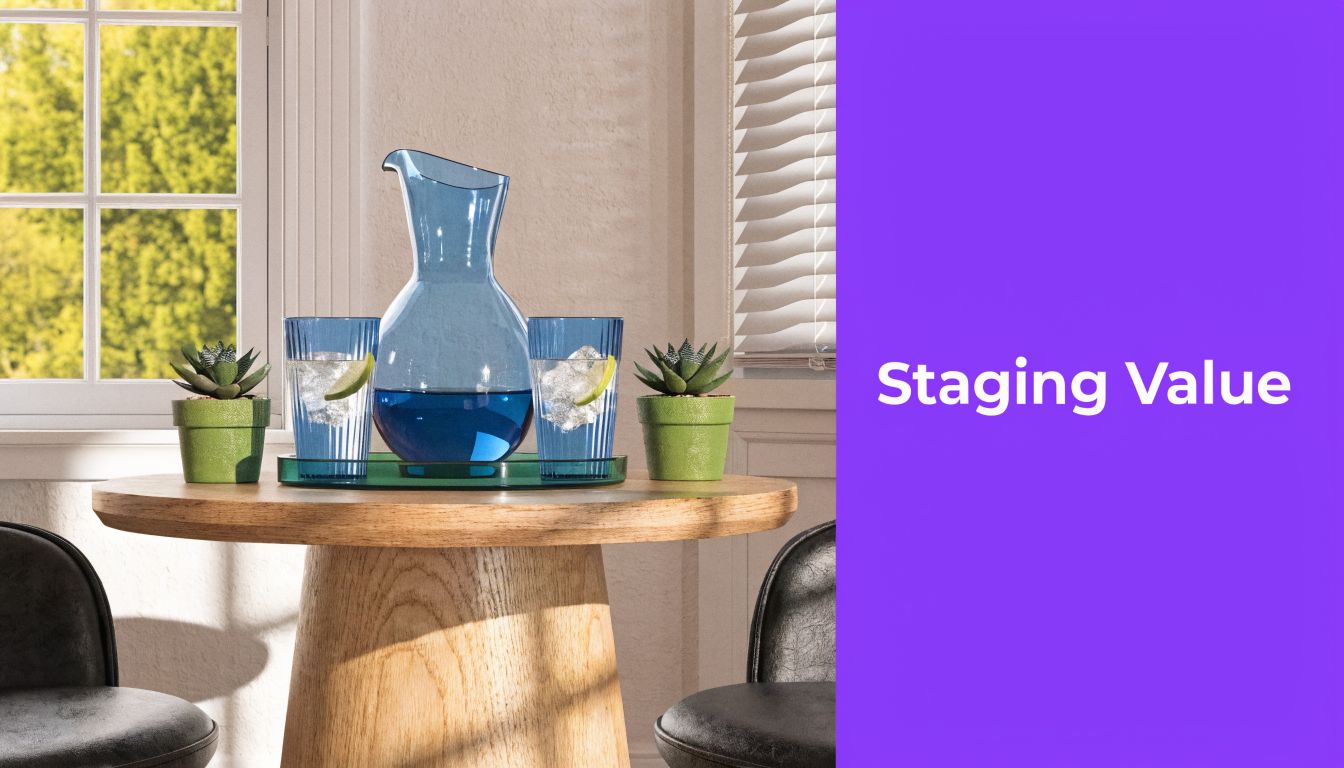
A blank room often behaves like an unfinished sentence. Buyers can see the square footage, but they still have to guess how the space lives. Staging fills in that sentence. It shows where the sofa goes, how people move through the room, and whether a dining area feels functional or cramped.
Why physical staging still works
Physical staging remains effective because it creates a real-world reference during showings. Buyers can judge depth, circulation, and proportions with their own eyes, which is harder to do from empty rooms or abstract floor plans.
It tends to pay off most in a few situations:
- Vacant homes: Empty rooms often photograph cold and can appear smaller than they are.
- Layouts that need explanation: Furniture helps define open-plan zones and awkward corners.
- Homes with highly specific decor: Reframing the style can widen buyer appeal.
Wall art plays a practical role here, too. A single well-placed artwork piece can anchor a room, pull the eye to the right height, and make the composition feel finished in photos. If you need a practical installation reference, this guide to hanging pictures with precision is useful because hanging height and spacing affect how polished the final photo looks.
Why physical staging gets expensive to test
The primary challenge with physical staging is logistical. Furniture has to be sourced, delivered, installed, adjusted, and removed. Every revision adds time, labor, and cost.
That becomes a problem when the marketing strategy changes midstream. An agent may want one look for broad mass-market appeal and another for a design-conscious buyer segment. A designer may love a concept board, then realize in the actual room that the sofa depth is too aggressive or the dining table crowds circulation. Each physical change slows the feedback loop.
Virtual testing addresses these logistical constraints.
What virtual staging does best
Virtual staging is strongest when the goal is comparison before commitment. It lets professionals test styles, product types, and room layouts without paying to move furniture in and out for every idea.
That matters in real listing work. You may want to compare a warm contemporary living room against a cleaner Scandinavian direction. You may want to swap a boucle sofa for leather, or test cream, camel, and charcoal before choosing the version that photographs best for the target buyer. A retailer or designer can also show clients how a specific product looks in a real room instead of relying on isolated catalog shots.
The highest-value version of virtual staging goes beyond generic mockups. aiStager’s approach is especially useful here because it can generate dimensionally accurate, hyper-realistic stagings using products from any retailer. That gives agents, designers, and furniture brands a practical way to visualize real inventory in a real space, with proportions that are built to reflect the room rather than approximate it.
Why dimensional accuracy changes the ROI
A beautiful image only helps if buyers trust it.
If a virtual sofa is oversized, the picture may attract attention but create disappointment at the showing. If a dining table appears to fit six comfortably and the room can barely handle four, the image works against credibility. In other words, style gets the click, but accurate scale protects the conversion.
A useful way to compare the options is to treat them like different levels of decision confidence:
| Approach | Strength | Limitation |
|---|---|---|
| Physical staging | Real, in-person experience | Slow to revise and expensive to compare |
| Basic virtual mockup | Fast concepting | Scale and realism may be unreliable |
| Dimension-aware virtual visualization | Fast comparison with better fit validation | Quality depends on the source photo and product data |
For a broader strategy view, this article on home staging for real estate marketing explains how staging choices support stronger listing performance and clearer buyer positioning.
A short demonstration helps clarify how visual staging tools fit into a modern workflow.
Examples that make the concept practical
Consider a suburban family listing. One version might use a Modern Farmhouse mix of light wood, black accents, and soft neutrals for broad appeal. Another might use Japandi cues with lower visual noise and warmer oak tones to attract a more design-aware buyer. A third might shift toward California casual with textured linen and relaxed silhouettes. The room stays the same. The perceived lifestyle changes.
A condo creates a different test. You might compare two sectional sizes, swap a round coffee table for a rectangular one, and see whether a lower bed frame makes the bedroom feel more open. Those are small visual decisions, but they shape how efficiently a buyer reads the room and how premium the space feels.
Buyers do not pay more because a room contains furniture. They pay more readily when the pictures make the space feel usable, believable, and aligned with the life they want.
That is the link between staging and home interior picture values. The better the image explains fit, flow, and aspiration, the more commercial value it carries.
A Quick Workflow for Real Estate and Design Pros
Teams generally don't need a complicated production system. They need a repeatable one.
The easiest workflow starts before styling. Take one clean room photo that shows the major walls, floor area, and natural circulation. If the room is messy, remove obvious distractions first, but don't wait for perfection. A usable base image is enough to start testing concepts.
A practical sequence that saves time
Use a simple five-step flow:
Capture the room clearly
Stand at a height that feels natural and keeps vertical lines as straight as possible. Make sure the room's key architectural features are visible.Decide who the room is for
A downtown condo listing and a family-oriented suburban listing shouldn't get the same look. Choose a target buyer before choosing decor.Pull product candidates from real retailers Here, examples become concrete. Try a sofa from West Elm, then compare it with a piece from the Studio McGee collection at Target. Test the same type of product in multiple colors and finishes rather than changing everything at once.
Generate a few distinct visual directions
Create one safe option, one style-forward option, and one middle-ground version. That gives sellers and clients a useful comparison set.Use the winning version in marketing assets
Apply the strongest look to listing photos, brochures, social posts, and client presentations.
Keep your comparisons controlled
New users often test too many changes at once. Then they can't tell what improved the image.
A better method is to hold most of the room constant and change one category at a time:
- Sofa test: Compare silhouette, upholstery color, and leg finish.
- Dining test: Swap table shape while keeping chair style similar.
- Bedroom test: Change bed style first, then layer in art and textiles.
This creates cleaner feedback from sellers, brokers, or design clients.
Where AI editing fits in
Photo editing tools are most useful when they remove friction, not when they overproduce the scene.
That might mean decluttering a crowded room, refining brightness, testing furnishings, or cleaning up a distracting corner before launch. A practical resource for this part of the process is this guide to AI real estate photo editing workflows, especially if you're trying to move faster without sacrificing consistency.
Use editing to clarify the room's strengths. Don't use it to invent a room that won't exist at showing time.
When teams stick to that rule, they get the best of both worlds. Faster turnaround, clearer visuals, and fewer surprises when buyers walk in.
Frequently Asked Questions About Interior Picture Values
Do virtual pictures have value if the home isn't physically staged?
Yes. Their job is to reduce uncertainty.
Buyers make fast judgments from photos, and an empty or poorly furnished room creates too many question marks. A strong virtual image helps them read the room the way a floor plan alone cannot. They can judge scale, circulation, and how the space might support daily life. For an agent, that means fewer confused clicks and more qualified interest. For a designer, it means a clearer visual case for your concept.
The value rises when the image is accurate. aiStager helps teams create dimensionally accurate, hyper-realistic staged views using real products from any retailer, so the photo works more like a realistic preview than a rough mood board.
Is it worth testing multiple styles for one property?
Usually, yes, as long as the testing is controlled.
Style testing works like trying two signs on the same storefront. The product is the same, but the presentation changes who stops to look. One version may attract a broad mainstream buyer. Another may connect better with a smaller, higher-intent audience.
Keep the room layout consistent and change one major style variable at a time, such as the sofa profile, wood tone, or art direction. That makes the feedback easier to read and helps you choose a final image set with more confidence.
Do vintage "Home Interiors" brand pictures add value?
Sometimes, but only in the right setting.
A Mercari marketplace overview of vintage Home Interiors wall decor shows that many of these pieces are inexpensive. Low purchase price, however, does not automatically mean high marketing value. In listing photos, decor either supports the story of the room or interrupts it.
Vintage wall art can add warmth and familiarity in a traditional home, a cottage, or a space aimed at buyers who respond to nostalgia. In a cleaner, more contemporary listing, the same piece can make the room feel older than it is. The safest approach is to test it visually before you buy, hang, or photograph it. That is especially useful if you want character without guessing wrong.
How do I know if a picture is adding value?
Use a simple three-part screen.
First, does it make the room easier to understand? Second, does it improve perceived quality, care, or style? Third, does it help the target buyer picture living there?
If a photo clears all three tests, it is doing real financial work. It is not just decorating the listing. It is helping the home present more clearly, feel more desirable, and compete more effectively.
If you want to turn ordinary room photos into dimensionally accurate, hyper-realistic interiors using real products from any retailer, aiStager gives you a fast way to test layouts, compare sofa brands, swap colors and finishes, declutter busy spaces, and create polished visuals from a single room photo plus a product link. For agents, designers, and furniture teams, it's a practical way to make home interior picture values work harder.