How to Design Room: Ideas for Your Space
Discover how to design room layouts with ease. This guide offers practical planning, styling tips, and furniture ideas to create a space you'll love.
Any successful room design really boils down to three main stages: figuring out your vision, planning the practical layout, and then, the fun part—bringing it all to life with furniture and decor. It's a lot less daunting when you have a clear roadmap and can actually see your ideas before you commit to any big purchases.
Your Room Design Journey Starts Here
Staring at an empty room can feel both exciting and totally overwhelming. Where do you even begin? The secret isn't some special design gene; it's just about having a structured approach that takes you from vague ideas to a concrete plan. This guide is that plan—no fluff, just a practical walkthrough to get you from a blank slate to a room you genuinely love spending time in.
We'll cover everything from nailing down your initial vision to adding those final, personal touches. Trust me, a solid plan is your best defense against costly mistakes and buyer's remorse.
This simple breakdown shows the whole journey in three straightforward phases: vision, plan, and decorate.
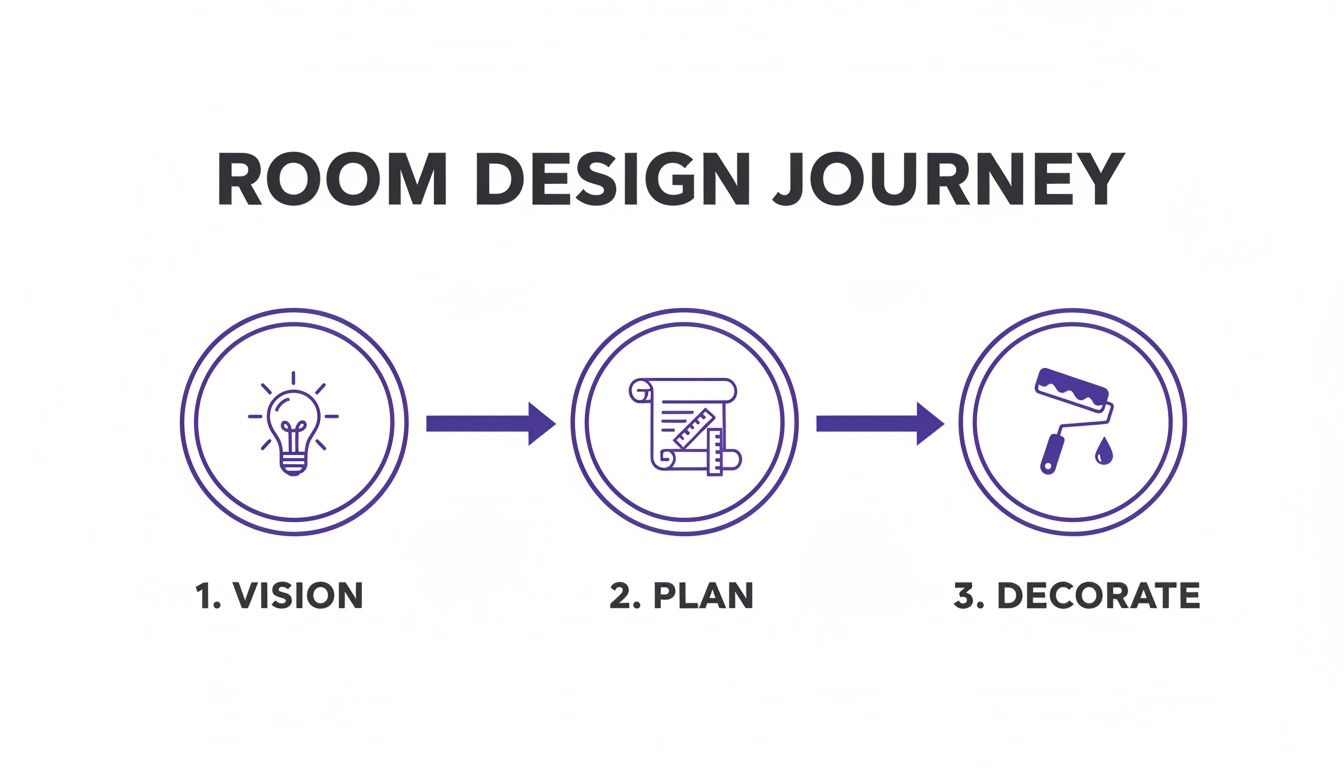
Moving through the process in this order—from big-picture thinking to the nitty-gritty details—is what creates a space that feels cohesive and intentional.
From Inspiration to Reality
So, how do you actually connect those beautiful inspiration photos to what will work in your own home? Visualization is everything, and this is where modern tools really change the game.
Let's say you're torn between two looks for your living room—maybe a warm, cozy California Casual vibe inspired by Serena & Lily or a clean, minimalist Organic Modern aesthetic. Instead of just trying to imagine it, you can use a tool like aiStager. It's the only solution out there that generates hyper-realistic photos using the true dimensions of your room and the specific furniture you're eyeing.
For example, you could test out different sofas from a brand like Article, seeing exactly how the Sven in green velvet looks compared to the same sofa in navy leather, all within a picture of your actual living room.
The real magic is seeing how a specific product will look and fit. With aiStager, you just upload a photo of your room and drop in a link to the product. In just a few clicks, it places the item in your space with perfect scale and realistic lighting.
This completely takes the guesswork out of the equation. You can freely experiment with different brands, colors, and materials—like comparing a dark wood Crate & Barrel coffee table against a lighter one from West Elm—without any risk. It makes the whole process more creative and way less of a gamble. If you want to dive deeper into gathering your ideas, check out our guide on how to create a moodboard.
Get the Tape Measure Out: Why Planning Your Layout Is Non-Negotiable
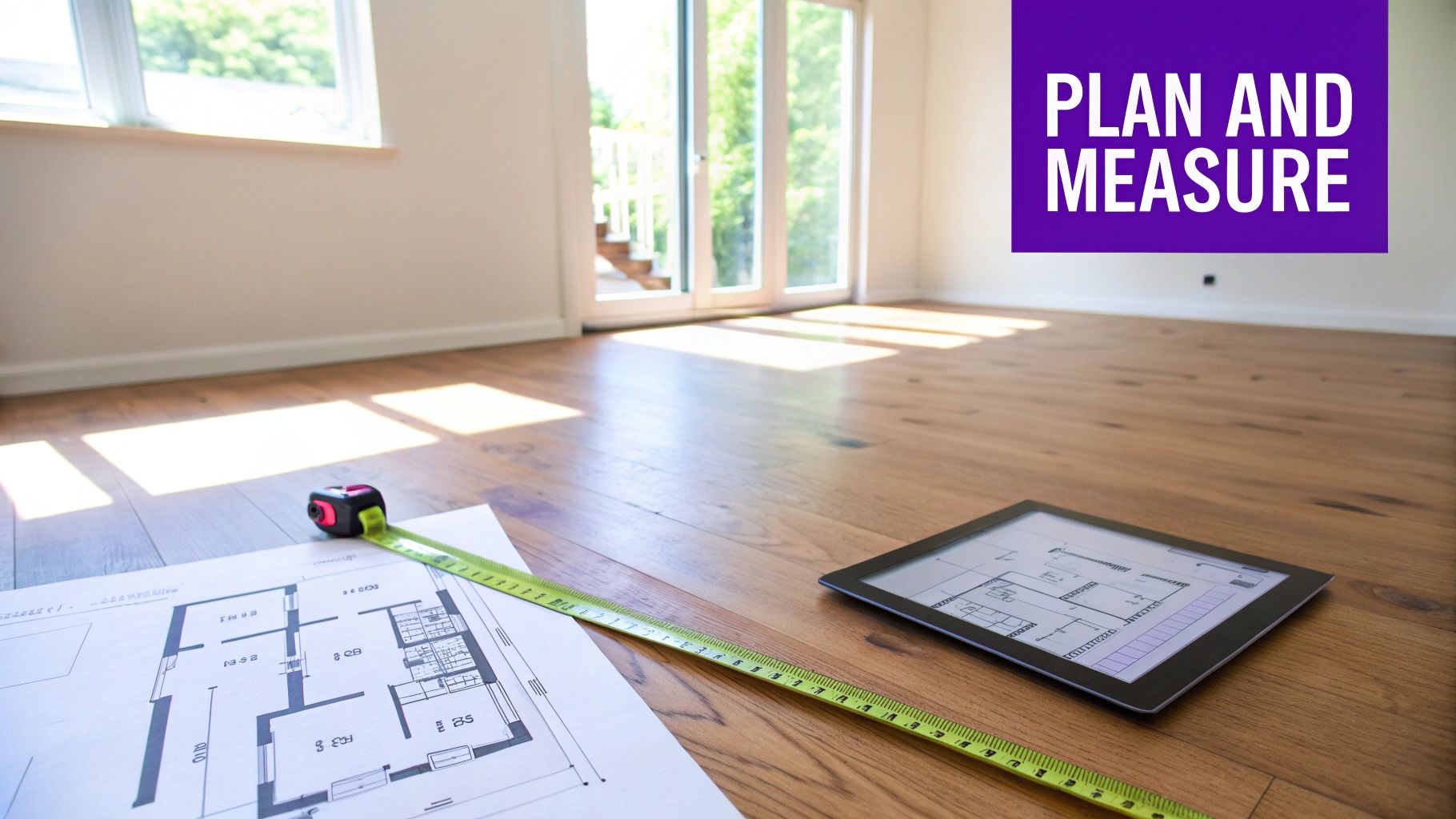
Before you even think about paint swatches or dream sofas, there's a crucial first step that every good design project starts with: measuring and planning. I know, it’s not the most glamorous part, but trust me, this is the foundation that separates a beautifully functional room from a frustrating, cramped space.
Getting this right from the beginning saves you from the all-too-common headache of falling for a piece of furniture online, only to have it arrive and completely swallow your room or block a crucial walkway. A tape measure and a simple plan are your best friends in making smart, practical decisions that you won't regret later.
Taking Stock of Your Space
First things first, grab a piece of paper and sketch a rough bird's-eye view of your room. It doesn’t have to be perfect—just a simple box will do. Now, it's time to measure everything. And I mean everything.
Here’s a quick checklist of what to capture:
- Overall Dimensions: Get the total length and width of the room, wall to wall.
- Ceiling Height: This is a big one! It affects the scale of everything from lighting fixtures to bookcases.
- Doors and Windows: Measure the height and width of each one, including the trim. Also, note how far they are from the corners of the room.
- Permanent Fixtures: Jot down the locations of every single outlet, switch, vent, radiator, or architectural feature like a fireplace.
These little details are more important than you think. Knowing where your outlets are determines where a lamp or TV can go. Understanding the window placement helps you arrange furniture to maximize natural light without creating glare. For a deeper dive, we have a complete guide to interior design space planning.
From Measurements to a Digital Floor Plan
With your measurements in hand, you can start building a real floor plan. This isn't just about fitting furniture in; it's about understanding traffic flow—the natural paths people will take as they walk through the space. A well-designed room keeps these pathways clear, making it feel open and easy to live in.
This is where technology really steps in to make our lives easier. Instead of just guessing, you can bring your plan to life visually. It’s no surprise the global interior design market is set to grow from $212.75 billion to $325.48 billion by 2032, a shift largely fueled by tools that let us see hyper-realistic previews before committing. In North America, for instance, 43% of designers are using visualization to experiment with complex trends like irregularly shaped furniture—something that would be a huge gamble without a proper preview.
Visualize Your Design with Hyper-Realistic Previews
This is where the magic really happens, especially with a tool like aiStager. What sets it apart is that it’s the only solution that generates hyper-realistic photos using the true dimensions of both your room and the exact furniture objects you’re considering. We're talking way beyond a simple mood board here.
Let’s say you’re designing a Mid-Century Modern living room. You’re stuck between two iconic sofas: the sleek West Elm Andes Sofa and the more relaxed Crate & Barrel Gather Sofa. Instead of trying to imagine how they’d look, you can actually see them in your room.
With aiStager, you just upload a photo of your empty room and drop in a link to a product. The platform instantly generates a photorealistic image showing that exact sofa, in the right color and finish, placed perfectly to scale.
You could try out the West Elm sofa in a rich saddle leather, then swap it for the Crate & Barrel model in a cozy boucle fabric in just a few clicks. You’ll see exactly how each one fits, how the color plays with your walls, and if there's enough room left for that coffee table you’ve been eyeing. This is how you design with total confidence—backed by a visual plan that’s clear, accurate, and genuinely inspiring.
Finding Your Style and Nailing the Perfect Color Palette
Alright, now for the fun part. You’ve done the practical work of measuring and planning the layout, and now you get to decide what the room will feel like. This is all about zeroing in on a style that feels like you and picking out a color scheme that pulls it all together.
The whole "find your style" thing can feel a bit overwhelming, I get it. You might like bits and pieces from several different aesthetics, and that's totally fine. The point isn't to force yourself into a strict category, but to find the common threads in what you love so you can create a space that feels personal and cohesive.
What’s Your Vibe? Going Beyond Generic Labels
Instead of getting bogged down by vague terms like "modern" or "boho," let's talk about the specific styles people are actually putting in their homes right now. Knowing the lingo helps you search for inspiration and find products that fit your vision.
To help you pinpoint your personal aesthetic, here’s a quick breakdown of some of the most popular design styles in the US market today. See which one speaks to you.
Popular Design Styles and Their Key Elements
| Design Style | Key Characteristics | Common Materials | Example Brands |
|---|---|---|---|
| Organic Modern | Clean lines meet natural, earthy elements. Neutral colors, soft textures, and a minimalist yet warm feel. | Light woods (oak, ash), stone, rattan, linen, boucle, concrete. | Crate & Barrel, Jenni Kayne |
| California Casual | Light, airy, and deeply relaxed. A focus on comfort with a seamless indoor-outdoor connection. | White and cream fabrics, weathered woods, jute, leather, ceramics. | Serena & Lily, Pottery Barn |
| Grandmillennial | A fresh take on traditional. Embraces florals, ruffles, and antique-inspired pieces with modern art and a curated, not stuffy, vibe. | Chintz, wicker, dark woods, brass, patterned wallpaper. | Ballard Designs, Caitlin Wilson |
| Industrial | Inspired by warehouses and old factories. Features raw, unfinished elements like exposed brick and ductwork mixed with refined pieces. | Metal (steel, iron), exposed brick, reclaimed wood, leather. | West Elm, Restoration Hardware |
Think of this table as a starting point. Your personal style might be a mix of two, and that's where the most interesting designs come from!
A great first step is to jump on a platform like Pinterest and create a mood board. Start pinning images of rooms that just make you feel good. After you have 20-30 images, take a step back. Do you see a pattern? Are you drawn to light, bright spaces or rooms that feel dark and moody? This is your gut telling you what you really want.
Building Your Color Palette with Confidence
Once you have a style in mind, it's time to talk color. The easiest trick in the book for getting this right is the 60-30-10 rule. It’s a simple formula that designers use to create a perfectly balanced space.
- 60% is your main color. This is the dominant shade that will likely go on your walls. It sets the overall mood.
- 30% is your secondary color. This is for bigger pieces like furniture, rugs, or curtains. It’s there to support the main color.
- 10% is your accent color. These are the fun pops of color you'll sprinkle in through pillows, art, and accessories.
There's a reason so many people are investing in their homes. A well-designed space genuinely improves your daily life. The global interior design market is exploding, expected to grow from $120.4 billion in 2021 to over $148 billion by 2025. And North America is leading the charge, making up nearly 40% of that market, thanks to a huge wave of home remodeling.
See It Before You Buy It
Here’s how we eliminate the biggest fear in any design project: making a costly mistake. We've all been there, taping tiny paint swatches to the wall and just hoping that new sofa will look as good in our home as it did in the showroom. Thankfully, those days are over.
aiStager is the only solution that generates hyper-realistic photos with true dimension rooms and furniture. This isn't just a generic mockup; it means you can see exactly how a specific chair from a real brand will look and fit in your actual room—before you spend a dime.
Let's say you're going for that California Casual living room. You’ve fallen for the Sven sofa from Article but you're torn. Should you get the classic Charme Tan leather or the cozy Bouclé fabric?
With aiStager, that decision becomes incredibly simple. You upload a quick photo of your living room and drop in the link for each sofa version. In just a few clicks, you can place the new product in your room and see a photorealistic rendering of the tan leather sofa sitting right there in your space. Not feeling it? Instantly swap it for the bouclé version. You can test how a Pottery Barn coffee table pairs with it, compare it to one from Crate & Barrel, and play with different colors and finishes until it feels just right. It takes all the expensive guesswork out of the equation.
For a deeper dive into color theory, be sure to check out our complete guide on how to choose your home design color palette.
Getting Your Core Furniture Right
With your style and color palette decided, it's time for the heavy hitters: the furniture. These are the pieces that do the real work—the sofa you relax on, the bed you sleep in, the table where you gather. Getting these core items right is crucial because they anchor the entire room and dictate how you live in it.
This is where the space really starts to feel like yours.
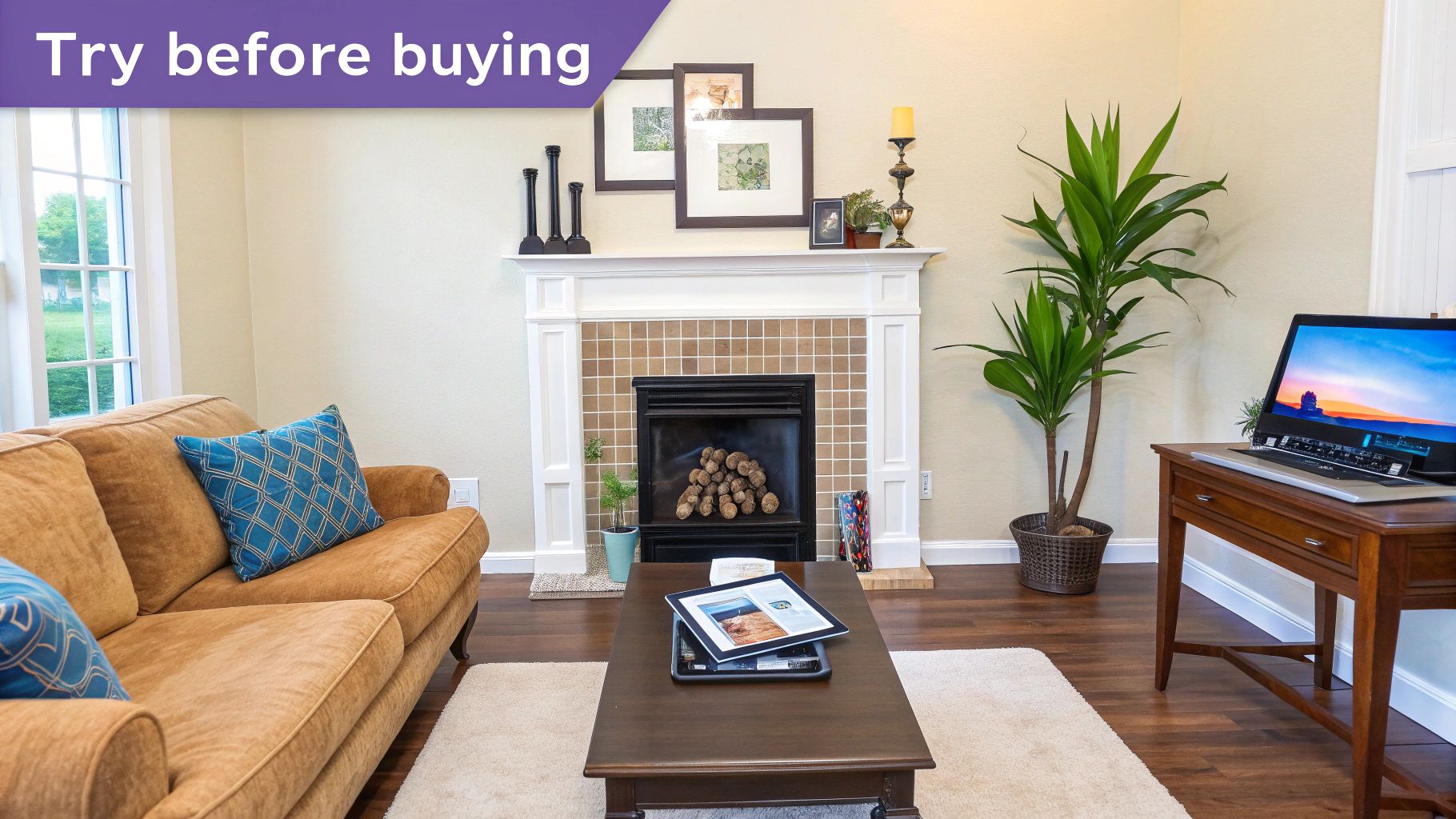
Before you move a single thing, find the room's focal point. It’s the first place your eyes land when you walk in. Sometimes it's obvious, like a beautiful fireplace or a big window with a killer view. If your room doesn't have a natural one, no problem—you can create one with a bold piece of art or a statement media console.
Once you've got it, arrange your biggest piece of furniture (like the sofa or bed) to either face it or complement it. This one move sets the stage for everything else and makes placing the rest of your furniture so much easier.
Mastering Scale and Proportion
One of the most common design mistakes I see is furniture that’s the wrong size for the room. A massive sectional can swallow a small living room whole, making it feel tight and stuffy. On the flip side, a tiny loveseat can get completely lost in a large, airy space. It's all about finding that "just right" balance.
Think about the visual weight of each item before you buy.
- Furniture with visible legs creates a sense of openness because you can see the floor beneath them. This is a great trick for making smaller rooms feel larger.
- Solid, heavy pieces that sit right on the floor can ground a room, but too many can make it feel weighed down.
- Don't forget to look up! A tall bookcase or a slender floor lamp draws the eye upward, giving the illusion of higher ceilings.
If you're outfitting a bedroom, this ultimate guide to bedroom furniture is a fantastic resource for exploring different styles and finding pieces that will work for your space.
Take the Guesswork Out with Realistic Visualization
This is where you can truly "try before you buy" and sidestep some costly mistakes. Let’s say you’re designing an Organic Modern living room and you're torn between two coffee tables: a dark, solid wood one from Crate & Barrel and a lighter, travertine-topped table from Pottery Barn. How can you be sure which one will look best?
This is exactly the kind of dilemma aiStager solves. It’s the only solution that generates hyper-realistic photos using the true dimensions of both your room and the actual furniture objects you're considering. There’s no more guessing.
Just upload a photo of your living room, drop in the link to the Crate & Barrel coffee table, and you'll see a photorealistic, dimensionally accurate image of it in your space. Want to compare? In just a few clicks, you can swap it out with the Pottery Barn link and see that version instantly.
This kind of immediate visual feedback is a total game-changer. You can test different brands, finishes, and colors, seeing exactly how each one changes the feel of the room. It ensures a perfect fit every time, saving you the headache (and cost) of returns.
Classic Layouts to Get You Started
While every room has its own quirks, some furniture arrangements are popular for a reason: they just work. Feel free to use these as a starting point and tweak them to fit your life.
The Symmetrical Living Room: This is perfect for more formal spaces or rooms with a strong central feature like a fireplace. You'd place a sofa directly opposite the focal point, with a matching armchair on either side facing each other. A coffee table in the middle pulls it all together.
The U-Shaped Conversation Pit: Great for larger living rooms built for hosting. A big sofa forms the back of the "U," with two loveseats or a few armchairs creating the sides. This setup naturally encourages conversation and can make a big room feel cozier.
The Bedroom Retreat: The bed should be the star. Place it against the longest uninterrupted wall to make it the clear focal point. Add a nightstand on each side for balance. If you have the room, carving out a small seating area by a window with an armchair and a little table adds another layer of function and comfort.
Remember, these are just ideas. The best layout is the one that works for you. Don't be afraid to experiment, shift things around, and use tools like aiStager to see your ideas come to life until the room feels just right.
Adding the Final Layers with Lighting and Decor
You’ve got the main furniture in place and the room is starting to look like, well, a room. Now for the fun part. This is what I call the "final 10%"—those finishing touches that take a space from functional to fantastic. This is where lighting, textiles, and personal decor come in to inject mood, texture, and your unique personality.
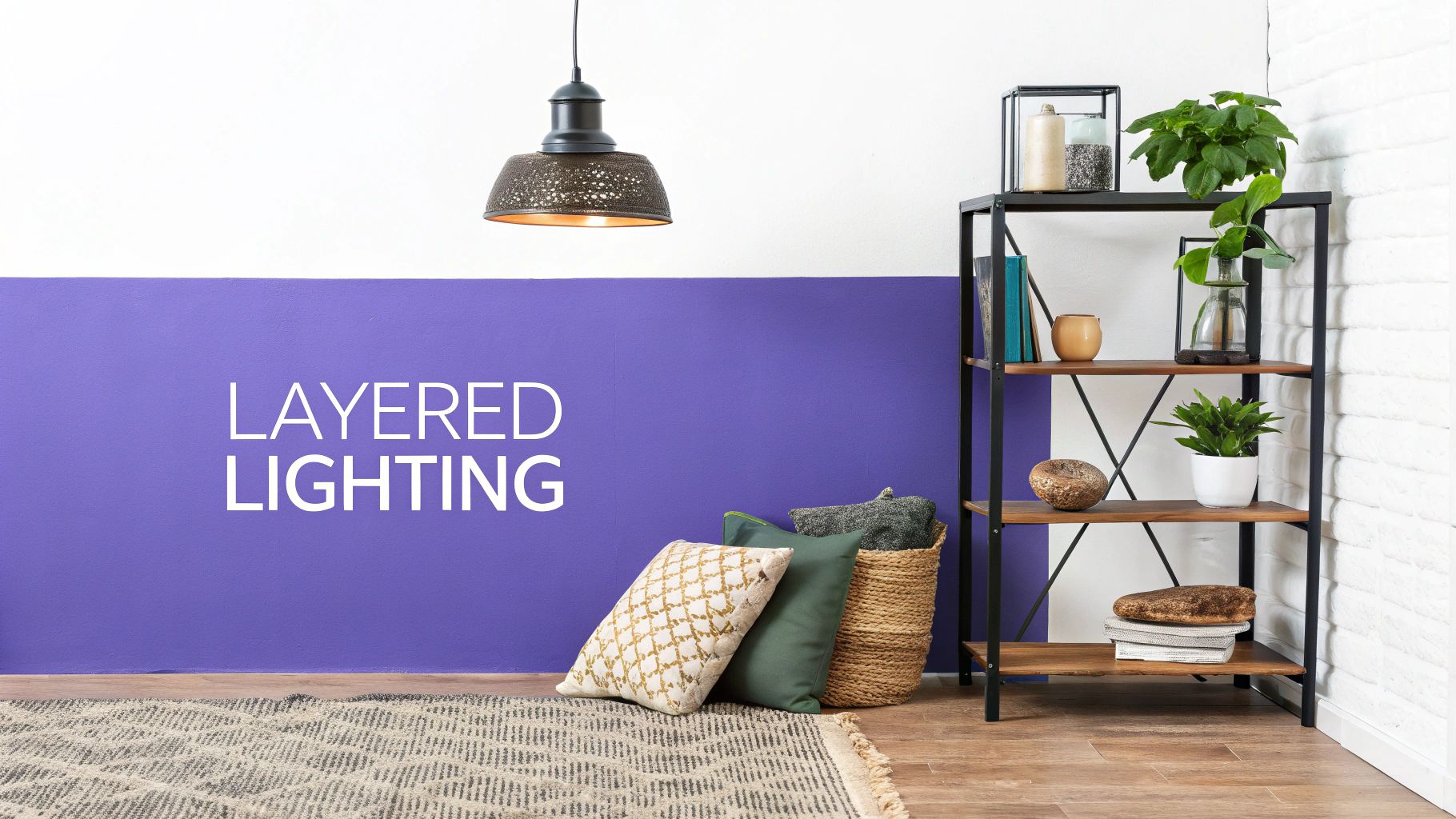
Master the Mood with Layered Lighting
Never underestimate the power of good lighting. It’s one of the most impactful tools you have. Instead of just sticking a single, harsh light in the middle of the ceiling, think in layers. A well-lit room always has a mix of three distinct lighting types.
- Ambient Lighting: This is your room's main light source. It's the overall illumination from things like recessed lights or a central chandelier.
- Task Lighting: This is exactly what it sounds like—light for a specific job. Think of a focused floor lamp next to your favorite reading chair or some handy under-cabinet lights in the kitchen.
- Accent Lighting: Now we're getting dramatic. Accent lighting is all about creating visual interest. It could be a picture light that makes a piece of art pop or a small uplight tucked behind a plant to cast cool shadows on the wall.
When you mix these three sources, you get total control over the vibe. You can go from bright and energetic to cozy and intimate with just the flip of a few switches.
Bring in Texture and Warmth with Textiles
Textiles are your playground for color, pattern, and feel. A great rug doesn't just feel good underfoot; it can anchor an entire furniture arrangement or carve out a distinct zone in an open-concept room.
Don't be shy about mixing different textures. It’s what gives a room depth.
The real magic of textiles is how they add softness. A sleek leather sofa can look a bit cold on its own, but toss a chunky knit throw over the arm and add a couple of plush velvet pillows, and it suddenly feels a hundred times more inviting.
Pillows and throws are also the perfect way to experiment without breaking the bank. A sofa is a big commitment, but you can swap out cushion covers every season to play with new colors or trends.
The Art of Accessorizing Your Space
This final layer is all about you. Accessories are the little things that tell your story—the books you've read, the art that inspires you, the souvenirs you’ve picked up along the way. The trick is to make the space feel curated, not cluttered.
A great little guideline to keep in your back pocket is the "rule of three." For whatever reason, our brains find things grouped in odd numbers more appealing. Try arranging three objects of different heights on your coffee table to create a simple, balanced display.
Even the smallest details matter. When adding greenery, think about choosing indoor plant pots that genuinely fit your room's style, rather than just using the plastic one it came in.
It’s these high-impact finishing touches that homeowners are focusing on, driving the remodeling market to a forecasted $175.74 billion by 2030. We’re seeing a real desire for personality over perfection, with trends like curvy furniture—which 43% of designers are eyeing for 2026—and bold maximalism taking center stage.
Your Room Design Questions Answered
Even the best-laid plans hit a snag. Designing a room is an evolving process, and it’s completely normal to get stuck or start second-guessing yourself along the way. Let's tackle some of the most common questions I hear, with clear answers to get you over those hurdles and keep your project moving.
How Do I Make a Small Room Feel Bigger?
This is probably the number one question in interior design. While we can't actually knock down walls, we can absolutely trick the eye into seeing more space than there is. It comes down to a few smart, strategic moves.
- Go Light and Bright: Lighter wall colors are your best friend. Think soft whites, pale grays, and subtle pastels. They reflect light beautifully, making a room feel instantly more open and airy.
- Lean on Mirrors: A large, well-placed mirror is the oldest trick in the book for a reason. It can visually double the size of a room by bouncing light and reflecting the space back on itself.
- Choose "Leggy" Furniture: When you're picking out sofas, chairs, or tables, look for pieces with visible legs. Being able to see the floor underneath the furniture creates a sense of openness and stops the room from feeling heavy or cramped.
What If I Want to Mix Different Design Styles?
Please do! Mixing styles is what gives a room personality and keeps it from looking like a catalog page. A space where everything is from one brand or a single design era can feel sterile and impersonal, not like a real home.
The secret to successfully blending styles—say, Mid-Century Modern with a bit of relaxed California Casual—is to find a common thread that ties everything together. This unifying element could be a consistent color palette running through the pieces, a repeated material like a warm wood tone, or even just a similar level of formality. As long as the items have something in common, the look will feel collected and intentional, not chaotic.
How Do I Choose Between Similar Products from Different Brands?
We’ve all been there. You’ve found two nearly perfect sofas, one from West Elm and the other from Article. They're almost identical in style, but the colors are a hair different, and you're stuck. How on earth do you make the final call without getting them both into your living room?
This is where visualization tools are no longer a "nice to have"—they're a game-changer. It takes all the guesswork out of the equation.
With a platform like aiStager, you can completely eliminate buyer's remorse. It's the only tool I've found that generates hyper-realistic photos using the true dimensions of your room and the exact furniture you're considering. You just upload a picture of your space and paste the product link.
In a matter of clicks, you can virtually place the West Elm sofa in your room and then swap it out for the one from Article. You can test a rich leather against a soft boucle and see exactly how each one looks with your wall color and lighting. This kind of direct comparison makes the right choice feel obvious, giving you total confidence before you hit "buy."
Where Should I Splurge, and Where Can I Save?
Knowing where to invest your money is key to a successful design. You don't need to break the bank on every single item to get a high-end, pulled-together look.
- Splurge On: Think about the items you interact with every single day. These are your high-traffic, high-impact pieces. Your sofa, your mattress, and the main area rug are where you want to invest in quality. Better construction here will pay you back in comfort and durability for years to come.
- Save On: Decorative accessories are the perfect place to be frugal. Things like throw pillows, vases, and small decor items can be found at great prices. They’re easy to swap out as trends shift or your style evolves, which keeps your room feeling fresh without a major financial commitment.
By putting your budget into the foundational pieces and getting creative with the accents, you’ll end up with a beautiful room that’s both stylish and smart.
Ready to stop guessing and start visualizing? With aiStager, you can see exactly how any piece of furniture from any store will look in your actual room, in hyper-realistic detail. Upload a photo, paste a product link, and design your perfect space with total confidence. Try it for free and bring your vision to life today at https://www.ai-stager.com/en.