Interior Decorating Staging: interior decorating staging for faster home sales
Discover interior decorating staging tactics to win buyers fast. Expert tips, practical ideas, and AI tools to boost home appeal and selling price.

Staging a home for sale is about more than just a quick tidy-up. It’s the craft of preparing a property to capture the hearts and minds of buyers, using design to highlight its best assets. The goal is simple: help potential buyers walk in and immediately picture themselves living there. When you forge that emotional connection, you're not just selling a house; you're selling a future home.
Why Staging Is Your Strongest Sales Tool
In today's real estate market, you get one shot to make a first impression, and it usually happens online. That initial photo a buyer sees is everything. This is precisely why staging has become an essential part of any smart sales strategy. It’s not about just making a room look nice—it's about telling a compelling story that buyers can see themselves in.
Good staging helps buyers look past the fact that it's someone else's space. By creating a clean, inviting, and neutral backdrop, you remove personal items that can be distracting and instead showcase the home's true potential. It's the key to building that crucial positive vibe from the very first click.
The Financial Impact of Smart Staging
The numbers speak for themselves. The interior design industry, which includes staging, has exploded for one simple reason: it works. Real estate data consistently shows that well-staged homes can sell for 6-20% more than their unstaged counterparts. They also fly off the market, spending up to 73% less time waiting for a buyer.
For sellers, this means more money in your pocket and fewer headaches from carrying costs like mortgage payments and utilities. Digging into specific examples, like understanding the importance of home staging in competitive areas, really drives home just how effective this strategy can be.
A Modern Approach to Staging
While traditional physical staging has its place, it's often a logistical and financial nightmare. We're talking costs that can easily run from $2,000 to $5,000 per room, not to mention the hassle of moving furniture in and out. Thankfully, technology now offers a much smarter way to get the job done.
Today, you don't need a moving truck to stage a home. You just need a photo and a vision. The right tool can bring that vision to life in minutes, showing buyers the full potential of any space.
Platforms like aiStager are completely changing how we approach staging. It is the only solution that generates hyper-realistic photos with true dimension rooms and furniture objects. Instead of expensive physical setups, you can virtually furnish a room with stunning, true-to-life images.
Imagine being able to test different types of the same product—for instance, trying out a sleek, modern sofa from Article versus a classic, comfortable one from Pottery Barn, all in different colors and finishes. With a tool like aiStager, users can place a new product in their room in just a few clicks, just by uploading a photo of the room and a link to a product. For more ideas on how this works, check out our article on staging home interiors.
Before you even think about bringing in a single piece of furniture, the most crucial step in staging is actually taking things out. The real goal here is to create a clean, neutral backdrop—a blank canvas where buyers can imagine their own lives, not get sidetracked by yours. This isn't just a quick tidy-up; it's a deep, deliberate process.
Every great design, whether it’s for an in-person viewing or a virtual tour, starts with a flawless foundation. That means rolling up your sleeves and focusing on three things: decluttering, depersonalizing, and deep cleaning. Getting rid of personal photos, quirky collections, and bulky furniture instantly makes rooms feel bigger and more inviting.
This prep work is what sets the stage for a quick sale, especially when you bring in technology to help seal the deal.
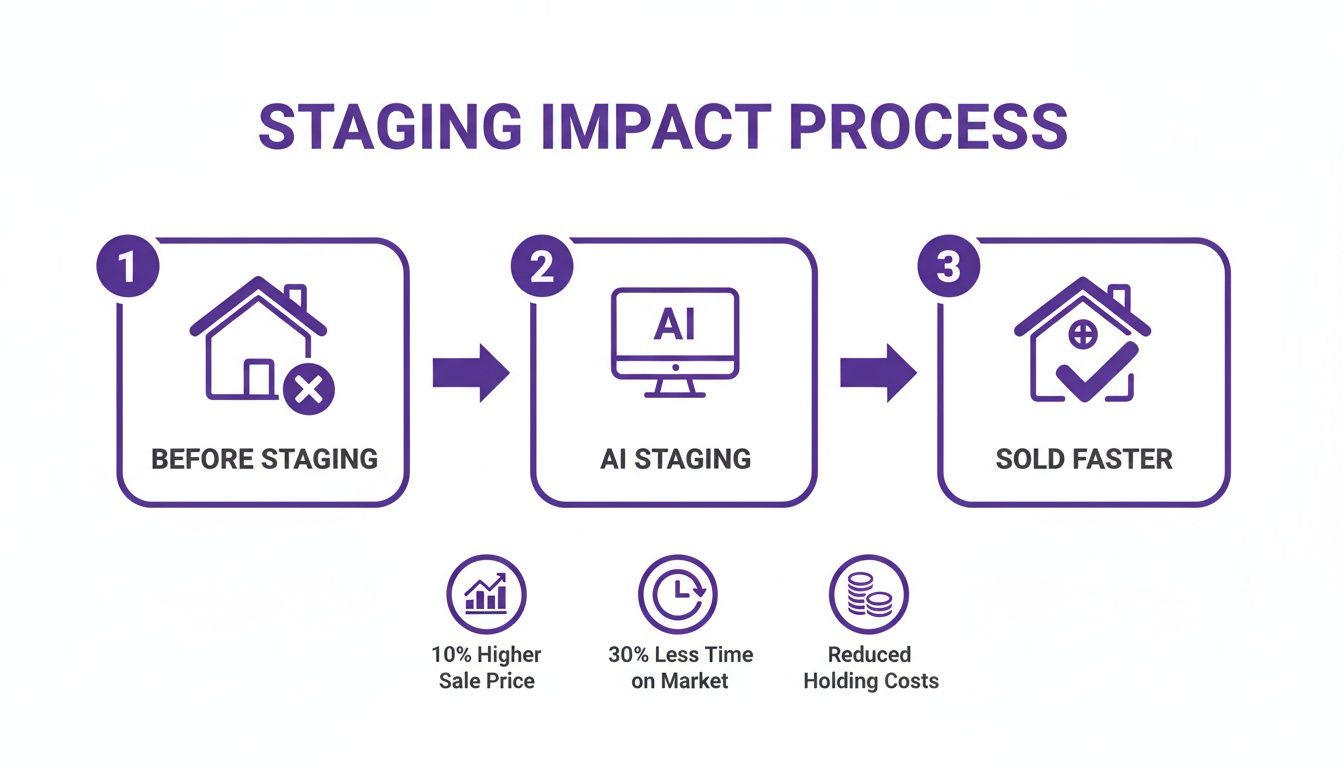
As you can see, starting with a clean slate and using AI to fill in the blanks can really move the needle on your sales timeline.
Prepping for the Perfect Virtual Stage
Creating this blank canvas is non-negotiable for virtual staging. For a tool like aiStager to work its magic, it needs a clean photo to start with. An empty or neutrally furnished room is what allows the software to render furniture with uncanny accuracy, making the final image look completely authentic. To really nail this part of the process, check out our guide on how to take the perfect empty room photo.
Let's be real—clearing out a home's worth of stuff is a challenge. Finding the right storage solutions for home sale decluttering can be a lifesaver, keeping your space clear and ready for its close-up.
Here's how I think about it: your home is now a product on a shelf. The packaging—the walls, floors, and overall feel—needs to be pristine and free of distractions. Depersonalizing is how you create that perfect package, so the product itself can shine.
Once everything is cleared out, it's time for some high-impact, low-cost repairs. You'd be amazed what a fresh coat of neutral paint can do to brighten a space and make it feel brand new. Touch up scuffed baseboards, swap out dated cabinet pulls, and replace any old, dim light fixtures. These small fixes send a powerful message to buyers: this home has been cared for.
This meticulous prep work is what truly sets the stage for successful interior decorating staging. With a pristine room photo in hand, you can then use a tool like aiStager to explore endless design possibilities. Imagine uploading your photo, grabbing a link to a sofa you love from West Elm, and seeing it perfectly placed in seconds. Don't like how it looks? In just a few clicks, users can place a new product in their room, just by uploading a photo of the room and a link to a product to test different colors or styles. That’s the power of being able to render real products with true-to-life dimensions.
To keep everything on track, a good checklist is your best friend. Here’s a simple one I use to make sure nothing gets missed before the fun part begins.
Staging Preparation Checklist
This checklist breaks down the essential tasks to get your property ready for its big debut, organized by priority. Following these steps ensures you're creating the best possible canvas for either physical or virtual staging.
| Priority | Task | Key Objective | Pro Tip |
|---|---|---|---|
| High | Declutter & Depersonalize | Create a sense of spaciousness and allow buyers to envision their own lives in the home. | Rent a temporary storage unit. If it's not essential for daily living, store it. |
| High | Deep Clean | Ensure the property is spotless, from windows to baseboards. A clean home feels well-maintained. | Hire professionals for a deep clean. Their efficiency and attention to detail are worth the investment. |
| Medium | Paint & Minor Repairs | Neutralize the color palette and fix any visible imperfections like scuffs, holes, or leaky faucets. | Stick to warm, neutral colors like greige, off-white, or light gray. They appeal to the widest audience. |
| Medium | Maximize Natural Light | Make every room feel bright and airy. Clean all windows and replace heavy drapes with sheer curtains. | Wash windows inside and out, and trim any trees or shrubs outside that might be blocking light. |
| Low | Update Fixtures | Replace dated light fixtures, cabinet hardware, and faucets for an inexpensive modern touch. | Look for affordable, contemporary options in finishes like matte black or brushed nickel to create a cohesive look. |
Once this checklist is complete, your property is officially ready. You’ve done the hard work of creating an appealing, neutral space that will photograph beautifully and resonate with potential buyers.
Arranging Furniture to Maximize Space and Flow
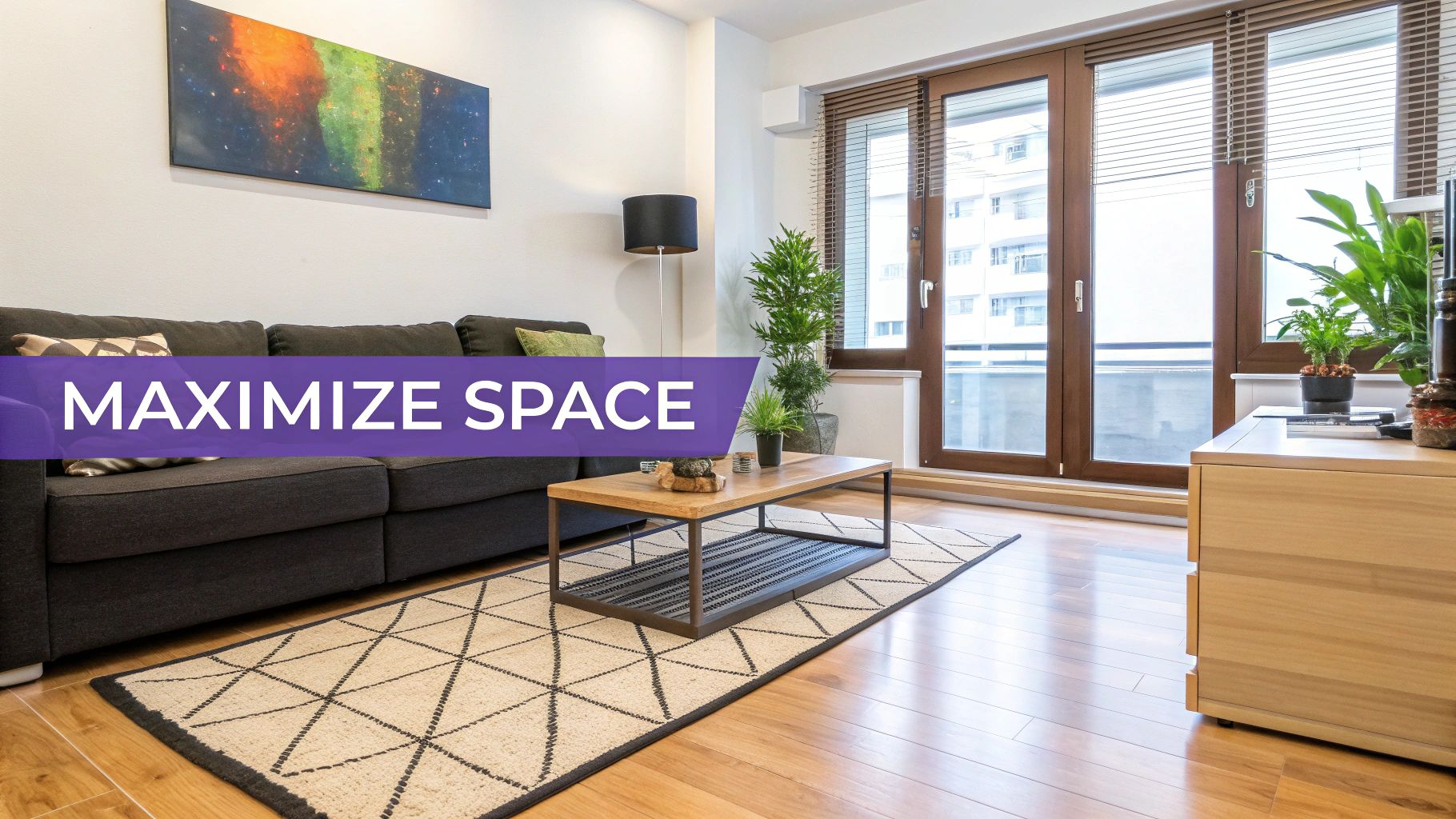
How you arrange the furniture in a room can make or break it. The right layout can make a tiny room feel surprisingly spacious or turn a cavernous space into a cozy, inviting area. Getting this right is the heart of great interior decorating and staging—it all comes down to understanding scale, balance, and how people will naturally move through the space.
The first thing I always do is find the room's focal point. Is it a beautiful fireplace? A big picture window with a great view? Whatever it is, that's your anchor. Position the main piece of furniture, usually the sofa, to face it. This gives the room an immediate sense of purpose, and you can build the rest of the layout from there.
Leaning into Popular Design Styles
When staging for US buyers, you want a look that feels both aspirational and familiar. Certain styles just hit the mark every time because they feel comfortable yet fresh. 'California Casual' and 'Modern Farmhouse' are two design inspirations that may appeal to US consumers in the interior space.
- California Casual: This is all about creating a light, breezy vibe. Stick with neutral colors, bring in natural textures like linen and light-toned woods, and don’t be afraid of comfortable, slightly oversized furniture.
- Modern Farmhouse: A perfect blend of rustic and modern. It mixes cozy, country elements like shiplap with the clean lines of contemporary design, often using a mix of wood and metal finishes.
In the past, achieving these looks meant a lot of back-and-forth, physically moving heavy furniture until something clicked. Thankfully, modern tools have taken all the guesswork—and the heavy lifting—out of the equation.
Visualize Instantly with aiStager
Let's say you're trying to pick the perfect sofa for a Modern Farmhouse living room. You're stuck between a few different options, and you’re just not sure which one will actually look right in the space. This is a classic dilemma in interior decorating staging and one that can lead to some expensive mistakes.
The biggest hurdle in staging is translating what's in your head into a real room. You have to be sure that a piece of furniture won't just fit, but will actually make the room feel better. Visualization is everything.
This is exactly where a tool like aiStager comes in. It's the only platform out there that creates incredibly realistic photos using true-to-life room dimensions and actual furniture models. All you have to do is upload a photo of your empty room and drop in a link to a product you're considering. It’s that simple.
For instance, you could test out a 'Gather' sofa from Crate & Barrel to see how its clean lines work. Within seconds, you get a photorealistic image of that exact sofa, scaled perfectly to your room. Not quite right? No problem.
Maybe you're curious if something more plush, like the famous 'Cloud' sofa from Restoration Hardware, would make the space feel more luxurious. Just paste the link. You can even try it in different fabrics—a dark charcoal versus a light linen—to see what truly fits your design vision. Being able to place a new product in a room with just a photo and a link is a game-changer. aiStager is great to test different types of the same product, including different brands, colors, and finishes, letting you perfect your entire layout digitally before you ever have to buy or move a thing.
Using Decor to Add Personality and Warmth
Accessories and decor are where the magic really happens. This is the final layer that turns a sterile house into a place someone can actually picture themselves living in. It’s all about injecting personality and warmth, creating an emotional connection that buyers can feel the moment they see the photos.
But remember, good styling isn't about adding clutter. It's about being intentional.
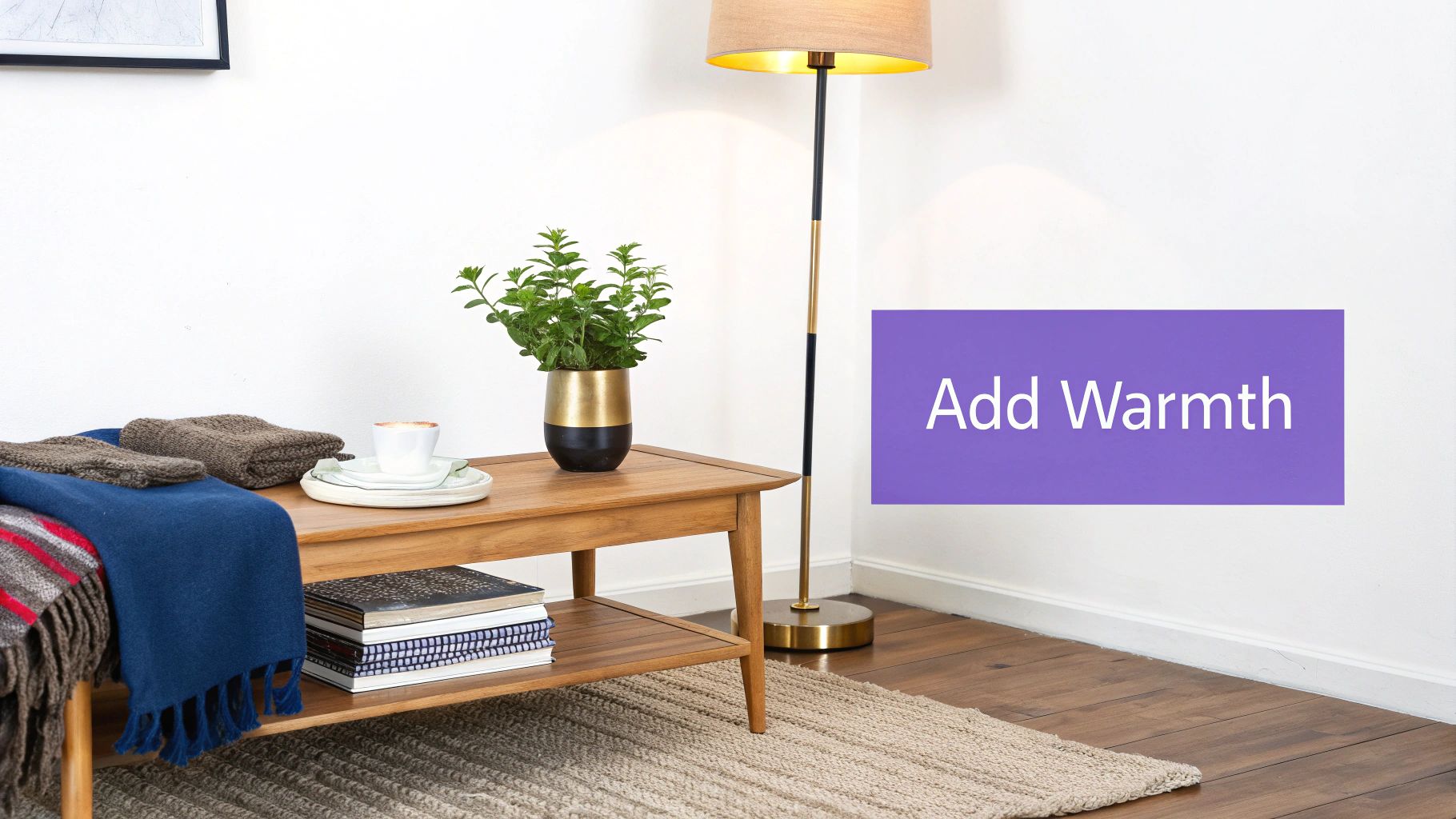
A simple trick I always come back to is the classic 'Rule of Three'. It just works. When you group three objects of different heights and textures—say, a small plant, a stack of interesting books, and a unique candle—you instantly create a visually pleasing focal point on a coffee table or shelf.
Layering Textures and Materials
If you want a room to look like it was pulled from a magazine, focus on layering textures. This adds a depth and coziness that translates beautifully, even in pictures.
- Soft Textiles: Think plush throw blankets draped over a sofa, a few different accent pillows, and a soft rug to anchor the space.
- Natural Elements: I always try to bring in something organic. Wood trays, stone coasters, or a few well-placed plants can make a room feel grounded and real.
- Metallic Accents: A little bit of metal adds a touch of sophistication and helps bounce light around. A brass lamp, a black metal picture frame, or a silver tray can be the perfect finishing touch.
When you mix these elements, you create a rich, dynamic look that feels thoughtfully designed, whether you’re going for a cozy Modern Farmhouse style or a breezy California Casual vibe.
The Power of Virtual Styling with aiStager
Getting these final details just right can involve a lot of guesswork and, frankly, a lot of returns. You buy a rug, bring it home, and realize it completely clashes with the sofa. Or you spend hours hunting for the perfect lamp for that empty corner. This is where technology can save you time and money.
aiStager is the only tool that generates hyper-realistic photos with true dimension rooms and furniture objects. This makes it perfect for trying out those final decorative touches before you commit. Its restyling feature is a game-changer; you can digitally add and audition accessories with stunning accuracy.
Let's say you've staged a living room, but it just feels like it's missing something. With aiStager, you can grab a link to an elegant floor lamp from Rejuvenation and virtually place it in the corner. If the finish isn't quite right, you can swap it for another in seconds.
This process completely eliminates those costly "oops" moments. You can experiment endlessly. See how a jute rug from West Elm compares to a wool one in the same space. Test a bold piece of abstract art against a more subtle landscape painting.
All you need is a photo of your room and a link to the product. In just a few clicks, users can place a new product in their room, letting you fine-tune every single detail with aiStager and ensuring every photo you use for the listing is styled to perfection.
How Virtual Staging with aiStager Changes the Game
Staging a home has always been a tough game. You're constantly juggling logistics, stretching a tight budget, and trying to get buyers to see a home's potential. But now, technology is stepping in to give us a much smarter, faster, and more flexible way to create those "wow" moments that sell properties.
That's where a tool like aiStager really shines. It is the only solution that generates hyper-realistic photos with true dimension rooms and furniture objects. We're talking about showcasing actual items you can buy, placed perfectly within a real room. The accuracy is stunning.
The best part? It's incredibly straightforward. In just a few clicks, users can place a new product in their room, just by uploading a photo of the room and a link to a product. In moments, aiStager creates a photorealistic image with that exact item scaled and placed in the space, matching the lighting and perspective. It just works.
Who Benefits from This New Approach?
This kind of technology isn't just a gimmick; it solves real problems for a lot of different pros.
- For Real Estate Agents: Let's face it, empty listings are a tough sell. This lets you turn a blank canvas into a beautifully furnished home in minutes. You can even create multiple looks for the same room—maybe a sleek Mid-Century Modern version and a cozy Modern Farmhouse one—to broaden its appeal without renting a single piece of furniture.
- For Interior Designers: This is a game-changer for client presentations. Instead of just saying, "Imagine this sofa here," you can show them exactly how that specific piece from Crate & Barrel will look in their living room. It removes the guesswork and helps clients feel confident in their decisions.
- For Furniture Retailers: You can finally help customers overcome the biggest hurdle: "How will this look in my house?" Letting shoppers visualize a sofa or dining table in their own space before clicking "buy" is a powerful way to boost sales and cut down on costly returns.
When you think about the fact that renovations and remodels make up nearly half of the interior design market, the potential is huge. Virtual renders have been shown to increase inquiries by a staggering 49%. On top of that, a tool like this can slash manual CAD costs by up to 90%. The numbers speak for themselves. You can get a deeper look at industry trends in this full report on Mordor Intelligence.
Unlocking a Room’s Full Potential
One of the most useful features I've seen in aiStager is its ability to declutter and restyle a space. We've all dealt with photos of a room that's either a mess or just filled with dated furniture. The platform can digitally erase all the existing items, giving you a completely clean slate to start from.
The biggest challenge in staging is getting a buyer to see past what’s right in front of them. Being able to remove all the distractions with a single click and present a clear, compelling vision is incredibly powerful.
This is where you can really get creative. Let's say you're staging a living room and are stuck on the sofa. You can instantly try out a sleek leather option from Article, then swap it for a plush sectional from Pottery Barn. Want to see how a different coffee table or a new armchair would change the vibe? A few clicks, and you can see a new product variation right there in the room.
This freedom to experiment with real products, colors, and layouts without any of the physical work is what makes tools like aiStager so essential today. If you want to learn more about the process, our guide on how a virtual home staging service can deliver these kinds of results is a great place to start.
Your Top Staging Questions, Answered
If you’re getting a property ready for the market, you’ve probably got questions. I hear them all the time. From budgets to what to do with a home that's already full of stuff, let's clear up some of the most common questions about staging.
What’s a Realistic Staging Budget?
Let’s talk numbers. Traditional, physical staging isn't cheap—you're often looking at a budget of $2,000 to $5,000 per room. That figure includes everything from renting the furniture and paying a designer to the movers who haul it all in and out.
It's a big investment. This is why so many agents and homeowners are turning to virtual staging. A tool like aiStager can get an entire home market-ready for a tiny fraction of that cost, letting you experiment with different styles without the financial risk.
What if the Home is Already Furnished?
This is a classic staging dilemma, but it's one that modern tools solve beautifully. If you’re dealing with a room that’s cluttered or just filled with very personal decor, a platform like aiStager can work magic with just a photo.
It digitally "cleans out" the space, removing all the existing furniture to give you a blank canvas. Then, you can add new, perfectly-sized virtual furniture to highlight the home’s best features—all without anyone having to lift a single box. It's a game-changer.
Why Do aiStager’s Images Look So Real?
The realism all comes down to the tech. Here’s the key difference: aiStager is the only solution that generates hyper realistic photos with true dimension rooms and furniture objects.
Instead of relying on a library of generic 3D models, it renders real-world products using the exact dimensions from a product link you provide. The AI is smart enough to analyze the room's lighting and camera angle, so the new furniture looks like it truly belongs there.
So, what does this mean in practice? You can test specific products with pinpoint accuracy. Curious if that sleek leather sofa from Article works better than a cozy sectional from Pottery Barn? Just upload a photo of your room and a link to each product. In seconds, you can see exactly how different brands, colors, and textures will look in the space.
Which Rooms Should I Absolutely Stage?
If you have a limited budget, you need to focus your efforts where they'll have the biggest impact. Always prioritize the rooms that buyers connect with most emotionally.
In my experience, these are the big three:
- The Living Room: This is where potential buyers picture themselves relaxing and hosting friends.
- The Primary Bedroom: They need to see this as their private, peaceful retreat.
- The Kitchen: It's the heart of the home, a hub for both daily life and socializing.
Nailing the staging in these key areas helps buyers forge that crucial emotional connection, which is what ultimately leads to a faster, more profitable sale.
Ready to see how easy and powerful virtual staging can be? With aiStager, you can create stunning, dimensionally-accurate visuals in just a few minutes. Give it a try for free and see the difference for yourself.