A Practical Guide to Planning Spaces Interior Design
Master planning spaces interior design with our guide. Learn to measure, zone, and visualize your layout for a perfectly functional and beautiful home.
Space planning is where great interior design truly begins. It’s the art and science of arranging a room so it not only looks good but feels right and works effortlessly for the people living in it. We're talking about more than just where to put the sofa; it's about crafting a flow that makes your daily life easier and more enjoyable. A well-planned space ensures every inch has a purpose, from smart storage to comfortable conversation areas.
The Blueprint for a Beautiful and Functional Home
Every successful interior design project starts with a rock-solid plan. This initial step is your best defense against those classic, costly mistakes—like falling in love with a sectional that swallows your living room whole or ending up with a layout that’s just plain awkward to move through.
Think of your space plan as the architectural blueprint for your lifestyle. It’s a strategy that goes beyond room dimensions to consider how you actually live within those four walls. This is how a simple room becomes a space that feels custom-made for you.
Whether you're dreaming of a minimalist, Scandinavian-inspired vibe or a cozy, Modern Farmhouse feel popular in US homes, a thoughtful plan is what pulls everything together, making the final result feel intentional and intuitive.
Visualizing Your Vision Before You Commit
One of the biggest challenges in any design project is closing the gap between what you can imagine and what will actually work in your space. A mood board is great for inspiration, but it won’t tell you if that specific Crate & Barrel leather armchair will truly fit with your existing furniture.
The ability to see furniture in your actual room, perfectly scaled, before spending a dollar is a game-changer. It eliminates guesswork and empowers you to make design decisions with complete confidence.
Imagine you're stuck between two different sofa styles. Instead of guessing, you could use a tool like aiStager. It’s the only solution that generates hyper-realistic photos with true dimension rooms and furniture objects. This means what you see is an accurate preview, not just a guess.
In just a few clicks, you can place a new product in your room. Simply upload a photo of your space, paste a product link—say, for a sleek sectional from West Elm—and see precisely how it will look. You can even test different types of the same product, like comparing a boucle sofa to a leather one, or see how different colors and finishes look in your home.
As you get started, a common question is how to start the interior design process for a room. The answer always circles back to having an effective plan. It’s the roadmap that guides you through the essential stages of turning an empty room into a home.
To give you a quick overview, here are the core stages of space planning that we'll dive into. This table breaks down the entire journey from a high-level concept to a finished, livable space.
Key Stages of Interior Space Planning
| Stage | Primary Goal | Practical Outcome |
|---|---|---|
| 1. Site Assessment | To understand the physical constraints and features of the space. | An accurate floor plan with dimensions, outlets, windows, and architectural details. |
| 2. Defining User Needs | To clarify how the space will be used and by whom. | A clear "design brief" outlining activities, lifestyle needs, and priorities. |
| 3. Zoning & Circulation | To map out activity zones and ensure logical flow between them. | A diagram showing traffic paths and designated areas for tasks (e.g., seating, working). |
| 4. Furniture Layout | To arrange furniture for optimal function, comfort, and aesthetics. | A scaled furniture plan with proper clearances and conversational groupings. |
| 5. Lighting & Systems | To layer lighting and integrate HVAC/electrical for comfort and ambiance. | A plan for ambient, task, and accent lighting, plus locations for vents and outlets. |
| 6. Iteration & Presentation | To refine the plan based on feedback and visualize the final design. | 3D renderings, mood boards, and a finalized floor plan to present to a client. |
Think of these stages as your guide. Following them in order helps ensure no detail gets missed, setting you up for a final result that is both beautiful and perfectly functional.
Getting to Know Your Space and How You'll Use It
Before you even think about picking out a sofa, great space planning starts with a deep dive into two critical areas: the room itself and the life that happens inside it. Get these two things right, and you're setting yourself up for a design that not only looks fantastic but truly works for you.
Think of it like this: your room is a blank canvas, but it already has its own quirks and character. Your first job is to get its exact measure. Pull out a tape measure and get down to business, documenting everything—wall lengths, ceiling height, and the precise location and size of every fixed feature. We're talking windows, doors, light switches, electrical outlets, radiators, and any oddball architectural elements like columns or alcoves.
An accurate, to-scale floor plan isn't just a nice-to-have; it's the absolute foundation of your project. It’s the only way to know for sure what will actually fit where. But the numbers are only half the story.
What's the Room's Vibe?
Beyond the hard measurements, you need to get a feel for the room’s personality. Spend some time just observing. How does the natural light move through the space during the day? That west-facing window might cast a beautiful golden glow in the evening—perfect for a reading nook but a nightmare for glare on a TV screen.
Pinpoint the room's best features and its biggest headaches.
- The Good Stuff: Does it have soaring ceilings, gorgeous original crown molding, or a killer view? Your design should play these up.
- The Problem Areas: Is there an awkwardly placed door that swings into the main walkway? Is the room a bit of a cave with limited light? Acknowledging these challenges upfront is the key to solving them creatively.
This part of the process gives you the context you need to make smart layout decisions, helping you create a design that works with the space, not against it.
Time for a Lifestyle Audit
Once you’ve got a handle on the canvas, it's time to figure out the artist—you. A "lifestyle audit" sounds formal, but it's really just a brutally honest look at what you need the room to do. This is where we move past pretty pictures and get into the nitty-gritty of daily function.
Start by asking yourself some direct questions about how the room is currently used and how you want to use it.
- What’s the main event? Will this be the spot for hosting parties, family movie nights, quiet work sessions, or a kids' play-doh free-for-all?
- Who’s using it? Is it a high-traffic zone for the whole family, or a quiet escape for just one or two people?
- What drives you nuts right now? What’s the biggest pain point in the current setup? Do guests always trip over the coffee table? Is there never a good place to set down a drink?
- What's next? How might your needs change in the next five years? Will you need to carve out a dedicated WFH spot or find more room for toy storage?
Being real about your daily habits, your pet peeves, and your routines is the secret sauce. A room that looks like it belongs in a magazine but doesn't actually support your life will never feel right.
From Vague Ideas to Crystal-Clear Visuals
This is where the rubber meets the road—turning all those needs and wants into a tangible plan. Let's say your audit reveals you're stuck between two different sofas for your Modern Farmhouse living room. A mood board won't cut it here. Maybe you're torn between a classic, comfy Pearce sectional from Crate & Barrel and a sleeker, modular design from Article.
This is a perfect moment to bring in a tool like aiStager. It’s the only solution I’ve found that generates hyper-realistic photos with true dimension rooms and furniture objects. You can snap a photo of your actual living room, provide a link to each sofa, and in a few clicks, aiStager will drop a photorealistic, perfectly scaled model of each one right into your space.
This lets you see exactly how the charcoal gray fabric of the Crate & Barrel sofa plays with your wall color versus the rich cognac leather of the Article piece. It’s an incredible way to test-drive different brands, styles, and colors side-by-side, taking all the guesswork out of the equation. You can be confident your investment fits both the room’s character and your real-world needs.
Bringing the Plan to Life: Zoning, Circulation, and Scale
Once you have your measurements in hand and a clear idea of how the space will be used, it’s time for the fun part: turning those abstract ideas into a tangible layout. This is where we focus on three make-or-break principles: zoning, circulation, and scale. Nail these, and the room will feel right from the moment you walk in.
First up is zoning. Think of this as the art of creating distinct "rooms within a room," especially crucial in today's open-concept homes where living, dining, and kitchen areas often bleed into one another. Without clear zones, a large space can feel messy and undefined.
It doesn’t have to be complicated. You can carve out a quiet reading nook in a sprawling living room with just an armchair—maybe a classic like the Eames Lounge Chair from Herman Miller—a small side table, and a good floor lamp. In an open floor plan, something as simple as a large area rug placed under the dining set visually fences off that zone from the rest of the living area, giving each space a clear purpose.
This strategic division is the bedrock of any solid design plan. Before you even think about placing furniture, you need to understand the room's potential, as this simple breakdown shows.
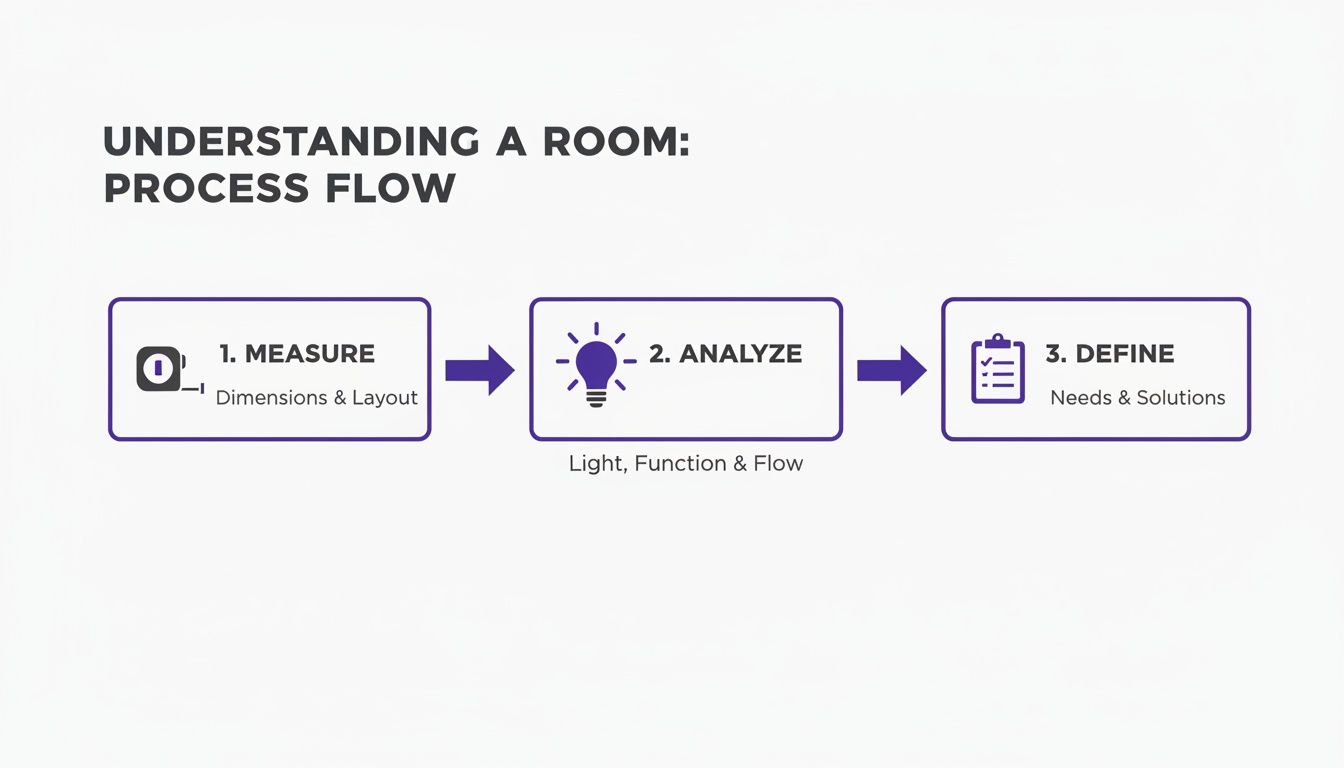
As you can see, great design starts with measurement, moves to analysis, and finishes with a clear definition of purpose—all before a single sofa is moved.
Creating a Natural Flow with Circulation
Next, let's talk about circulation, which is just a fancy word for how people move through a room. The paths you create are the invisible lifelines connecting your different zones. Get it wrong, and you'll have people awkwardly squeezing past furniture, creating frustrating bottlenecks and a feeling of constant interruption.
The aim is to create clear, unhindered pathways that feel completely intuitive. What are the most common trips people will make? From the door to the sofa? From the living area to the kitchen? These are your primary traffic routes, and they need to be kept clear.
Here are a few hard-and-fast numbers to live by:
- Main Walkways: Keep major traffic paths at least 36 inches wide. This is the magic number that allows two people to pass without turning sideways.
- Coffee Table Clearance: Leave around 18 inches between your sofa and coffee table. It's close enough to set down a drink but provides enough legroom.
- Dining Space: You'll want at least 24 to 30 inches between the back of a dining chair (when someone is seated) and a wall or other furniture. This lets people get in and out of their seats without a struggle.
When a layout works, you don't even think about it. You just move through the space effortlessly. That's the sign of a well-planned room.
If you want to get deeper into the nitty-gritty of furniture arrangement, our guide on how to design a room layout has you covered.
Getting Scale and Proportion Just Right
Finally, let's tackle scale and proportion—this is where so many DIY designs fall flat. Scale is about how the size of an object relates to the room and other objects within it. That giant, comfy-looking sectional that was perfect in the showroom? It can absolutely swallow a small living room, making it feel cramped and claustrophobic.
On the flip side, dinky furniture can make a large room feel barren and unfinished. It’s all about finding that Goldilocks fit. If you're working with a smaller footprint, knowing how to make a small room feel big with smart furniture choices is an invaluable skill. A classic designer trick is to use painter's tape on the floor to outline furniture dimensions, giving you a real-world sense of the footprint.
But taping your floor is old school. Modern visualization tools are a game-changer here. Imagine being able to drop perfectly scaled 3D models of furniture into a photo of your actual room. With a tool like aiStager, you can do just that, completely avoiding expensive mistakes. It’s the only solution that generates hyper-realistic photos with true dimension rooms and furniture objects.
Just upload a photo of your space and a product link—say, a slim-profile sofa from Design Within Reach versus a plush, traditional one from Pottery Barn. In seconds, you can see exactly how each one fits, to scale. You can even play with colors. Will that navy velvet sofa be a stunning focal point, or will it just suck all the light out of the room? This process takes out all the guesswork, ensuring every piece you select works in harmony to create a balanced, beautiful, and truly functional space.
Visualizing Your Design with Hyper-Realistic Previews
This is where technology really changes the game. Traditional 2D floor plans and mood boards are fundamental, no doubt. They help map out the bones of a concept, but they have a serious blind spot: they can't show you what a room will actually feel like. That gap between a flat drawing and the real-life atmosphere is where expensive mistakes happen.
AI-powered tools are here to bridge that divide. They take the guesswork out of the equation by generating photorealistic previews that show you exactly how your design choices will look in the actual space. We're not talking about clunky 3D models here; this is about seeing real products in your own room.
From Guesswork to Certainty
With a tool like aiStager, the process is surprisingly simple. You just upload a photo of your room and provide a link to a piece of furniture you’re eyeing. The tech then works its magic, creating a hyper-realistic image of that specific item placed right where you want it.
Let's say you're designing a living room with a modern, American-style vibe. You're torn between a sleek, mid-century modern sofa from West Elm and a cozier, family-friendly sectional from Pottery Barn. Instead of trying to imagine how each one fits, you can literally see it.
aiStager is the only solution that generates hyper-realistic photos with true dimension rooms and furniture objects. This means what you see in the preview is an accurate representation of scale, not just a visual approximation.
This is huge. It means you can test different pieces side-by-side in your actual space. Place the West Elm sofa in your room photo, and then, with a couple of clicks, swap it for the Pottery Barn sectional. You’ll instantly see how the different styles, colors, and textures play with your existing floors, wall color, and even the natural light.
Test Driving Your Design Choices
This goes way beyond just sofas. Worried that dark walnut dining table from Article will feel too heavy and swallow up your dining area? In seconds, you can test it against a lighter oak version right in your photo. It's an absolute lifesaver for comparing different colors and finishes of the same product.
Think about these common design headaches that instant visualization solves:
- Color Confidence: Is that bold, emerald green armchair a stunning statement or a future regret? See it first.
- Finish Finesse: Compare a matte black coffee table to a glossy white one to see which truly complements your decor.
- Brand Battles: Pit a Crate & Barrel bookshelf against a similar one from a boutique brand to decide which one fits your room's vibe and scale.
Being able to test real products from any brand gives you complete design freedom. You're not stuck with a limited catalog of generic 3D models. In just a few clicks, you can place a new product in your room just by uploading a photo of the room and a link to the product, helping you make confident decisions that prevent costly returns. For a deeper look at this process, check out our guide on floor plan rendering.
This shift is a big deal for the design industry. Valued at roughly USD 31.77 billion, the interior design services market is projected to hit USD 49.59 billion by 2029. Much of that growth is being driven by new digital tools, with virtual visualization becoming a critical part of how designers and clients bring a vision to life. You can read more about this trend and its impact on the interior design services market.
Layering Lighting, Materials, and Storage
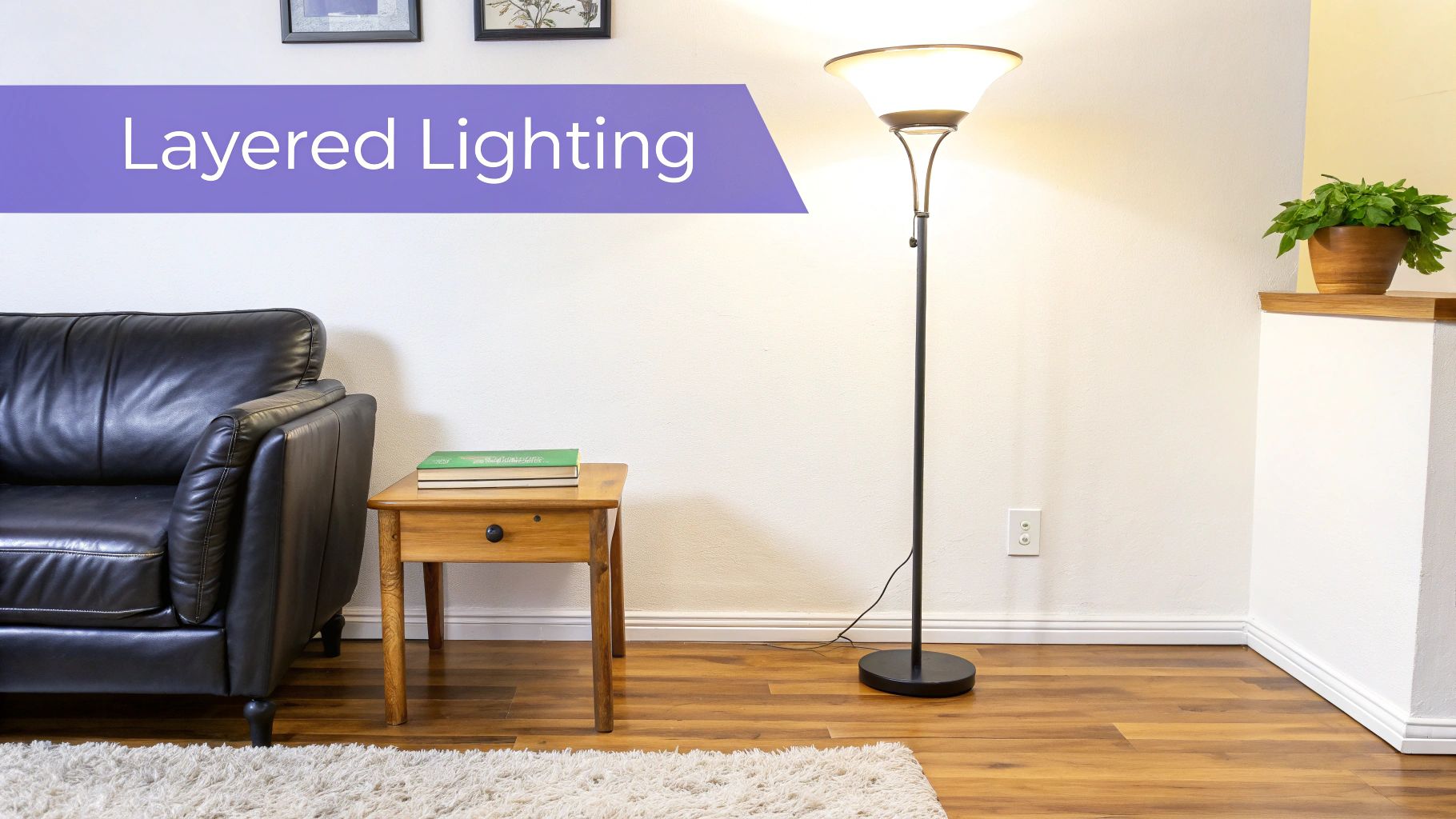
Once your furniture layout is locked in, the real magic begins. This is where we move beyond the floor plan's black-and-white lines and start layering in the elements that give a room its soul. We’re shifting from footprints and pathways to atmosphere and texture, and there’s no better place to start than with lighting.
A great lighting plan is never one-dimensional. You need to think in layers—combining three types of light to build depth, set the mood, and make the space truly work. Each one has a job to do.
- Ambient Lighting: This is your room’s foundation of light. Think of it as the general glow from ceiling fixtures like chandeliers or recessed cans that provides a comfortable, even brightness.
- Task Lighting: Just like it sounds, this is focused light for getting things done. It’s the floor lamp you pull up next to your favorite reading chair or the under-cabinet strips that illuminate your kitchen workspace.
- Accent Lighting: This is the fun, dramatic layer. It’s all about highlighting what you love, whether it’s a track light aimed at a piece of art or an uplight tucked behind a fiddle-leaf fig to create cool shadows.
When you layer these sources correctly, you eliminate those harsh, flat shadows that can make a room feel sterile. It also gives you total control over the vibe, letting you switch from bright and productive to cozy and intimate in an instant.
The Power of Materials and Textures
Next up, let’s talk about the feel of the room. The interplay of different materials and textures is what stops a space from feeling flat and one-note. A room full of only sleek, smooth surfaces can feel a bit cold and uninviting, no matter how well it’s laid out.
Think about a cozy, modern living room. You might have a buttery leather sofa paired with a rough, live-edge wood coffee table. Throw a chunky, soft wool rug on the floor, and suddenly you’ve created a rich, tactile experience that’s way more interesting and inviting.
The trick is to create a good mix of contrast and balance. Soft against hard, rough against smooth, matte against glossy—these combinations engage the senses and make a design feel complete. This is a crucial step after you’ve settled the layout, because the right materials will elevate your whole plan. If you're looking for inspiration on this front, our guide on how to create a moodboard is a great resource.
A well-designed room is a clutter-free room. Smart, integrated storage is not an afterthought; it is a fundamental component of good space planning that ensures your design remains beautiful and livable long-term.
Integrating Seamless Storage Solutions
Finally, let’s get real about storage. Clutter is the number one enemy of good design. A beautiful, thoughtful layout can fall apart pretty quickly once real life moves in if there’s nowhere to put anything.
That’s why you have to plan for storage from the very beginning, not just try to shove a bookshelf in at the end. Look for clever opportunities to build it right in.
- Built-ins: Custom shelves and cabinets flanking a fireplace are a classic for a reason. They add architectural character and tons of storage.
- Multi-functional Furniture: Think smarter, not bigger. An ottoman with a hidden compartment is perfect for stashing blankets, and a coffee table with drawers can hide away remotes and magazines.
- Vertical Space: Don't forget to look up! Tall, skinny bookcases can tuck into awkward corners and hold a surprising amount without eating up precious floor space.
By weaving lighting, materials, and storage into your plan, you’re doing more than just arranging furniture. You’re crafting a complete environment that looks good, feels right, and actually works for the people living in it.
Common Space Planning Mistakes to Avoid
Even the best-laid plans can go sideways. I’ve seen it happen time and again—a few seemingly small slip-ups in space planning can completely throw off the feel of a room. Spotting these common pitfalls early on is what separates a good design from a truly great one, saving you a world of frustration (and money) down the line.
One of the most common blunders? Getting the scale all wrong. A massive, overstuffed sofa can swallow a small living room whole, making it feel claustrophobic. On the flip side, dinky furniture in a large, airy space just looks lost and unfinished. This is especially true with area rugs—if it’s too small for the seating arrangement, the whole setup just looks awkward and disconnected.
Don't Choke Your Light and Flow
Another classic mistake is accidentally blocking your natural light sources. It’s amazing how quickly a room’s vibe dies when a tall bookcase or a high-backed chair is shoved in front of a window. The same goes for ignoring how people actually move through a space. If you have to shimmy sideways past the coffee table to sit on the couch, your layout is failing.
Here’s how to sidestep these issues:
- Let the Light In: Choose furniture with a lighter visual weight. A sleek media console on raised legs from a place like CB2 feels much more open than a blocky, solid unit. A well-placed mirror opposite a window is also a classic designer trick to amplify daylight.
- Clear the Paths: As a rule of thumb, keep your main walkways at least 36 inches wide. This simple guideline ensures the room feels easy to navigate, not like an obstacle course.
- Tape It Out: Before you commit to a big purchase, grab some painter's tape and mark the furniture’s footprint on the floor. This gives you a real-world sense of how much floor space it will actually take up.
See It Before You Buy It
Honestly, the best way to dodge almost every planning mistake is to see your layout before you spend a dime. In the interior design world—a competitive market expected to hit USD 27.2 billion with around 155,000 businesses in the U.S. alone—showing a client a flawless vision is everything. For a deeper dive into these numbers, you can learn about the U.S. interior design market's performance.
The most expensive mistake is the one you have to undo. Visualizing your layout with true-to-scale models of real products eliminates guesswork and prevents costly buyer's remorse.
This is exactly why tools like aiStager are becoming so essential. It’s the only platform I’ve found that creates photorealistic images using the actual dimensions of both your room and the specific furniture you want.
Curious if that dark navy sofa will overpower the room? Stop guessing. Just upload a picture of your space and the product link. aiStager lets you test out different colors and finishes from any brand, placing the piece right into your room in a few clicks. You get to see exactly how it will look and fit, making your final plan practically foolproof.
Your Space Planning Questions Answered
Even the most detailed guide can’t cover every little thing that pops up. Let’s tackle some of the most common questions I hear from clients and new designers. Getting these right will give you the confidence to move forward.
What Is the First Thing to Do When Planning a Room Layout?
Before you do anything else—before you even open a Pinterest board—grab a tape measure. You need to create an accurate floor plan of the space as it is right now.
Get the room's length, width, and ceiling height. But don't stop there. Note the exact size and placement of every door, window, radiator, and electrical outlet. This detailed map is the absolute bedrock of every single decision you'll make later.
How Can I See if a Sofa Will Fit My Room Before I Buy It?
Painter's tape on the floor is a classic trick for mapping out a footprint, but it only tells you half the story. To really understand how a piece will look and feel, you need to see it in 3D.
This is where visualization tools really shine. A tool like aiStager is a game-changer because it’s the only solution that generates hyper-realistic photos with true dimension rooms and furniture objects.
You can upload a photo of your empty room and drop in a link to a specific sofa you’re eyeing—say, a big, comfy sectional from Pottery Barn or a more minimalist design from West Elm. The tool then creates a perfectly scaled image of that exact sofa in your actual room. It takes all the expensive guesswork out of the equation.
The most common error in furniture arrangement is pushing everything against the walls. It creates a weird, empty void in the middle and makes the room feel cold and impersonal.
A much better approach is to "float" your main seating group. Pull the sofa and chairs away from the walls and anchor them around a coffee table or an area rug. This simple move instantly creates a more intimate, functional conversation area and makes the entire room feel more thoughtfully designed.
Ready to stop guessing and start visualizing? With aiStager, you can see exactly how any piece of furniture will look in your space before you buy. Upload a photo of your room and a product link to get a hyper-realistic, perfectly scaled preview in seconds. Try it for free and make your next design decision with total confidence.