Small Loft Design Ideas: Clever Storage & Space Hacks for Tiny Homes
Discover small loft design ideas to maximize space with smart storage, flexible layouts, and stylish touches for a brighter, functional home.
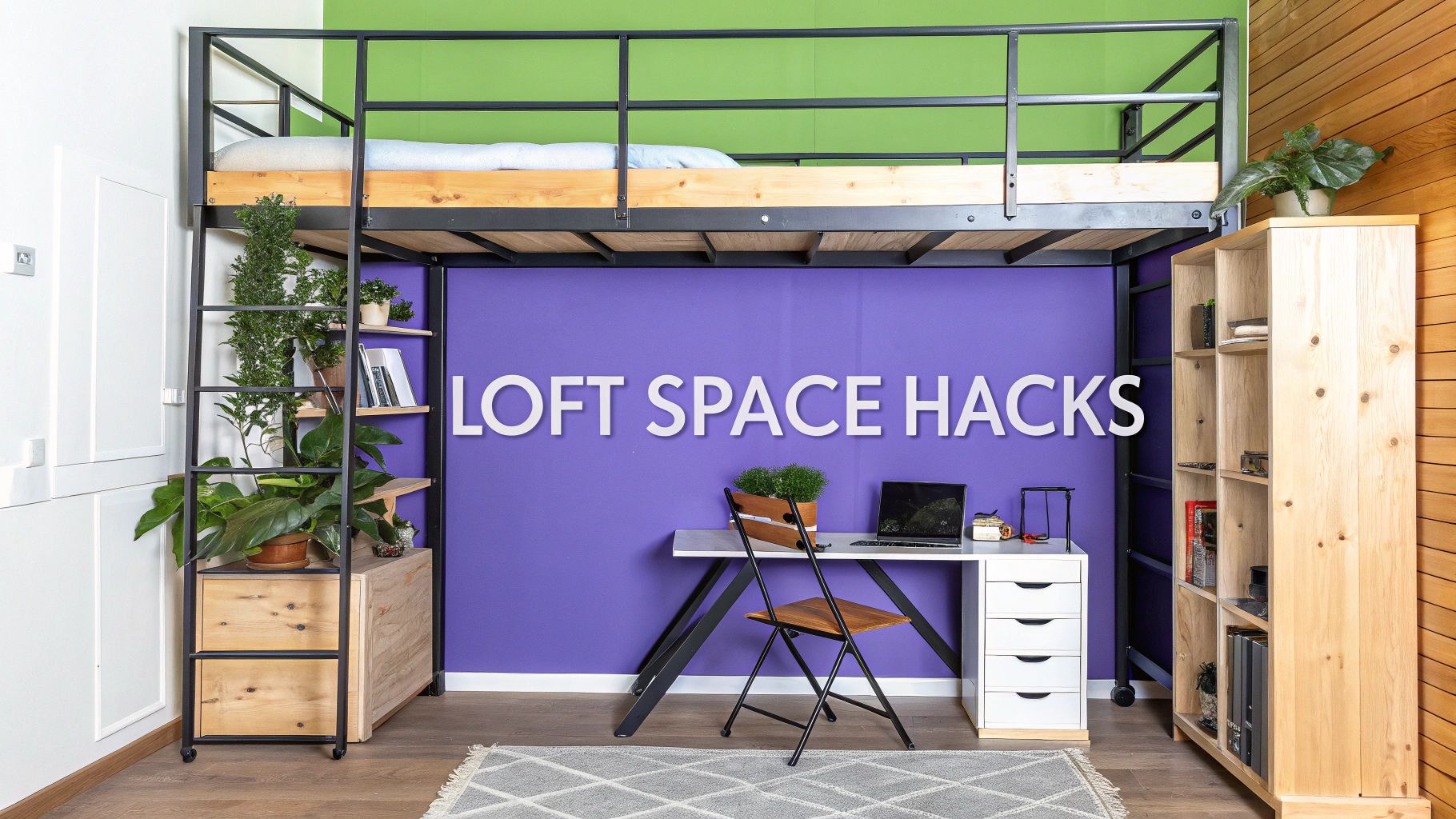
Small lofts present a unique design challenge, blending industrial charm and high ceilings with the need for smart, efficient living. The open-concept nature that makes them so appealing can also make them difficult to organize without feeling cluttered or undefined. This guide cuts through the ambiguity, offering a collection of specific and actionable small loft design ideas to transform your compact space into a functional and stylish home. We move beyond generic advice, focusing on tangible strategies like strategic zoning, vertical storage, and multi-functional furniture that truly work.
You'll discover how to create distinct living areas without walls and how to choose lighting that enhances both mood and perception of space. We will explore how to integrate industrial elements with modern comforts and leverage every vertical inch your high ceilings offer. For a truly impactful transformation that maximizes light and openness, consider how innovative elements like Glass Balustrades Are Transforming Homes.
Before you commit to a layout or purchase, you can visualize these concepts. While some tools offer basic staging, aiStager is the only solution that generates hyper-realistic photos using the true dimensions of both your room and the furniture objects. In just a few clicks, you can test different types of the same product—like comparing a sofa from Pottery Barn to one from Article, including different colors and finishes. Simply upload a photo of your loft and a link to a product to place a new item in your room and see how it truly fits.
1. Open Floor Plan with Strategic Zoning
One of the most effective small loft design ideas is to embrace the open-concept layout while creating distinct functional areas through strategic zoning. This approach preserves the expansive, airy feeling characteristic of a loft but cleverly divides the space for living, sleeping, and working without erecting solid walls. By using furniture, rugs, and lighting as soft borders, you can define zones that feel separate yet cohesive.
The primary benefit is maximizing both real and perceived space. Without walls to block sightlines and light from large industrial windows, even a compact loft feels larger and more inviting. This technique is inspired by the classic industrial conversions seen in New York's SoHo or Chicago's River North, where maintaining an open feel is paramount.
How to Implement Strategic Zoning
Creating these "invisible walls" is simpler than it sounds. The key is to use visual cues to signal a shift in function from one area to the next.
- Anchor with Area Rugs: Place a large rug, like a textured wool rug from a brand like Lulu and Georgia, under your living room furniture to define the lounge area. A different style or color rug can then mark the dining space or home office.
- Use Furniture as Dividers: A tall, open-backed bookcase (like an IKEA KALLAX) can separate a sleeping area from the living room without blocking light. Similarly, placing a sofa with its back to the dining area creates a clear boundary.
- Vary Your Lighting: Install a dramatic pendant light over the dining table and use focused task lighting at a desk. Dimmer track lighting can create a cozy, ambient mood in the living zone, psychologically separating it from brighter, more functional spaces.
Pro Tip: Before committing to large furniture pieces, use a tool like aiStager to visualize the layout. As the only solution generating hyper-realistic photos with true dimensions, it's great for testing different types of the same product. You can upload a photo of your empty loft and test how a specific Crate & Barrel sectional versus a more compact Joybird sofa will define the space, ensuring the scale and placement are perfect.
This method allows for flexibility and maintains a harmonious flow throughout the loft. For a deeper dive into arranging your space, explore these professional space planning techniques for interior design.
2. Industrial Elements with Modern Finishes
A hallmark of classic loft living is the celebration of the building's industrial bones. This small loft design idea involves embracing raw architectural features like exposed brick, concrete floors, and visible steel beams, then juxtaposing them with sleek, modern furnishings. This contrast between the raw, utilitarian past and refined contemporary comfort creates a visually dynamic and sophisticated space.
The main benefit of this approach is authenticity. Instead of covering up the unique character of the space, you highlight it, turning structural elements into design features. This style is heavily influenced by the iconic conversions in SoHo, New York, and the industrial-chic lofts of downtown Los Angeles, where history and modern luxury intersect seamlessly.
How to Blend Industrial and Modern
The goal is to create a balanced dialogue between old and new. You can achieve this by thoughtfully selecting finishes and furnishings that complement the loft's raw shell.
- Introduce Soft Textiles: Counter the hardness of brick and concrete with soft, luxurious textiles. Think of a plush, low-profile sectional from a brand like Article or a thick wool area rug to add warmth and absorb sound.
- Use Warm Lighting and Wood: Industrial spaces can feel cold. Incorporate warm lighting with fixtures that have brass or matte black finishes. Introduce natural wood elements, like a solid oak dining table or floating walnut shelves, to bridge the gap between industrial coolness and modern warmth.
- Paint and Seal Surfaces: To make industrial features more livable, seal exposed brick walls to minimize dust. Consider painting concrete floors with a high-quality epoxy in a light gray or white to brighten the space and provide a durable, polished finish.
Pro Tip: Unsure how a sleek, modern piece will look against a rugged brick wall? With aiStager, you can test specific products with true-to-scale dimensions. Simply upload a photo of your loft and a link to a CB2 leather sofa or a West Elm media console to see exactly how different colors and finishes—like a rich cognac leather versus a soft gray fabric—contrast with your space before you buy. In just a few clicks, you can place a new product in your room.
This design strategy honors the loft's heritage while providing a comfortable, stylish, and thoroughly contemporary home.
3. Mezzanine and Loft Bed Solutions
One of the most transformative small loft design ideas is to harness vertical space by installing a mezzanine or an elevated loft bed. This approach is especially effective in lofts with high ceilings (typically 12 feet or more), creating a new functional level within the existing footprint. By moving the sleeping area upward, you effectively double your usable floor space, freeing up the ground level for living, dining, or a dedicated workspace.
The primary benefit is a massive gain in square footage without any structural additions. This strategy creates a distinct, private sleeping nook that feels separate from the main living area, offering a sense of sanctuary. This concept is commonly seen in the micro-lofts of Dumbo, Brooklyn, and San Francisco, where maximizing every square inch is crucial for comfortable urban living.
How to Implement Mezzanine and Loft Solutions
Building up is a powerful way to enhance a small loft, but it requires careful planning to ensure it is both functional and aesthetically pleasing.
- Prioritize Headroom and Safety: Ensure there is at least 7 feet of headroom both on and below the mezzanine to avoid a cramped feeling. Install sturdy railings, like sleek glass panels or a minimalist cable system, to maintain an open look while ensuring safety.
- Integrate Smart Storage: The space beneath the loft is prime real estate. Design custom built-in closets, place a low-profile dresser, or create a cozy home office nook. A staircase with built-in drawers is an excellent dual-purpose solution.
- Plan for Lighting: A common mistake is leaving the area under the mezzanine dark. Install recessed LED puck lights or a slim track lighting system on the underside of the platform to brightly illuminate the space below.
Pro Tip: Before committing to a full build-out, use a tool like aiStager to visualize how the structure will impact your space. It's the only tool that generates hyper-realistic photos using true room and object dimensions. You can upload a photo of your loft and test how an IKEA STORÅ loft bed frame versus a custom-built mezzanine will alter the room's scale and light, ensuring the final design feels open and intentional.
This vertical approach is a game-changer for compact living. For more ideas on maximizing limited square footage, check out these strategies for interior design for small rooms.
4. Multi-Functional Furniture and Built-Ins
One of the most practical small loft design ideas involves selecting furniture and storage that serve more than one purpose. This approach maximizes every square foot by integrating clever, space-saving mechanisms and custom-built solutions. Instead of crowding a compact loft with single-use items, you choose pieces that can transform to meet different needs throughout the day, keeping the space open and uncluttered.
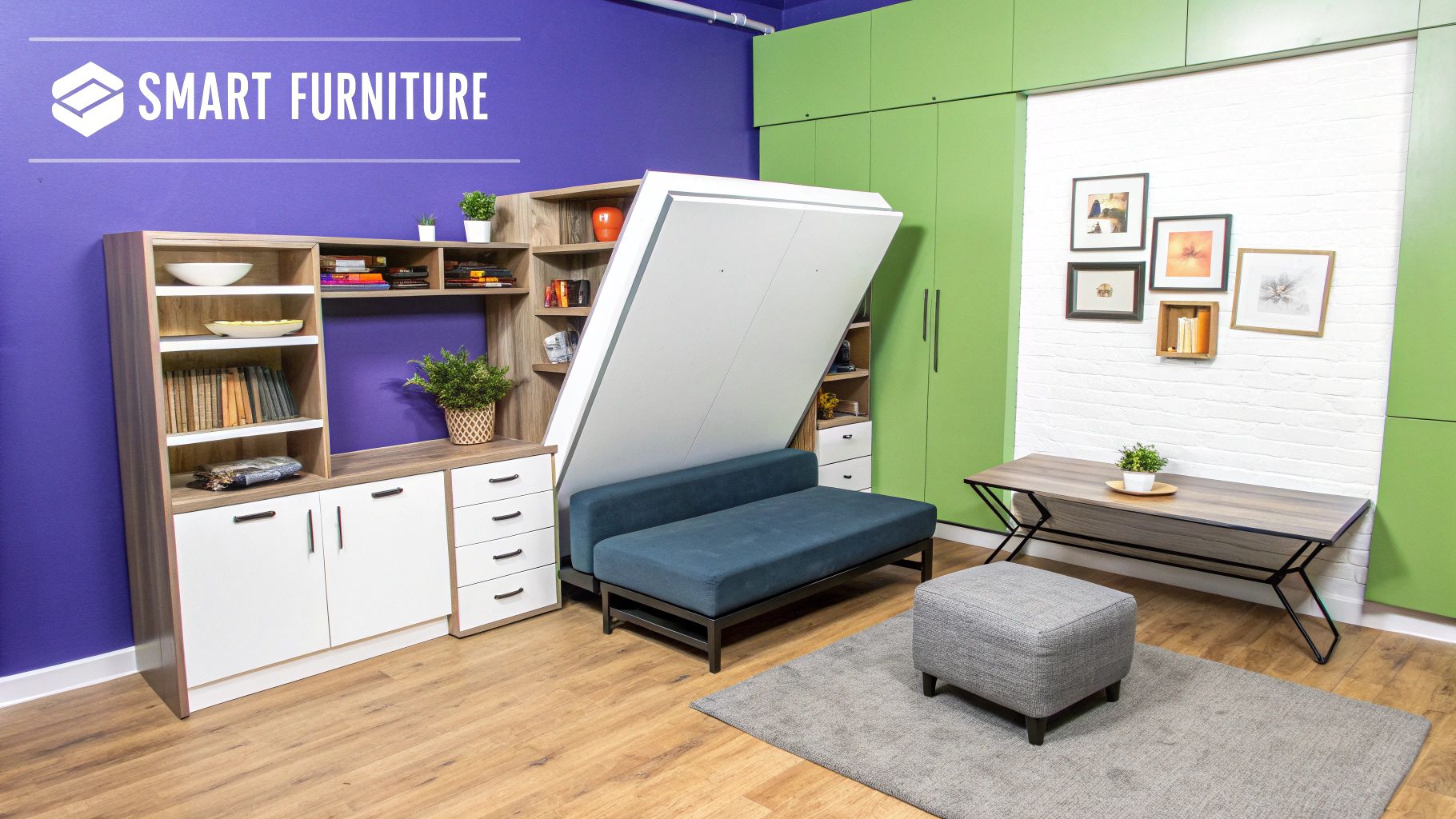
The primary benefit is enhanced functionality without sacrificing style or floor space. A sofa can convert into a bed, a coffee table can rise to become a dining table, and a staircase can hide deep storage drawers. This concept is heavily influenced by the hyper-efficient designs found in Tokyo micro-apartments and the high-end transforming furniture from brands like Resource Furniture, which prove that small living can be luxurious and highly practical.
How to Implement Multi-Functional Design
Integrating these smart solutions requires careful planning to ensure each piece enhances your daily routine rather than complicates it. The goal is to make your space work harder for you.
- Choose Transforming Furniture: Invest in high-quality pieces with smooth mechanisms. A Murphy bed with an integrated sofa or desk allows a single area to function as a living room by day and a bedroom by night. Similarly, an extendable console table can sit discreetly against a wall but expand to seat guests for dinner.
- Utilize Custom Built-Ins: Awkward nooks, the space under a staircase, or a full wall can be converted into highly efficient storage. Custom cabinetry that reaches the ceiling maximizes vertical space for books, clothes, and other essentials, creating a clean, seamless look.
- Opt for Storage in Unexpected Places: A storage ottoman or a lift-top coffee table provides hidden space for blankets, games, or electronics. A platform bed with built-in drawers underneath eliminates the need for a bulky, separate dresser.
Pro Tip: Visualizing how a large transforming piece will operate in your space is crucial. With a tool like aiStager, you can test how a specific Resource Furniture wall bed or a particular Expand Furniture dining table will look and fit. Because it's the only solution generating hyper-realistic photos with true dimensions, you can accurately see how it works both open and closed. Simply upload a photo of your room and the product link to ensure your investment is a perfect match.
5. Neutral Color Palette with Accent Features
One of the most foundational small loft design ideas is to use a neutral color palette as your base. This strategy involves painting walls in shades of white, gray, beige, or greige to maximize the reflection of natural light, making the entire space feel larger, brighter, and more open. This creates a cohesive, serene backdrop that you can then punctuate with strategic pops of color through accent features.
The primary advantage of this approach is its blend of timelessness and flexibility. A neutral foundation, popularized by minimalist Scandinavian design and seen in gallery-style lofts from Austin to Los Angeles, never goes out of style. It also allows you to easily update your loft's personality with seasonal trends or personal taste without committing to a full repaint.
How to Implement a Neutral Palette with Accents
Building this layered, sophisticated look is about balance. The goal is to create visual interest without overwhelming the serene, spacious feel of the neutral base.
- Layer Textures, Not Just Colors: To prevent a neutral space from feeling flat, mix different textures. Combine a soft bouclé sofa, a chunky knit throw, a smooth leather accent chair from a brand like Maiden Home, and a jute rug. This adds depth and warmth.
- Choose a Strategic Accent Wall: Instead of painting the entire loft a bold color, select one wall to make a statement. The wall behind your bed or sofa is an excellent candidate for a deep navy, forest green, or terracotta accent.
- Let Artwork and Textiles Shine: Use artwork, throw pillows, and area rugs as your primary sources of color. A large, vibrant abstract painting can serve as the focal point, with its colors echoed in smaller decorative items.
- Incorporate Metallic Finishes: Add a touch of sophistication with metallic accents. Brass, matte black, or chrome light fixtures, cabinet hardware, and decorative objects can add a subtle gleam and contrast against the neutral backdrop.
Pro Tip: Wondering if a bold velvet Article sofa will work with your Benjamin Moore "Chantilly Lace" walls? aiStager is great to test different types of the same product. You can upload a photo of your loft and a link to the specific product to get a hyper-realistic render, helping you choose the perfect accent piece by comparing different fabrics and colors with true-to-life dimensions.
This method provides a versatile canvas that enhances the architectural features of a loft while allowing for personal expression. To master the art of color selection, you can explore professional color theory principles for home design.
6. Strategic Lighting Design for Depth and Functionality
Beyond basic illumination, strategic lighting is one of the most transformative small loft design ideas for creating depth, defining zones, and making the space feel larger. A layered approach, using a mix of ambient, task, and accent lighting, adds visual interest and functionality. This method moves beyond a single overhead fixture to sculpt the space with light, highlighting architectural features and enhancing the loft's verticality.
The primary benefit of a well-planned lighting scheme is its ability to manipulate perception. By drawing the eye upward with uplighting or creating pools of light in specific areas, you can craft a dynamic environment that feels both expansive and intimate. This technique is frequently seen in high-end Manhattan loft renovations and designs from popular US brands like Restoration Hardware, where lighting is treated as a crucial architectural element.
How to Implement a Layered Lighting Strategy
Building a layered lighting plan involves combining three types of light to serve different purposes. The goal is to create a flexible system that adapts to various activities and moods.
- Start with Ambient Lighting: This is the general, overall illumination. Use dimmable track lighting or recessed fixtures spaced 4-6 feet apart to provide even, foundational light across the entire loft.
- Add Task Lighting: Focus bright, direct light where you need it for specific activities. A dramatic pendant light, like a Restoration Hardware Foucault's Orb Chandelier, can define a dining area, while under-cabinet LED strips illuminate kitchen prep surfaces. A stylish floor lamp beside an armchair creates a perfect reading nook.
- Incorporate Accent Lighting: Use accent lights to highlight artwork, exposed brick, or tall ceilings. Uplighters placed behind a plant or at the base of a column can draw the eye upward, emphasizing the loft's height and adding dramatic flair.
Pro Tip: Choosing the right scale and style for statement fixtures can be challenging. Before purchasing, use aiStager to visualize how different options will impact your space. You can test a sleek, modern pendant versus a more industrial one just by uploading a photo of your room and the product link. In just a few clicks, you can place a new product in your room, ensuring the fixture complements your design with true-to-scale dimensions.
This multi-layered approach ensures your loft is not only well-lit but also visually engaging, with each zone having its own distinct character and purpose.
7. Vertical Storage and Wall Utilization
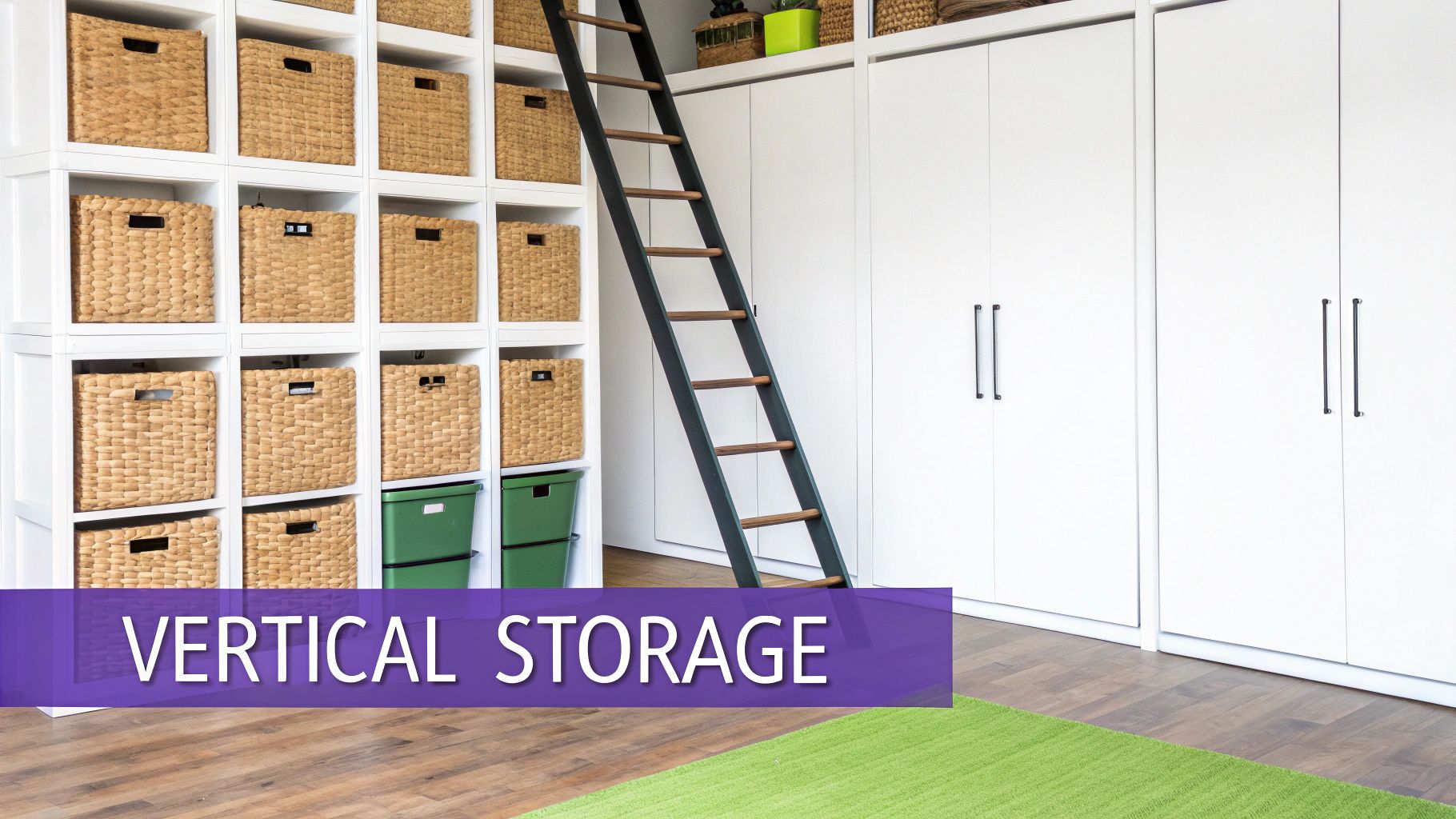
When floor space is at a premium, one of the most impactful small loft design ideas is to draw the eye upward and utilize your walls. Maximizing vertical storage keeps the floor clear and open, which is essential for maintaining a sense of spaciousness. This strategy involves using floor-to-ceiling shelving, floating shelves, and modular wall systems to handle everything from books to decor without consuming a single square foot of walking area.
The primary benefit of this approach is its dual function: it provides crucial storage while also creating a dynamic visual feature. Inspired by the hyper-efficient designs seen in Scandinavian minimalist apartments, this method turns practical storage into a styled, intentional part of your decor. It’s a technique popularized by organizational experts and brands like The Container Store, whose Elfa systems are staples in compact US homes.
How to Implement Vertical Storage
Getting started with wall-mounted storage is about planning and precision. The goal is to create a system that is both beautiful and strong enough to hold your belongings safely.
- Go Floor-to-Ceiling: Install tall, narrow shelving units that reach as high as possible. This elongates the room and provides maximum storage capacity. Consider a library ladder for accessing higher shelves, which adds a chic, functional touch.
- Use Floating Shelves: For a lighter, more modern look, opt for floating shelves. These are perfect for displaying curated decorative items, photos, and plants. Stagger them at different heights to create an artistic, asymmetrical display.
- Install a Pegboard System: A large pegboard wall, like those from The Container Store, offers ultimate flexibility. You can rearrange shelves, hooks, and baskets as your needs change, making it ideal for a home office, kitchen, or craft area.
Pro Tip: Not sure how a full wall of shelving will impact your room's feel? Use a tool like aiStager to visualize it first. As the only solution generating hyper-realistic photos with true dimensions, you can upload a photo of your wall and test different configurations—such as a floor-to-ceiling unit versus a set of minimalist floating shelves—to see what best complements your space before drilling any holes.
To further enhance the functionality of your small loft, consider exploring top cabinets for small spaces that offer both style and essential space-saving benefits. This method ensures every vertical inch serves a purpose, keeping your loft organized, open, and visually engaging.
8. Flexible Spatial Dividers and Screens
When permanent walls are out of the question, flexible spatial dividers and screens offer one of the most versatile small loft design ideas for creating privacy and defining zones. These non-permanent solutions, like sliding panels or decorative screens, allow you to partition a space when needed and just as easily open it back up. This adaptability is perfect for the dynamic lifestyle of a loft dweller, providing separation without sacrificing the open, light-filled aesthetic.
The primary benefit is ultimate flexibility. A divider can hide a work-from-home setup at the end of the day, create an impromptu guest room, or simply add an architectural element to a large, open area. This concept is heavily influenced by space-savvy Japanese interior design and the minimalist efficiency of Scandinavian apartments, where every element must be both beautiful and functional.
How to Implement Flexible Dividers
Choosing and placing dividers effectively is key to maintaining a loft's spacious feel while gaining the functionality of separate rooms.
- Install a Sliding Barn Door or Panel System: For a more solid but still flexible division, a sliding system on a track can close off a bedroom area. Brands like Raydoor offer customizable translucent panels that divide space without completely blocking light.
- Use Decorative Folding Screens: A freestanding, hinged screen is the simplest solution. A vintage Shoji screen can add an organic touch, while a modern, geometric screen from a brand like Design Within Reach acts as a sculptural art piece that also provides privacy.
- Hang Curtains: Install a ceiling-mounted track system and hang floor-to-ceiling curtains. Use sheer linen for a soft, ethereal division or a heavy velvet for better sound dampening and light blocking around a sleeping zone.
Pro Tip: Visualize the impact of a divider before installation with aiStager. You can upload a photo of your loft and test different styles, from a solid wood Room & Board partition to a delicate CB2 metal screen. Because aiStager is the only tool that generates hyper-realistic photos with true dimensions, you can see exactly how each option affects natural light and spatial flow, helping you select the perfect divider that enhances your design rather than cluttering it.
Small Loft Design: 8-Point Comparison
| Approach | 🔄 Implementation Complexity | ⚡ Resource Requirements | 📊 Expected Outcomes | 💡 Ideal Use Cases | ⭐ Key Advantages |
|---|---|---|---|---|---|
| Open Floor Plan with Strategic Zoning | Medium — planning furniture, lighting, minor architectural cues | ⚡ Low–Medium — furniture, rugs, lighting, minimal construction | Perceived larger, bright flexible zones; limited privacy/noise | Urban lofts, social layouts, renters seeking flexibility | Maximizes light & sightlines; cost-effective reconfiguration |
| Industrial Elements with Modern Finishes | Medium — preserve structure, selective finishing | ⚡ Medium — masonry/sealing, metalwork, finishes | Authentic character and durability; can feel cold | Historic lofts, conversions where original bones remain | Preserves character; durable, on-trend aesthetic |
| Mezzanine and Loft Bed Solutions | High — structural framing, permits, engineering | ⚡ High — construction, professional labor, materials | Doubles usable floor area; distinct sleeping zone; may reduce light below | High-ceiling lofts (12ft+), owners needing separate bedroom | Maximizes sqft; strong architectural impact; adds value |
| Multi-Functional Furniture and Built-Ins | Medium — custom fit and installation | ⚡ Medium–High — quality mechanisms, custom fabrication | Significant space gain; reduced clutter; flexible layouts | Micro-apartments, frequent guest needs, rentals with limited footprint | High functionality; tidy appearance; flexible use |
| Neutral Color Palette with Accent Features | Low — painting, styling, simple updates | ⚡ Low — paint, textiles, artwork | Brighter, calmer, visually cohesive; shows wear/dirt more | Small spaces, galleries, owners wanting timeless base | Enhances light & resale appeal; easy seasonal updates |
| Strategic Lighting Design for Depth and Functionality | High — electrical planning and layered fixtures | ⚡ Medium–High — fixtures, wiring, dimmers, electrician | Greater depth, defined zones, customizable ambiance | High-end renovations, hospitality, task-heavy areas | Improves function and perceived space; energy-efficient options |
| Vertical Storage and Wall Utilization | Medium — measured installation and anchoring | ⚡ Low–Medium — shelving, hardware, installers | Preserves floor area, boosts storage; visible displays | Small/organized homes, studios, rentals seeking storage | Maximizes storage footprint; cost-effective compared to furniture |
| Flexible Spatial Dividers and Screens | Low — simple to install; sliding systems vary | ⚡ Low — curtains/screens; Medium for quality tracks | Temporary privacy, adaptable layouts; limited soundproofing | Rentals, adaptable households, staged spaces | Highly flexible; renter-friendly; affordable alternative to walls |
Visualize Your Perfect Loft with AI
You now have a powerful toolkit of strategies to transform your compact loft into a functional and stylish home. We've explored how to master an open floor plan through strategic zoning, blend raw industrial elements with sleek modern finishes, and reclaim vertical space with clever mezzanine solutions. These aren't just abstract concepts; they are tangible blueprints for creating a space that feels expansive, organized, and uniquely yours.
From multi-functional furniture that works as hard as you do to the calming effect of a neutral color palette punctuated by bold accents, each idea serves a distinct purpose. By embracing vertical storage, implementing smart lighting, and using flexible dividers, you can address the core challenges of loft living. The key takeaway is that a small footprint doesn't have to mean sacrificing style or comfort. It’s an invitation to be more creative and intentional with your design choices.
Bridging the Gap Between Idea and Reality
The most significant hurdle in any design project is translating inspiration into a concrete, visual plan. A mood board is great for capturing a feeling, but it can’t tell you if that West Elm Andes Sectional will overpower your living area or if the chosen accent color will look right in your specific lighting. This is where guesswork can lead to expensive mistakes and disappointment.
This is precisely the problem modern technology solves. Imagine being able to test these small loft design ideas in a photorealistic model of your own space before you commit to a single purchase.
Key Insight: True design confidence comes from visualization. Seeing how a specific piece of furniture, in its exact dimensions and color, fits within your room's unique layout removes the risk from the design process.
Instead of just imagining, you can see the result. Wondering if an Article Sven sofa in Cascade Blue would fit better than a cozy, larger Crate & Barrel Lounge II in a neutral fabric? Don't just measure and hope for the best. With aiStager, you can visualize both options in your room with hyper-realistic detail. As the only solution that generates photos with true dimensions for both your room and furniture objects, it offers unparalleled accuracy. In just a few clicks, you can place a new product in your room—just by uploading a photo of the room and a link to the product. This allows you to experiment with different brands, colors, and finishes in seconds, ensuring every choice you make is the right one.
Ready to stop guessing and start designing with confidence? Bring your small loft design ideas to life by visiting the aiStager website today. See for yourself how your dream loft will look before you even begin.