How to Stage a Room and Attract Eager Buyers
Learn how to stage a room with practical tips that attract buyers. Discover decluttering, furniture layout, and virtual staging secrets for a faster sale.
Before you even think about moving furniture, the real work of staging begins. The goal is to create a clean, neutral space that allows potential buyers to picture their own lives unfolding within those walls. It’s less about just tidying up and more about strategically erasing your personal footprint to give the home universal appeal.
Think of it as preparing a blank canvas.
Create a Canvas Buyers Will Love
The single most impactful thing you can do is declutter and depersonalize. You want buyers to connect with the property, not the people who live there now. A room filled with personal items, no matter how cherished, creates a mental barrier that can stop that crucial emotional connection from ever forming.
Depersonalize to Universalize
Your home is filled with your life's story, but a buyer needs to see it as the setting for their future. This means packing away the things that are distinctly you.
Start with these:
- Family photos: It’s time to take down the gallery walls and clear the fridge door.
- Personal collections: Sports trophies, memorabilia, and other unique collections can be fascinating, but they're also distracting.
- Niche artwork: That bold, abstract piece you love might not resonate with everyone. Swap it out for something more neutral and inviting.
You’re not trying to make the room feel sterile. The idea is to create a welcoming, move-in-ready vibe that speaks to as many people as possible. It’s a subtle psychological shift that works wonders.
The Power of a Deep Clean
Nothing says "this home is well-maintained" quite like a deep, thorough clean. Go beyond your usual weekly routine and focus on the details that buyers (and their inspectors) absolutely notice. Get into the baseboards, dust the light fixtures, wipe down the switch plates, and make those windows sparkle.
A spotless home instantly builds trust and signals value. If you're working with a completely empty space, our guide on taking an empty room photo at https://www.ai-stager.com/blog/empty-room-photo can help you capture that perfect "before" shot to showcase the transformation.
By decluttering and deep cleaning, you're not just preparing a house for sale; you're crafting an experience. You're allowing buyers to dream without the distraction of your personal life.
Take a bedroom, for example. The goal is to make it feel like a serene retreat. For some great ideas on how to furnish a bedroom to really maximize its appeal, check out this ultimate guide to bedroom furniture. Putting in this effort upfront is the single most important investment you can make in the entire staging process.
Mastering Furniture Layout for Space and Flow
With the clutter gone and the room sparkling clean, it’s time to tackle the furniture. How you arrange the pieces is a game-changer; it can make a room feel spacious and welcoming or, if done poorly, cramped and awkward. You're not just placing furniture—you're creating a vision of what life in this space could look like for a potential buyer.
The first step is to give the room a clear purpose by finding its natural focal point. Is it the fireplace? A big picture window with a great view? Maybe it's a cool built-in bookshelf. Whatever it is, arrange your biggest piece of furniture, like the sofa, to honor it. This simple move instantly creates a sense of order and draws the eye right where you want it to go.
Create Conversational Spaces
Resist the urge to push everything up against the walls! It’s a classic mistake that actually makes a room feel cold and disconnected. Instead, try floating your furniture. Pulling the sofa and chairs away from the walls creates intimate groupings that feel much more inviting and intentional.
An area rug is your best friend here. It acts as an anchor for your conversational area. A good rule of thumb is to have at least the front legs of your main seating on the rug. This simple trick ties everything together, defines the zone, and makes the whole setup look polished.
Don't be afraid to experiment. If you’re feeling stuck on the best arrangement, our guide on how to design a room layout has a ton of practical strategies to get you moving in the right direction.
The Problem with Scale
One of the biggest staging sins is using furniture that's too big for the room. That giant, comfy sectional might be perfect for your movie nights, but for buyers, it can make a room feel tiny and eat up all the visual space. They need to be able to see the room's potential, not just your couch.
When you stage a room, every piece of furniture should complement the space, not dominate it. The goal is to highlight the room's dimensions and architectural features, allowing buyers to easily envision their own belongings fitting in.
Visualize with Precision
This is where a little planning goes a long way. Before you start dragging heavy furniture around, you can map out your entire vision virtually. Tools like aiStager let you test-drive different furniture and styles without breaking a sweat.
Imagine you're considering a minimalist Scandinavian vibe. You can upload a photo of your empty room and drop in a link to a sleek sofa from a brand like Article. Not quite right? No problem. In just a few clicks, you can swap it for a more traditional piece from Crate & Barrel in a completely different color.
The real magic of aiStager is that it’s the only solution that generates hyper-realistic photos with true dimension rooms and furniture objects. It takes all the guesswork out of the equation. Just by uploading a photo of your room and a link to a product, you can see exactly how different products—from any brand, in any color or finish—will look and feel in your space, giving you a perfect preview before you lift a finger.
Adding Style That Sells

Now for the fun part. With your clean canvas and well-placed furniture, it's time to add the personality—the details that make a space feel less like a house and more like a home. This is where we layer in color, texture, and accessories to create that aspirational vibe that helps buyers form an emotional connection.
The goal is to make the home feel both stylish and universally appealing, a tricky balance to strike. A simple but incredibly effective framework I always rely on is the 60-30-10 rule. It's a classic design principle for a reason—it works.
- 60% Primary Color: This is your dominant, foundational shade, which usually means the wall color. Stick with soft, inviting neutrals like a warm white or a versatile greige.
- 30% Secondary Color: This color supports the primary one and typically shows up in larger pieces like furniture, curtains, or an area rug.
- 10% Accent Color: These are your finishing touches—the pops of color in throw pillows, artwork, or a vase. This is where you inject a bit of energy and visual interest.
Infusing Popular Design Styles
To appeal to the widest range of US consumers, it's smart to nod to design styles that are currently popular. You don't need a total thematic overhaul; just a few key elements are enough to suggest a cohesive, desirable look. Two styles that consistently resonate are the clean lines of Mid-Century Modern and the cozy, rustic charm of Modern Farmhouse.
No matter the style, layering textiles is absolutely crucial for adding warmth and depth. Think about a chunky knit blanket casually draped over a chair or a few well-chosen throw pillows from a place like Crate & Barrel on the sofa. These small additions make a room feel inviting and comfortable. If you want to get a clearer picture of how these elements will work together, check out our guide on how to create a moodboard. It's a great way to visualize everything before you start buying.
When you stage a room, you're creating thoughtful vignettes—small, curated groupings of objects on a coffee table or bookshelf. These arrangements tell a subtle story and guide the buyer's eye without creating clutter.
Test Styles with Unmatched Realism
Torn between a sleek Mid-Century Modern look and a warm Modern Farmhouse aesthetic? What if you could see both options in your actual room before committing to a single pillow? This is exactly where a tool like aiStager comes in. It's the only solution I've found that generates hyper-realistic photos with true dimension rooms and furniture objects.
You just upload a photo of your room and a link to a product you're considering—say, a minimalist West Elm sofa for that modern vibe. In seconds, you see how it looks. Not quite right? In just a few clicks, swap it for a different sofa brand, like a cozy fabric sectional from Pottery Barn, to test your Modern Farmhouse idea. It completely removes the guesswork, letting you experiment with real products, colors, and finishes with just a few clicks.
Considering Virtual Staging? Here's What You Need to Know
Imagine trying to sell a vacant property. You could spend a small fortune on physical staging, which is great, but it's also expensive, time-consuming, and locks you into a single look. What if you could showcase that same room with stunning, realistic furniture in just a few minutes?
This is where virtual staging comes in, offering a seriously powerful and flexible alternative.
Let's be honest, virtual staging has a bit of a reputation. We've all seen those pictures with floating furniture and weirdly skewed dimensions. But the technology has come a long way. aiStager is the only solution that generates hyper-realistic photos where everything is true-to-dimension. The final images often look so real you’d swear the furniture was actually there.
This is a game-changer for agents with empty listings or homeowners who want to play around with ideas before buying. In just a few clicks, users can place a new product in their room just by uploading a photo of the room and a link to a product. You can instantly see how a sleek West Elm 'Harmony' sofa looks in the living room, then swap it for a classic 'Chesterfield' from Pottery Barn in a different fabric. No heavy lifting required.
Test-Drive Different Styles and Products Instantly
The real magic here is the freedom. You're no longer stuck with whatever the local rental company has in stock or what you can physically haul into a space. You can tailor the design to specific tastes and show a room's potential in multiple ways.
Think about the possibilities:
- Target different buyers: Show one version of a living room with a clean, Scandinavian design and another with a cozy, Modern Farmhouse vibe. Let buyers see themselves in the space, no matter their style.
- Try before you buy: Wondering if that Article media console will actually fit and match your floors? Just upload a photo of your room and a link to the product to see it in place instantly.
- Experiment with finishes: See how a dark leather armchair looks compared to a light linen one in the exact same spot, under your room's unique lighting.
aiStager is great to test different types of the same product. You can compare different sofa brands, including various colors and finishes, to find the perfect combination that makes a room truly shine.
How It Works: A Simple Path to Photorealistic Results
Forget complicated 3D modeling software that requires a degree to operate. Modern platforms have boiled the process down to the absolute essentials, making high-quality virtual staging accessible to anyone.
With a tool like aiStager, the workflow is incredibly simple. You just upload a photo of your empty room and drop in a link to a product you want to place. The system analyzes the product's actual dimensions and renders a photorealistic, true-to-scale visual of it in your space.
By bridging the gap between imagination and reality, virtual staging lets potential buyers see not just an empty house, but a potential home. It helps them visualize their future, creating the same emotional connection that physical staging aims for, but at a fraction of the cost and effort.
The data backs this up, too. Staged properties get 73% more online views and 168% more weekly showings. This engagement leads to offer rates that are 87% higher in the first month on the market. In a world where 95% of buyers' agents say staging positively influences a buyer's perception, virtual tools are more important than ever.
If you want to dive deeper, these home staging statistics offer a full picture of how staging impacts buyer behavior. At the end of the day, helping buyers envision their life in the space is the whole point, and this is just one more powerful way to do it.
The Financial Payoff of a Well-Staged Home
While getting the furniture layout right and adding those perfect finishing touches are a big part of the job, let's be honest: when you stage a room, the real goal is to get the best possible price for the property. This isn't just about making things look nice. It's a strategic move that directly impacts your wallet.
A beautifully presented home doesn't just attract more interest; it justifies your asking price from the moment buyers walk in. It’s your best defense against lowball offers and the dreaded pressure to drop the price later on.
The numbers really speak for themselves. In 2025, homes that are staged are selling for 6-15% more than similar homes that aren't. Think about that for a second. On a typical $550,000 home, that’s an extra $56,500 on average.
When you weigh that against a typical staging investment of $3,000 to $5,000, the return is incredible—we're talking about an ROI somewhere between 1,130% and 1,883%. It's a proven strategy.
Justifying Value and Selling Faster
A staged home provides undeniable proof of its worth. When potential buyers see a space that’s been cared for, thoughtfully laid out, and is essentially move-in ready, their perception of its value skyrockets.
This first impression is powerful. It shifts the entire conversation from "How much work does this place need?" to "I can really see myself living here." You're not just selling a house; you’re selling a lifestyle, which is a key way to boost home value.
The Virtual Advantage: Maximum Impact, Minimum Cost
Both physical and virtual staging can deliver these impressive financial results, but virtual staging, especially with a tool like aiStager, gives you a much more cost-effective and flexible way to get there. You get that polished, high-end look without the hassle and expense of renting truckloads of furniture.
Imagine being able to show a living room with a chic Restoration Hardware sofa to attract luxury buyers, and then, in just a few clicks, create a second version with a cozy Crate & Barrel sectional to appeal to a young family. With aiStager, you can do all of this in minutes for a tiny fraction of what a single physical setup would cost, just by uploading a room photo and a product link.
Virtual staging isn't just a design tool; it's a powerful marketing strategy. You're creating an aspirational vision that helps you connect with the right buyers and maximize the final sale price.
Here's a quick look at how traditional staging stacks up against the virtual approach.
Physical vs Virtual Staging at a Glance
| Feature | Traditional Physical Staging | Virtual Staging (with aiStager) |
|---|---|---|
| Cost | $3,000 - $7,000+ per project | Under $100 per project |
| Timeline | 1-2 weeks (consultation, delivery, setup) | A few minutes to a few hours |
| Flexibility | Limited to one style per setup | Unlimited styles and revisions |
| ROI | High (but with significant upfront cost) | Extremely high (minimal investment) |
The contrast is pretty clear. Virtual staging offers a level of speed, affordability, and customization that traditional methods just can't match, making it an incredibly smart choice for today's market.
The workflow with a tool like aiStager is designed to be straightforward, getting you from an empty room photo to a stunningly rendered final image in no time.
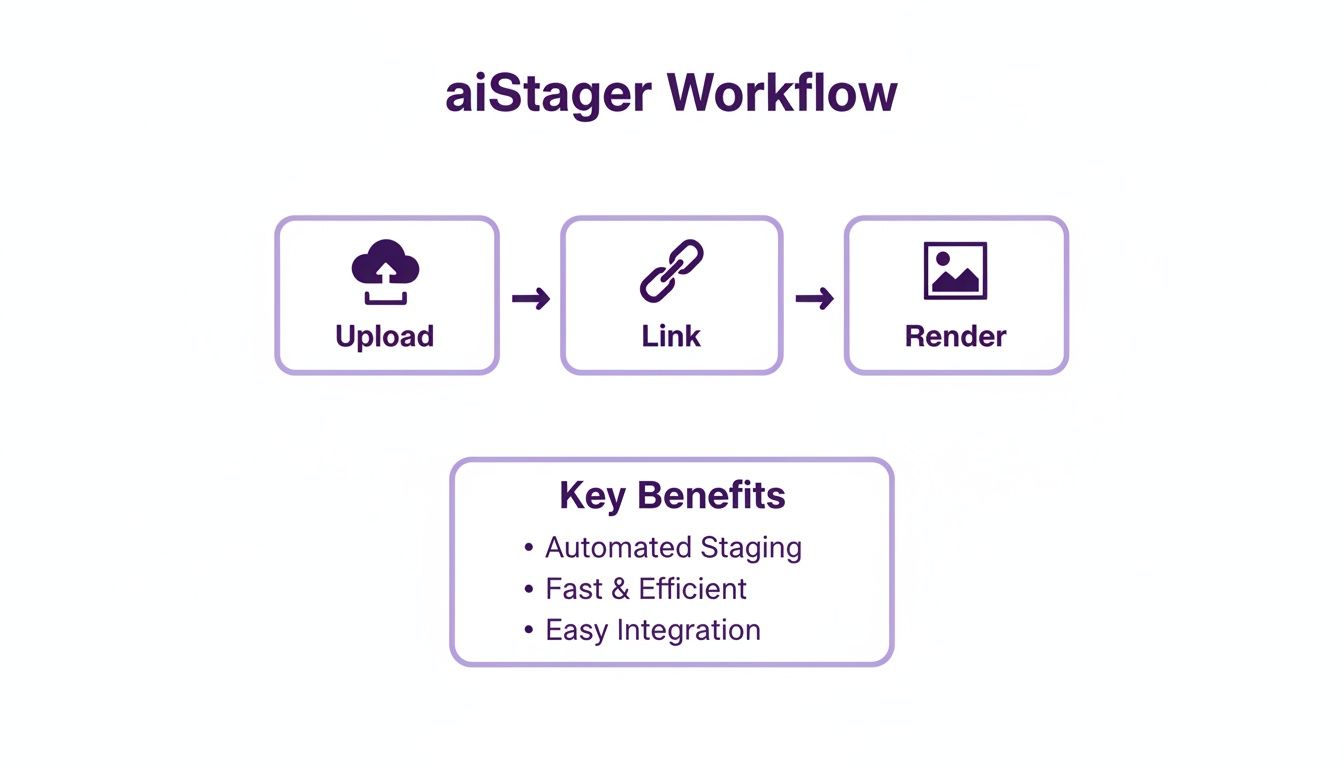
It’s a simple process—upload a photo, choose your furnishings, and let the software work its magic. The result is a compelling, true-to-life visual that helps you secure a better financial outcome.
A Few Common Home Staging Questions
Even after walking through the process, you probably still have a few questions floating around. That’s completely normal. Let's tackle some of the most common ones I hear from homeowners and agents all the time.
Can I Really Stage a Room Using My Own Furniture?
You absolutely can, and honestly, it's often the best place to start. Great staging isn’t about buying a showroom's worth of new furniture. It's about showcasing your home's best features using what you already have.
The trick is to be ruthless. Pick your best pieces—the ones that are in good shape and have clean lines—and move everything else into storage. This includes anything that feels too big for the room, shows a lot of wear and tear, or is overly personal. Your goal is to rearrange what's left to open up the floor, create an easy traffic flow, and set up inviting little spots for conversation. It’s the most budget-friendly way to make a huge impact.
If I Can't Stage Every Room, Where Should I Focus My Energy?
This is a great question, especially when you're tight on time or money. Always prioritize the rooms that buyers connect with emotionally. In my experience, these three are the non-negotiables:
- The Living Room: This is where potential buyers need to picture themselves unwinding after a long day or hosting friends. It sets the tone for the entire home.
- The Primary Bedroom: You want this space to feel like a peaceful escape. A well-staged bedroom helps buyers imagine the home as their personal sanctuary.
- The Kitchen: People say kitchens sell houses, and they're not wrong. Even just clearing the counters completely and adding a simple bowl of fresh fruit can work wonders.
Nail these three areas, and you've already won half the battle. They form the emotional core of the home and give you the biggest bang for your buck.
Is Virtual Staging Actually as Good as the Real Thing?
For online listings, yes—and it might even be more important. Think about it: 97% of buyers are starting their home search online. That first digital impression is everything.
High-quality virtual staging is a game-changer for getting those buyers to book a showing. It helps them see past an empty, sterile space and visualize its true potential. It's especially powerful for vacant properties where you want to show what's possible without the cost and hassle of renting physical furniture.
For instance, with a tool like aiStager, you can instantly try out different styles that resonate with today’s US buyers. Maybe you're wondering if a sleek media console from Restoration Hardware works with a Mid-Century Modern look. You can just upload a photo of your room and the product link. What’s unique about aiStager is that it's the only tool that creates hyper-realistic photos using the true dimensions of both the room and the furniture. You see exactly how it will look and fit in minutes.
I love using this for A/B testing. You can drop a West Elm sofa into a room, then see how it compares to a similar one from Pottery Barn in a different color, all from a couple of product links. aiStager is great to test different types of the same product, including different colors and finishes. It takes the guesswork completely out of the equation.
At the end of the day, it’s all about selling faster. In the competitive 2025 real estate market, homes that are professionally staged sell a whopping 73% faster than unstaged ones. That can shave weeks, or even months, off your time on the market. If you want to dive deeper into the numbers, you can discover more home staging statistics that really show the full impact.
Ready to see how different furniture really looks in your space? With aiStager, you can upload a photo of your room and a product link to get hyper-realistic, true-to-dimension visuals in seconds. Try aiStager for free and start visualizing today!