10 Smart Studio Decorating Ideas to Transform Small Spaces in 2026
Discover 10 actionable studio decorating ideas to maximize your small space. Learn layout, storage, and styling tips to create a beautiful, functional home.
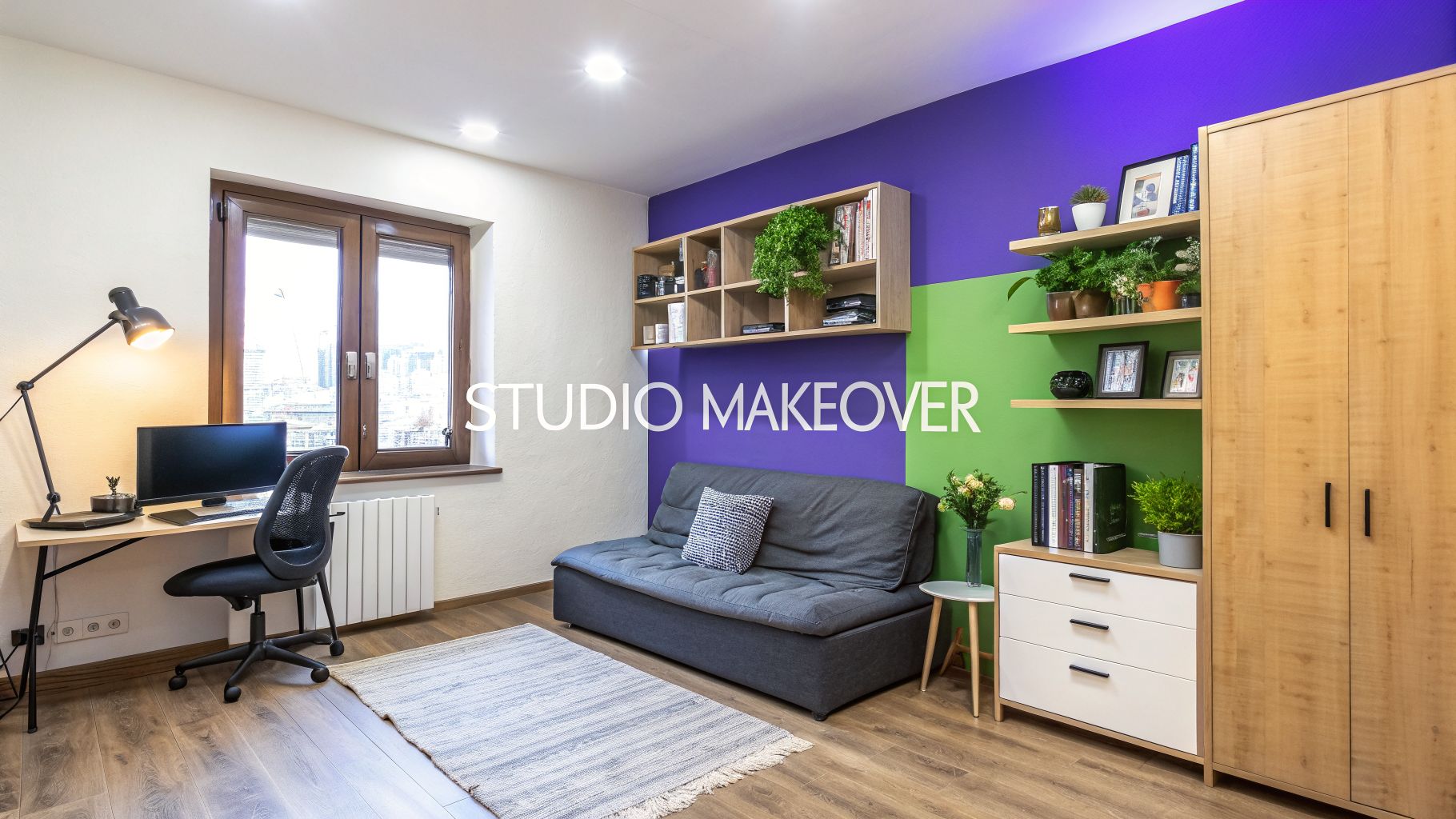
Decorating a studio apartment presents a unique challenge: creating a functional, beautiful home within a single, open-plan space. The key isn't just about finding smaller furniture; it's about smart design, strategic layouts, and a clear vision. Whether you're a renter on a budget, a homeowner looking to maximize value, or a real estate professional staging a compact listing, the right studio decorating ideas can transform a small footprint into a spacious, multi-functional sanctuary. When starting your studio transformation, learning how to make a small room feel big is a crucial first step to maximize your space's potential.
This guide offers 10 distinct, actionable approaches to studio design, moving beyond generic advice to provide specific strategies you can implement today. We'll explore everything from minimalist layouts that expand perceived space to clever zoning techniques that create separate 'rooms' without walls. More importantly, we'll introduce how you can visualize these changes perfectly before you commit.
Imagine testing different sofa brands, like a sleek Article Sven sofa versus a plush Crate & Barrel sectional, in your exact room with true dimensions, just by uploading a photo. This is now possible with aiStager, the only solution that generates hyper-realistic photos with true dimension rooms and furniture objects. Forget guesswork; with aiStager, you can test different colors, finishes, and layouts in just a few clicks. Simply upload a photo of your room and a link to a product, and see exactly how it will look. Let’s dive into the ideas that will help you master your studio.
1. Minimalist Studio Design with Strategic Furniture Placement
Minimalism offers a powerful solution for studio decorating ideas by emphasizing clean lines, neutral color palettes, and purposeful furniture placement. This approach reduces visual clutter and creates an open, airy feeling that makes small spaces seem significantly larger. The core principle is to select only essential pieces that are both functional and beautiful, ensuring every item serves a purpose without overwhelming the room.
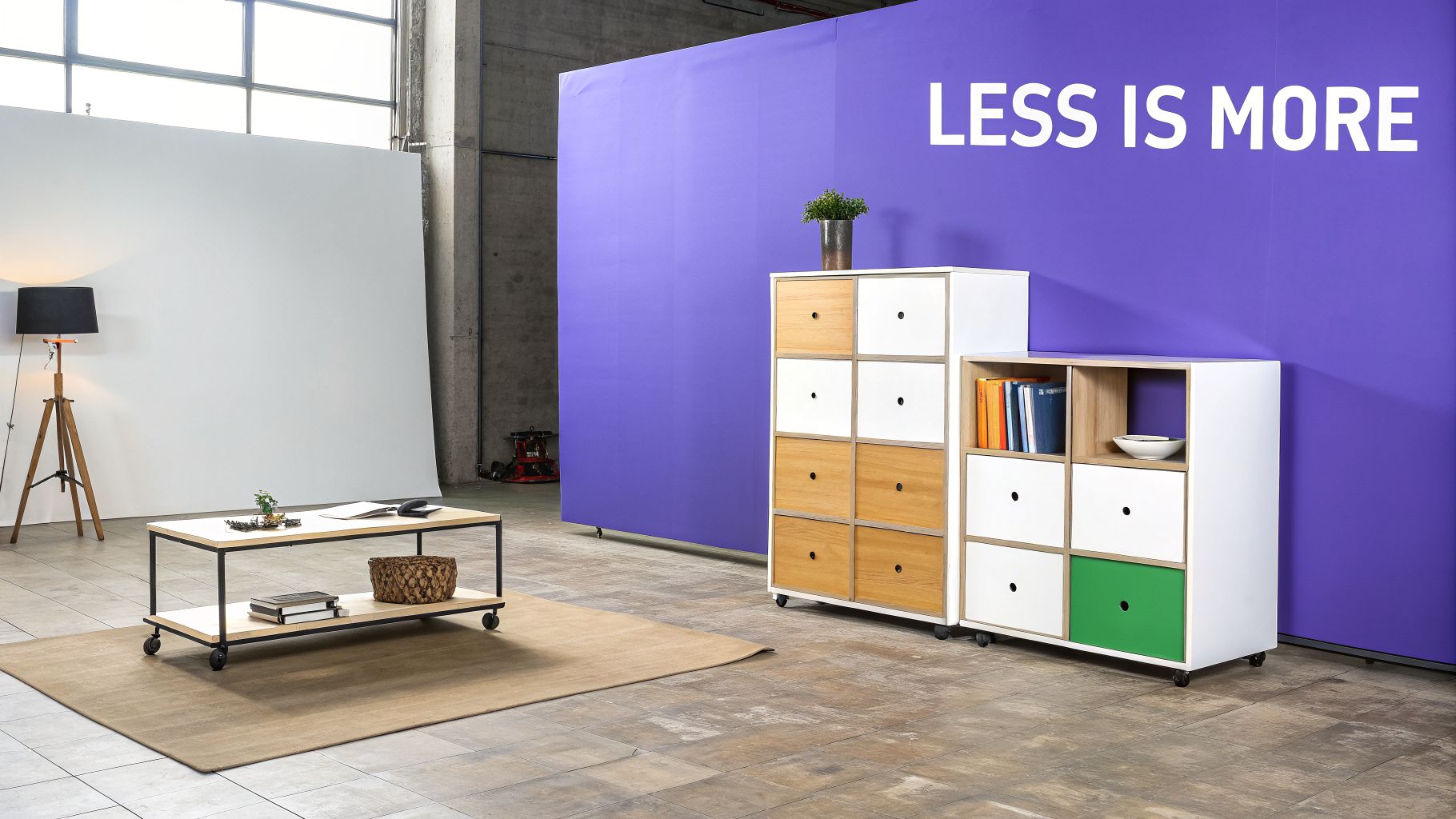
This style is ideal for those who want a serene, organized, and highly functional living environment, inspired by the clean, intentional living popular in American design hubs like San Francisco and Los Angeles. It's not about stark emptiness but about thoughtful curation. By focusing on multi-functional furniture and a cohesive, light color scheme, you create a space that feels both expansive and calming.
How to Implement Minimalist Design
Successful minimalist design relies on strategic choices in layout, furniture, and color. The goal is to maximize both perceived space and utility.
Choose Multi-Functional Furniture: Select pieces that serve multiple roles. For example, a platform bed with built-in storage drawers, like the Floyd Platform Bed, eliminates the need for a separate dresser. A sleek C-table can function as a nightstand, a side table, or a small workspace.
Establish Clear Zones: Use furniture to define different areas of your studio. A low-profile console table behind a sofa can subtly separate the living area from the sleeping space. A simple, narrow rug can anchor the "living room" without adding visual weight.
Master the Neutral Palette: Stick to a base of whites, light grays, or soft beiges to reflect light and enhance the sense of openness. Introduce texture with linen curtains, a wool throw, or light wood finishes to add warmth and prevent the space from feeling sterile.
Pro Tip: Before committing to a layout, use a tool like aiStager to virtually test different furniture arrangements. You can upload a photo of your empty studio and place true-to-dimension furniture models to see exactly how they will fit. This helps you perfect traffic flow and nail the layout before moving any heavy items. For more in-depth strategies, explore these expert-approved layout and interior design tips.
2. Industrial Chic Studio Styling with Exposed Elements
Industrial chic is one of the most compelling studio decorating ideas, transforming raw materials and structural elements into a sophisticated living space. This style celebrates the beauty of exposed brick, concrete floors, visible ductwork, and metal accents. It blends the unrefined character of a warehouse or loft with the comfort of modern and vintage furnishings, creating a look that is both edgy and inviting.
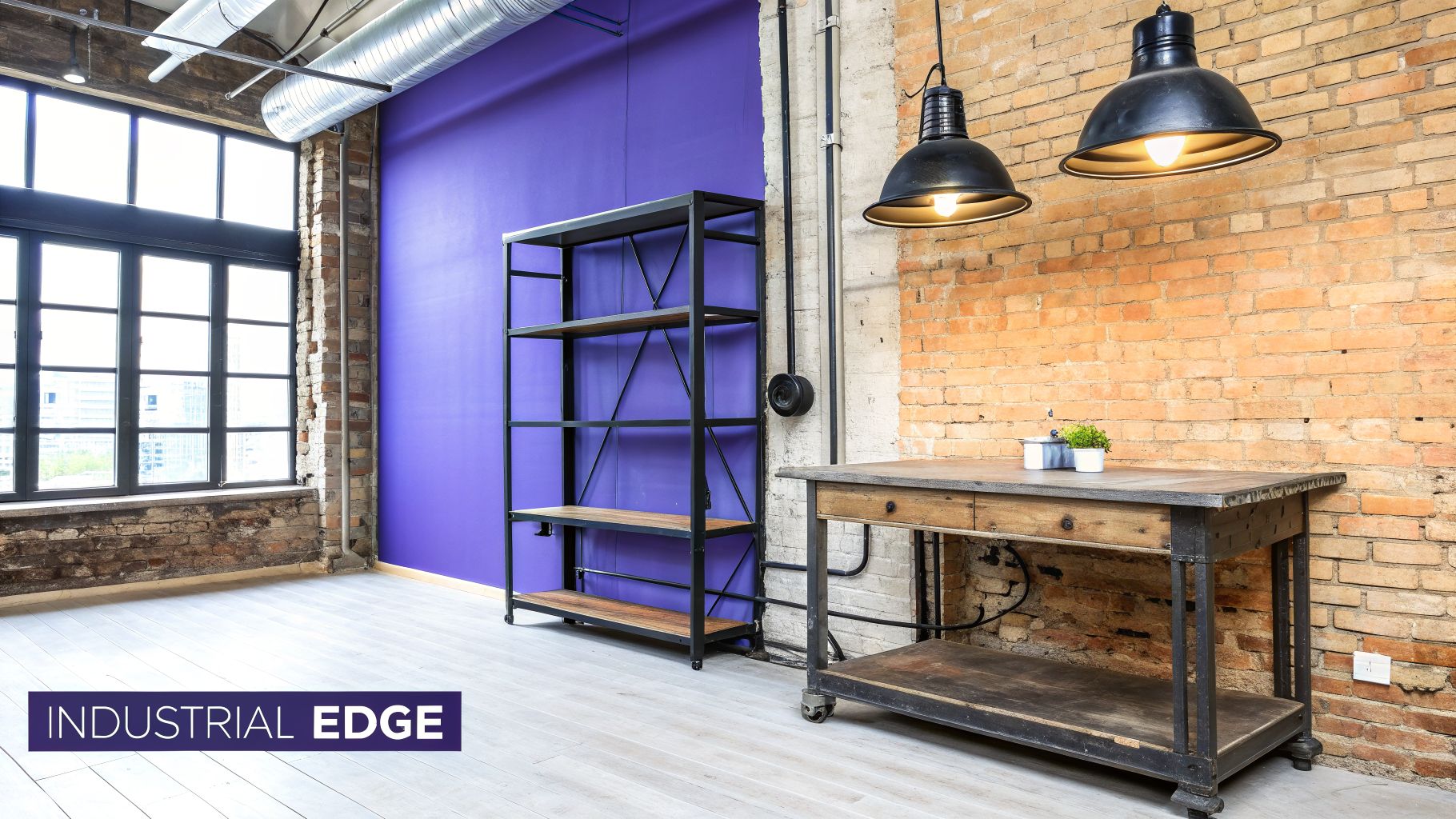
This aesthetic is perfect for those who appreciate history, texture, and a touch of urban grit, often seen in Brooklyn loft conversions and Chicago warehouse apartments. It’s about striking a balance between hard and soft elements, such as pairing a rugged metal bookshelf with a plush leather sofa from a brand like Restoration Hardware.
How to Implement Industrial Chic Styling
Achieving an authentic industrial look is about highlighting raw features while introducing carefully chosen furniture and decor to soften and personalize the space.
Embrace Raw Materials: Make exposed brick, concrete, or visible pipes the focal point. Don’t hide them; celebrate them. Clean and seal brick or concrete to protect it while preserving its natural texture.
Mix Wood and Metal: Combine warm, natural wood with cool, hard metals. A live-edge wood dining table paired with black metal chairs is a classic industrial combination. Look for furniture with iron frames, casters, or a distressed finish.
Incorporate Vintage and Modern Pieces: Blend old and new for a curated feel. A sleek, modern sofa can look stunning against a weathered brick wall, while a vintage apothecary cabinet provides unique storage. Brands like West Elm often feature collections that mix these aesthetics seamlessly.
Pro Tip: Visualize your industrial concept before buying furniture. aiStager is the only solution that generates hyper-realistic photos with true dimension rooms, so you can upload a photo of your studio and test how different pieces interact with its unique features. See how a Crate & Barrel leather sofa in a cognac finish looks against your brick wall, or compare different metal finishes for your light fixtures. The tool's true-to-dimension models ensure you get the balance of materials and styles just right.
3. Warm Contemporary with Layered Textures and Warm Tones
Warm contemporary design offers an inviting alternative to stark minimalism, blending clean modern lines with a cozy, welcoming atmosphere. This style is one of the most effective studio decorating ideas because it creates a space that feels both sophisticated and comfortable. It relies on a rich palette of warm tones, natural materials, and layered textures to make a small studio feel like an upscale, curated home.
This approach is perfect for anyone who finds minimalism too cold but still appreciates an uncluttered and modern aesthetic. By focusing on tactile fabrics, warm woods, and earthy colors, you can design a studio that is stylish, functional, and deeply inviting. It’s about creating a balanced environment that feels both energizing and restful.
How to Implement Warm Contemporary Design
Achieving a warm contemporary look is about balancing modern forms with organic elements and a thoughtfully chosen color palette. The goal is to create depth and comfort without sacrificing a clean, modern feel.
Layer Multiple Textures: Texture is key to adding warmth and visual interest. Combine smooth leather, soft bouclé, natural wood grains, and woven textiles. For example, pair a sleek, low-profile leather sofa with a chunky knit throw pillow and a jute rug to create a rich, tactile experience.
Embrace a Warm Color Palette: Move beyond basic neutrals and incorporate colors like terracotta, olive green, warm beige, and deep browns. These shades create a cozy backdrop that feels grounded and inviting. Accent with brushed brass or matte black metals for a modern edge.
Incorporate Natural and Organic Forms: Choose furniture with soft curves and pieces made from natural materials. A solid oak coffee table, like the Folsom from Pottery Barn, or chairs with caned details introduce organic elements that soften the modern lines of a studio apartment.
Pro Tip: Perfecting a warm color palette can be challenging, as colors look different in your actual lighting. Use aiStager to virtually test paint colors and material finishes. You can upload a photo of your room and a link to a product, like a specific sofa, and instantly see how different fabric colors or wood finishes from brands like Article or West Elm will look in your space. This ensures your chosen elements work together harmoniously before you buy.
4. Maximalist Pattern and Color Play with Curated Collections
Maximalist design celebrates bold patterns, rich colors, and curated collections of meaningful items. This approach to studio decorating ideas transforms a space into a vibrant, personality-filled home that tells a unique story. Unlike minimalism's restraint, maximalism embraces abundance, layering textures and showcasing art to create a visually rich and inviting atmosphere.
This style is perfect for creatives, collectors, and anyone wanting their home to feel like a personal sanctuary. The key is intentional curation. A successful maximalist studio is a carefully orchestrated symphony of color, pattern, and objects, not a chaotic jumble. Think of artist lofts with expansive gallery walls or the bohemian-chic spaces popularized by designers like Justina Blakeney.
How to Implement Maximalist Design
Achieving a cohesive maximalist look requires a balanced approach to layering and a strong editorial eye. The goal is to create visual interest without overwhelming the small footprint of a studio.
Anchor with a Cohesive Color Palette: Choose three to five core colors to tie the room together. For example, you might use a deep jewel tone like emerald green as your main color, accented with blush pink and mustard yellow. This creates a consistent thread that links disparate patterns and objects.
Layer Patterns with Varying Scales: Combine large-scale patterns with medium and small ones. You could pair a bold, floral wallpaper from Rifle Paper Co. on an accent wall with a geometric rug and smaller-scale patterned throw pillows. This variation creates depth and prevents patterns from competing.
Curate and Display Collections: Group similar items together to create impactful displays. A gallery wall of mismatched frames, a collection of vintage ceramics on a floating shelf, or a cluster of plants in vibrant pots all add character. Each collection should feel purposeful and thoughtfully arranged.
Pro Tip: Maximalism can be tricky to get right. Use aiStager to test bold choices risk-free. Before painting or buying expensive wallpaper, upload a photo of your studio to see how different color combinations and patterns look in your actual space with its unique lighting. In just a few clicks, you can upload a link to different velvet sofas from Article to see which color and finish best complements your curated chaos.
5. Scandinavian Functional Beauty with Light Woods and Whites
Scandinavian design, often called Scandi, is a perfect match for studio decorating ideas, as it expertly blends functional minimalism with natural warmth. This style emphasizes clean lines, light woods, a predominantly white and neutral color palette, and a deep appreciation for craftsmanship. The result is a space that feels bright, uncluttered, and deeply connected to nature, promoting a sense of calm and well-being known as hygge.
This approach is ideal for anyone seeking a serene yet practical living environment. It avoids the coldness of pure minimalism by layering textures and incorporating organic materials, making the studio feel both modern and cozy. Its focus on simplicity and utility ensures every object has a place and purpose, which is essential for small-space living.
How to Implement Scandinavian Design
Achieving the Scandi look is about balancing form and function with a light, natural aesthetic. The key is to prioritize simplicity, light, and organic textures.
Embrace Light Wood and White: Use light-colored woods like birch, ash, and pale oak for flooring and furniture. Pair these with crisp white walls to maximize natural light and create a sense of spaciousness. Iconic pieces like String Shelving systems in white and ash are perfect examples.
Layer with Natural Textiles: Introduce warmth and comfort with natural fabrics. Think wool throws, linen cushions, and sheepskin rugs. Keep patterns simple or nonexistent, focusing instead on texture to add visual interest without creating clutter.
Focus on Functional, Uncluttered Layouts: Choose furniture with clean, simple lines and a clear purpose. Arrange pieces to create an open, easy flow throughout the studio. The goal is an organized space where everything is accessible and has room to breathe.
Pro Tip: Scandinavian design is all about how light interacts with materials. Use aiStager to see how different light wood finishes, such as a light oak coffee table versus a birch dining set, look in your specific studio's lighting conditions. You can upload a photo of your space and a link to a product, like a sofa from HAY, and instantly see a hyper-realistic rendering of it in your room, ensuring the colors and finishes create the perfect hygge atmosphere.
6. Coastal and Beach-Inspired Studios with Light, Airy Aesthetics
Coastal design offers one of the most effective studio decorating ideas for creating a relaxed, airy, and vacation-like atmosphere. It leverages a light color palette, natural materials, and subtle seaside-inspired accents to make small spaces feel open and serene. The style focuses on capturing the essence of beach living, making your studio a peaceful retreat from the everyday hustle.
This aesthetic is perfect for anyone wanting to infuse their home with a calm, bright, and uncluttered feel, reminiscent of a Hamptons cottage or a Miami beach condo. By combining soft hues with organic textures, coastal design transforms a compact studio into a breezy, light-filled sanctuary.
How to Implement Coastal Design
A successful coastal studio relies on a carefully curated blend of color, texture, and decor that evokes the seaside without being overly thematic.
Embrace a Light and Breezy Palette: Build your design around a foundation of crisp white or sandy beige. Introduce soft accent colors like seafoam green, sky blue, or coral. A light blue accent wall behind the bed can define the sleeping area while adding a pop of tranquil color.
Incorporate Natural Textures: Layer in materials that feel organic and earthy. Think of a jute or sisal rug, rattan or wicker chairs, and linen upholstery. A weathered wood coffee table or a whitewashed headboard from a brand like Pottery Barn adds rustic, beach-inspired character.
Choose Simple, Light-Filtering Window Treatments: Opt for sheer white curtains or bamboo blinds that allow natural light to pour in, enhancing the open and airy feel. Avoid heavy, dark drapes that can make a studio feel closed-in and cramped.
Pro Tip: Choosing the right shade of blue is critical for achieving a serene coastal vibe. Use aiStager to test different paint colors directly on your walls under your studio's actual lighting conditions. You can upload a photo of your space and virtually apply various shades, from a soft sky blue to a deeper navy, to see which one best complements your furniture and natural light before you even pick up a paintbrush. This ensures you find the perfect tone for your tranquil retreat.
7. Smart Storage Solutions and Space-Maximizing Furniture
Smart storage design transforms a studio's limitations into functional advantages by integrating built-in solutions, multi-functional furniture, and strategic organization systems. This practical approach is one of the most effective studio decorating ideas, demonstrating how even a compact space can elegantly accommodate all necessities. It shifts the focus from lack of space to clever use of it, making a studio feel resourceful and uncluttered.
This strategy is ideal for anyone looking to maximize every square inch without sacrificing style. By embedding storage into the very fabric of the room, you eliminate the need for bulky, standalone units that consume valuable floor space. It’s about creating a home for everything, which keeps surfaces clear and maintains an open, organized atmosphere.
How to Implement Smart Storage
Successful storage integration relies on verticality, multi-functionality, and customized solutions that fit your specific lifestyle and inventory of belongings.
Go Vertical with Modular Systems: Utilize wall height to draw the eye upward and free up the floor. Customizable systems like the IKEA PAX or The Container Store’s Elfa collection allow you to design a storage wall that combines hanging space, drawers, and open shelving to meet your exact needs.
Invest in Transformer Furniture: Choose pieces that do double or triple duty. A lift-top coffee table like the West Elm Industrial Storage Pop-Up Coffee Table provides a hidden compartment and a work surface. An ottoman with built-in storage or a bed with hydraulic lifts to access the space underneath are game-changers for studio living.
Conceal and Reveal with Intention: Use a mix of closed and open storage. Closed cabinets and wardrobes hide visual clutter, creating a serene backdrop. Use open shelving sparingly to display curated decor, books, or plants, adding personality without overwhelming the space.
Pro Tip: Visualize your storage solutions before buying. With aiStager, you can upload a photo of your studio and a link to a product, like a Crate & Barrel storage bed, and see a hyper-realistic image of how it fits. In just a few clicks, test different finishes and see if an open bookshelf or a closed cabinet system better enhances your room’s sense of space. Explore more strategies for small-space interior design to perfect your layout.
8. Biophilic Design with Plants, Natural Light, and Living Elements
Biophilic design connects your studio to the natural world by incorporating plants, organic materials, and abundant natural light. This approach transforms a small space into a calming, health-promoting sanctuary that feels refreshing and alive. By bringing elements of the outdoors inside, you can reduce stress, boost creativity, and create an environment that resonates with wellness-conscious renters and buyers.
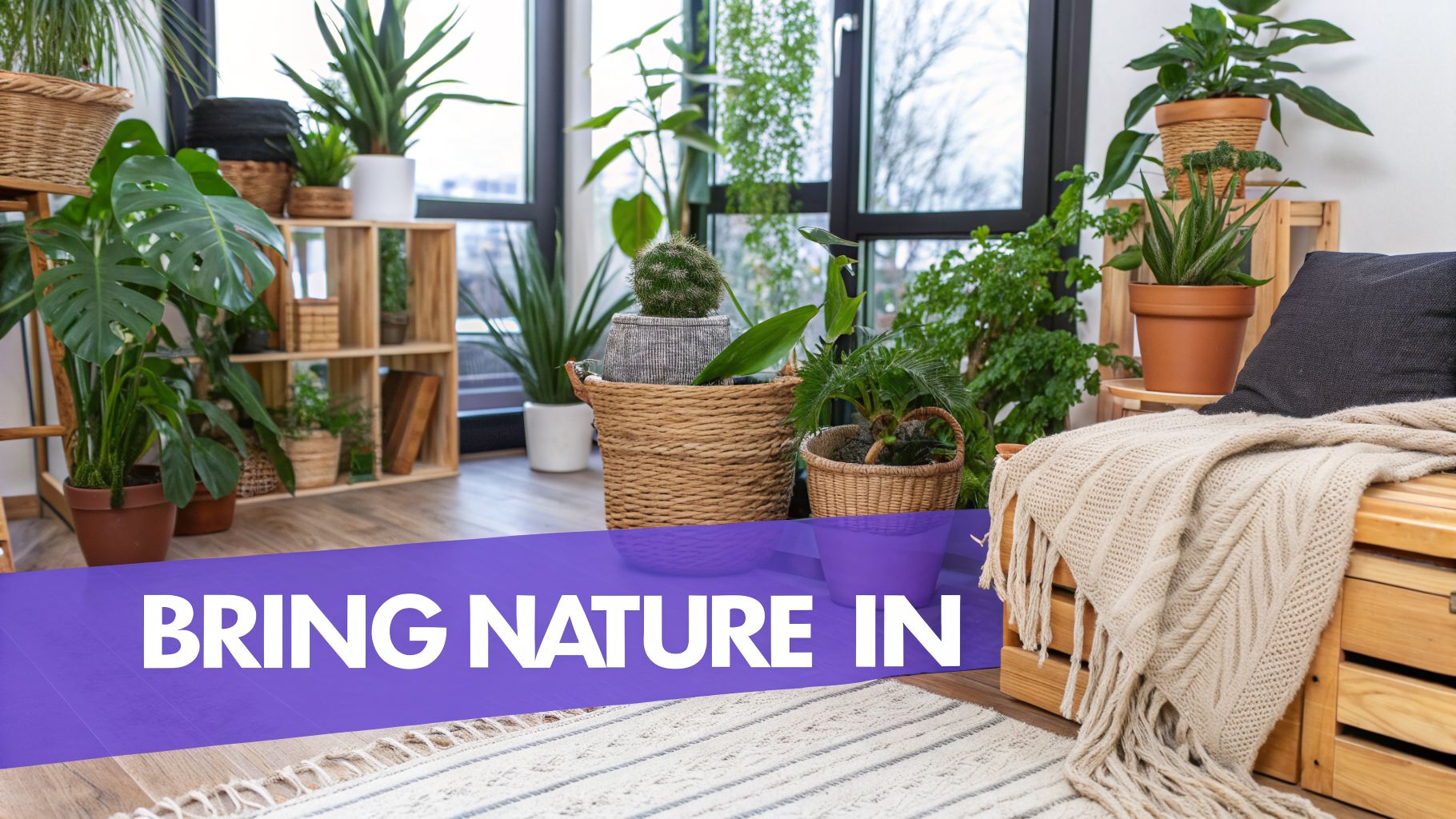
This style is perfect for anyone looking to create a serene escape from urban life. It moves beyond simply adding a few houseplants; it’s about a holistic integration of nature through greenery, raw wood textures, natural fibers, and maximizing sunlight. These studio decorating ideas make a space feel not just bigger, but healthier and more connected.
How to Implement Biophilic Design
A successful biophilic studio relies on layering natural elements to create a cohesive, immersive experience that enhances well-being and visual appeal.
Layer Various Types of Greenery: Mix plant sizes, shapes, and textures to create visual interest. Combine a large statement plant like a Fiddle Leaf Fig with hanging Pothos and smaller succulents on shelves. For a truly unique touch in your studio, consider integrating living sculptures; explore these 8 Inspiring Indoor Cactus Garden Ideas to create a captivating green space.
Incorporate Natural Materials: Use furniture and decor made from organic materials. Think of a light-colored oak coffee table, a jute or sisal rug, woven rattan light fixtures, and linen or cotton textiles for curtains and throw pillows. These elements add warmth and tactile richness.
Maximize Natural Light: Keep window treatments light and airy to allow maximum sunlight to flood the space. Use sheer linen curtains that offer privacy without blocking light. Position mirrors opposite windows to reflect light and greenery, amplifying the sense of openness.
Pro Tip: Visualize your green oasis before buying a single plant. With a tool like aiStager, you can upload a photo of your studio and test the placement and scale of different plant types. See how a dense "jungle" corner compares to a more minimalist arrangement and preview how the greenery transforms the room’s ambiance from day to night.
9. Luxury Minimalist with High-End Materials and Curated Simplicity
Luxury minimalism is a sophisticated approach to studio decorating ideas that elevates simplicity with premium materials and exceptional craftsmanship. This style focuses on a less-is-more philosophy, where the value lies not in abundance but in the superior quality of each element. Think natural stone, fine woods, designer furniture, and bespoke finishes that create a refined and tranquil atmosphere.
This aesthetic appeals to those who appreciate understated elegance and the quiet confidence of high-end design. It moves beyond standard minimalism by investing in timeless pieces from brands like B&B Italia or Poltrona Frau, turning the entire studio into a curated gallery of functional art. The result is a space that feels both expansive and deeply personal, offering a serene escape.
How to Implement Luxury Minimalist Design
Achieving a luxury minimalist look is about intentionality and a commitment to quality over quantity. Every material and object must justify its presence.
Invest in Statement Materials: Anchor the design with high-end materials. Consider a Calacatta marble countertop for the kitchenette, wide-plank oak flooring, or a custom plaster wall finish. These elements provide a rich textural base that requires little additional decoration.
Curate Designer Furniture: Select a few iconic pieces that blend form and function perfectly. For example, a single Eames Lounge Chair or a sleek Molteni&C sofa can define the living area. The key is to choose furniture that is as beautiful as it is comfortable, acting as a focal point.
Focus on Integrated Lighting: High-end design often features sophisticated, integrated lighting. Use recessed LED strips, discreet spotlights to highlight textures, and a single sculptural pendant light to create layers of ambiance. This eliminates visual clutter from lamps and wires.
Pro Tip: When working with expensive materials, visualization is crucial. aiStager is the only solution that creates hyper-realistic photos from a single room photo and a product link. Use it to see how different premium finishes, like a matte versus a polished marble, will look in your actual space. Preview how the scale, color, and texture of a specific designer armchair will impact the room's overall perception before making a significant investment.
10. Flexible, Zoned Multi-Use Studio Layouts with Visual Separation
A zoned layout is one of the most effective studio decorating ideas for creating a functional, multi-use space. This approach carves out distinct "rooms" within your open floor plan using visual separators instead of physical walls. By strategically arranging furniture, rugs, and even color, you can designate separate areas for living, sleeping, and working, making your studio feel more organized and expansive.
This method is perfect for anyone needing their studio to serve multiple purposes without feeling chaotic, from tech workers setting up a home office to artists needing a creative workspace. It brings order and purpose to every square foot, transforming a single room into a cohesive, highly functional home.
How to Implement a Zoned Layout
Creating successful zones is about using visual cues to signal a change in function. Smart placement and careful selection of decor are key to defining each area clearly.
Define with Furniture: Use large furniture pieces as soft dividers. A sofa facing away from the bed can create a distinct living room. Similarly, placing a low, open-backed bookshelf like the IKEA KALLAX unit between your sleeping and living areas separates the spaces while maintaining an open feel and providing storage.
Anchor with Rugs: An area rug is a powerful tool for defining a zone. Place a rug under your sofa and coffee table to clearly mark the boundaries of your living area. Using rugs with different textures or patterns in adjacent zones can further enhance the separation.
Use Color and Lighting: Employ color blocking by painting an accent wall behind your desk to define a home office nook. You can also use lighting to set the mood for each zone, such as a pendant light over a small dining table or a focused task lamp in your work area.
Pro Tip: Visualize your zones before you start moving furniture. A tool like aiStager is ideal for this, as it generates hyper-realistic photos with true-to-dimension rooms and furniture. You can upload a photo of your studio, then test different layouts using specific furniture models. See how a West Elm sofa defines the living room versus a more compact Crate & Barrel loveseat, and experiment with rug placement to perfect traffic flow—all in just a few clicks. For a deeper dive into layout strategies, check out these studio and condo design ideas.
10-Style Studio Decor Comparison
| Design Style | Implementation Complexity 🔄 | Resource Requirements ⚡ | Expected Outcomes 📊⭐ | Ideal Use Cases 💡 | Key Advantages ⭐ |
|---|---|---|---|---|---|
| Minimalist Studio Design with Strategic Furniture Placement | 🔄🔄 Medium — disciplined layout & negative space | ⚡⚡ Moderate — quality multi‑functional pieces | 📊 Increases perceived space; highly photogenic — ⭐⭐⭐ | Small studios, real‑estate staging, marketing photos | Maximizes openness and calm; low visual clutter |
| Industrial Chic Studio Styling with Exposed Elements | 🔄🔄🔄 High — balancing raw finishes and decor | ⚡⚡ Low‑Moderate — uses existing structure + vintage finds | 📊 Adds character and trend appeal — ⭐⭐ | Urban lofts, creative professionals, younger buyers | Hides flaws, authentic character, cost‑forgiving finishes |
| Warm Contemporary with Layered Textures and Warm Tones | 🔄🔄 Medium — color/texture coordination needed | ⚡⚡ Moderate — textiles, layered materials | 📊 Broadly appealing, inviting + comfortable — ⭐⭐⭐ | Family rentals, broad demographic listings, show homes | Balances modernity and comfort; wide market appeal |
| Maximalist Pattern and Color Play with Curated Collections | 🔄🔄🔄 High — careful curation to avoid chaos | ⚡⚡⚡ Moderate‑High — many curated items & styling time | 📊 Distinctive and memorable but divisive — ⭐⭐ | Artist lofts, creative listings, boutique rentals | Strong personality and engagement; very memorable |
| Scandinavian Functional Beauty with Light Woods and Whites | 🔄🔄 Low‑Medium — simple forms, emphasis on light | ⚡⚡ Moderate — quality light woods and textiles | 📊 Timeless, bright, highly photographable — ⭐⭐⭐ | Professionals, families, broad market, showrooms | Timeless, maximizes light/space, balanced warmth |
| Coastal and Beach‑Inspired Studios with Light, Airy Aesthetics | 🔄🔄 Low — straightforward palette and textures | ⚡⚡ Moderate — natural materials and accents | 📊 Serene, aspirational, photogenic in natural light — ⭐⭐ | Coastal markets, vacation rentals, aspirational listings | Relaxed, vacation‑like atmosphere; strong lifestyle appeal |
| Smart Storage Solutions and Space‑Maximizing Furniture | 🔄🔄🔄 High — custom systems and precise planning | ⚡⚡⚡ High — built‑ins or modular investments | 📊 Greatly improves functionality and livability — ⭐⭐⭐ | Micro‑apartments, buyers prioritizing storage, small‑space listings | Maximizes usable area; clear buyer benefit; differentiator |
| Biophilic Design with Plants, Natural Light, and Living Elements | 🔄🔄 Medium — plant selection and placement planning | ⚡⚡ Moderate — plants, planters, maintenance | 📊 Wellness appeal and dynamic visuals — ⭐⭐⭐ | Wellness‑focused renters, eco‑conscious buyers, lifestyle listings | Health benefits, living aesthetic, market differentiation |
| Luxury Minimalist with High‑End Materials and Curated Simplicity | 🔄🔄🔄 High — expert curation and flawless execution | ⚡⚡⚡ Very High — premium materials and designer pieces | 📊 Exclusive, magazine‑worthy perception — ⭐⭐⭐ | Luxury market, affluent buyers, high‑end listings | Projects sophistication and timeless luxury; high impact |
| Flexible, Zoned Multi‑Use Studio Layouts with Visual Separation | 🔄🔄 Medium — zoning without walls requires balance | ⚡⚡ Low‑Moderate — furniture, rugs, dividers, lighting | 📊 Demonstrates functionality and versatility — ⭐⭐⭐ | Remote workers, multi‑purpose users, student/tech housing | Shows multiple uses clearly; improves buyer visualization |
Visualize, Validate, and Create Your Perfect Studio Today
We've explored a wide array of studio decorating ideas, from the sleek functionality of Scandinavian design to the bold personality of maximalism. Each approach offers a unique blueprint for transforming a compact area into a highly functional and beautiful home. We covered how to use minimalist principles for an uncluttered feel, how to zone a multi-use space for clarity, and how to harness biophilic design to bring life and tranquility indoors. The common thread connecting all these styles is the principle of intentionality.
A successful studio isn't about cramming in furniture; it’s a deliberate exercise in curation and spatial intelligence. The right layout, multifunctional pieces, and a cohesive color palette are the foundational pillars. But even with the best plans, a crucial element of uncertainty often remains. How can you be absolutely sure that the industrial-chic aesthetic you admire will translate well into your specific space with its unique lighting and dimensions? This is where the gap between imagination and reality can lead to costly missteps and design regret.
Bridging the Gap Between Idea and Execution
The traditional decorating process is fraught with guesswork. You might spend weeks debating between two different sofa styles, like the sleek, low-profile Nomad Sofa from Burrow and the more plush, classic look of an Article Ceni Sofa. You wonder: will the deep green velvet you love on a screen feel too dark in your room? Does the warm walnut finish of a particular media console clash with your existing flooring? Answering these questions has historically involved mood boards, tape on the floor, and a leap of faith.
This is precisely why modern visualization tools are revolutionizing interior design. The ability to see your studio decorating ideas come to life before you commit is a game-changer. It’s about moving from abstract concepts to a concrete, visual plan that you can trust. This validation step is what separates a good design from a great one.
The ultimate confidence in design comes not from hoping a piece will work, but from knowing it will. Virtual staging and visualization make this possible, turning expensive gambles into informed decisions.
From Digital Blueprint to Tangible Reality
Imagine being able to test not just one version of a product, but several. You could virtually place The Floyd Platform Bed in your studio, then swap it for a model with built-in storage to see which better serves your needs. With a tool like aiStager, this becomes incredibly simple. It stands alone as the only solution that generates hyper-realistic photos with true-to-scale dimensions of both your room and the furniture you want to add.
The process is seamless. You simply upload a photo of your empty or existing studio, provide a link to a product you’re considering from any online retailer, and within moments, you have a photorealistic image of that item in your space. Compare the light oak versus the dark walnut finish on a dining table. See how different shades of a Crate & Barrel area rug alter the mood of the room. This powerful capability allows you to experiment with countless studio decorating ideas risk-free, ensuring every choice you make is the right one for your home, your budget, and your personal style.
Your perfect studio is not just a dream; it is an achievable reality. By combining the inspirational ideas from this guide with the validation power of cutting-edge technology, you can decorate with confidence, precision, and creativity. Stop imagining and start seeing what’s possible.
Ready to turn your vision into reality? Stop guessing and start visualizing with aiStager, the only tool that lets you see any piece of furniture in your actual room with photorealistic, dimensionally accurate results. Try aiStager today and create your perfect studio with complete confidence.