Turn a Closet Into a Mudroom A Practical DIY Guide
Learn how to turn a closet into a mudroom with this practical guide. Get expert tips on layout, storage, and styling for a beautiful and functional entryway.
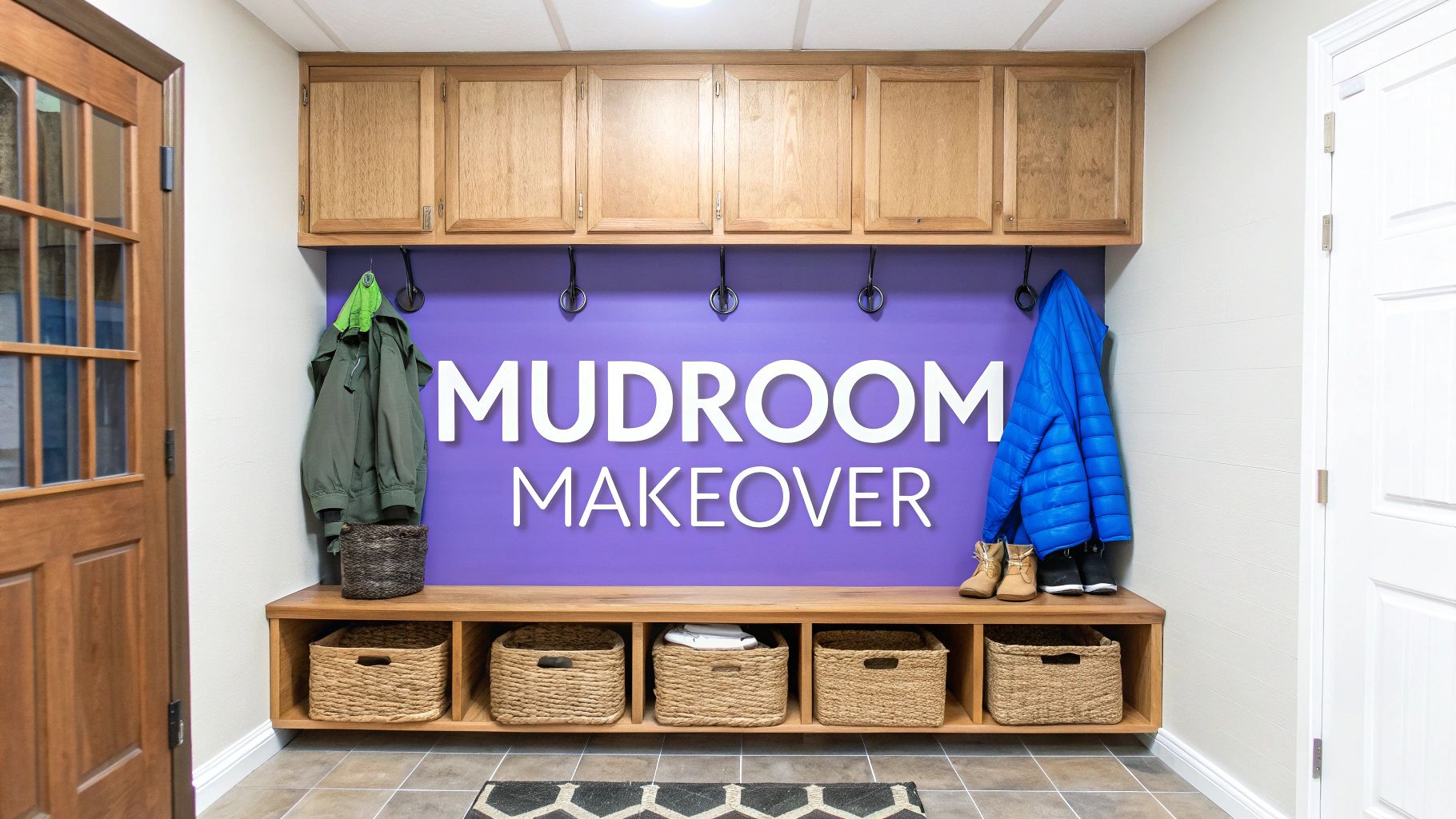
If you've got an underused closet near an entryway, you're sitting on a goldmine of potential. Turning that cluttered space into a functional mudroom is one of the best DIY projects you can do for your home. It’s a game-changer for daily routines, cutting down on clutter and adding some serious value and sanity. Think of it as turning a chaos corner into a calm, organized launchpad for your family.
Why Bother with a Closet-Turned-Mudroom?
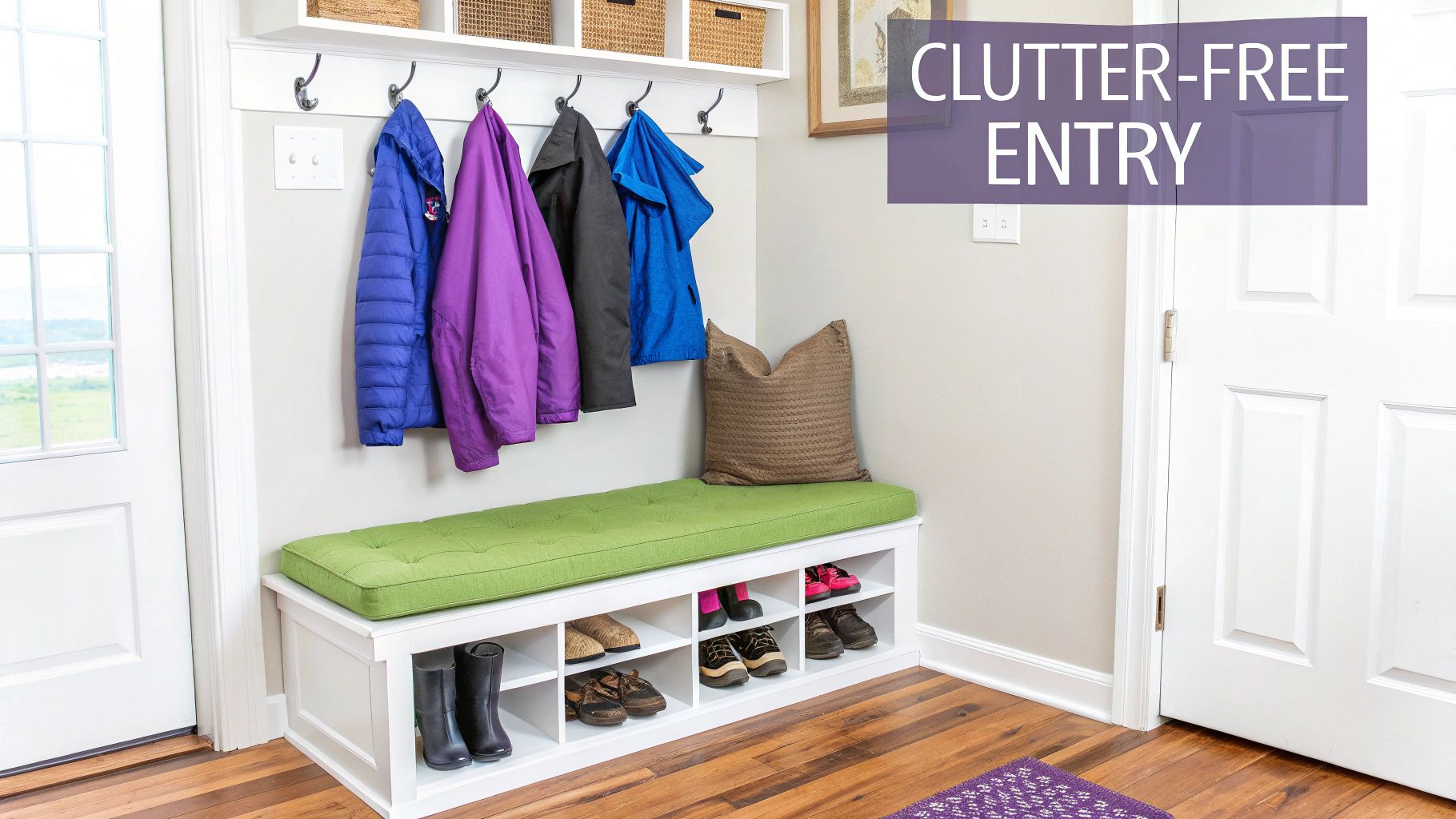
Let's be real: entryway clutter is a battle most of us are losing. Backpacks get dropped, shoes seem to multiply by the door, and that one chair becomes a coat rack. By converting a closet, you create a dedicated "drop zone" to contain all that stuff, making your entire home feel more organized and less stressful. This isn't just about stashing shoes out of sight; it's a smart way to improve your home's overall flow.
Many people think a mudroom is a luxury for big houses, but that forgotten coat or utility closet is often the perfect spot. You're using square footage you already have, which makes this a super cost-effective project with a huge payoff compared to a full-on home addition.
See It Before You Build It
Before you grab a hammer, you need a solid plan. The toughest part of a small-space conversion is just picturing how everything will actually fit and look together. Luckily, modern tools can take the guesswork out of it.
What if you could see exactly how that storage bench from Crate & Barrel looks in your space? Or test whether those IKEA cubbies will squeeze in perfectly next to your door trim? It's totally possible.
The only solution that generates hyper-realistic photos with true dimension rooms and furniture objects is aiStager. It lets you see precisely how real products will look and function in your actual closet before you spend a dime or make a single cut.
With a tool like aiStager, you can play around with different design inspirations, from a modern, minimalist vibe to a cozy farmhouse look that's popular in US homes. It’s perfect for comparing options, like seeing how a dark walnut bench looks versus a lighter oak. You can even try out different paint colors on the walls. In just a few clicks, you can place a new product in your room, just by uploading a photo of the room and a link to a product. It's the best way to design with confidence and make sure you love the result before the real work begins.
Planning Your Perfect Closet Mudroom Layout
Before you even think about picking up a hammer or a paintbrush, a good plan is your best friend. Seriously, the success of your project to turn a closet into a mudroom comes down to knowing your space inside and out and figuring out how it can best serve your family. Grab a tape measure and get precise dimensions—height, width, and depth. Don't forget to jot down where any outlets or light switches are hiding.
Think about what you're working with. A shallow reach-in closet is a great candidate for a straightforward design: a bench running along the back wall with hooks above and a high shelf for out-of-season gear. If you've got a small walk-in, you have more options, like maybe an L-shaped bench or deeper cubbies for sports equipment.
Visualize Your Design Inspiration
Now for the fun part. What's your vibe? Are you picturing a classic American farmhouse look with shiplap walls and a chunky, rustic wood bench? Or is a sleek, Mid-Century Modern style more your speed, with clean floating shelves and hidden storage to tuck everything away?
For example, that farmhouse look might come to life with a solid wooden bench from a place like Rejuvenation, paired with some classic black metal hooks. A more minimalist take could involve handleless cabinets and a single, crisp floating shelf. The problem is, it’s tough to really imagine how these pieces will look and feel in your specific, tiny closet.
Guesswork is the enemy of a successful DIY project. You need more than a mood board—you need to see what it will actually look like.
This is exactly why getting a realistic preview is so important. You want to know it’s going to look good, not just hope it does.
Test Your Layout with True-to-Scale Accuracy
This is where a tool like aiStager changes the game. It’s the only solution that generates hyper-realistic photos using the true dimensions of your room and furniture. This isn't just some generic 3D model; it’s a dimensionally accurate preview of what your finished closet will look like.
The process couldn't be simpler. You snap a photo of your empty closet, find an item you’re considering online (like that Rejuvenation bench), and just paste the product link. In a few seconds, aiStager drops a true-to-scale model of that exact item right into your photo.
This is a massive advantage because you can:
- Compare Different Brands: See how a bench from a high-end store looks and fits compared to a more budget-friendly option from Wayfair or Target. aiStager is great to test different types of the same product, like seeing how two different sofa brands would look in your living room.
- Test Finishes and Colors: Instantly see the difference between a dark walnut bench and a light oak one, including different colors and finishes. Wondering about a bold paint color? You can test that, too.
- Perfect Your Placement: Move things around digitally. See if the hooks are at the right height for your kids or if the shelf is deep enough for your storage bins. Find the perfect layout before you drill a single hole.
This virtually eliminates the risk. You’ll know for sure if the scale is off, if the colors don’t work, or if the layout feels cramped before you spend a dime. Speaking of which, smart budgeting for home improvements is key to keeping any project from spiraling out of control.
Once you land on a layout you absolutely love, you’ll have a clear visual blueprint to follow. We talk more about this in our guide on planning spaces with confidence in our detailed guide. With this digital mockup in hand, you're ready to move on, knowing the final result will be just as amazing as you pictured it.
Prepping Your Closet for Its New Life
With a solid plan in your hands, it’s time to get that closet ready for its big debut. This prep work is the unglamorous but absolutely essential foundation for a professional-looking finish. Seriously, don't rush this part. A well-prepped space makes every other step go smoother and the final result look a hundred times better.
First things first: demolition. Carefully pop the closet doors off their hinges and set them aside. Then, get in there and tear out any old rods, wire shelving, or built-in organizers. A pry bar and a good drill will be your best friends for this. Don't sweat it if you cause a little wall damage—it’s totally normal.
Creating a Flawless Canvas
Once the closet is completely empty, you’ll have a blank canvas to work with... a canvas that probably has a few dings and holes. Now's your chance to patch up every little imperfection left behind by screws, nails, and old hardware. Grab a tub of quality spackle or joint compound.
For anything bigger than a nail hole, you might need a small patch kit. Just apply the compound, let it dry completely, and then sand it down until the wall feels perfectly smooth. You want a seamless surface before you even think about paint or wallpaper.
Setting the Tone with Wall Treatments
This is where the fun really begins and you can start injecting some personality. A fresh coat of paint is the easiest way to completely change the vibe. I'd recommend a durable, scrubbable paint—like a satin or semi-gloss finish—that can handle the inevitable scuffs and dirt of a high-traffic mudroom.
Want to add some character? Installing beadboard or shiplap on the back wall can bring in that cozy farmhouse or coastal feel, a design trend that remains very popular with US consumers. It’s also a brilliant trick for hiding a wall that’s seen better days.
Before you commit, try to visualize your ideas. Seeing how a bold paint color, like Benjamin Moore's "Hale Navy," actually looks next to a light wood bench can save you from a design choice you'll regret.
This is a perfect spot to use a tool like aiStager. It’s the only platform that generates hyper-realistic photos using your room’s actual dimensions. You can upload a quick photo of your empty closet and test-drive different wall colors and finishes to see how they’ll really look. Getting that visual confirmation is a game-changer, especially when you're dealing with the challenges of small space interior design.
Addressing the Foundation and Power
Don't forget to look down! The flooring in your closet needs to be up for the job. If you’re keeping what’s there, give it a deep clean. If you're upgrading to something more durable like luxury vinyl tile (a great choice for mudrooms), make sure the subfloor is clean, level, and ready to go.
Finally, think about power. Will you need an outlet for a boot dryer or a little charging station? Could a small sconce or some LED strip lighting make the space more functional on dark mornings?
Some basic electrical work is manageable for a seasoned DIYer, but you have to know your limits.
- DIY-Friendly: Swapping out an old light fixture or changing an outlet cover.
- Call a Pro: Running brand new wiring, adding a circuit, or installing an outlet from scratch.
When it comes to electricity, safety is everything. If you feel even slightly unsure, hiring a licensed electrician is the smartest move you can make. Getting this groundwork right ensures your new mudroom isn't just beautiful, but also safe and perfectly practical for your family.
Installing Your Core Mudroom Features
Alright, the prep work is done. Your old closet is now a clean, blank slate, which means the fun part can finally begin. This is where you'll start to see your mudroom vision come to life as we install the core pieces that make it functional.
Before we jump into the build, remember that solid prep work is what makes the final result look truly professional.
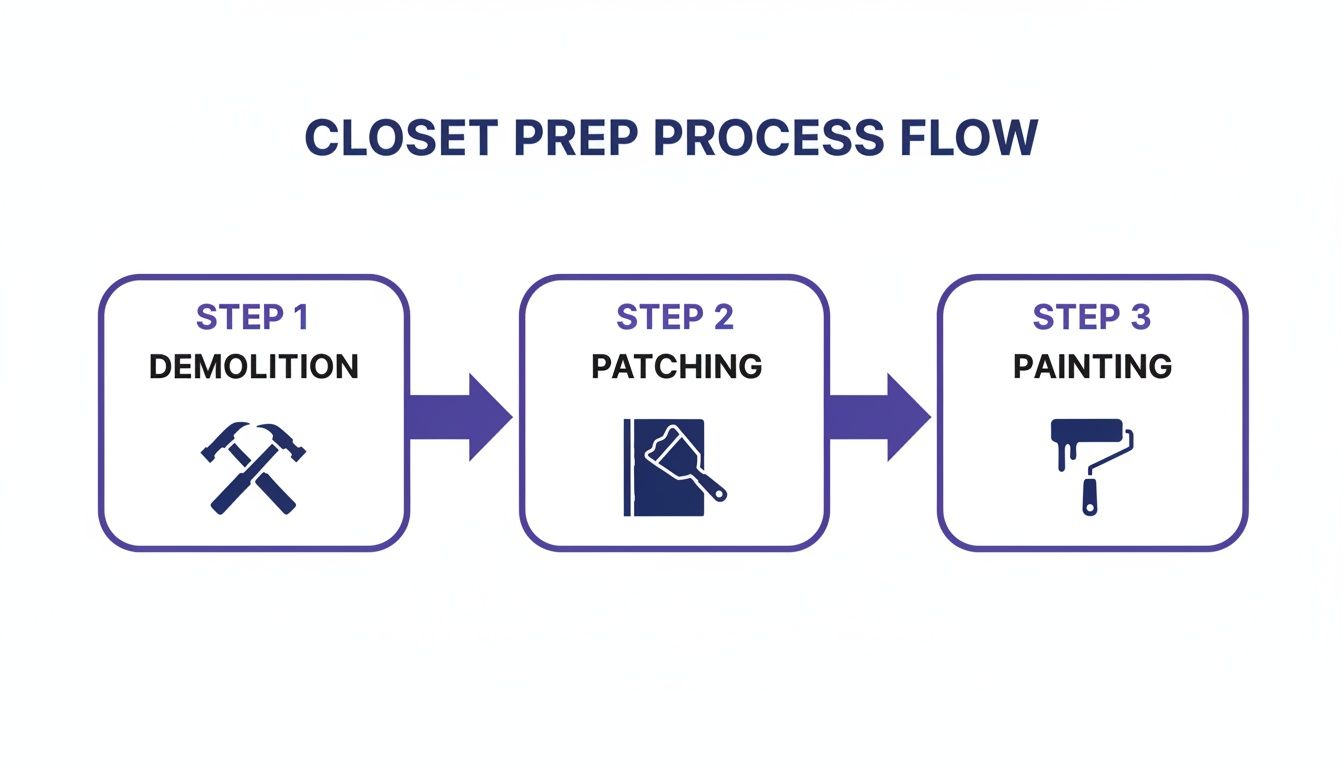
This process—clearing everything out, patching up the walls, and a fresh coat of paint—gives your new features a flawless backdrop. It’s a step you don't want to skip.
Start From The Ground Up With Durable Flooring
Think of your mudroom floor as the frontline against dirt, rain, and snow. It has to withstand muddy boots, dripping umbrellas, and whatever else the family drags in. While you could stick with your existing flooring, this is a prime opportunity to upgrade to something more resilient.
Luxury Vinyl Tile (LVT) is a fantastic, hard-wearing choice. It's waterproof, tough to scratch, and a breeze to clean. Better yet, it comes in a huge range of styles, from realistic wood looks to sleek stone patterns. Porcelain tile is another bulletproof option with a classic, timeless appeal.
Can't decide between a dark slate tile and a light wood-plank vinyl? This is the perfect time to use a visualization tool to see how different styles will actually look in your space before you buy anything.
The Centerpiece: Your Mudroom Bench
Every great mudroom needs a bench. It’s where you’ll sit to pull on boots, the go-to drop zone for backpacks, and a crucial storage element. You’ve got two main routes here: build a custom bench or buy one off the shelf.
A custom built-in is brilliant for maximizing every last inch of a tight closet space. But, if you want a faster solution, a beautiful ready-made bench from a brand like West Elm can work just as well, as long as it fits properly. An ill-fitting bench can make the entire space feel off—too small looks lost, and too big feels cramped.
This is where precise planning makes all the difference. An AI visualizer like aiStager is the only tool that can show you exactly how a real-world product will look and fit using the true dimensions of your room and the furniture. Just upload a photo of your prepped closet, paste the product link for a bench you're considering, and you get a dimensionally accurate preview.
It’s an incredible way to test-drive your options. You can instantly compare a rustic wooden bench against an upholstered one or see how different paint colors look on a custom build. By uploading a room photo and a product link, you eliminate the guesswork and make sure your centerpiece is a perfect fit from day one.
Maximize Vertical Space With Smart Storage
With your bench in place, it’s time to look up. Hooks are an absolute must-have for any mudroom—they’re the simplest way to keep coats, bags, and hats off the floor. When you're installing them, think about who needs to reach them.
- For adults, hang hooks about 60-65 inches from the floor.
- For kids, add a lower row at 30-40 inches so they can hang up their own gear.
- For spacing, leave at least 6-8 inches between hooks so bulky winter coats aren't crammed together.
Beyond hooks, think about adding cubbies or an overhead shelf. Cubbies are fantastic for giving each family member their own designated spot, which is a game-changer for organization. An upper shelf installed above the hooks is perfect for stashing out-of-season items like winter gloves or summer hats in decorative baskets.
Just be sure to install everything securely. Always drive screws for shelves and hook boards directly into wall studs. If you can't hit a stud, use heavy-duty drywall anchors rated to hold a serious amount of weight. A secure installation is what makes your new mudroom not just beautiful, but built to handle the daily chaos of family life.
Putting the Finishing Touches on Your New Mudroom
The hard work is done. You've successfully wrangled a messy closet and turned it into a seriously functional mudroom. Now for the fun part: infusing it with style and personality to make it truly feel like part of your home.
This is where you move beyond pure utility and start creating a space that’s not just practical, but genuinely welcoming.
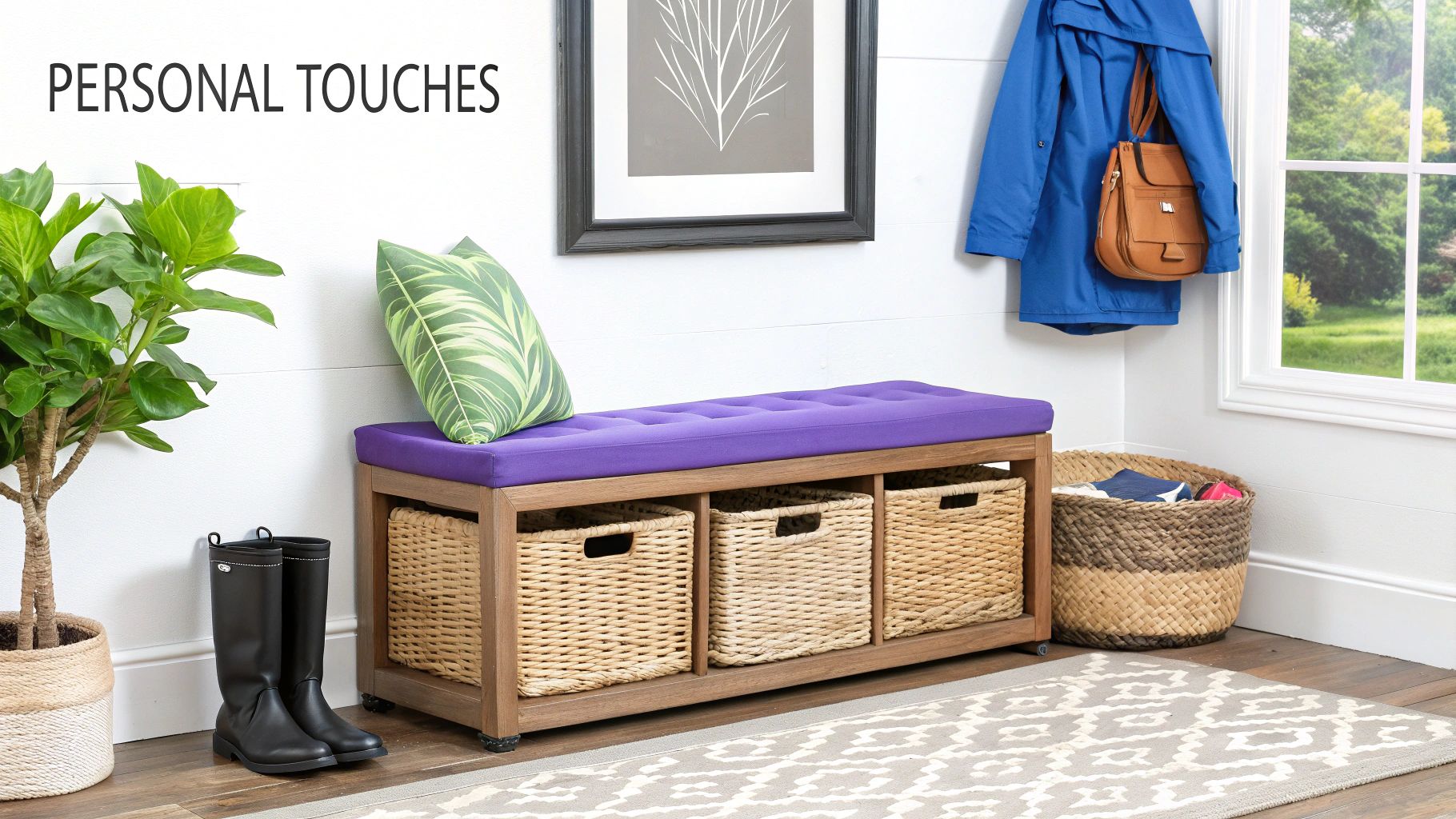
The trick is to find decor that looks great but can also handle the daily grind of a busy entryway. Think durable, beautiful, and purposeful.
Finding a Style That Fits
Your new mudroom shouldn't stick out like a sore thumb. It needs to flow with the rest of your house. Whether you’ve got a modern farmhouse thing going on, a coastal vibe, or something more minimalist, pulling those same design threads into this small space will make everything feel connected.
Need some ideas to get started?
- Modern Farmhouse: Go for matte black hardware, a warm wood bench, and maybe some shiplap or beadboard on the walls. A simple plaid cushion and some wire baskets would fit right in.
- Coastal Vibe: Think light, breezy colors and brass hardware. A bench cushion in a classic navy and white stripe is a perfect touch, and woven baskets from a place like The Container Store are great for corralling flip-flops.
- Sleek and Minimalist: Keep it clean with simple geometric hooks, a cool neutral paint color, and maybe even a floating bench to open up the floor space. Less is more here.
See It Before You Buy It with Virtual Styling
Trying to pick out those final details can be nerve-wracking. What if that paint color you love on a tiny swatch feels overwhelming on the actual wall? This is where a tool like aiStager can save the day—and your budget.
Now that the construction is done, you can snap a photo of your new space and start experimenting with all the finishing touches, risk-free. It’s like a design dress rehearsal that ensures you get the polished look you're after before spending another dime.
What’s great about aiStager is that it’s the only tool that generates hyper-realistic photos using the actual dimensions of your room and furniture. This isn't just a vague collage; it's an incredibly accurate preview.
For example, you can upload a link to two different bench cushions you're eyeing at Pottery Barn—one solid, one patterned—and see exactly how each one will look on your bench, in your light.
Want to test out some wall art? See if a runner works with your flooring? You can try it all in just a few clicks by uploading your photo and a product link. This final check is the secret to avoiding those "oops" moments and making sure you absolutely love the result. It’s a lot like creating a digital mood board to keep your vision on track. If you want to dive deeper, you can learn more about how to create a moodboard to guide all your design projects.
Decor That Does Double Duty
In a tight space, every single item needs to earn its keep. When you turn a closet into a mudroom, you don’t have room for things that are just pretty. The best decorative pieces are also incredibly useful.
Here are a few ideas for stylish, hardworking additions:
- A Tough-as-Nails Bench Cushion: A cushion makes the bench a much nicer place to sit. Look for one covered in a high-performance fabric that’s a breeze to wipe clean.
- A Good-Looking Boot Tray: This is a non-negotiable for containing mud and slush. Thankfully, you can find plenty of stylish options that complement your floors instead of just looking like a plastic slab.
- Woven Baskets: Baskets are a designer's best friend for a reason. They hide clutter like hats and scarves while adding great texture and warmth to the space.
- A Small Rug or Runner: A washable runner adds a splash of color and personality, but it also traps dirt at the door and protects your floors. Win-win.
- A Well-Placed Mirror: It’s a classic trick for a reason! A small mirror will bounce light around, making the space feel bigger. It's also perfect for a final check before you dash out the door.
By layering in these final, thoughtful touches, you’ll complete your transformation. You’ll have a space that’s not just organized and efficient, but a beautiful little corner that truly reflects your home’s style.
A Few Common Questions About Closet-to-Mudroom Projects
Even with a solid plan, a few questions always pop up once you start a project like this. Let's tackle some of the most common things homeowners ask when they're about to turn a closet into a mudroom. Having these answers ready will help you feel more confident and keep your project on track.
How Much Value Does a Mudroom Actually Add?
It's tough to slap an exact number on it, but a well-executed mudroom is a huge win for homebuyers. It solves the universal headache of entryway clutter, which makes a home feel more valuable and just plain easier to live in.
In a hot real estate market, a dedicated "drop zone" can make your house stand out. It tells buyers that the home is thoughtfully designed for real, busy life. That small detail can absolutely lead to a faster sale and a better offer.
What’s the Best Flooring for This Kind of Space?
You need flooring that’s two things above all else: durable and water-resistant. This floor is going to see everything from muddy boots and wet paws to heavy daily foot traffic, so it has to be tough.
That’s why Luxury Vinyl Tile (LVT) and porcelain tile are almost always the top recommendations.
- Luxury Vinyl Tile (LVT): This stuff is fantastic. It's totally waterproof, incredibly hard to scratch, and a breeze to clean. Plus, it comes in a dizzying array of styles, from hyper-realistic wood looks to sleek, modern stone.
- Porcelain Tile: Another workhorse. Porcelain is super dense and tough, making it almost impossible to damage with water or scratches. It gives off a classic, high-end vibe that can really elevate the look of a small space.
If you're stuck, this is another perfect spot to use a tool like aiStager. Since it’s the only platform that generates hyper-realistic photos using true dimensions, you can see exactly how it will look. Just snap a photo of your closet and try out different flooring styles to see what you love before you buy.
Can I Do This If I’m Renting?
You sure can! A closet-to-mudroom conversion is a great project for renters, as long as you stick to temporary solutions that won’t cause any damage. You can get all the function you need without leaving a single mark.
Think freestanding and temporary. Grab a sturdy, freestanding bench instead of a built-in. Use heavy-duty adhesive hooks from a brand like Command for coats and bags—they hold a ton of weight but peel off cleanly. You can even use tension rods between the walls for extra shelving. To protect the floor, just have a piece of vinyl or a tough mat cut to fit the closet's footprint.
Should I Get Rid of the Closet Door?
For most projects, I’d say yes. Taking off the old closet door is probably one of the biggest little changes you can make. It immediately opens up the space and makes your new mudroom feel like a deliberate, integrated part of the hallway or entryway. It just flows better and feels much bigger.
But if you like the idea of hiding the occasional mess, you have options.
A sliding barn door is a popular choice. It adds a great design element and saves on the floor space that a traditional swinging door would eat up. For a softer, more affordable route, a heavy curtain on a stylish rod works beautifully, too.
How Can I Test Products Before I Commit to Buying?
Figuring out how different pieces will actually look together in your space is always the hardest part. It’s one thing to see a bench online, but it’s another to know if it will clash with the hooks you found somewhere else.
This is exactly what aiStager was built for. It’s perfect for comparing different products—different brands, colors, you name it. For example, maybe you’re torn between a rustic wood bench from Pottery Barn and a modern upholstered one from West Elm.
With aiStager, you can see both of them sitting in your actual closet in a matter of clicks. Upload a photo of your space and the product links, and the tool generates a true-to-scale, hyper-realistic image. It takes all the guesswork out of the process so you can be sure you’ll love every piece you buy.
Ready to see your ideas come to life in stunning, true-to-scale visualizations? With aiStager, you can see exactly how real products will look in your space before you start your project. Stop guessing and start designing with confidence. Try aiStager for free today and visualize your perfect mudroom.