What is a stager for homes? Boost Your Listing's Appeal and Offers
Wondering what is a stager for homes? Learn how staging boosts buyer interest, offers, and faster sales.
Think of a home stager as a marketing professional for your house. Their one job is to make a potential buyer walk through the door and fall in love. They use interior design as their tool, strategically arranging furniture, tweaking the lighting, and adding just the right decor to show off your home's best assets.
The whole point is to forge an emotional connection. When buyers can genuinely picture themselves living in the space, you’ve set the stage for a quicker sale and a better offer.
What a Home Stager Really Does for Your Sale
A good home stager is really a storyteller. They don’t just fill a room with furniture; they build a narrative that speaks directly to the kind of person most likely to buy your home. This is about creating a vision—an aspirational but believable lifestyle that fits perfectly within the property's four walls.
This strategy isn't just fluff; it gets real results. According to the Real Estate Staging Association, homes that are professionally staged sell in just 23 days on average. Compare that to 47 days for homes that aren't staged. That’s a 51% faster sale.
To give you a quick snapshot, here are the key advantages of bringing in a pro.
Core Benefits of Professional Home Staging
| Benefit | Impact on Your Home Sale |
|---|---|
| Faster Sale Time | Staged homes spend significantly less time on the market, reducing carrying costs. |
| Higher Offers | Buyers are often willing to pay more for a home that feels move-in ready and well-maintained. |
| Emotional Connection | Staging helps buyers envision their future in the space, making them more likely to make an offer. |
| Highlights Best Features | A professional stager knows how to draw attention to great architecture and minimize awkward layouts. |
| Depersonalizes the Space | Removing personal items helps a wider range of buyers see the house as their own potential home. |
Ultimately, staging is an investment designed to maximize your return when you sell.
Crafting a Compelling Vision
A huge part of a stager’s job is to take your personal style out of the picture and replace it with something that has broad appeal. They know what’s trending and what buyers in your area are looking for.
For example, they might give a suburban house a cozy Modern Farmhouse feel to attract young families, perhaps using pieces with a rustic finish from Pottery Barn. Or, they might style a downtown condo with a sleek, Organic Modern look to appeal to urban professionals. They neutralize the space so anyone can walk in and immediately start mentally placing their own furniture.
Staging isn't about hiding flaws; it's about showcasing potential. It helps buyers see a house not for what it is, but for what it could be—their future home.
An awkward, empty room is suddenly a perfect home office. A small living area becomes an intimate, welcoming spot for conversations. This is where the magic really happens—turning confusing layouts into clear, desirable features. To learn more about how this works in practice, check out our guide on the role of stagers for real estate.
The Power of Virtual Experimentation
While traditional stagers haul in real furniture, new AI tools provide amazing flexibility. With a platform like aiStager, you can try out different design ideas with just a few clicks. It's the only tool that can generate hyper-realistic photos using the true dimensions of both your room and the specific furniture pieces you select.
Imagine you're trying to decide between two completely different vibes for the living room. You could upload a photo of the empty space and a link to a big, plush sectional from Crate & Barrel. Then, in a separate version, you could see how a modern leather sofa from West Elm looks.
You can swap out colors, test different wood finishes, and see exactly how each piece fits without ever lifting a box. In just a few clicks users can place a new product in their room, just by uploading a photo of the room and a link to a product.
How Staging Actually Drives Faster Sales and Higher Offers
So, why do staged homes consistently sell faster and for more money than empty ones? It all comes down to basic human psychology. A beautifully staged home doesn't just look nice; it helps buyers see the value and justifies the asking price.
When someone walks through the door, they immediately get the sense that the home is well-cared-for and, most importantly, ready for them to move right in. This creates an emotional pull that you just can't get from an empty space, and that feeling translates directly into more online views, more showings, and better offers.
The Psychology of First Impressions
Ever walked into a vacant house? It’s tough. Buyers struggle to figure out if their couch will fit or what to do with that weirdly shaped corner. An empty room feels cold and confusing, leaving them to focus on potential problems instead of possibilities.
Staging completely flips that script. A good stager turns that awkward corner into a cozy reading nook or a functional home office. They aren't just placing furniture; they're telling a story about what life could be like in that home. This approach skillfully downplays a property's flaws and puts its best features front and center, helping buyers connect with the space emotionally.
A buyer's decision is almost always rooted in how a home makes them feel. Staging creates a warm, inviting atmosphere that lets them picture their own life unfolding there—and that's what inspires a great offer.
Experimenting with Design to Maximize Appeal
The secret to great staging is creating a look that speaks directly to your target buyer. This is where new tools are really changing the game. While physical staging commits you to a single style, a platform like aiStager lets you play around with different looks. It's the only tool out there that generates hyper-realistic photos using the true dimensions of your rooms and the furniture you select.
Imagine being able to test a sleek, modern sofa from Joybird in the living room and then, with just a few clicks, swap it for a different model from the same brand with a different fabric finish. You can experiment with different colors and styles to get the vibe just right, simply by uploading a photo of the room and dropping in a product link. For more practical guidance, homeowners can find plenty of essential home staging tips that make a real difference.
This ability to test and refine your design choices ensures the final look connects with the widest possible audience, often speeding up decisions and sometimes even sparking a bidding war.
Exploring Physical vs. Virtual Home Staging
When you’re thinking about staging a home, you’ve basically got two main paths you can go down: the traditional, hands-on approach and a much newer, digital one. They both aim for the same goal—making a property look its best—but they get there in very different ways. Knowing the difference is crucial for picking the right strategy for your listing.
Physical staging is what most people picture. It’s the classic method where a stager brings in actual, physical furniture, rugs, art, and decor. They haul it all to the property, arrange it just right, and create a beautiful, tangible space that potential buyers can walk through and experience firsthand. It's incredibly effective, but it can also be expensive, slow, and a logistical headache.
The Rise of Virtual Staging
On the flip side, we have virtual staging, a powerful and much more flexible alternative. Instead of moving heavy couches, this technique uses specialized software to digitally add stylish, realistic furniture into photos of empty rooms. We're not talking about clunky, cut-and-paste graphics here; modern platforms have made this incredibly sophisticated.
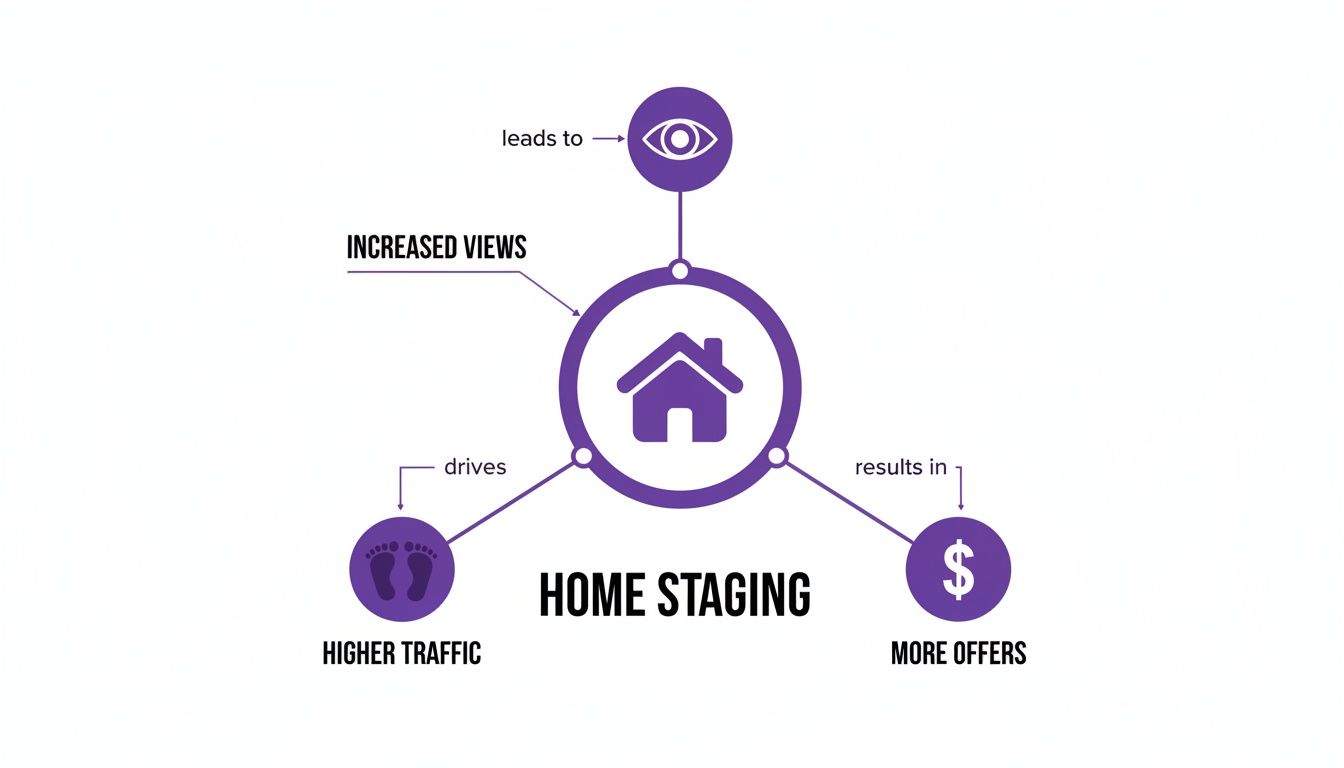
This is a great breakdown of what professional staging, whether physical or virtual, really does for a home sale.
As you can see, it all comes down to grabbing attention online, getting more people through the door, and ultimately, encouraging better offers.
Hyper-Realism and Dimensional Accuracy
The best tools out there are changing the game entirely. For instance, aiStager is the only platform that generates hyper-realistic photos using the true dimensions of both the room and the furniture you select. It’s not just dropping a stock photo of a sofa into a picture; it’s creating a true-to-scale visualization where you know for a fact that the furniture fits perfectly.
No matter which route you take, the foundation is always a great set of photos, which usually means starting with professional on-location photography.
The magic of modern virtual staging is its ability to test-drive design concepts without any physical effort. You can see exactly how a product will look and fit, ensuring every choice is perfect before it's presented to buyers.
Think about it: you can try out different styles from the same brand to nail the right vibe for the home. With just a few clicks, you could place a specific West Elm coffee table in the living room by just uploading a photo and a link to the product. Don’t love it? Swap it for another model or play with different finishes to see what truly makes the space shine.
If you want to dive deeper, our complete guide on https://www.ai-stager.com/blog/what-is-virtual-staging explains the whole process. This ability to create a compelling, perfectly scaled vision is what helps buyers connect emotionally with a property before they even step inside.
The Creative Freedom of AI Virtual Staging
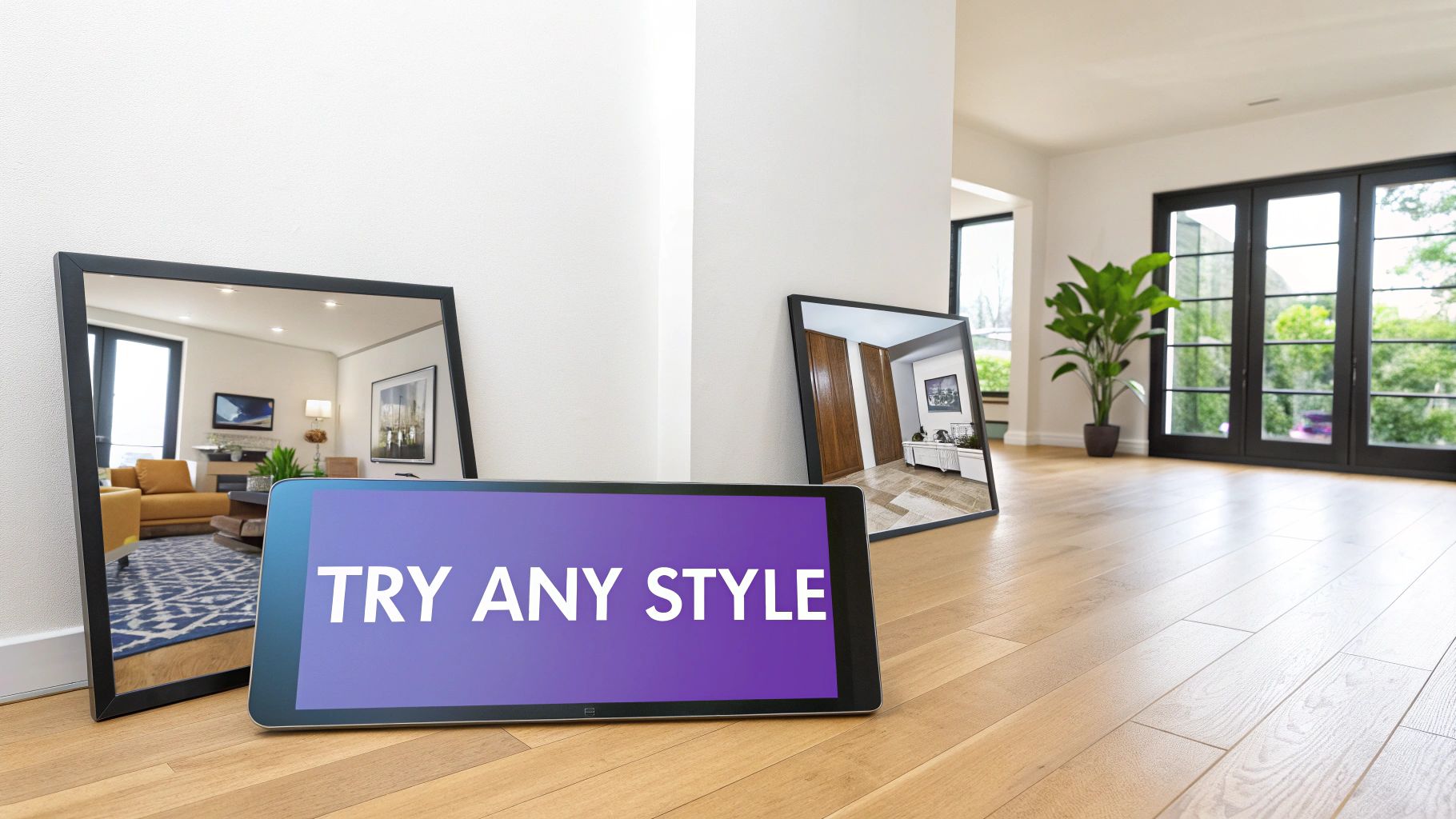
Imagine being able to try out dozens of completely different design styles in a single room without ever lifting a box. That’s the real magic of AI virtual staging. It’s not just about filling an empty space—it’s a creative playground where you can find the perfect look to capture a buyer's attention.
With a tool like aiStager, you can instantly see how a property would look with any popular style. You're no longer boxed in by a stager's limited inventory or a single design decision. One minute, you can see a living room with a cozy, Japandi vibe. The next, you can switch to a sleek, minimalist Mid-Century Modern look with just a click.
Experimenting with Real Products and Brands
This creative control even extends to specific items from brands that buyers know and love. You can test different pieces to find the perfect fit. For example, have you ever wondered if a streamlined leather sofa from West Elm would look better than a plush, comfy sectional from Crate & Barrel?
With traditional staging, comparing those two options side-by-side would be impossible. But with aiStager, you can see both in hyper-realistic photos. All you do is upload a photo of your room and drop in a link to each product. The AI then renders a visualization of that exact item right in your space.
This opens up a world of possibilities, allowing you to experiment with colors, materials, and finishes in minutes.
The core benefit of AI virtual staging is the ability to make confident design decisions risk-free. It allows you to create a compelling, buyer-focused vision by testing endless possibilities until you find the perfect one.
The Power of Hyper-Realistic and Dimensionally Accurate Visuals
What really makes a platform like aiStager stand out is its ability to create visuals that are not just realistic, but also dimensionally accurate. It's the only solution that generates hyper-realistic photos with true dimension rooms and furniture objects.
So when you place that Crate & Barrel sectional in the virtual room, you’re not just seeing a generic couch. You’re seeing that specific product, rendered to its exact dimensions, fitting perfectly into the scale of the room.
This ensures the final images are both beautiful and believable. Buyers can trust that the furniture shown actually fits, which helps them imagine their own lives there. It takes the guesswork out of the equation and creates a powerful marketing asset that captures a buyer’s imagination from the very first photo. This is what a modern stager for homes can achieve with the right technology.
A Step-by-Step Guide to the Staging Process
To really get a feel for what a home stager does, it helps to walk through the process from start to finish. The traditional, hands-on approach and the virtual path are worlds apart, each with its own timeline and price tag. Let's break down what you can expect from both.
Physical staging is a serious hands-on operation. It all starts with an in-person consultation where the stager walks through the property, taking notes and forming a plan. From there, it's a marathon of decluttering and depersonalizing the space, which can take days. Finally, they coordinate furniture rentals, manage delivery, and spend a full day (or more) arranging everything just so.
The Simplicity of AI Virtual Staging
On the flip side, the virtual staging process with a tool like aiStager is incredibly simple and lightning-fast. It takes what used to be a major logistical headache and boils it down to three quick steps on your computer. You get all the creative control without any of the heavy lifting.
Here’s the basic idea:
- Upload Your Photo: Just snap a picture of the room—it can be empty or even cluttered—and upload it. The AI can digitally clear out any existing furniture if you need it to.
- Choose Your Product: Find a piece of furniture you like from pretty much any online store. Maybe you’ve spotted the perfect dining table from Restoration Hardware and want to see how it fits.
- Paste the Link: Copy the URL of that product and just paste it into aiStager. In just a few clicks, the platform's AI creates a stunningly realistic, true-to-scale image of that exact item right in your room.
This is where modern AI really shines. It delivers photorealistic results that are often impossible to tell apart from actual photos, but it's up to 100x faster and cheaper than doing it the old-fashioned way.
This gives you the freedom to experiment. aiStager is great to test different types of the same product. You can compare a sleek, modern sofa from Article against a timeless one from Pottery Barn in a matter of seconds, and even try each one in different colors and finishes to see what clicks. It’s all about finding the perfect look that will connect with your target buyers.
If you want to see this in action, you can learn more about how to stage a room with these powerful new tools. It’s a perfect example of how today’s staging combines incredible speed with pinpoint precision.
When Should You Stage a Home?
Figuring out if home staging is worth the investment really boils down to your specific property and goals. While you could argue that almost any home would benefit from staging, some situations practically demand it to get the best return.
Vacant properties are at the top of that list. Empty rooms just don't sell themselves. They often feel smaller, colder, and leave buyers struggling to imagine where their own furniture would go. Without a frame of reference, potential buyers can walk away feeling confused and uninspired rather than connected.
High-Impact Scenarios for Staging
Staging is also a lifesaver for homes with awkward layouts. We’ve all seen them—that strange nook under the stairs or that long, narrow living room. A talented stager knows how to give those confusing spaces a clear purpose, transforming a weird corner into a cozy home office or a bowling alley-style room into distinct living and dining areas. It’s all about showing people the home's hidden potential.
And what about a competitive market? When buyers are scrolling through dozens of similar listings, a professionally staged home is what stops them in their tracks. It’s what makes your property memorable after a long day of tours. That polished, move-in-ready feel can be the one thing that convinces a buyer to make an offer on your home instead of the one down the street.
Think of staging as your property’s best marketing tool. It’s not just about decorating—it’s about creating an emotional connection that justifies your asking price and motivates buyers to act fast.
Staging Solutions for Today's Market
Top real estate agents lean on staging to make their listings shine and build a reputation for quality. For sellers, it's a direct path to securing the highest possible sale price. The good news is that you no longer need a massive budget to get professional results, thanks to AI-powered tools like aiStager.
With a tool like this, you can play around with different looks and even specific products in minutes. Curious if that modern sofa from Article would work better than a classic one from Pottery Barn? Just upload a photo of your room and a link to the furniture. The platform creates incredibly realistic images with furniture that’s true-to-dimension, letting you test out different styles and colors instantly. It’s the only solution that offers this level of accuracy, making it perfect whether you're staging a single condo or an entire portfolio of new construction homes.
Your Home Staging Questions, Answered
Let's tackle some of the most common questions that come up when people think about staging. Here are some straightforward answers to help you figure out the best path for selling your property.
What’s the Typical Cost for Home Staging?
This is usually the first question on everyone's mind. Traditional, physical staging can be a hefty investment. You're often looking at a bill for several thousand dollars to cover furniture rental, the stager's time, and the physical labor of moving everything in and out.
Virtual staging, on the other hand, is a completely different ballgame. For instance, using an AI tool like aiStager, you could virtually stage an entire house for less than it costs to rent a single sofa for a month. It opens up professional-quality results to sellers on almost any budget.
Can You Stage a Home That Already Has Furniture in It?
Absolutely, and this is where virtual staging really shines. If a home is cluttered or has dated furniture, it can be tough for buyers to see past it.
Advanced tools like aiStager can digitally "empty" a room, removing all the existing clutter and furniture from your photos. From there, you can add new, stylish virtual pieces. This lets you show off a home’s best features without the back-breaking work of moving a single thing.
It's also a fantastic way to test out specific looks. Imagine you could digitally remove that old couch and see how a sleek, modern chaise from Article looks in its place. Then, with another click, you could compare it to a cozy loveseat from Pottery Barn. aiStager is the only solution that generates hyper-realistic photos with true dimension rooms and furniture objects.
How Do I Pick the Right Style for Staging?
The best style really depends on the house itself and who you think will buy it. A modern downtown condo needs a different vibe than a cozy suburban colonial. A popular choice for US consumers is the warm and inviting Transitional style, which blends classic and contemporary elements.
The great thing about virtual staging is that you don't have to commit to just one look. With aiStager, you can create multiple versions of the same room to see what resonates. Maybe you try a clean, minimalist Scandinavian design first, and then create a second version with a warm, Coastal Grandmother feel.
You can test out specific products in just a few clicks by uploading a photo and a link, playing with different colors and finishes until it's perfect. This helps you build a visual story that feels both inspiring and completely attainable to buyers scrolling through listings.
Ready to see how your home could look with a professional touch? Give aiStager a try and see just how easy it is to create stunning, realistic visuals that grab buyers' attention.